

Review · CYCLING TOURS
Ancient Athens E-Bike Tour
Fast wheels, ancient Athens in two hours.
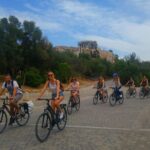
This Ancient Athens E-Bike Tour makes the steep parts of town feel manageable, with a standing motorized Trikke so you can see big sights without pedaling. I like the tight route that hits the Acropolis, Plaka, and the Agora area in one go, and I like the small-group feel, capped at 12 riders, which keeps the pace human. One thing to plan for: the tour requires good weather and archaeological-site tickets are not fully included, so your final cost may be higher than the base price.
What really sells it is how the tour balances landmarks with on-the-ground context. When your guide is Dimitris, you get clear explanations that connect monuments to daily life, including the democracy story tied to the hill where meetings happened. You also get practical safety support up front with a helmet and costumer insurance, which matters when you are cruising around tight streets and busy crossings.
If you want a fast orientation to Athens that you can build on later, this is a smart use of time. It runs about 2 hours and is offered in English, with a mobile ticket and a start point at Leof. Andrea Siggrou 22. The ride ends back at the same meeting spot, so you do not have to figure out your next move with sore legs and a map from 50 phones ago.
In This Review
- Key highlights worth your attention
- Why this Athens e-bike tour is a smart use of limited time
- First stop energy: Theatre roots and what to look for
- Odeon of Herodes Atticus: a Roman theatre still doing its job
- Acropolis: getting close without making it a full hike
- Pnyx and democracy views: a hill you can feel
- National Observatory of Athens and the Nymphs Hill park zone
- Ancient Agora: the daily life core of the ancient city
- Kerameikos: ceramics and the neighborhood name you can trace
- Monastiraki: the crowd magnet with practical food and shopping energy
- Roman Agora and the Tower of the Winds payoff
- Plaka: picture-postcard streets that you can use after the tour
- What you really get for the price: $72.09 plus site admissions
- Timing, group size, and the route rhythm you will feel
- Safety and ease: helmet, insurance, and learning the Trikke fast
- When to book and how to choose your day
- Should you book this Ancient Athens E-Bike Tour?
- FAQ
- What is the duration of the Ancient Athens E-Bike Tour?
- How much does the tour cost?
- What is included in the tour price?
- What is not included?
- Where do I meet for the tour?
- What time does the tour run?
- Is the tour in English?
- How large is the group?
- Do I need good weather to go?
- Do I need a printed ticket?
Key highlights worth your attention
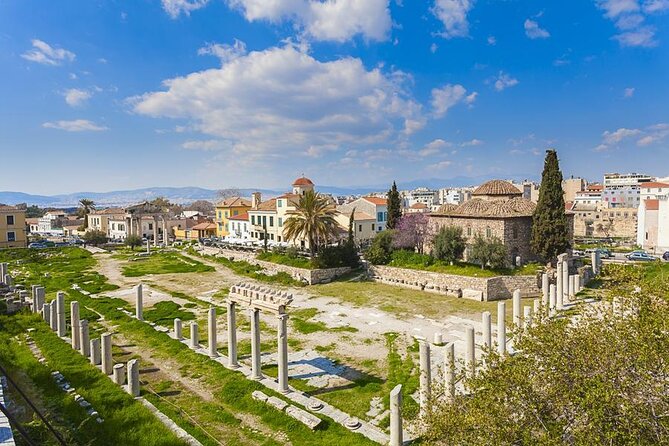
- Standing Trikke, no pedaling stress: you steer and balance, and the motor does the work so your energy stays for sightseeing.
- A compact route that actually works in heat: you cover several major zones around the Acropolis without turning the day into a hike.
- Small group size (max 12): you are not swallowed by a sea of walkers, and you can hear the guide.
- Helmet plus costumer insurance: safety gear is included, and the tour is built around controlled movement.
- History stops with real-world meaning: expect explanations tied to democracy, markets, and daily life, not just dates.
More Athens routes by bicycle and e-bike




Why this Athens e-bike tour is a smart use of limited time

Athens can be a lot, fast. The city’s most famous sights are close on a map, but they are not close on foot, thanks to hills and uneven walking. This tour is designed for that reality. You do the sightseeing legs first by motorized Trikke, then you spend your real attention time where it matters, at viewpoints and major monuments.
The standing format is key. Instead of being stuck on a bicycle seat, you are more upright, and that helps with scanning the scenery. It also makes photo stops easier because you are not dismounting for every glance.
I also like that you are not forced into one rigid script. A good guide can adjust the pacing based on what you already saw, and the better part of the experience is the quality of the commentary as you move. Even if you only care about the big-ticket hits, the explanations help you look at them in the right order, with the right context.
First stop energy: Theatre roots and what to look for
The tour starts with one of the most important theatre areas in the ancient Greek world, the Theatre of Dionysus on the Acropolis Hill complex. This is the place where theatre began, and the ticket to the Acropolis Hill is noted as including this theatre site as well.
Even if you only have a short stop here, use it like a primer. Look for the way the space is built for performance, how the seating wraps and how sound would carry in a place designed for voices. This is not just an old venue, it is a reminder that Athens shaped cultural life early, not only politics and stone architecture.
Practical note: the theatre area is listed with a 20€ admission, and the Acropolis Hill ticket is described as covering both the Acropolis Hill and the related theatre entries. Because archaeological tickets are not fully included in the tour price, you should expect to pay for this if you do not already have those tickets.
Odeon of Herodes Atticus: a Roman theatre still doing its job
Next comes the Odeon of Herodes Atticus, a Roman theatre that is still used for performances. The site is described as being created in the second century A.D., tied to a memorial gift for the wife of Herod Atticus.
This stop is a great example of why doing Athens by Trikke makes sense. You are moving from one major monument zone to another without losing time on travel between them, and you can still take in what makes the place different. The Odeon is all about presence. It feels like an operating theatre, not a museum prop.
You will see why the Romans built on Greek foundations, and why Athens kept reusing important civic spaces across eras. Admission is listed as 20€ for this stop, with the Acropolis Hill ticket also described as including it.
If you want to squeeze maximum value out of your ticket day, this is where it helps to plan your ticket strategy before you arrive. The tour format can guide your priorities, but the final admissions still depend on what you purchase.
Acropolis: getting close without making it a full hike
Then the tour reaches the Acropolis itself. You get time to watch the hill from a close side, with the Parthenon as the signature temple up top.
The Acropolis is crowded, and it is famous enough that you might think you know what you are looking at already. The benefit of this tour is that you are positioned with context. Instead of arriving after hours of wandering, you arrive with a route in mind. The guide can help you connect what you see on the hill to what you will see lower down later in the loop.
The Acropolis Hill ticket is listed as 20€, and it is noted that ticketing coverage connects to nearby theatre sites too. Since tickets to archaeological areas are not included in the tour price, this is another place where you should budget ahead.
Try this: when you stop for photos, do not only shoot the skyline. Look at how the rock forms a natural foundation for the temples, then scan outward to see how the city slopes away. Even in a short stop, you can learn the Acropolis position in Athens geography.
Pnyx and democracy views: a hill you can feel

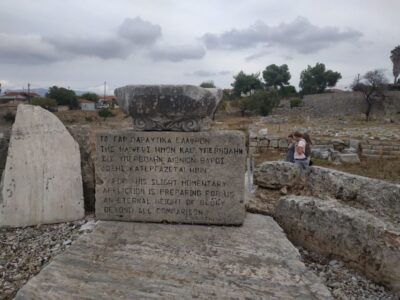
After the main theatre and Acropolis segment, the tour moves toward Pnyx, described as the place where democracy started. Pnyx is within an archaeological area that is also a park, with 15 minutes of free admission listed.
This is a powerful stop because it changes your mental picture of Athens. When you spend time here, it is easier to understand how the city’s political system would be experienced physically. This is where ideas connect to staging, crowd size, and visibility.
You do not need long time here to get the point. Use the minutes you have to spot the open views and imagine how speeches would land in that space. If your guide highlights the significance of monthly meetings and the democratic nature of the city, this stop will start to click.
Other Athens e-bike routes
- Athens Acropolis Official E-Scooter Guided Tour Fat E-Bike★ 5.0 · 504 reviews
- Athens: Discover the City Electric Bike Tour★ 4.9 · 414 reviews
- Electric Bike Tour of Athens by Night★ 5.0 · 355 reviews
- Athens Sunset Electric Bike Tour★ 5.0 · 151 reviews
National Observatory of Athens and the Nymphs Hill park zone
Next is the National Observatory of Athens, placed on the hill of Nymphs within an archaeological area and park. The tour lists 15 minutes and marks admission as included.
This part of the day is a nice break from pure monument-gazing. Instead of chasing marble details, you get space to look around, catch your breath, and reset your eyes for the next historic cluster.
Since the observatory is marked as included in the itinerary data, it can feel like a “good” stop where you do not keep mentally tracking extra ticket costs. Still, keep a flexible mindset about admissions overall, because archaeological ticket notes vary by site and how your booking is bundled.
Ancient Agora: the daily life core of the ancient city
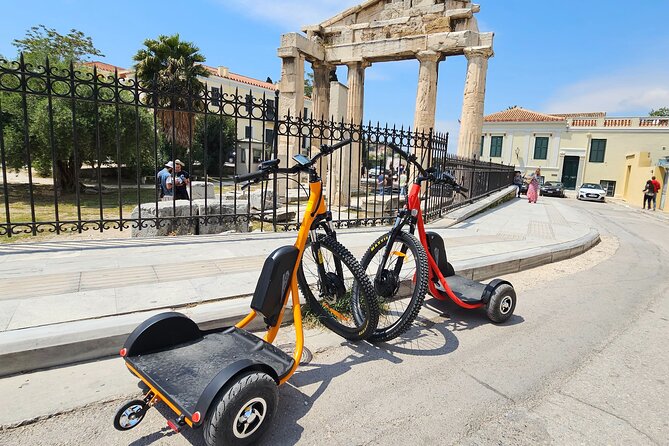
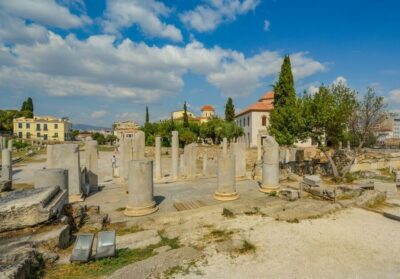
The tour then goes to the Ancient Agora of Athens, described as a central marketplace and the most important area of ancient Greek civic life. You get about 20 minutes here.
This is where you should slow down mentally. The Agora is not just a set of ruins, it was the operating system for trade, meetings, and public life. When you picture the modern city, think of the Agora as the place where information and services moved through daily routines.
Ticket details here are listed as 4€, and admission is marked as included in the stop list. Because the overall tour says archaeological tickets are not included, I recommend you check what is already covered in your booking confirmation. Either way, this is the kind of stop that pays off even if you end up buying a small extra ticket.
Kerameikos: ceramics and the neighborhood name you can trace
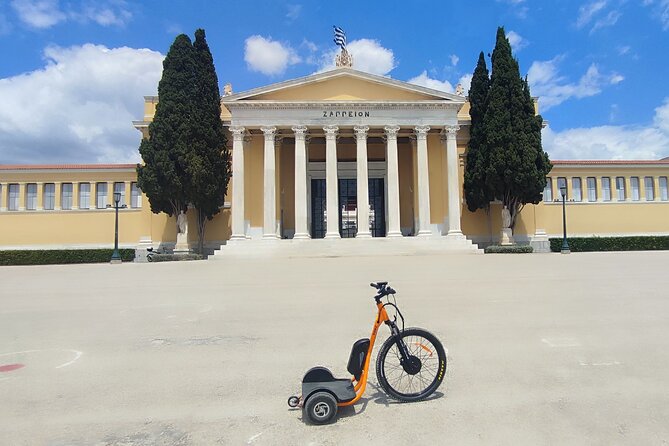
After the Agora, you ride to Keramikos, an archaeological area close by. The name connects to ceramics production, which is a neat way to connect a neighborhood name today to what happened there in the past.
Kerameikos is listed with 10 minutes and free admission.
This is a good stop if you like the quieter “in-between” zones of history. The Agora area tends to dominate your attention, then Kerameikos adds a different angle, the industrial life of the city. You also get a break from major crowd nodes, which keeps your energy steady for the last stretch.
Monastiraki: the crowd magnet with practical food and shopping energy
Next comes Monastiraki, described as the second most crowded square in Athens and considered the heart of the city, with bars, restaurants, and lots of choices around.
You get about 10 minutes here, and admission is marked as included in the stop list. Monastiraki is not a ticketed ruin stop, so treat it as a neighborhood orientation moment. This is where you figure out which direction the city’s “easy life” lives in.
If you love wandering, this is where you can pick up instincts for later. After the monuments, you get back to street-level Athens: terraces, quick bites, and the vibe that keeps people coming back.
Roman Agora and the Tower of the Winds payoff
Then you reach the Roman Agora, described as a Roman-era version of the Greek Agora from the second century A.D. Inside, you can see the Tower of the Winds.
The stop list gives it 10 minutes and lists a 4€ ticket note for admission, while also showing “admission ticket free” on one line. Because that information conflicts, do not rely on it as a guarantee. Instead, assume there may be an extra ticket cost unless your booking confirmation clearly indicates it is covered.
The Tower of the Winds is the kind of detail that makes the Roman overlay feel real. You are not only seeing a Roman remake of an older civic area, you are seeing how Romans translated Greek space into their own systems and technologies.
This is also where the Trikke experience helps. You get from spot to spot quickly, so you do not feel like you are cutting out the smaller highlights to save time.
Plaka: picture-postcard streets that you can use after the tour
Finally, you reach Plaka, described as the traditional neighborhood of Athens. It is described as picturesque, with an atmosphere that looks like a Greek island.
Plaka is listed as a free stop with 10 minutes, and that makes sense. This is a “reset” zone. You get to see the streets you will likely want to walk later, and you can start memorizing the shapes of lanes and viewpoints.
After two hours of moving fast, Plaka is where you stop for a few final photos and build a short list for your next half day. Think of it as your post-tour map drawn in real streets, not on a screen.
What you really get for the price: $72.09 plus site admissions
The base price listed is $72.09 per person, for a tour that runs about 2 hours and includes Trikke use, a helmet, and costumer insurance. For Athens, that combo is good value if you want to cover multiple landmark zones without spending the day walking up and down steep streets.
Where the math can change is admissions. The itinerary notes separate admission prices for major sites, including 20€ for the Theatre of Dionysus complex area, 20€ for Odeon of Herodes Atticus, and 20€ for the Acropolis Hill ticket. Smaller ticket notes appear too, such as Ancient Agora with 4€ and Roman Agora with a 4€ ticket note. Some stops are marked free or included, like Pnyx and Kerameikos, which can soften the total.
My practical advice: budget for extra museum or archaeological tickets, and then treat any included admissions as a bonus. If you already plan to buy an Acropolis Hill ticket, this tour can be a efficient way to see multiple connected sites while you are there, rather than making separate trips.
Timing, group size, and the route rhythm you will feel
The tour operates Monday through Saturday from 10:00 AM to 4:00 PM, with the activity window noted from 05/01/2023 to 12/22/2026. That means you get daylight hours for photos and a predictable time slot.
Group size is capped at 12 travelers, which is a big deal. In Athens, a large group can turn stops into long queues and loud confusion. A smaller group keeps your actual viewing time meaningful, and it makes it easier for the guide to adjust your route if you are already familiar with a site.
Also note that you start at Leof. Andrea Siggrou 22 and end back at the same meeting point. That is helpful if you have plans after, since you do not need a second transport plan for your exit.
Safety and ease: helmet, insurance, and learning the Trikke fast
You are provided a helmet and costumer insurance, both listed in the included features. That is the baseline, and it is worth paying attention to when you are using any motorized equipment around busy areas.
The standing Trikke style also tends to feel intuitive quickly. One of the best bits of feedback tied to this tour is that the bikes are easy to use, and riders feel safe while crossing between spots. If you have kids in your group, this matters too. The tour is reported to work well with kids ages 9 through 15, with them enjoying the ride while you still get quality history stops.
You should still ride with attention. Standing and steering takes a bit of getting used to, so if you are nervous on bikes, do not just hope it works out. Plan to start slowly, listen for the first safety instructions, and keep your turns smooth.
When to book and how to choose your day
This experience requires good weather. If it is canceled due to poor weather, you will be offered a different date or a full refund.
Because Athens heat can be intense, this tour can feel like a heat-saver. You are not doing a long walk between hills, and the motorized Trikke helps you conserve energy for the sightseeing parts. If you are visiting in hotter months, this format is particularly practical.
Check what time you want to do it based on your overall plan. If you need a “starter day” to orient yourself, the earlier slot is useful. If you prefer a relaxed finish with cooler air, pick a departure that fits your schedule, still within the listed operating window.
Should you book this Ancient Athens E-Bike Tour?
I think you should book this if you want to see the top Athens highlights in a tight time window, especially around the Acropolis and Agora zones, without turning the day into a steep, sweaty endurance test. The included helmet and insurance, the small group size, and the ability to cover multiple neighborhoods in about 2 hours make it a strong value play.
Skip it or at least think twice if you are not comfortable with motorized equipment or you are not sure about weather. Admissions add-ons can also change the final price, so check your ticket expectations before you go.
If you want a day that balances monuments with street-level Athens and gives you a clear mental map for the rest of your trip, this tour is one of the better ways to do it.
FAQ
What is the duration of the Ancient Athens E-Bike Tour?
The tour lasts about 2 hours.
How much does the tour cost?
The price is listed as $72.09 per person.
What is included in the tour price?
You get use of the Trikke, a helmet, and costumer insurance.
What is not included?
Tickets to the archaeological areas are not included.
Where do I meet for the tour?
The meeting point is Leof. Andrea Siggrou 22, Athina 117 42, Greece.
What time does the tour run?
The activity is listed as operating Monday through Saturday from 10:00 AM to 4:00 PM.
Is the tour in English?
Yes, it is offered in English.
How large is the group?
The tour has a maximum of 12 travelers.
Do I need good weather to go?
Yes. This experience requires good weather, and if it is canceled due to poor weather, you will be offered another date or a full refund.
Do I need a printed ticket?
You use a mobile ticket. Confirmation is received at the time of booking.
By Bicycle in Athens
The Rest of Athens





Every Other Athens Write-Up
- All Day Cruise -3 Islands to Agistri,Moni, Aegina with lunch and drinks included
★ 5.0 · 4,958 reviews




Everything else we have written up around Athens




Cycling Tours, side by side.
 ★ 5.0Athens Scenic Bike Tour with an Electric or a Regular BikeFrom $332,702 reviews
 ★ 4.8From Rethymno: Half-Day Quad Bike SafariFrom $701,444 reviews
 ★ 4.9Agia Pelagia Crete Quad Bike authentic backland TourFrom $501,430 reviews
 ★ 5.0Athens Electric Bike TourFrom $58836 reviews
 ★ 4.9Athens: Old Town Highlights Guided E-Bike TourFrom $44834 reviews
 ★ 5.0Athens Small Group Electric Bike TourFrom $45803 reviews
 ★ 4.9Historic Athens: Small Group Electric Bike TourFrom $50740 reviews
 ★ 5.0Acropolis & Parthenon Tour and Athens Highlights Bike tourFrom $81605 reviews
Sits on these lists