Review · GREECE
Discover your talent in sculpture, in a country where golden section was born.
Golden ratio meets messy clay. This Athens workshop mixes an Assassin’s Creed Odyssey prop workshop with hands-on sculpting on Cretan clay, plus a guided peek at ancient techniques and tools.
I really loved the way Manos teaches. He keeps a calm pace, gives practical support, and makes it feel possible even if you think you have zero artistic talent.
One thing to consider: you are making a small sculptural piece in about 2 hours, not a full marble statue. If you’re expecting a museum-only experience, you’ll spend most of your time at the workbench.
Hands-on teaching with Manos, in a private setting
You get your group only, so the class stays personal and the coaching is direct.
Assassin’s Creed Odyssey maker connection
You’ll see items tied to the game, including the weapons and props that came from this kind of workshop thinking.
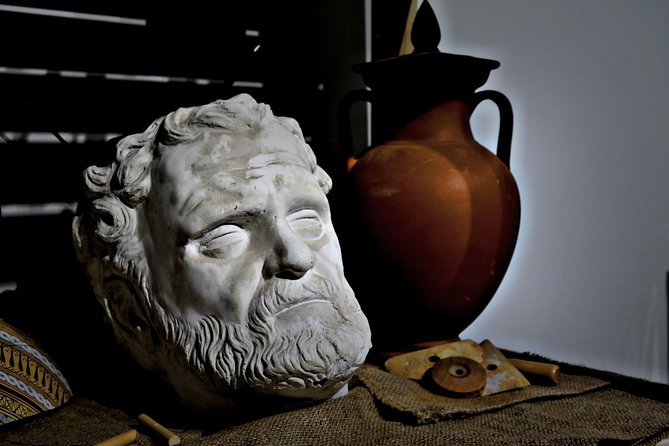
Ancient room, mini-museum, and tool demos
Before clay time, you tour the space and handle sculpting tools while you learn how they work.
Technique talk from lost-wax casting to stone carving
You’ll see videos and explanations that connect modern sculpting steps with older methods.
Cretan clay souvenir you can take home
You finish an artwork designed to travel, so your Athens memory becomes something physical.
In This Review
- Golden Ratio Meets Cretan Clay in Athens
- Getting There: Doiranis 39 and the Easiest Way to Arrive
- The Ancient Room Tour, the Mini-Museum, and the Assassin’s Creed Odyssey Props
- Sculpting Tools, Technique Videos, and What You’ll Learn Before You Make
- Making Your Hermes Face with Air-Dry Clay (Cretan Clay Session)
- Lost-Wax Casting, Stone Carving, and Why Technique Talk Still Matters
- Wine Stories, Family Sculptor Lineage, and Studio Atmosphere
- Duration and Pacing: What 2 Hours Feels Like in Practice
- The Value Case: Why $58.05 Can Make Sense
- Who Should Book This Sculpture Workshop in Athens
- Should You Book Ancient Symposium’s Hermes Clay Workshop?
- FAQ
- What will I sculpt in this Athens workshop?
- Do I need previous experience in sculpting?
- What materials are used?
- Can I take my sculpture home?
- How long is the experience?
- Is it a private activity?
- Where do we meet for the workshop?
- Do I get a mobile ticket?
- What topics and techniques are covered?
- Can I cancel for a refund?
Golden Ratio Meets Cretan Clay in Athens
Greece has a special obsession with order, proportion, and making ideas feel physical. That shows up here in a clay workshop that treats sculpting like both art and craft, not just a fun pastime. You start with context, tools, and stories, then you get your hands on the process.
I like the balance of this experience. You’re not dropped into a craft session with zero background, and you’re not stuck in a lecture either. It moves from an ancient-themed room and museum-style items into modern workshop techniques.
Also, Athens is full of big, famous sights. This class is different. It puts you in a working studio with the same kind of problem-solving that goes into detailed props and sculptural design.
Not settled on one yet? These are the other Athens trips that made our review list.
- All Day Cruise -3 Islands to Agistri,Moni, Aegina with lunch and drinks included
★ 5.0 · 4,958 reviews




Getting There: Doiranis 39 and the Easiest Way to Arrive
The meeting point is Doiranis 39, Athina 176 72, Greece. The activity ends back at the same spot, so you’re not dealing with a long end-of-tour shuffle.
It’s near public transportation, which helps if you’re bouncing around Athens by metro and bus. If you’re staying in a different neighborhood, plan for a taxi or a careful route rather than assuming it’s a quick walk. I’d rather you arrive calm than sweaty, because the first part includes a guided tour before you start working with clay.
You’ll have a mobile ticket, and the experience runs daily during the stated window, with opening hours listed as 9:00 AM to 10:00 PM. That wide window can make it easier to fit into a packed sightseeing day.
The Ancient Room Tour, the Mini-Museum, and the Assassin’s Creed Odyssey Props
The experience begins with an introduction that feels like walking into a working gallery. You’ll be shown an ancient room where the workshop’s cultural angle comes first. Expect explanations about art, and also a focus on wine in ancient Greece. The studio keeps this theme grounded and practical, not overly academic.
Then you move into the space where you can see sculptural items and workshop pieces up close. The highlight here for gamers is the Assassin’s Creed Odyssey connection. You’ll see game-related weapons and other studio items, and you’ll learn how this kind of prop-making mindset overlaps with sculpture.
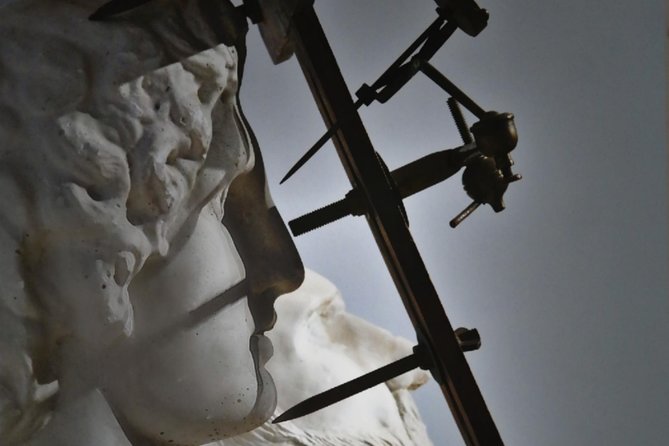
One of the best parts of this pre-clay phase is that you’re not just looking. You’ll touch a selection of sculpting tools and learn how they’re used. That turns the tour from “look and listen” into “understand and connect,” which makes the later hands-on work feel way easier.
If you’re into art history, you’ll appreciate the way ancient techniques are brought into the room. If you’re into making things, you’ll appreciate that the tools are real and the explanations are about function.
Sculpting Tools, Technique Videos, and What You’ll Learn Before You Make
After the tour, you shift from viewing to experimenting. You’ll get guided instruction on how to use selected sculpting tools, and you’ll watch videos on ancient sculpting techniques. The workshop also references techniques like lost-wax casting and methods related to precious stone carving.
Even if you don’t remember every technique name, you’ll still benefit. Here’s why: you start to recognize what sculptors actually do. They shape, refine, and correct. Tools are not magic, but they are precise. Once you see that logic, you stop worrying about whether you’re talented and start focusing on steps.
This is the part where the teaching style really matters. The class is designed so you can work at your own speed, with the tutor helping you correct details when needed. That showed up again and again in the experience feedback, with emphasis on patient guidance and pacing that does not rush you.
Making Your Hermes Face with Air-Dry Clay (Cretan Clay Session)
Now for the fun part: the sculpture you actually create.
The workshop centers on modeling the face of the God Hermes using air-dry clay. You’ll learn while you work, and you won’t be left alone with a blank table and a vague idea. The instructor will guide you through shaping the face and adding the kinds of details that make a recognizable sculptural result.
You should expect a mix of independent making and hands-on help. You’ll model your piece, then your tutor helps you with finishing touches, especially around face details. That matters because clay can be forgiving while you’re roughing out shapes, but it becomes more challenging when you move into smaller definition.
Also, the workshop describes the clay as Cretan clay, and the made-by-hand souvenir concept stays consistent: you create something personal, then you take it home. You’re not just learning techniques for the sake of learning. You end with an object you can display.
If you’re wondering how “creative” this is, it’s creative in a structured way. You’re not asked to sculpt from total imagination. You’re making something with a clear subject and a guided approach, so the odds are better that you’ll like what you produce.
Lost-Wax Casting, Stone Carving, and Why Technique Talk Still Matters
It’s easy to think technique videos are filler. Here, they aren’t. The teaching connects what you’re doing with how sculptors historically solved the same problem, turning a face and details into a physical object.
When you hear about lost-wax casting, you’re learning how sculptors think about transferring shape and preserving fine forms. When you hear about stone carving, you get a sense of how different materials demand different approaches. Your clay session is not casting or stone carving in the same way, but you still gain a big mental upgrade: sculpting is always about material behavior.
This technique context is also what makes the studio feel more meaningful than a generic “paint and take home” workshop. You’ll walk away with a clearer understanding of sculpture as craft, not just an art output.
And because the class includes both technique talk and real tool handling, you can connect the dots in your head. That connection is what turns a fun activity into a trip memory that sticks.
- Athens: Acropolis & up to 5 Archaeological Sites Combo Pass★ 4.4 · 12,619 reviews
- Athens: Acropolis, Parthenon & Acropolis Museum Guided Tour★ 4.8 · 9,316 reviews
- Athens: Cape Sounion & Poseidon Temple Sunset Half-Day Trip★ 4.8 · 8,241 reviews
- Athens: Acropolis and Parthenon Guided Walking Tour★ 4.6 · 5,882 reviews
Wine Stories, Family Sculptor Lineage, and Studio Atmosphere
There’s also a human side to the place. You’ll hear about the art and the maker culture in the studio, including the fact that it involves multiple generations of sculptors. That family lineage comes through when you’re shown the gallery and explained the studio’s workshop approach.
The wine element is part of the tour flow too. You’ll talk about wine in ancient Greece, and there are mentions that the instructor is connected to making wine. Even if you don’t focus on wine, these stories add texture, the kind of context that makes an art workshop feel like a place, not a stop on a checklist.
The atmosphere matters because you’re going to be hands-on. You’ll likely want to feel comfortable asking questions or requesting help. This studio’s setup, and the way the tutor supports your pace, helps you stay relaxed.
The end result is that the experience feels like a cultural visit plus a craft session, tied together by sculpture.
Duration and Pacing: What 2 Hours Feels Like in Practice
This is an approximate 2-hour experience. In that time, you’ll do three main things: tour and intro, tools and technique explanation, and then the actual making of your Hermes face.
That pacing is a sweet spot. Long workshops can feel stressful if you’re touring all day. Short ones can feel too rushed. Here, you get enough time for guidance and correction, without losing track of what you’re doing.
One more practical note: since the class starts with a tour and a set-up phase, don’t plan to arrive five minutes late and sprint in. Give yourself a little buffer so you can listen, touch tools, and get oriented. Your actual sculpting will go smoother if your brain is settled before the clay stage begins.
The Value Case: Why $58.05 Can Make Sense
At $58.05 per person, this isn’t the cheapest thing you can do in Athens. But it’s also not priced like a big tourist show. You’re paying for a private-group experience, an instructor-led hands-on session, and a guided tour that mixes cultural context with tool-based learning.
The biggest value driver is what you leave with: your own artwork. Museums are great, but you can’t pack most museum experiences in your suitcase. Here, you can. And because it’s made with your own hands, it tends to feel more personal than a generic souvenir.
The second value driver is the teaching approach. Feedback emphasizes patient instruction and pacing, which lowers the anxiety of “I’m not artistic.” You’re not expected to be a sculptor when you arrive. You’re expected to follow steps, ask questions, and work with support.
If you’re an art person, this is a hands-on lesson. If you’re a gamer, it’s a smart way to connect a pop-culture interest to real-world workshop skill. Either way, you’re getting more than a photo opportunity.
Who Should Book This Sculpture Workshop in Athens
This workshop is a great fit if you want an authentic studio experience where you actually make something. I’d especially recommend it to:
- Beginners who want structure and reassurance
- Couples who want a shared activity that feels memorable
- People who like craftsmanship and process, not just end results
- Gamers who love Assassin’s Creed Odyssey and want to understand how prop-making connects to sculpture
- Anyone who wants a break from major landmarks, with something calmer and more hands-on
If you’re only interested in seeing famous ancient statues, and you want a lecture-only format, this may not match your expectations. This class is about making, tools, and finishing an artwork you can take home.
Should You Book Ancient Symposium’s Hermes Clay Workshop?
If you’re on the fence, book it if any part of you wants to get your hands dirty for a couple hours and leave with a real keepsake. The combination of an ancient-themed studio tour, real sculpting tools, and patient instruction makes it easier than most creative classes.
I’d say it’s especially worth it when you want a break from the standard Athens rhythm. You’ll get guided context, then you’ll do the work. And you’ll walk away with something you made, not just something you looked at.
Just go in expecting a small sculptural project, not a grand masterwork. When you accept that, you’ll enjoy the process much more. And if Hermes is your mood, you’ll likely end the session smiling at what you created.
FAQ
What will I sculpt in this Athens workshop?
You’ll make the face of the God Hermes with air-dry clay, guided by your instructor.
Do I need previous experience in sculpting?
No. Most travelers can participate, and the class is designed to be approachable with support during the process.
What materials are used?
You work with Cretan clay and air-dry clay, using selected sculpting tools provided in the studio.
Can I take my sculpture home?
Yes. You’ll bring your artwork home as a souvenir.
How long is the experience?
It’s about 2 hours.
Is it a private activity?
Yes. It’s private, and only your group participates.
Where do we meet for the workshop?
You meet at Doiranis 39, Athina 176 72, Greece.
Do I get a mobile ticket?
Yes. The tour uses a mobile ticket.
What topics and techniques are covered?
You’ll learn tool use and watch videos on ancient sculpting techniques, including references to lost-wax casting and precious stone carving.
Can I cancel for a refund?
Yes. You can cancel free of charge up to 24 hours in advance for a full refund. Within 24 hours, the amount paid is not refunded.
Every Other Athens Write-Up
- All Day Cruise -3 Islands to Agistri,Moni, Aegina with lunch and drinks included
★ 5.0 · 4,958 reviews