
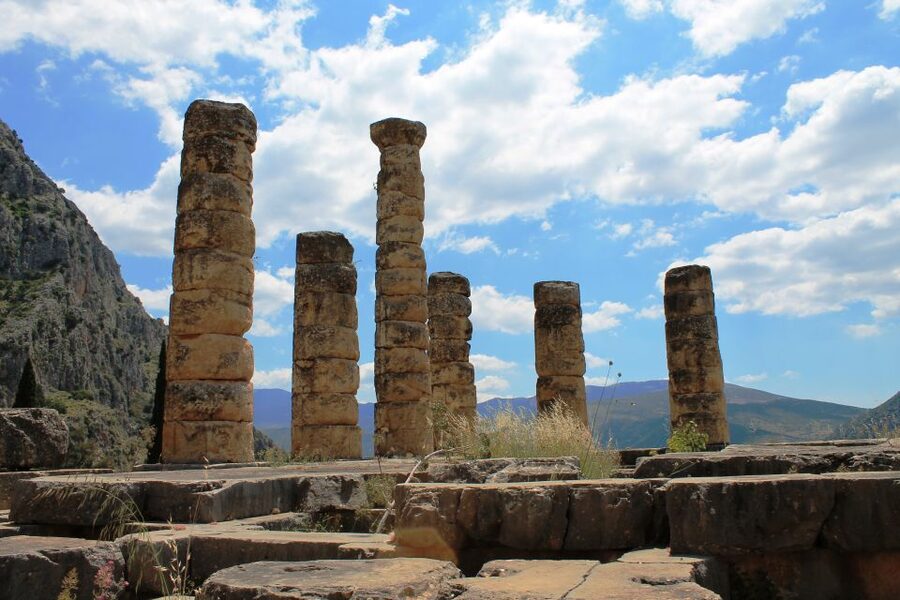
Review · METEORA MONASTERY TOURS
From Athens: 4-Days Classical Tour with Meteora
Ancient Greece in four fast, scenic days. This tour strings together Epidaurus, Mycenae, Olympia, Delphi, and Meteora into one sensible loop, with air-conditioned coach comfort and guided context that keeps you from getting lost in names and dates.
I especially like how you get both the headline sites and the museums, especially in Olympia and Delphi, so the story clicks instead of just feeling like a bucket list of ruins. And the “big wow” moments are real, like standing inside Epidaurus’ famed theatre.
The trade-off is that you spend a lot of hours on the road, and the included dinners can be more buffet-style than deeply local. If you are picky about food, plan to manage lunches and snacks on your own some days.
In This Review
- Key highlights to look for
- Why this route feels efficient, not exhausting
- Leaving Athens: Corinth Canal viewpoints and Epidaurus theatre
- Mycenae and Agamemnon: where myth meets dirt (and details matter)
- Olympia beyond the stadium: Zeus, torch history, and museum context
- Delphi: the oracle site and museum that make it make sense
- Meteora on Day 4: monasteries above rock towers and Byzantine art
- Price and value: what $711 includes, and what to budget
- Guides and flow: what makes the days feel smooth
- Dinners, meals, and the food question
- Who this tour suits best
- Should you book this 4-day Classical Tour with Meteora?
- FAQ
- How long is the tour?
- What areas of Greece does the tour cover?
- What is the starting point in Athens?
- What meals are included?
- Are entrance fees included?
- What about accommodation taxes at the hotel?
- What transport is provided?
- Will there be a guide?
- Is free Wi-Fi included?
- What is the cancellation policy?
Key highlights to look for
- Epidaurus theatre’s famed acoustics, where the architecture actually does the talking
- Mycenae and the Tomb of Agamemnon, myth and archaeology in the same breath
- Olympia that goes beyond ruins, including the sanctuary area, stadium, and the torch-lit reference point
- Delphi as more than an oracle stop, with both the site and museum time
- Meteora monasteries above huge rock towers, paired with Byzantine art you can actually see
- Coach comfort plus free Wi-Fi on board, helpful for a route that is heavy on driving
More ways to see the Meteora rocks and monasteries

Why this route feels efficient, not exhausting
This is a classic Greece circuit, but the pacing is what makes it work. You are not bouncing randomly around the map. You move through the Peloponnese, then up to Delphi, and finally out to Meteora before heading back to Athens, with overnight stops that cut down on those brutal all-day drives.
The tour also gives you structured breaks between the major sites. You get short photo stops and longer guided visits, which matters because the “famous Greek ruins” feeling can fade fast when you are rushed.
One more small thing I appreciate: the tour is built around museums as well as monuments. That is a huge difference between looking at stone and understanding why it matters.
Leaving Athens: Corinth Canal viewpoints and Epidaurus theatre
Day 1 starts with coastal-road scenery and a short stop by the Corinth Canal, where the cut between land masses makes the geography feel immediate. It is quick, but it sets the tone, you are moving through Greece, not just hopping from ruin to ruin.
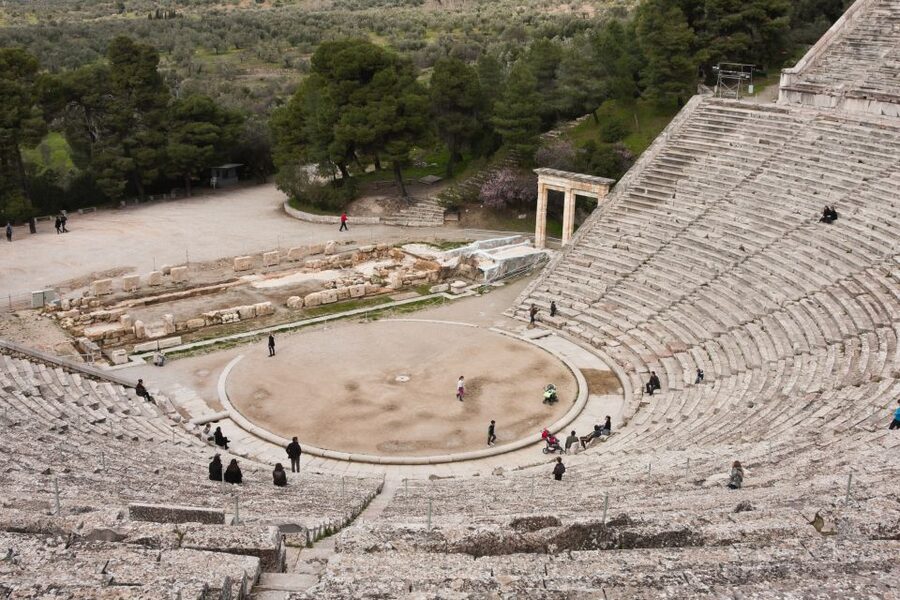
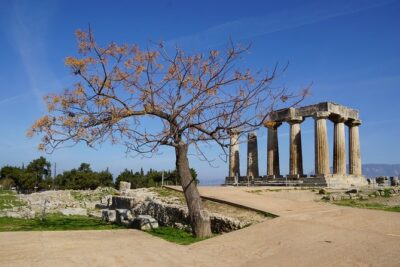
Then you head to Epidaurus for the theatre visit. This is the kind of place where you can feel the planners behind the design. The Epidaurus Theatre is famous for its remarkable acoustics, and even if you do not do a formal “sound test,” you still get the sense that people built it to be heard in a big open space.
Practical tip: bring layers. The theatre areas can be breezy, and you will probably be standing in the sun for stretches.
After Epidaurus, you have a short break in Nafplio for photos before continuing toward Mycenae. Nafplio’s role here is mostly visual, but it is a good palate cleanser after ancient stone.
Mycenae and Agamemnon: where myth meets dirt (and details matter)
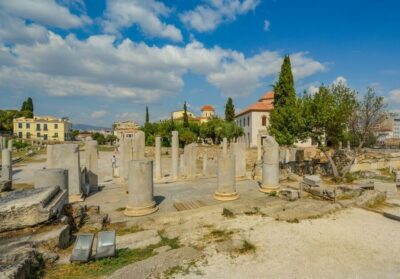
In Mycenae, you get the archaeological site plus the Tomb of Agamemnon area. This is where the legendary side of Greece overlaps with the physical evidence. Even if you only know the broad strokes of the Trojan-era stories, the site layout helps you understand why this place mattered so much.
The value here is not just the chance to say you saw Mycenae. It is that you see how major settlements and power centers sat in the landscape, and how later Greeks and Romans kept weaving these stories into their own identities.
Then you continue through central Peloponnese, passing towns like Tripolis and Megalopolis on the way to Olympia. That drive sounds boring on paper, but it helps you experience the tour as a real journey through the region, not a sequence of isolated photo stops.
You end Day 1 with an overnight in Olympia, plus dinner.
Olympia beyond the stadium: Zeus, torch history, and museum context
On Day 2, Olympia is one of the strongest parts of the whole trip because it is layered. You start at the archaeological site, including the Sanctuary of Olympian Zeus, and then move to the ancient stadium area. This is the core of the Olympic story, long before “the Olympics” became a global TV package.
One highlight that makes this more than a walk through ruins is the time given to the spot connected with the torch of the modern Olympic Games. It is a clever link, it shows how symbols travel through time.
You also get time at the Archaeological Museum, which is where your brain gets its bearings. Museums explain objects and timelines that are otherwise hard to read from the ground. If you have ever walked through a site and thought, I’m looking at stuff, but what is the big picture, this museum time helps fix that.
After Olympia, the tour continues through the plains until you reach the Rion to Antirion bridge, crossing the Corinthian Bay. You get the visual impact of the span and the sense of scale that a map never really gives you.
Then you pass by towns including Nafpactos (Lepanto) and Itea as you travel toward Delphi. The timing usually leaves you ready for the next big stop, not mentally fried.
You arrive in Delphi for dinner and overnight.
Delphi: the oracle site and museum that make it make sense
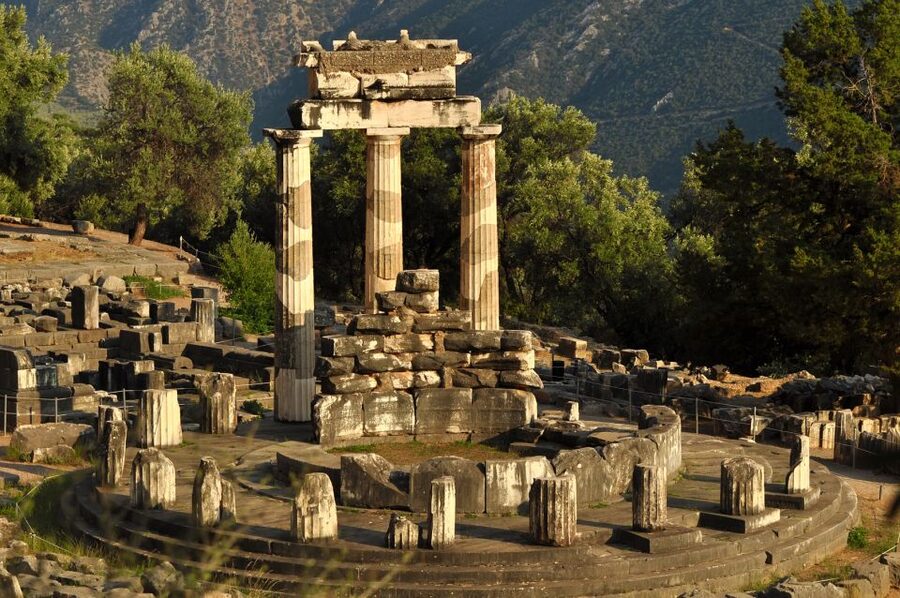
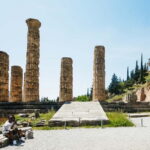
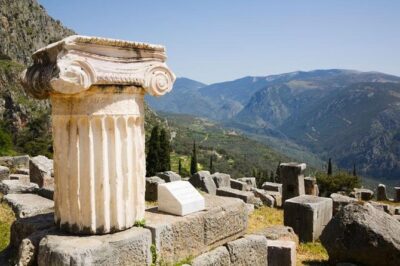
Day 3 is built around Delphi in a thoughtful way: you visit the archaeological site and then the Museum of Delphi. Delphi is famous as the oracle of the ancient world, but without context it can feel like a name you already know from school.
Here, the site visit helps you understand why people believed divine guidance could come from this specific mountain setting. You see the space and the remains that supported those sacred functions.
The museum time is what turns it from legend into understanding. It helps you connect the religious ideas with the objects and artistic styles preserved there. That is the kind of knowledge you actually carry with you when you look at more Greek sites later.
After Delphi, you head to Kalambaka, the town at the foot of the Meteora rock formations. The dinners and overnight here keep you positioned perfectly for an early look at Meteora the next day.
- Athens: Acropolis & up to 5 Archaeological Sites Combo Pass★ 4.4 · 12,619 reviews
- Athens: Acropolis, Parthenon & Acropolis Museum Guided Tour★ 4.8 · 9,316 reviews
- Athens: Cape Sounion & Poseidon Temple Sunset Half-Day Trip★ 4.8 · 8,241 reviews
- Athens: Acropolis and Parthenon Guided Walking Tour★ 4.6 · 5,882 reviews
Meteora on Day 4: monasteries above rock towers and Byzantine art
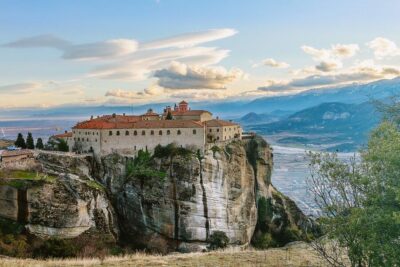
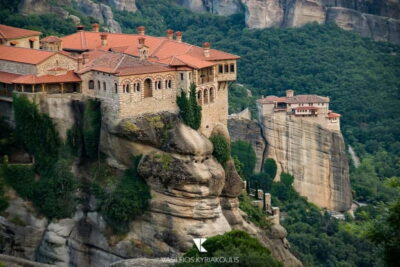
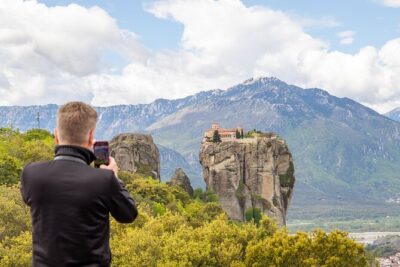
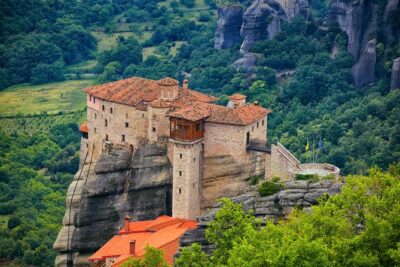
Meteora is the emotional high point for many people, and it fits the tour because you reach it with enough time to really enjoy it. The monasteries sit on huge rock formations, and the setting feels almost impossible once you are there in person.
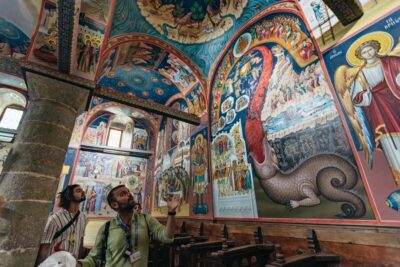
The tour visit focuses on Meteora’s striking scenery and the monasteries themselves. You also get the chance to see Byzantine art in those monastery spaces, which adds depth beyond the views. It is not just a photo platform. It is a place where faith, art, and geography collide.
Practical tip: wear shoes with good grip. Rocky terrain and stone steps are not the day to test brand-new sneakers.
Also, pack for temperature swings. Meteora can feel cooler and windier than you expect, especially compared to coastal areas you passed earlier.
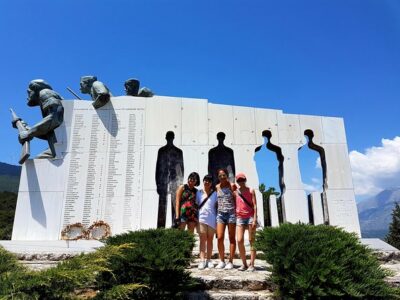
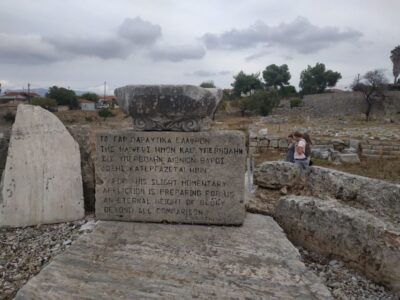
Once you finish Meteora, you return toward Athens with stops including Trikala and Lamia, plus a short stop at Thermopylae. You get a look across the road to Leonida’s Monument. It is brief, but it is a meaningful capstone to a trip that already covered so much of Greece’s myth and classical era identity.
You end back in Athens early in the evening.
Price and value: what $711 includes, and what to budget
At $711 per person, you are paying for a lot of logistics handled for you. You get:
- Transport by luxury air-conditioned coach
- A professional guide
- Overnight accommodation for three nights
- Breakfast and dinner as per the route
- Entrance fees
- Free Wi-Fi on the bus
That inclusion list matters. Entrance fees across multiple major sites add up, and accommodation is often the most expensive line item in multi-day tours. Here, you are also buying convenience. You do not have to plan driving between the Peloponnese, Delphi, and Meteora, which is a big deal if you are trying to enjoy the trip instead of managing it.
Two costs to keep in mind:
- Lunch and drinks are not included, so you’ll want a daily strategy for buying something simple and local.
- There is an overnight accommodation tax paid at check-out. The amount depends on hotel star rating, from €1.50 per night per room for 3-star up to €4.00 per night per room for 5-star. (You should expect to pay this at the hotel, not in advance.)
One more value note based on what has worked well for others: there can be a meaningful difference between standard and upgraded hotel options. If sleep and room quality are important to you, it can be worth looking closely at the upgrade choices before you book.
Guides and flow: what makes the days feel smooth
A tour like this lives or dies on guiding. When it is done well, you feel like every stop builds on the last one. This route has strong potential for that kind of coherence.
Guides named Georgia Dova, Anthony, and Evie have been praised for being informative and organized, and you also want a steady driver. In particular, John and Socrates have come up as drivers who keep the ride smooth on a route that involves real distance.
Even with the best planning, you still have travel time. So I like that the tour gives you a rhythm: a guided stop, then a drive with scenery, then another guided stop. That keeps you from feeling stuck in the coach the entire time.
Dinners, meals, and the food question
Meals included are breakfast and dinner. Lunch and drinks are on you. That is normal for Greek tours, but it does create a decision for you: how much do you care about food each day?
One caution: included dinners can be described as safer buffet-style options rather than fully off-the-beaten-path, deeply traditional meals. If you want more authentic lunches, treat lunch as your freedom time. Pick something quick near your stop, or carry a plan for a longer lunch when you have the chance.
The upside is that you likely will not spend time hunting for dinner after big touring days. You sit, eat, and get ready for the next morning.
Who this tour suits best
This is a great fit if you want:
- High-value classics in a short time
- A guide to explain why sites matter
- A comfortable way to handle lots of driving without stress
It is also a smart choice if you are traveling solo or as a couple and want the itinerary to hold together. You can enjoy the stops without coordinating schedules, and you get a clear day-by-day structure.
Who might want a different style of trip:
- If you hate coach travel and prefer slower, self-paced days, the driving could feel like a lot.
- If you are very picky about food beyond buffet-style dinners, you will probably want to budget for lunches and optional snacks.
Should you book this 4-day Classical Tour with Meteora?
Yes, if you want one efficient route that ties together Epidaurus, Mycenae, Olympia, Delphi, and Meteora with guide-led context and included entrances. The price is easier to justify because accommodation and entry fees are part of what you are paying for, not added after the fact.
Book with confidence if you are comfortable spending a decent chunk of time on the road. Bring good walking shoes, plan for lunches on your own, and keep your expectations realistic about dinners.
If you want a fast, structured introduction to the Greek heartland, this is the kind of itinerary that can turn first-time Greece into a memory you can actually explain.
FAQ
How long is the tour?
The tour duration is 4 days.
What areas of Greece does the tour cover?
It covers Peloponnese, including stops such as Corinth Canal, Epidaurus, Mycenae, Olympia, and areas en route, then includes Delphi, Kalambaka, Meteora, and returns to Athens.
What is the starting point in Athens?
The meeting point may vary depending on the option booked. One listed option is Zappeio, and the end returns to the meeting point.
What meals are included?
Breakfast and dinner are included as per the itinerary. Lunch and drinks are not included.
Are entrance fees included?
Yes, entrance fees are included.
What about accommodation taxes at the hotel?
There is an accommodation tax due at check-out. It depends on hotel star level, from €1.50 per overnight per room for 3-star up to €4.00 per overnight per room for 5-star.
What transport is provided?
You travel by luxury air-conditioned coach.
Will there be a guide?
Yes. You get a live tour guide, and languages listed are French, English, and Italian.
Is free Wi-Fi included?
Yes, free Wi-Fi is provided on the bus.
What is the cancellation policy?
You can cancel up to 24 hours in advance for a full refund.
The Rest of Athens



Every Other Athens Write-Up
- All Day Cruise -3 Islands to Agistri,Moni, Aegina with lunch and drinks included
★ 5.0 · 4,958 reviews



The Meteora Rocks, More Visits

Everything else we have written up around Athens


Meteora Monastery Tours, side by side.
 ★ 4.8Thessaloniki: Full-Day Bus Trip to MeteoraFrom $583,471 reviews
 ★ 4.7Athens: Meteora Monasteries Day Trip with Caves and LunchFrom $662,964 reviews
 ★ 4.8Athens: Meteora Monasteries Day Tour with LunchFrom $652,196 reviews
 ★ 4.8Athens: Meteora Tour with Local Guide and Greek LunchFrom $631,561 reviews
 ★ 4.5Athens: Meteora Monasteries, Caves & Coastal Stopovers with LunchFrom $881,432 reviews
 ★ 4.5From Athens: Delphi and Meteora 2-Day Guided TourFrom $271825 reviews
 ★ 4.54-Day Classical Greece Tour: Epidaurus, Mycenae, Olympia, Delphi, MeteoraFrom $766732 reviews
 ★ 4.5Athens: Meteora Monasteries, Hermit Caves Tour with PickupFrom $87724 reviews
Sits on these lists