
Review · METEORA MONASTERY TOURS
Meteora: Morning Monasteries Tour with Photo Stops
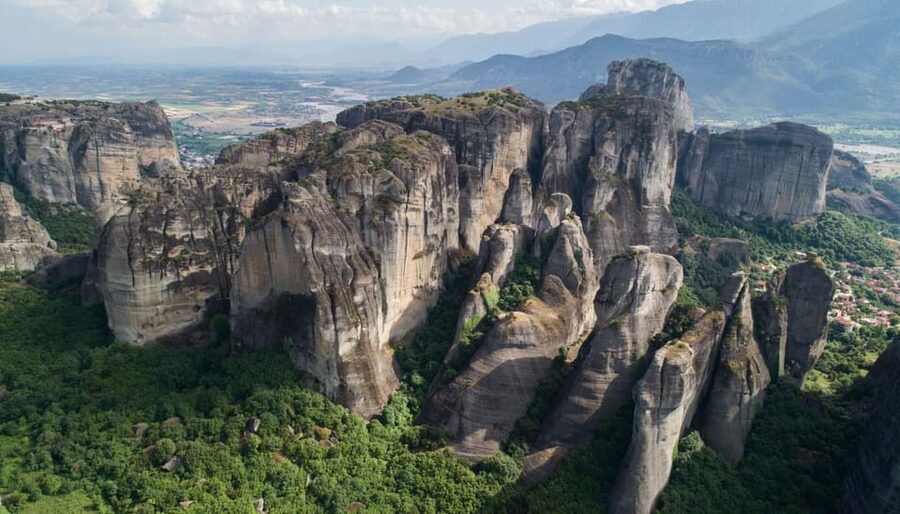
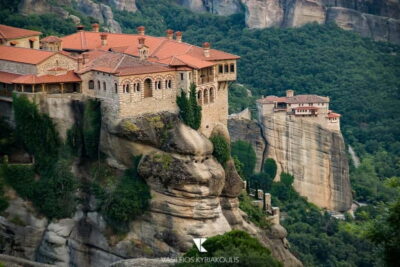
Rocks and monks, with great angles. This half-day Meteora tour balances all six monastery viewpoints and the hermit caves of the early ascetics, so you get the full story of Meteora without rushing yourself. I like that you can actually go inside up to three monasteries, not just stop outside, but the trade-off is simple: interior visits depend on opening hours and monastery entry fees are extra.
You also ride in comfort. You meet at Kalabaka Train Station, then you head out by air-conditioned minibus on a smooth route with an English-speaking local guide who brings the place to life with local legends and practical context. One more consideration: this is timed for a 4-hour morning, so you will not have long, slow hangs inside each site.
In This Review
- Why this Meteora tour hits the sweet spot
- From Kalabaka Train Station to Meteora, in a comfortable 4 hours
- How you see all six monasteries without spending your whole day
- Hermit caves and the cave of St. George the Mandilas
- Entering up to three monasteries: what to plan for
- Photo stops that actually help, not just random viewpoints
- The guides and drivers make the difference on these roads
- What you should bring (and what you can skip)
- Who this Meteora morning tour is best for
- Price and value: what 34 USD buys you, plus the realistic extras
- How crowded will it feel, and how to get the best moments
- Should you book this Meteora morning monasteries tour?
Why this Meteora tour hits the sweet spot
- All six monasteries from outside, plus scenic photo stops to help you see how the sites connect across the rock formations
- Hermit caves and St. George the Mandilas, a big step beyond the usual monastery-only route
- Enter up to three monasteries, depending on daily opening hours, so you still get real interior views
- Air-conditioned minibus from Kalabaka, with local driving that makes the roads feel manageable
- Guides who explain the frescoes and monastic roots, plus pointers for where to photograph without wasting time
More ways to see the Meteora rocks and monasteries

From Kalabaka Train Station to Meteora, in a comfortable 4 hours
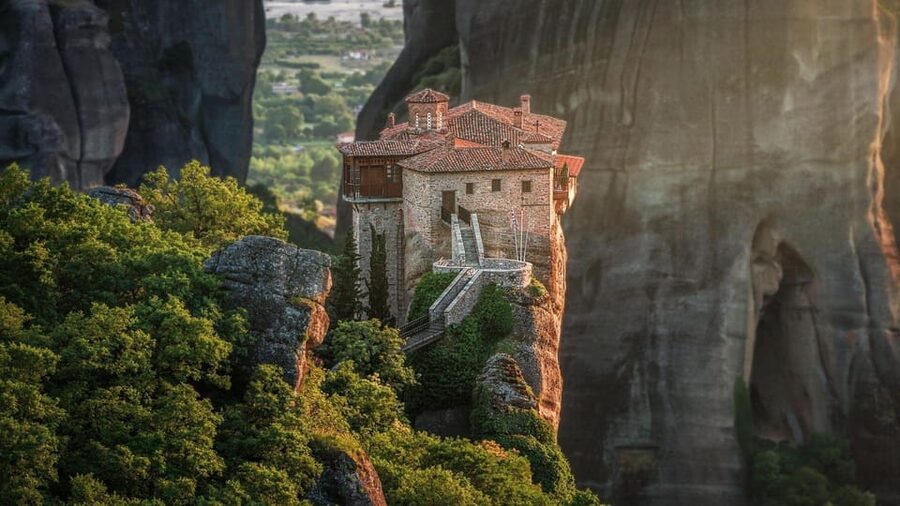
If your base is Kalabaka, this tour is a clean, low-effort way to see Meteora. You start from the Kalampaka Train Station area, then the day unfolds as a mix of drive, viewpoint stops, and short walks that fit a morning schedule.
The transportation part matters more than it sounds. Meteora is built on sheer rock outcrops, so you will spend time on winding roads. The tour uses an air-conditioned minibus, and the rides are consistently described as smooth and well kept, which helps if you want to save your energy for photos and monastery steps.
The duration is also realistic. Four hours sounds tight until you remember what Meteora demands: moving between viewpoints, fitting in short walks, and still having time for up to three interior visits. If you are the type who likes to see a lot but still wants meaningful time at each stop, this is a strong match.
How you see all six monasteries without spending your whole day
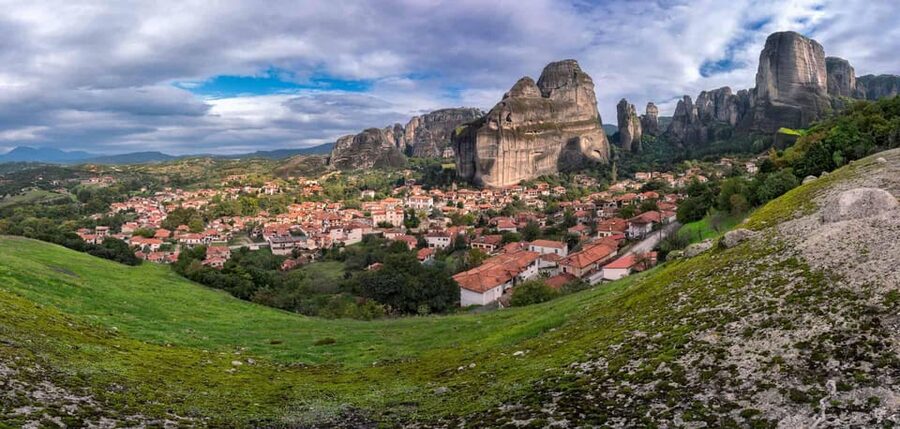
Here is the key idea behind the value: you get outside views of all six monasteries from different vantage points. You are not just checking names off a list. You learn how the monasteries sit in relation to one another, and why the rock-top locations mattered for isolation and defense.
The tour then layers in something extra for people who want more than scenery. You can typically enter up to three monasteries inside, depending on their opening hours on your specific date. So you get the best of both worlds: a wider view of Meteora’s monastic map, and real interior time where it counts.
What to watch for: interior visits are not guaranteed for every monastery every day. That is not a trick, it is just how active religious sites work. If one of the monasteries you want most is closed at the time you arrive, you still keep moving through the route and you still see the overall set from outside.
For me, that structure is exactly why the price makes sense. You are paying for guided logistics plus multiple viewpoints that are hard to coordinate on your own, especially if you are trying to avoid missing one or two monasteries due to timing.
Hermit caves and the cave of St. George the Mandilas
The hermit stop changes the feel of the tour. Many Meteora days make monasteries the main show and everything else feels like a quick add-on. Here, the tour explicitly includes the hermit caves, where the earliest ascetics lived when they first arrived in the region.
This matters because Meteora is not only buildings. The monastic story begins with people choosing solitude in difficult places, then building a religious community model on top of those early experiments. When you pause at the caves, you get a better sense of why the monasteries developed the way they did.
You also visit the cave of St. George the Mandilas. Even if you do not know the details beforehand, this stop gives context for the names and traditions you will hear later. It makes the later monastery interiors feel less like tourist stops and more like chapters in the same long story.
One practical note: caves and stone paths can be uneven. Wear shoes you trust, and take your time on the walk sections even if the group keeps a quick pace.
Entering up to three monasteries: what to plan for
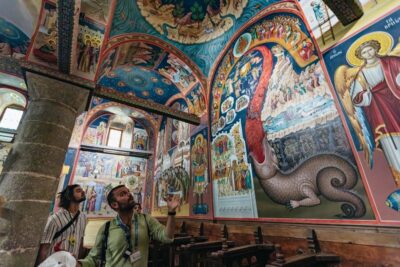
Monastery interiors are where you get the emotional payoff. Frescoes, stonework, and the way the spaces are arranged help you understand how faith is expressed in a place that is also hard as a fortress.
But you need to plan for three realities.
First, entry fees are not included. The tour notes that monastery entrance fees are typically around 3 EUR per person per monastery. If you enter three, budget roughly in that range for each interior you do, on top of the tour price.
Second, what you can enter depends on opening hours. The tour handles this by building in the outside views of all six, then giving you the chance to enter up to three interiors if timings allow. So you are not left staring at gates all morning.
Third, dress rules apply. Shoulders and knees need to be covered for monastery visits. If you show up with bare shoulders or short hemlines, you may have to adjust on the spot, and that is a hassle you can avoid. Short skirts are not allowed, and flash photography is not permitted. Modest, comfortable layers are the easiest solution.
If you want great photos, aim to follow the guide’s suggestions on timing and angles. Monasteries fill up, and the best moments can be a matter of minutes.
Photo stops that actually help, not just random viewpoints
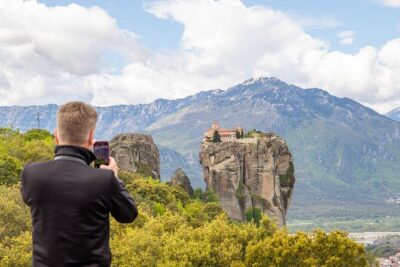
Meteora is famous for pictures, but a tour earns its keep when the photo stops are placed with purpose. This one includes photostops at scenic points and builds in time where the views are worth it.
The big win is that you are not only shooting one angle. Because the tour is designed around multiple vantage points, you start to see how each monastery looks from different directions, and how the rock formations frame the religious buildings. This makes your photos feel more complete, almost like a set.
I also like that the route is designed for storytelling, not just traffic movement. You get stops where the guide can explain the significance of what you are seeing, then you get the camera time to capture it.
If you care about photography, bring your camera setup ready. You will be moving in and out of bright light, so a quick lens wipe, stable support, and a watch on your battery help. And remember, flash photography is not allowed in the monasteries.
The guides and drivers make the difference on these roads
Meteora roads are not hard because they are technical. They are hard because they are twisty and because you bounce between dramatic viewpoints. That is why transport comfort is more than convenience.
This tour uses an air-conditioned minibus, and the pickup details include black vehicles such as a Mercedes Sprinter or a Peugeot Boxer. In plain terms, you are not squeezed into something uncomfortable while you wait to reach each viewpoint.
The guides are the other half of the experience. English-speaking local tour leaders guide you through the myths, legends, and monastic roots that connect the sites. Several guides get named in customer feedback, including Panos and Joana, plus Joanna and Areti, and they are described as friendly, humorous, and very helpful with picture locations. On the driving side, Thanos and other drivers get praised for safe road knowledge and smooth rides.
One extra detail that matters for families and small groups: the tour can be flexible with where you prioritize if someone has a specific monastery interest. If you are traveling with kids or planning around a personal must-see site, that kind of flexibility can turn a good tour into a great one.
What you should bring (and what you can skip)
You do not need a backpack full of gear, but you should show up ready for a monastery morning.
Bring:
- Comfortable shoes with grip, because there are walks between viewpoints and around monastery areas
- A camera, or at least a phone with enough storage
- Water, since you will be out for several hours in open air with repeated stops
Skip or plan carefully:
- Anything that violates modest dress expectations. Plan clothing with shoulders covered and knees covered
- Anything that assumes you can use flash inside. Flash photography is not allowed
A small tip I recommend: pack one layer even if the morning is warm. Monastery areas can feel cooler due to rock shade, and having a light layer helps you enjoy the stops without rushing.
Who this Meteora morning tour is best for
This tour is best for people who want structure. If you are short on time, and you still want to see a lot of Meteora, the mix of outside views of all six plus interior access to up to three is a smart way to do it.
It is also a good fit for first-timers. You get context quickly, and you do not have to figure out the complex logistics of which monastery to hit first, or how to plan for opening hours.
Families can also do well. One review mentions a family group with ages ranging from 6 to 46, and highlights guide flexibility and comfort. If your group includes kids, expect shorter walk segments and a paced, guided flow rather than a long hiking day.
Where it does not fit:
- People with mobility impairments may struggle. The tour explicitly states it is not suitable for mobility impairments or wheelchair users.
- If you need fully accessible routes and long seated time, you may find this format frustrating.
Price and value: what 34 USD buys you, plus the realistic extras
At around $34 per person, this tour is priced for a meaningful morning. You get a guided experience in English, air-conditioned transport, hermit cave time, outside views of all six monasteries, and the chance to enter up to three monasteries depending on hours.
The main extra cost is entrance fees. The tour notes that monastery entrance fees are typically around 3 EUR per person per monastery. So your total cost depends on how many interiors you can enter on your date. If you enter three, you can estimate roughly 9 EUR in entrance fees, but your exact number should match what is open and what the route allows for that day.
Food and drinks are not included. That is not a problem if you plan ahead. I suggest you carry a snack if you get hungry, or plan a quick café stop after you finish, since this is designed as a morning block.
So, is it worth it? For most visitors, yes, because you are paying for more than a bus ride. You are paying for viewpoint timing, guided context, and a route that shows all six monasteries without needing to coordinate every detail on your own.
How crowded will it feel, and how to get the best moments
Meteora can get busy, especially around popular monastery entrances. This tour helps because you are not stuck at only one location for the whole time. You will move through different points and that naturally spreads your experience.
To get the best moments, lean into the guide’s timing suggestions. They are there to point you toward spots for photos and to keep the group moving smoothly between stops. Even when the sites feel crowded, a slightly earlier angle or a different viewpoint can completely change your photos.
Also, take your time with the interior rules. Modest dress and no-flash photography are not just formalities. They help you stay respectful in places that are still religious. Slow down inside, look at fresco details, and treat the monasteries like living spaces, not just ruins on a route.
Should you book this Meteora morning monasteries tour?
Book it if you want a half-day plan that covers the essentials and makes Meteora make sense fast. You get a smart mix of all six monasteries from outside, interior time at up to three, plus hermit caves that explain where the monastic story started. The guides and transport are repeatedly praised for comfort and helpfulness, and the 4-hour format fits well if you are exploring Thessaly on a tight schedule.
Skip it or think twice if you need full wheelchair access or have mobility limits you cannot work around with short walks. Also consider whether you are okay paying extra monastery entrance fees and dressing modestly.
If you want Meteora in one efficient morning, with enough photo stops to feel like you actually saw something, this is a solid choice.
Every Other Kalambaka Write-Up
Monasteries and Byzantine Churches
The Meteora Rocks, More Visits
Everything else we have written up around Kalambaka

Meteora Monastery Tours, side by side.
 ★ 4.8Thessaloniki: Full-Day Bus Trip to MeteoraFrom $583,471 reviews
 ★ 4.7Athens: Meteora Monasteries Day Trip with Caves and LunchFrom $662,964 reviews
 ★ 4.8Athens: Meteora Monasteries Day Tour with LunchFrom $652,196 reviews
 ★ 4.8Athens: Meteora Tour with Local Guide and Greek LunchFrom $631,561 reviews
 ★ 4.5Athens: Meteora Monasteries, Caves & Coastal Stopovers with LunchFrom $881,432 reviews
 ★ 4.5From Athens: Delphi and Meteora 2-Day Guided TourFrom $271825 reviews
 ★ 4.54-Day Classical Greece Tour: Epidaurus, Mycenae, Olympia, Delphi, MeteoraFrom $766732 reviews
 ★ 4.5Athens: Meteora Monasteries, Hermit Caves Tour with PickupFrom $87724 reviews
Sits on these lists