
Review · TOURS
Mythology, Philosophy and Democracy Tour
Athens turns ideas into street-level history. This 3-hour guided walk connects mythology, philosophy, and democracy across some of Athens’ most meaningful ancient spots. You’ll hear how ancient thinkers moved from belief to reasoning fast enough to feel surprising, even on a short visit.
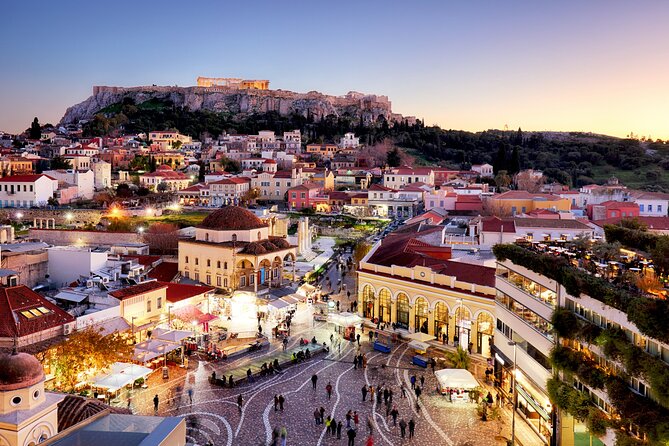
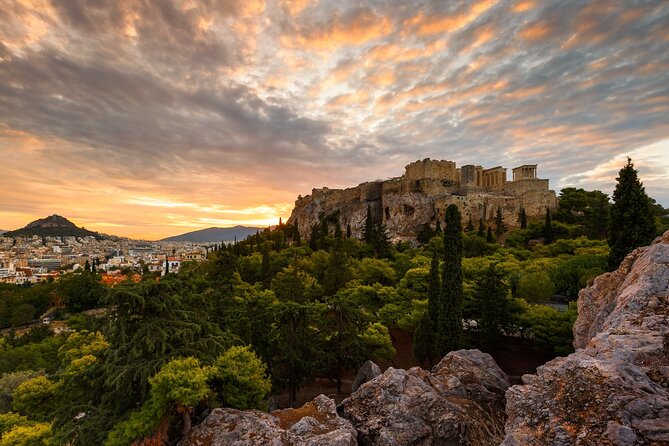
I especially like two things. First, Kerameikos, with its link to Pericles’ famous democracy-focused Epitaph, gives the tour a real political heartbeat. Second, the finish at Philopappos Hill treats your brain with a reward: wide Acropolis views that look especially good as Athens shifts into evening.
One possible drawback: you’ll be outside for most of the route and you’ll be walking between locations. If you’re sensitive to heat, plan your day smart and bring water, since Athens sun can be intense.
In This Review
- Fast Facts You Can Use Before You Go
- Why This Tour Feels Different Than Usual Athens Sightseeing
- Kerameikos: Ceramic Workshops, Athens’ Cemetery, and Pericles’ Democracy Moment
- Ancient Agora: Where Socrates, Plato, and Pericles Lived in One Place
- Monastiraki Square and Plaka: When You Need Color Between Big Ideas
- Roman Agora, Tower of the Winds, and Hadrian’s Library: From Belief to Science on Foot
- Pnyx: The First Parliament Feeling, plus Viewpoint Time
- Philopappos Hill Finish: Best Acropolis Views After the Ideas Settle
- Price and Value: What $50.69 Buys in Real Athens Time
- Who Should Book, and Who Might Want a Different Style
- Should You Book This Mythology, Philosophy and Democracy Tour?
- FAQ
- How long is the Mythology, Philosophy and Democracy Tour?
- Where does the tour start and end?
- Is the tour offered in English?
- How big is the group?
- What does it cost?
- Are there admission tickets for the stops?
- Is the tour mostly outdoors and walking?
- What happens if the weather is bad?
Fast Facts You Can Use Before You Go
- Pericles is tied to Kerameikos, not just to the Acropolis, so you get the democracy story in a cemetery setting.
- The Ancient Agora route connects big names, from Socrates and Plato to Solon and Sophocles, all in one walking framework.
- Tower of the Winds is part clock, part weather station, with an hourly sound mechanism described in the tour.
- Pnyx is treated like a living idea, often called the first parliament, and it’s a great viewpoint for late day light.
- Small group, max 12, keeps the conversation going without feeling crowded.
- Philopappos Hill ends the tour high and scenic, with the best views over Athens after your main stops.
Not settled on one yet? These are the other Athens trips that made our review list.
- All Day Cruise -3 Islands to Agistri,Moni, Aegina with lunch and drinks included
★ 5.0 · 4,958 reviews



Why This Tour Feels Different Than Usual Athens Sightseeing

A lot of Athens tours are built around monuments. This one is built around questions, and you feel the logic as you walk. You start with stories and civic life, then you trace how Greek thinkers tried to explain the world with arguments, not just tradition.
That structure matters for you because it turns “ancient facts” into a set of cause-and-effect moments you can remember. One stop points to the next, and the guide connects politics, literature, and philosophy like they’re part of one long conversation.
The guide also leans into making the ideas practical. In the feedback I saw, people kept calling out how Panos pushes for critical thinking and uses humor without losing the thread. If you like your travel with a human voice, not just audio commentary, that style is a big part of the value.
Kerameikos: Ceramic Workshops, Athens’ Cemetery, and Pericles’ Democracy Moment
Kerameikos is where the tour earns its name myth-to-philosophy energy. It’s called ceramic because there were many pottery workshops here, and later it became the cemetery of Athens for many centuries. That combination gives you a grounded feeling for how daily life and public memory overlap.
What makes this stop stand out is the Pericles connection. You’ll hear about Pericles’ Epitaph speech, given for the first casualties of the Peloponnesian War, praising the virtues of democracy and the way Athenians saw their political identity. Standing in this kind of place helps the speech land differently. It’s not just “a famous speech,” it’s civic meaning tied to real loss.
Practical note: this is a stop that works well early in your walk. You’re fresh, the setting is memorable, and it sets the tone for the rest of the route. Plan for a bit of standing and looking, since the story is anchored to the ground.
Ancient Agora: Where Socrates, Plato, and Pericles Lived in One Place
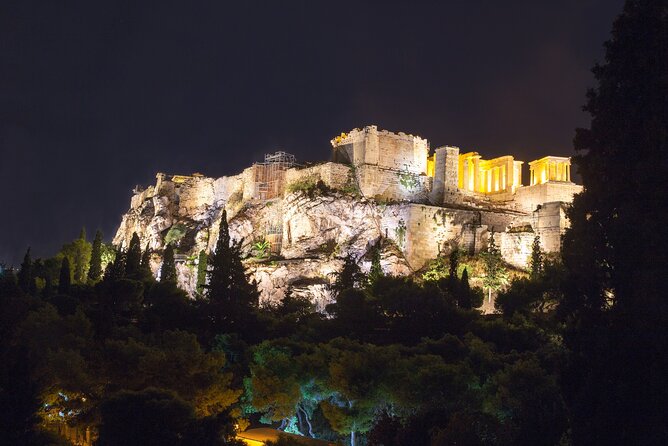
Next you move to the Ancient Agora, the heart of Athens, and you can almost picture it as the city’s open forum. This is where the tour treats debate like a physical activity. Philosophers, politicians, and writers walked these spaces and discussed matters of justice, government, and how people should live.
You’ll hear a strong lineup of names woven through the explanation: Socrates and Plato, Solon and Themistocles, Pericles and Thucydides, plus Sophocles and Aristophanes. The point is not to memorize them all. The point is to feel the variety of conversations that democracy and philosophy made possible.
A good way to think about this stop for your own experience: the Agora helps you understand how political systems and intellectual systems grow together. Democracy wasn’t just voting. It required argument, public speech, persuasion, and a willingness to question ideas. That mindset is what the tour keeps returning to.
Tip for your enjoyment: if you’re the kind of person who likes stories about how people actually argued in public, this is your sweet spot.
Monastiraki Square and Plaka: When You Need Color Between Big Ideas
After the heavyweights of civic life and thought, you get a softer, human-scale Athens moment. Monastiraki Square is where the tour takes an easy pace walk through the Flea Market area, with antique and tourist shops adding the usual street texture.
Then Plaka brings you into the charm zone. You’ll see a scenic neighborhood with small houses and narrow, picturesque streets. This part of the walk helps you cool down mentally, and honestly it helps you recharge physically too because the terrain feels more like strolling through a neighborhood than shifting between landmark after landmark.
Why this matters: if the tour only stayed on ruins and theories, it could feel academic. Adding Plaka and Monastiraki keeps the connection to Athens as a lived city. You get a sense that these ideas are not museum labels. They happened inside a city that still has street life.
If you want photos, this is also your friendliest time for it. The views are less dramatic than at the hills, but the street scenes are often what make Athens feel like Athens.
Roman Agora, Tower of the Winds, and Hadrian’s Library: From Belief to Science on Foot

One of the most satisfying parts of the tour is how it shows a shift toward explanation. It doesn’t frame progress as a straight line, but you do see the theme: how people started building systems to understand the world.
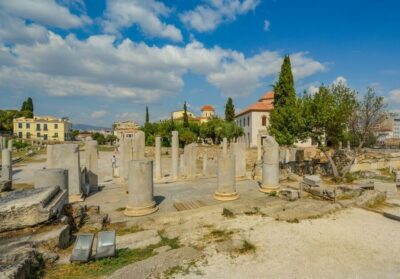
You pass by the Roman Agora, located north of the Acropolis and east of the Ancient Agora. Even with less time here, it helps you understand Athens as a layered city, not a single time period frozen in place.
Then comes Tower of the Winds, and this stop has “wait, what?” energy. The octagonal building is credited to Andronicus of Kyrristos in the 1st century BC. It served as a wind indicator and a clock. In sunny conditions, it worked as a solar clock, but on cloudy days it could use a hydraulic mechanism that produced a sound every hour. The tour frames it like the Big Ben of Athens and also like an early meteorological station.
If you like the story of how humans measured reality, you’ll enjoy this. It’s the tour’s way of showing that philosophy and practical observation can share the same building.
Hadrian’s Library follows, created by the Roman Emperor Hadrian in AD 132 on the north side of the Acropolis. The tour describes it as the second largest in the world at the time. Even if you only glance quickly, the size claim gives you perspective on how seriously the ancient world treated knowledge as a public asset.
Practical note: these stops are short. That’s good if you want variety, and it’s also a reminder that this tour is more about connections than about long stays inside individual monuments.
- Athens: Acropolis & up to 5 Archaeological Sites Combo Pass★ 4.4 · 12,619 reviews
- Athens: Acropolis, Parthenon & Acropolis Museum Guided Tour★ 4.8 · 9,316 reviews
- Athens: Cape Sounion & Poseidon Temple Sunset Half-Day Trip★ 4.8 · 8,241 reviews
- Athens: Acropolis and Parthenon Guided Walking Tour★ 4.6 · 5,882 reviews
Pnyx: The First Parliament Feeling, plus Viewpoint Time

Pnyx is where the democracy story finally gets its stage. The tour presents it as the first parliament of the world, and you’ll spend enough time here to look around instead of just rushing past.
The real reason Pnyx matters for you is that it turns the word democracy into an actual place where speech and decision-making would have happened. You get a sense of scale and how a crowd might gather with leaders speaking in a civic setting.
It’s also a viewpoint stop, and the tour emphasizes the idea that it’s a strong spot for sunset views. Even if you do not stay until late light, plan to spend a little time just scanning the area. On a clear day, it helps your brain anchor the rest of the route.
Philopappos Hill Finish: Best Acropolis Views After the Ideas Settle

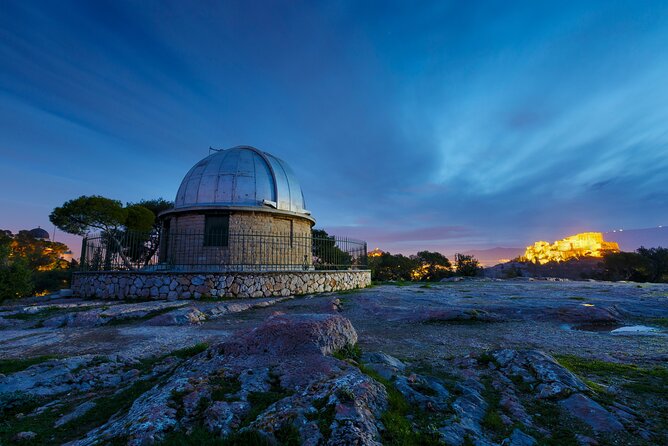
The tour ends at Philopappos Hill, also called the Hill of the Muses. This is the “let it land” moment, because you’re wrapping the intellectual journey with a scenery payoff.
From here, the views are described as among the best for the Acropolis and Athens by night. If your evening plans are flexible, this finish can naturally lead you to linger with a drink nearby and just watch the city shift.
I like this kind of ending because it changes the memory of the tour. You’re not just walking away with facts. You’re walking away with an image you can connect to the themes you heard earlier, especially the democracy thread and the philosophical shift toward explanation.
If you’re traveling with teens or adults who learn best when they can see where history “happened,” this finish helps them connect the dots fast.
Price and Value: What $50.69 Buys in Real Athens Time
At $50.69 per person for about 3 hours, this is priced like a premium guided walk. The value comes from three things that matter on a first visit.
First, you cover a chain of high-meaning sites without needing to piece together a DIY route. You move from Kerameikos to the Agora areas, then through Roman-era science and education themes, then finish on the hills. That flow saves time and mental effort.
Second, the guide’s delivery is a major part of the experience. Many comments highlight Panos’ humor, storytelling, and how he makes the connections between mythology, philosophy, and democracy feel like a single argument you can follow. If you want a guide who actively sparks thought, the cost tends to feel fair.
Third, the group size max is 12, which keeps the experience from feeling rushed or impersonal. For this kind of tour, conversation and pacing are part of the product, not extras.
If you’re short on time in Athens, this is a strong “one guided orientation” choice. If you already know Greek history deeply and want long museum hours, you might prefer a slower, single-site format. But for most visitors, this hits the sweet spot.
Who Should Book, and Who Might Want a Different Style
This tour is ideal if you want more than photo stops. You’ll enjoy it if you like ideas you can connect to place: democracy at Pnyx, public debate at the Agora, and the science-meets-civic-life feeling at the Tower of the Winds.
It’s also a good fit for families with older kids and teens, since the tour’s themes connect well to school-level interests. People mentioned it worked for kids too, even when the walking rhythm is steady.
If you prefer quiet sightseeing, this may not be your best match. The whole point is conversation and interpretation. This is a thinking tour, not a silent wander.
Should You Book This Mythology, Philosophy and Democracy Tour?
I think you should book if you want Athens to make intellectual sense fast. This tour gives you a tight route, a small group feel, and a guide like Panos who uses stories to connect democracy, philosophy, and the city’s layers of history. The payoff is not just what you see, it’s how you understand what you’re seeing.
I would hesitate if you hate walking in sun or you want lots of free time at one single monument. The schedule is compact and outdoor-heavy. If that’s your situation, choose a cooler time of day, wear good shoes, and come ready to listen.
If that sounds like your kind of Athens day, this is an easy yes.
FAQ
How long is the Mythology, Philosophy and Democracy Tour?
It runs for about 3 hours.
Where does the tour start and end?
It starts at the Statue of Theseus in Athens and ends at Philopappos Hill.
Is the tour offered in English?
Yes, it is offered in English.
How big is the group?
The tour has a maximum of 12 travelers.
What does it cost?
The price is $50.69 per person.
Are there admission tickets for the stops?
The tour data lists admission ticket Free for the stops included.
Is the tour mostly outdoors and walking?
Yes, it is a walking tour through multiple Athens sites, including an easy-pace walk through Monastiraki Square.
What happens if the weather is bad?
The experience requires good weather. If it’s canceled due to poor weather, you are offered a different date or a full refund.
The Rest of Athens



Every Other Athens Write-Up
- All Day Cruise -3 Islands to Agistri,Moni, Aegina with lunch and drinks included
★ 5.0 · 4,958 reviews

Everything else we have written up around Athens




Tours, side by side.
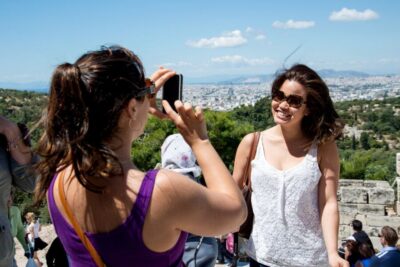 ★ 4.8Athens: Acropolis, Parthenon & Acropolis Museum Guided TourFrom $409,316 reviews
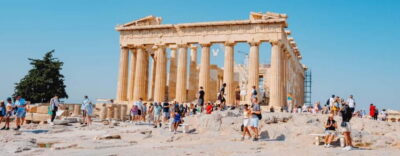 ★ 4.6Athens: Acropolis and Parthenon Guided Walking TourFrom $385,882 reviews
 ★ 5.0Greek Food Walking Tour in AthensFrom $874,740 reviews
 ★ 4.3Athens: City Sightseeing Hop-On Hop-Off Bus TourFrom $254,520 reviews
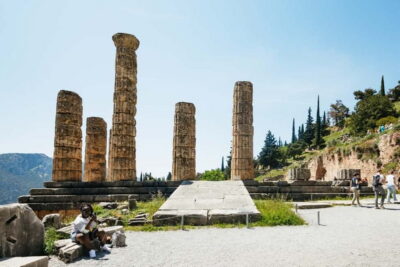 ★ 4.6Athens: Mythology of Delphi, Museum and Arachova Guided TourFrom $314,008 reviews
 ★ 4.9Zakynthos: Shipwreck Beach with Blue Caves Land & Sea TourFrom $583,774 reviews
 ★ 5.0Best of Athens Half Day Private TourFrom $913,714 reviews
★ 4.8Athens: Acropolis, Parthenon & Acropolis Museum Guided TourFrom $413,579 reviews
★ 5.0Best of Athens Half Day Private TourFrom $913,714 reviews
★ 4.8Athens: Acropolis, Parthenon & Acropolis Museum Guided TourFrom $413,579 reviews