Review · GREECE
Panorama of Athens in 6 hours
Five hours, and Athens makes sense. This private, hotel-to-hotel tour is built for speed with taste, so you hit the big-name sights without spending your day figuring out transport. I especially like the round-trip pickup and the smooth logistics of a private SUV.
I also like how the schedule turns the Acropolis into a walk-through story, starting at the fortified hilltop and moving gate to temple to viewpoints. You’ll get panoramic views over Athens and toward Piraeus, plus a stop that includes the oldest open-air theater in the world on the slopes below.
The main consideration is that entrance fees are not included, and the day packs in a lot of standing and walking. The tour says moderate physical fitness helps, so if you have knee or mobility issues, you should plan ahead and ask how pacing and access will work.
In This Review
- Key things that make this Athens tour work
- Price and logistics: what you’re really paying for
- Hotel pickup to Acropolis: how the day starts strong
- Propylaea and the Acropolis gate experience
- Parthenon time: what to focus on when you only have 20 minutes
- Erechtheion and the Ionian temple feel
- Theatre of Dionysus and the Roman layers below the hill
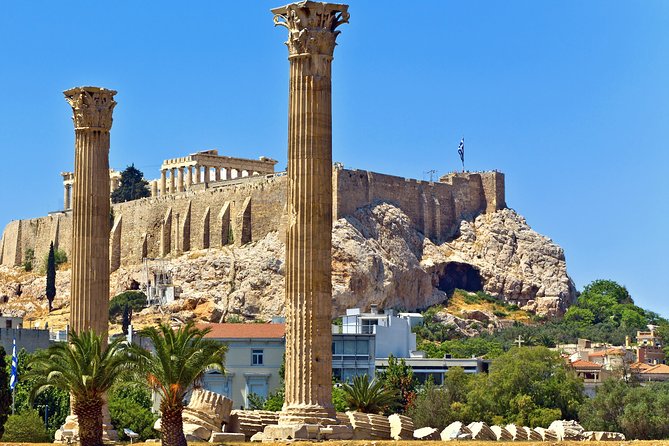
- Temple of Olympian Zeus: the giant footprint in the center
- Change of the Guard, Lycabettus views, and the best use of free moments
- Panathenaic Stadium: ancient sport, modern marble, same shape
- Academic Athens: quick looks at institutions that echo older designs
- Ancient Agora and Stoa of Attalos: civic Athens, not just temples
- Temple of Hephaestus and the Plaka finish: where you slow down
- Monastiraki Flea Market: a timed taste of everyday Athens shopping
- Price and value: when private makes sense in Athens
- Who this tour fits best
- Should you book this Athens half-day route?
- FAQ
- How long is the Panorama of Athens tour?
- Is this a private tour?
- What is the group size limit?
- Do I get hotel pickup and drop-off?
- What language is the tour offered in?
- Is bottled water included?
- Are entrance tickets included?
- Does the tour include a licensed tour guide?
- Are there any stops with free admission?
- What happens if the weather is bad?
Key things that make this Athens tour work
- Hotel pickup and drop-off: you start close to home and end back there, which saves real time in Athens
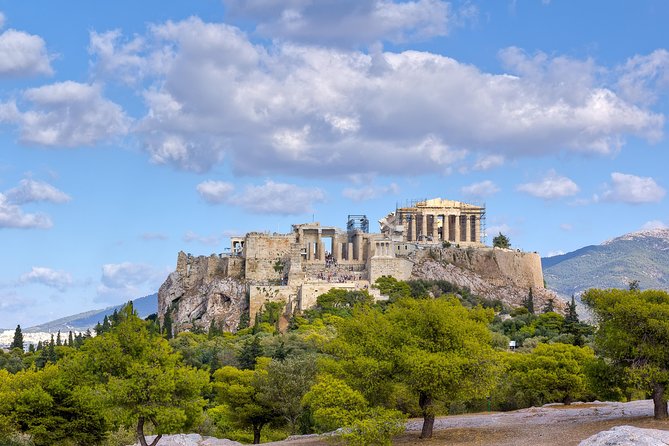
- Acropolis, done in order: Propylaea, Athena Nike, Parthenon, Erechtheion, with built-in viewpoint time
- Luxury vehicle for a short day: an air-conditioned ride keeps you comfortable between stops
- A smart mix of paid and free stops: Acropolis and big archaeological sites, plus free moments like the Changing of the Guard
- Focused route for limited time: it covers the center, not just the hilltop
- You can shape the pacing: the experience is private, so your host can adjust within the time window
Not settled on one yet? These are the other Athens trips that made our review list.
- All Day Cruise -3 Islands to Agistri,Moni, Aegina with lunch and drinks included
★ 5.0 · 4,958 reviews



Price and logistics: what you’re really paying for
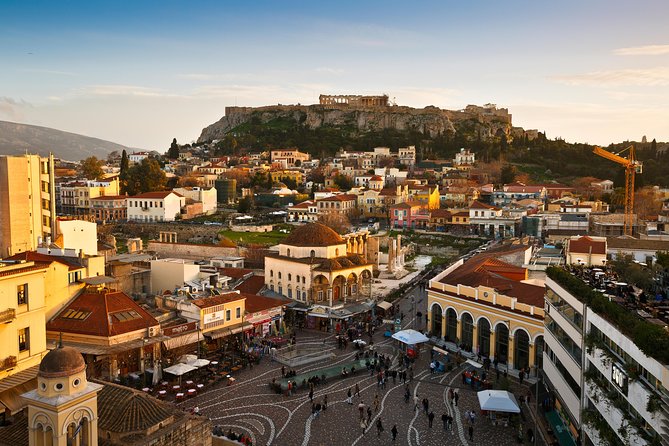
This tour costs $459.74 per group, up to 3 people, for about 5 to 6 hours. That pricing model matters, because it turns a “big day” into something you can justify when you are traveling with family or friends instead of paying for separate taxis.
What you get for the money is mostly friction removal. You get hotel pickup and drop-off, a private air-conditioned vehicle (SUV KODIAQ or a luxurious vehicle, and sometimes a C Class taxi), bottled water, and driving plus historical commentary. A big plus for Athens is that parking and route choices can eat your time, so having a driver who can manage the busy center is a real value.
One more note: a licensed tour guide is not included. That does not mean you will be left in the dark. It does mean explanations happen from the professional driver host, but you should expect that deeper site-by-site interpretation may be lighter than on tours that include a licensed guide.
Hotel pickup to Acropolis: how the day starts strong
The tour kicks off with pickup and takes you directly to the Acropolis area. This is where the private format pays off. Instead of syncing with buses and crowds, you arrive with a plan.
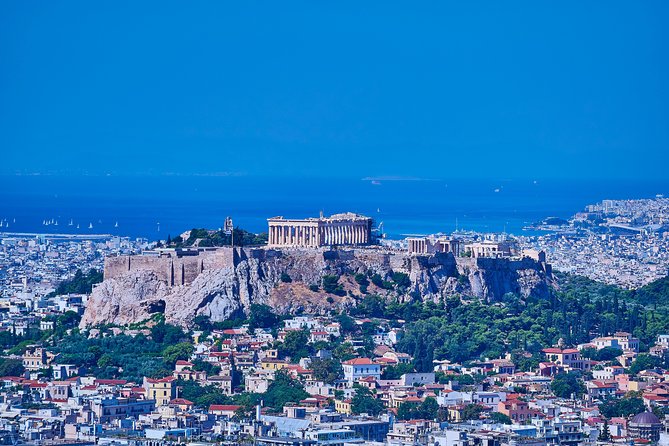
Once you are up on the hill, the walking route is designed to feel logical rather than random. You start with the naturally fortified hill of the Acropolis and move through major monuments in a sequence that makes the architecture and purpose easier to follow, especially if you have never been before. The schedule also includes the panoramic outlook over Athens and Piraeus, which is one of the fastest ways to understand where everything sits in relation to the sea.
If you have mobility constraints, ask questions early. In the experience feedback, at least one host helped someone with a broken knee get access using elevator options at the Acropolis. Even if your exact situation is different, that’s a sign that your host will think about practical access, not just sightseeing on paper.
Propylaea and the Acropolis gate experience
Your Acropolis walk includes Propylaea, the monumental gateway. It is a short stop on the clock, but it carries weight. Propylaea ties together different eras, since earlier gates were built and rebuilt over centuries after major conflicts.
You’ll also see the Temple of Athena Nike, the Erechtheion, and the Parthenon as part of the broader Acropolis circuit. The idea is that you do not just take photos, you connect what you see to what the Greeks built for themselves. Even if you only catch a portion of the details, the order helps.
A practical tip: at the Acropolis, even a small gate-to-temple walk can feel longer than expected because the ground is uneven. Wear shoes you trust. Bring water if you are sensitive to heat, even though bottled water is included in the vehicle.
Parthenon time: what to focus on when you only have 20 minutes
The Parthenon stop is scheduled for about 20 minutes. That sounds short until you realize the tour is trying to keep you moving at a pace that fits everything else later that day. The payoff is that you get to stand in the Parthenon area without feeling like you only touched the site for five seconds.
Here’s the mindset that helps: don’t try to read every panel. Instead, look at proportion and placement. The Parthenon is described as a peak of Athenian democracy, and the building is also a masterclass in design and execution. Use those 20 minutes to notice the temple’s layout and its position atop the hill, then connect it to what you will see on the slopes below.
If you are planning to go inside and you care about ticket lines, plan ahead. One travel detail that came up in feedback was that purchasing combo tickets ahead of time can save a lot of waiting. Since Acropolis admission is an extra cost here, pre-booking can make the whole day feel smoother.
Erechtheion and the Ionian temple feel
Next comes the Erechtheion, scheduled briefly but strategically. It is a complex structure, designed by Mnesikles and built as part of the late fifth-century BC era on the Acropolis. If you are not sure what to look for, focus on how different the spaces feel compared to the Parthenon. The Erechtheion is arranged in ways that reflect multiple sacred elements.
This stop pairs well with earlier Acropolis moments, especially the Temple of Athena Nike. Athena Nike is noted as an early fully Ionic temple on the Acropolis, and that architectural shift is worth clocking. You’ll feel the difference in style, and it makes the Acropolis feel like a collection of purposeful building projects rather than one single monument.
- Athens: Acropolis & up to 5 Archaeological Sites Combo Pass★ 4.4 · 12,619 reviews
- Athens: Acropolis, Parthenon & Acropolis Museum Guided Tour★ 4.8 · 9,316 reviews
- Athens: Cape Sounion & Poseidon Temple Sunset Half-Day Trip★ 4.8 · 8,241 reviews
- Athens: Acropolis and Parthenon Guided Walking Tour★ 4.6 · 5,882 reviews
Theatre of Dionysus and the Roman layers below the hill
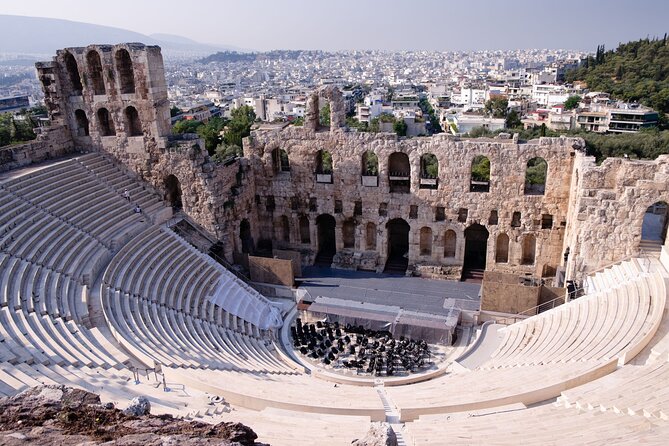
After the main hilltop monuments, the tour heads into the slope area where you get a different view of Athens: the stage culture and the layers of time. The stop at the Theatre of Dionysus Eleuthereus is described as the oldest open-air theater in the world, with major playwrights tied to its tradition.
You’ll also see (or at least be in the area for) the Odeon of Herodes Atticus and Mars Hill, also called the Areopagus. This is the part that often surprises first-timers. The Acropolis feels monumental and official. The theaters and civic spaces below feel more human and daily-life oriented, like Athens had public culture and debate baked into the landscape.
In short: you’re not only looking at temples. You’re seeing the city’s ideas, performed and argued.
Temple of Olympian Zeus: the giant footprint in the center

The route then continues to the Temple of Olympian Zeus, also known as the Olympieion. This is a “wow because of scale” stop, even in its incomplete state. Construction began in the sixth century BC and stretched across centuries, with completion arriving much later during the reign of Roman Emperor Hadrian in the second century AD.
If you only have a short time in Athens, this stop helps you balance the Acropolis. The Parthenon is a symbol of one peak era. Olympian Zeus reads like a long project, a city that keeps changing what it worships and how it shows power.
As you walk around the columns and grounds, take a step back and see the urban context. This temple is at the center of the Greek capital, so you’ll feel the modern city pressing in around ancient stone.
Change of the Guard, Lycabettus views, and the best use of free moments
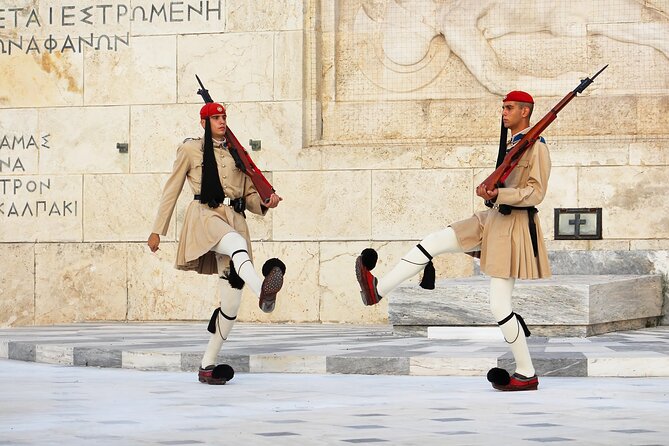
The tour includes a stop for the Changing of the Guard at the presidential mansion, which happens every day, every hour. You get about 15 minutes here, and since the admission is free, this is one of the best ways to add a uniquely Greek moment without paying extra.
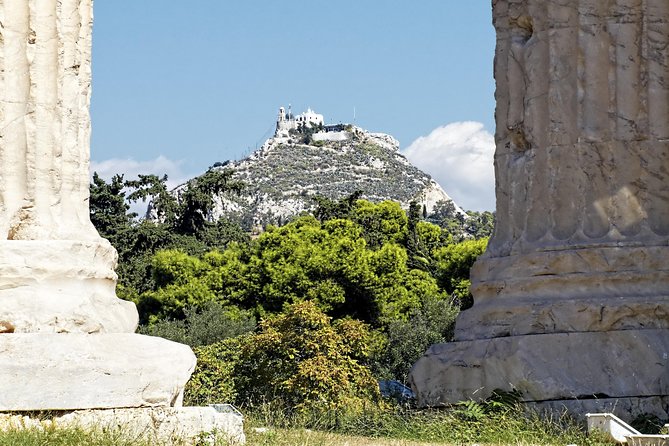
From there, you climb to Mount Lycabettus, described as the highest point in the center of Athens at 277 meters. You get time to reach the viewpoint and take in the sweep of the city. This is another “use your short time wisely” stop because views can replace slow sightseeing when your schedule is tight.
If you are sensitive to walking uphill, plan your pace. Lycabettus time is limited, so you want to conserve energy for the climb and the actual viewpoint moment, not detours.
Panathenaic Stadium: ancient sport, modern marble, same shape
Another highlight on this route is the Panathenaic Stadium. It is not presented like a typical archaeological ruin, because the current structure uses marble renovation connected to the first modern Olympic Games in 1896.
The description includes a key name: Georgios Averof financed the marble covering work. The interesting detail for you is that the present-day shape is said to be the same as the ancient stadium from the fourth century BC. So you get a rare feeling of time continuity, where the “arena” identity stayed while the materials were updated.
This stop is also a nice breather in terms of what you are seeing. It is less about climbing and more about appreciating the setting and why the site still matters.
Academic Athens: quick looks at institutions that echo older designs
The tour also passes by the Academy of Athens and the University of Athens, plus the National Library of Greece. These stops are quick, but they add a layer that many Athens tours skip: how modern Greece built institutions by borrowing older visual language.
The Academy of Athens is described as founded in 1926, and the building is a copy of the Propylaea of the Acropolis. The University of Athens was founded on 3 May 1837 by King Otto of Greece, and it is noted as the first university in the liberated Greek state in the surrounding region. The National Library’s mission is outlined too, focused on collecting, organizing, describing, and preserving Greek cultural evidence.
You do not need to be a scholar to enjoy these stops. They help you understand that Athens is still constructing identity, not only preserving the past.
Ancient Agora and Stoa of Attalos: civic Athens, not just temples
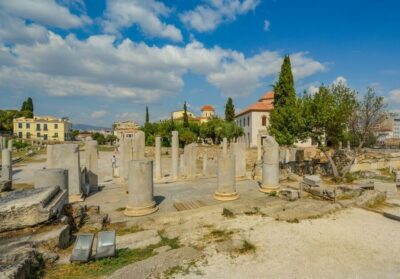
Later in the day, you reach the Ancient Agora of Athens. The Agora is described as the heart of ancient Athens, with political, commercial, administrative, social activity, plus religion and justice. That mix is exactly why it works on a half-day tour. It expands your Athens view from religious and ceremonial buildings to public life.
The schedule also includes time around the Stoa of Attalos, described as the main monument and museum at the Ancient Agora after the Temple of Hephaestus. The Stoa matters because it was a covered public space, and in ancient cities, those spaces often explain how people moved and gathered.
If you have limited time, I suggest you spend your short time looking at how these structures frame the space. In places like the Agora, the layout is part of the story, not an afterthought.
Temple of Hephaestus and the Plaka finish: where you slow down
You end the archaeological part at the Temple of Hephaestus, also known as Thissio. It is described as one of the best-preserved ancient temples in Greece and dedicated to Hephaestus, the Olympian god of fire.
This is a great “capstone” because Hephaestus gives you a sense of intact craftsmanship after stops where time has taken more visible pieces away. It also transitions nicely into Plaka, the old neighborhood under the Acropolis with narrow streets, neoclassical buildings, cafes, souvenir shops, and museums.
Plaka here is a short stop, about 10 minutes. Think of it as a chance to get your bearings and pick where you might return on another day. If you want photos, this is one of the better places to get them without the climb.
Monastiraki Flea Market: a timed taste of everyday Athens shopping
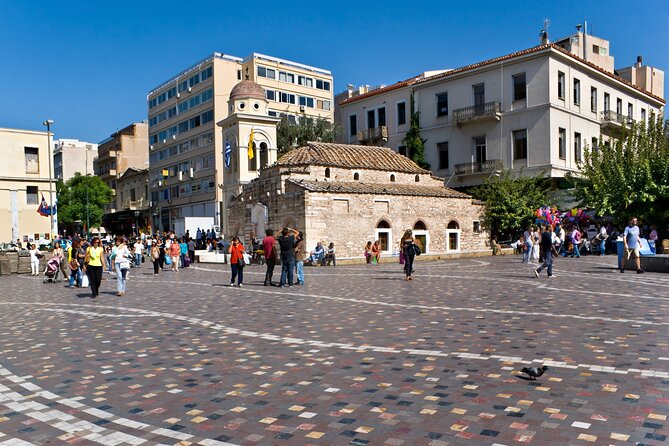
The route includes the Monastiraki Flea Market, about 30 minutes. It is described as the biggest and most popular flea market in Athens, located at Monastiraki Square. Even if you do not plan to buy much, it’s a useful stop because it shows you Athens as a living market, not only a museum.
In the same travel feedback, one host also handled route timing and parking so the group could hit the most important sights and still enjoy the neighborhood vibe. That kind of care makes the day feel less like a checklist.
Price and value: when private makes sense in Athens
At $459.74 per group up to 3, this is not a budget tour. But in Athens, private value usually shows up in two places: saving time between distant stops and avoiding stress. You get hotel pickup and drop-off, private air-conditioned transport, and a day plan that covers a dense set of sites in one go.
It is also value-forward if your top priority is seeing the Acropolis plus the center. A cheaper option can sound tempting, but half a day can evaporate quickly when you factor in waiting, ticket lines, and transit confusion.
Keep in mind what is not included. Entrance tickets you need to book on your own include Acropolis & Slopes at €30 per person, up to age 18 is free. Other site admissions listed as not included also mean you should read ticket details before you go so you are not surprised at the gates.
Who this tour fits best
This is best for small groups who want the main Athens highlights without spending their day commuting. It also suits people who appreciate a host like Andrew or Andreas, who in feedback were praised for being patient, flexible, and practical. Another guide, Evagelos, was described as tailoring the city tour to what people wanted to see and do.
If you like your sightseeing with clear explanations, the hosts in the feedback were praised for turning monuments into understandable stories. Alex was also praised for bringing history to life and sharing historical photos while on the move, which is a smart trick for keeping the day engaging between sites.
This may be less ideal if you want long stays inside museums and you hate moving between sites quickly. The whole point here is coverage in a short time.
Should you book this Athens half-day route?
I’d book it if you want maximum Athens in one focused block of time and you value comfort and organization. The combination of hotel pickup, luxury transport, and a route that hits Acropolis, Agora, and Plaka can turn a tight schedule into a satisfying day.
I would hesitate if your priority is slow, in-depth time at each monument or if your group is very sensitive to walking and uneven ground. The tour calls for moderate physical fitness, and while hosts can help with access needs when possible, it is still a condensed route.
If you decide to go, the smartest move is to plan your Acropolis tickets ahead and wear comfortable shoes. That one step protects your time, so you can enjoy the viewpoints and not lose your morning to line management.
FAQ
How long is the Panorama of Athens tour?
It runs about 5 to 6 hours.
Is this a private tour?
Yes. It is private, and only your group participates.
What is the group size limit?
The price is per group up to 3 people.
Do I get hotel pickup and drop-off?
Yes, hotel pickup and drop-off are included.
What language is the tour offered in?
The tour is offered in English.
Is bottled water included?
Yes, bottled water is included.
Are entrance tickets included?
No. Entrance tickets are not included, and you must book them on your own. The Acropolis & Slopes entrance is listed at €30 per person and must be purchased in advance.
Does the tour include a licensed tour guide?
No. A licensed tour guide is not included.
Are there any stops with free admission?
Yes. Change of the Guard is free, Mount Lycabettus is listed as free, Monastiraki Flea Market is free, and Plaka is listed as free.
What happens if the weather is bad?
This experience requires good weather. If it is canceled due to poor weather, you will be offered a different date or a full refund.
Every Other Athens Write-Up
- All Day Cruise -3 Islands to Agistri,Moni, Aegina with lunch and drinks included
★ 5.0 · 4,958 reviews