
Review · TOURS
Philosophy and Democracy tour of Athens
Democracy feels different when you hear it in Athens. With Panos and a max 15-person group, I love how he connects philosophy to the places where it played out, and I also love the small-group attention that keeps questions moving. One thing to plan for is that several major stops require separate admissions and the route is mostly walking.
You’re looking at about 3.5 hours to cover key ideas in motion, not a museum lecture. The pace feels well managed, from a calm stroll through the flea market to slower, story-driven stops at the Agora and Pnyx.
In This Review
- Key things to know before you go
- Why this philosophy and democracy tour feels different
- Price and logistics that affect your day
- Kerameikos: the cemetery where Pericles praised democracy
- Flea market and Plaka stroll: a softer Athens break
- Hadrian’s Library and the Roman Agora: Athens after the Romans
- Tower of the Winds: Athens’ weather station and clock
- Ancient Agora and the Prison of Socrates: debate in real space
- Pnyx Hill: the cradle of democracy with real views
- Plaka and the monument stop for perspective
- Tips from the guide you can use that night
- Should you book the Philosophy and Democracy tour of Athens?
- FAQ
- How long is the Philosophy and Democracy tour of Athens?
- What is the group size?
- What language is the tour offered in?
- Where do I meet, and where does the tour end?
- Is a mobile ticket used?
- Are admission tickets included for each stop?
- Which stops are free?
- Are service animals allowed?
- What if the tour is cancelled due to weather or too few travelers?
- What is the cancellation deadline for a full refund?
Key things to know before you go
- Philosophy meets city planning at the cradle-of-democracy sites like Pnyx
- Kerameikos connects to Pericles and the Peloponnesian War, not just ruins
- Tower of the Winds explains time and weather like Athens version of Big Ben
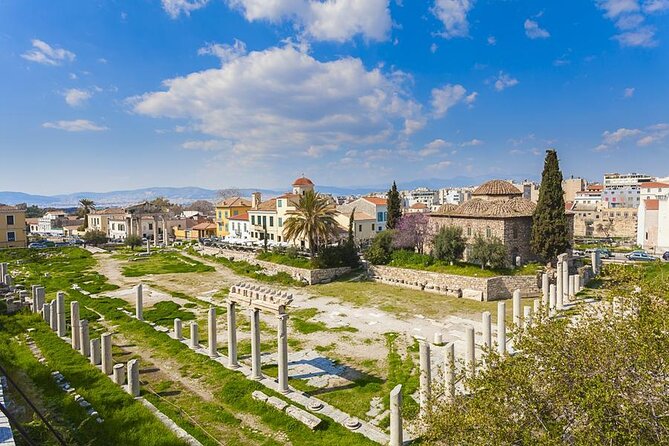
- Roman layers show up clearly, from Hadrian’s Library to the Roman Agora
- Group size stays small (up to 15), so you can ask questions in real time
- Expect a mix of free stops and ticketed sites, plus a Plaka neighborhood stroll
Not settled on one yet? These are the other Athens trips that made our review list.
- All Day Cruise -3 Islands to Agistri,Moni, Aegina with lunch and drinks included
★ 5.0 · 4,958 reviews




Why this philosophy and democracy tour feels different
Athens has plenty of tours that point at stones and move on. This one does the opposite. I like that Panos turns ideas into something you can picture, using the city as your classroom.
You’ll compare ancient democracy with modern life, not in theory-only language. The big payoff is that you’ll walk away with a better sense of why these places matter beyond tourism photos, especially if you care about politics, ethics, or how societies decide what is fair.
The tone is also practical. You get tips on where to eat, drink, and explore, and you’ll cover more than just the usual highlight list. If you already did an Acropolis-focused tour earlier, this route helps you connect the dots to the Agora, the debate spaces, and the decision-making ground.
Price and logistics that affect your day
The price is $50.81 per person for about 3 hours 30 minutes. For a guided walking experience through multiple archaeological areas, that works out as decent value, mainly because the guide keeps the story stitched together across different neighborhoods. You’re not just paying for access, you’re paying for interpretation.
That said, think of this as a guided route, not an all-in ticket bundle. Several stops specifically say admission tickets are not included, so you should budget extra for entry fees if you want to go into every ticketed site.
You’ll also be on your feet. Most travelers can participate, but the format is walking between landmarks, with a steady rhythm rather than a bus ride. If you’re coming with good shoes and a bit of patience for crowds near central sites, the day feels smooth.
Kerameikos: the cemetery where Pericles praised democracy
Kerameikos is one of those Athens stops that many visitors miss, even though it’s historically huge. It gets its name from ceramic workshops in the area, and it also served as a cemetery for many centuries.
This is where the tour gets especially meaningful. Panos places you in the context of Pericles and the famous Epitaph speech delivered for the first casualties of the Peloponnesian War, where Pericles praises the virtues of democracy and the way Athenians lived. You’re not just looking at graves, you’re hearing how democratic ideals were argued in public life during real crisis.
Timing here is about 15 minutes, and the admission ticket is not included. If you hate feeling rushed at paid sites, arrive rested and focus on the main story the guide is building, then decide how much time you want for extra wandering.
Practical note: this stop is a good example of why a guide matters. Left alone, Kerameikos can feel like a collection of ruins. With the political-philosophy framing, it reads like part of a living argument about civic identity.
Flea market and Plaka stroll: a softer Athens break

After Kerameikos, you shift gears with an easy pace walk through a flea market. It’s a simple, human-scale interlude, and it’s listed as free. You’ll get a break from the heavier historical stops without losing momentum on your walk.
Then you move through Plaka, described as a scenic neighborhood of small houses and narrow streets. This is the part of the route that helps you reset your brain. The philosophical talk is still there, but the mood becomes more everyday, the kind of setting where you can imagine Athenians wandering on ordinary days.
If you’re the type who wants a quick snack or a coffee pause, Plaka is where that instinct makes sense. Just know that the tour format is still a guided walking route, so take short breaks and keep your place in the group.
Hadrian’s Library and the Roman Agora: Athens after the Romans
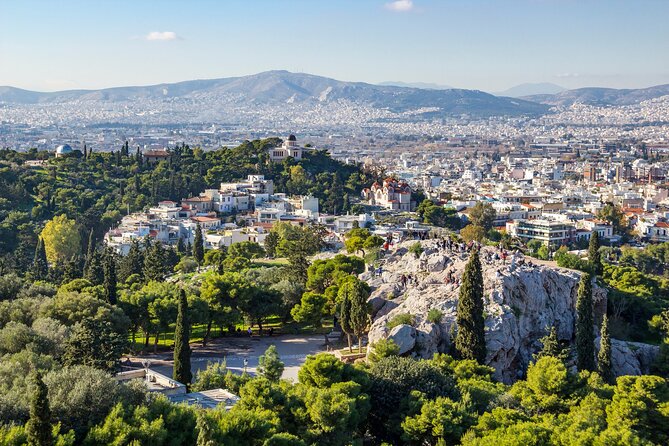
Next comes the Roman layer, and it’s handled in a way that doesn’t confuse the story. Hadrian’s Library was created by Roman Emperor Hadrian in AD 132 on the north side of the Acropolis area. Even with a short stop of about 15 minutes, you can feel how later empires adopted Athens and reshaped its cultural spaces.
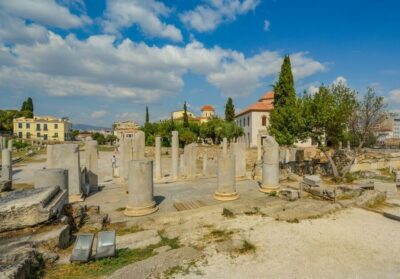
Then you head to the Roman Agora, located north of the Acropolis and east of the Ancient Agora. Here the tour helps you see that Athens wasn’t frozen in the classical past. It kept changing, and different powers left their stamps on the city plan.
Admissions at these stops are not included. If you’re trying to control costs, you may need to decide how many ticketed sites you want to enter. The guide’s commentary is still valuable even if you pick and choose what to go into, but entrance fees can add up across multiple sites.
The benefit for you is clarity. You’ll understand why the Agora area feels layered, not messy, and why Roman Athens deserves attention when you’re tracing how public life evolved.
- Athens: Acropolis & up to 5 Archaeological Sites Combo Pass★ 4.4 · 12,619 reviews
- Athens: Acropolis, Parthenon & Acropolis Museum Guided Tour★ 4.8 · 9,316 reviews
- Athens: Cape Sounion & Poseidon Temple Sunset Half-Day Trip★ 4.8 · 8,241 reviews
- Athens: Acropolis and Parthenon Guided Walking Tour★ 4.6 · 5,882 reviews
Tower of the Winds: Athens’ weather station and clock
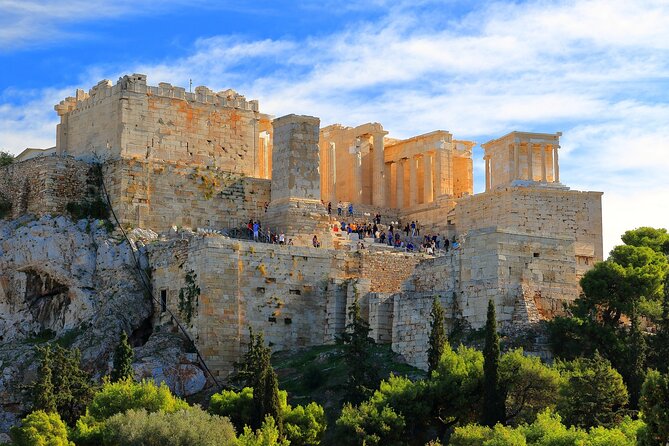
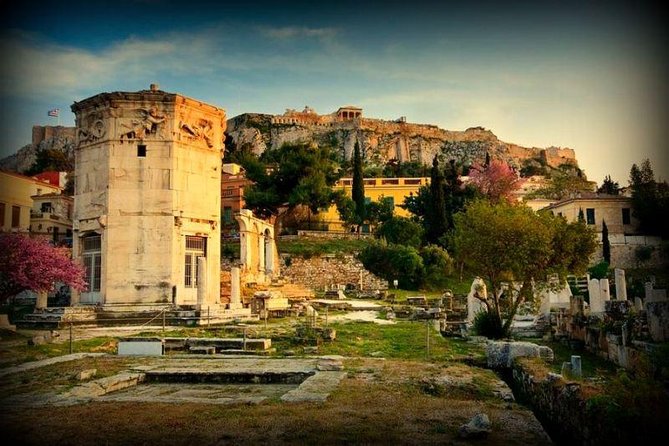
Tower of the Winds is short on time, about 5 minutes, but big on wow-factor. This octagonal building was made by the astronomer Andronicus of Kyrristos in the 1st century BC. It served as both a wind indicator and a clock, functioning like Athens’ answer to Big Ben.
The detail that makes it stick is the weather-mechanics story. The clock was solar, and on cloudy days there was also a hydraulic mechanism that produced a sound every hour. It’s considered the first meteo station.
What I like here is how practical the design feels. It’s not just astronomy for scientists. It’s information for people living with weather and time. When your guide explains it in the context of civic life, the site becomes a lesson in how city communities depended on shared signals.
Admission is not included at this stop. If you’re hoping for a lot of time inside, note the tour keeps it brief, so focus on the concept and the explanation.
Ancient Agora and the Prison of Socrates: debate in real space
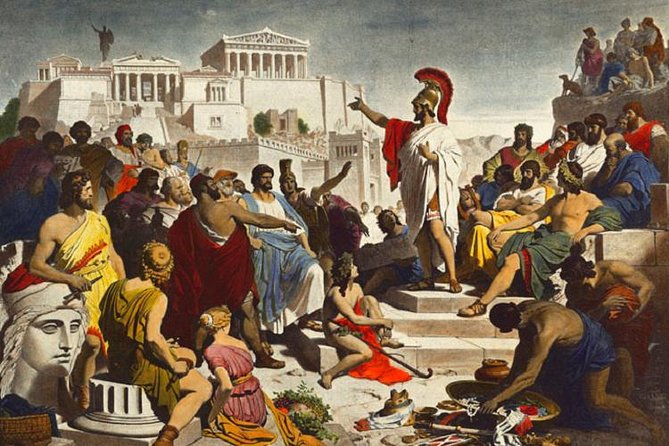
The heart of the city’s public life shows up at the Ancient Agora. This is where philosophers and politicians actually walked, argued, and met. The tour frames it around the people you care about: Socrates, Plato, and others, plus politicians and citizens who shaped civic decisions.
This stop is about 20 minutes and admission is not included. Because it’s the main debate ground, it’s also one of the places where you may wish you had more time. Still, the guided pacing works if you want the big picture and the connections between names, ideas, and locations.
Right after that you visit the Prison of Socrates, about 10 minutes, and this one is free. It’s described as a place where you pay tribute to a great philosopher. I like that it gives a human emotional tone after the intellectual talk. You’re reminded that philosophical ideas were not abstract for the people who lived them.
If your brain likes stories, this is a high point. If you’re more photo-first, you’ll still get enough context to make the photos mean something.
Pnyx Hill: the cradle of democracy with real views
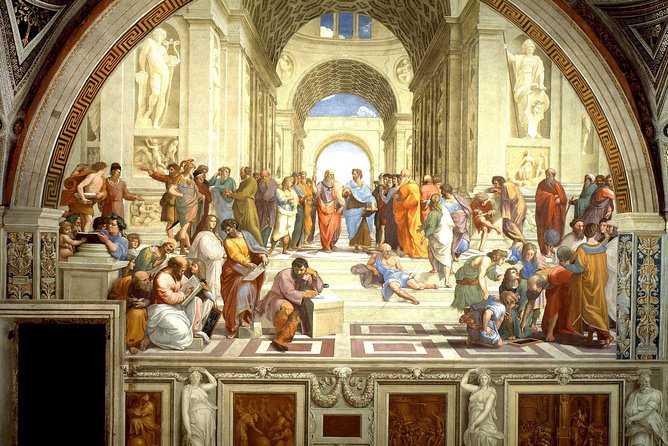
Pnyx Hill is the tour’s strongest link to the idea in the title. It’s considered the cradle of democracy since it was the first place where people took decisions about their future.
The tour spends about 30 minutes here, and it is free. You also get great views of the Acropolis and Athens, which matters because it helps you picture what public speaking and civic meetings would feel like in the space.
This stop is the reason I think the tour works even if you’re not a “history person.” Democracy is an abstract word until you stand in a place designed for public decisions. You start to understand why people argued face to face, why persuasion mattered, and why civic participation felt like power.
Plaka and the monument stop for perspective
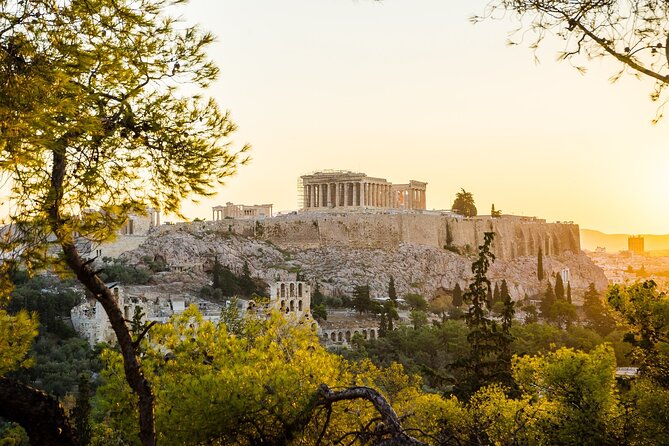
After Pnyx, you get a scenic neighborhood moment in Plaka, then the tour includes a stop to visit and admire Greece’s greatest monument. The tour doesn’t spell out extra detail in this description, but you should treat this as your big visual payoff moment.
This timing helps a lot. You’ve just spent time on the decision-making hill, so the final monument stop feels like the next chapter, not random sightseeing. You’ll have a better mental map of how the city’s idea of greatness connects back to civic life and the philosophy that fed it.
As always with big monuments, plan for crowds and quick photo windows. If you want slow time, ask your guide how to manage it best during your allotted window. A good guide can help you get the most meaningful view without losing track of the group.
Tips from the guide you can use that night
One of the practical reasons I like this style of tour is that it doesn’t end at the final stop. The highlights include insider tips on where to eat, drink, and explore. Those recommendations can save you time, especially if you don’t want to spend your first days in Athens guessing.
Also, the tour format helps you organize the rest of your trip. When you learn how the Roman Agora relates to the Ancient Agora, and when you understand why Pnyx is tied to decision-making, your later strolls through central Athens feel less like wandering. You’ll pick up meaning without needing to “study” first.
If you’re worried about comprehension, relax. Panos is known for explaining complex concepts clearly, and his delivery is described as loud and clear, so earphones are usually unnecessary. He also has a sense of humor, which keeps the heavy themes from becoming stiff.
And do bring water and comfortable shoes. Athens walking adds up, and this tour is designed to keep moving.
Should you book the Philosophy and Democracy tour of Athens?
Book it if you want Athens to make sense as a political and philosophical story, not just a list of sights. This is especially worth it if you care about how modern society borrowed ideas from ancient models, or if you’re the type who likes asking questions while you walk.
Skip or reconsider if you want an all-inclusive ticket day with no extra admissions and minimal walking. Since several key archaeological stops require separate entry, your total day cost could rise. Also, if you dislike open-air walking, this route may feel like too much physical effort.
One more smart move: if your trip is close, don’t wait. The tour is commonly booked about 36 days in advance, and a small group size can limit last-minute options.
If you’re ready to trade some passive sightseeing for guided meaning, this tour is one of the best ways to learn why Athens still feels relevant.
FAQ
How long is the Philosophy and Democracy tour of Athens?
The tour lasts approximately 3 hours 30 minutes.
What is the group size?
The tour has a maximum of 15 travelers.
What language is the tour offered in?
The tour is offered in English.
Where do I meet, and where does the tour end?
You meet at the Statue of Theseus, Athens 105 55, Greece. The tour ends at Theorias 21, Athina 105 58, Greece.
Is a mobile ticket used?
Yes, the tour includes a mobile ticket.
Are admission tickets included for each stop?
Not all admissions are included. Some stops list admission tickets as not included, while others are free.
Which stops are free?
The flea market is free, the Prison of Socrates is free, and Pnyx is free. Other stops list admission tickets as not included.
Are service animals allowed?
Yes, service animals are allowed.
What if the tour is cancelled due to weather or too few travelers?
If the tour is cancelled due to poor weather, you’ll be offered a different date or a full refund. If it’s cancelled because the minimum number of travelers isn’t met, you’ll be offered a different date or experience or a full refund.
What is the cancellation deadline for a full refund?
You can cancel up to 24 hours in advance for a full refund. If you cancel less than 24 hours before the start time, the amount paid is not refunded.
The Rest of Athens



Every Other Athens Write-Up
- All Day Cruise -3 Islands to Agistri,Moni, Aegina with lunch and drinks included
★ 5.0 · 4,958 reviews

Everything else we have written up around Athens




Tours, side by side.
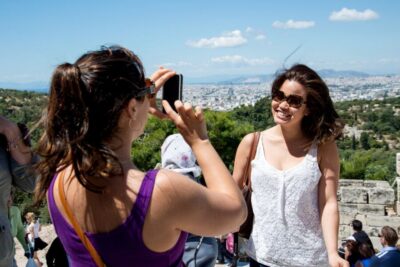 ★ 4.8Athens: Acropolis, Parthenon & Acropolis Museum Guided TourFrom $409,316 reviews
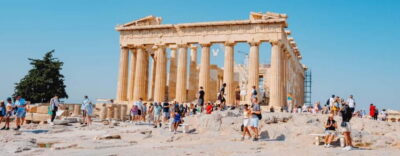 ★ 4.6Athens: Acropolis and Parthenon Guided Walking TourFrom $385,882 reviews
 ★ 5.0Greek Food Walking Tour in AthensFrom $874,740 reviews
 ★ 4.3Athens: City Sightseeing Hop-On Hop-Off Bus TourFrom $254,520 reviews
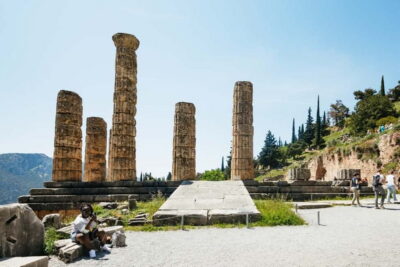 ★ 4.6Athens: Mythology of Delphi, Museum and Arachova Guided TourFrom $314,008 reviews
 ★ 4.9Zakynthos: Shipwreck Beach with Blue Caves Land & Sea TourFrom $583,774 reviews
 ★ 5.0Best of Athens Half Day Private TourFrom $913,714 reviews
★ 4.8Athens: Acropolis, Parthenon & Acropolis Museum Guided TourFrom $413,579 reviews
★ 5.0Best of Athens Half Day Private TourFrom $913,714 reviews
★ 4.8Athens: Acropolis, Parthenon & Acropolis Museum Guided TourFrom $413,579 reviews