
Review · GREEK CULTURE SHOWS & WORKSHOPS
Playing and Creating with Clay 3 Hours Pottery Class
Clay has a way of slowing your day down fast.
This Paros pottery class is a hands-on, low-stress way to learn real ceramic basics while staying fully in the moment. In about three hours you go from shaping simple forms (guided by your instructor) to trying the wheel for round pieces, with plenty of time to make it feel like your own. It is also a private class, taught in English, with a relaxed studio vibe near public transportation in Pounta.
I love the step-by-step clay techniques you can use right away, especially pinchpot work and coiling. I also love the payoff of wheel time, where you learn how to shape circular forms and adjust them so they actually look like what you had in mind.
One key consideration: your pieces need two firings, and you will need to arrange shipping if you want them sent home (with an extra packing cost), so it is not the same-day souvenir route.
In This Review
- Key highlights you will care about
- A 3-hour Paros pottery class in Pounta, built for beginners
- Clay basics you can use immediately: pinchpot, coiling, and slab
- Pinchpot: simple shapes with instant feedback
- Coiling: build up walls and structures
- Slab: flat surfaces that become functional forms
- Wheel time for round forms you can actually shape
- The break that keeps the whole class from feeling rushed
- Why your ceramics take two firings, and what that means for souvenirs
- The vibe: patient teaching, freedom to experiment, and calm focus
- Price and value: what $84.10 covers and where extra costs pop up
- Who this class is best for in Paros
- Your practical plan: when to book and how to fit it into the day
- Should you book this Paros clay workshop?
- FAQ
- How long is the Playing and Creating with Clay class in Paros?
- What techniques will I learn during the class?
- Can I take my pottery home the same day?
- Is the class taught in English?
- Is shipping available for the pieces I make?
- What is the cancellation policy?
Key highlights you will care about
- Three hours of real practice, not a quick demo, with time for both hand-building and the wheel
- Pinchpot, coiling, and slab techniques so you can choose the form you want to make
- Wheel training for circular shapes, with guidance as you learn to center and shape
- A calm studio rhythm, including a planned coffee and break partway through
- Two firing process, then optional shipping about 15 days later with stated cost add-ons
- Private, English-taught class, so you get attention without a big crowd
Not settled on one yet? These are the other Paros trips that made our review list.





A 3-hour Paros pottery class in Pounta, built for beginners
If you want a break from beaches and buses, this is a solid pick. You trade sightseeing lines for a focused studio session where time moves differently. The location is in Pounta and the class starts and ends at the same meeting point, which makes planning easy.
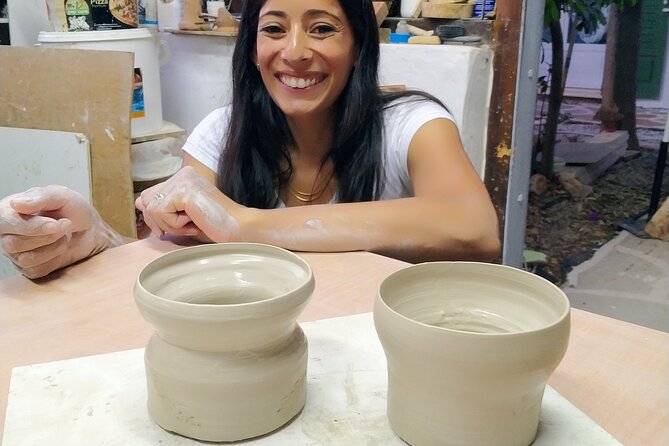
It is a private tour/activity, meaning you are not rotating through stations with strangers. That matters. When you are brand new to clay, the most helpful thing is quick, friendly corrections, and that is easier when your group is the only group in the room. The class runs about 3 hours, and most people can participate, including first-timers. Service animals are allowed too.
And yes, it is taught in English. That matters if you want to understand the why behind the technique, not just copy hand positions.
Clay basics you can use immediately: pinchpot, coiling, and slab
This is not just play. You start by learning the stages of creating complete ceramics, then you jump into the core forming methods: pinchpot, coiling, and slab.
Here is how those techniques actually translate to what you might want to make:
Pinchpot: simple shapes with instant feedback
Pinchpots are ideal for beginners because they teach controlled thickness. You work slowly, thinning the walls by pinching and rotating. The clay tells you fast if you are rushing or going uneven. It is a great way to learn how clay behaves before you move on to bigger builds.
Coiling: build up walls and structures
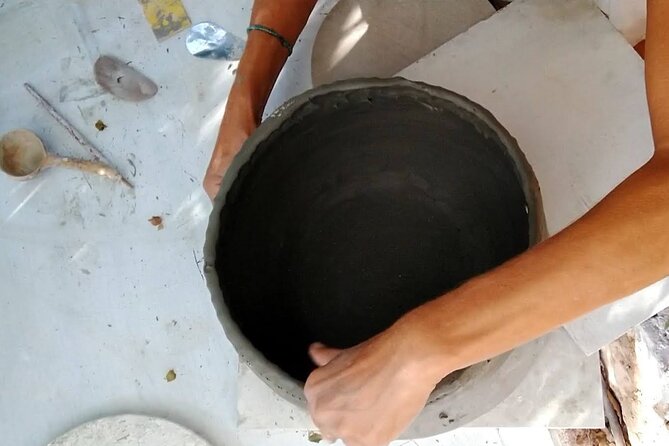
With coils, you stack and blend ropes of clay to build up the form. This method is useful if you want something like a mug-like silhouette or a bowl shape with more personality. You also get practice in joining seams so the piece does not fall apart later.
Slab: flat surfaces that become functional forms
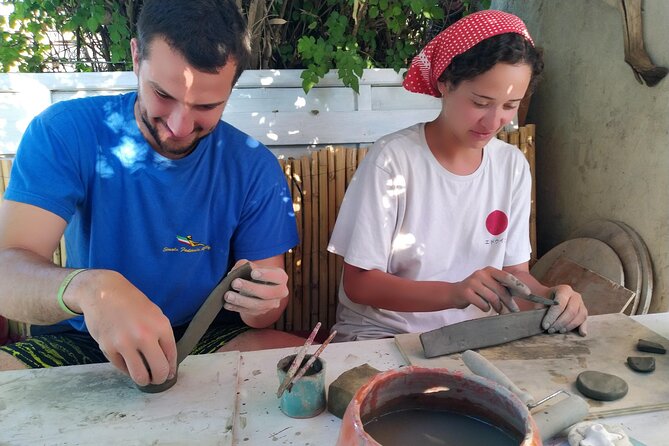
Slabs are the technique for handles, sides, or structured shapes. Even if you only do a small slab section, it teaches you about thickness, cutting, and joining edges cleanly.
The class also talks through forms and what each person wants to create. That is a big deal for value. Instead of forcing one template, you pick a direction that fits your taste, then you learn the technique that gets you there.
More Paros hands on sessions
- Paros: Cooking Class with Greek Meal & Wine★ 5.0 · 116 reviews
- 3-Hour Marble Workshop Creating your own Souvenir out of ( Paros ) Marble★ 5.0 · 91 reviews
- 1 Hour Watercolor Workshop in Parikia Paros!★ 5.0 · 55 reviews
Wheel time for round forms you can actually shape
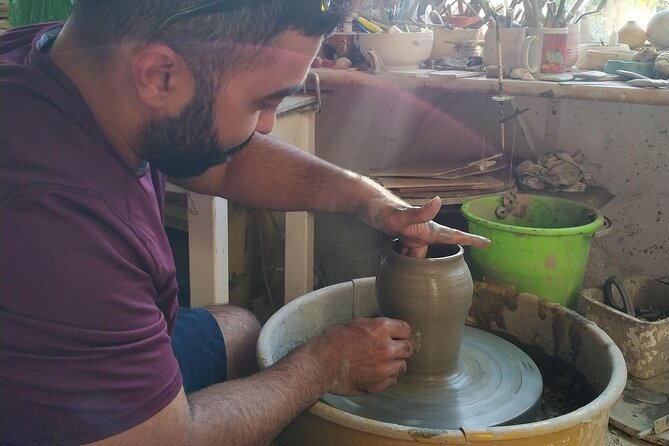
After the hand-building portion, you move to the pottery wheel. Wheel work sounds intimidating, but the way this class is set up makes it feel learnable. You get instruction on creating circular objects and then you refine them based on your own aesthetics.
Wheel practice teaches three things quickly:
- Centering, so the clay does not wobble
- Steady pressure, so the form rises or thins evenly
- Shaping choices, like how tall, wide, or rounded you want the final look to be
Even if your first attempt looks more like a lopsided planet than a bowl, you are learning transferable skills. And because this is hands-on instruction, you are not just watching someone else make magic.
One of the best parts is that wheel time happens after you already learned pinchpot, coiling, and slab basics. That means you are not starting from zero when you sit at the wheel.
The break that keeps the whole class from feeling rushed
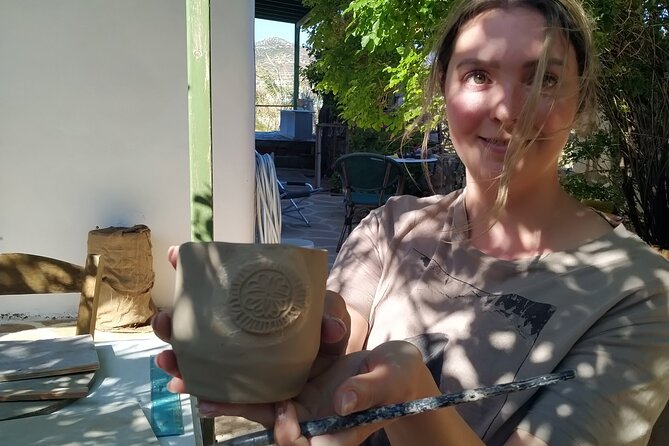
About midway through, you take a break. Think coffee and fruit juice, plus a dessert option. This is not just hospitality, it is pacing.
Clay work needs a calm rhythm. Your hands get tired, your attention gets sharper, then it resets. That short pause helps you come back and focus for the final wheel portion without feeling like the session is one long sprint.
It is also a nice moment to ask questions while the group takes a breather, especially if you are unsure what you should prioritize: a clean silhouette, stronger seams, or a more decorative edge.
Why your ceramics take two firings, and what that means for souvenirs
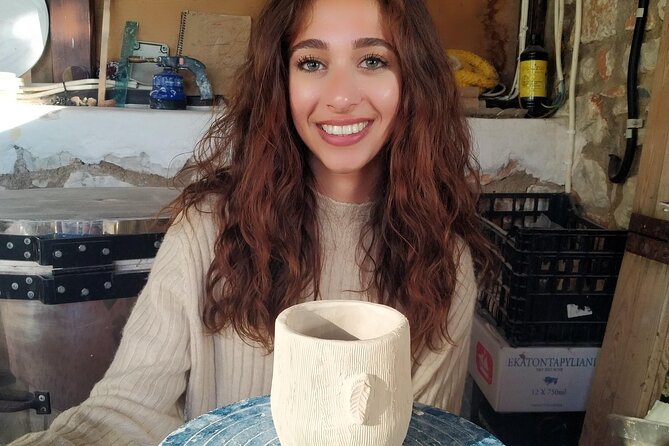
Here is the part that changes how you should plan. Your finished ceramics require two firings in a ceramic oven. That is how you get durable, finished pottery, but it also means you typically cannot treat the class as a buy-a-magnet situation.
The timeline matters:
- Your pieces need time for the firings
- Shipping is possible about 15 days after, assuming you choose delivery
If you want your ceramics sent home, there is a clear cost structure:
- Shipping is based on Greek Post office pricing
- There is an extra 20% packing cost
So if you are only in Paros for a short stop and you want something to take immediately in a suitcase, this might not match that need. But if you are okay with waiting for a real ceramic piece to arrive later, it is a fair trade.
Tip: when you decide whether to ship, think about whether the object matters enough to justify the extra logistics. For me, the class is worth it even if you do not ship, because the skills and the process are the point. But if you fall in love with what you make, shipping is the way to get that piece to follow you home.
The vibe: patient teaching, freedom to experiment, and calm focus
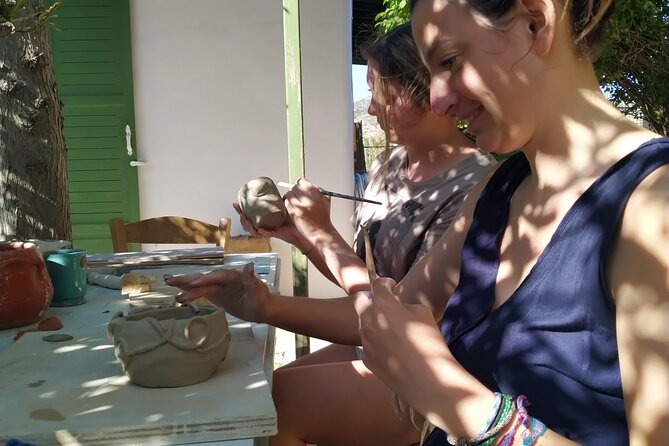
This class is designed around making clay feel safe to work with. The key idea is that you can correct mistakes. Clay gives you time to adjust thickness, repair seams, and refine your shape until you feel satisfied.
That lowers the stress level fast. Instead of trying to nail it on the first try, you learn to iterate. That is exactly how good ceramics are made.
You will also notice the teaching style: it tends to be welcoming and patient, with the instructor checking in, showing you technique, then giving you room to do your own version. That balance is ideal for first-timers. You get guidance without feeling micromanaged.
Also, clay work does something to your brain. The session feels grounding. The work is repetitive in a good way, which makes the time go by quickly.
Price and value: what $84.10 covers and where extra costs pop up
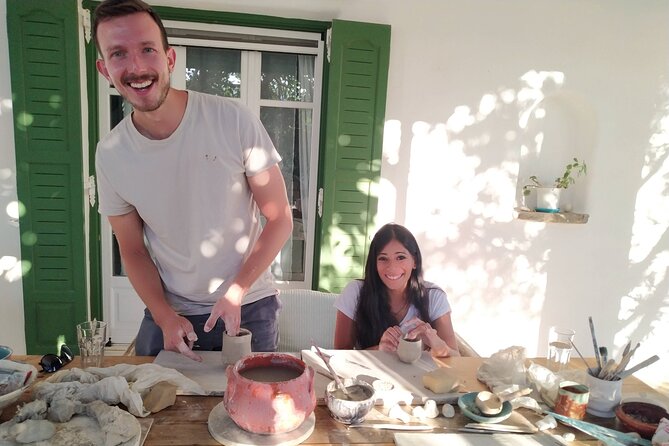
At $84.10 per person for about 3 hours, the value is mainly in two places: time and instruction. You are not paying for a passive show. You are paying for hands-on practice across multiple techniques and wheel learning, plus structured guidance through the stages of ceramics.
The main cost caveat is take-home delivery. If you want shipping, plan for:
- shipping cost based on the Greek Post office price table
- an extra 20% packing cost
So your total trip cost depends on your souvenir plan. If you make a piece you love and want it delivered, shipping can turn the class from a simple activity into a bigger purchase. If you are fine leaving the fired pottery behind, you can treat the class like a skill-building experience.
For many people, that is the sweet spot. You get something intangible that stays with you: the confidence to understand clay, the techniques you can repeat, and a new appreciation for how ceramics are made.
Who this class is best for in Paros
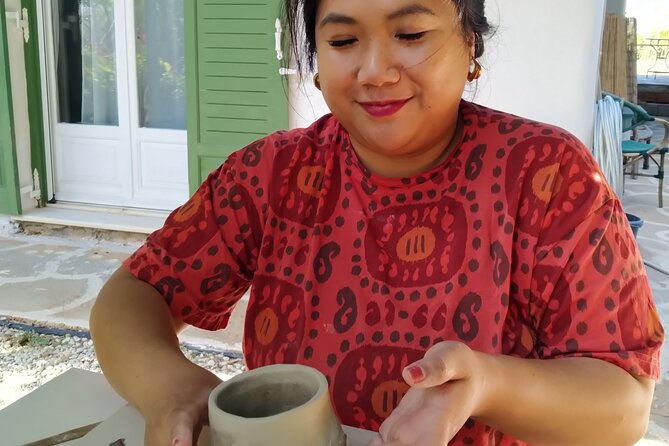
I think this fits best if you want an activity that is:
- creative but beginner-friendly
- relaxing, not high-energy
- hands-on with clear instruction
It is a good match for:
- couples who want a shared activity that is not centered on photos
- families with kids who can sit through a focused, guided session
- solo travelers who like learning something tactile and calming
If you hate waiting for stuff, or you need immediate take-home items the same day, you might find the two firings and shipping timeline annoying. But if you are flexible, the end result is real ceramic work, not just a tabletop craft.
Your practical plan: when to book and how to fit it into the day
This class is commonly booked ahead, on average about 20 days in advance. If you are traveling in a busy season or you have limited time in Paros, booking earlier gives you more schedule choices and reduces stress.
Since the experience is about three hours and returns to the same meeting point, it is easy to slot between beach time and dinner. Aim for a time when you are not rushing to catch another tour. Clay work is most enjoyable when you are not thinking about the next thing.
Language is English, and your ticket is mobile. That is convenient, especially if you are juggling other reservations.
For the meeting location, the listing gives a pinpoint in Pounta using a code format: 24Q6+C9 Pounta (and it also shows 24Q6+C9C). Use it in your maps app so you are not circling.
Should you book this Paros clay workshop?
Book it if you want a calm, hands-on Paros pottery class that teaches real techniques, not just a fun afternoon craft. I would especially recommend it if you like learning by doing and you want to try both hand-building methods (pinchpot, coiling, slab) and the pottery wheel.
Think twice if you are traveling with strict timing for take-home souvenirs. Your pieces need two firings, and shipping is optional but involves extra costs and a wait of about 15 days. If you only care about immediate objects to pack today, this may frustrate you.
Overall, if you can spare a half-day in Pounta and you are open to the idea that good pottery takes time, this is a strong use of your money and your attention.
FAQ
How long is the Playing and Creating with Clay class in Paros?
The class lasts about 3 hours.
What techniques will I learn during the class?
You will learn three hand-building techniques: pinchpot, coiling, and slab. You will also get time to try the pottery wheel.
Can I take my pottery home the same day?
The ceramics require two firings in a ceramic oven, and shipping is possible after completion, so same-day take-home is not part of the process described.
Is the class taught in English?
Yes, the class is offered in English.
Is shipping available for the pieces I make?
Yes. Shipping is possible after completion and takes about 15 days. Shipping cost is based on Greek Post office pricing, with an additional 20% packing cost.
What is the cancellation policy?
Free cancellation is available up to 24 hours in advance for a full refund. If you cancel less than 24 hours before the start time, the amount paid is not refunded.
Making Something in Paros

Every Other Paros Write-Up

Everything else we have written up around Paros






Greek Culture Shows & Workshops, side by side.
 ★ 4.7Athens: Ancient Greek Theater PerformanceFrom $352,481 reviews
 ★ 4.8Santorini: The Greek Wedding Show Entry TicketsFrom $96894 reviews
 ★ 4.5Athens Skip the Line: Open Air Ancient Greek Theatre PerformanceFrom $36520 reviews
 ★ 4.5The Greek Wedding Show – SantoriniFrom $102372 reviews
 ★ 5.0Zeus Cave, Lassithi Plateau, Olive Oil Factory, Kritza, PotteryFrom $119362 reviews
 ★ 4.7Rhodes: Sunset Cruise w/ Gourmet Buffet, Drinks & Live MusicFrom $89321 reviews
 ★ 3.5Athens Night Sightseeing Tour with Greek Dinner ShowFrom $96268 reviews
 ★ 4.8Crete:Zeus & Lassithi Plateau, OliveTasting, Kritza, PotteryFrom $111259 reviews
Sits on these lists