
Review · GREEK CULTURE SHOWS & WORKSHOPS
Steps to tradition: Greek Traditional Dances in Athens
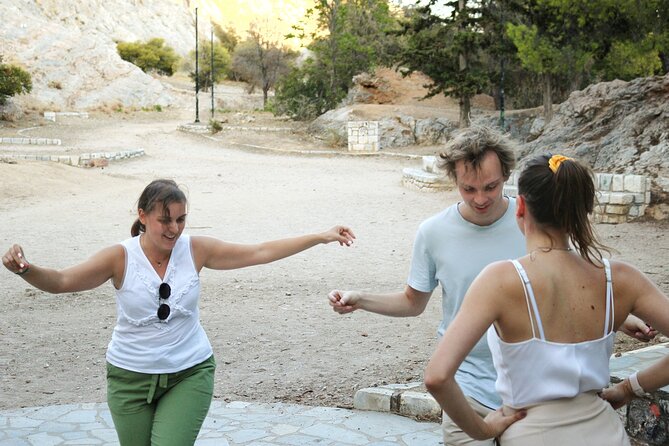
Hand in hand, Athens turns into a dance floor. This 2.5-hour class on Philopappou Hill lets you learn authentic Greek traditional dances with the Acropolis in view, led by Tania and her team. I love the step-by-step coaching that helps you feel confident fast, even if your feet are not used to Greek rhythms.
I also like the cultural threads you get along the way, so the movement feels connected to real people and real places, not just choreography. One consideration is the early 6:00 am start and the fact that the experience depends on good weather. If rain rolls in, you will need flexibility for a new date or a refund.
In This Review
- Key highlights at a glance
- Philopappou Hill at 6:00 am: meeting point, pace, and why early matters
- The 10-minute walk: getting your bearings on Philopappou
- How Tania teaches Greek dances: quick confidence, clear steps
- Circular dances, hand in hand: the tradition behind the steps
- What you actually learn in 2.5 hours: dances, regions, and a real workout
- Group size, instructors, and the team vibe (Tania, Kostas, and more)
- Acropolis views while you dance: using the setting, not just seeing it
- Photos, certificate, and QR playlist: what you take home
- Price and value: what $41.52 gets you in Athens
- Who should book this Greek traditional dance class
- My bottom line: should you book Steps to Tradition?
- FAQ
- Where does the dance class start?
- What time does the experience start?
- How long is the experience?
- How big is the group?
- Is it suitable for beginners and most people?
- Will I receive a mobile ticket?
- What happens if the weather is poor?
- What if the minimum number of travelers is not met?
- Can I get a full refund if I cancel?
- Are service animals allowed?
Key highlights at a glance
- Philopappou Hill, with Acropolis views from the dance spot
- Tania teaching real regional Greek dances, step by step
- Circular, hand-in-hand dancing with ancient roots (Minoan era, around 2000 B.C.)
- Small groups up to 12 travelers for more attention
- You leave with a participation certificate and QR code playlist
- Good workout, and lots of fun, not stiff and formal
Other evenings of music, dance and craft


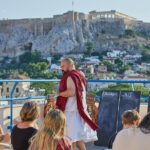
Philopappou Hill at 6:00 am: meeting point, pace, and why early matters
You start at Dionysiou Areopagitou & Apostolou Pavlou, Athina 117 41, Greece. The class begins at 6:00 am and finishes back at the same meeting point, which keeps logistics simple when you are trying to line up the rest of your Athens day.
The early start is not just for convenience. The walk to the dance area is part of the experience, and starting at dawn helps you dance in calmer conditions, with cooler air and fewer people around. Plan to arrive a few minutes early so you can start the day unhurried.
Before the dancing begins, you do a 10-minute walking route with a view of the Acropolis. Along the way, you get orientation and context, including references like Socrates’ Prison. Then the group moves into a quieter natural spot on the hill, where you start learning the dances.
The 10-minute walk: getting your bearings on Philopappou
I like that the meeting time is paired with an easy warm-up walk. You are not dropped into the middle of a lesson without context. You get a quick route first, then settle into a spot where it is easier to focus on music and movement.
That walk also helps you connect the setting to the themes of the class. Philopappou is not just a backdrop, it is part of the story you are learning. When the Acropolis shows up in your line of sight, you immediately understand why this location works so well for traditional circular dances.
Some groups mention a beautiful, quiet church and park nearby as part of the experience area. Either way, you are aiming for a calm pocket of the hill, not a noisy square. If you enjoy learning while standing in a real place, this structure fits that style.
How Tania teaches Greek dances: quick confidence, clear steps
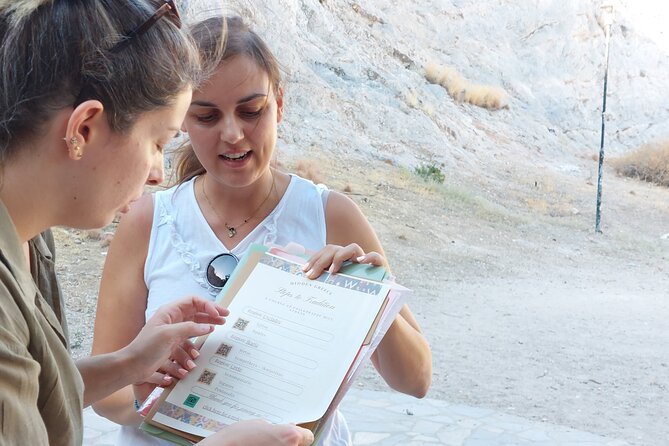
The main teacher is Tania, an experienced traditional dances teacher who leads you through the lesson. Her approach is practical: you learn by doing, with step-by-step instruction that helps you feel successful rather than lost.
From the reviews, you can expect a lot of attention to the basics. People highlight how clearly the steps are explained, plus the way the instructors correct and encourage you as you go. You are also taught to follow the rhythm and the pattern of the dance, which is key for circular dances, where your timing affects everyone.
You will learn several traditional dances during the session. Reviews commonly mention 5 to 6 dances, and one person reported 6 to 7. That variation makes sense because the exact set depends on the group and flow of the class, but the promise is the same: real dances from major regions of Greece, not just a single routine.
The method also sounds very friendly for first-timers. One review described the instructors making the group feel at ease right away. So if you are the kind of person who worries you will look awkward, you should feel better about showing up anyway.
Circular dances, hand in hand: the tradition behind the steps
Here is what makes this class more than a fun morning workout. Circular dancing is not random. The idea is tied to ancient Greek traditions, and the tour frames it as a living custom with roots going back to around 2000 B.C. and Minoan civilization in Crete.
You do not need to memorize a timeline to get it. What you want is the feeling that these dances have been carried forward and changed over time. The class presents the dances as evolving through eras and regional cultures, passed along through families and villages.
And you experience that “living” quality with your body. When you dance in a circle with people hand in hand, you start to understand the rhythm as a shared thing, not a solo performance. That is why so many people talk about building a small community during the class.
Expect emotion and meaning to come through the instruction. Reviews mention cultural insights and stories tied to the music, and that matters because you learn faster when you know what you are doing and why it fits.
What you actually learn in 2.5 hours: dances, regions, and a real workout
The duration is about 2 hours 30 minutes, which is long enough to learn multiple dances without feeling rushed. In that time, you start with basics, then build up as the group finds the rhythm together.
The dances are described as characteristic of main regions of Greece. Some reviews mention learning dances ranging from simpler steps to more energetic styles, including Cretan dances with quick steps and kicks. If that sounds like a range, it is. The instructors seem to adapt to the group and to your comfort level, encouraging you as you progress.
This is also a physical experience. Several reviews call it a great workout. That is not surprising when you keep moving, turning, and staying in rhythm with a group. If you are visiting Athens and want a hands-on activity that gets your heart rate up, this is one of the better options.
And you will likely leave with more than muscle memory. One review highlighted that after the class, people felt prepared to dance in a tavern like locals. You probably will not leave as a professional, but you might walk into Greek music later and actually understand what your body is responding to.
- Athens: Cape Sounion & Poseidon Temple Sunset Half-Day Trip★ 4.8 · 8,241 reviews
- All Day Cruise -3 Islands to Agistri,Moni, Aegina with lunch and drinks included★ 5.0 · 4,958 reviews
- Athens, Piraeus, and Coastline: Blue Hop-On Hop-Off Bus★ 3.9 · 4,849 reviews
- Greek Food Walking Tour in Athens★ 5.0 · 4,740 reviews
Group size, instructors, and the team vibe (Tania, Kostas, and more)
The group limit is 12 travelers. That number is important. Smaller groups usually mean faster feedback, more chances to correct your steps, and less time standing and watching.
Tania is the lead instructor. Many reviews also mention Kostas as part of the teaching team, often alongside Tania. One detailed review also names additional instructors, including Alexandra and Konstantinos, especially in a smaller group situation. That suggests the team can rotate a bit depending on the day and group makeup.
The vibe matters as much as the instruction. Reviews repeatedly describe the teachers as kind, patient, and encouraging. For your trip, that translates to a lower stress level, especially if you are traveling solo or with kids who want something active but not intimidating.
If you want a class that feels like a shared morning with locals instead of a staged performance, this is built for that.
Acropolis views while you dance: using the setting, not just seeing it
Athens has a lot of impressive “look at that” sights. This experience adds a different layer: you move with the view in front of you.
The lesson begins with a walk that includes Acropolis views. Then the dancing happens up on Philopappou, where the scenery stays connected to the music and the circle. Reviews specifically mention being able to see the Acropolis from the quiet church and park area where they danced.
It is one of those rare moments where the city is not only something you photograph. It becomes part of the sensory experience. You see it, you hear music tied to Greek culture, and you feel the rhythm in your legs at the same time.
That combo is why this keeps landing as a highlight on trips. It is not only the activity, it is the setting working with it.
Photos, certificate, and QR playlist: what you take home
You are not just leaving with a vague memory of steps. Many reviews mention that someone on the team records the dancing and takes photos, so you can keep a clear reminder of what you learned.
You also receive a participation certificate afterward. In at least one review, the certificate included QR codes to a Greek traditional playlist plus an overview of the dances learned and where they are danced most often. That is genuinely useful. When you get home, you can replay the music and remember the movements.
You also get practical touches like water during the class. Reviews also mention an ouzo and food touch as a nice bonus. The safest way to think about this is: there can be small hospitality additions, but the core of the experience is the teaching and dancing.
If you like activities where the payoff continues after your return, this one is designed for that.
Price and value: what $41.52 gets you in Athens
The price is $41.52 per person for about 2 hours 30 minutes. That is not cheap, but it also is not inflated for the time and hands-on nature of the activity.
Here is the value math I see:
- You are not buying a single dance clip. You are learning multiple regional dances step by step.
- You are not in a huge crowd. The class caps at 12, and that helps you actually learn.
- You are getting more than movement. The instructors share cultural stories and context, plus you leave with a certificate and QR-linked playlist.
Also, the location has real leverage. Philopappou is a high-value setting in itself, with Acropolis views. You are paying for skilled teaching plus a special place to practice.
If you are comparing this to “museum plus walking tour plus brochure,” this is more physical and more memorable. If you only want quiet sightseeing and have no interest in music and rhythm, it may feel like too much. But if you want an active Athens moment, it is a solid buy.
Who should book this Greek traditional dance class
This works especially well if you:
- Want a hands-on cultural experience that is not just listening
- Like music, rhythm, and learning by doing
- Enjoy active mornings and want something different from standard Athens tours
- Are okay with a 6:00 am start for a better, quieter vibe on the hill
Families can do it too. One review mentions a family with ages 13 and 11, and they had a great time. Also, the tour notes that most travelers can participate, which is a helpful signal if you are worried about being “too uncoordinated.”
If you are planning a dense Athens itinerary, this can be a great anchor. It is early enough that you still have time later for museums, neighborhoods, and dinner.
My bottom line: should you book Steps to Tradition?
Book it if you want a memorable Athens moment built around real movement, real instruction, and a meaningful setting. The biggest wins are the small group size, the step-by-step teaching from Tania (often with Kostas), and the fact that you learn multiple dances in one session. Add in the Acropolis views and the story behind circular dances, and it becomes the kind of experience that stays in your day long after the music stops.
Skip it if you hate early mornings or you know you will be unhappy with weather-related changes. Since the experience requires good weather and may shift dates if needed, bring flexibility.
If you are choosing one “do something” culture activity in Athens that mixes body, history, and fun, this is a strong candidate. Just show up with comfortable shoes, a willingness to follow directions, and the mindset that dancing is a group sport, not a solo test.
FAQ
Where does the dance class start?
You meet at Dionysiou Areopagitou & Apostolou Pavlou, Athina 117 41, Greece.
What time does the experience start?
The start time is 6:00 am.
How long is the experience?
It runs about 2 hours 30 minutes (approx.).
How big is the group?
This activity has a maximum of 12 travelers.
Is it suitable for beginners and most people?
Yes. The experience states that most travelers can participate.
Will I receive a mobile ticket?
Yes. The experience includes a mobile ticket.
What happens if the weather is poor?
The experience requires good weather. If it is canceled due to poor weather, you will be offered a different date or a full refund.
What if the minimum number of travelers is not met?
If the experience is canceled because the minimum is not met, you will be offered a different date or a full refund.
Can I get a full refund if I cancel?
You can cancel up to 24 hours in advance for a full refund.
Are service animals allowed?
Yes. Service animals are allowed.
Every Other Athens Write-Up
- All Day Cruise -3 Islands to Agistri,Moni, Aegina with lunch and drinks included
★ 5.0 · 4,958 reviews
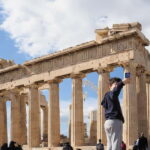





Music, Dance and Craft
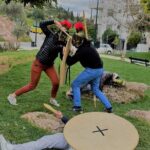
Everything else we have written up around Athens


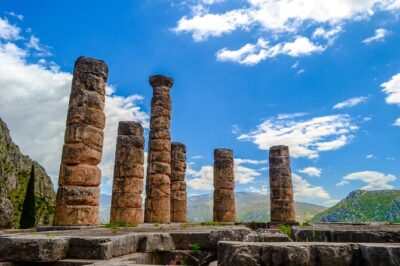




Greek Culture Shows & Workshops, side by side.
 ★ 4.7Athens: Ancient Greek Theater PerformanceFrom $352,481 reviews
 ★ 4.8Santorini: The Greek Wedding Show Entry TicketsFrom $96894 reviews
 ★ 4.5Athens Skip the Line: Open Air Ancient Greek Theatre PerformanceFrom $36520 reviews
 ★ 4.5The Greek Wedding Show – SantoriniFrom $102372 reviews
 ★ 5.0Zeus Cave, Lassithi Plateau, Olive Oil Factory, Kritza, PotteryFrom $119362 reviews
 ★ 4.7Rhodes: Sunset Cruise w/ Gourmet Buffet, Drinks & Live MusicFrom $89321 reviews
 ★ 3.5Athens Night Sightseeing Tour with Greek Dinner ShowFrom $96268 reviews
 ★ 4.8Crete:Zeus & Lassithi Plateau, OliveTasting, Kritza, PotteryFrom $111259 reviews
Sits on these lists