

Review · TOURS
Unexpected Athens Orientation Tour
Athens hits different when you stop chasing only the headline sites. This 4-hour orientation walk ties together 2,500 years of change, with an East-West thread you can feel in the streets. I like the way it connects the modern European city to earlier worlds, and I also like the practical route that keeps you moving through real neighborhoods instead of long, empty detours. One thing to consider: you will do a lot on foot, so comfortable shoes matter.
Two standouts for me are the focus on 19th-century landmarks alongside the older layers of the city, and the chance to see how Ottoman neighborhoods still leave fingerprints in Psiri and Monastiraki. The guide names and pacing show up again and again in the reviews, like Simos and Andreas doing a tight, friendly job. The only real drawback is that the World War II prison stop is not always available, since it is closed on Mondays and Tuesdays.
In This Review
- Key highlights you will actually care about
- A 4-hour Athens reset: why this walk feels different
- Where you start, where you end, and how to use the included map
- Syntagma, Kolonaki, and the European-capital story you can see
- Exarcheia and Psiri: street-level Athens with a point of view
- Ottoman footprints in Psiri and Monastiraki
- 19th-century industrial landmarks and royal palaces
- The World War II prison stop, plus ancient rivers and tombs
- Architecture that isn’t just Greek, explained in plain language
- Squares, central markets, and the Athens you’ll actually use next
- Price and value: is $62 worth it?
- What to wear, how to pace yourself, and what you will miss
- Who this tour fits best
- Should you book Unexpected Athens Orientation Tour?
- FAQ
- How long is the Unexpected Athens Orientation Tour?
- What does it cost per person?
- Where does the tour start and where does it end?
- Which languages are offered?
- Is the World War II prison stop always included?
- What should I bring?
- Is food included in the tour price?
Key highlights you will actually care about
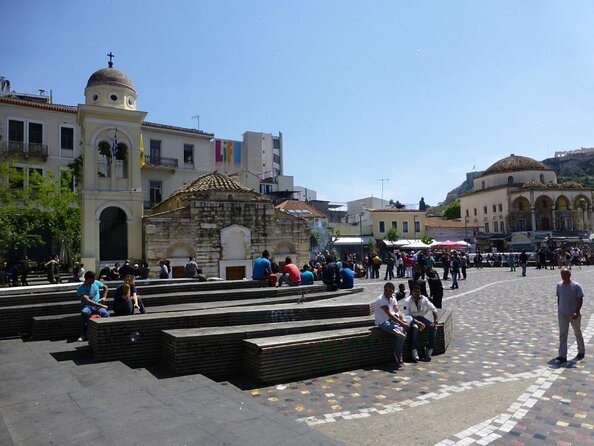
- Royal palace and industrial-era buildings in the same flow, so Athens history feels less like a school lesson
- World War II prison visit when it is open, for a sharper view of the 20th century
- Ottoman-era neighborhood walk through Psiri and Monastiraki, where the old city still shows through
- Major neoclassical institutions like the Parliament, Academy, University, and National Library, explained as part of building a European capital
- Squares and markets (Omonia, Kotzia, central markets) that help you understand how daily Athens fits with the ancient story
- A map included that ties your route to 2,500 years of urban change
Not settled on one yet? These are the other Athens trips that made our review list.
- All Day Cruise -3 Islands to Agistri,Moni, Aegina with lunch and drinks included
★ 5.0 · 4,958 reviews





A 4-hour Athens reset: why this walk feels different
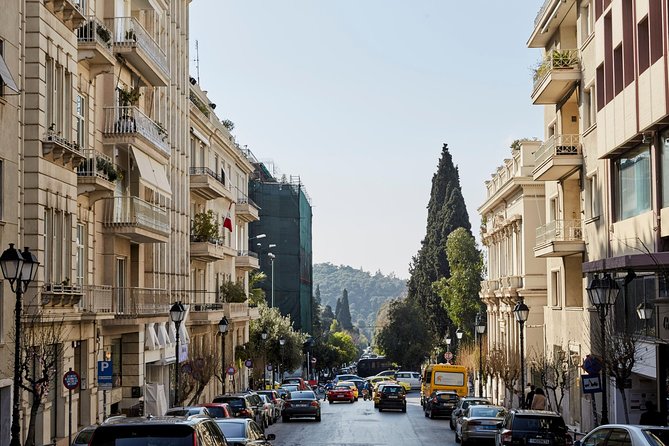
Athens can be a blur. One minute you’re staring at temples, the next you’re stuck in traffic, and somehow it all feels disconnected. This tour works because it treats Athens like a living timeline, where old and new keep bumping into each other.
I like that you get an orientation that isn’t just “here’s what the big ruins are.” You’re walking through neighborhoods and landmark buildings that help explain how Athens turned into the capital you see today. You also get a guide who keeps the pace steady, which matters when you’re on foot for about four hours.
The goal is not to overload you with dates. Instead, you leave with a clearer mental map of where the city’s power shifted over time, and why certain buildings and streets still matter.
Where you start, where you end, and how to use the included map
You can start in one of two places: Syntagma Square or Kolonaki. Either starting point is useful. Syntagma is the city’s main front door, so it’s great if you want to orient fast. Kolonaki has a different vibe, more elegant and stylish, which helps if you’ve already spent time around central sights.
You finish at Monastiraki Square, which is a smart end point. It’s a natural place to keep exploring on your own, whether you want food, browsing, or quick connections back to your hotel. Finishing there also matches the tour’s theme, because Monastiraki is where ancient, Ottoman, and modern Athens all show up close together.
The tour includes a city map highlighting transformations over 2,500 years. I’d treat that map like a mini compass. Even if you don’t follow every mark, it helps you remember what you saw, and it makes the neighborhoods easier to navigate later.
Syntagma, Kolonaki, and the European-capital story you can see
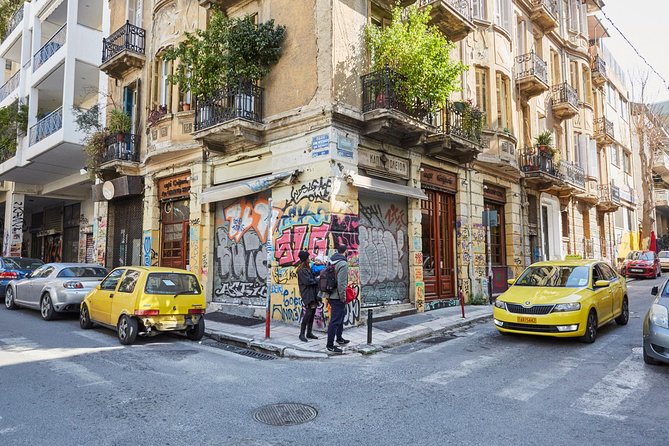
Early in the walk, you’re steered toward the grand civic core. That includes big institutions tied to the modern state: Parliament, the Academy, the University, and the National Library. These buildings aren’t just impressive architecture. They’re also proof that the new Athens wanted to look and function like a European capital.
I like this angle because it helps you understand why Athens feels both classic and modern at once. The city didn’t just inherit ancient greatness and stop. It re-built itself, piece by piece, using architecture and institutions to signal its place in the 19th and 20th centuries.
You’ll also pass key squares along the way, including Omonia Square and Kotzia Square. Those stops matter more than they seem. They act like waypoints where you can see how the city’s “center of gravity” has moved over time, and how public space shapes daily life.
Exarcheia and Psiri: street-level Athens with a point of view
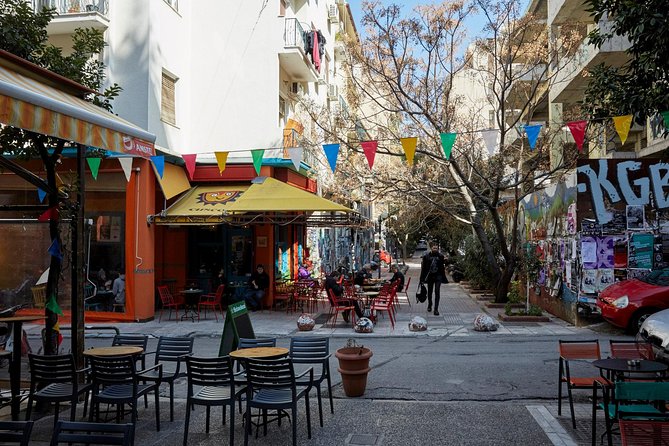
As the walk shifts into Exarcheia and then Psiri, Athens becomes more personal. These aren’t just “pretty streets.” They’re neighborhoods with identity, where you see how culture and politics mingle with everyday routines.
Exarcheia, in particular, is a part of Athens that tends to surprise people. Even if you’ve been to Athens before, this tour is designed to put you in areas that don’t always fit the standard postcard route. You get context for what you’re seeing, so it doesn’t feel like you’re wandering randomly.
In Psiri, the tour leans into the theme of layers. You see how older structures and street patterns stay in circulation, even as the city around them changes. This is where the walking format pays off: at street level, you can clock the differences faster than you could from photos.
I also appreciate the pacing. Several guide experiences in the feedback mention great timing and flow. That’s important here because you’ll be moving through different “modes” of Athens, from grand buildings to tighter, more textured neighborhoods.
Ottoman footprints in Psiri and Monastiraki
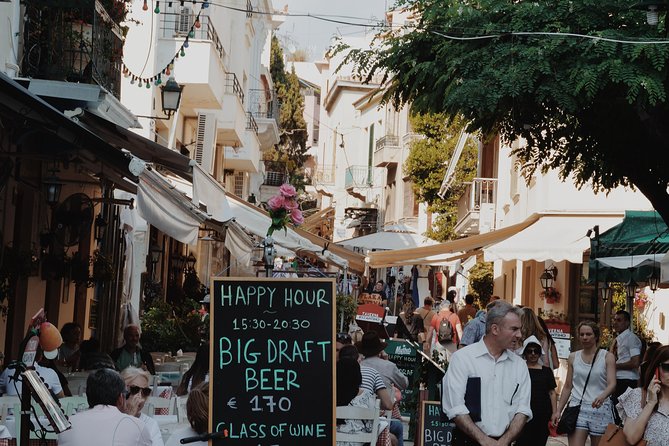
One of the most useful parts of this tour is how it frames the Ottoman neighborhoods. You walk through Psiri and Monastiraki, and the point is not just that Ottoman architecture once existed. The point is that you can still read its impact in how the old city was organized.
This is where Athens becomes less about single monuments and more about human geography. Markets, streets, and building styles create a different feel than what you get in the official civic center. And when you see those differences in one walking arc, they click into place.
If you like “how did this city work?” questions, you’ll enjoy this section. You’re learning the missing link between the ancient past and the fast, modern present. You also get a sense of where East-West influences blended, and where they didn’t.
- Athens: Cape Sounion & Poseidon Temple Sunset Half-Day Trip★ 4.8 · 8,241 reviews
- All Day Cruise -3 Islands to Agistri,Moni, Aegina with lunch and drinks included★ 5.0 · 4,958 reviews
- Athens, Piraeus, and Coastline: Blue Hop-On Hop-Off Bus★ 3.9 · 4,849 reviews
- Greek Food Walking Tour in Athens★ 5.0 · 4,740 reviews
19th-century industrial landmarks and royal palaces
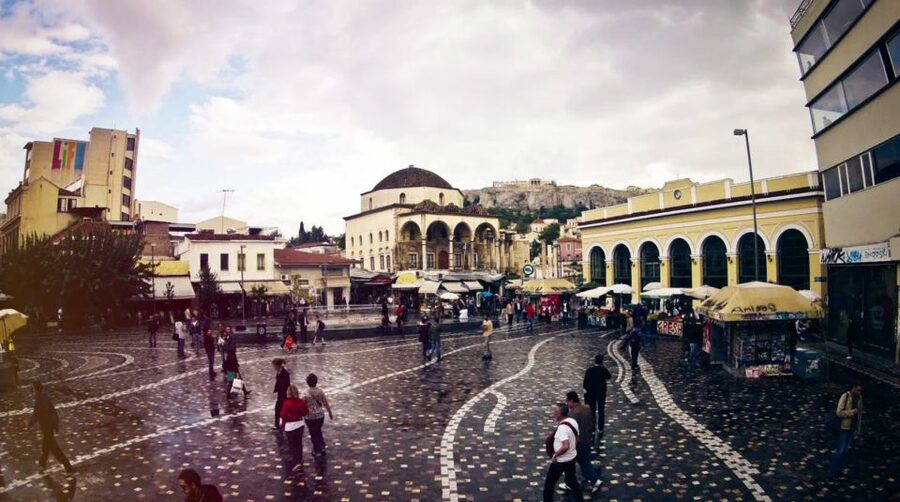
Athens is often presented as either ancient Greece or modern Greece. This tour refuses that split by bringing in the 19th-century industrial revolution landmarks and royal palaces. That shift matters, because it shows you the city’s growth and ambition when Athens was becoming a new political and cultural hub.
Royal palaces and industrial landmarks also help you understand the “power buildings” theme. They tell you where money, authority, and infrastructure shaped the city. They also add contrast, which keeps the walk from feeling like one long march through similar-looking sights.
You’ll learn what these landmarks represented as Athens changed course. The guide ties the story back to the present, so you can understand why certain areas developed the way they did.
The World War II prison stop, plus ancient rivers and tombs

A highlight for many people is the stop at a World War II prison. It adds a hard edge to the tour, because it brings 20th-century history into the same walk as ancient and Ottoman Athens. You do need to plan around the schedule: it is closed on Mondays and Tuesdays.
If the prison stop is not available on your day, don’t assume the tour becomes weak. The broader route is built to connect themes. You’ll still get the “layers of Athens” approach through other stops that keep the timeline moving.
Another part of the experience includes moments tied to older life and landscape, such as ancient rivers still flowing and tombs of a foregone era. You’ll see how even the natural and burial features help explain why ancient Athens lasted so long in the public imagination. It also makes you notice the city’s continuity, not just its ruins.
Architecture that isn’t just Greek, explained in plain language

This walking tour also pays attention to landmark buildings of international architectural interest. You might not think of Athens that way at first, but the city’s modern chapters drew on broader European building styles and planning ideas.
The value here is the explanation. You’re not just told a building is impressive. You learn what role it played in shaping the look and function of a European capital. That’s how architecture becomes a clue, not a postcard.
I find that kind of context helps even if you don’t consider yourself an “architecture person.” It turns the walk into pattern recognition.
Squares, central markets, and the Athens you’ll actually use next

The tour moves through central markets and major public squares, including Omonia and Kotzia. These stops matter because you’ll feel more comfortable using them later in your trip.
When you understand where people gather, you understand where the city’s energy lives. And because this tour connects squares and markets to the larger timeline, your first time passing through these places doesn’t feel random.
This is also where you get a sense of the city’s ongoing challenges, not just its monuments. One guide helped people get beyond tourist-only choices by pointing out a taverna for non-touristy food and a good coffee spot. That kind of advice is what makes an orientation feel useful.
Price and value: is $62 worth it?
At $62 per person for a 4-hour walking tour, the price is in the sweet spot for a guided orientation. You are paying for three things that are hard to replicate on your own.
First, you’re paying for a guide who can connect ancient, Ottoman, and modern Athens into a single story. Without that, it’s easy to see buildings and still not understand what links them.
Second, you’re paying for time. Walking only gets you so far if you stop for every question. This tour reduces the guesswork by shaping your route and explaining the why behind the what.
Third, you get a map that ties your walk to 2,500 years of change. That’s a practical souvenir, not just a paper folder.
You also get flexibility: it includes English or French-speaking guides, private group availability, and you can choose between two starting points. For solo travelers who want structure, or couples who want a shared storyline, this is a solid value.
What to wear, how to pace yourself, and what you will miss
The tour is four hours on foot, so you’ll want comfortable shoes. Since the stops mix open streets and building exteriors, plan on moving steadily, not sightseeing at a slow museum pace.
Food and drinks are not included. That’s normal for a city walk, but it does mean you should plan a meal before or after. If you tend to get hungry, bring a snack for yourself, even though the tour price won’t include it.
Also, remember that the prison stop depends on the day. If your schedule falls on a Monday or Tuesday, the tour still offers plenty, but you should expect that one specific historical site might not be on the route.
Who this tour fits best
This is ideal for:
- First-time visitors who want a smart orientation fast, without staying stuck only on the Acropolis track
- Returning visitors who like Athens, but want to see different neighborhoods and understand modern Athens better
- People who enjoy history that feels tied to daily life, squares, markets, and neighborhoods
- Anyone who prefers walking with a guide for context, especially if you like learning in a natural street setting
If you want only famous ancient ruins in one go, you might feel the balance is different. This tour aims at the connective tissue of Athens, not just the headline monuments.
Should you book Unexpected Athens Orientation Tour?
If you want to understand Athens as a city that keeps reinventing itself, I’d book it. The strongest draw is the way it links major institutions, 19th-century royal and industrial landmarks, Ottoman neighborhood footprints, and even a World War II prison stop when open. That combination helps you build a mental map that lasts past day one.
Book it especially if you’re curious about how East-West influences show up in streets and neighborhoods, not just museum walls. It’s also a good choice when you want a guide to set the pace and keep the story coherent for about four hours.
One last nudge: come with walking energy. Bring comfortable shoes, set aside your next meal plan, and use the included map to keep your bearings. You’ll leave with Athens feeling less like separate eras and more like one continuous, human city.
FAQ
How long is the Unexpected Athens Orientation Tour?
The tour lasts 4 hours.
What does it cost per person?
The price is $62 per person.
Where does the tour start and where does it end?
You can start at Syntagma Square or Kolonaki, and the tour ends at Monastiraki Square.
Which languages are offered?
The guide provides English or French.
Is the World War II prison stop always included?
No. The World War II prison is closed on Mondays and Tuesdays, so it may not be available on those days.
What should I bring?
Wear comfortable shoes.
Is food included in the tour price?
No. Food and drinks are not included.
The Rest of Athens



Every Other Athens Write-Up
- All Day Cruise -3 Islands to Agistri,Moni, Aegina with lunch and drinks included
★ 5.0 · 4,958 reviews

Everything else we have written up around Athens





Tours, side by side.
 ★ 4.8Athens: Acropolis, Parthenon & Acropolis Museum Guided TourFrom $409,316 reviews
 ★ 4.6Athens: Acropolis and Parthenon Guided Walking TourFrom $385,882 reviews
 ★ 5.0Greek Food Walking Tour in AthensFrom $874,740 reviews
 ★ 4.3Athens: City Sightseeing Hop-On Hop-Off Bus TourFrom $254,520 reviews
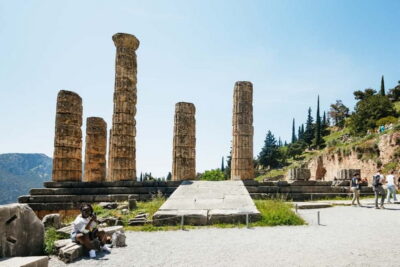 ★ 4.6Athens: Mythology of Delphi, Museum and Arachova Guided TourFrom $314,008 reviews
 ★ 4.9Zakynthos: Shipwreck Beach with Blue Caves Land & Sea TourFrom $583,774 reviews
 ★ 5.0Best of Athens Half Day Private TourFrom $913,714 reviews
★ 4.8Athens: Acropolis, Parthenon & Acropolis Museum Guided TourFrom $413,579 reviews