
Review · GUIDED
Athens: Guided Urban Street-Art Tour
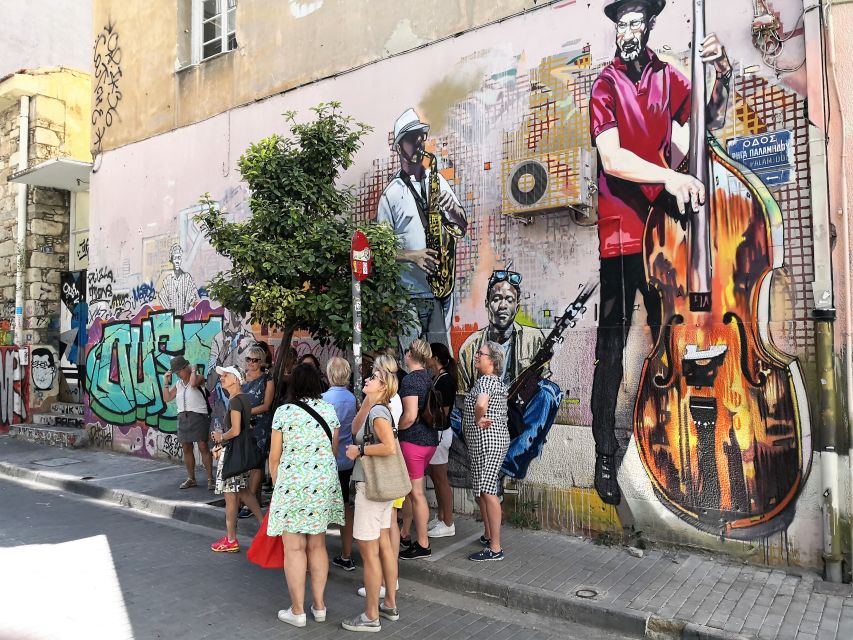
Street art is politics you can walk through. This 2-hour Athens guided street-art tour turns everyday streets into a story you can read, with stops across central neighborhoods like Monastiraki, Psyri, and Metaxourgeio. You’re not just hunting photos, you’re learning how Athens artists react to social change, economic pressure, and the everyday mood of the city.
I especially love how the guide helps you decode the messages in drawings, symbols, and styles, instead of treating graffiti like random decoration. The other big win for me is the route itself, because you move through hidden alleys and courtyards, then end in a different part of town with a totally new sense of place.
One consideration: it’s still a walking tour with a decent pace, and the themes can get political and heavy since the crisis shaped a lot of the art. If you hate modern commentary on current events, you might prefer a more classic Athens highlight tour instead.
In This Review
- Quick Takes Before You Go
- Why Athens Street Art Works So Well on Foot
- Meeting Point at Lonis, Athinas 7, Next to Monastiraki Metro
- Monastiraki, the Warm-Up District With Big City Contrasts
- Psyri, Where Street Art Starts Feeling Personal
- Platia Iroon, a Breather That Still Feels Like Part of the Story
- Sarri, Smaller Streets and the Sense of Discovery
- Omonoia, Modern Tension on the Walls
- Metaxourgeio, the Payoff Finish With an After-Feel
- Price and Value for a $47, Two-Hour Walking Tour
- What You Actually Learn on This Tour
- Who This Tour Is Best For
- Tips to Get the Most From Your Walk
- Should You Book This Athens Street-Art Tour?
- FAQ
- How long is the Athens guided street-art tour?
- How much does the tour cost?
- Where do I meet the guide?
- Is the tour in English?
- What is included in the price?
- Are food and drinks included?
- What cancellation terms are listed?
- Is it a private tour or a group tour?
Quick Takes Before You Go
- Start right by Monastiraki, then work across several central districts in one walk.
- Learn to read street art through context, symbols, and technique, not just visuals.
- Follow how the crisis changed artists, linking past and present themes on building walls.
- Small group energy tends to mean more questions and conversation at each stop.
- Finish at Metaxourgeio Square, so you end with options for a late coffee or dinner nearby.
Other Athens bookings where a guide comes along



Why Athens Street Art Works So Well on Foot
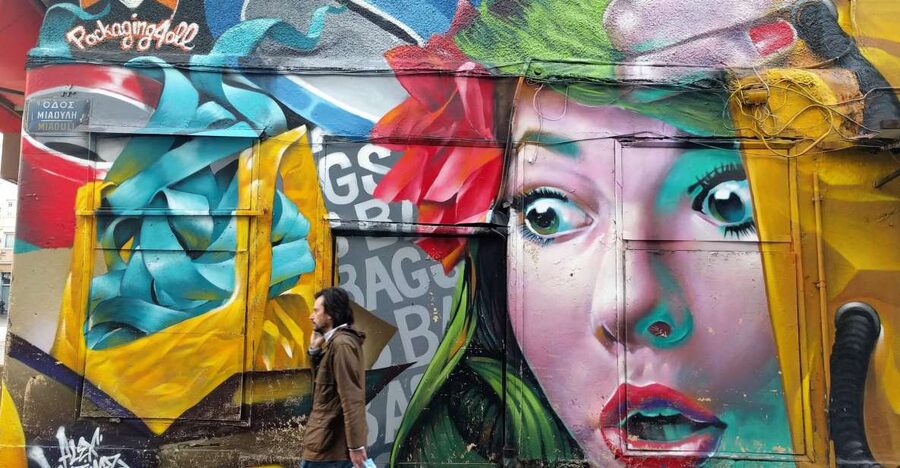
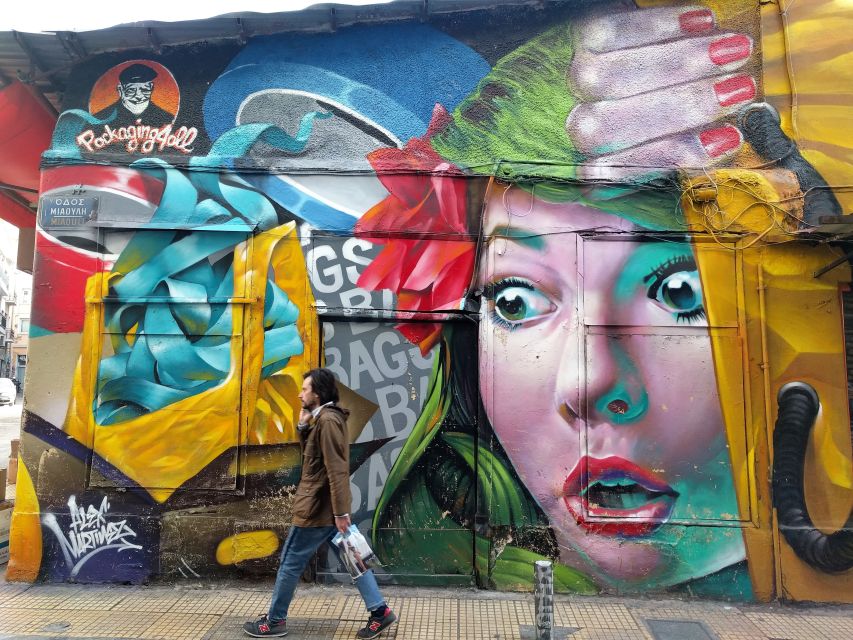
Athens street art has a gift for staying in your head. Instead of grand museum labels, you get meaning right where the city lives, on facades, shutters, garage doors, and alley walls. In a city like this, that matters, because what you see on a wall often reflects what you feel on the sidewalk.
This tour is built for that kind of city reading. You get an English-speaking guide who explains not only the art but also the social, political, and financial backdrop Greece has lived through. The result is you stop seeing graffiti as a background texture, and start treating it as local commentary.
And you’ll walk through neighborhoods that many first-time visitors only pass through on the way to something else. The route is short enough to be doable, but varied enough to make Athens feel bigger than the usual sightseeing loop.
Meeting Point at Lonis, Athinas 7, Next to Monastiraki Metro
You’ll begin at Ζαχαροπλαστείο (MAKARON) Lonis, on Athinas 7, right next to the Monastiraki metro station exit. It’s a smart meeting spot because Monastiraki is one of the easiest hubs to reach, and it’s also where the city’s energy is already loud.
Plan to arrive a few minutes early so you can settle in before the walk starts. If you’re using the metro, the simplest move is to use the Athinas street exit and look for Lonis the pastry shop landmark.
One practical tip: Athens streets can look like they blend together fast. When you meet, take a second to identify the exit direction you’ll be heading toward later, so you don’t start the tour already playing catch-up.
Monastiraki, the Warm-Up District With Big City Contrasts
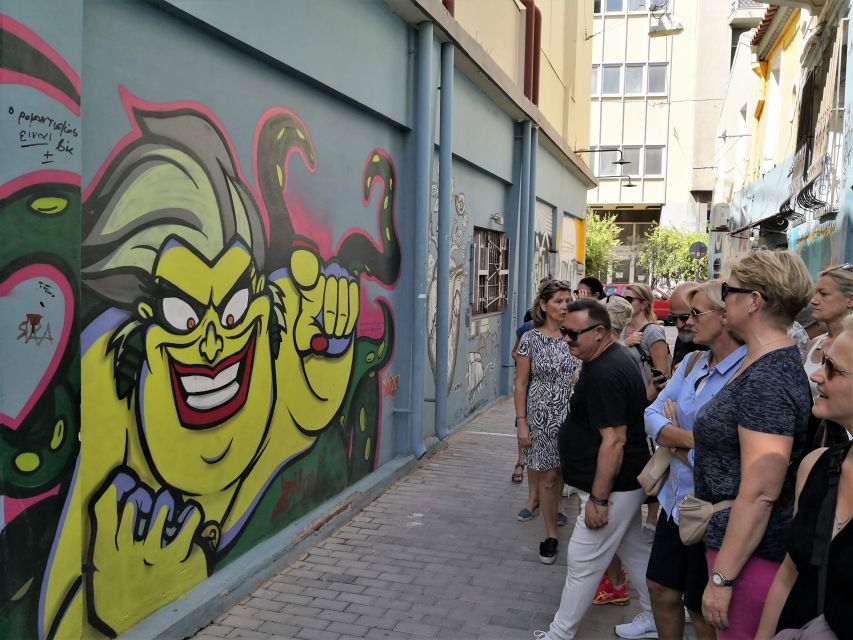
Your first movement is a short walk into Monastiraki, about ten minutes from the start. This is a great place to begin because the area gives you quick contrast. You’ll notice how old-school street-level life sits next to newer voices, including artists who use walls to respond to the present.
What I like about starting here is that it teaches you the basic skill you’ll use all tour: looking up, then looking again. Street art in Athens often works like a layered conversation, with imagery, text, and style hinting at different time periods and different pressures.
You’ll also start shifting from visitor mode to reader mode. The guide’s focus on decoding messages and images kicks in early, so you’re not relying on luck to “get it.” By the time you leave Monastiraki, you should already know what questions to ask yourself when you spot a new piece.
Psyri, Where Street Art Starts Feeling Personal
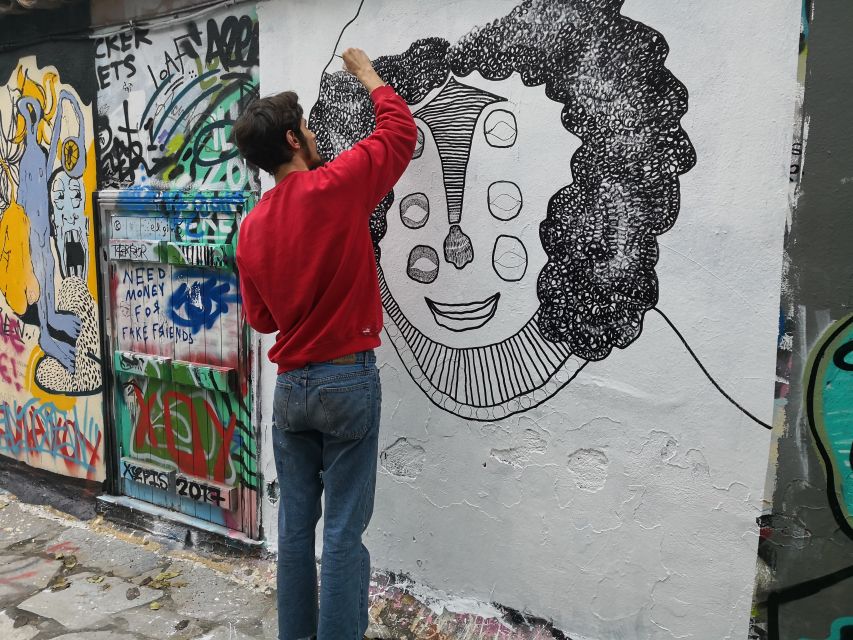
Next comes Psyri, roughly forty minutes of walking through the area. This is where the tour’s “another side of Athens” promise becomes real. Psyri tends to feel like a district with its own tempo, and that matters because street art works best when you understand the emotional tone of the neighborhood.
During this part, you’re meant to connect what you see with why it exists. The tour talks about how socio-economical factors, including the crisis, affected urban culture and influenced local artists. In other words, you’re not just learning styles, you’re learning motivations.
This is also a good stretch to ask questions. Guides on this tour are often praised for explaining the background of specific works and artists, and for keeping a steady pace so everyone can see what’s in front of them. If you’re the type who likes to stop and inspect details, this segment gives you that breathing room while still moving forward.
If you’re thinking about photo strategy, I’d suggest doing a quick wide shot, then a close-up. Athens murals can be big from a distance, but the meaning often lives in small choices: a specific symbol, a face expression, a phrase that hits differently once you know the context.
Platia Iroon, a Breather That Still Feels Like Part of the Story
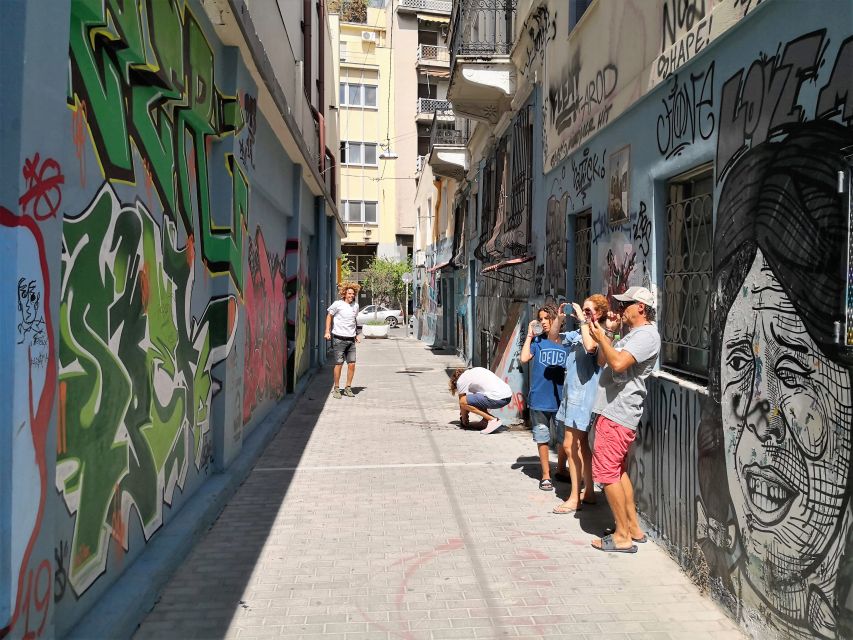
You then move to Platia Iroon for a shorter stretch, about ten minutes of walking. Platia Iroon is a nice reset point because it breaks up the constant alley-to-alley movement with a more open feeling. That can help you regroup, refocus, and keep your eyes sharp for the next set of walls.
Even in a shorter stop like this, the tour’s main job is consistent: connecting street art to the city’s past and current situation. You’re not just “passing through a place,” you’re learning how themes echo across neighborhoods, even when the streets look different.
This is also a good time to notice technique changes. Street art isn’t one thing. You may see differences in lettering style, color layering, and how artists use surfaces. When you learn to spot technique, you’ll start identifying artists’ approaches faster later, even on your own.
- Athens: Acropolis & up to 5 Archaeological Sites Combo Pass★ 4.4 · 12,619 reviews
- Athens: Acropolis, Parthenon & Acropolis Museum Guided Tour★ 4.8 · 9,316 reviews
- Athens: Cape Sounion & Poseidon Temple Sunset Half-Day Trip★ 4.8 · 8,241 reviews
- Athens: Acropolis and Parthenon Guided Walking Tour★ 4.6 · 5,882 reviews
Sarri, Smaller Streets and the Sense of Discovery
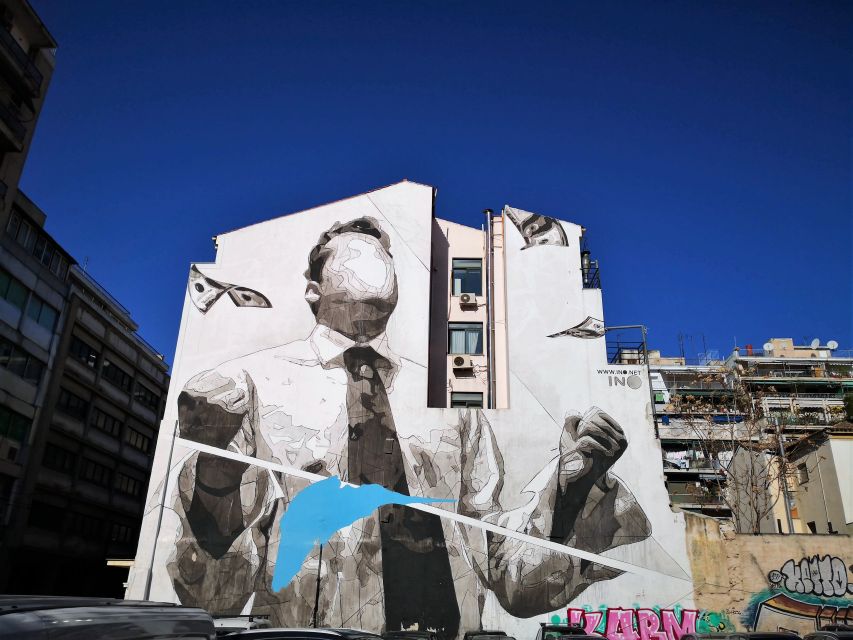
From there you head toward Sarri, about fifteen minutes. This part feels more like the tour’s “secret Athens” phase, where you start trusting that the guide has a reason for each turn. The focus on hidden courtyards and small alleys is the kind of detail that makes this experience feel like a guided walk with an actual brain behind it.
Sarri is a district where you’ll likely feel the contrast between ordinary buildings and intentional artwork. That contrast is a big part of why street art in Athens works so well. It turns places that might feel forgettable into places that demand attention.
If you want to get value from the tour, this is where you practice what the guide teaches: slow down for a symbol, then connect it to the story. You might notice messages and imagery that link to social and political realities, and that’s exactly what you’re meant to learn.
Omonoia, Modern Tension on the Walls
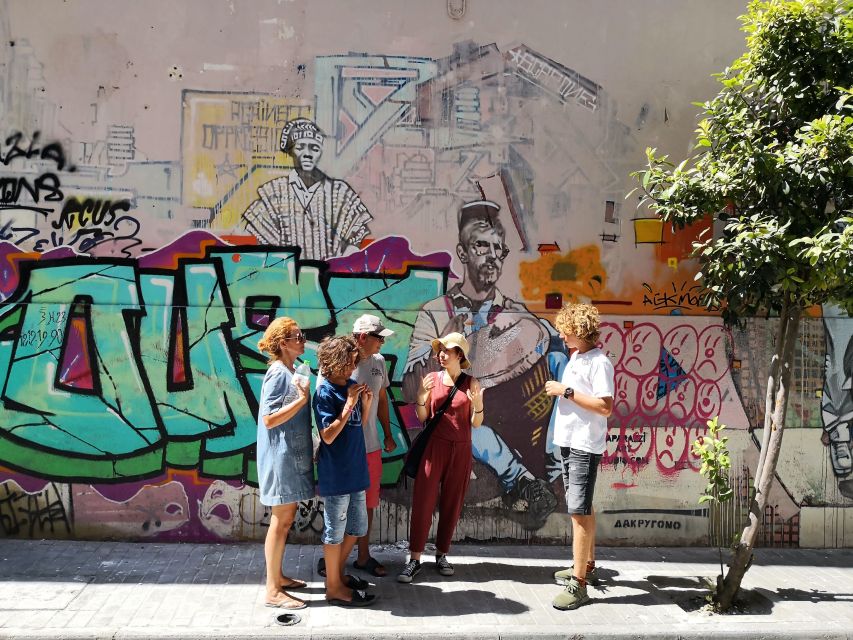
Next is Omonoia, about fifteen minutes on foot. Omonoia brings a different energy. Street art here can feel more directly tied to the mood of the city, as if the walls are responding to what’s happening now rather than just reflecting history.
This section is where themes like financial pressure and social change can land harder. The tour frames many works in relation to how the crisis shaped artists and urban culture. So even if you’re not into politics, you’ll still feel the emotional logic behind the visuals.
One thing I’d watch for here is your own attention span. It’s easy to get “wall fatigue” when you see a lot of street art quickly. Omonoia helps because it can reset your attention with a different streetscape, making new pieces feel like discoveries again rather than repetition.
Metaxourgeio, the Payoff Finish With an After-Feel
Finally, you reach Metaxourgeio, walking about thirty minutes and finishing at Metaxourgeio Square. This end point is useful, not just scenic. By the time you arrive, you’re done with the guided storytelling, so you can keep exploring on your own with a better eye.
Metaxourgeio is a fitting finale because it often feels like a district where the city’s present and future energy is visible. The guide’s theme across the whole walk, linking art to social and economic realities, comes together well when you finish in a place where Athens feels like it’s still changing.
In several guides’ styles described in past experiences, a strong emphasis is placed on keeping the walk moving at a good pace while still allowing time to observe and ask questions. If your feet are tired, this is also the segment where you’ll feel the payoff: you get a finish point that’s convenient for your next step, whether it’s dinner or a coffee near your route out.
Price and Value for a $47, Two-Hour Walking Tour
At $47 per person for two hours, this is priced like a focused experience rather than a broad “see everything” tour. That works in its favor because the guide is doing the heavy lifting: decoding street art, explaining themes, and pointing out the connections between pieces.
What’s included is an English-speaking guide. What’s not included is food and drinks, so you’ll want to plan for a stop on your own if you get hungry. The good news is that because the tour is in central districts, you’re unlikely to be far from something afterward.
Is it worth it? If you enjoy art but you want meaning, context, and practice reading images in your own way, yes. If you only want famous landmarks, street art can feel like a side quest. This tour is the opposite. It teaches you to see Athens as a living commentary, painted in public.
What You Actually Learn on This Tour
The tour’s promise is not just “best murals.” It’s learning the language of street art in Athens.
Here’s what you can expect to walk away with:
- A clearer way to interpret messages, drawings, and images on walls.
- Better understanding of how artists were shaped by the social and economic situation around the country.
- A sense of continuity, how street art connects past and present through themes and recurring symbols.
- A more grounded way to see the city, where art and urban life influence each other.
This is also why guides matter so much on this type of tour. When the guide explains styles and the meaning behind works, you’ll start “seeing the system.” You notice patterns, you understand symbolism faster, and your own self-guided walking afterward becomes more rewarding.
And you’ll likely leave with an instinct to look up. That sounds basic, but it changes how Athens reads at street level.
Who This Tour Is Best For
This is a great fit if you:
- Love street art and want to understand the why, not just the what.
- Like art that has a point of view, even when that point of view is uncomfortable.
- Want an off-the-beaten-path Athens angle without giving up a central location.
- Prefer guided walking because you’ll get help interpreting what you see.
It may not be ideal if you:
- Want only ancient ruins and classic sights.
- Dislike political themes in art.
- Are looking for a low-walking, sit-and-stroll experience.
Tips to Get the Most From Your Walk
I’d come with two habits that make street art tours click.
First, pace yourself. Even a two-hour walk can feel longer when you keep stopping to look carefully. Bring comfortable shoes and expect some stairs and tight passageways, since the tour includes small alleys and hidden courtyards.
Second, ask for clarification when something doesn’t make sense. This tour is built around decoding. If you let yourself guess, you’ll only get half the fun. If you ask, you get the story behind the symbol and the technique, which makes every new wall easier to read.
Should You Book This Athens Street-Art Tour?
Book it if you want Athens to feel like a real city right now, not a postcard. The best part isn’t just seeing murals. It’s learning how to decode street art’s social messages, then walking through multiple central neighborhoods with a guide who keeps the meaning clear as you go.
Skip it if you’re burned out on walking or if political commentary in public art makes you tune out. Also, if your trip is short and you need classic must-sees only, this may not be your top priority.
If you’re somewhere in the middle, this is the kind of tour that can change how you see Athens for the rest of the trip. You’ll look at walls differently, and you’ll notice the city’s current voice, not just its ancient one.
FAQ
How long is the Athens guided street-art tour?
It lasts 2 hours.
How much does the tour cost?
The price is $47 per person.
Where do I meet the guide?
You meet at Athinas 7 in Athens, in front of the pastry shop called Lonis (MAKARON), right next to the Monastiraki metro station exit.
Is the tour in English?
Yes. The tour includes an English-speaking guide.
What is included in the price?
The tour includes the English-speaking guide.
Are food and drinks included?
No. Food and drinks are not included.
What cancellation terms are listed?
There is free cancellation up to 24 hours in advance for a full refund.
Is it a private tour or a group tour?
It can be private or small groups, depending on the option you choose.
A Guide Comes Along in Athens

The Rest of Athens



Every Other Athens Write-Up
- All Day Cruise -3 Islands to Agistri,Moni, Aegina with lunch and drinks included
★ 5.0 · 4,958 reviews



Everything else we have written up around Athens



Guided, side by side.
 ★ 4.2Athens: Acropolis Ticket with Optional Audio or Live GuideFrom $4211,055 reviews
 ★ 4.8Athens: Acropolis, Parthenon & Acropolis Museum Guided TourFrom $409,316 reviews
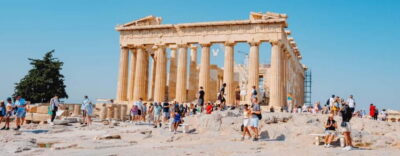 ★ 4.6Athens: Acropolis and Parthenon Guided Walking TourFrom $385,882 reviews
 ★ 4.4Athens: Cape Sounio & Poseidon Temple Trip with Audio GuideFrom $234,521 reviews
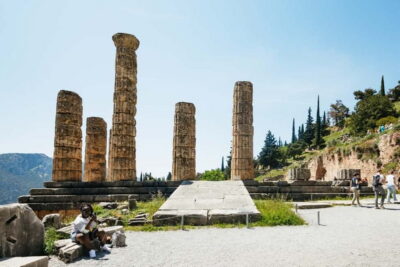 ★ 4.6Athens: Mythology of Delphi, Museum and Arachova Guided TourFrom $314,008 reviews
★ 4.8Athens: Acropolis, Parthenon & Acropolis Museum Guided TourFrom $413,579 reviews
★ 4.6Athens: Mythology of Delphi, Museum and Arachova Guided TourFrom $314,008 reviews
★ 4.8Athens: Acropolis, Parthenon & Acropolis Museum Guided TourFrom $413,579 reviews
 ★ 4.0Athens: Acropolis Ticket with Audio GuideFrom $473,575 reviews
 ★ 4.7Acropolis: Acropolis and Parthenon Guided Walking TourFrom $363,442 reviews