
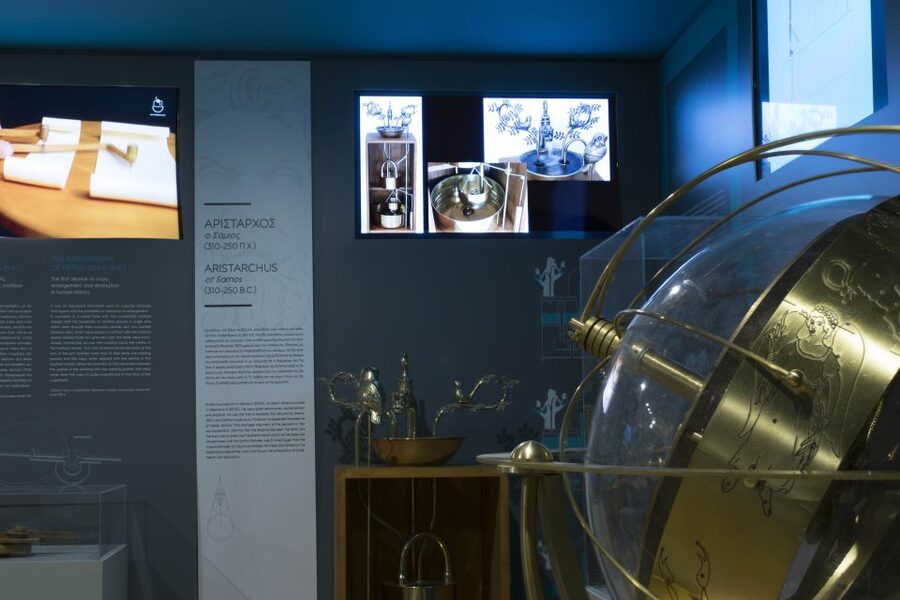
Review · MUSEUMS
Athens: Kotsanas Museum of Ancient Greek Technology Ticket
Greek tech feels weirdly modern here. I really like the operating models you can see in action, and the brain-bending Antikythera analog computer moment.
This museum is largely self-guided, since a guided tour is not included, so you will rely on labels and videos rather than a live guide. Also, plan on skipping snacks inside, because food and drinks are not allowed.
The payoff is hands-on learning. You can use some mechanisms yourself, and you get lots of audio-visual support in Greek and English while you walk through about 700 square meters of displays in a historic Art Nouveau building.
In This Review
- Key things to know before you go
- Finding the Kotsanas Museum of Ancient Greek Technology in Athens
- What you’ll see inside the 700 square meters of ancient machinery
- The Antikythera analog computer moment (and why it matters)
- Hands-on timekeeping, automata, and the Greek engineering chain
- Multimedia stations and videos that make the mechanisms click
- The vibe: self-guided, tech-focused, and great for curious minds
- Price and value: is $7.90 a good deal?
- Practical tips for getting the most from the museum
- Should you book the Kotsanas Museum ticket?
- FAQ
- Where is the Kotsanas Museum of Ancient Greek Technology?
- How much is the ticket?
- How long is the ticket valid?
- Is there a guided tour included?
- What languages are available at the museum?
- Is the museum wheelchair accessible?
- Are the exhibits interactive?
- What is not allowed inside?
- Do I need to pick a specific time?
- Is there free cancellation and a pay later option?
Key things to know before you go
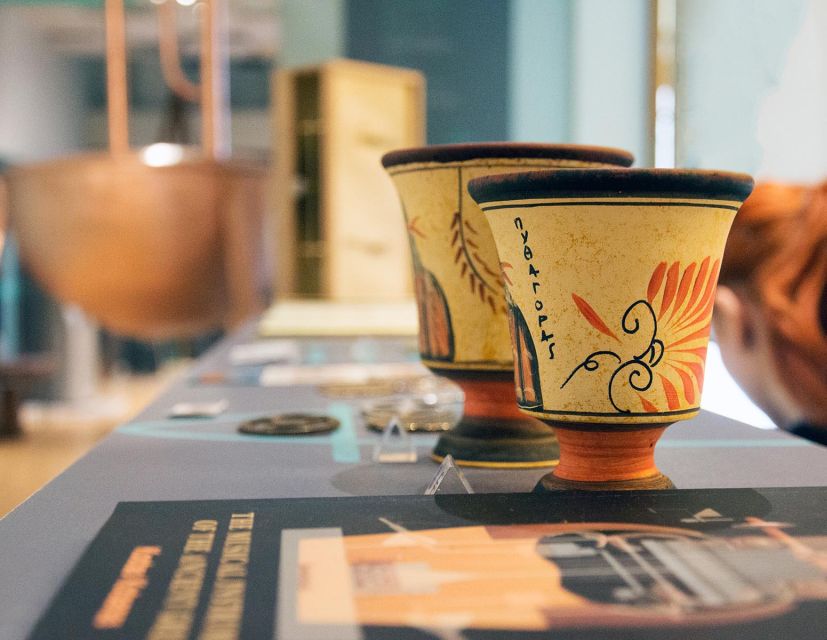
- About 100 operating exhibits focused on Greek invention, many running like real machines
- The Antikythera mechanism as an analog computer, often described as the oldest of its kind
- Interactive stations where you can put mechanisms into use with your own hands
- Big-name inventors appear throughout, including Philon, Heron, Ktesibios, and more
- Lots of explanations in Greek and English, using diagrams, photos, and multimedia stations
Finding the Kotsanas Museum of Ancient Greek Technology in Athens
I like that this museum starts with an easy orientation. The Kotsanas Museum of Ancient Greek Technology is about a 5-minute walk from Syntagma Metro Station, at Pindarou 6, Athina 106 71. That matters in Athens, because you want your first stop to be simple to reach before you get swallowed by traffic and crowds.
You are also in a building that feels like part of the experience. It is a historic Art Nouveau space, with a total area of 700 square meters. So even before you get to the machines, the setting tells you to expect something a bit different than the usual stone-and-marble museum route.
What you’ll see inside the 700 square meters of ancient machinery
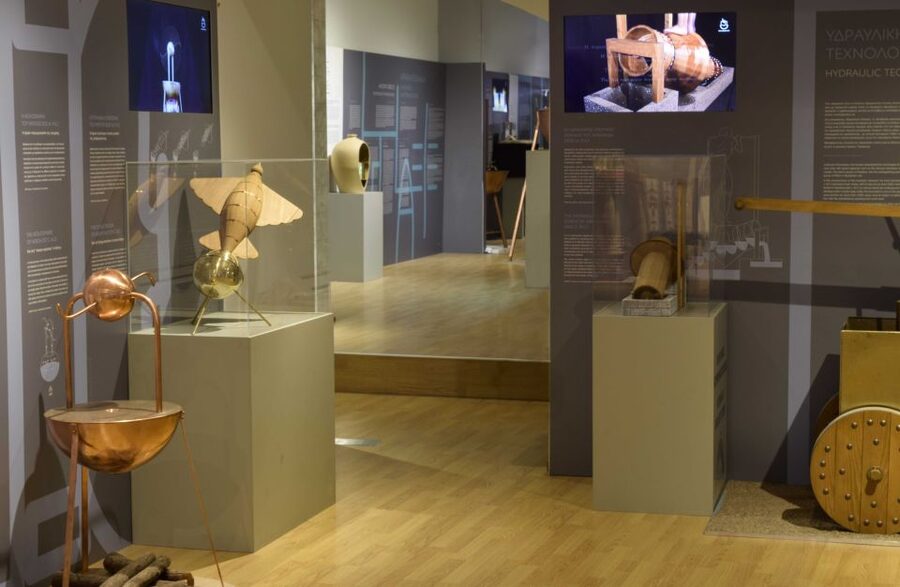
The museum exhibition is called The Hi-Tech Inventions of Ancient Greeks, and it aims at one clear idea: ancient Greece was engineering heavy, not just mythology heavy. The displays cover about 100 selected exhibits, each tied to a mechanism or invention, from early computing concepts to automata and timekeeping devices.
As you move through the galleries, you’ll notice a pattern. Explanatory labels and giant posters do the heavy lifting with diagrams, photos, and full bibliographical references. In practice, that means you can read at your own pace. If you want the science angle, you can follow the diagrams. If you want the fun angle, you can skip ahead and watch what the models do.
And yes, the models are operating. This is not a museum where everything is stuck behind glass with no motion. Many exhibits are working models that help you understand the underlying mechanism, not just admire a pretty replica.
The Antikythera analog computer moment (and why it matters)
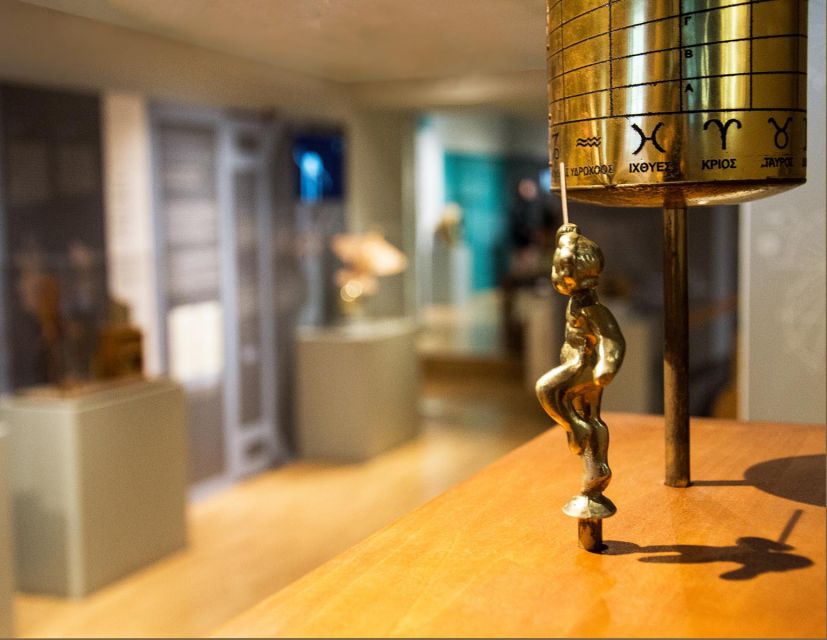
If you like technology, this is the star attraction. The highlights specifically call out the oldest analog computer in the world, and at this museum that spotlight lands on the Antikythera calculating mechanism.
Why that matters for your trip is simple. When you see a calculating mechanism operate as a physical machine, it changes the way you think about ancient innovation. You are not just hearing that Greeks did clever things. You are watching a device perform a function the way a tool would, with gears and logic doing the work in the open.
It also sets expectations for the rest of the collection. Many exhibits aim at the same feeling: mechanism first, explanation second. Even if some details go over your head, you can still connect the dots by watching how movement translates into function.
Hands-on timekeeping, automata, and the Greek engineering chain
One of my favorite parts of this museum is that it asks you to participate. The experience includes interactive displays where you can put some mechanisms into use with your own hands. That turns the exhibits into something you try, not something you just observe from a distance.
You also get a parade of famous inventor names tied to real devices. The collection includes exhibits like:
- the robot-servant
- the cinema of Philon
- the automotive-puppet show of Heron
- the hydraulic clock of Ktesibios
Even if you have seen the names Heron or Ktesibios before, this format can feel different because it focuses on how the inventions work. A clock becomes more than a symbol of ancient timekeeping. An automaton becomes more than a curiosity. The labels and diagrams support what you are seeing, and the interactive elements let you test the principle yourself.
One practical consideration: because not every exhibit is described as hands-on, you may need to choose where to spend your energy. If you want hands-on learning, follow the interactive stations and give yourself a little time to repeat a mechanism if you get it working once and want to see how it behaves again.
Multimedia stations and videos that make the mechanisms click
The museum does not rely only on static text. Many exhibits are supported with projecting stations, including video and animation. There are also documentaries where an exhibitor explains the function and the use of the mechanisms.
I like this approach because it respects different learning styles. If you are a diagram person, you can lean on the posters and detailed diagrams. If you prefer to see motion and hear an explanation, the animation and documentary-style segments are there.
Language support is another plus. Audio-visual material is provided in Greek and English, with explanatory labels alongside it. So if you are traveling with someone who reads Greek faster than you do, or if you want a second pass in English after skimming, you have options.
The vibe: self-guided, tech-focused, and great for curious minds
This ticket is entry only. A guided tour is not included, and host or greeter support is listed as English. That means the museum works best if you are comfortable being your own guide, using labels, diagrams, and the multimedia stations to build understanding as you go.
What I think this place is best for:
- tech lovers who like gears, analog logic, and how machines translate ideas into motion
- people who enjoy hands-on learning, even if you are not an engineer
- visitors who want a Greek stop that is less about monuments and more about invention
What might be less satisfying:
- if you only want a classic overview of ancient Greece with big historical framing, the tech angle could feel narrow
- if you need a live guide to keep you engaged, you might want to pair this with another museum where a human interpreter leads the story
Price and value: is $7.90 a good deal?
At $7.90 per person, I think this ticket is strong value if you like mechanical thinking. You are paying for access to about 100 exhibits, with many operating models and a mix of interactive stations, diagrams, photos, and multimedia explanation. That is a lot of content packed into one stop.
It is also good value for people who want fewer wasted hours. Because the displays are functional and interactive, you are not just walking through cases hoping something catches your attention. You can watch mechanisms run. You can try some yourself. And you can switch between reading and watching without losing your way.
The only caveat is your personal interest level. If you go expecting ancient Greek art or temples, this may feel off-theme. If you go curious about how the past solved practical problems, it is a very satisfying use of time.
Practical tips for getting the most from the museum
A few things I would do to get the best experience, based on how the museum is described:
- Focus on the operating models first. Watching motion usually makes the diagrams make sense faster.
- Spend extra time on the Antikythera mechanism, since it is framed as the oldest analog computer and anchors the whole tech theme.
- Plan on using interactive stations, but don’t stress if you find some exhibits are more observation-based than hands-on.
- Bring your reading stamina. The posters and labels can be detailed, with bibliographical references and diagrams.
- Skip food plans. Food and drinks are not allowed, so if you need a snack, handle it before or after.
Also, the museum is wheelchair accessible, so if mobility is a concern, you should feel comfortable planning it as a main stop.
Should you book the Kotsanas Museum ticket?
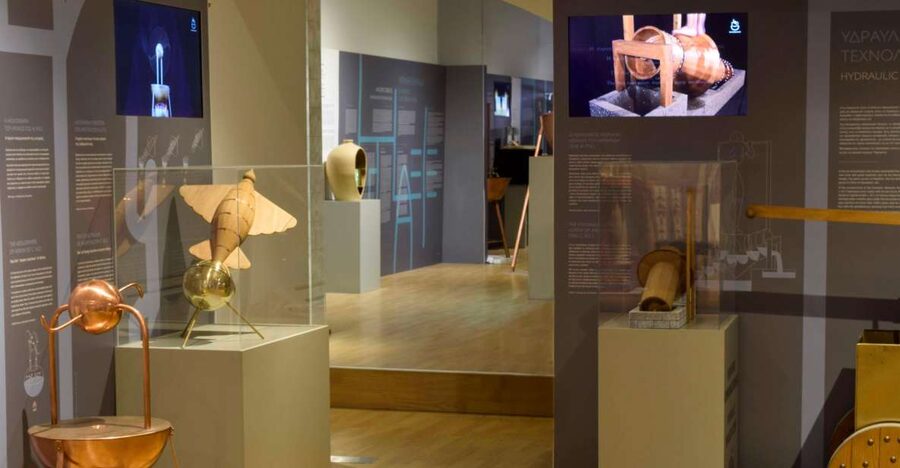
I would book this if you want something memorable that connects ancient invention to real engineering, not just trivia. The combination of working models, interactive stations where you can try mechanisms, and strong explanation support in Greek and English makes it a great stop for curious travelers.
Skip it, or at least think carefully, if you prefer guided storytelling from a human interpreter. Since a guided tour is not included, you will be learning through labels and videos. If that is your style, go. If you want someone to talk you through everything step-by-step, you may prefer a guided option elsewhere.
If you are planning an Athens day and you want your itinerary to include at least one surprise, this ticket is an easy yes.
FAQ
Where is the Kotsanas Museum of Ancient Greek Technology?
The museum is located at Pindarou 6, Athina 106 71, Greece. It is about a 5-minute walk from Syntagma Metro Station.
How much is the ticket?
The price is $7.90 per person.
How long is the ticket valid?
The ticket is valid for 1 day. You should check availability to see starting times.
Is there a guided tour included?
No. Entry ticket includes access to the museum, but a guided tour is not included.
What languages are available at the museum?
The audio-visual material is available in Greek and English, and the host or greeter language is English.
Is the museum wheelchair accessible?
Yes, the museum is wheelchair accessible.
Are the exhibits interactive?
Many of the exhibits are interactive, including stations where you can put some mechanisms into use with your own hands.
What is not allowed inside?
Food and drinks are not allowed.
Do I need to pick a specific time?
The ticket is valid for 1 day, and starting times depend on availability, so you should check what times are offered when you book.
Is there free cancellation and a pay later option?
Yes. Free cancellation is available up to 24 hours in advance for a full refund, and there is also a reserve now and pay later option.
Museums, side by side.
 ★ 4.8Athens: Acropolis, Parthenon & Acropolis Museum Guided TourFrom $409,316 reviews
 ★ 4.6Athens: Mythology of Delphi, Museum and Arachova Guided TourFrom $314,008 reviews
★ 4.8Athens: Acropolis, Parthenon & Acropolis Museum Guided TourFrom $413,579 reviews
 ★ 5.0Acropolis monuments & Parthenon Walking Tour with Optional Acropolis MuseumFrom $422,678 reviews
 ★ 4.5Athens All Included: Acropolis and Museum Guided Tour with TicketFrom $1652,673 reviews
 ★ 4.4Athens: Acropolis Museum Ticket with optional Audio GuideFrom $302,652 reviews
 ★ 4.8From Athens: Small-Group Delphi, Museum & Arachova Day TripFrom $342,476 reviews
 ★ 4.1Parthenon & Acropolis Museum with Audio or Live Tour OptionFrom $702,446 reviews
Sits on these lists