

Review · ACROPOLIS & PARTHENON TOURS
Acropolis monuments & Parthenon Walking Tour with Optional Acropolis Museum
This is where Athens turns into stone stories. This guided Acropolis and Parthenon walking tour gives you the what, the why, and the details behind the ruins you came to see. You also get the option to extend the day with the Acropolis Museum, where the artifacts make the timeline click.
I like two things a lot. First, the small groups (max 20) and the use of a whisper-audio system mean you can actually hear your guide on the move. Second, you are not stuck staring at signs, because the guide connects landmarks like the Parthenon, the Temple of Athena Nike, and the Erechtheion to the larger story of ancient Athens.
One thing to plan for: this is a steep walk with lots of standing. Even if the pace is manageable, you will still be climbing uphill paths, so comfortable shoes (and a hat and sunscreen) are not optional.
In This Review
- Key highlights worth planning around
- Why an early-morning Acropolis route makes a big difference
- The walk from Dionysus to the Parthenon, stop by stop
- Parthenon and Athena Nike, explained in a way that helps your eyes
- Small group comfort, plus audio that actually works
- Tickets, official fees, and where the value really comes from
- The Acropolis Museum option, why it often feels like the second half of the story
- Meeting point, route logistics, and what the day feels like
- Who should book, and who might prefer a self-guided visit
- Should you book this Acropolis and Parthenon walking tour?
- FAQ
- How long is the tour?
- Where does the tour start?
- Where does the tour end?
- Is the tour offered in English?
- What is the group size?
- Are entrance tickets included?
- What are the entrance fees if I book without tickets?
- Do I need to bring ID for discounts?
- What should I wear or bring?
- What is the cancellation policy?
Key highlights worth planning around

- Skip-the-line entry with a licensed guide, so you lose less time waiting and more time looking
- Small groups under 20 with whisper-style audio for better hearing
- A tightly routed Acropolis walk from the Theatre of Dionysus views to the Parthenon and Erechtheion area
- Caryatid-focused stop at the Erechtheion, where the sculpted female figures are the big visual payoff
- Optional Acropolis Museum extension to see more artifacts after the hilltop visit
- Multiple tour start times so you can match the day to your schedule
Other ways up the Acropolis, side by side




Why an early-morning Acropolis route makes a big difference

This tour meets early and walks you up to the Acropolis area at the start of the day, when it is easier to breathe, look around, and take photos. If you have ever tried to visit the Parthenon in peak hours, you know the difference a good start can make.
You also get a practical advantage: the guide handles the process for tickets based on the option you select, and you are set up to skip the line. That matters here because the Acropolis can chew up time, even if you arrive with a plan.
Timing also affects comfort. Expect a morning that is a mix of walking and stopping, with plenty of time spent staring upward. The upside is that your view stays dramatic for most of the route, and the guide can point out details while you are still fresh.
The walk from Dionysus to the Parthenon, stop by stop
The route is built to show you the Acropolis as a connected sacred and civic complex, not just a set of isolated photo spots. You will move through a sequence of theaters, temples, and major monuments, with short stops designed to keep the flow.
Here is how the itinerary comes together:
Theatre of Dionysus Eleuthereus (about 15 minutes)
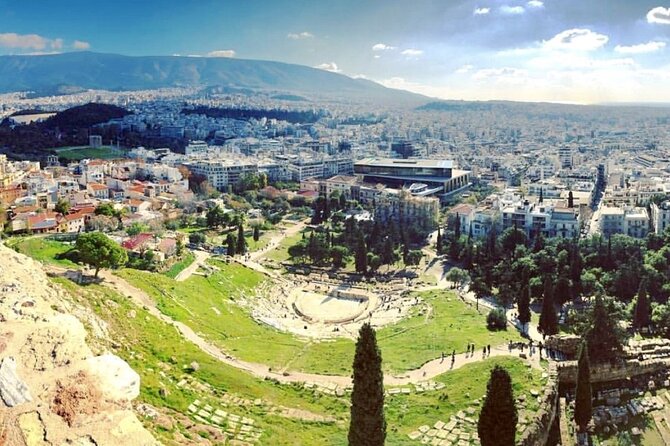
This ancient theater sits on the south slope of the Acropolis hill. It is tied to the City Dionysia festival, with early construction around the mid-to-late 6th century BC. Even if you know theater basics, standing near the site helps you understand why the Acropolis area mattered beyond religion.
Herod Atticus Odeon (about 15 minutes)
This is a Roman-era stone theater structure completed in 161 AD and renovated in 1950. It is a useful reminder that Athens kept using, reworking, and honoring older cultural spaces long after the classical period.
Temple of Athena Nike, often called the Temple of Victory (about 10 minutes)
This stop spotlights the small temple associated with Athena Nike. It is quick, but it is also one of the most visually crisp spots on the hill because it sits where you get strong angles over the surrounding area.
Propylaea, the monumental entrance (about 15 minutes)
Think of this as the big gate into the Acropolis proper. The tour frames it as a major architectural concept from roughly 2,500 years ago, so you are not just walking through something decorative. You are walking through the entrance designed to set a tone for what is next.
Temple of Athena Nike again (about 15 minutes)
The itinerary lists it twice, which usually means you get a second look from a different angle or after you have learned enough context to notice more. Either way, it is a chance to compare details without feeling rushed.
Parthenon (about 30 minutes)
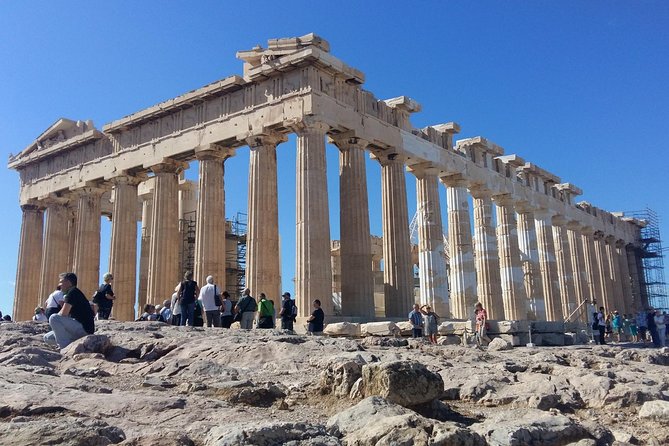
This is the main event. The tour sets you up to focus on the Parthenon as a temple of Athena and to appreciate its scale and placement. In the broader tour framing, most of what you see dates back to the 5th century BC, which helps you connect the ruins to a specific era rather than treating everything as the same age.
Erechtheion (about 10 minutes)
This is where the tour earns its reputation for the visual payoff. The Erechtheion is famous for its caryatid statues, and the guide points out what makes the figures so special, and why they are tied to this monument’s identity on the hill.
Acropolis hill itself (about 1 hour)
This is the connective segment where the guide ties monuments together, explains how the hill functioned, and helps you track what you are seeing as you move. It is also where you often get the stories that make the site feel less like a checklist.
Parthenon and Athena Nike, explained in a way that helps your eyes
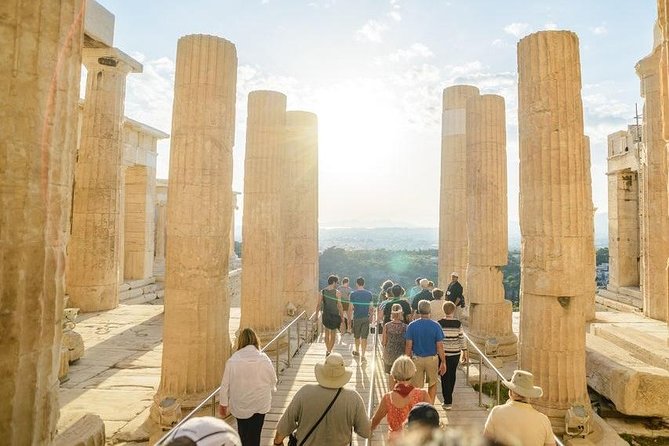
The Parthenon is not hard to recognize, but it is easy to misunderstand if you only glance and move on. With a guide, you get help turning details into meaning, such as how the monuments fit into the architecture and religious symbolism of ancient Athens.
The Temple of Athena Nike works the same way. It is small, but it is early and distinctive, and you get better at spotting why it matters once someone points out what is unique about its style. The tour notes that it is the earliest fully Ionic temple on the Acropolis and dates it to around 420 BC. That kind of specific framing turns a pretty photo stop into a real learning moment.
What I like about this format is that it teaches you how to look. After a few stops, you start noticing positioning, sight lines, and how the monuments relate to each other. That is also why the tour works well for first-time visitors: you end with a mental map, not just a camera roll.
Small group comfort, plus audio that actually works
This tour runs with a maximum of 20 people per guide. That is a big deal at the Acropolis, where crowd pressure can make you feel like you are chasing other people’s shoulders.
You will also use a whisper tour guide system for better listening, especially helpful when groups are larger than 5. In plain terms: you get clearer explanations without having to crane your neck toward the front.
The pace is another practical win. Even when you are climbing steep paths, the stops are short and purposeful. That matches how the tour plays out in the real world: you can listen, look closely, take photos, and still keep moving instead of getting stuck waiting for the slowest moment.
Tickets, official fees, and where the value really comes from
The tour price is listed at $42.33 per person for an experience of about 4 hours. On average, it is booked about 45 days in advance, which is a sign that it is a popular, predictable way to see the site with less hassle.
But the cost puzzle depends on which option you choose:
- If you book with entrance tickets, the appropriate site admissions are included (Acropolis and/or Acropolis Museum depending on the option).
- If you book without entrance tickets, you must buy them online in advance through the official website.
For budgeting, the data you need is this: the Acropolis ticket is listed as €30 per adult from April 2025, and €10 per adult from November to March. The Acropolis Museum ticket is €20 per adult from April 2025. Your exact total will vary based on season and whether you add the museum and ticket options.
One more important money saver: age-based entrance rules. EU citizens under 25 have free entrance. Others under 25 have a 50% discount for Acropolis tickets, with ID or passport required to confirm birth date. People under 18 should bring passports or IDs for reduced ticket pricing.
If you qualify for those discounts, choosing the right ticket option can change the total cost a lot. If you do not, the tour still tends to feel like good value because you are paying for the guide plus skip-the-line handling, not just for a walk.
More Acropolis Museum entries we have checked
- Acropolis monuments & Parthenon Walking Tour with Optional Acropolis Museum★ 5.0 · 2,678 reviews
- Athens: Acropolis Museum Ticket with optional Audio Guide★ 4.4 · 2,652 reviews
- Athens: Acropolis, Parthenon and Acropolis Museum Guided Tour★ 5.0 · 1,778 reviews
- Acropolis of Athens and Acropolis Museum Tour★ 4.5 · 944 reviews
The Acropolis Museum option, why it often feels like the second half of the story
If you choose the museum upgrade, the tour typically continues after the hilltop exploration and ends at the Acropolis Museum. The museum visit is framed as a chance to see even more artifacts that highlight the history behind what you just walked among.
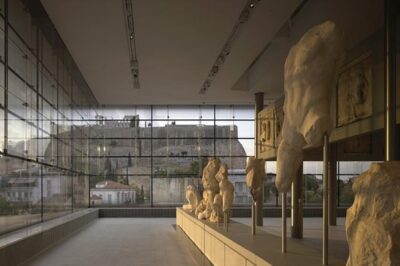
The museum matters because it takes things that felt distant on the hill and brings them into clearer focus. You get displays tied to the Acropolis collection, and the tour notes that the museum has Acropolis galleries. If your main interest is the Parthenon, this is where the Parthenon friezes are mentioned in the tour context.
I also like that the museum time is not positioned as an exhausting sprint. The guide points out key pieces and helps you connect them to what you saw outside, and then you still have time to look at what you want after the guided portion.
Practical tip: this added hour is a win for people who want context, but it also adds standing time. If you are already feeling the hill fatigue, bring water and pace your museum browsing.
Meeting point, route logistics, and what the day feels like

You meet at Porinou 5, Athina 117 42, Greece. The tour ends at the Acropolis Museum, Dionysiou Areopagitou 15, Athina 117 42, Greece, if you booked the museum option. If you booked only the Acropolis, your tour ends after the hilltop visit.
There is a friendly practical note built in: WiFi is available close to the meeting point area. That helps if you need to check your map or message coordination on the day.
The day itself is about a 4-hour block. It is designed as a half-day experience you can fit into an Athens itinerary without losing your whole afternoon. You will walk short distances between stops, and you will spend time standing at each monument.
For comfort, the tour asks you to wear comfortable shoes, and to bring a hat and sun cream. This is not luxury advice. It is the difference between enjoying the route and counting minutes.
Who should book, and who might prefer a self-guided visit
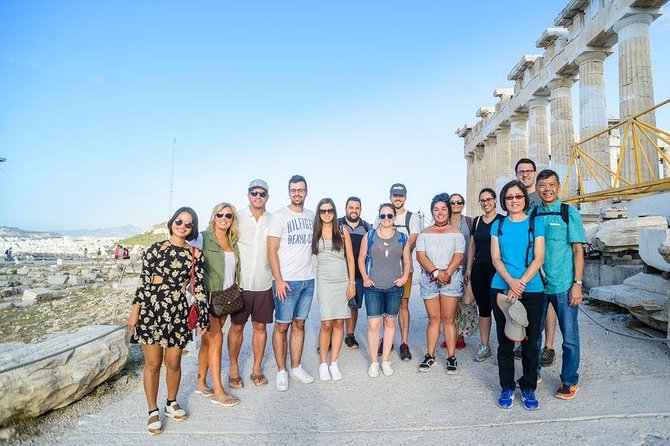
This tour is ideal for:
- First-time visitors who want help turning the Acropolis into a coherent story
- History and architecture fans who like specific dates and named monuments
- People who prefer small groups and clear audio instead of competing with crowd noise
- Anyone planning to see both the hill and the museum and wants the museum to connect to what they saw outside
You might consider a different approach if:
- You dislike steep climbs and long periods of standing
- You already know a lot about the Acropolis and want maximum freedom to linger in your own order
On balance, the guide-led format is the value engine here. One guide name that comes up strongly in the guide lineup is Lisa, praised for being outstanding and providing archaeological insight. Other named guides include Aidli, Anna, Dionysios, John D, and Helen, often described as energetic, engaging, and careful with the pace. That is a good signal that the experience is not just a basic narration, it is a structured visit that helps your eyes do the work.
Weather is also a factor. This experience requires good weather, and if it is canceled due to poor weather, you are offered a different date or a full refund.
Should you book this Acropolis and Parthenon walking tour?
I would book it if you want the Acropolis and Parthenon to make sense fast, with a plan that keeps you from wasting time on logistics. The combination of a licensed guide, skip-the-line handling, and small-group audio is the core reason it tends to work well.
I would skip it or choose a lighter option if you are traveling with someone who struggles with steep walking, or if you already prefer self-guided museum time and do not want to pay for interpretation. In that case, going solo can be totally fine, but you lose the guide’s ability to connect the monuments into a single story.
If you fall in the first group, this tour is one of the more straightforward ways to get a satisfying Athens half-day that feels organized, not rushed.
FAQ
How long is the tour?
The tour duration is listed as approximately 4 hours.
Where does the tour start?
The meeting point is Porinou 5, Athina 117 42, Greece.
Where does the tour end?
It ends at the Acropolis Museum if you book the option with the museum. If you book only the Acropolis, it ends at the Acropolis monuments.
Is the tour offered in English?
Yes, it is offered in English.
What is the group size?
The tour has a maximum of 20 travelers per guide.
Are entrance tickets included?
Entrance tickets depend on the option you select. If you book with the entrance ticket option, tickets are included. If you book without tickets, you need to purchase admissions online in advance.
What are the entrance fees if I book without tickets?
The Acropolis fee is listed as €30 per adult from April 2025 and €10 per adult from November to March. The Acropolis Museum fee is listed as €20 per adult from April 2025.
Do I need to bring ID for discounts?
If you are under 25 (and need to qualify based on the rules listed), you should bring your passport or an ID. People under 18 should bring passports or IDs as well.
What should I wear or bring?
Wear comfortable shoes. Bring a hat and sun cream.
What is the cancellation policy?
Free cancellation is available up to 24 hours in advance for a full refund. If canceled less than 24 hours before the start time, the amount paid is not refunded. The experience requires good weather, and if canceled due to poor weather you are offered a different date or a full refund.
Every Other Athens Write-Up
- All Day Cruise -3 Islands to Agistri,Moni, Aegina with lunch and drinks included
★ 5.0 · 4,958 reviews



Acropolis Museum, Other Entries



The Acropolis, Other Ways Up

Everything else we have written up around Athens





Acropolis & Parthenon Tours, side by side.
 ★ 4.4Athens: Acropolis & up to 5 Archaeological Sites Combo PassFrom $4812,619 reviews
 ★ 4.2Athens: Acropolis Ticket with Optional Audio or Live GuideFrom $4211,055 reviews
 ★ 4.8Athens: Acropolis, Parthenon & Acropolis Museum Guided TourFrom $409,316 reviews
 ★ 4.6Athens: Acropolis and Parthenon Guided Walking TourFrom $385,882 reviews
★ 4.8Athens: Acropolis, Parthenon & Acropolis Museum Guided TourFrom $413,579 reviews
★ 4.6Athens: Acropolis and Parthenon Guided Walking TourFrom $385,882 reviews
★ 4.8Athens: Acropolis, Parthenon & Acropolis Museum Guided TourFrom $413,579 reviews
 ★ 4.0Athens: Acropolis Ticket with Audio GuideFrom $473,575 reviews
 ★ 4.7Acropolis: Acropolis and Parthenon Guided Walking TourFrom $363,442 reviews
 ★ 4.5Athens All Included: Acropolis and Museum Guided Tour with TicketFrom $1652,673 reviews