Review · PIRAEUS PORT TRANSFERS & TOURS
City Sightseeing Athens, Piraeus & Beach Riviera Hop-On Hop-Off Bus Tours
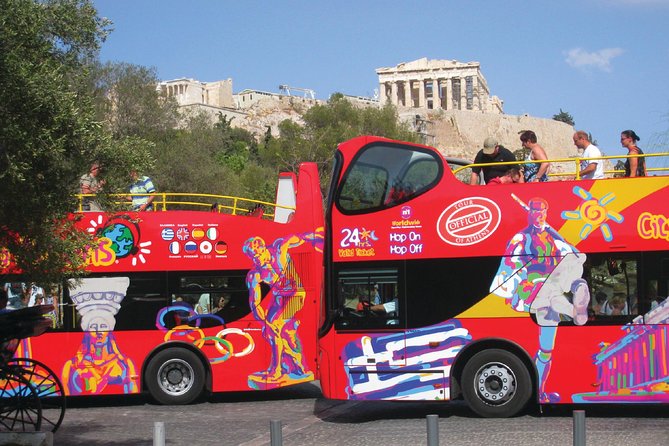
Athens is better from the open-top deck. I like the flexible hop-on, hop-off stops and the 13-language audio with headphones, so you can pace yourself around Plaka, the Acropolis Museum area, and the coast. One watch-out: if Athens has major road disruption, bus timing and audio tracking can feel off, so build in extra time.
The pass lasts 24, 48, or 72 hours, which lets you ride once to get your bearings and then come back for specific sights when your feet and photos are ready. At $26.36 per person, it’s a simple, high-signal way to cover a lot of ground without getting bogged down in traffic.
In This Review
- Key Things To Know Before You Ride
- Price and Where This Fits in Your Athens Plan
- Tickets, Routes, and the Timing That Actually Matters
- Riding the Athens Line: Syntagma, Acropolis Area, Museums, and Old Town
- Syntagma Square: Your Athens Starting Point
- Acropolis and Plaka: The Area You Can’t Skip
- Acropolis Museum Area: Where the Story Gets Clearer
- The Parthenon Interchange Point
- Temple of Zeus: Big Scale, Short Wander
- Parliament and National Gardens: A Breather Stop
- “Four Museums” Stop: For People Who Like Concentration
- National Gallery Stop: Art Between Antiquity
- Ancient Olympic Stadium: A Familiar Name in Athens
- Omonia and Library Area: A Real Neighborhood, Not Just Sights
- National Archaeological Museum: The One to Know If You Love Artifacts
- Karaiskaki and Monastiraki, plus Kotzia Square: Old Town and Shopping Energy
- Piraeus Route: Cruise Terminal Access and Seaside Texture
- Pantion University and the Museum-Friendly Stretch
- Municipal Theatre: Culture in the Middle of Motion
- Cruise Terminals A and B: Built for Easy Off and On
- Lions Gate: A Quick History Hit
- Archaeological Museum of Piraeus: For the Artifact-Lovers
- Beach Views at Votsalakia and Mikrolimano
- Beach Riviera Route: Faliro to Glyfada Town, Then Vouliagmeni
- Acropolis to Start, then Down the Coast
- Faliro and Flisvos: The Urban Beach Start
- Edem and Agios Kosmas: Beach Stops With Local Flavor
- Glyfada and the Hotel Strip: For People Who Want Easy Beach Access
- Vouliagmeni Lake: A Non-Beach Nature Break
- Pigadakia and Glyfada Town: For Lunch and Wandering
- Kalamaki and Back Up Coast Toward Athens
- The Open-Top Views, Audio Commentary, and Comfort Details That Affect Your Day
- Practical Tips to Make the Bus Work Like a Travel Superpower
- Who This Tour Suits Best (and Who Might Be Less Happy)
- Should You Book City Sightseeing Athens, Piraeus & Beach Riviera?
- FAQ
- How long is each route?
- Which languages are included for the audio?
- Does the price include entry to attractions?
- Do Piraeus and the Beach Riviera routes run all year?
- How do I board if I have a mobile or printed voucher?
- Is Wi-Fi included on the bus?
Key Things To Know Before You Ride

- Pick the right line for your day: Athens Line is year-round, while Piraeus and Beach Riviera run April to October only.
- Departure times are fixed for the beach and Piraeus: the Beach Riviera goes out at 11am, 1pm, and 3pm, and Piraeus has 11am and 3pm departures.
- You can plan like a local: Athens buses run about every 20 to 30 minutes, making it easier to hop off for a short wander and return.
- Audio is helpful, but don’t trust it blindly: some people report the headphones and timing not always lining up with the view.
- Voucher reality check: the mobile or printed voucher must be redeemed on-site for a paper ticket before boarding.
Other Piraeus pickups and port runs



Price and Where This Fits in Your Athens Plan
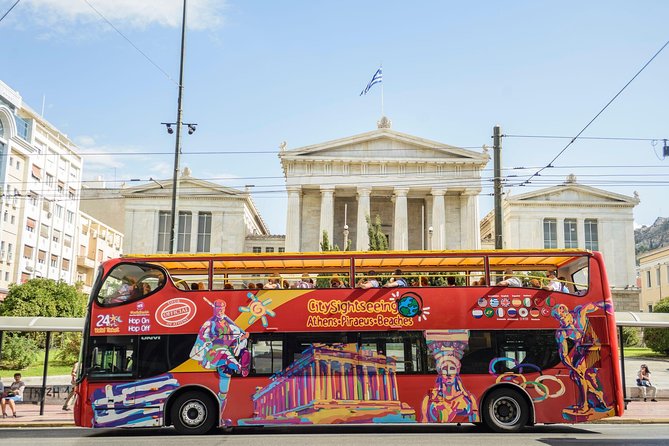
At $26.36 per person, this hop-on hop-off setup is priced like a “time-saver with flexibility,” not like a museum ticket. For the cost, you’re buying three things: a full loop across key neighborhoods, the ability to hop off when something catches your eye, and onboard commentary that helps you understand what you’re looking at while you’re moving.
If you’re arriving for the first time and you want to avoid spending day one in transit logistics, this kind of pass can be a smart anchor. Athens has real traffic, tight spots for parking, and steep climbs around major sights. The bus doesn’t replace walking, but it reduces the number of “how do we get there?” moments.
The main value question is simple: do you have enough time to use the pass duration? If you’re only in Athens for a couple of hours, you’ll get less out of it. If you have a full day or two, the 24 to 72-hour flexibility lets you spread your sightseeing out instead of stacking it all into one exhausting sprint.
Tickets, Routes, and the Timing That Actually Matters
You choose a 24-, 48-, or 72-hour pass, and that determines how many lines you can ride. The big practical trick is to match the line to your itinerary:
- Athens Line: from Syntagma Square (Terminal A1), and it runs all year except 17th November, 25th December, and 1st January. Departures run from 8:30am to 4:30pm, about every 20 to 30 minutes, and the full loop takes about 90 minutes.
- Piraeus Route: geared for cruise passengers, departing from Acropolis / Parthenon interchange (A4). It runs April to October, with departures at 11am and 3pm, and lasts about 80 minutes.
- Beach Riviera Route: also April to October, departing from Acropolis / Plaka interchange (A2) at 11am, 1pm, and 3pm, lasting about 110 minutes.
Why this matters: the Athens Line gives you more “anytime” flexibility. The beach and Piraeus routes are more like scheduled day trips. If you’re trying to make beach time, pick the departure that fits your energy and your sunset plans.
Also note the workflow at the stop. Your electronic voucher is not a ticket. It must be redeemed by an agent at the stop or on the bus before you board, and once you redeem it, you need to keep the printed paper ticket with you for the whole journey.
Riding the Athens Line: Syntagma, Acropolis Area, Museums, and Old Town
This is the line you’ll likely lean on first. It’s built around the classic first-time Athens loop: government center, the Acropolis zone, museum areas, and the neighborhoods where you actually want to walk after the bus drops you off.
Here’s the sweep, with what each stop is good for and what to watch.
Syntagma Square: Your Athens Starting Point
You’ll start at Syntagma Square, the “center of Athens” feel-good zone near Parliament. It’s a smart place to begin because it’s easy to orient yourself from there and grab a coffee before you start hopping.
What I like: it’s a low-friction starting stop.
Watch for: the city around it can get busy, so think “quick photo now, walk later.”
Acropolis and Plaka: The Area You Can’t Skip
Twice on the route, you’ll find the big drop-off point at the Melina Mercouri Monument area, serving the Acropolis and Plaka. This is the bus stop for the postcard view and the maze of old streets you’ll want to explore on foot.
If your plan is: see the view from the bus, then actually walk into Plaka, this is your hinge point.
Other open top bus loops
- Athens: City Sightseeing Hop-On Hop-Off Bus Tour★ 4.3 · 4,520 reviews
- Athens: Big Bus Hop-on, Hop-off Tour by Open-Top Bus★ 4.1 · 1,042 reviews
- Athens:City Pass with Acropolis, Museums, Hop-On Hop-Off Bus★ 3.9 · 586 reviews
- Athens: Hop-on-Hop-off Bus and Cape Sounion Sunset Tour★ 4.3 · 484 reviews
Acropolis Museum Area: Where the Story Gets Clearer
You’ll also stop at Chatzichristou 6A for the Acropolis Museum area. Even if you don’t go inside, the neighborhood has that “this is why it matters” feeling. It helps you connect what you saw from the bus to what you’re seeing up close.
Practical tip: if you’re planning a museum visit, this is the stop that makes it easiest to transition from sightseeing into learning time.
The Parthenon Interchange Point
There’s an interchange stop labeled as a kiosk serving the Acropolis and Parthenon area. This is useful because it’s right where people want to transfer between routes, especially if you’re adding the Piraeus line later.
Watch for: this area can be crowded. If you want quieter photos, hop off earlier in your pass window.
Temple of Zeus: Big Scale, Short Wander
Another Melina Mercouri Monument stop covers access to the Temple of Zeus. This is one of those Athens sights where the bus view tells you something, but the walking paths show the scale.
Consideration: if you have limited time, pick either Temple of Zeus or Acropolis deep-walk depending on your interests, rather than trying to cram both into one quick stop.
Parliament and National Gardens: A Breather Stop
Back at Syntagma you’ll also connect toward Parliament and the National Gardens. This is a nice reset when the rest of the day is packed with walking and stairs.
“Four Museums” Stop: For People Who Like Concentration
At Leof. Vasilissis Sofias 642, you’ll reach the Four Museums area. If your plan includes more than one museum, this stop saves you from bouncing around by taxi.
National Gallery Stop: Art Between Antiquity
At Leof. Vasileos Alexandrou 14 you’ll find the National Gallery area. It’s a good option if you want a break from ancient sites and still stay central.
Ancient Olympic Stadium: A Familiar Name in Athens
At George Karaiskakis Statue, you’ll connect with the Ancient Olympic Stadium area. This is an efficient way to see another major Athens landmark without committing to a long transit detour.
Omonia and Library Area: A Real Neighborhood, Not Just Sights
The stop at Omonoia 118 serves the National Library area. Omonia Square itself appears later at Pl. Omonias 3. If you want a “real city” feel, these stops can shift your Athens day away from only monuments.
National Archaeological Museum: The One to Know If You Love Artifacts
At 28is Oktovriou 53, you reach the National Archaeological Museum. This is a major museum stop, and it’s ideal if you want a deeper dive than monuments and ruins.
Karaiskaki and Monastiraki, plus Kotzia Square: Old Town and Shopping Energy
You’ll see a series of old-town anchor points:
- ATM Alpha Bank for Karaiskaki Square
- Ermou 137 for Monastiraki Square
- Town Hall for Kotzia Square
- plus Omonia Square again as a central hub
These are the stops you’ll use when your plan becomes: hop off, browse streets, eat something local, and return to the bus before you run out of daylight.
One drawback to keep in mind: the bus gives you time-saving transport, but if a stop feels like it stays crowded, you might spend more time waiting for the next bus than you want. When that happens, it’s often easier to pick one or two “walk longer” zones per day.
Piraeus Route: Cruise Terminal Access and Seaside Texture
If you’re on a cruise, or if you want a break from the ancient core, the Piraeus route is a smart add-on. It’s also shorter, about 80 minutes, which fits well when you want sea air without committing to a full day elsewhere.
This route runs April to October, departing from the Acropolis / Parthenon interchange at 11am and 3pm.
Pantion University and the Museum-Friendly Stretch
Early on, you’ll stop at Isalos.net for Pantion University. Then it continues to Lisikratous 1 for the Niarchos Foundation. These are points that help you see “Athens beyond ruins,” with modern institutions in the mix.
Municipal Theatre: Culture in the Middle of Motion
The Sotiros Dios 15 stop links to the Municipal Theatre. If you’re interested in architecture or just want to look at Athens beyond the tourist postcard, that’s a helpful stop.
Cruise Terminals A and B: Built for Easy Off and On
At Telōneio, you’re near Cruise Terminals A and B. This is one of the biggest practical wins of the Piraeus route. You’re not guessing how to get from ship to city. You’re also not scrambling to line up timing with informal transport.
Lions Gate: A Quick History Hit
At Akti Miaouli 238, you’ll reach the Lions Gate area. It’s a compact stop that gives you something to photograph and talk about without turning the ride into a long detour.
Archaeological Museum of Piraeus: For the Artifact-Lovers
The Nelson Exhibition stop is tied to the Archaeological Museum of Piraeus. If you like museums but don’t want to commit to a major Athens museum day, this can be a neat “one museum” option.
Beach Views at Votsalakia and Mikrolimano
You’ll also get seaside textures at:
- Akti Kountouriotou 13 for Votsalakia Beach
- Leof. Al. Papanastasiou 68 for Mikrolimano Harbour
This is where the route feels less like a sightseeing checklist and more like a change of pace. The harbor vibe is the reward.
Watch for: when you hop off near the water, the area can be time-sensitive. If your goal is to walk a bit, plan to do it quickly so you don’t risk missing the next timed departure.
Beach Riviera Route: Faliro to Glyfada Town, Then Vouliagmeni
The Beach Riviera line is all about coastal Athens. It runs April to October, lasts about 110 minutes, and departs from Acropolis / Plaka interchange at 11am, 1pm, and 3pm. This is your “get the sea air” option, especially if you don’t want to figure out buses and transfers to each beach.
Acropolis to Start, then Down the Coast
You’ll begin at Melina Mercouri Monument serving Acropolis / Plaka, then you’ll pass:
- Isalos.net for Pantion University
- Lisikratous 1 for Niarchos Foundation
Then the route starts heading toward the coast with a sequence of stops that feel more like districts than single attractions.
Faliro and Flisvos: The Urban Beach Start
At Trokantero, you’ll reach Faliro / Flisvos. This is a good entry point if you want “coast” without going deep into faraway beaches.
Edem and Agios Kosmas: Beach Stops With Local Flavor
You’ll also stop at:
- Edem (a direct coast-side stop)
- 4η ΚΑΛΑΜΑΚΙΟΥ for Agios Kosmas Beach
These are the kinds of stops where you can hop off for a walk, grab a drink, and still make your bus return.
Glyfada and the Hotel Strip: For People Who Want Easy Beach Access
The route keeps rolling through a cluster of popular beach district stops:
- Palace Hotel Glyfada and Bomo Palace
- Leof. Poseidonos 82 and Glyfada Beach
- Xanthou 1 for Asteria Beach
- Αγ. Νικολαος for Divani Apollon
- Athens Astir Palace Beach Resort and Oceanis Beach / Astir Palace
- Αkti Miaouli is not listed here, but the route is already anchored by these hotel beach zones
If you’re the kind of traveler who wants convenience and a clear “get off here for beach” moment, this part is made for you.
Practical tip: pick one beach district as your main stop. Trying to hop off at three different beaches on the same day can turn into a transportation game.
Vouliagmeni Lake: A Non-Beach Nature Break
One of the most interesting transitions on the route is Limnē, Vouliagmeni Lake. You’re leaving the pure beach pattern for a more nature-based stop, which can feel like a different day inside one bus ride.
Pigadakia and Glyfada Town: For Lunch and Wandering
The route continues to:
- Leof. Kon/nou Karamanli 223 for Pigadakia
- Pikpa for Blazer Suites
- Πλ. Γλυφαδας for Glyfada Town
- 2η ΓΛΥΦΑΔΑΣ for Golf
These are good for food, strolling, and resetting.
Kalamaki and Back Up Coast Toward Athens
You’ll also hit:
- 4η ΚΑΛΑΜΑΚΙΟΥ for Agios Kosmas
- Leof. Poseidonos 43 for Kalamaki
- POSEIDON ATHENS HOTEL for another coast-side option
- Then you loop back toward the Planetarium – Marriott Hotel area and Grand Hyatt & Intercontinental
- Finally you reconnect to the Melina Mercouri Monument / Temple of Zeus area
This structure makes the route useful even if you only want a taste of the coast.
The Open-Top Views, Audio Commentary, and Comfort Details That Affect Your Day

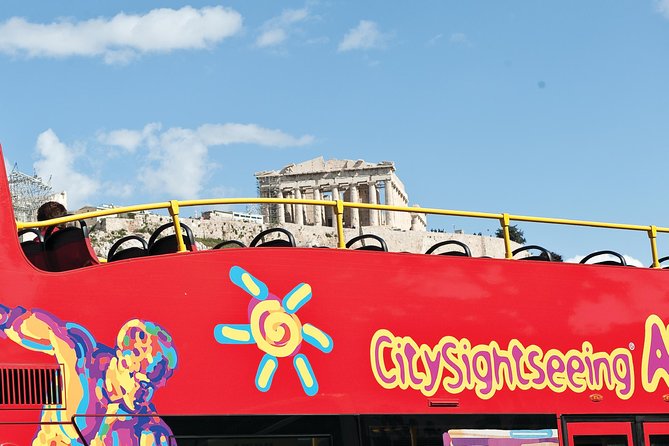
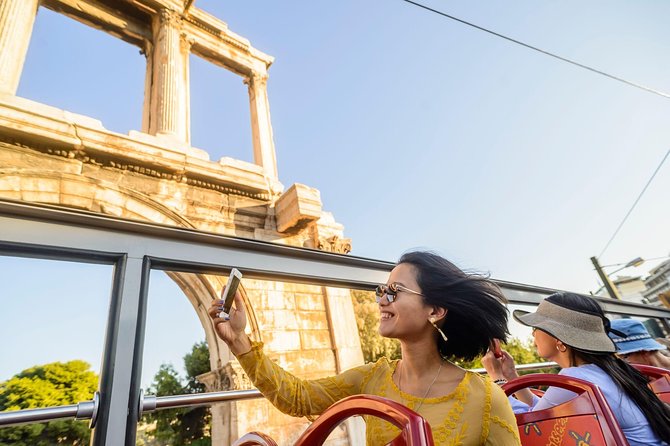
This tour uses open-top, double-decker buses and aims for 360-degree views with onboard audio commentary. It’s one of the few ways to see a wide area without feeling penned in, and it helps in Athens because the sights are spread out.
You get:
- Audio guide commentary in 13 languages with headphones
- Free Wi-Fi
- Free local Greek beer (but the venue may change)
That beer detail matters because it’s not something you should build a strict plan around. Keep it as a pleasant bonus, and if you’re counting on it, ask where it’s served when you board.
Now, the real-world caution. The audio and headphones are a big part of why this tour is “more than just transport.” Still, some people report issues like one ear not working or audio not matching what you’re seeing. My practical take: treat the audio as helpful, not final authority. If you notice it slipping, just shift to using street signs and landmarks outside the bus to guide you.
Practical Tips to Make the Bus Work Like a Travel Superpower
A few habits make this pass much better:
- Do one early loop. Athens runs until 4:30pm on the Athens Line, so do a morning or midday ride to pick what you’ll actually walk to.
- Bring water and snacks. The city pauses will happen, and you’ll appreciate having supplies ready for museum lines or short walks.
- Use the headphones, then check one ear. If sound seems uneven, swap or ask at the stop when possible.
- Aim for a “two zones per day” strategy. Pick one monument cluster and one neighborhood cluster (like Acropolis plus Monastiraki) so you’re not constantly hopping.
- Plan around special events. Road closures tied to events can reduce service, slow traffic, and change stops. If you’re visiting during a major holiday or big race weekend, check your timetable on-site before you assume everything will run normally.
- For beach days, lock your departure time. The Beach Riviera has set departures at 11am, 1pm, and 3pm, so don’t leave it to chance if you want beach time.
Who This Tour Suits Best (and Who Might Be Less Happy)
This is an excellent fit for:
- First-time visitors who want to get their bearings fast
- People who want less stress than taxis and less effort than figuring out multiple transfers
- Cruise passengers who need an easy connection from terminals to city highlights
- Travelers who like mixing “view from the bus” with targeted walking stops
It can be a tougher fit for:
- Anyone who strongly needs step-free boarding or easy access. There are reports of difficult access for mobility needs due to steep stairs and design limitations.
- People who expect perfectly timed audio at every stop, since audio can be inconsistent, especially during disrupted traffic.
- Travelers who want only one or two sights. If your list is tiny, another approach might give you more time per dollar.
Should You Book City Sightseeing Athens, Piraeus & Beach Riviera?
I’d book this if you’re doing Athens as a multi-stop visit and you want the convenience of hop-on, hop-off flexibility without negotiating the city at street level all day. It’s especially worth it when you can use the 24 to 72-hour window, so you can ride, hop off for a few targeted walks, and come back later with more confidence.
I’d think twice if you’re short on time, allergic to waiting around, or expecting the audio to be flawless turn-by-turn. In that case, you might prefer a more direct plan built around the specific sights you care about most.
If you do book, my best advice is straightforward: choose the line that matches the day you want, do an early loop on the Athens Line, then use Piraeus or the Riviera when you want a change of pace from the center.
FAQ
How long is each route?
The Athens Line loop is about 90 minutes, the Piraeus route is about 80 minutes, and the Beach Riviera route is about 110 minutes.
Which languages are included for the audio?
The onboard audio commentary is available in 13 languages, and headphones are provided.
Does the price include entry to attractions?
No. Entry to attractions is not included.
Do Piraeus and the Beach Riviera routes run all year?
No. The Piraeus and Beach Riviera routes operate April to October only. The Athens Line runs all year except 17th November, 25th December, and 1st January.
How do I board if I have a mobile or printed voucher?
Your voucher must be redeemed by an agent at the stop or on the bus before you board. After redemption, you receive a printed paper ticket that you need to keep for the whole duration of your journey.
Is Wi-Fi included on the bus?
Yes, free Wi-Fi is included.
Every Other Athens Write-Up
- All Day Cruise -3 Islands to Agistri,Moni, Aegina with lunch and drinks included
★ 5.0 · 4,958 reviews