
Review · CORFU TOWN & PALAIOKASTRITSA
Corfu: History and Culture Walking Tour
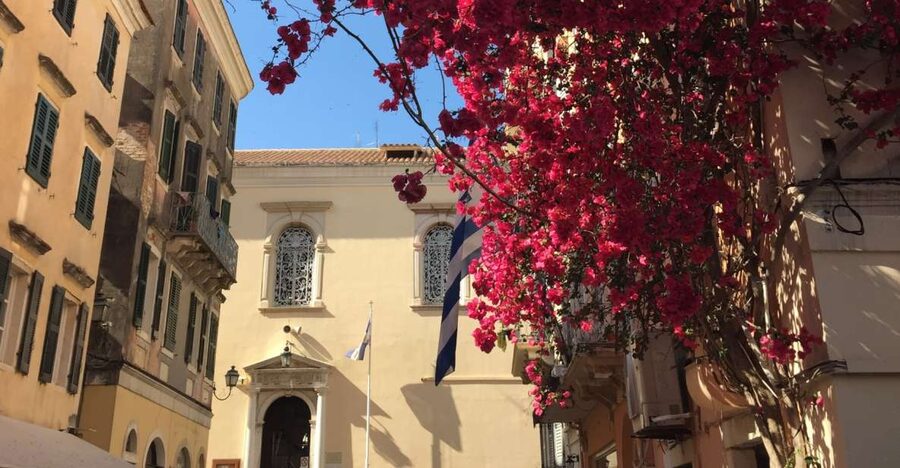
Corfu has layers, and this walk reads them fast. You start at the Old Venetian Fortress with a licensed English guide, then move through squares and alleyways toward St. Spyridon. I like how the route turns big, confusing eras into real streets and real buildings.
My second favorite part is the small group feel, limited to just 8 people. Guides like Nausica and Ariti bring the island’s shifts between Venetians, French, and British into everyday stories you can actually picture.
One thing to consider: the tour is not suitable for people with mobility impairments, and it involves a lot of walking on historic paths.
In This Review
- Key things that make this Corfu walk worth your time
- Finding your group at Agoniston Politechniou and the Schulenburg statue
- Old Venetian Fortress: where Corfu’s rulers leave physical fingerprints
- From alleyways to St. Spyridon Church, the bell tower that signals status
- Town Hall Square and the old neighborhood of Corfu’s elite
- Price and timing: is $93 good value for a 3-hour walk?
- What guides like Nausica, Alice, Valia, and Ariti do differently
- Who should book this Corfu History and Culture Walking Tour
- Should you book this Corfu history walk?
- FAQ
- How long is the Corfu History and Culture Walking Tour?
- Where do I meet the guide?
- What is the starting location for the tour?
- Is Old Fortress entry included?
- Is the tour guided in English?
- How big is the group?
- Is food included?
- Do I need to bring anything?
- Is the tour suitable for people with mobility impairments?
- Can I cancel for a full refund?
Key things that make this Corfu walk worth your time
- Old Fortress first, so you get context before the streets start flying by
- Skip-the-line entry plus the entrance fee included, so you spend less time waiting
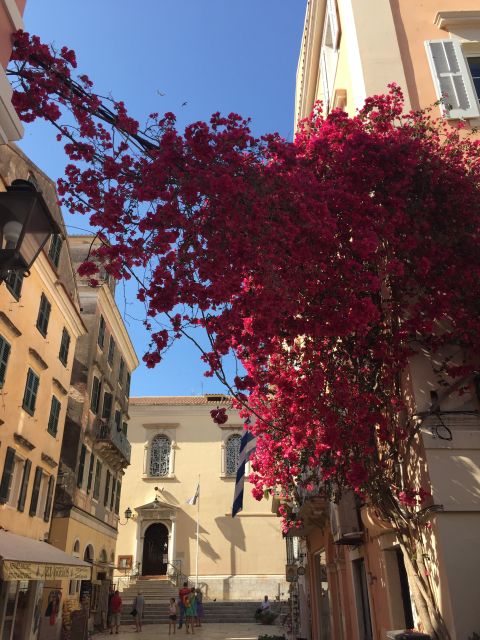
- St. Spyridon details including its 16th-century Greek Orthodox look and bell tower reach in the Iodan Islands
- Town Hall Square perspective, with insight into Corfu’s former elite meeting ground
- Guides who adapt, with time flexibility if weather or pacing shifts
More of Corfu, old town out to Palaiokastritsa





Finding your group at Agoniston Politechniou and the Schulenburg statue
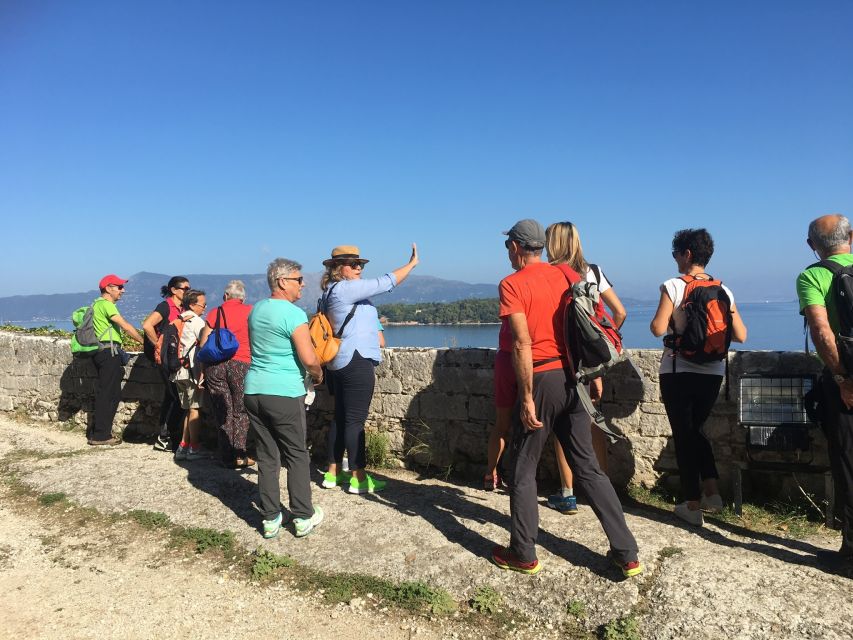
The tour starts in Corfu Town, with the official starting point listed as Agoniston Politechniou. When you show up, your guide waits by the statue of Schulenburg in front of the Old Fortress, so you can orient quickly even if you’re new to the area.
I like that this is simple. No mystery meeting place, no long scavenger hunt. You just walk in the direction of the fortress, locate the statue, and you’re set.
This timing matters too. With only 3 hours on the clock, you want a meeting spot you can find without stressing. The tour is built for a steady rhythm, meaning you’ll get more from each stop if you arrive a few minutes early and slip into the group calmly.
Also plan for shoes. Comfortable footwear is strongly recommended, and you’ll be moving through older stone streets where your footing matters more than your fashion choices.
If you’re thinking about what to do before the tour, keep it light. Grab water, do a bathroom stop near your lodging if you can, then head to the Old Fortress ready to walk. Since food isn’t included, it’s smart to plan a snack either before you start or for after you finish.
Old Venetian Fortress: where Corfu’s rulers leave physical fingerprints
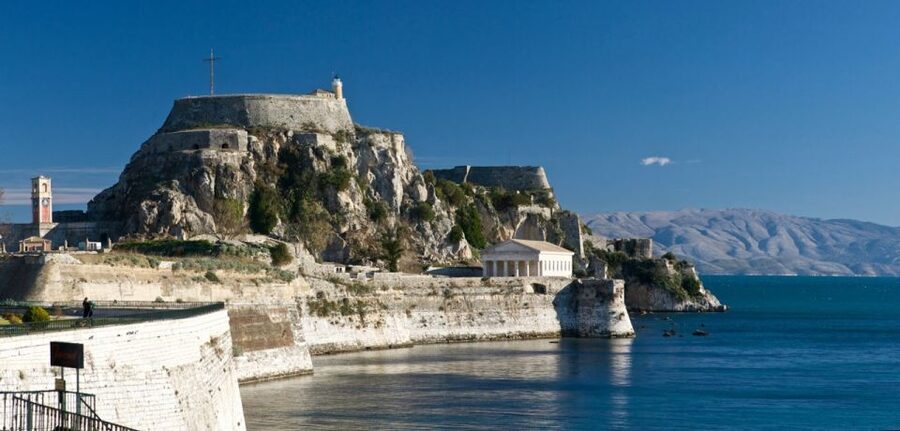
You begin at the Old Venetian Fortress, a Venetian-era stronghold right in the historical center. This is the first big payoff of the tour: you don’t start in the middle of the maze, you start at the place that explains why the maze looks the way it does.
You’ll get a guided visit inside the fortress, along with sightseeing and walking time that lets you actually look around, not just hear facts. The tour also includes the Old Fortress entrance fee, plus skip-the-ticket-line access, so the fortress time stays productive.
What makes this stop especially useful is the way it frames later buildings. Corfu’s identity is layered, and this fortress is one of the clearest places to connect architecture with power. You’ll see how Venetian influence showed up not only in defenses but in the cultural shape of the area.
Even if you’ve seen fortresses before, this one has a local angle. The guide ties the structure to Corfu’s changing rulers, including Venetians, French, and British. That matters because those shifts are not just dates on a timeline. They show up as language in street life, as design in churches and public buildings, and as traditions in how locals talk about their past.
On the practical side, this is also where you get your bearings. Standing in the fortress area early helps you understand what direction you’re heading and why certain squares feel like they connect to the same story.
If you’re the type who likes to ask questions, this is also a strong moment to do it. The best guides do not just recite history. They connect it to what your eyes can see right now.
From alleyways to St. Spyridon Church, the bell tower that signals status
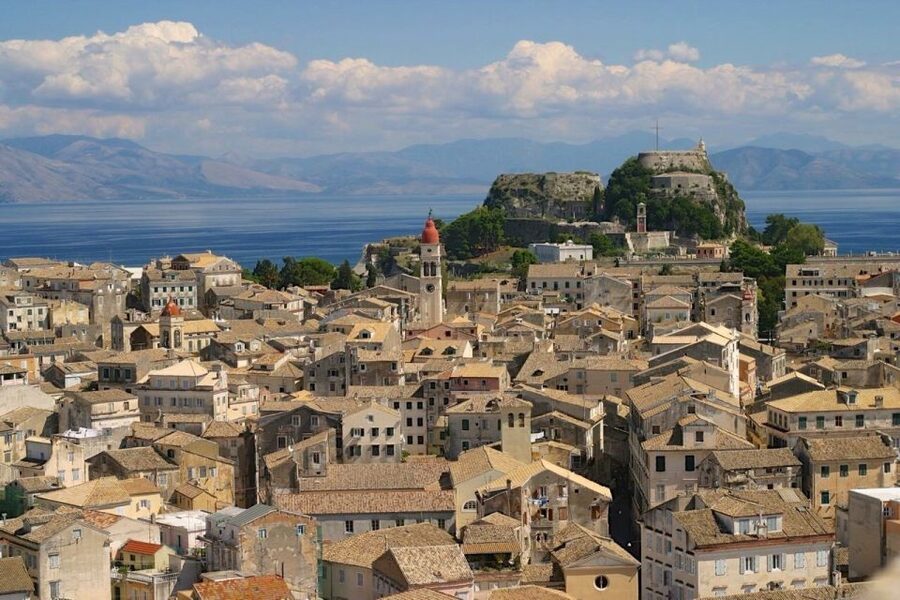
After the fortress, the tour shifts into walking through Corfu Town’s historical core. You’ll pass deserted alleyways, then reach lively squares and fountains as you make your way toward St. Spyridon Church.
This part of the experience works because it mixes motion with moments to pause. You’re not just checking boxes. You’re getting a sense of how the city flows: narrow streets that feel lived-in, open spots where people gather, and public spaces where power and faith show up together.
St. Spyridon is the key stop. You’ll visit and admire its architecture, described as a 16th-century Greek Orthodox church. The guide points out what’s distinctive about it, and you’ll also marvel at the bell tower, listed as the highest in the Iodan Islands.
That bell tower detail isn’t just trivia. It helps you understand what the church represented in Corfu. When a religious building reaches that kind of height, it’s signaling more than worship. It’s about presence, influence, and community identity you can see from across the town.
One of the most memorable ways the tour can feel is through the stories attached to this church. In particular, you may hear the connection to Prince Philip being christened there. Even if the name doesn’t spark your interest, the point is still useful: the guide gives famous touchpoints that anchor Corfu’s local tradition in a broader world.
And since this is a walking tour, you’ll also get the benefit of context you would miss if you visited the church alone. The guide stitches the fortress to the town, so by the time you reach St. Spyridon, you’re not guessing why the route is shaped the way it is.
Town Hall Square and the old neighborhood of Corfu’s elite
The tour ends at Town Hall Square, once considered one of the most exclusive neighborhoods in Corfu. This is a smart way to finish, because it moves from faith and defenses into civic power.
Here, you’ll admire impressive monuments and learn more about the island’s elite who used to meet in this square. That changes how you interpret what you saw earlier. Instead of viewing Corfu as only a sequence of churches and walls, you start recognizing it as a place where different groups negotiated influence in visible public spaces.
This stop also helps the tour feel complete. You get the fortress, then a major church, and then the civic center. That triangle gives you a workable map of how Corfu functioned historically, even if you don’t remember every date.
If you’re the kind of visitor who likes to keep going after a tour, this ending spot is useful. Town Hall Square is an easy anchor to transition into independent exploring, and it’s a natural place to ask your guide for next-step suggestions since you’ll be wrapping up with them right where Corfu’s public life is concentrated.
Price and timing: is $93 good value for a 3-hour walk?
At $93 per person for a 3-hour walking tour, you’re paying for three things: a live English guide, entrance to the Old Fortress, and the guided structure that keeps you from getting lost in the details.
The entrance fee is included, and you’ll skip the ticket line. That combination helps the tour justify its cost because you’re not spending your limited time stuck at a doorway or paying extra on top.
You also get a small group capped at 8 participants. In practice, this often means you can ask questions without feeling like you’re shouting over a crowd. Several guides on this route are described as lively and personality-driven, which makes the history feel less like a lecture and more like a story you can follow while walking.
Food is not included, so if you’re coming from a morning that already drained your energy, you might want to plan a snack either before the tour or for after. Since the route is mostly sightseeing, not dining, keeping your stomach stable helps you enjoy the walking portion.
Also, the tour is not built for slow pacing. If you’re visiting during very hot weather, bring water and wear shoes that won’t punish you after a few hours. The tour’s length is comfortable for most people who want a history hit without committing to a full day.
Overall, this is value when you want guidance. If you love independent wandering with zero structure, you could probably do a self-guided walk around the same landmarks. But for most visitors, paying for an informed, flexible guide turns the buildings into a coherent explanation.
More of Corfu taken slowly on foot
- Corfu Town: Guided Walking Tour and Local Food Tastings★ 4.9 · 313 reviews
- Taste Corfu: Private Corfu Food Walking Tour★ 5.0 · 82 reviews
- Small Group Corfu Walking City Tour★ 5.0 · 57 reviews
- Corfu: History and Culture Walking Tour★ 4.9 · 55 reviews
What guides like Nausica, Alice, Valia, and Ariti do differently
The tour’s quality depends heavily on the guide, and the strongest praise across recent outings centers on personality plus clarity. Names that come up include Alice, Nausica, Nausicaa, Valia, and Ariti, with comments that describe guides as engaging, enthusiastic, and quick to answer questions.
I take that seriously because Corfu history can sound like a list if no one helps you connect it. The best guides make those connections visible. They translate how Venetians, French, and British influence might show up in architecture, traditions, or how people talk about their city.
Flexibility shows up too. One guide is described as adjusting time allocations, and another worked around bad weather. That matters because a 3-hour tour can be thrown off easily if conditions change. When the guide adapts, you keep the full arc of the story instead of losing key stops.
One more reason I like this tour style: guides often act like helpful locals, not just historians. For example, you may hear recommendations for restaurants, and some reviews mention small extras like Greek coffee or even brief tastings such as local dairy products or liquor. Food is not listed as included, so think of these as occasional guide-driven additions rather than part of the guarantee.
Finally, the small group size makes a difference. With only up to 8 people, you get a better chance of real conversation. That turns the tour into something you remember, not just something you attend.
Who should book this Corfu History and Culture Walking Tour
This tour is a great fit if you want:
- A guided path through Corfu Town’s most important historical markers
- A structured way to understand Venetian, French, and British influences
- A short time commitment that still feels like more than a quick photo stop
It also suits couples, solo visitors, and small groups who prefer walking over buses. The route makes sense for people who like to look closely at churches, monuments, and public squares, and who enjoy learning while moving through real streets.
If you’re traveling with kids, this could work if your group can handle a steady 3-hour walk, but the tour is not listed as child-specific, so you’ll need to judge attention span.
If you have mobility impairments, skip it. The tour is explicitly not suitable for that. Likewise, if you have major walking limits, you might want to look for an option with less on-foot time.
If you’re already planning to visit the Old Fortress and St. Spyridon on your own, this is the version where you get the why behind the what. The guided connection between stops is what saves you from turning history into a blur.
Should you book this Corfu history walk?
Book this tour if you want a high-impact overview of Corfu Town in just 3 hours, with the Old Fortress and St. Spyridon built into a route that explains how power and culture changed over time. The included entrance fee and skip-the-line access make the timing practical, and the small group limit gives you a better chance of conversation with guides like Nausica and Ariti.
Skip it if mobility is a concern, or if you prefer zero structure and don’t want to pay for a guide. Also skip if you’re hungry in the middle and can’t plan for food outside the tour, since food is not included.
If you do book, come with comfortable shoes, arrive at the Schulenburg statue by the Old Fortress so you start on time, and be ready to ask questions. This is the kind of walking tour where the guide’s stories can turn familiar landmarks into something you actually understand.
FAQ
How long is the Corfu History and Culture Walking Tour?
It lasts 3 hours.
Where do I meet the guide?
Meet your guide at the statue of Schulenburg in front of the Old Fortress.
What is the starting location for the tour?
The tour starting location is listed as Agoniston Politechniou.
Is Old Fortress entry included?
Yes. The Old Fortress entrance fee is included, and you also skip the ticket line.
Is the tour guided in English?
Yes. The guide is licensed and the tour is available in English.
How big is the group?
The tour is a small group, limited to 8 participants.
Is food included?
No. Food is not included.
Do I need to bring anything?
Bring comfortable shoes.
Is the tour suitable for people with mobility impairments?
No. It is not suitable for people with mobility impairments.
Can I cancel for a full refund?
Yes. Free cancellation is available up to 24 hours in advance for a full refund.
The Rest of Corfu



Every Other Corfu Write-Up
Corfu, Old Town to Palaiokastritsa
Everything else we have written up around Corfu






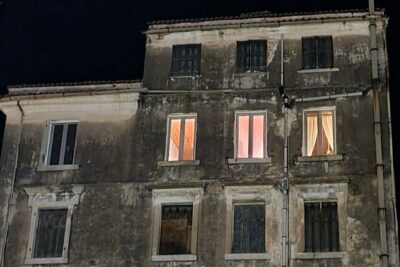
Corfu Town & Palaiokastritsa, side by side.
 ★ 4.6From Corfu Island: Antipaxos & Paxos Blue Caves Boat CruiseFrom $612,963 reviews
 ★ 4.6From Corfu: Day Cruise to Paxos, Antipaxos, and Blue CavesFrom $532,851 reviews
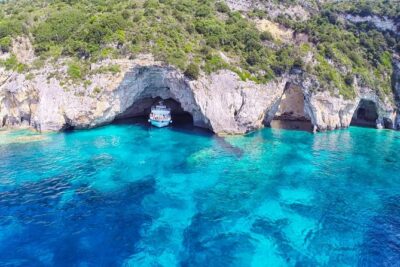 ★ 4.5Full-Day Boat Tour of Paxos Antipaxos Blue Caves from CorfuFrom $541,567 reviews
 ★ 4.1Corfu: City Sightseeing Hop-On Hop-Off Bus TourFrom $25937 reviews
 ★ 4.8Gouvia: Corfu Island Sailing Trip with Snack and Soft DrinksFrom $69851 reviews
 ★ 4.5Paxos Antipaxos Blue Caves (Lakka Village) from CorfuFrom $54777 reviews
 ★ 4.9Corfu Town: Full-Day Cruise with Lunch, Drinks & Swim StopsFrom $127707 reviews
 ★ 4.3Corfu: Paleokastritsa Beach and Old Town Bus Shore ExcursionFrom $44704 reviews
Sits on these lists