
Review · CORFU TOWN & PALAIOKASTRITSA
Corfu: Small Group City Walking Tour
Corfu’s streets tell stories fast. This 2-hour small group walk is one of my favorite ways to see the UNESCO old town, because you get a local perspective on what you are actually looking at, not just dates and names. I especially love the way the guide ties architecture to the people who lived and ruled here.
Do note the route is a long slog over cobbled streets, and it is not built for everyone. If you have mobility limits, heart problems, or you use a wheelchair, this one is a miss.
In This Review
- Key things you’ll notice on this Corfu walk
- Why Corfu’s Old Town Works Best on Foot
- Starting at the Old Fortress Gate: Your first Corfu orientation
- Esplanade and Liston arcade: the café scene that sets the tone
- Cobblestones, squares, and UNESCO context that makes sense
- Old 14th-century fortress stories: learning without a ticket
- Neoclassical Palace of St. Michael and St. George: a style you can spot
- Dimarcheion and San Giacomo: churches and civic power
- Campiello: walking into Corfu’s oldest neighborhood feel
- Ending in Corfu-town: what to do next with kumquat and olive oil
- Small group size, the 2-hour format, and what you can realistically see
- Price and value: where the $82 actually goes
- Practical tips: shoes, sun, and the no recording rule
- Who should book this Corfu walking tour?
- Should you book this Corfu Small Group City Walking Tour?
Key things you’ll notice on this Corfu walk
- Esplanade and Liston arcades first, so you start with the big, scenic view and the café-life atmosphere
- A practical UNESCO lens, with stories that help the old town feel readable, not random
- Old fortress context, where you learn Corfu’s past without turning it into a museum day
- Stop-and-look architecture, including the Neoclassical Palace of St. Michael and St. George and key church sites
- Campiello at the end of the route, where the neighborhood vibe shifts to older, quieter streets
More of Corfu, old town out to Palaiokastritsa





Why Corfu’s Old Town Works Best on Foot
Corfu’s old town is the kind of place where you can miss half the point if you zip around in a car. The charm is in the way buildings, courtyards, and little squares line up along pedestrian lanes. On this tour, you walk at a pace that lets you actually see it.
I also like the focus on interpretation. Instead of a speed-run through landmarks, the guide frames what you are looking at, then points out small architectural cues that make the city feel coherent. That matters in Corfu, because the old town is a mix of influences layered over time.
The small group format helps too. With up to 8 people, you are less likely to feel like you are getting shoved along. And in at least one case, the tour ran with only two people, which means the guide can keep things moving without losing clarity.
Starting at the Old Fortress Gate: Your first Corfu orientation
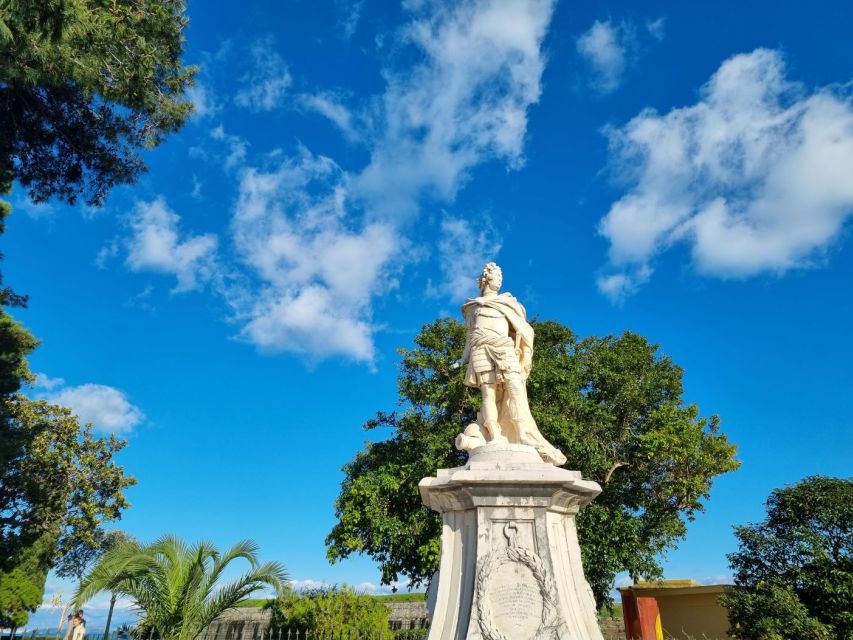
The meeting point is at the Old Fortress Gate, in front of Schulenburg’s statue. Your guide will hold a lollipop sign with the agency logo, so you will not be guessing who you are supposed to follow.
From the start, this is a tour designed to get your bearings fast. You are beginning right where the fortress zone frames so much of the city’s layout. That makes later stops click, because you can mentally connect streets to the defensive, historic logic that shaped Corfu.
If you arrive early, hang around for a minute and watch where people naturally flow. Corfu old town paths often feel “random” until you notice the corridors that funnel you from one square to the next. Once you start moving with the group, the city will start behaving like a map instead of a maze.
Esplanade and Liston arcade: the café scene that sets the tone
Right after starting, the tour heads to the Esplanade and the Liston arcade gallery. This is a smart move, because it is visually open compared to the tight lanes that come later.
You will see plenty of cafés and bars around the area, and the whole vibe makes sense as a meeting place for locals and visitors. Liston’s arcade gives you that classic promenade feeling, and it is a good spot to notice how pedestrians and architecture work together here.
What I like most is how this opening stop prepares you for the rest of the walk. If you begin with a scenic, structured area, the later cobbled streets do not feel like a sudden drop in quality. They feel like a change in chapter.
Cobblestones, squares, and UNESCO context that makes sense
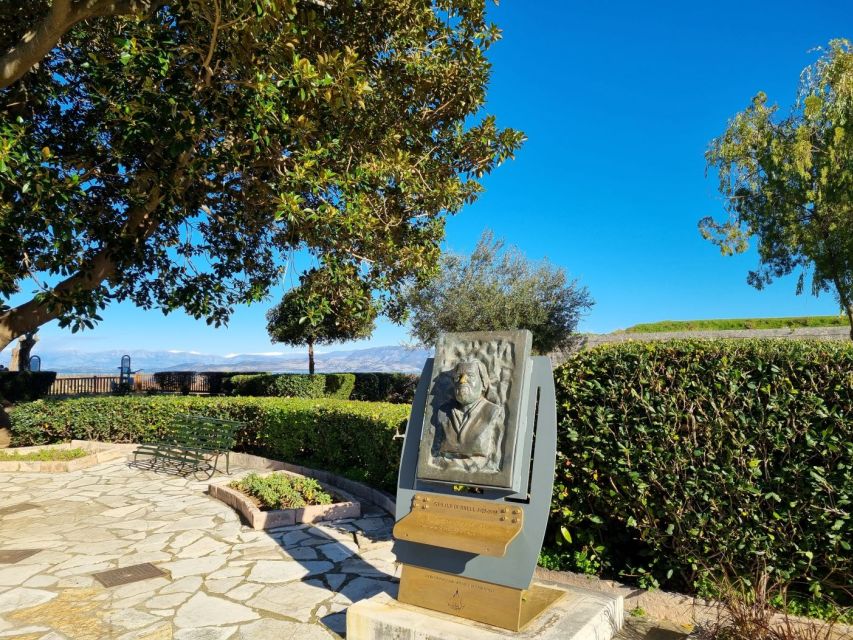
After the Esplanade and Liston, the walk continues through the old town’s cobbled streets. Expect a long, steady route, with the guide steering you toward enchanting squares and beautiful architecture.
A big part of the value is the UNESCO world heritage angle. The old town is protected for specific reasons, and the guide connects those reasons to what you are seeing on the ground. That turns the UNESCO label into something practical, like an explanation for why the streets, façades, and neighborhood pockets look the way they do.
In this phase of the tour, you will probably find yourself doing that small, helpful thing: looking up. Corfu rewards upward attention. Details matter here, and a guided walk is the easiest way to learn what details to look for without spending your whole vacation squinting at stones.
Old 14th-century fortress stories: learning without a ticket
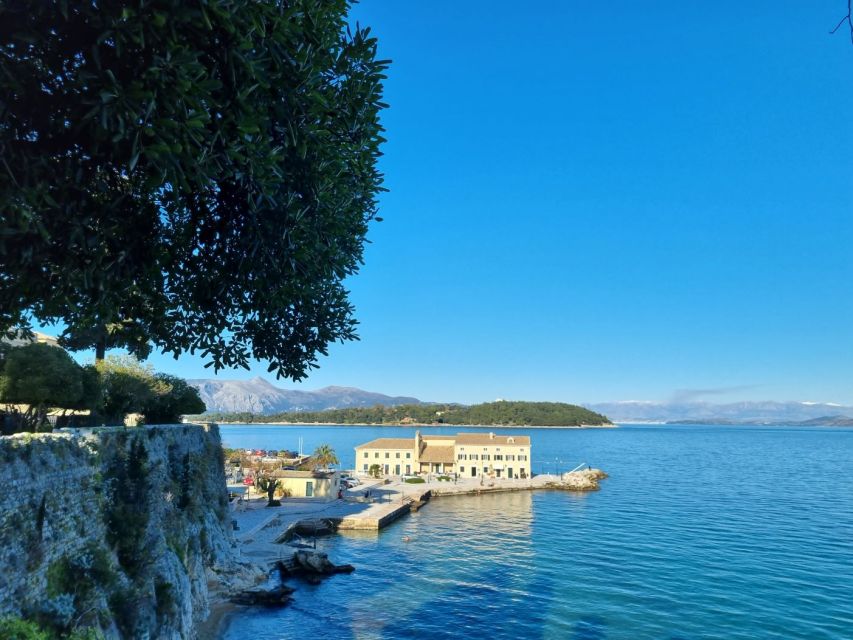
Next up is the older fortress area, where you learn more about Corfu’s past. The fortress is a key piece of the city’s identity, but this tour keeps it efficient. You are not signing up for a full fortress visit or museum marathon.
Instead, the guide uses the location to explain history as you stand in the right neighborhood context. That approach is perfect if you want the “why” behind the sights, but you still plan to eat, wander, or see a museum on your own later.
One drawback to keep in mind: the tour includes learning and viewpoints, not a dedicated museum or extended fortress entry. If what you really want is a long interior visit, you will need to plan that separately. For most people, though, the learn-outside format is a great fit for a 2-hour city-walk.
More of Corfu taken slowly on foot
- Corfu Town: Guided Walking Tour and Local Food Tastings★ 4.9 · 313 reviews
- Taste Corfu: Private Corfu Food Walking Tour★ 5.0 · 82 reviews
- Small Group Corfu Walking City Tour★ 5.0 · 57 reviews
- Corfu: History and Culture Walking Tour★ 4.9 · 55 reviews
Neoclassical Palace of St. Michael and St. George: a style you can spot
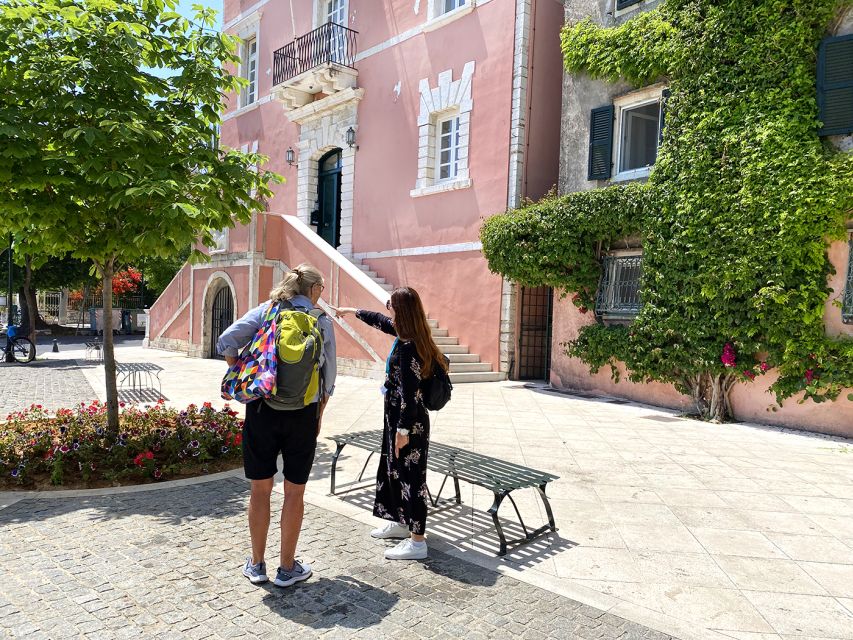
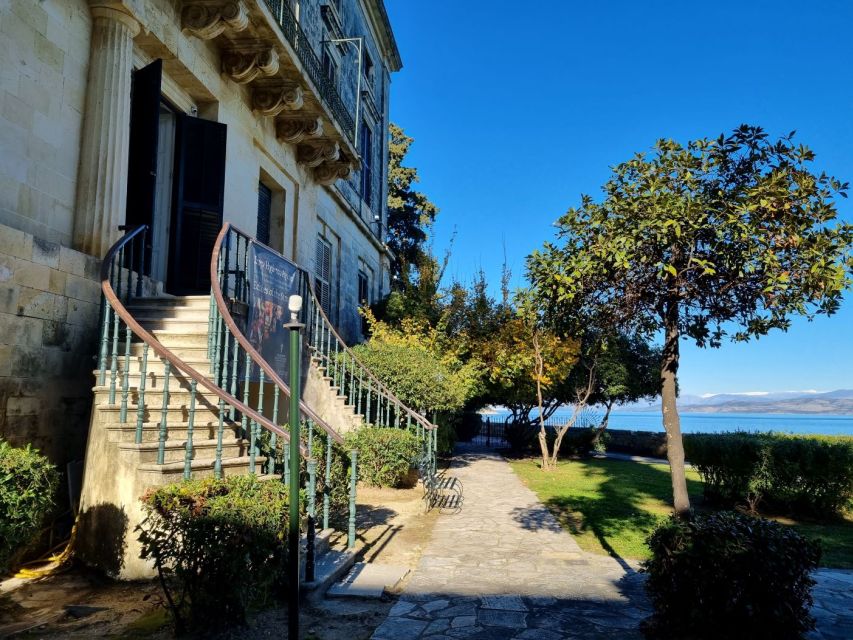
As the tour moves through the city, you reach the Neoclassical Palace of St. Michael and St. George. This is the kind of stop where the guide can help you read style. You can spot neoclassical features even without an art history degree, but having someone explain the cues makes it stick.
Look for symmetry and the “formal” feeling compared to the tighter, older street textures. The palace stop works because it breaks the walk into recognizable segments. Your brain gets to categorize what it is seeing, which is exactly what you want on a short tour.
This is also where the tour’s pacing earns its keep. You are not rushing from landmark to landmark. You have time to actually register what makes this building different before moving on.
Dimarcheion and San Giacomo: churches and civic power
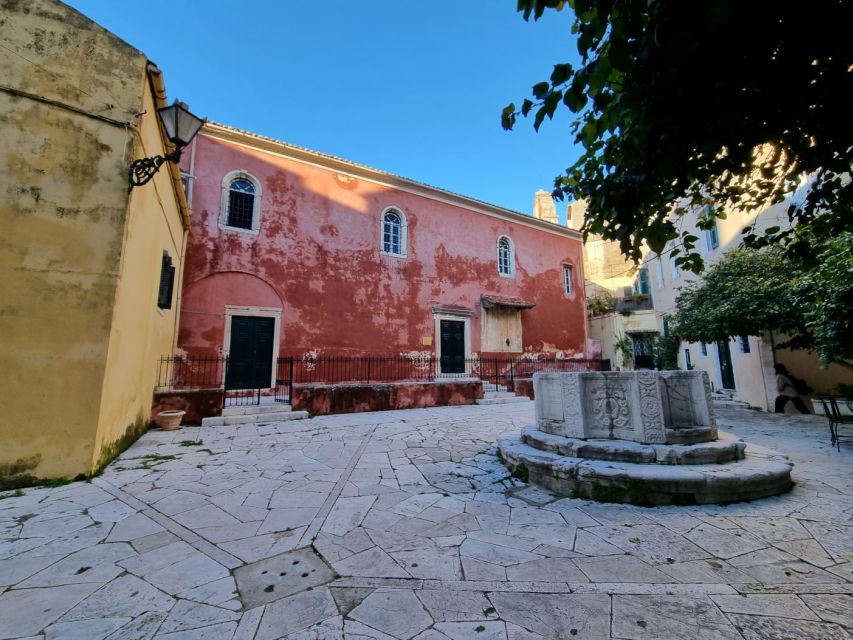
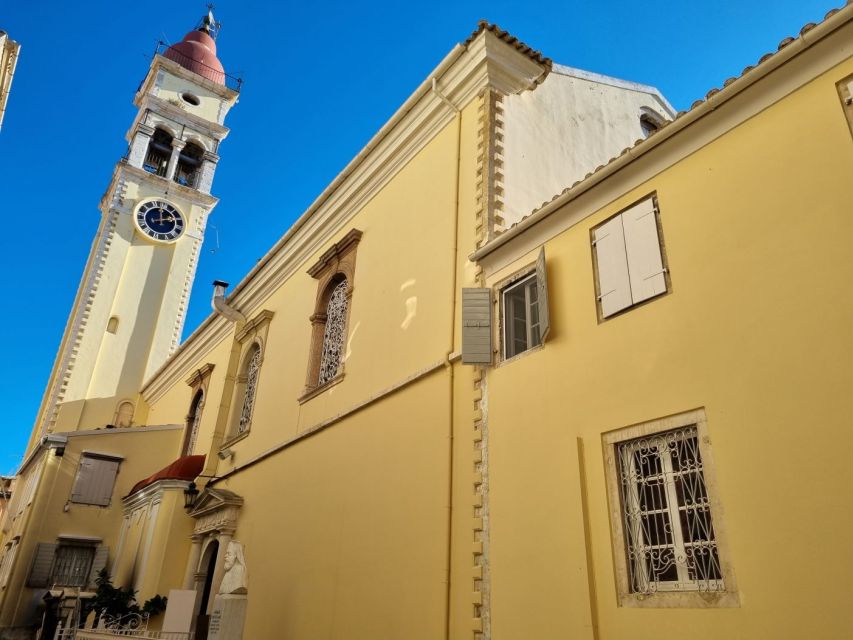
After the palace, the tour continues to the Dimarcheion and the Episcopal Church of San Giacomo. These stops help you see Corfu as both civic and spiritual, not just scenic streets and postcards.
The Dimarcheion is a civic landmark, and the guide’s job here is to connect the building’s role to the city’s layout and identity. Even if you only take a quick look at the façade, you start to understand how public life shaped the old town.
Then comes San Giacomo, where the focus shifts. Churches in Corfu are not just buildings, they are markers of community and influence. You will get more meaning from the stop if you let the guide point out what to notice, rather than trying to do all the interpretation yourself in the moment.
I really appreciate how these stops create a balanced walk. You are not stuck only on one theme, like defense or only aristocratic architecture. You get a more complete picture of how the city functioned.
Campiello: walking into Corfu’s oldest neighborhood feel
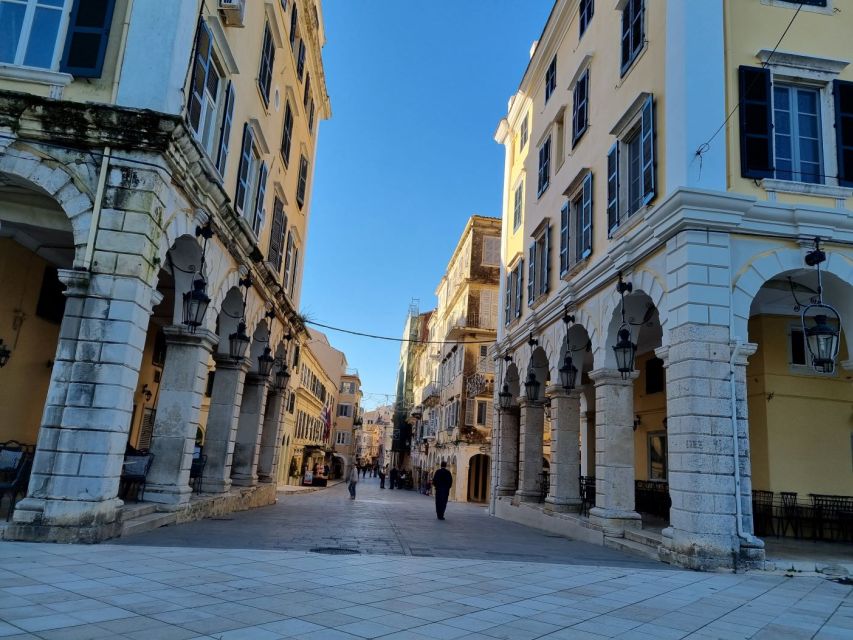
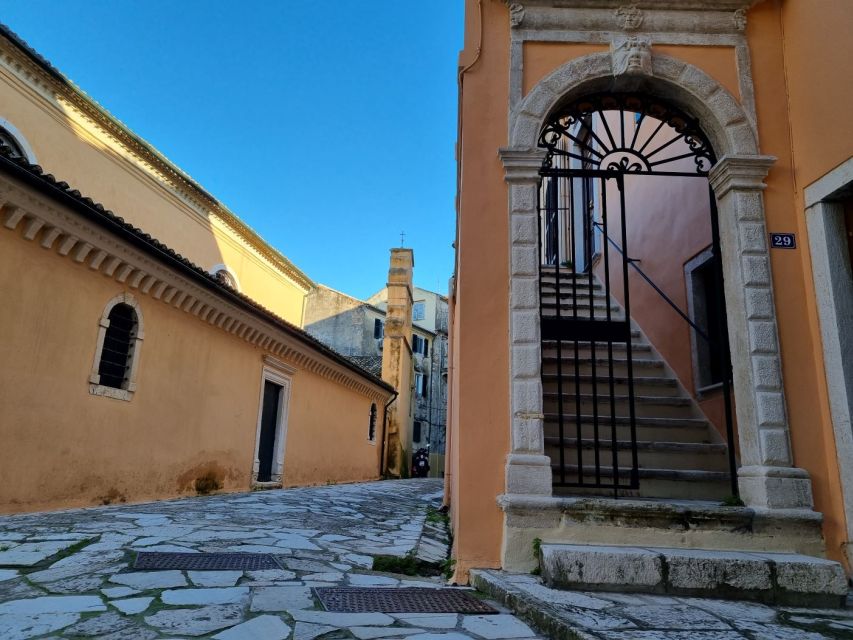
The route continues toward Campiello, described as the oldest neighborhood on the island. This is a great mid-to-late tour destination because it shifts the atmosphere. The walk becomes more intimate, and it starts to feel like you are inside the old town rather than just seeing it.
Campiello is where your earlier UNESCO context pays off. If the guide has been explaining why old town structures matter, the neighborhood itself becomes the proof. Even if you are not carrying a clipboard, you can feel the difference between a curated main street and an older residential pattern.
I find it helpful to slow down here, even if the group is moving. Take a breath. Look at street corners. Notice how the lanes guide you, because those tiny spatial choices are part of what makes old towns work.
Ending in Corfu-town: what to do next with kumquat and olive oil
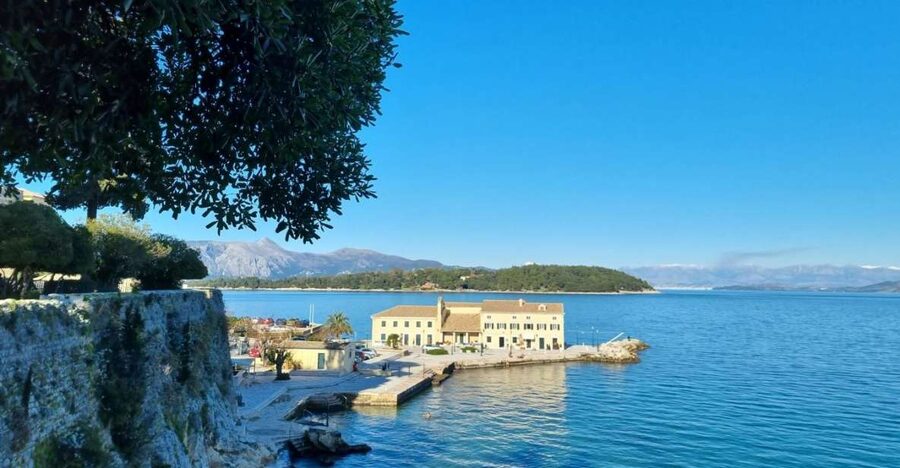
After the walk, you finish in Corfu-town. From there, you can head down the busier streets to find stalls, shops, and tavernas.
This is the practical payoff. You learn the city’s story, then you get the chance to eat and buy local flavors. Look for kumquat and Corfiot olive oil, both repeatedly highlighted as local favorites.
My advice: use the tour as your orientation, then turn your free time into personal wandering. If you are hungry, pick a taverna nearby and keep your first meal simple. If you are shopping, set a quick limit on what you buy. It is easier to enjoy the city when you do not turn the rest of the day into a mission.
Small group size, the 2-hour format, and what you can realistically see
At $82 per person, you are paying for a guided experience in a compact time window. The key value is not that you see every single site in Corfu. The value is that you leave with a structured understanding of the old town, so your independent exploration gets easier.
A 2-hour walk also means you will have energy left afterward. That matters in Corfu, where afternoon heat and street walking can add up. If you try to cram too much in one day, you end up spending the next morning trying to recover.
Small group matters here because it changes the guide dynamic. You can ask questions without feeling like you are holding up a parade. And based on one standout experience, the tour may run with fewer participants than advertised, which can make the guiding more personal and attentive.
Price and value: where the $82 actually goes
You get a professional guide, a small group limited to 8 people, plus fees and taxes (24%). Visits to museums and fortresses are not included, and drinks are not included either.
So think of the price as paying for expert interpretation plus time in the right spots, rather than paying for entry tickets. If you already plan to visit a museum separately, that is a good match. If you do not want to commit to multiple ticketed attractions, this tour helps you get meaning out of the architecture and streets you would otherwise just walk past.
Also, consider the languages offered. The live guide can work in German and English, which is a real advantage if you want explanations in a language you trust.
In short, I see this as a strong “setup tour.” You do it early or mid trip, and then the rest of your old town time becomes more satisfying.
Practical tips: shoes, sun, and the no recording rule
Corfu old town walking is not an outfit problem, it is a ground problem. Bring comfortable shoes. Cobblestones can be charming, and they can also be your feet’s worst enemy if you are in the wrong footwear.
You will also want a sun hat and sunscreen, plus water. The tour description clearly flags weather-appropriate clothing, and that is smart because you are outside the whole time.
One more detail: video recording and audio recording are not allowed. If you rely on recording everything, plan to take notes or just enjoy the experience in real time. I know it feels old school, but it actually helps you stay present.
If you are traveling with young kids or you have health or mobility concerns, pay attention to the suitability limits. This tour is not suitable for children under 3 years, pregnant women, people with mobility impairments, people with heart problems, or wheelchair users. The walking route and cobbled surfaces are the practical reasons behind that.
Who should book this Corfu walking tour?
This is for you if you want Corfu’s old town to feel understandable. If you enjoy architecture, historic neighborhood texture, and learning how places evolved, you will get a lot out of the guide’s stops.
It is also ideal if you prefer a small group over big crowds. One reason the ratings are so high is that the experience stays pleasant even when you keep the group size tight. A guide named Efi is specifically praised for mixing Corfu’s different periods of the city with a clear look at architecture and famous people tied to the story.
If you are the type who likes to go back later and wander with more confidence, this tour is a great primer. If you want hands-on museum time or long interior visits, you will likely want to pair it with another activity.
Should you book this Corfu Small Group City Walking Tour?
Yes, if you want a 2-hour plan that turns Corfu old town from scenery into something you can read. The combination of key landmarks, UNESCO context, and a genuinely small group format makes it good value, especially when you compare it to the cost of doing several ticketed stops without the meaning.
Book it when:
- you want a guided overview without museum fatigue
- you like architecture and neighborhood feel
- you want a local voice in both the big places and the smaller lanes
Skip it or choose something else when:
- you need accessibility support for cobbled streets
- you are looking for extended fortress or museum entry time
- you plan to rely on audio or video recording during the walk
If your goal is to leave Corfu town with a map in your head and a better sense of what you are seeing, this tour is a solid choice. It is short, guided, and focused, which is exactly what an old town visit should be.
The Rest of Corfu



Every Other Corfu Write-Up
Corfu, Old Town to Palaiokastritsa
Everything else we have written up around Corfu




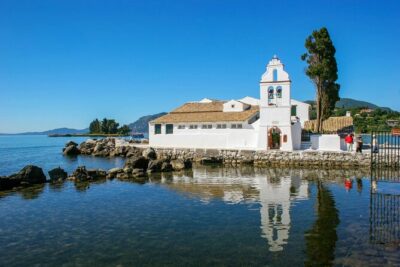


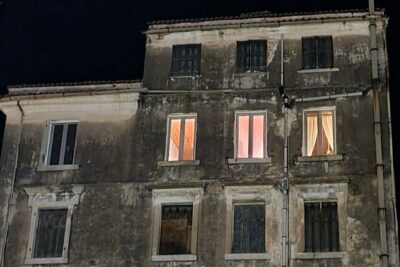
Corfu Town & Palaiokastritsa, side by side.
 ★ 4.6From Corfu Island: Antipaxos & Paxos Blue Caves Boat CruiseFrom $612,963 reviews
 ★ 4.6From Corfu: Day Cruise to Paxos, Antipaxos, and Blue CavesFrom $532,851 reviews
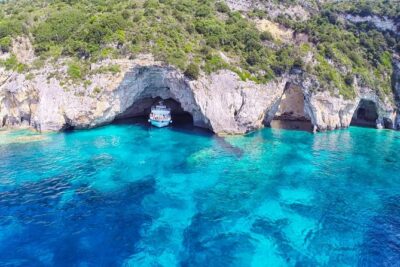 ★ 4.5Full-Day Boat Tour of Paxos Antipaxos Blue Caves from CorfuFrom $541,567 reviews
 ★ 4.1Corfu: City Sightseeing Hop-On Hop-Off Bus TourFrom $25937 reviews
 ★ 4.8Gouvia: Corfu Island Sailing Trip with Snack and Soft DrinksFrom $69851 reviews
 ★ 4.5Paxos Antipaxos Blue Caves (Lakka Village) from CorfuFrom $54777 reviews
 ★ 4.9Corfu Town: Full-Day Cruise with Lunch, Drinks & Swim StopsFrom $127707 reviews
 ★ 4.3Corfu: Paleokastritsa Beach and Old Town Bus Shore ExcursionFrom $44704 reviews
Sits on these lists