
Review · DELPHI & THE ORACLE
Delphi: Archaeological Site & Museum Ticket with Audio Tours
Delphi feels like standing inside a myth. With a pre-booked ticket, you can scan your entry and avoid the ticket booth crush at the start.
I also love how the mobile audio guide and the on-site museum work together, so you’re not just walking ruins, you’re learning what each building was and why it mattered.
One thing to keep in mind, the museum needs a fixed time slot, and the audio runs on your smartphone, so charge your phone and bring headphones before you go.
In This Review
- Key points to know before you go
- Delphi’s magic works best when you guide yourself
- Ticket basics: museum time slot vs site entry on your date
- Using the mobile audio guide without losing your rhythm
- Delphi Archaeological Site: Apollo’s world, the theater, and the sanctuary areas
- Delphi Museum: the artifacts that turn ruins into stories
- Timing tips: using late-day shade and smarter sequencing
- What to bring, plus the site rules you’ll actually care about
- Price and value: is $29.36 worth it?
- Should you book this Delphi audio ticket?
- FAQ
- Do I need a specific time for the Delphi Museum?
- Can I enter the Delphi Archaeological Site anytime that day?
- How do I get the audio guide?
- What languages are available for the audio guide?
- What should I bring to make the audio work?
- What are Delphi’s opening hours?
- Is this ticket refundable?
Key points to know before you go
- Skip the ticket booth by scanning at the entrance machines after you arrive
- Apollo, theater, stadium, and treasuries all connect better when you use the audio guide
- Museum time slot is strict, but the archaeological site entry is flexible on your selected date
- You need your own headphones and a charged phone, no physical audio device is included
- Choose your visit timing wisely to reduce crowd pressure inside the museum
Other trips up the mountain to Delphi


Delphi’s magic works best when you guide yourself

Delphi has a way of making ancient Greece feel personal. One moment you’re looking at a hillside of stone, the next you’re walking through places tied to the myth of Apollo and the rituals that brought people from far away.
This ticket is built for that kind of independent pacing. You get entry to the Delphi Museum on a chosen date and time slot, plus access to the Delphi Archaeological Site on the selected date. Then you add the audio layer using your phone, so you can slow down when something catches your eye, or speed up when the route is familiar.
What makes it a smart way to visit is control. You’re not stuck waiting for a group to catch up, and you’re not forced to rush through the museum panels and artifacts just to meet a schedule. The audio helps you connect the dots between what you see outdoors and what you’re about to see indoors.
Still, it’s not a hands-free experience. You’ll be responsible for downloading and playing the audio, and you’ll want to do a quick check that your headphones work. The payoff is that you can repeat the parts you care about, instead of hoping the timing lines up.
Ticket basics: museum time slot vs site entry on your date
Here’s the simple logic you should plan around.
The Delphi Archaeological Museum needs a specific date and time slot. Once you pick it, you can’t amend the travel date or entry time slot. The site itself is more forgiving: you can enter the Delphi Archaeological Site anytime you want on the selected date.
That split matters because it helps you design the day. If you’re aiming for fewer people in the museum, you’ll want a time slot that feels convenient rather than just the earliest slot. If you’re more focused on the outdoors, you can build your route around the site first and treat the museum as a structured warm-up or wrap-up.
Also note the visit window depends on the season. Delphi’s opening hours shift across the year, and Tuesdays have their own schedule. In November to March, it runs from 8:30 AM to 3:30 PM. In June to August, it’s 8 AM to 8 PM. On Tuesdays, opening hours are from 10 AM to 5 PM. For the other months, hours change as daylight changes, so you should verify what applies to your exact travel dates before you go.
Using the mobile audio guide without losing your rhythm
This is a self-guided experience, powered by your phone. The ticket includes self-guided audio for the Delphi Museum, and audio for the Delphi Site if you selected that option.
No physical audio device is provided. You’ll need:
- a charged smartphone
- headphones (earphones are not included)
Before you arrive, use the download instructions sent with your voucher. Then plan to keep the audio running as you move. The point isn’t just facts. The better value is how the narration explains what you’re seeing while you’re still standing in front of it.
A practical trick: if the audio seems to jump ahead or starts in an unexpected place, don’t keep walking blindly. Pause, find the right segment, and then continue. With ruins, a small misstep can lead you away from the feature the narration was explaining, like the Apollo area.
Another practical detail: the audio guide languages include English, Italian, French, Spanish, German, Dutch, and Japanese. If you’re traveling with multiple languages in your group, everyone should confirm their language before you start, so you don’t spend precious time swapping settings on-site.
Delphi Archaeological Site: Apollo’s world, the theater, and the sanctuary areas
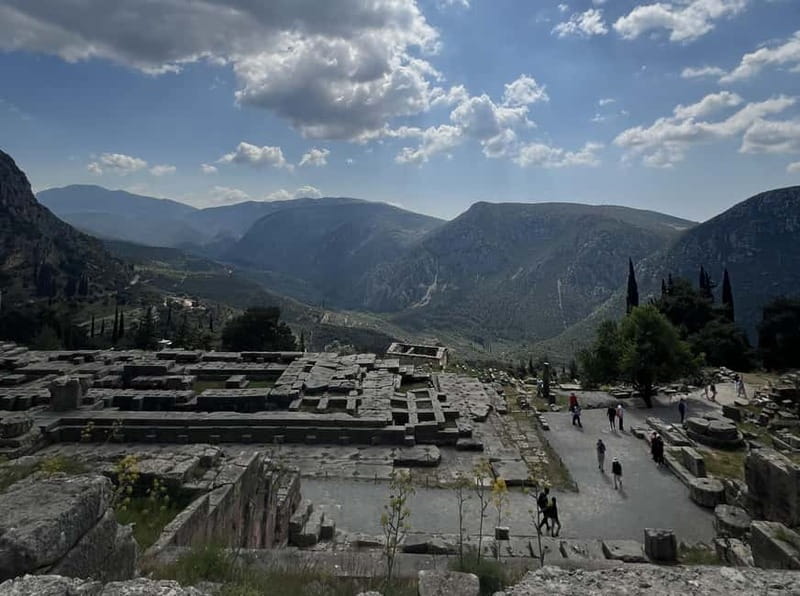
The main outdoors route is where Delphi earns its reputation. You’ll move through sacred and civic spaces that once shaped how the ancient Greeks understood prophecy, games, and worship.
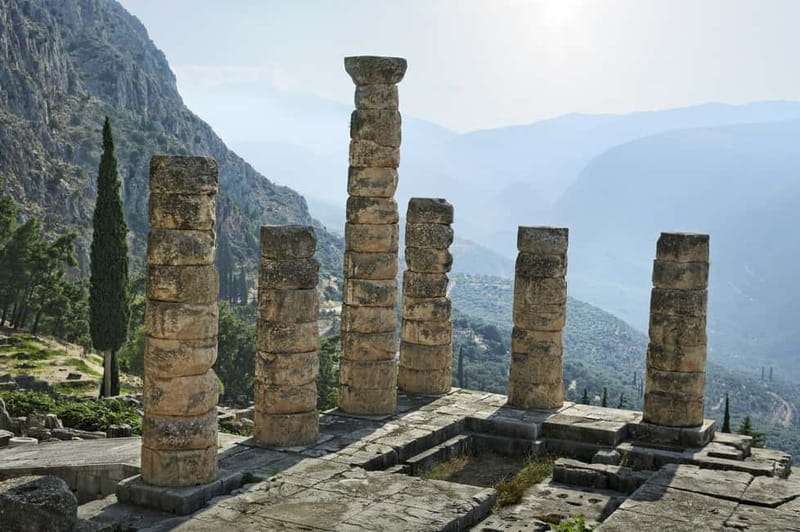
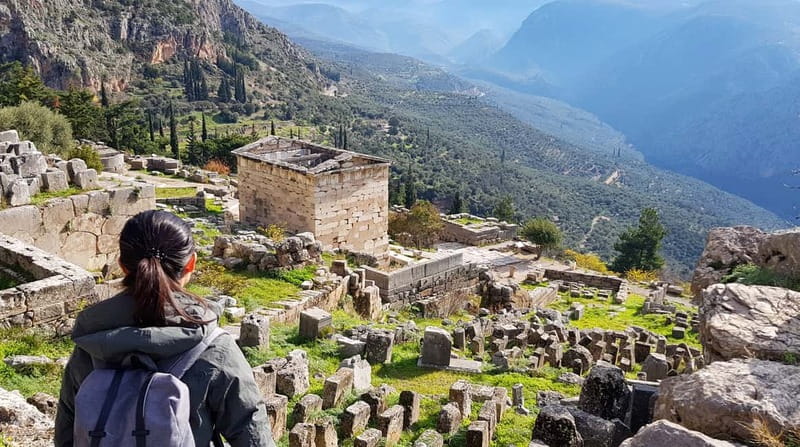
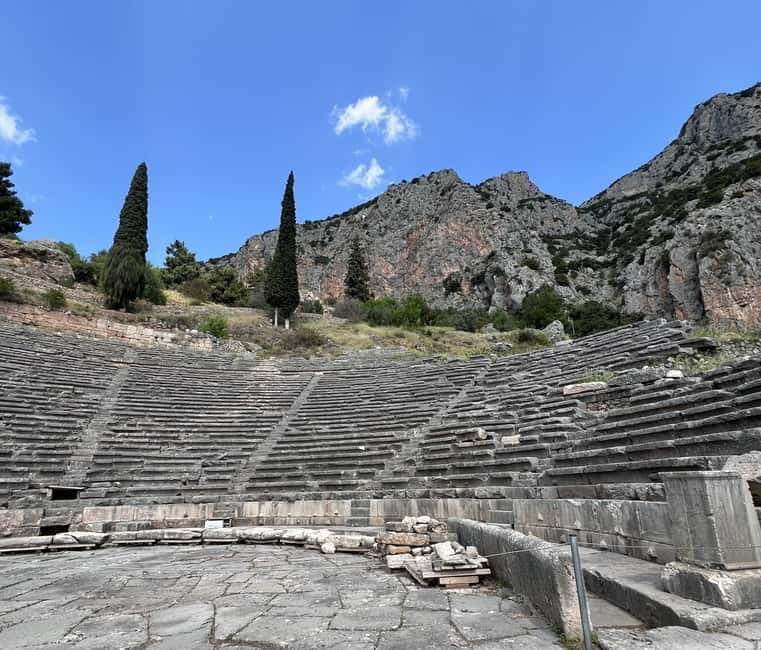
Start with the big spiritual anchors. The site includes the temple of Apollo and the theater area. The theater matters because it tells you Delphi was not only a place for ritual, it was also a stage for public events. Even if you’ve seen Greek theaters before, the setting here adds a special feeling because you’re standing in the same kind of natural amphitheater geography that once amplified voices and ceremony.
As you keep going, you’ll find the sanctuary of Athena Pronaia with the Tholos. This is one of those stops where audio storytelling can save you from confusion. Instead of staring at stones and guessing, you get a guided explanation of how the space was used and what it symbolized.
Don’t skip the smaller “in-between” features either. The site description includes the Kastalia Spring and several treasuries. These are the places that help you understand that Delphi functioned like a whole complex system, not just one monument. Treasuries, in particular, connect to how different communities displayed devotion and identity.
Then there’s the stadium. If you time it well, this is one of the most satisfying endings because it gives you a sense of the athletic side of Delphi’s reputation. One of the smartest ways to experience the stadium is to plan your visit so you’re there late enough to slow down, but not so late that you feel rushed out of the site.
What you’ll likely feel: a lot of walking on uneven ground, plus uphill stretches. Wear comfortable shoes and bring water, because once you’re on the site, you’ll want your energy for the climb rather than saving it for the nearest rest stop.
Delphi Museum: the artifacts that turn ruins into stories
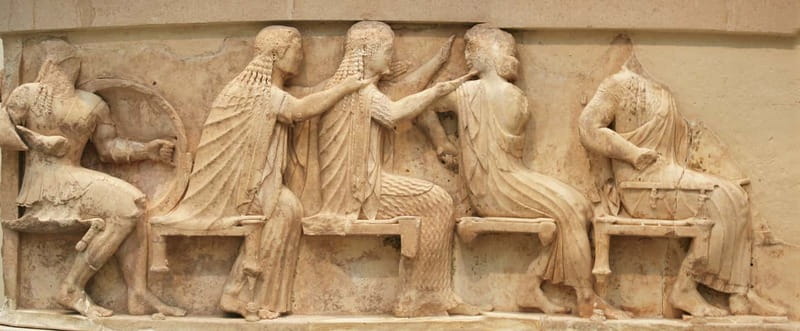
If you want the ruins to make sense fast, the museum is your cheat code. The Delphi Archaeological Museum on-site contains significant Greek artifacts from excavations in the area, plus displays that help explain what you’re about to see, or what you’ve just seen.
Think of the museum as your interpreter. Outdoors, your brain can struggle to translate fragments into full structures. Inside, you get context. The exhibits are especially useful when you’re trying to connect named places like the Apollo sanctuary and the theater to actual objects and evidence.
The museum is also a good place to set your mental map. If you enter first, you can use the exhibits and text panels to understand what features matter, then let the audio guide support you as you move outside. If you prefer to start at the site, the museum still works well as a clarifier afterward.
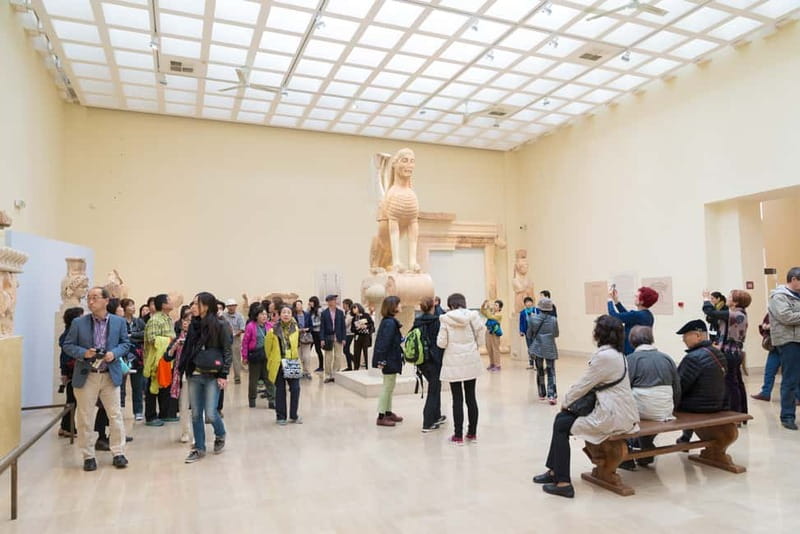
One real-world note: the museum can feel busy when tour groups arrive. So if you’re sensitive to crowds, pick a museum time slot that reduces overlap. If you can choose, consider selecting a later slot, then plan your outdoors time for the period when the sun and crowds feel more manageable.
Timing tips: using late-day shade and smarter sequencing
Delphi is not a place to treat like a quick stop. The experience is better when you manage heat, crowds, and your energy level.
A common winning approach is museum first or late-afternoon site entry, then finishing with the stadium area. If you arrive later in the day, you may find more shade and fewer people circulating through the main flows, which makes the ruins feel calmer and easier to understand.
If you’re there in warmer months, plan to carry water and keep your schedule flexible. The outdoors can be tiring, and you’ll want to avoid the feeling of watching the clock while you’re trying to appreciate details.
Also remember the daily time window. In the long summer days, you have more room to spread it out. In the winter months, the closing time arrives earlier, so you’ll want to make sure you see your must-dos before the final rush.
What to bring, plus the site rules you’ll actually care about
This ticket is straightforward, but the practical stuff can make or break your day.
Bring:
- passport or ID card
- comfortable shoes
- sunglasses
- sun hat
- water
- comfortable clothes
- headphones
- a charged smartphone
Skip:
- pets
- baby strollers
- luggage or large bags
A few notes you should treat as essential. This experience is not suitable for wheelchair users. Also, the ticket is for travelers over 25 years. Reduced-price tickets are not available online, but free admission or reduced admission may apply if you’re in eligible age groups, with proof at the ticket booth.
If you’re going as part of a family or mixed-age group, plan around the rules for ID checks. Have the right documentation ready, so you don’t end up dealing with a last-minute ticket booth issue.
Price and value: is $29.36 worth it?
At $29.36 per person, the ticket cost is meant to pay for convenience and control, not just entry. The key value points are:
- you can enter with a pre-booked ticket instead of handling on-the-spot lines
- you get self-guided audio for the museum, and possibly the site if selected
- you can use the audio on your own schedule and replay what you want
For some people, the difference vs buying directly is mainly time. If you want to start right away and protect your sightseeing stamina, pre-booking is a real advantage. For others, it’s about the phone audio layer, especially if you like understanding what you’re seeing without hiring a live guide.
The trade-off is that you pay for convenience and you still need your own phone setup. No phone means no audio. No headphones means you’ll struggle. And because the museum has a fixed time slot, you should choose your timing carefully up front.
Should you book this Delphi audio ticket?
I’d book this if you want a flexible, self-paced Delphi day with the museum and the site working together. If you enjoy storytelling and want more than stone-and-smile photos, the audio option helps you connect the names, places, and reasons without slowing down your whole route.
I’d think twice if you’re traveling without reliable smartphone battery, or if you hate managing downloads and headphones on the go. Since the museum time slot is strict, you should also feel comfortable committing to the date and time you choose.
If you match those priorities, you’ll get a satisfying day that’s equal parts myth, worship, and real artifacts, with just enough structure to keep the site coherent.
FAQ

Do I need a specific time for the Delphi Museum?
Yes. Entry to the Delphi Archaeological Museum requires choosing a specific time and day of visit. You can’t amend the travel date or entry time slot after booking.
Can I enter the Delphi Archaeological Site anytime that day?
Yes. The Archaeological Site entry is anytime, but only on the selected date shown in your booking.
How do I get the audio guide?
After booking, you receive download instructions with your voucher. The audio guide is accessed through your phone, and no physical audio device is provided.
What languages are available for the audio guide?
The audio guide languages include English, Italian, French, Spanish, German, Dutch, and Japanese.
What should I bring to make the audio work?
Bring a charged smartphone and headphones. Passport or ID card is also required.
What are Delphi’s opening hours?
Opening hours vary by season. November to March: 8:30 AM to 3:30 PM. June to August: 8 AM to 8 PM. On Tuesdays: 10 AM to 5 PM. For other months, hours differ as the length of the day changes, so check before your visit.
Is this ticket refundable?
No. The activity is non-refundable.
The Rest of Delphi

Every Other Delphi Write-Up
Up the Mountain to Delphi
Everything else we have written up around Delphi


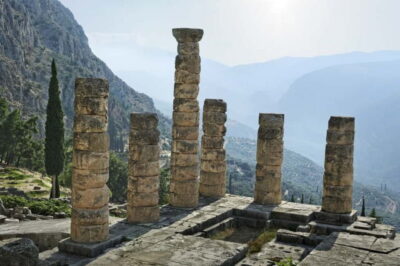
Delphi & the Oracle, side by side.
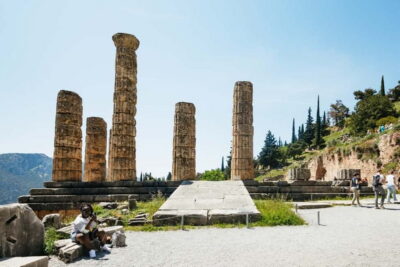 ★ 4.6Athens: Mythology of Delphi, Museum and Arachova Guided TourFrom $314,008 reviews
 ★ 4.6From Athens: Delphi Full Day V.R. Audio Guided TourFrom $303,028 reviews
 ★ 4.8From Athens: Small-Group Delphi, Museum & Arachova Day TripFrom $342,476 reviews
 ★ 4.5Delphi English Day Trip from Athens with Official GuideFrom $782,199 reviews
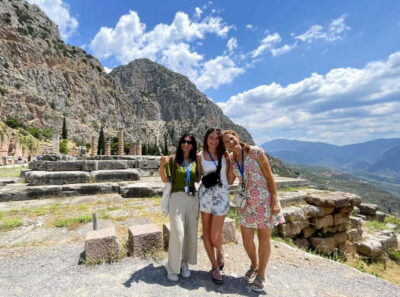 ★ 4.7Athens: Delphi Guided Trip with Optional Lunch and EntryFrom $331,553 reviews
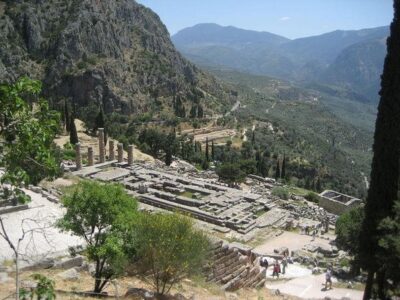 ★ 4.5Historical Delphi One Day Tour with Arachova Stop & Expert GuideFrom $341,247 reviews
 ★ 4.5Premium Delphi Day Trip with an Expert Guide, Museum & LunchFrom $381,100 reviews
 ★ 4.5From Athens: Delphi and Meteora 2-Day Guided TourFrom $271825 reviews
Sits on these lists