
Review · TOURS
From Athens: Explore Ancient Greece 4-Day Tour
Ancient Greece, minus the stress. This 4-day route strings together the big names from Apollo to the Olympic Flame, then caps it with Meteora monasteries balanced on rock pillars. I especially like how you get guided time at the ancient theatre of Epidaurus and the major classical centers, all while your transport is handled by a luxury A/C bus.
One thing to plan for: the monasteries have strict clothing rules, and the tour also notes no shorts, so pack accordingly (especially if you’re visiting Meteora as a woman).
In This Review
- Key Things I’d Circle On Your Map
- From Athens by A/C Bus, You Keep Your Energy for the Sites
- Epidaurus, Nafplio, and Mycenae: The Classic Start With Big Variety
- Epidaurus Theatre: Where Sound Becomes the Attraction
- Nafplio Stop: A Short Reset Before the Ruins
- Mycenae: Agamemnon and the Weight of the Past
- Olympia: Temples, Museums, and the Olympic Flame Ritual
- Temples of Hera and Zeus: More Than Photo Stops
- Olympic Flame Altar: The Symbol You Can Think With
- Museum Time: Context Helps the Ruins Click
- The Road to Delphi via Rio-Antirrio Bridge and Coastal Views
- Delphi and Arachova: The Navel of the World in Mountain Light
- Delphi in the Afternoon and Morning Calm
- Arachova: A Mountain Village Break
- Kalambaka: Staying Close to Meteora’s Big Rocks
- Meteora Monasteries: Rock Pillars, Orthodox Spiritual Sites, and the Right Clothes
- Optional Byzantine Icons Factory Stop
- Guides, Pace, and Why Commentary Matters More Than You Think
- Hotels and Meals: Included Breakfast and Dinner Reduce Decision Fatigue
- Price and Value: What $742 Covers and What You Still Need to Budget
- Who This Tour Suits Best, and Who Might Want to Skip It
- Should You Book This 4-Day Ancient Greece Tour?
Key Things I’d Circle On Your Map
- Epidaurus theatre acoustics that make speech and song feel unusually clear
- Mycenae and Olympia paired for that slow, satisfying march from myth to ritual
- Delphi with Arachova as a mountain break, not just another stop
- Olympic Flame symbolism at the altar, plus museum time to add context
- Meteora monasteries with huge views, and clothing that must be monastery-appropriate
Not settled on one yet? These are the other Athens trips that made our review list.
- All Day Cruise -3 Islands to Agistri,Moni, Aegina with lunch and drinks included
★ 5.0 · 4,958 reviews



From Athens by A/C Bus, You Keep Your Energy for the Sites
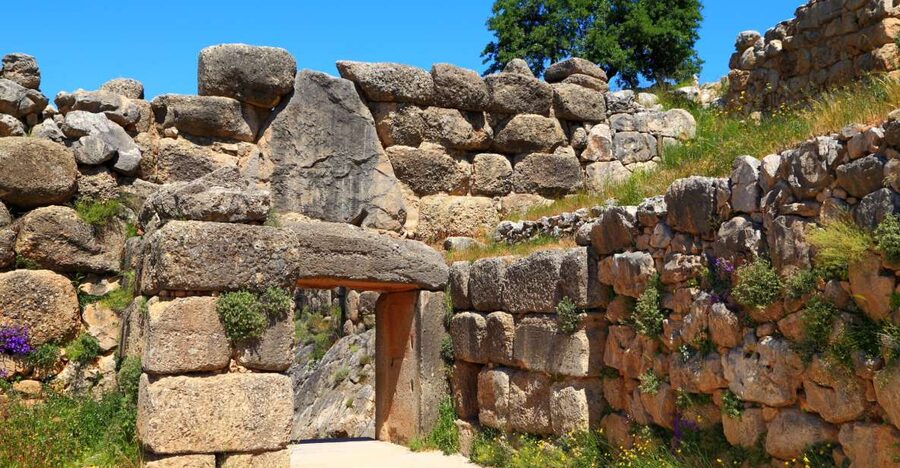
This tour is built around one core convenience: you start in Athens with pickup from many centrally located hotels, then you travel in a luxury A/C bus with transfers handled for you. I like this format because it keeps you from playing “how do we get there” all day, especially on roads that take real time between archaeological hot spots.
It’s also framed as a lower-impact, more sustainable journey, which matters on a trip that covers a lot of ground. You’ll still see plenty of famous places, but the logistics are designed so you can focus on what you came for: temples, theatres, sanctuaries, and the feeling of being surrounded by Greek mythology and classical history.
One more practical note: you’ll have breakfast and dinner included, which changes how you plan your day. You can treat lunch as a flexible gap, rather than trying to hunt for food between long guided blocks.
Epidaurus, Nafplio, and Mycenae: The Classic Start With Big Variety
Your first stretch gives you three very different flavors of Greece, all in one day. That mix is a strength if you like your travel days to have rhythm, not just repetition.
Epidaurus Theatre: Where Sound Becomes the Attraction
Epidaurus is the moment that makes a lot of people sit up straight. The ancient theatre is famous for symmetry and, more importantly, its exceptional acoustics. Even if you’re not a “theatre person,” it’s still one of those places where you can feel the careful design.
This stop also works well for first timers because it sets a theme right away. Greek architecture wasn’t only about beauty. It was about performance, civic identity, and making experiences audible across a crowd. You’re not just looking at stones, you’re thinking about what those spaces were built to do.
Nafplio Stop: A Short Reset Before the Ruins
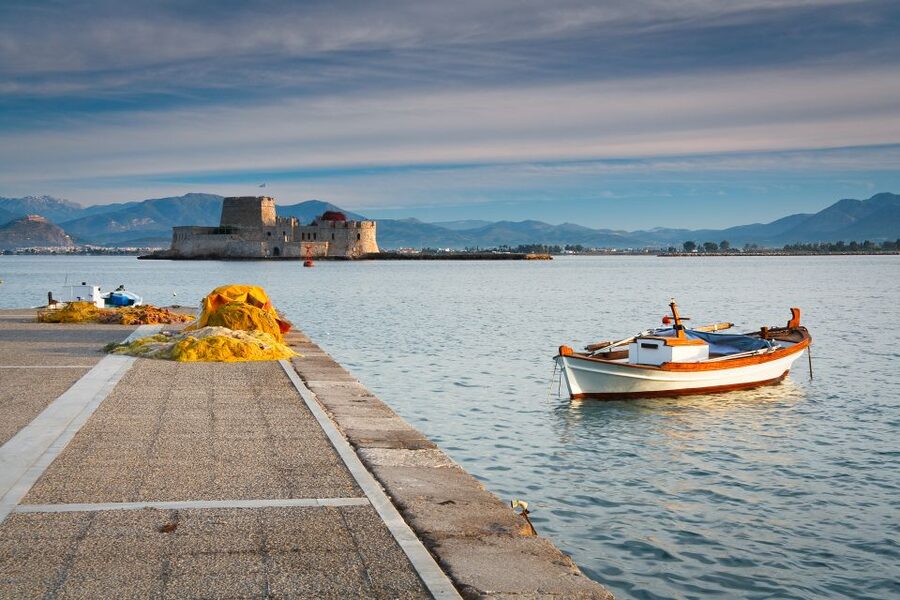
From Epidaurus, you’ll make a brief stop in Nafplio, a seaport town. It’s not meant to turn into a full city day. Instead, it acts like a palate cleanser before the heavier sites, giving you a chance to walk a little, stretch your legs, and break up the driving.
Even with a short stop, Nafplio helps the trip feel more human. After a theatre visit, your eyes need something with streets and everyday life. This is a good “breather” between the past and the next layer of it.
Mycenae: Agamemnon and the Weight of the Past
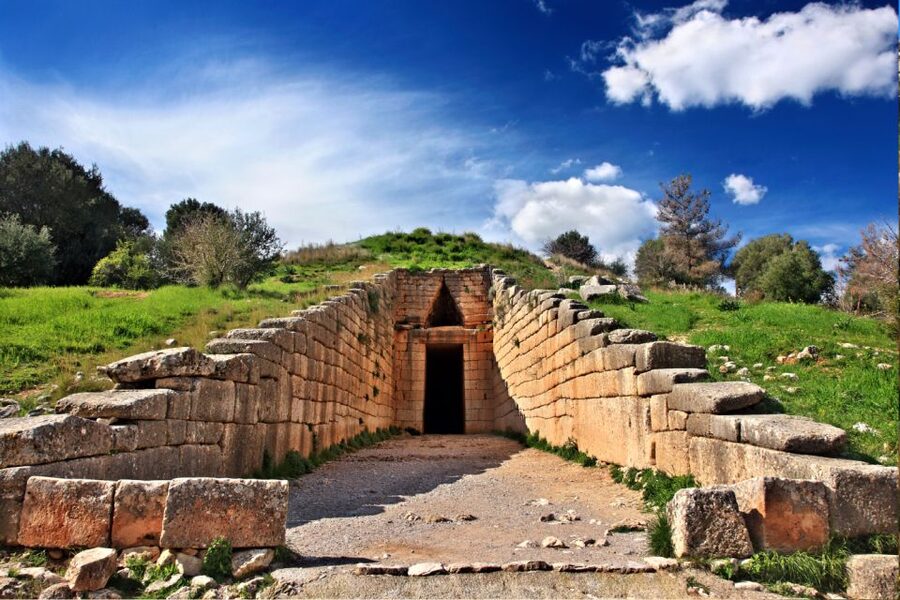
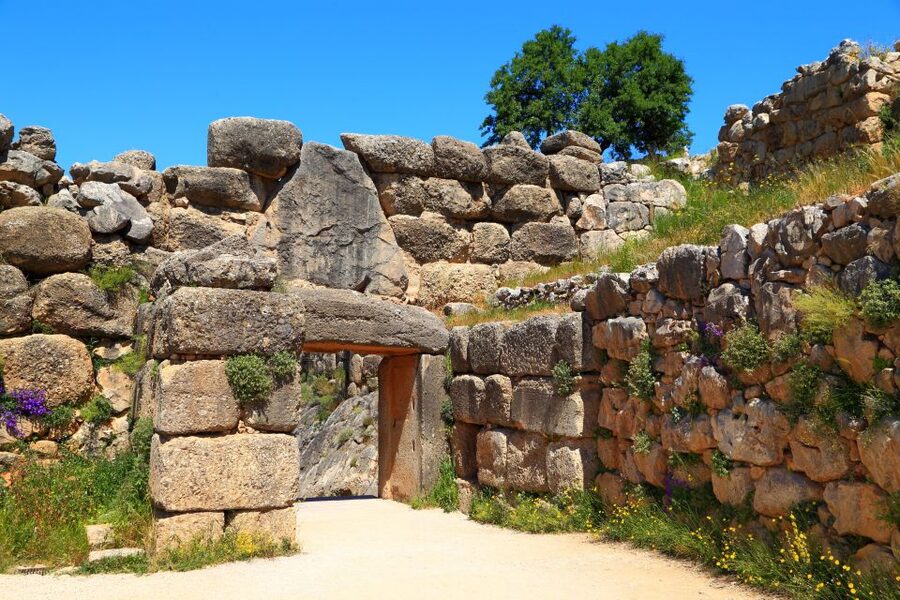
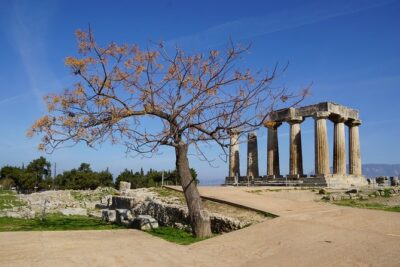
Then you reach Mycenae, once a major center of Greek civilization, and it lands with a big storyline: you can connect the setting to the Tomb of Agamemnon. This is where mythology and archaeology start to overlap in your head in a more personal way.
What I like about Mycenae on this kind of tour is that it gives you a sense of scale. You’re not only seeing monuments, you’re reading the landscape for power, settlement, and influence. It’s a reminder that “ancient Greece” isn’t one era. It’s layered, and this stop helps you feel that.
Finally, you overnight in the Olympia area after day one. That choice matters because it sets you up for a full second day without rushing.
- Athens: Acropolis & up to 5 Archaeological Sites Combo Pass★ 4.4 · 12,619 reviews
- Athens: Acropolis, Parthenon & Acropolis Museum Guided Tour★ 4.8 · 9,316 reviews
- Athens: Cape Sounion & Poseidon Temple Sunset Half-Day Trip★ 4.8 · 8,241 reviews
- Athens: Acropolis and Parthenon Guided Walking Tour★ 4.6 · 5,882 reviews
Olympia: Temples, Museums, and the Olympic Flame Ritual
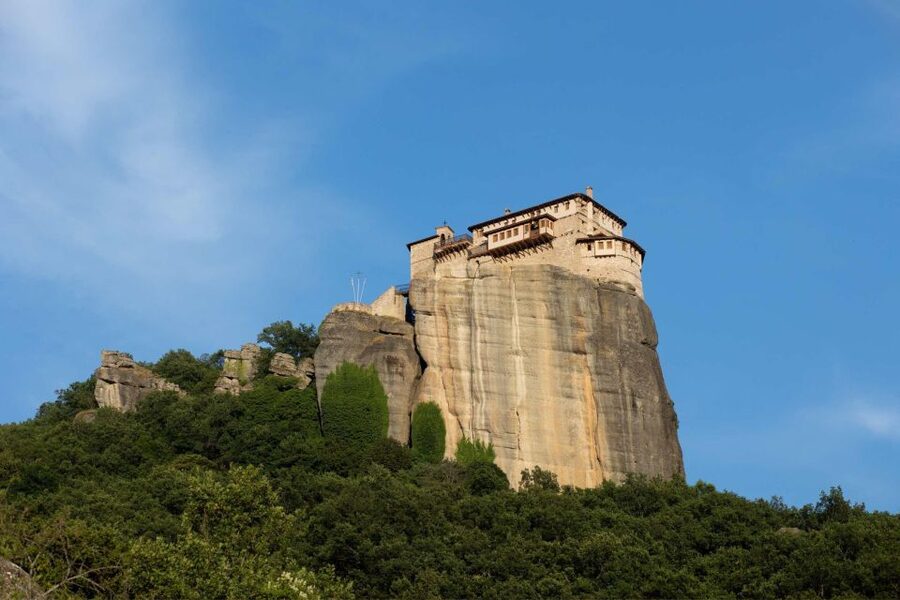
Olympia is the other anchor stop, and it’s paced so you can actually absorb it.
Temples of Hera and Zeus: More Than Photo Stops
You’ll explore the Olympic site walking among key sacred areas, including the temples of Hera and Zeus. I like how this tour doesn’t treat Olympia as a checklist. With a knowledgeable guide, you’re guided toward what to notice, not just what to see.
Temples like these make you think about how the Greeks organized belief into public space. These were religious centers and civic stages at the same time, and you can feel that double purpose when you stand in the right spots.
Olympic Flame Altar: The Symbol You Can Think With
One standout detail is the altar linked to the Olympic Flame, where sacrifices were made. Even if you already know modern Olympic symbolism, this spot gives it older roots. You’re not just looking at an image. You’re standing in the setting where ritual and competition were part of the same worldview.
If you’re a mythology and symbols person, Olympia is the day that rewards you most.
Museum Time: Context Helps the Ruins Click
There’s also museum time on site. That matters because many people arrive at Olympia with only a general idea of what happened here. The museum helps you connect ruins to stories and objects, so the site becomes more than a dramatic backdrop.
If you’re the kind of traveler who hates “standing and listening,” museum time can actually be a relief. It gives you a quieter way to process what you’ve already seen.
The Road to Delphi via Rio-Antirrio Bridge and Coastal Views
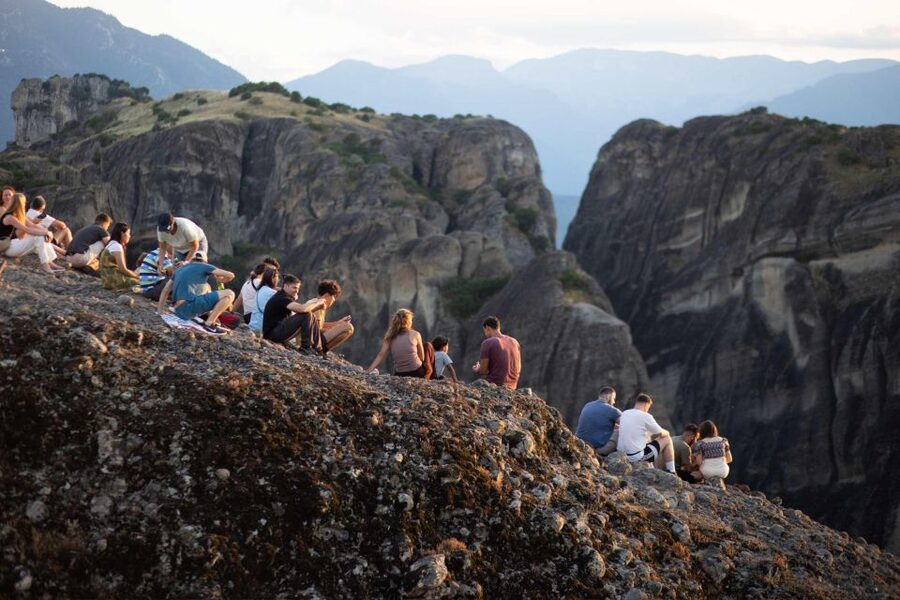
On the way to Delphi, you cross the state-of-the-art Rio-Antirrio bridge. That’s a practical and psychological change. You go from the Peloponnese feel into a bigger mainland journey, and the bridge is a clean marker that the trip is moving fast but not randomly.
You’ll also travel along the coast and past places like Nafpaktos. This is where you get a different kind of scenery, more everyday and less ruins-based. It gives your brain a break between major archaeological moments.
Delphi and Arachova: The Navel of the World in Mountain Light
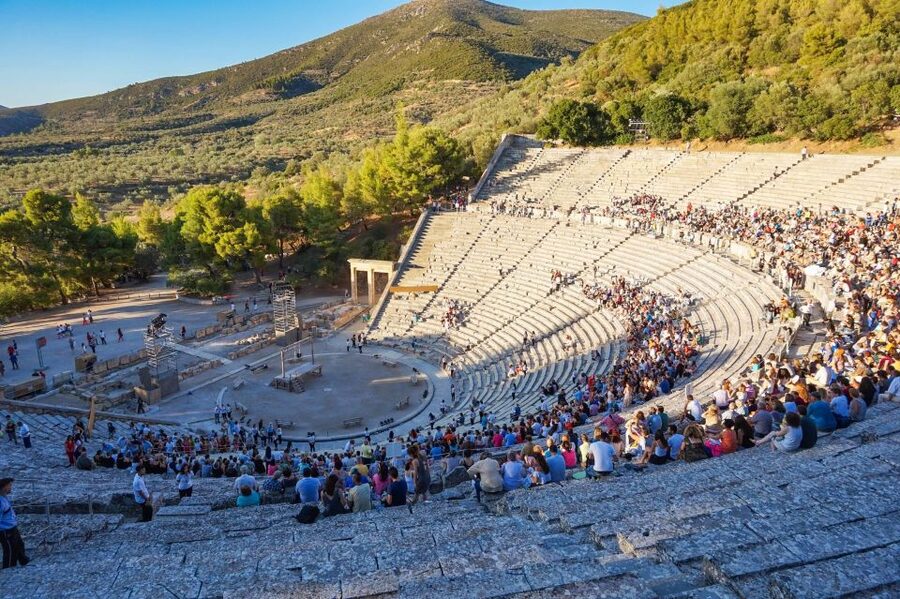
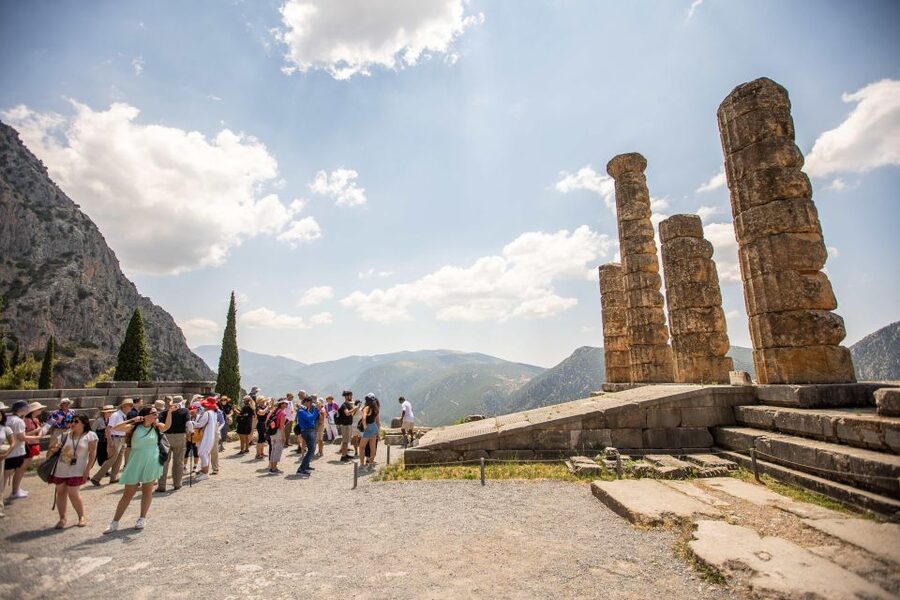
Delphi can feel like a mix of reverence and spectacle. It’s known as the navel of the world, and the setting supports that idea in a way a plain city museum never could.
Delphi in the Afternoon and Morning Calm
You’ll first arrive and later return for an overnight, so you get a bit of time to experience it without only rushing through one session. In the morning you’ll take in the atmosphere of Delphi as a center of Greek worship, where heaven and earth were imagined to meet.
This is also a day where good guiding makes a big difference. The names and functions of spaces can blur together if you’re on your own. With a guide, you’re more likely to catch the “why” behind what you’re looking at.
Arachova: A Mountain Village Break
In the afternoon, you’ll visit Arachova, a picturesque mountain village, then head back to Delphi. I like Arachova in the schedule because it breaks up the intensity of archaeological walking. You get a view change and a slower feel that makes the next stage easier.
If you’re the type who needs a rest from ruins to keep your motivation high, Arachova is the pressure valve.
Kalambaka: Staying Close to Meteora’s Big Rocks
You’ll spend the night in Kalambaka, overlooked by the Meteora monasteries. That location is smart because it reduces the feeling that you’re commuting to the mountains and back like it’s a day trip.
Kalambaka also acts like a transition point. You’ve spent days moving through ancient sites and sacred stories at ground level. Now the trip starts shifting upward, into dramatic vertical space.
Even if you’re not a big “monastery” person, waking up with Meteora in your mental picture sets expectations. You know you’re heading somewhere visually intense.
Meteora Monasteries: Rock Pillars, Orthodox Spiritual Sites, and the Right Clothes
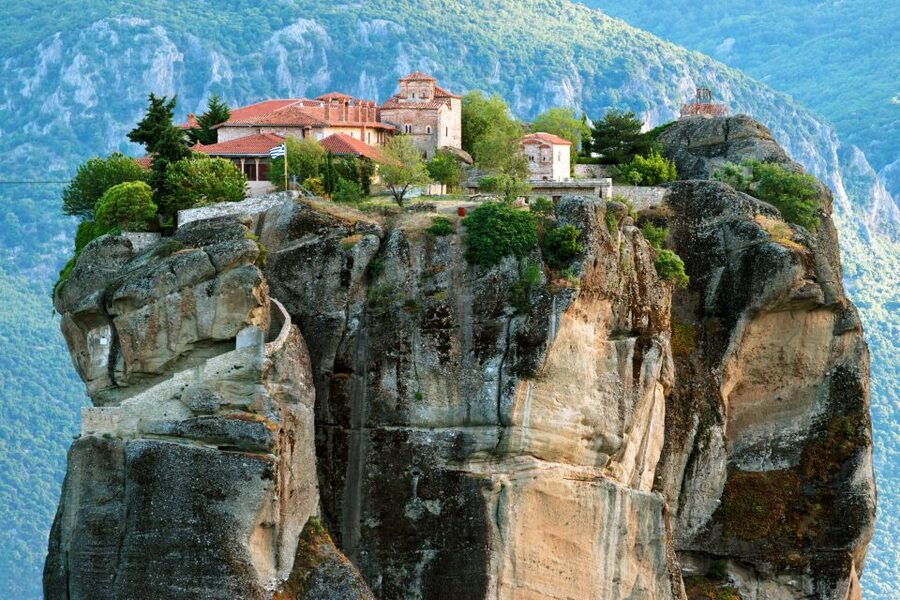
Meteora is the visual payoff day. You travel to visit the most important complex of Eastern Orthodox monasteries in Greece, built on six sandstone pillars. The views are huge, and the rock setting makes it impossible to treat this as just another stop.
But Meteora is also about rules. The tour specifically calls out clothing requirements: no short skirts, and long-sleeved tops are requested for female visitors. Shorts aren’t allowed on the tour either, and you’ll want to pack something respectful and practical for walking.
If you show up underdressed, it can drain time and energy. If you dress right, you can focus on the experience, including the feeling of spiritual calm that people often associate with these places.
Optional Byzantine Icons Factory Stop
On the return toward Athens, there’s an optional stop at a factory of Byzantine-style icons. This can be a nice cultural add-on if you like religious art and want something more hands-on than purely architectural sites.
Guides, Pace, and Why Commentary Matters More Than You Think

This kind of tour lives or dies by the guide. The strongest praise in the available feedback centers on guides who don’t just recite facts. They explain what you’re looking at, connect sites to mythology and geography, and keep a steady pace.
I also like that many guides are described as calm, friendly, and caring about different needs. Names that come up include Panaiota, Dozia, Ivan, Christina Stamou, Stavros, and Sofia, with drivers including Stelios, Evan, George, Leo, and Theo mentioned for safe, smooth driving.
Why does that matter? Because these sites are spaced apart and the days can be full. When the guiding is strong, the trip feels like a story you can follow. When it’s weak, you might end up standing in front of stone ruins with a vague feeling of, I saw it, but I didn’t understand it.
Pace is also a real consideration. One piece of feedback notes that group size can change over the days, which can make walking around and listening a little harder at times. If you prefer lots of space, plan to bring a little patience on the bus and at busier monuments.
Hotels and Meals: Included Breakfast and Dinner Reduce Decision Fatigue
You have overnight stays in three-star or four-star hotels, depending on what you choose. Hotel tax is not included, and you pay it directly to the hotel, with the tour listing rates of €5 per room per night for three-star hotels and €10 per room per night for four-star hotels.
Meal structure is one of the biggest practical upsides here. Breakfast and dinner are included, which means your mornings and evenings are mostly handled. Lunch is not included, so you’ll want to plan for that gap.
From the feedback, the hotels and food were generally described as pleasant, with some properties in towns such as Olympia and Kalambaka specifically mentioned, and others referencing places like Lagadia and Itea depending on the departure. Some guests also noted nice views and even pool access at certain hotels, so your room situation may vary, but the overall standard seems to land on the comfortable side of the midrange.
Price and Value: What $742 Covers and What You Still Need to Budget
The price listed is $742 per person for a 4-day experience. That sounds like more money than a single museum ticket, but it’s also covering a lot that you’d otherwise have to arrange yourself.
Here’s what’s included:
- Luxury A/C bus transfers
- A tour guide (English and Spanish)
- Entrance fees
- Overnight hotels in three-star or four-star options
- Breakfast and dinner
What’s not included:
- Lunch
- Drinks
- Personal expenses
- Hotel tax
So the value equation is pretty clear. You’re paying for transport across multiple major sites plus guided access plus multiple hotel nights. The budget gaps are mostly food (lunch and drinks) and personal spending, plus the hotel tax.
If you hate logistical planning and want a structured route that hits the big classical landmarks without you coordinating rail schedules or intercity buses, this price starts to make more sense quickly.
Who This Tour Suits Best, and Who Might Want to Skip It
This is ideal for you if:
- You want the major classical Greek sites in one trip: Epidaurus, Mycenae, Olympia, Delphi, and Meteora
- You value guided explanations, especially for places like the theatre acoustics and sacred symbolism
- You like staying in hotels outside the cities so you get a more relaxed pace (and you’re okay with a bus-based day)
- You want breakfast and dinner handled so you can spend energy on the sites
It may not be ideal if:
- You need wheelchair access, since the tour says it’s not suitable for wheelchair users
- You hate group travel dynamics, because group size can change during the days and that can affect walking comfort and listening space
- You don’t want to deal with clothing rules for monasteries, since Meteora requires respectful coverage
Should You Book This 4-Day Ancient Greece Tour?
If your goal is a concentrated, guided classic Greece sweep from Athens through Mycenae, Olympia, and Delphi, then up to the unforgettable vertical drama of Meteora, I think this is a strong match. The included guide, entrance fees, and breakfast and dinner reduce decision fatigue, and the route makes sense for first timers who want big names plus the right kind of context.
Book it if you can dress appropriately for Meteora and you’re comfortable with a full, moving schedule. Skip or rethink if you need heavy accessibility support or you’re likely to struggle with the pace and group dynamics.
If you want to see ancient Greece’s greatest hits with less planning and more explanation, this one is built for you.
The Rest of Athens



Every Other Athens Write-Up
- All Day Cruise -3 Islands to Agistri,Moni, Aegina with lunch and drinks included
★ 5.0 · 4,958 reviews

Everything else we have written up around Athens



Tours, side by side.
 ★ 4.8Athens: Acropolis, Parthenon & Acropolis Museum Guided TourFrom $409,316 reviews
 ★ 4.6Athens: Acropolis and Parthenon Guided Walking TourFrom $385,882 reviews
 ★ 5.0Greek Food Walking Tour in AthensFrom $874,740 reviews
 ★ 4.3Athens: City Sightseeing Hop-On Hop-Off Bus TourFrom $254,520 reviews
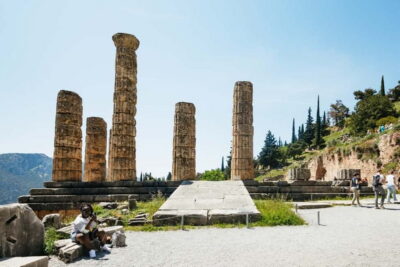 ★ 4.6Athens: Mythology of Delphi, Museum and Arachova Guided TourFrom $314,008 reviews
 ★ 4.9Zakynthos: Shipwreck Beach with Blue Caves Land & Sea TourFrom $583,774 reviews
 ★ 5.0Best of Athens Half Day Private TourFrom $913,714 reviews
★ 4.8Athens: Acropolis, Parthenon & Acropolis Museum Guided TourFrom $413,579 reviews
★ 5.0Best of Athens Half Day Private TourFrom $913,714 reviews
★ 4.8Athens: Acropolis, Parthenon & Acropolis Museum Guided TourFrom $413,579 reviews