
Review · CHANIA & WESTERN CRETE
Guided Walking Tour in Chania
A walk after the heat sets in, perfect. This Chania guided walking tour mixes local crafts with quick looks at religious and Venetian-era landmarks, stitched together by a live guide and lots of “just wander” time. You get a route that’s easy to follow in about two hours, with each stop kept short so you don’t feel stuck in one place.
I especially like that the tour leans into everyday Chania, not only grand monuments. You’ll spend time in knife-maker territory at Skalidakis Cretan Knives, then head to the Street of Leather (Skridlof), where shopping and craftsmanship sit side by side.
One drawback to plan around: if you want a big, movie-like story at every corner, the pace may feel like quick stop-and-go. The stops are around 20 minutes each, and the overall experience may not satisfy you if you expected a slower, deeper museum-style guided talk.
In This Review
- Quick hits before you lace up
- Why this Chania walk works at 5:00 pm
- Price and value: what $32 really covers
- Stop 1: Skalidakis Cretan Knives and the craft behind the souvenir
- Stop 2: Skridlof Street, the Street of Leather
- Stop 3: Holy Catholic Church of the Assumption, quiet and architectural
- Stop 4: Old Venetian Harbor, where the city shows its postcard face
- Stop 5: Küçük Hasan Mosque and Ottoman-era layers in plain sight
- Stop 6: Church of Agios Nikolaos, plus a couple of surprises
- Pacing, group size, and how to get more from your guide
- What if the tour feels too short or too shop-heavy?
- Who this tour suits best
- Should you book this Guided Walking Tour in Chania?
- FAQ
- How long is the Guided Walking Tour in Chania?
- What is the price per person?
- What time does the tour start?
- Is the tour guided and in English?
- Where does the tour start and end?
- What is included in the ticket price?
Quick hits before you lace up
- 5:00 pm start: a practical evening slot when streets are cooler and Chania feels more human.
- Small group, about 15 people max: easier to hear your guide and adjust pace if you need photos or a break.
- Lots of free entry stops: many listed sights are free to enter, so you’re paying mainly for the guide and route.
- Craft-focused stops: knives at Skalidakis and leather along Skridlof, two souvenir hunts with real context.
- Chania’s layered identity in one walk: Venetian Harbor plus Ottoman-era landmarks like Küçük Hasan Mosque.
- Some “surprise” stops: you’ll get a few additional short breaks you can’t fully predict ahead of time.
More of Chania and the west of the island
Why this Chania walk works at 5:00 pm
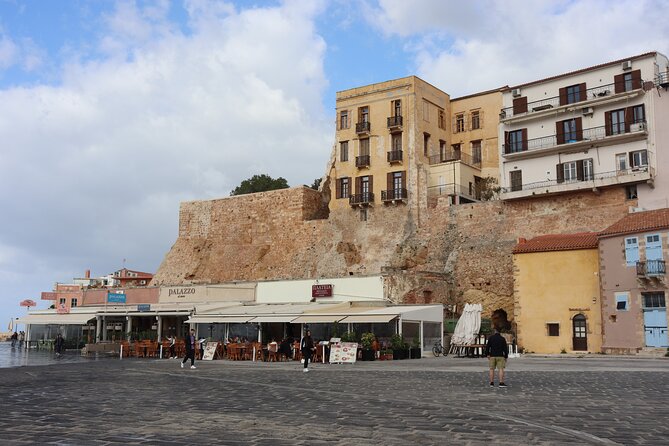
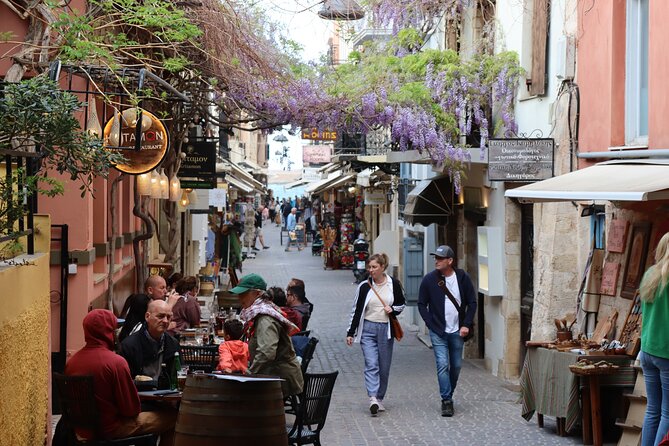
This tour starts at 5:00 pm, which is a smart timing choice. Chania is a walking city, but the middle of the day can be hot and bright, especially in summer. In the evening, the harbor views and side streets tend to feel calmer, and you can actually enjoy the details instead of rushing.
The tour is also very route-friendly. You’re given a clear starting point at Venizelos Graves, Agorastaki 4, Chania 731 33, and the tour ends back at that same place. That matters because you do not waste energy figuring out your return plan.
With a 2-hour length, the pacing is designed to keep momentum. You visit multiple stops, each with time to glance, take photos, and ask questions, without turning the outing into an all-day commitment.
Price and value: what $32 really covers
At $32 per person for about two hours, you’re not paying for entrance fees at the stops listed. The itinerary shows free admission tickets for the major stops, including the knife shop area and the churches and mosques on the route. That shifts the value question away from “did we pay to see things?” and toward “did the guide make the route make sense?”
So the biggest factor is your guide’s storytelling style and how well they connect the dots. A tour like this can be either a fun way to get your bearings fast, or it can feel like reading a short guidebook out loud. The overall rating is decent but mixed, so I’d treat this as a route-and-context tour, not a deep lecture.
If you love walking cities with a “show me what I should notice” mindset, you’ll likely feel you got your money’s worth. If you prefer long time in a few major sites, you might find the stop length a bit brisk.
Stop 1: Skalidakis Cretan Knives and the craft behind the souvenir
The first stop is at Skalidakis Cretan Knives, in the knives district. This is a great way to kick off because it immediately grounds the tour in something tactile: tools and craftsmanship you can actually see. Even if you do not buy anything, it helps you understand what people here value and produce.
What I like about starting with knives is that it’s not generic “store shopping.” The district focuses on specialized shops and artisans making and selling different styles, from traditional Greek designs to more modern ones. That gives you a quick sense of how Cretan craft can be both heritage and current taste.
The listed time is about 20 minutes, and admission is free for this stop. That means you can look around, ask questions if the shop staff or guide points you to the right things, and move on before it turns into a long sales pitch.
Stop 2: Skridlof Street, the Street of Leather
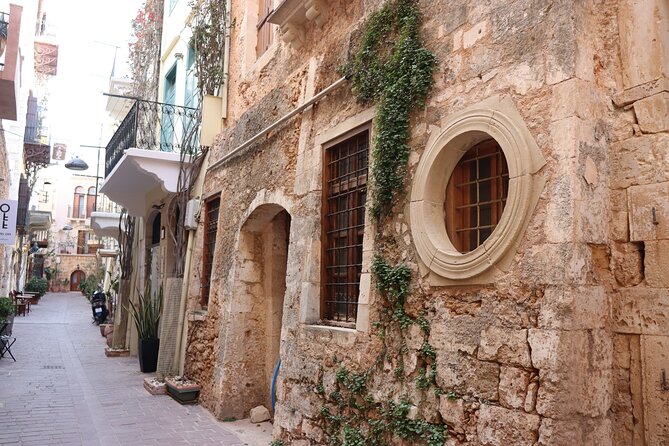
Next comes Skridlof, also called the Street of Leather. This area is ideal for travelers who like souvenirs with a story, not just a barcode price tag. You’ll find shops selling leather goods like bags, shoes, belts, and jackets, all in the same compact walking zone.
This is one of those stops where the guide can make a big difference. If your guide explains how craftsmanship affects quality, you can shop smarter. If they keep it purely to directions, you might feel like it’s just a street of stores.
Still, even without buying, the walk through Skridlof helps you read the city. You see how different trades cluster together, and you get a sense of where Chania’s shopping culture comes from. Since this stop is again about 20 minutes and listed as free entry, it’s easy to enjoy without committing to a purchase.
Practical tip: if you plan to shop, set a simple goal before you arrive. Decide whether you’re browsing, comparing leather types, or only hunting one item. It keeps you from drifting into decision overload.
Stop 3: Holy Catholic Church of the Assumption, quiet and architectural
The tour then shifts from trade to faith at the Holy Catholic Church of the Assumption of the Blessed Virgin Mary, also referred to as the cathedral of Saint Mary of the Assumption. This stop is about slowing down for a moment. Churches are often where a city’s “public face” changes from street life to something more reflective.
From the description, you’re looking at elegant architecture and a calm atmosphere. That makes sense as a mid-route reset. After shopping zones and busy streets, you get a chance to stand, look carefully, and let your eyes adjust to details.
The time is about 20 minutes with free admission. That’s enough for a respectful visit and a few good photos, but not so long that you feel trapped waiting for a full guided lecture. If you’re someone who likes a mix of sights rather than just one type of attraction, this stop helps balance the day.
Other Crete bookings where a guide comes along
- From Chania/Rethymno: Samariá Gorge Guided Hike with Pickup★ 4.5 · 1,010 reviews
- Chania: Old Town Highlights Guided Tour with Street Food★ 4.9 · 407 reviews
- Heraklion Archaeological Museum Ticket & Audio Guide★ 4.3 · 396 reviews
- Chania: Boat Trip with Guided Snorkeling & Stand-Up Paddling★ 4.7 · 363 reviews
Stop 4: Old Venetian Harbor, where the city shows its postcard face
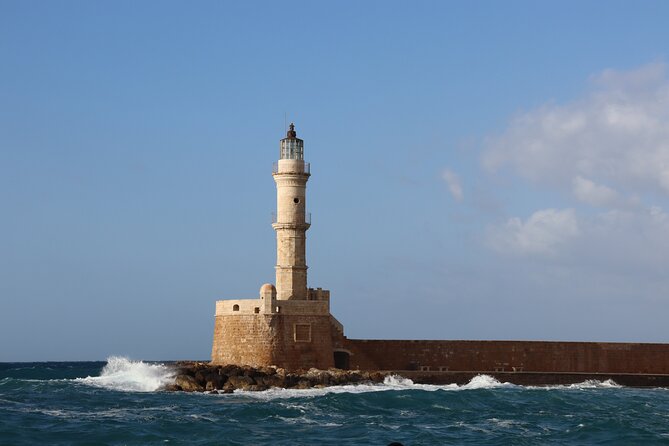
Then you hit Old Venetian Harbor, one of Chania’s most recognizable areas. This is the part of the tour where the scenery does some of the work for you: cobblestones, colorful waterfront buildings, and a sea-facing walk that feels like the city’s stage.
The harbor area connects history and daily life. You’ll hear about maritime trading routes and how the harbor area relates to Venetian influence, including references to the lighthouse and a Venetian fortress. Even if you’ve seen Venetian-style cities before, it helps to see how Chania’s harbor functions as a living waterfront now.
This stop is again about 20 minutes and listed as free admission. That length works well because the harbor is also for wandering on your own right after. You can take in the views with the guide’s framing, then keep walking afterward at your own pace.
If you want photos, aim to bring your camera ready but do not rush. Harbor shots are better when you pause for the light and not just for the angle.
Stop 5: Küçük Hasan Mosque and Ottoman-era layers in plain sight
The next landmark is the Küçük Hasan Mosque, an Ottoman-era site in the middle of Chania’s modern streets. This stop is valuable because it expands the story beyond the Venetian period and shopping districts. You get a reminder that Chania’s identity has multiple layers, not one neat timeline.
The description emphasizes the mosque’s distinctive architecture and tranquil ambiance. That’s a good fit for a walking tour because it offers contrast. You’ve just had outdoor harbor energy, and now you step into a quieter, more contained experience.
The time is around 20 minutes, with free admission listed. This is typically enough to understand why the mosque is notable and to notice architectural details that you might otherwise overlook while just passing by.
Respect note: when you enter religious spaces, keep your voice low and follow any local guidance on dress and behavior. If the guide offers quick reminders, take them seriously. It makes the visit smoother for everyone.
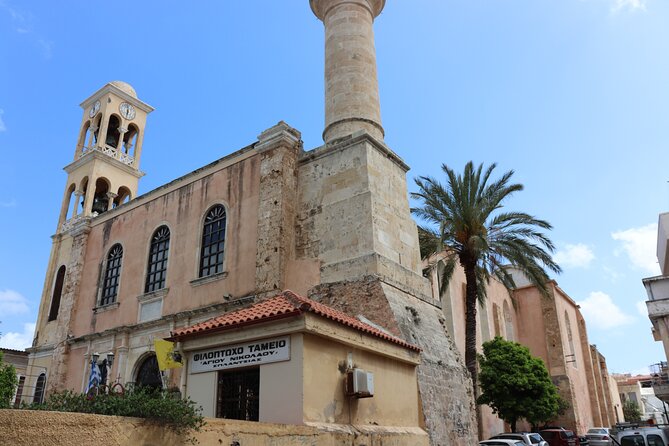
Stop 6: Church of Agios Nikolaos, plus a couple of surprises
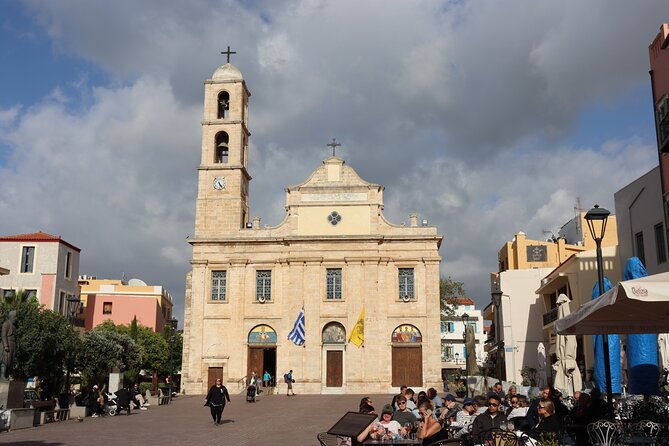
The itinerary includes the Church of Agios Nikolaos, and it also mentions a few additional stops kept as a surprise. That means your exact route can vary slightly, but the intention stays consistent: more quick-hit landmarks and enough variety to keep the two-hour walk from feeling repetitive.
This part of the tour is often where you either feel the tour is “just okay” or you start connecting themes. When the guide links churches to the city’s community life and architecture, it helps the whole walk feel like one story instead of six separate photo stops.
Because the tour includes these short segments, you’ll get a sense of the neighborhoods and landmarks without needing a strict schedule. That makes it a good option if you’re in Chania for a short time and want to see a lot quickly.
Pacing, group size, and how to get more from your guide
This tour caps at 15 travelers. That’s a sweet spot for a walking tour, because you can usually hear instructions and the guide can answer basic questions without turning it into a stampede. It also makes the experience feel more personal than large group bus tours.
The tour is in English, and the ticket is mobile, which is convenient in a city where you’re constantly using your phone for maps and photos anyway. Since it’s near public transportation, you can also treat it as a flexible add-on if your day plan changes.
If you want the tour to feel more alive, come with one or two things you care about. For example: are you curious about how Venetian and Ottoman influences show up in buildings? Or do you want the guide’s help turning a souvenir street into a mini learning experience? Asking simple questions at the stops can transform the walk from “timeline of sights” into a conversation.
What if the tour feels too short or too shop-heavy?
A mixed rating makes sense here. Two things can push your experience in either direction.
First, the tour format is built around many stops, each about 20 minutes. If you’re the type who likes to linger, you might feel rushed. Second, the beginning is strongly craft-focused, with knives and leather. If you do not want to browse shops at all, these stops could feel like detours.
To protect yourself from disappointment, go in with expectations that match the structure. Think of it as a guided orientation plus cultural highlights, not a slow-paced sightseeing marathon.
Also, there’s a small caution worth noting from prior guest feedback: schedules can sometimes shift last-minute. If you’re trying to connect this tour to a timed dinner or another booking, leave a buffer. That one change can mean the difference between a relaxed evening and a scramble.
Who this tour suits best
You’ll likely enjoy this walk if:
- You like short, focused stops and a smooth route back to the start.
- You want a guided explanation at Venetian Harbor and Ottoman-era Küçük Hasan Mosque, not just a self-guided walk.
- You enjoy craft shopping as part of the experience, especially knives and leather.
You might want to skip or look for a different option if:
- You expect long, in-depth history at one or two major sites.
- You don’t want any shopping areas on your itinerary at all.
- You prefer tours that feel like a storytelling performance rather than quick guided context.
Should you book this Guided Walking Tour in Chania?
If your goal is to see key Chania highlights in about two hours, with a small group and a guide who connects the dots, I think this is a solid buy for the price. The best value angle is that many listed stops appear to have free entry, so you’re paying for a live route and interpretation, not gate fees.
Book it if you want an evening walk that helps you read the city: crafts in the knife and leather districts, religious landmarks for architectural contrast, and the harbor for big-picture atmosphere. Skip it if you want a deep, slow experience or if you dislike even light browsing.
If you do book, bring comfy shoes and a flexible mindset. This tour works best when you treat it like orientation, then continue exploring after, armed with better context for what you’re seeing.
FAQ
How long is the Guided Walking Tour in Chania?
The tour is listed as about 2 hours.
What is the price per person?
The price is $32.00 per person.
What time does the tour start?
The start time is 5:00 pm.
Is the tour guided and in English?
Yes, it includes a professional guide, and the tour is offered in English.
Where does the tour start and end?
It starts at Venizelos Graves, Agorastaki 4, Chania 731 33, Greece and ends back at the same meeting point.
What is included in the ticket price?
The included items are the professional tour guide and the 2-hour guided walking tour. Gratuities are not included.
The Rest of Crete


Every Other Crete Write-Up

Chania and the West of the Island

Everything else we have written up around Crete

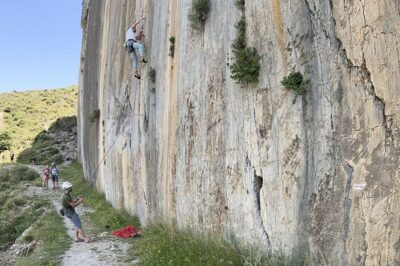

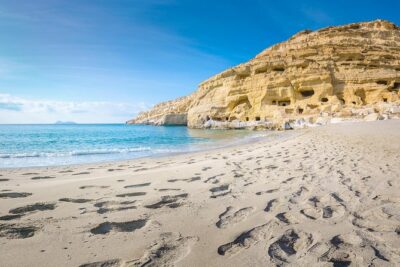
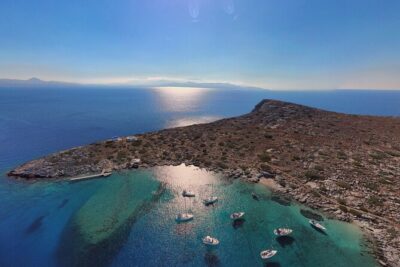



Chania & Western Crete, side by side.
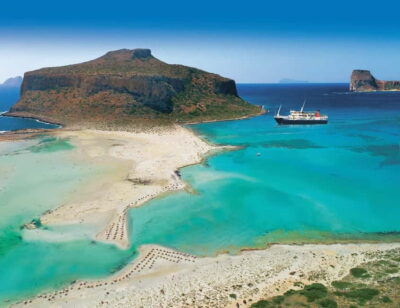 ★ 4.2From Kissamos Port: Boat Cruise to Balos Lagoon & GramvousaFrom $476,755 reviews
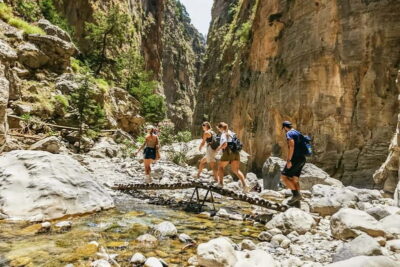 ★ 4.6From Chania: Full-Day Samaria Gorge Trek Excursion & GuideFrom $413,191 reviews
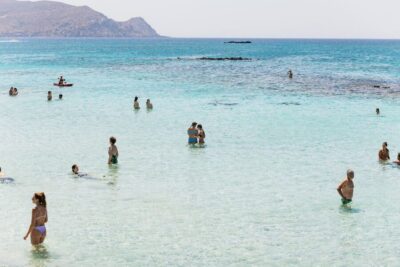 ★ 4.5From Chania: Day Trip to Elafonisi Island Pink Sand BeachFrom $382,014 reviews
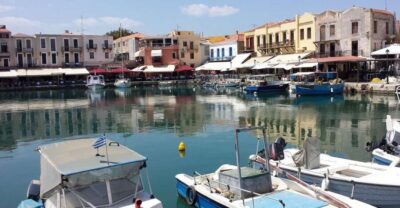 ★ 4.4Crete: Rethimno, Chania, and Kournas Lake Day TripFrom $451,694 reviews
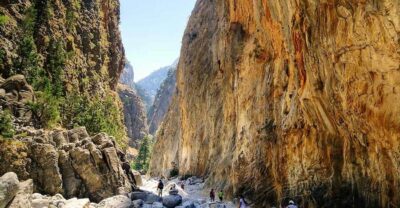 ★ 4.5From Chania/Rethymno: Samariá Gorge Guided Hike with PickupFrom $371,010 reviews
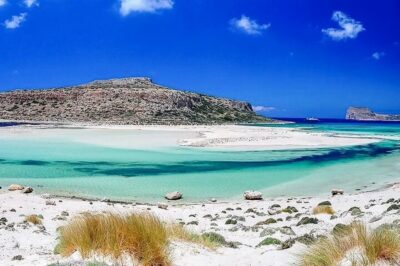 ★ 4.2Chania Areas/Kalyves:Gramvousa Island & Balos,Boat Tkt ExtraFrom $23992 reviews
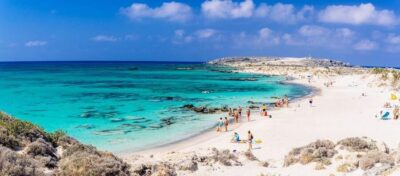 ★ 4.5Elafonissi Beach Day Trip from Chania -Stop in Elos VillageFrom $37744 reviews
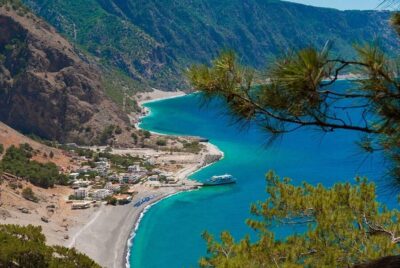 ★ 4.6From Chania: Samaria Gorge with Professional Hiking GuideFrom $37720 reviews
Sits on these lists