
Review · MUSEUMS
Lychnostatis Open Air Museum: Entry Ticket with Add-Ons
A walk through Crete, minus the tourist rush. Lychnostatis Open Air Museum lets you see how everyday Cretan life worked, not just how it looked, with traditional village scenes and real trades and tools. I love the way the grounds are arranged so you can move at a steady pace and still get context fast.
One of my favorite parts is the museum café, where you can slow down with a typical drink or sweet. The only real catch I’d flag is language, the live guidance is Greek, so plan to rely on your own wandering during free time if you do not read Greek well.
In This Review
- Key things to know before you go
- Lychnostatis Open Air Museum: why it feels different from a standard museum
- Price and value for a full-day cultural ticket
- Your one-day rhythm: how to structure the visit
- Traditional village houses and community spaces you should not skip
- Olive oil press and distillery stops: how food and drink connect everything
- Workshops and trades: weaving, shoemaking, carpentry, and plant dyeing
- Libraries, exhibitions, and the indoor calm break
- Shows and performance spaces: auditorium and open-air theater
- The museum café and souvenir stop: a simple, local finish
- Practical considerations: language and signage that can affect comfort
- Who this works best for (and who should adjust expectations)
- Should you book Lychnostatis Open Air Museum?
- FAQ
- How long is the Lychnostatis Open Air Museum visit?
- What does the entry ticket include?
- Are meals included?
- What add-ons can I choose?
- What language is the live tour guide?
- Is there a skip-the-line benefit?
- Is the museum wheelchair accessible?
- How do I get to the meeting point?
- Is it possible to cancel?
Key things to know before you go
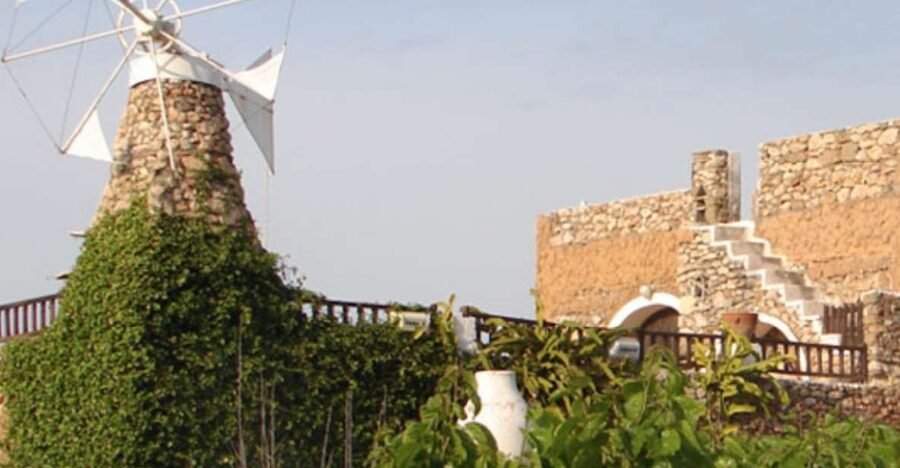
- A village-atmosphere setting: you walk through different traditional dwellings, not a single gallery room.
- Craft workshops you can picture: weaving, plant-dying, shoemaking, carpentry, and more are part of the story.
- Old drink and food production: you can step inside a tsikoudia (raki) distillery and see other production spaces.
- Nature as culture: herb gardens, a fruit garden, and herbarium help explain how people lived with the land.
- More than houses: you’ll also find a chapel, olive oil press, museum library, temporary exhibitions, and shops.
More Crete museums we have been round
Lychnostatis Open Air Museum: why it feels different from a standard museum
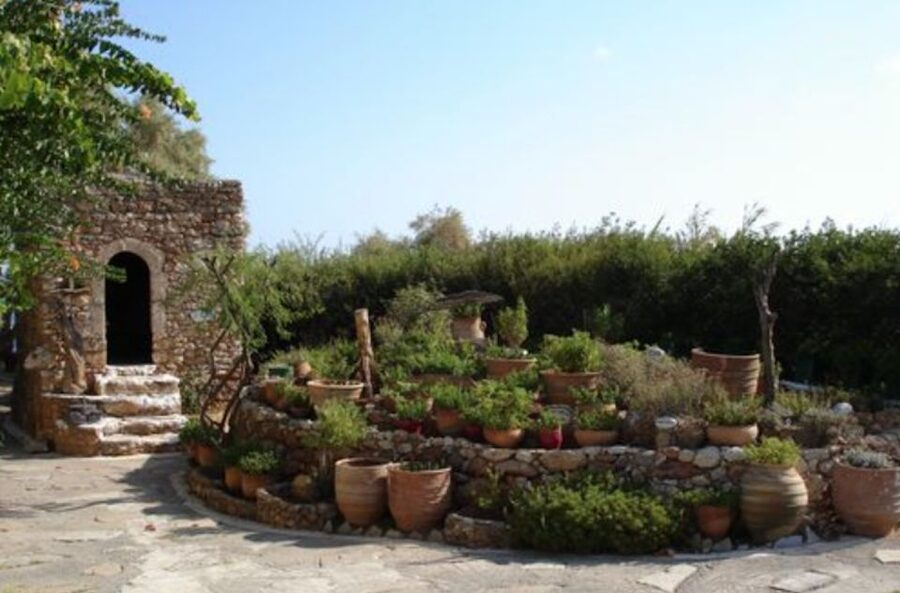
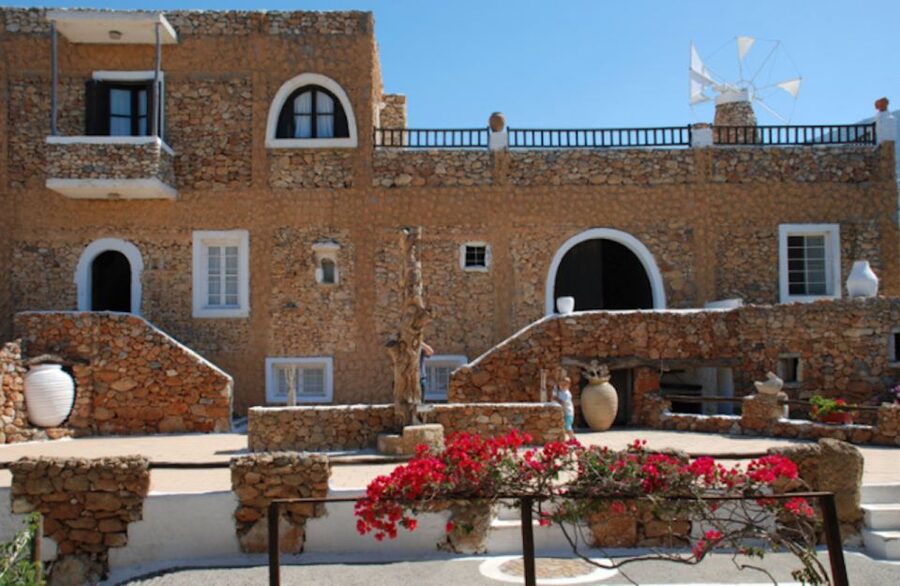
Open-air museums can turn into a slow shuffle if they do not explain the details. Lychnostatis avoids that trap by building an entire mini-world of Cretan ethnology, folk tradition, and everyday work. You get the sense of a community shaped by farming, craft, and local production, all laid out so your eyes can do the learning.
What makes it click for me is the mix: traditional buildings plus the spaces where people made things, cooked, and cared for animals and plants. It is not only about pretty architecture. It is about how people lived and how those routines were tied to the environment.
You’ll also see why it is such a strong stop for a single day in Crete. With entry plus free time, you can take your time, then add an audiovisual film or a private guided group tour if you want a faster, more guided explanation.
Price and value for a full-day cultural ticket
The entry ticket price is listed at $10 per person for a 1-day visit. For what you get, that is a practical bargain: you are paying for a whole open-air site with multiple themed areas and several indoor add-ons you might choose to use.
Think of your “value” in two layers. First, the base ticket covers the essentials: entry and free time to explore. Second, the add-ons (audiovisual film and private guided group tour) let you upgrade your experience depending on how much context you want and how comfortable you are with Greek.
If you are the type who likes to read as you walk, the free time portion is a great fit. If you prefer your history pre-chewed by a guide, you’ll probably want to choose the guided add-on.
Your one-day rhythm: how to structure the visit
The experience is valid for one day, and you can check starting times for availability. Since the museum covers a lot of different trades and environments, I suggest you treat it like a loop with “checkpoints,” not like a sprint.
Start by walking the main outdoor areas in a rough order: dwellings and community spaces first, then production and workshops, then nature sections and gardens. If you decide to add the audiovisual film, it can work as a reset point when you want the big picture before you keep moving.
Comfort tip: wear shoes you do not mind getting slightly dusty. Open-air museums encourage wandering, and you will likely cover more ground than you expect once you start comparing tools, rooms, and workshop setups.
Traditional village houses and community spaces you should not skip
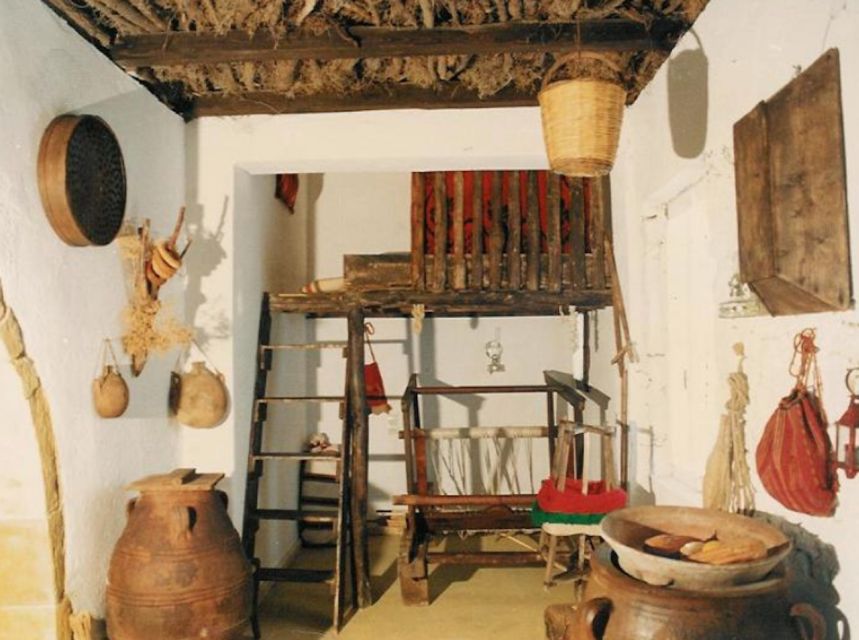
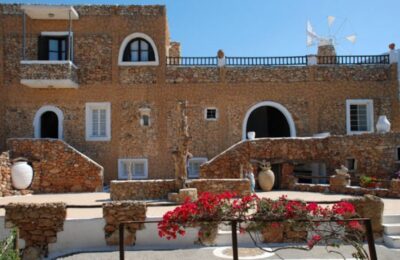
The museum’s core strength is the feeling of entering lived-in space. You can go into a traditional village house and see the inside layout, which helps you understand the logic of daily routines and household life.
Pay attention to the building “jobs.” Even when rooms look quiet, the museum design usually pairs them with the kind of work people did nearby. That is why you’ll also see spaces like a chapel, plus other community-linked areas that make the whole place feel like a village, not a set of artifacts.
If you like atmosphere, the open-air format does a lot of heavy lifting. The buildings sit in context with outdoor exhibits and pathways, so you can connect the dots between home life and outside production work.
Olive oil press and distillery stops: how food and drink connect everything
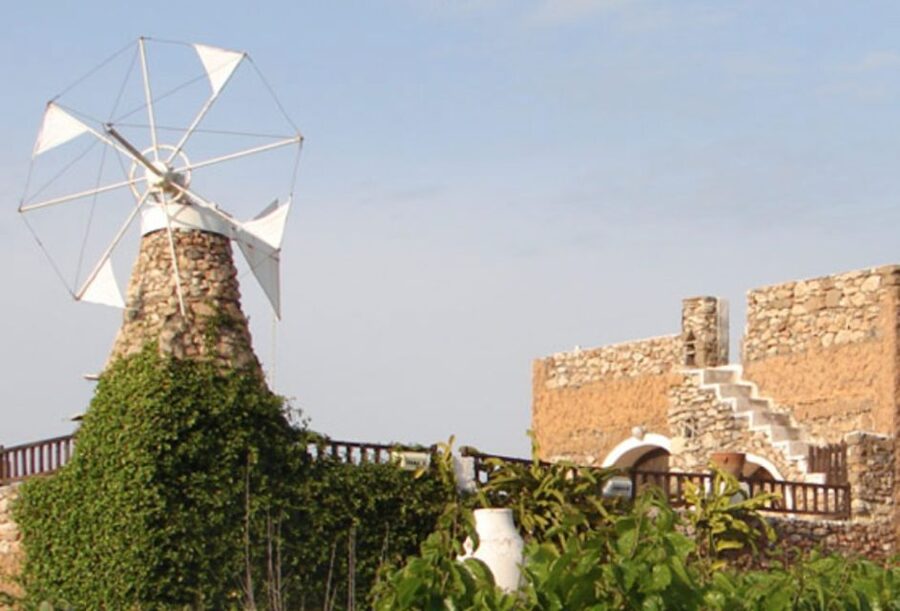
Cretan life is strongly tied to production, and the museum makes that visible. Look for the olive oil press area, then follow the thread to the tsikoudia (raki) distillery. Seeing these in an open-air setting makes the process feel more grounded, like something you would smell and hear if you stood nearby.
Why it matters for you: these production areas are where culture becomes practical. You start to see the logic of seasonal work, the need for storage, and why certain tools show up again and again across the different workshops.
This is also a good area to slow down. If you are doing a quick pass, you’ll miss the “how did this work” details that are easy to see when you take a few minutes in front of each setup.
Other Crete entries worth booking early
- Chania: Balos Gramvousa Cruise with Transfer and Boat Ticket★ 4.1 · 925 reviews
- Rethymno Area: Gramvousa Island & Balos, Boat Ticket Extra★ 4.3 · 594 reviews
- Heraklion Archaeological Museum Ticket & Audio Guide★ 4.3 · 396 reviews
- Crete: Acqua Plus Water Park Entrance Ticket with Transfer★ 4.4 · 84 reviews
Workshops and trades: weaving, shoemaking, carpentry, and plant dyeing
A highlight for me is how many trades are represented, and how they are arranged to feel like a working museum, not a decorative one. You can expect workshops such as weaving and plant-dying, bees and wax, shoe-making, and carpentry.
These sections are where the museum becomes especially useful if you like “small history,” the kind that explains daily life. You can stand in front of a workshop and imagine the sequence of labor, then turn around and notice how that same work connects to other areas, like gardens and plant collections.
Here’s a practical way to enjoy these rooms: pick one trade and track it across the museum. For example, plant dyeing pairs naturally with plant-focused areas, and beekeeping connects to wax work. You will end up with a clearer mental map than if you bounce randomly between exhibits.
Libraries, exhibitions, and the indoor calm break
Even though the museum is open-air, you will find indoor stops that make the visit feel complete. There’s a library stocked with Cretan books and periodicals, plus a temporary exhibitions hall if you want something fresher than the permanent sections.
This is also a smart break if the sun is doing its thing. After a stretch of outdoor buildings and workshops, stepping into reading spaces is a reset, and it helps you switch from looking to processing.
If you care about craft and ethnology, the combination of indoor reading materials and outdoor workshop spaces is a strong pairing. You see the tools and settings outside, then you can connect them to broader cultural context inside.
Shows and performance spaces: auditorium and open-air theater
The museum includes an auditorium with 100 seats for audio-visual shows and seminars. It also has an open-air theater with 250 seats for cultural and artistic events. If your schedule lines up with a show, it adds a welcome change from walking.
If you choose the audiovisual film add-on, it’s basically your shortcut to understanding the place. Instead of piecing together the museum’s themes room by room, the film helps you see how the collections connect: folk tradition, ethnology, environment, and everyday culture.
My advice: if you like stories and explanation, go for the audiovisual option. If you enjoy self-guided wandering and prefer to make your own connections, rely on the free exploration time and use indoor exhibits at your own pace.
The museum café and souvenir stop: a simple, local finish
At the end of your walk, the museum café is a practical reward. Reviews and descriptions highlight that you can grab a typical beverage or sweet. That last bite matters in a one-day visit. It turns the museum into an experience you remember as a whole day out, not just a checklist of rooms.
Then, swing by the souvenir shop if you want a small keepsake linked to the craft and culture you saw. This is one of those stops that is easy to skip, but if you like thoughtful mementos, it fits the theme better than a generic gift shop.
Practical considerations: language and signage that can affect comfort
The live tour guide is listed as Greek. If you are not comfortable with Greek, the best approach is to treat the guidance as optional enrichment, not your only source of information. Use the free time to explore at your own pace and let visual exhibits do their work.
One small, real-world comfort note from the experience: printed information sheets can get damp during a busy day. Keep your pages protected, or take photos of key labels so you can keep reading without worrying about weather or sweat.
This is not a dealbreaker. It just means you should go in prepared to stay comfortable while you move between indoor and outdoor spaces.
Who this works best for (and who should adjust expectations)
Lychnostatis is a great fit for you if you like culture that feels practical. If you enjoy the “how did people live” side of travel, this museum does that well with its mix of dwellings, production, workshops, and plant-related areas.
It is also a smart match for families and mixed groups, since you can split your attention. Some people will gravitate toward buildings. Others will focus on distillery and craft. Everyone can find something to latch onto.
If you are only looking for top-tier written interpretation in English, you might find yourself doing more self-guided reading than expected. The guide is Greek, and the museum’s real power comes from what you see and how the sites are arranged, so bring that mindset.
Should you book Lychnostatis Open Air Museum?
Yes, I’d book it if you want a full-day Cretan culture experience that is hands-on in feeling, not just in description. At $10 for entry plus free time, it is a strong value, especially because you can add context with the audiovisual film or a private guided group tour.
Skip the booking only if you strongly need English-language guided storytelling throughout every step. Otherwise, this is exactly the kind of museum that turns a single day in Crete into something more grounded, where you understand how people worked, made, and lived.
FAQ
How long is the Lychnostatis Open Air Museum visit?
The entry is listed as valid for 1 day, so you plan on spending a day exploring the museum at your own pace.
What does the entry ticket include?
The included items are the entry ticket, free time to explore the museum, and (if you select the options) an audiovisual film and/or a private guided group tour.
Are meals included?
No. Food and drinks are not included, and you can use the museum café if you want something to eat or drink.
What add-ons can I choose?
You can add an audiovisual film option and a private guided group tour option.
What language is the live tour guide?
The live tour guide is listed as Greek.
Is there a skip-the-line benefit?
Yes. The experience includes a skip the ticket line.
Is the museum wheelchair accessible?
Yes. It is listed as wheelchair accessible.
How do I get to the meeting point?
You start at the Lychnostatis Open Air Museum, and it notes that you can reach it by car or taxi.
Is it possible to cancel?
Yes, the experience offers free cancellation up to 24 hours in advance for a full refund.
Entries to Book in Crete

Museums Around Crete
Every Other Crete Write-Up



Everything else we have written up around Crete



Museums, side by side.
 ★ 4.8Athens: Acropolis, Parthenon & Acropolis Museum Guided TourFrom $409,316 reviews
 ★ 4.6Athens: Mythology of Delphi, Museum and Arachova Guided TourFrom $314,008 reviews
★ 4.8Athens: Acropolis, Parthenon & Acropolis Museum Guided TourFrom $413,579 reviews
★ 4.6Athens: Mythology of Delphi, Museum and Arachova Guided TourFrom $314,008 reviews
★ 4.8Athens: Acropolis, Parthenon & Acropolis Museum Guided TourFrom $413,579 reviews
 ★ 5.0Acropolis monuments & Parthenon Walking Tour with Optional Acropolis MuseumFrom $422,678 reviews
 ★ 4.5Athens All Included: Acropolis and Museum Guided Tour with TicketFrom $1652,673 reviews
 ★ 4.4Athens: Acropolis Museum Ticket with optional Audio GuideFrom $302,652 reviews
 ★ 4.8From Athens: Small-Group Delphi, Museum & Arachova Day TripFrom $342,476 reviews
 ★ 4.1Parthenon & Acropolis Museum with Audio or Live Tour OptionFrom $702,446 reviews
Sits on these lists