
Review · MYCENAE, EPIDAURUS & NAFPLIO
Nafplion: Mycenae and Epidaurus Day Tour
Two ancient worlds in one day.
This Nafplion day trip strings together Mycenae and Epidaurus theater in about 6 hours, with an easy van ride and a clear story of the Mycenaean age and the healing sanctuary. I especially like how the stops are tightly packed but not rushed, and how the key sights connect into one coherent picture, from Cyclopean walls to the theater where sound travels well.
One catch to plan around: entrance tickets and food are not included, and you will do a moderate amount of walking on uneven ground, so good shoes matter.
In This Review
- Key highlights worth knowing
- A practical way to see two big names in Greece
- The van ride from Nafplion, and how it affects your day
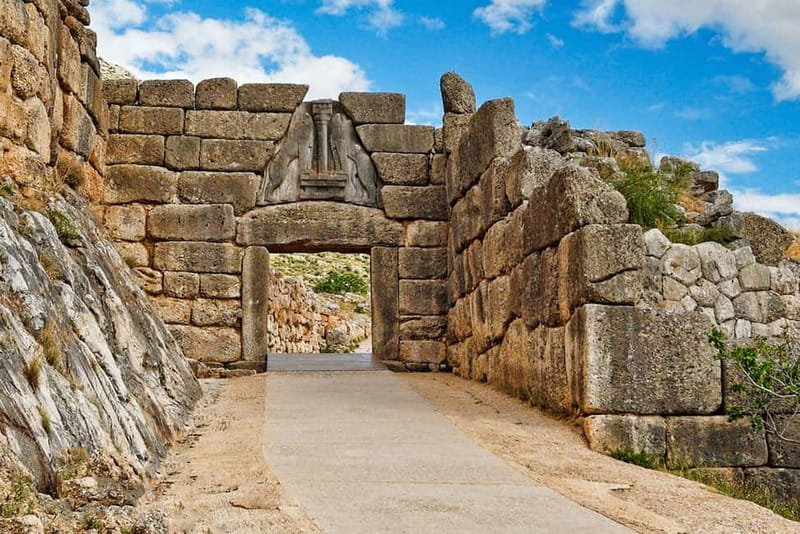
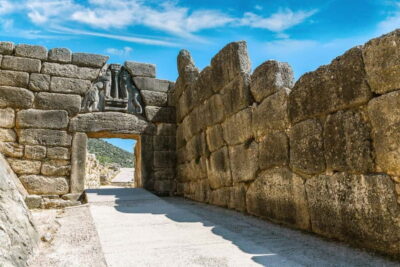
- Mycenae: Lions Gate, the palace entrance, and Cyclopean walls
- The tombs of Atreus and Clytemnestra
- The Kingdom of Agamemnon, and why the ruins still feel political
- Epidaurus first impression: Apollo’s sanctuary and the healing atmosphere
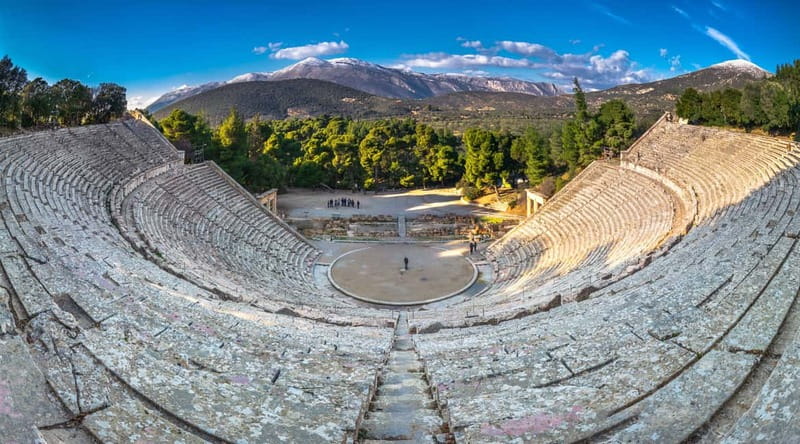
- The ancient theater of Epidaurus, and what makes it special
- Time on the ground: how to use your 1.5 hours at each site
- What to pack, and how to make the day feel easier
- Price and value: what $106 really buys you
- The driver experience, and what makes the pacing work
- Who this Mycenae and Epidaurus tour suits best
- Should you book this tour?
- FAQ
- How long is the Nafplion to Mycenae and Epidaurus day tour?
- What is included in the price?
- Are entrance tickets included?
- Where does pickup happen?
- How much walking should I expect?
- Is the tour wheelchair accessible?
- Is flash photography allowed in the tombs?
- What should I bring for the day?
- Can I cancel for a full refund?
Key highlights worth knowing
- Lions Gate and Cyclopean walls: a dramatic first look at Mycenae’s power.
- Tombs of Atreus and Clytemnestra: the kind of stone you feel in your bones.
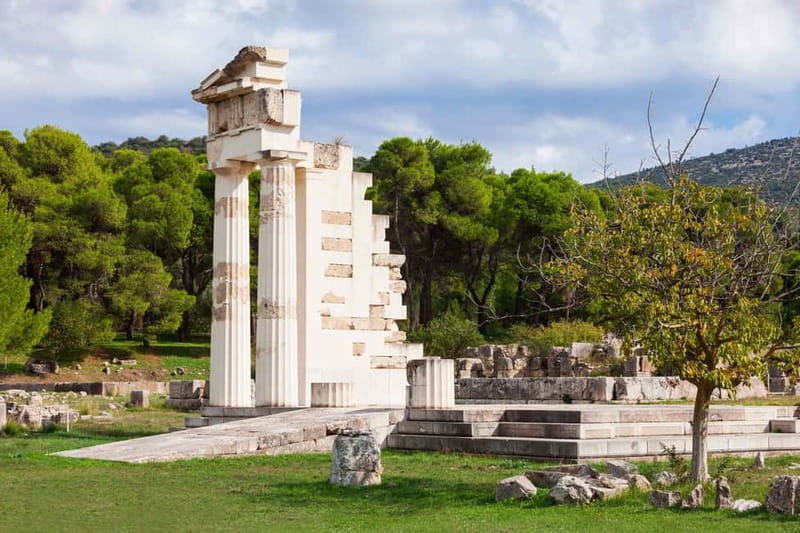
- Epidaurus Sanctuary and Apollo: a long-lived sacred site tied to ancient worship.
- Asclepieion of Epidaurus: healing temples and a pilgrim atmosphere.
- Ancient theater acoustics: 13,000-seat design famous for how well voices carry.
More of Mycenae, Epidaurus and Nafplio


A practical way to see two big names in Greece
If your base is Nafplion, this day tour is an efficient pairing. You get Mycenae first, then you end at Epidaurus, with roundtrip transportation keeping you from wrestling with schedules or rental cars. Mycenae delivers the raw, fortress-bright side of prehistoric Greece, while Epidaurus shifts the mood into sacred space, healing rituals, and a theater built with sound in mind.
The best part is that the day is structured around meaning, not just photo stops. You do not just look at ruins. You learn what they signaled to people at the time, like the message a monumental entrance sends, or why a sanctuary attracts pilgrims long after its original context.
The van ride from Nafplion, and how it affects your day
You start with pickup in Nafplion. The transport is by van, and the total time out is built around two sight blocks: about 1.5 hours at Mycenae and about 1.5 hours at Epidaurus. Then you have shorter transfer time between the sites and back again.
This matters because both Mycenae and Epidaurus involve uneven ground and walking. When a day is too short, you end up sprinting from one landmark to the next. Here, the timing gives you enough room to pause, look up at the walls and gate, and still make it back comfortably to the van.
Also pay attention to the “skip the ticket line” promise. Entrance tickets are still not included in the package price, but when the operator can speed up entry for you, it helps you spend more of your limited hours actually in the sites.
Mycenae: Lions Gate, the palace entrance, and Cyclopean walls
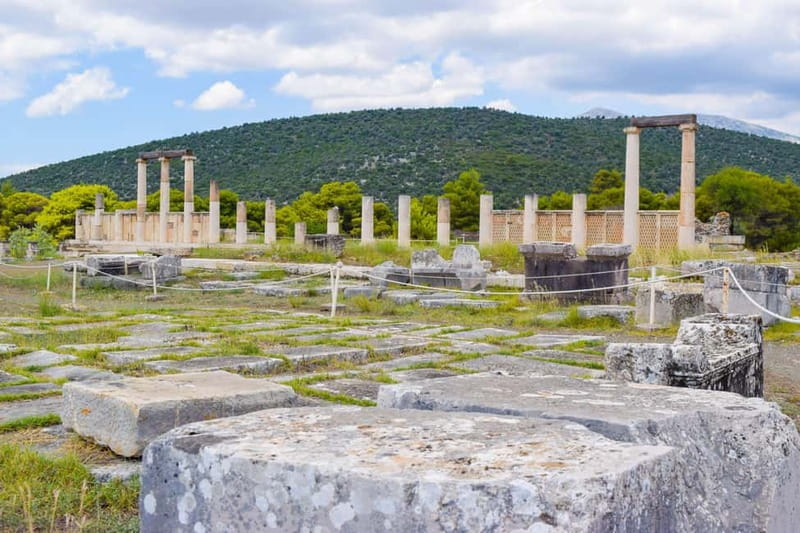
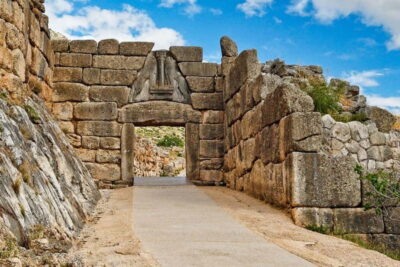
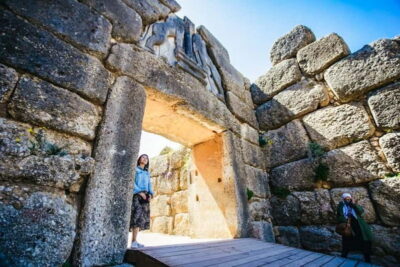
Mycenae is the headline act for anyone curious about the Mycenaean civilization. The moment you see the Lions Gate and the massive stonework around the acropolis area, it feels like the ruins are showing off. Even if you only know a little mythology, the place pulls you in because the scale is obvious, and the design is confident.
At the palace entrance, you get a clear sense of how fortified the kingdom was. Mycenae is described as one of the largest Greek civilizations of its time, with strong military fortresses dominating southern Greece. That reputation is not abstract here. You can see how the walls and monumental access points would control movement and protect power.
You also visit the Cyclopean walls, the famous heavy stone construction that gives the site its immediate wow factor. Standing near this sort of masonry, you start to understand why the Mycenae story includes kings, warfare, and major state-building projects.
The tombs of Atreus and Clytemnestra
This is where Mycenae turns from “impressive stones” into “story you can walk through.” You can see the tombs of Atreus and Clytemnestra, which are must-see stops for ancient history lovers. If you are the type who likes to connect legends to physical remains, these tombs help. They are a concrete link between mythic names and real architecture.
One practical note: photography is allowed, but flash is prohibited inside the tombs. So if you like low-light shots, plan to rely on ambient light instead of a flash.
The Kingdom of Agamemnon, and why the ruins still feel political
People often show up at Mycenae for the legend of Agamemnon. The value of the tour framing is that it ties myth to what the site actually shows from the 2nd millennium BC.
You are given the big idea that Mycenae was not a small trading town. It was a major power, and the ruins reflect that. The monumental entrance, the fortified walls, and the burial structures all point to leadership that wanted both security and legitimacy.
If you have ever wondered why ancient kings invested so much energy into visible architecture, you will get an answer you can feel on the ground. A place like Mycenae did not just store history. It communicated status, control, and authority every day.
Epidaurus first impression: Apollo’s sanctuary and the healing atmosphere
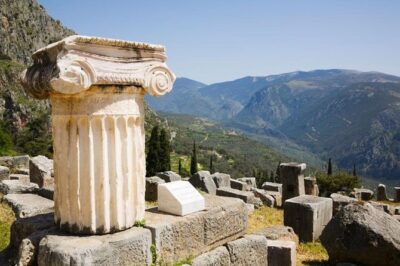
After Mycenae, the mood shifts. Epidaurus is famous for its sacred setting and its long association with healing. You visit the Sanctuary dedicated to the god Apollo, founded at around 800 BC. That date matters because it shows the site was not a short-lived project. It became a lasting destination.
Then you reach the heart of the story: the Asclepieion of Epidaurus, dedicated to healing powers connected to the gods. This is where the tour explains the idea of the ancient healing temple for serious diseases. The site attracted pilgrims and patients, which means you are not only looking at architecture. You are stepping into a place designed for hope, consultation, and care.
Even if you are not into ancient medicine specifically, the setting is worth your attention. Sanctuaries tend to feel “slower” than fortresses, and Epidaurus has that sense of space that makes you look around. It is a good contrast after Mycenae’s defensive mood.
The ancient theater of Epidaurus, and what makes it special
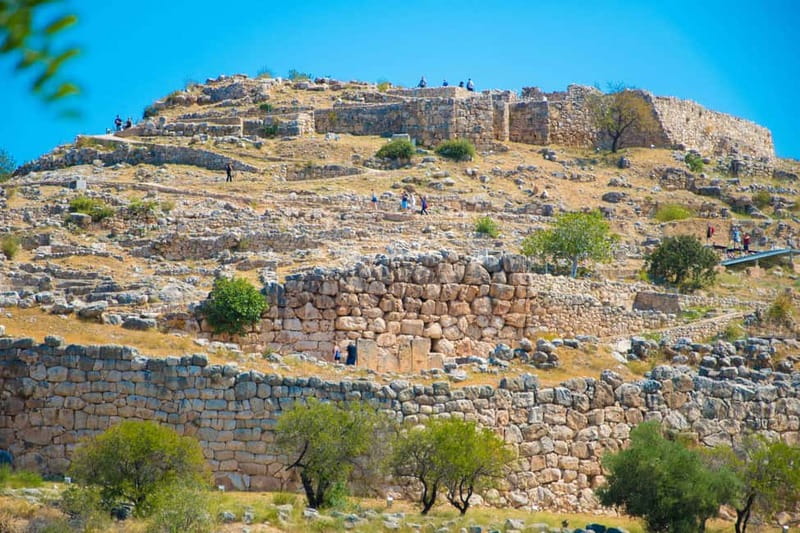
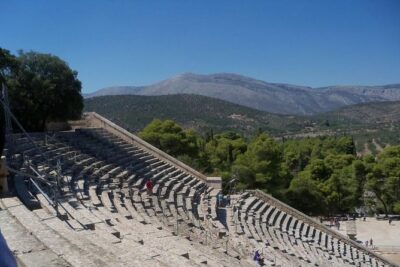
The ancient theater at Epidaurus is built within the Sanctuary of Asklepios. It dates to the end of the classical era, around 330 BC, and the tour highlights the theater’s elegance and design.
The headline feature for most people is the famous acoustics. The theater was designed for performance and speech, with a capacity of about 13,000 spectators. When a place was built that large and still gets remembered for sound, you know the designers were paying attention to more than seating comfort.
Here is what I think you should do when you visit: don’t just stand at the easy photo spots. Find a position and look around the space as if you are listening. Imagine a voice in the center and how it would travel outward. This is one of those ruins where your imagination actually works, because the geometry is obvious enough to “test” with your ears.
Time on the ground: how to use your 1.5 hours at each site
You get about 1.5 hours at Mycenae and about 1.5 hours at Epidaurus. That is a lot for ruins, but it is also a budget. The trick is to prioritize the big three at each location and then let curiosity guide the rest.
At Mycenae, I’d spend time on:
- Lions Gate and the monumental entrance area
- Cyclopean walls (walk enough to see the scale from different angles)
- Tombs of Atreus and Clytemnestra
At Epidaurus, I’d aim for:
- Apollo sanctuary area to set the context
- Asclepieion of Epidaurus to understand the healing destination idea
- The ancient theater to experience why this site became UNESCO-listed
Because the route ends with return transportation to Nafplion, you do not need to worry about getting lost. You do need to worry about sun and uneven ground, and that part is on you.
What to pack, and how to make the day feel easier
Plan for outdoor walking in Greece. The basics are simple: comfortable shoes, a hat, sunscreen, and water. Photography is allowed, but no flash inside the tombs.
It is also smart to bring snacks, since food and drinks are not included. Even if you buy something quick later, you do not want hunger to turn a fascinating site visit into a grumpy shuffle back to the van.
Also, note the surface. The tour involves walking on uneven ground. That means it may not work well for people with mobility impairments, and it is not suitable for wheelchair users.
Price and value: what $106 really buys you
The price is $106 per person for a 6-hour day tour. What stands out as value is the included roundtrip transportation from Nafplion and the English-speaking driver. That saves you time and planning effort, and you get a structured experience that connects the sites.
What is not included is equally important: entrance tickets and food and drinks are not part of the tour price. So the true day cost will be the base price plus whatever entrance fees you pay on site, plus meals or snacks.
Still, the “skip the ticket line” detail can reduce wasted time. If you have limited days in the Peloponnese, saving an hour here and there matters. It is not glamorous, but it is how you protect a good travel day from turning into a waiting day.
The driver experience, and what makes the pacing work
One of the most praised aspects is the driver. People have described drivers as friendly, knowledgeable, and willing to answer questions, with a warm, practical approach to pacing. Names that come up include Nikos, Kosis, Toso, and George. The consistent theme is that you are not left on your own at the sites.
On hot days, you will appreciate practical touches like cold water. The day is mostly outdoors, so any support that helps you stay comfortable will improve how much you enjoy the ruins instead of just surviving them.
Also, the early, organized start helps you get better light and fewer crowds, even if you cannot control crowds entirely. It makes the day feel smoother.
Who this Mycenae and Epidaurus tour suits best
This tour is a strong fit if you:
- Want two top archaeological sites in one day from Nafplion
- Like a narrative that connects Mycenaean power with later sacred healing culture
- Are comfortable with moderate walking on uneven surfaces
- Prefer an English-speaking driver to help you make sense of what you are seeing
It is not a good fit if you:
- Use a wheelchair
- Have mobility impairments that make uneven surfaces difficult
- Hate walking in sun without shade and breaks
Should you book this tour?
If you are staying in Nafplion and you want a focused day that hits Mycenae and Epidaurus without the headache of organizing transport yourself, I think this is a smart booking. You get a classic “greatest hits” archaeology combo, with time to see the major landmarks and still enjoy the theater moment at Epidaurus.
Book it if you can handle moderate walking and you are okay budgeting extra for entrance tickets and bringing your own snacks or planning meals. Skip it if accessibility is a concern, because the uneven ground makes this one difficult.
In other words: this is a good use of a day in the Peloponnese, especially when you want big, meaningful ancient sites, not just passing photos.
FAQ
How long is the Nafplion to Mycenae and Epidaurus day tour?
The tour duration is listed as 6 hours.
What is included in the price?
Transportation to and from Nafplion, an English-speaking driver, liability coverage, and taxes are included.
Are entrance tickets included?
No. Entrance tickets to the sites are not included.
Where does pickup happen?
Pickup is included from any hotel in Nafplion. You enter your pickup details when booking.
How much walking should I expect?
There is a moderate amount of walking, and you will walk on uneven surfaces.
Is the tour wheelchair accessible?
No. It is not suitable for wheelchair users and may not work for people with mobility impairments.
Is flash photography allowed in the tombs?
Photography is allowed, but flash is prohibited inside the tombs.
What should I bring for the day?
Bring comfortable shoes, a hat, a camera, sunscreen, and water. It is also recommended to bring water and snacks.
Can I cancel for a full refund?
Yes. Free cancellation is available up to 24 hours in advance for a full refund.
The Rest of Nafplio

Every Other Nafplio Write-Up
Mycenae, Epidaurus and Nafplio
Everything else we have written up around Nafplio

Mycenae, Epidaurus & Nafplio, side by side.
 ★ 4.8From Athens: Mycenae, Epidaurus & Nafplio Full Day TripFrom $332,438 reviews
 ★ 4.5From Athens: Mycenae, Epidaurus & Nafplio Full-Day TourFrom $331,580 reviews
 ★ 4.54-Day Classical Greece Tour: Epidaurus, Mycenae, Olympia, Delphi, MeteoraFrom $766732 reviews
 ★ 4.8Athens: Ancient Corinth & Nafplio Full Day Trip with SwimFrom $44523 reviews
 ★ 4.5Mycenae and Nafplion Day Trip from Athens with Official guideFrom $78501 reviews
 ★ 4.2Argolis: Full-Day Tour in Mycenae & NafplioFrom $41350 reviews
 ★ 4.53-Day Classical Greece Tour: Epidaurus, Mycenae, Nafplion, Olympia, DelphiFrom $520342 reviews
 ★ 5.0Mycenae, Epidaurus, Nafplio Full Day Private Tour from AthensFrom $229270 reviews
Sits on these lists