
Review · ANCIENT OLYMPIA TOURS
Olympia: Tour with Virtual Reality and Audio
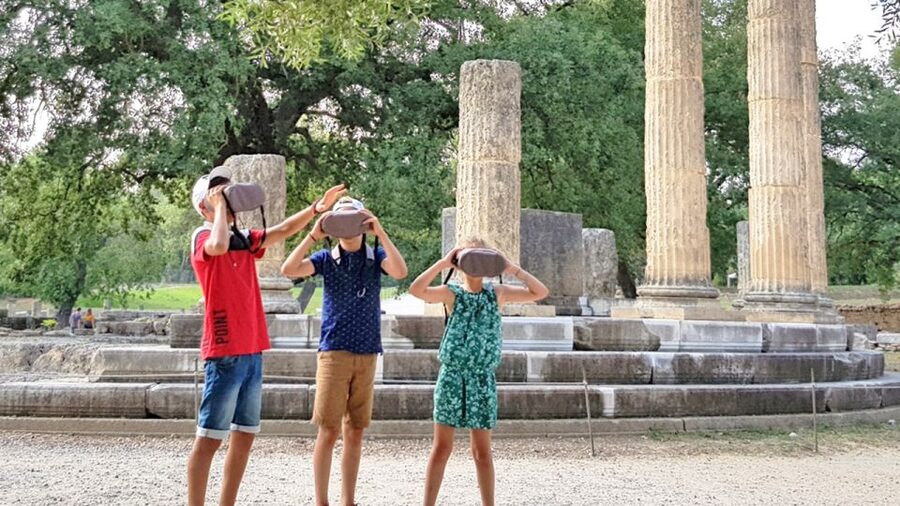
Ancient Olympia looks like itself again. This 2-hour VR and audio experience uses glasses and a built-in route to show monuments as they once stood, including athletes training and the Olympic Flame lighting tradition. I love how the 3D reconstructions turn scattered ruins into clear buildings, and I also like that the audio guide explains what you are seeing right as you approach each stop. One drawback to plan around is the pickup office is across town from the archaeological site, so give yourself a little buffer before your start time.
You also get something rare in ruins visits: a chance to experience scale and action, not just stone. The system is designed for you to move at your own pace with technical support available, plus a virtual map that helps you find each area without needing a traditional group guide. If you hate feeling “tied to” a device, you might find the occasional reorientation and on-screen direction slightly distracting at first.
In This Review
- Key highlights
- Why VR works so well at Ancient Olympia
- Pickup and setup at the Olympia Back In Time office
- Your VR route starts at the archaeological site
- Ancient Gymnasium and Palestra, where training made the games
- Phidias Workshop and the Statue of Zeus moment
- Ancient Stadium, where the competition comes alive
- Nymphaeum of Herodes of Atticus, ruins restored in VR
- The Olympic Flame tradition and what still feels familiar
- What you get for the $28.23 price
- Logistics that can make or break the experience
- Who this VR tour is best for
- FAQ
- FAQ
- How long is the VR and audio tour at Ancient Olympia?
- Where do I meet the host, and where does the tour end?
- Do I need to buy admission tickets separately?
- What languages are offered for the tour?
- What do I need to bring?
- Is the experience wheelchair accessible?
- What happens if I arrive late?
- Should you book this VR tour of Olympia?
Key highlights
- 3D reconstructions make temples, stadiums, and workshops look whole again
- Audio guide timing helps you learn each monument as you reach it
- 15 monuments on a virtual map keep your walking route organized
- Athletes and Olympic scenes help you picture events, not just architecture
- Self-paced flow can feel calmer than standard guided groups
Other visits to the stadium at Olympia
Why VR works so well at Ancient Olympia
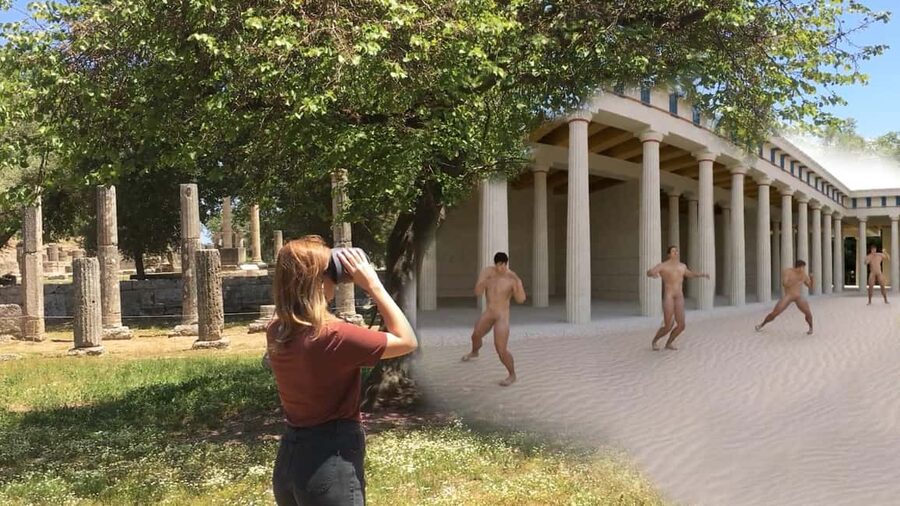
Ancient Olympia is gorgeous, but it is also mostly ruins. That can make the site feel like a pile of columns and wall fragments if you do not have the right context. With this tour, the technology does the hard part for you, showing older versions of the same structures so your brain can build the missing pieces.
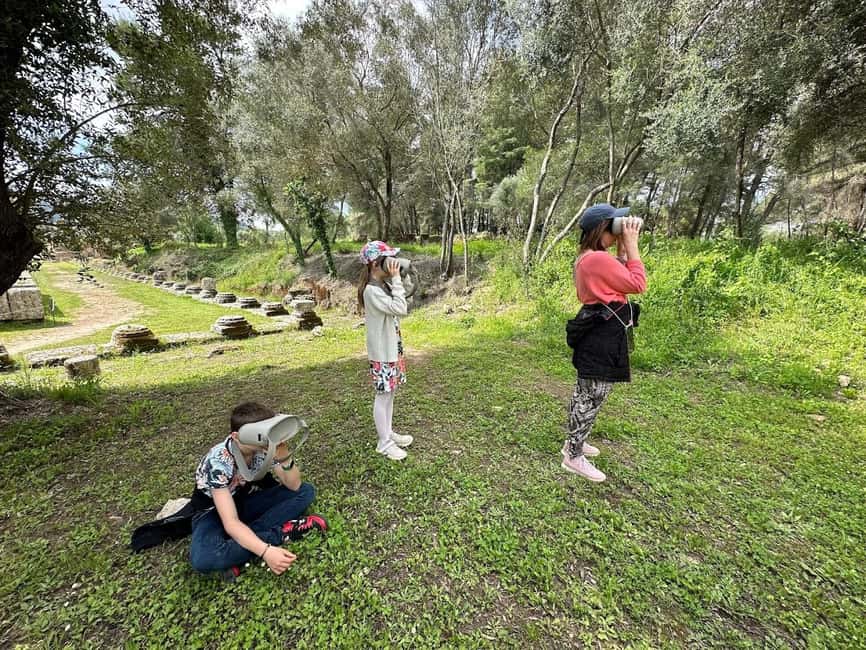
I also like that this is not just “watch a video while you walk.” You are actively using VR glasses across the site, and the tour is structured around real locations, including training and competition spaces. That means you are not only learning facts, you are seeing what those facts probably looked like in everyday life.
The best part is the combination: visuals plus audio. The audio guide gives you short, useful stories and explanations without dragging you through long lectures. If you want the site to make sense fast, this format is a strong match.
Pickup and setup at the Olympia Back In Time office
Your experience starts at the local partner’s office in Olympia. The instructions are simple: follow the main street and look for the office across from the church, or search for Olympia back in time on Google Maps. Then your host walks you through how the VR glasses work before you start the tour.
Do not rush this step. A quick demo helps you use the controls and understand what you should do as you move from one area to the next. If you want to avoid stress later, ask questions right then, especially if you are trying the glasses for the first time.
One more practical note: the tour duration is listed as 2 hours. That is plenty of time if you stay focused and keep moving at a steady pace, but it can feel tight if you stop often to troubleshoot or if you arrive late. Comfortable shoes matter here because you are walking an outdoor archaeological area while wearing the headset.
Your VR route starts at the archaeological site
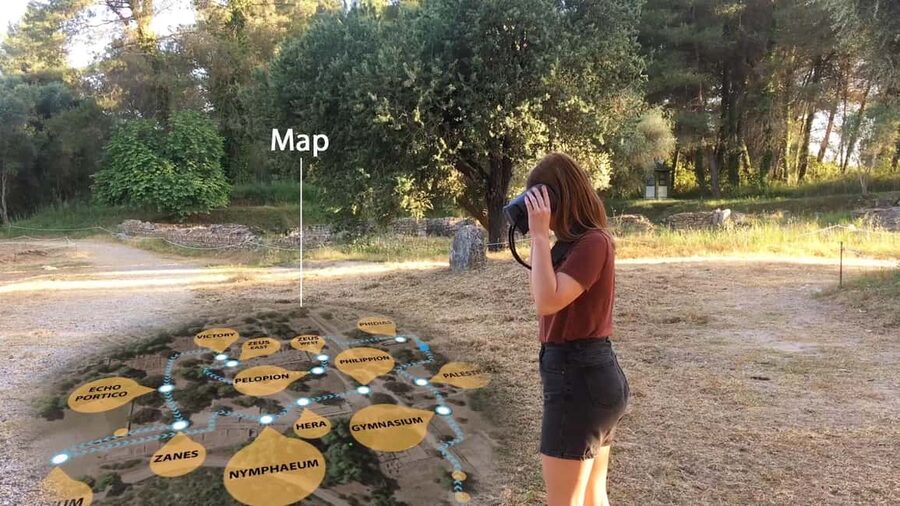
After the initial setup, you begin at the archaeological site. The tour is built around a virtual map that helps you navigate between monuments, so you are not wandering randomly. On the ground, you will match what you see in VR to physical reference points, using instructions like directional guidance shown to you through the experience.
This is the part of the tour where I think you get the biggest payoff. Standing near ruins can be oddly frustrating, because your imagination has to do all the work. With the VR overlay, you can compare the present view to a reconstructed past view and quickly understand how the buildings connected.
One thing to know up front: the technology may occasionally lose your exact location or ask you to reorient. That is usually not a deal-breaker, because the audio continues and the route is designed around physical monuments you can reach. Still, it is smart to keep calm if you notice the system “hesitating” and just follow the on-site direction cues.
Ancient Gymnasium and Palestra, where training made the games
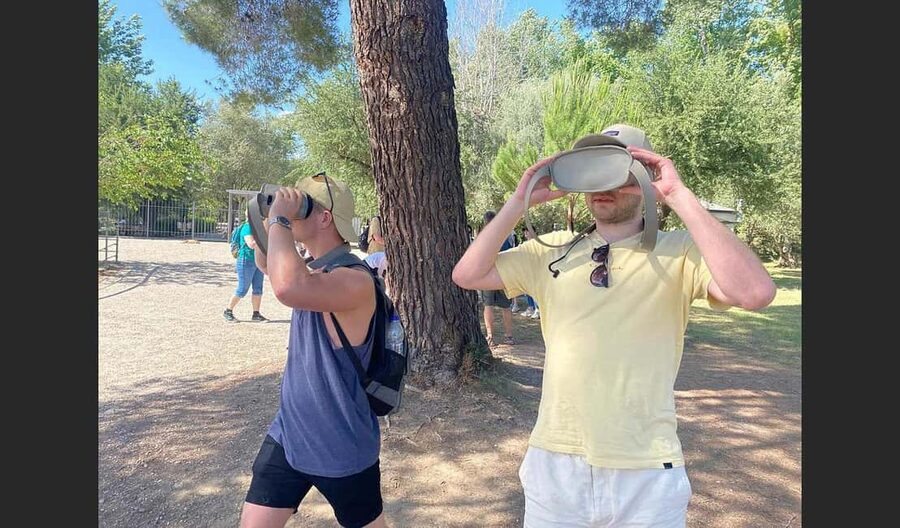
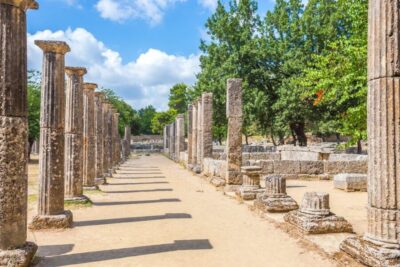
Your first major stop is the Ancient Gymnasium, where athletes trained for the Olympic Games. In VR, the site shifts from broken foundations into a setting that feels like an active training space. Instead of just hearing that athletes trained here, you can see how the area was meant to function.
Next you move to the Palestra, the training area for boxers and wrestlers. This is where the VR format helps your understanding in a practical way. You are not only learning that different combat athletes trained in different spaces, you are also getting the layout and purpose of those areas.
If you like sports history, this section is a highlight. The experience connects the architecture to the people who used it, so the training grounds feel like more than names on a sign.
Phidias Workshop and the Statue of Zeus moment
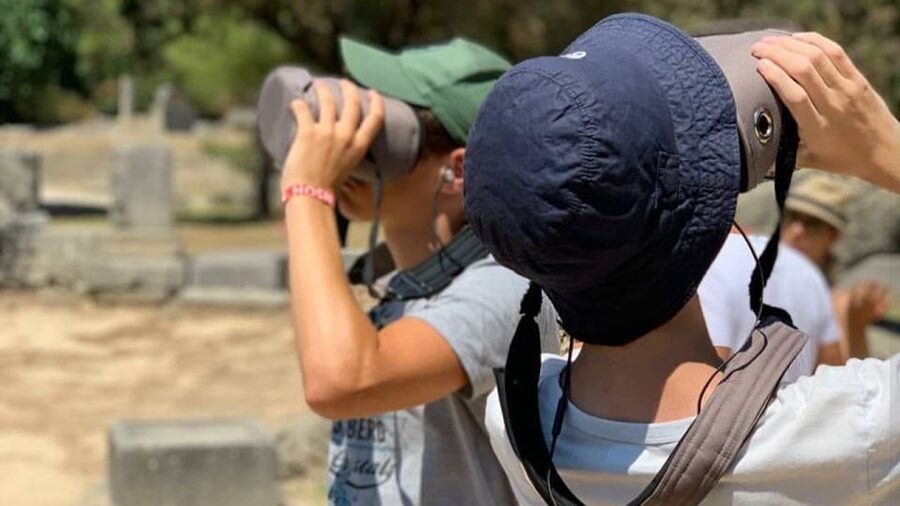
After the training areas, you head to the Phidias Workshop. This stop matters because it ties Olympia to artistry, not just athletic competition. In the experience, you learn that Phidias created one of the Seven Wonders of the ancient world, the Statue of Zeus, and the tour uses VR to help you visualize the monument in context.
Then the route turns east toward the Temple of Zeus. The VR portion includes a way to virtually enter the monument and see the Statue of Zeus inside. Even if you already know the basics, seeing how the space and the statue fit together makes the story feel more real.
A good way to approach this section is to slow down slightly. The Temple of Zeus area can be visually confusing when you are standing in ruins. In VR, the reconstructions can show you the interior idea, but you still need a few seconds to let your bearings settle before you move on.
Ancient Stadium, where the competition comes alive
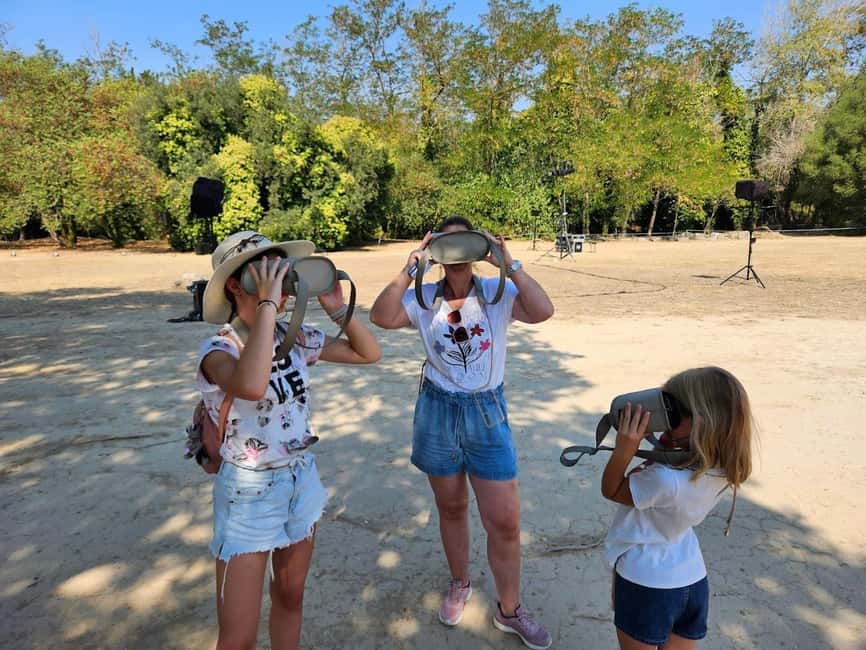
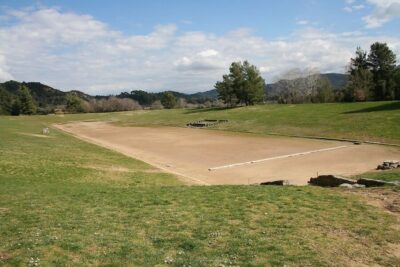
The next stop is the Ancient Stadium, and this is one of the most talked-about parts of the experience because it is action-based. Through your VR glasses, you can experience an ancient sporting event, including athletes competing for the Olympics. You also get viewpoints that feel like you are near the finishing area, which helps you understand how the stadium would have felt during real events.
This is one of the areas where “scale” matters. In plain ruin form, stadiums can look like long tracks, but the energy of an actual race is hard to picture. VR adds the missing sense of timing, movement, and atmosphere, so your understanding becomes more than memorizing terms.
If you are traveling with kids, this is often the moment that gets smiles. Even if the headset format is new to them, the stadium sequence is visual enough to keep attention.
Nymphaeum of Herodes of Atticus, ruins restored in VR
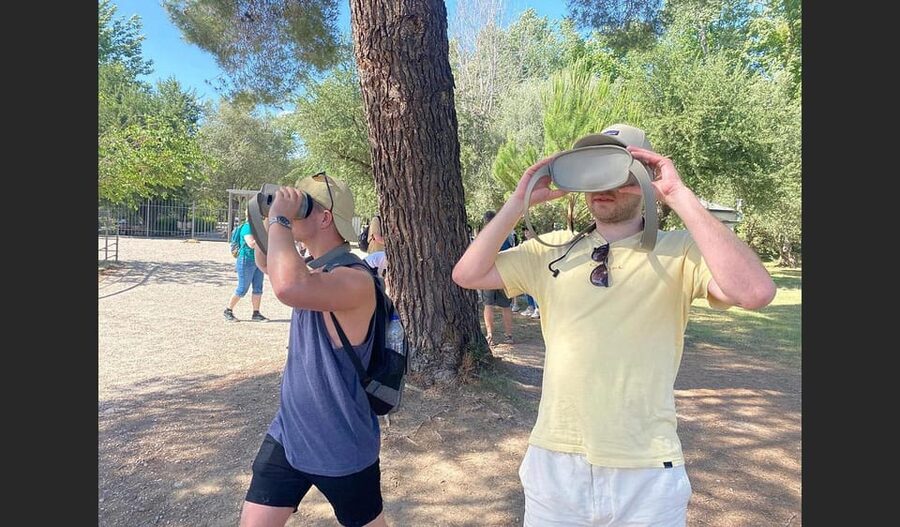
From the stadium, the route moves to the ruins of the Nymphaeum of Herodes of Atticus. In the experience, the VR glasses help you see the structure in fuller grandeur and then watch it come back to life again.
This section is great if you like “day-to-day life” history. Temples and stadiums get the spotlight, but nymphaea like this one often feel more connected to visitors, water features, and everyday movement through a site. The tour’s approach helps you understand that these ruins were not just background scenery.
When you reach this stop, give yourself a short pause. The physical remains can look smaller or harder to interpret than you expect. VR helps, but your comprehension clicks faster when you stand still and let the audio and visuals line up.
The Olympic Flame tradition and what still feels familiar
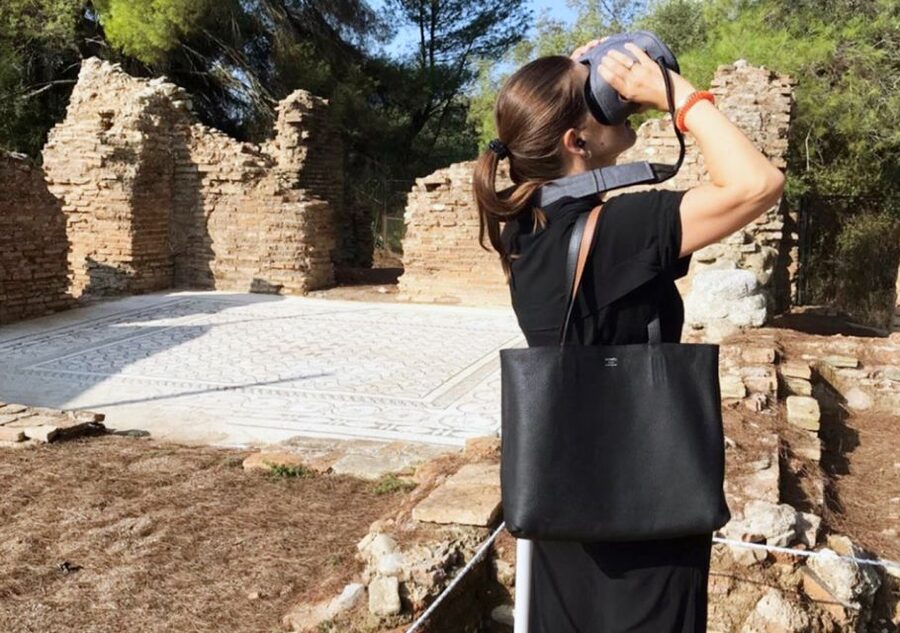
Near the end, you see the lighting of the Olympic Flame in ancient times. This is a smart finale because it connects Olympia to a tradition many people recognize today. The experience explicitly highlights that some traditions remained the same over time.
Even if you are not a mythology person, this part helps you close the loop. It takes you from buildings and sports to a living idea that people still care about.
If you are worried about the last stretch feeling rushed, plan to have some energy left. The final moments are often the most meaningful, and you do not want to stumble through them while rushing to finish the headset route.
What you get for the $28.23 price

At $28.23 per person for a 2-hour experience, you are paying for more than audio. You are renting the VR glasses, getting an audio guide, and benefiting from a live demonstration and technical support. You are also getting a structured self-guided route aimed at 15 monuments, which saves you from piecing together a route yourself.
The big “plus value” here is interpretation. Olympia ruins can be confusing, and confusion is expensive in time and patience. If VR helps you understand what you are looking at, that is effectively buying back your attention span.
The main cost consideration is that admission tickets to the archaeological site are not included. So you should budget for that separately. Still, for the amount of learning and visualization you get in a short time window, this is strong value for most people who want more than a slow walk through stones.
Logistics that can make or break the experience
This tour is designed for self-paced walking, which is great. But that also means you need to think about how you will move with a headset on. The most useful practical advice is to follow the route guidance consistently, especially early on when your sense of direction is still forming.
From real-use feedback on the experience, a few patterns show up:
- The VR may occasionally fail to recognize your precise location, so you may need to reorient and keep walking based on what you see in the real area.
- The device might need a restart if it shuts down during the tour, so it helps to stay relaxed if that happens.
- Crowd levels matter, because wearing VR can make you feel less aware of nearby walkers. If you can choose times, consider going when the archaeological site is not packed.
Also, the pickup office timing matters. Late arrivals over 45 minutes without contacting the team can lead to cancellation without refund. So give yourself breathing room and aim to be there early rather than hoping you can sprint across town.
Who this VR tour is best for
I think this experience fits people who want to understand Olympia quickly. It is a strong match if you like sports history, architecture, or you just hate the feeling of standing in ruins and guessing.
It is also a good choice if you do not want a traditional group tour. The VR route can help you avoid the usual pressure of staying in line with a crowd. At the same time, you are not completely on your own, because you get audio guidance and technical support.
If you are someone who struggles with VR headsets, motion, or comfort, it is worth knowing that the headset is used for most of the tour. You will be wearing it while walking, so comfort and personal tolerance should be part of your decision.
FAQ
FAQ
How long is the VR and audio tour at Ancient Olympia?
The activity is listed as 2 hours. Starting times depend on availability, so it is worth checking the schedule before you plan your day.
Where do I meet the host, and where does the tour end?
You meet your host at the local partner’s office in Olympia. The office is across from the church on the main street, and you can also search for Olympia back in time on Google Maps. The tour ends back at the same meeting point.
Do I need to buy admission tickets separately?
Yes. Admission tickets to the Archeological Site are not included, so you should plan to purchase those separately.
What languages are offered for the tour?
The instructor is listed as English, French, and Greek, and the audio guide includes Greek, English, French, German, Spanish, Italian, and Dutch.
What do I need to bring?
Bring a passport or ID card and wear comfortable shoes. A deposit is required as part of the ID/passport process.
Is the experience wheelchair accessible?
Yes. The tour is listed as wheelchair accessible.
What happens if I arrive late?
Late arrivals over 45 minutes without contacting the team can be canceled without a refund.
Should you book this VR tour of Olympia?
If you want Olympia to feel understandable in a short time, I would book it. The VR reconstructions turn ruins into clear shapes, and the audio guide keeps the learning tied to where you stand, which is exactly what most people need at Ancient Olympia.
I would skip it only if you strongly prefer a purely outdoor, eyes-only site walk without a headset, or if you know you dislike VR during movement. Otherwise, this is one of the most practical ways to get beyond “cool stones” and into how the place worked, trained, competed, and even lit the Olympic Flame.
The Rest of Archaeological Site Of Olympia
Every Other Archaeological Site Of Olympia Write-Up
The Stadium at Olympia
Everything else we have written up around Archaeological Site Of Olympia
Ancient Olympia Tours, side by side.
 ★ 4.54-Day Classical Greece Tour: Epidaurus, Mycenae, Olympia, Delphi, MeteoraFrom $766732 reviews
 ★ 4.3Ancient Olympia: Archaeological Site and Museum Entry TicketFrom $30555 reviews
 ★ 4.53-Day Classical Greece Tour: Epidaurus, Mycenae, Nafplion, Olympia, DelphiFrom $520342 reviews
 ★ 4.3Olympia: Archaeological Site & Museum E-Ticket & Audio GuideFrom $41272 reviews
 ★ 4.5Ancient Olympia Half-Day Tour from Katakolo Cruise PortFrom $14228 reviews
 ★ 3.5Katakolo: Pyrgos and Katakolo Hop-on Hop-off Bus TourFrom $11196 reviews
 ★ 4.84-Day Tour of Mycenae, Epidaurus, Olympia, Delphi & MeteoraFrom $747168 reviews
 ★ 5.0Olympia – Half day TourFrom $326130 reviews
Sits on these lists