
Review · MOUNT OLYMPUS, VERGINA & PELLA
Olympus Rock Climbing Course and Via Ferrata
Ropes, river air, and Mt. Olympus in a half-day. This course is interesting because you learn real climbing movement on the rock, then cut your teeth on Via Ferrata style protection in a small group near Agia Kori. One possible drawback: climbing shoes cost extra if you do not rent them.
What I like most is how much of the time goes into safe, practical instruction. Guides like Thomas, plus the Xtremeway Outdoors crew including Kosthos and Dionysos, focus on the basics that keep beginners comfortable, like harness checks, belaying, and rope management, and then you get complimentary photos and video to remember it.
In This Review
- Key highlights that make this course worth your time
- Mt. Olympus climbing in 4 hours: what the day actually looks like
- Meeting at 12:30 and getting to Agia Kori without stress
- Beginner path: Via Ferrata, abseil, and a top-rope confidence boost
- Level 1: partner climbing, knots, belaying, and real rope management
- Level 2: quickdraw leading, master points, and multi-pitch style thinking
- Safety and equipment that matter: harness, helmet, anchoring, and belaying
- Shoes, clothing, and what to pack for a slippery Olympus day
- Transfers, small-group attention, and the photos you actually want
- Price and value: is $130.19 a fair deal?
- Who should book this course, and who might want another option
- Should you book Olympus Rock Climbing Course and Via Ferrata?
- FAQ
- What is the price of the Olympus Rock Climbing Course and Via Ferrata?
- How long does the experience last?
- Is pickup available?
- What time does the course start?
- What is included in the price?
- Are climbing shoes included?
- Is there a minimum age and a group size limit?
Key highlights that make this course worth your time
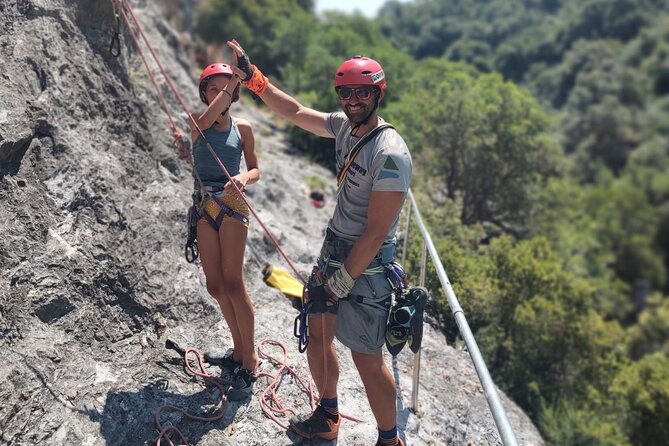
- Small group coaching (max 8) for more time with your guide, not just watching.
- Beginner friendly climbing ladder, starting with Via Ferrata, abseil, and easy top-rope.
- Progressive levels (Beginners, Level 1, Level 2) so you can build skills, not just do one move.
- Helmet and harness included, with rental shoes available for an added fee.
- Round-trip private transfer and pickup from selected places, so you spend less time navigating.
- Agia Kori setting near a river, which makes the climb field feel like a real place, not a training gym.
More around Olympus, Vergina and Pella
Mt. Olympus climbing in 4 hours: what the day actually looks like
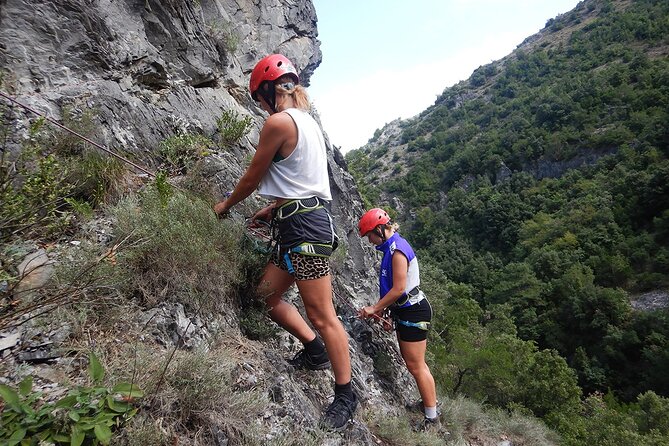
This is a half-day rock climbing course on Mt. Olympus in Macedonia, Greece, designed to be hands-on from the first minutes. The duration is about 4 hours, and the session starts at 12:30 pm, which is great if you want a morning free for beaches, coffee, or a short drive around the Olympus area.
The flow is simple and practical. You meet, gear up, hike a short distance to the climbing area, and then do skill work on rock under your guide’s watch. Even if the rock looks intimidating at first glance, the day is structured so you build confidence in stages, with clear progression through Beginners, Level 1, and Level 2.
A big reason people like this format is that it mixes technique with exposure. You are not only learning ropes in theory. You practice movements, learn how anchors and belaying work, and then you try routes at the right difficulty for your group level.
Meeting at 12:30 and getting to Agia Kori without stress
You meet at 12:30 pm at the provided location in Dion, Greece (the activity uses a specific meeting coordinate). If pickup is part of your plan, the service lists pickup options such as the Train Station of Larisa, Neoi Poroi, Leptokarya Litochoro, and selected hotel areas.
Once you arrive at the starting point, the day starts fast. You prepare equipment first, then you begin a short hike to reach the climbing field by a refreshing river. That small hike matters more than you might think. It gives your guide a chance to see how you handle gear on the move, and it helps you mentally shift from tourist mode to climb mode.
Agia Kori is the stop name used for the climbing area, so expect the day to feel like a true outdoor session rather than a quick photo stop. Because the group is capped at 8 travelers, you are not stuck waiting long for your turn.
Beginner path: Via Ferrata, abseil, and a top-rope confidence boost
If you’re starting from zero, the course is built to keep the first day doable. The Beginner track starts with Via Ferrata / Cordata. In simple terms, a via ferrata uses a fixed line, often steel cables or a cord, so you have dependable protection as you move along the route. That built-in system is the key to learning vertical exposure with fewer unknowns.
After the via ferrata portion, you also get abseil (rappelling) practice and then an easy top-rope climb. This combination is smart because it teaches two sides of climbing at once: moving safely upward or along a route, and controlling your descent. The top-rope part is where you learn how your system works while the rope handles a lot of the risk.
During these skills, guides focus on the essentials: equipment use, movement on the rock, rope basics, and how anchoring and belaying work. You do not need prior climbing experience to join. The emphasis is on making the gear feel normal, not mysterious.
A practical note for the rock itself: one guide response mentions slippery conditions due to snow in a past session. That is not something you can fully plan for, but it’s a reminder that grip matters. If conditions are slick, your guide will adjust your pace and route choices. You should dress accordingly and expect slower, careful movement.
Level 1: partner climbing, knots, belaying, and real rope management
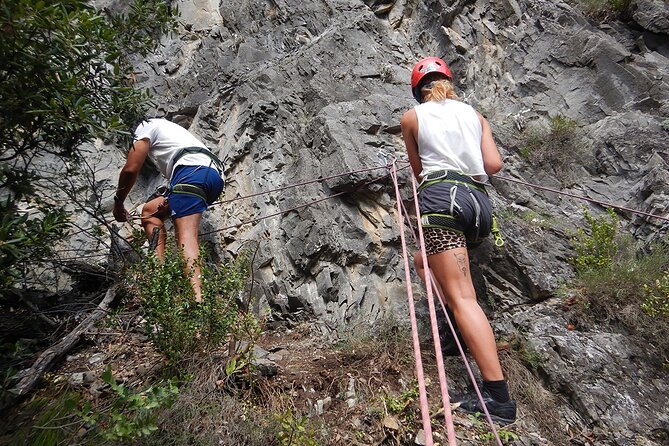
Level 1 is where the day starts to feel like actual climbing with a teammate. You still get instruction and coaching, but you shift from solo confidence to coordinated movement. The focus includes:
- basic knots
- belaying skills
- rope management
- climbing gear basics
- understanding master points
You also learn climbing with your partner. That’s important because outdoor climbing is rarely a solo sport. Even on a short course like this, you’ll practice how communication and positioning keep both people safe.
The training angle here is valuable for you if you’ve always wondered how climbers manage ropes in real situations. Knowing what to do with slack, how to set up and check the system, and how to stay calm while your partner is attached to the rope is the difference between feeling “safe because a guide is there” and feeling “safe because you understand the system.”
Level 1 also introduces the concept of master points. Those are the connection points used to organize anchors and protection. It’s a technical topic, but the goal is not to overwhelm you. The goal is to help you understand why climbers trust the system before they put weight on it.
Level 2: quickdraw leading, master points, and multi-pitch style thinking
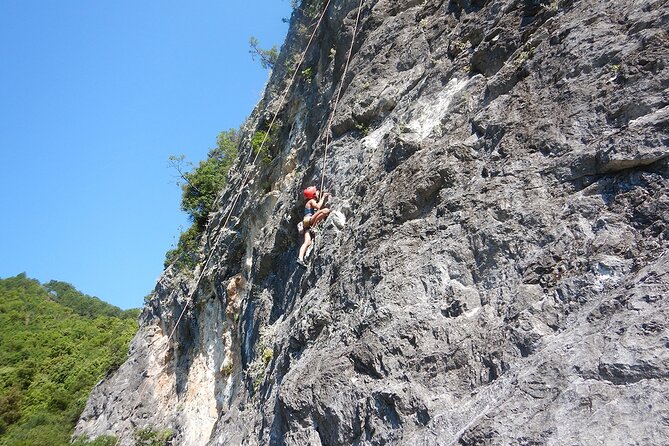
Level 2 is the next step up, with more independence and more technique. You’ll work on preparing a master point and then practicing a leading climb using quickdraws correctly. This is the part of the course that tends to make people feel like they moved from beginner learner to climbing student.
You’ll also be introduced to multi-pitch style concepts. Even if you do not leave the course site for a full multi-pitch day, you can still learn the thinking behind it: how climbing changes when you are responsible for more of the setup and how anchors and rope segments relate across stages.
For you, Level 2 makes sense if you already have some comfort with ropes, or if you learn fast and want more vertical time and more responsibility in the system. The structure stays safety-first, so the training is not about reckless speed. It’s about learning how better climbers move and set protection more confidently.
Safety and equipment that matter: harness, helmet, anchoring, and belaying
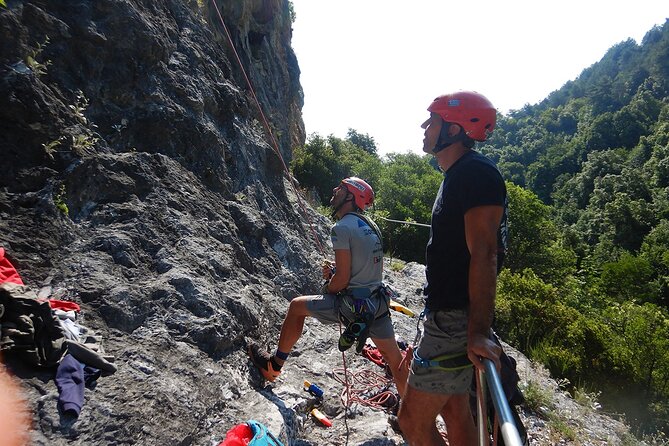
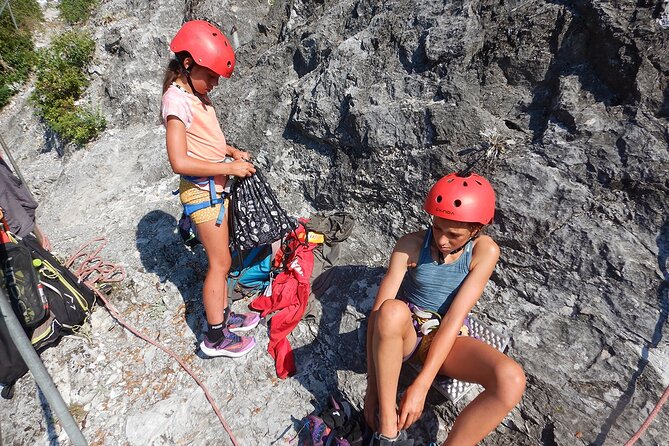
Rock climbing feels simple on YouTube. On a real day, safety is a chain of small steps. This course includes safety gear, with a helmet and harness provided, and you’ll cover key techniques with your guide.
Here’s what that coaching typically means in practice:
- You learn how the harness should fit and why it matters.
- You practice how ropes run through the system.
- You get instruction on anchoring and how protection is built.
- You learn belaying so you understand your role in risk management.
- You practice rope handling so you do not waste energy fighting your own setup.
The fact that the group is capped at 8 travelers also supports safety. With fewer people, guides can spot small mistakes early, like a rope twist you missed or a connection that needs a second check.
In the reviews, Thomas is repeatedly described as very focused on keeping people safe, and that focus comes through in the way the course is structured. Even when parts get sketchy due to conditions like snow or slippery rock, the emphasis stays on doing it correctly rather than rushing it.
Shoes, clothing, and what to pack for a slippery Olympus day
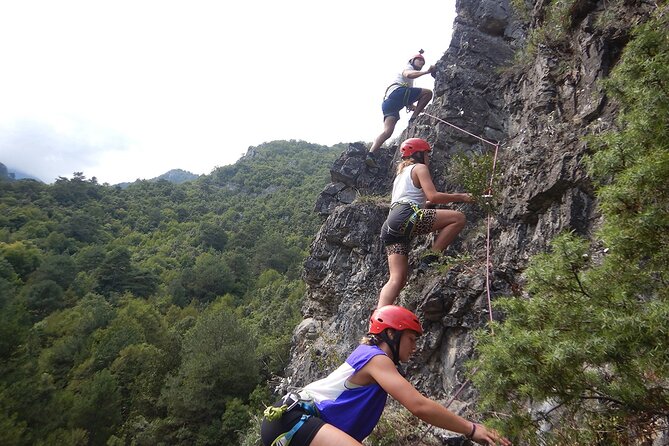
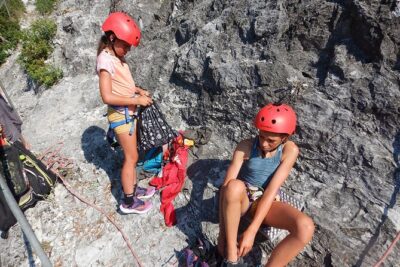
The course includes helmet and harness, but climbing shoes are not included. Rental shoes are available for 15 euros. If you have your own shoes, that works too, but the day is planned so everyone can suit up using the provided system.
You’ll also want to plan for changing outdoor conditions. The activity says it operates in all weather conditions and that you should dress appropriately. At the same time, good weather is a requirement for the experience to run, and poor weather can lead to a different date or a full refund. Translation for you: check the forecast, bring layers, and do not assume the rock will always be dry.
Bring snacks and plan for energy. Snacks and lunch are listed as not included. If you burn through energy fast, you’ll be glad you brought a small pack of food and water.
A practical approach: wear closed-toe shoes that you can walk in before you get climbing shoes on, and bring a light rain layer if clouds move in. Your guide can tell you how to prioritize comfort versus grip based on the day’s conditions.
Transfers, small-group attention, and the photos you actually want
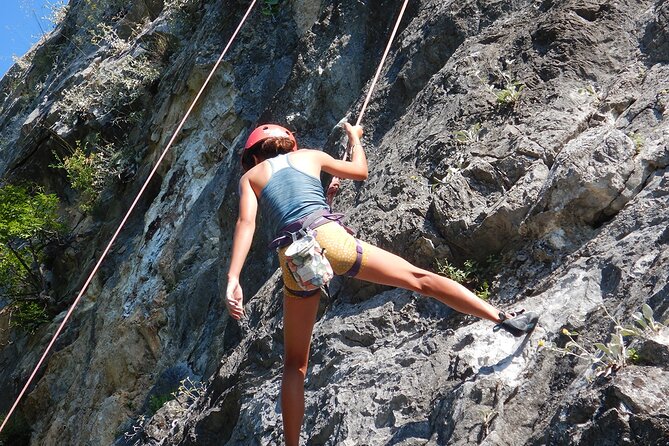
One of the easiest wins here is transportation. The experience includes round-trip private transfer, plus national park fees. Hotel pickup and drop-off are available for selected hotels, and pickup details include specific station areas like Neoi Poroi and Leptokarya Litochoro.
Why does this matter? Because a course like this depends on timing. When the transport is handled, you arrive ready to gear up, not scrambling to find a bus, parking, or the climbing entrance.
Another underrated value: the course includes complimentary photos and video. After a day where you’re focused on technique and safety, it’s nice to have a clear record of what you did. It also helps you remember the key moves your guide taught, which is especially helpful if you plan to keep climbing after this trip.
With up to 8 travelers and a professional guide, you should expect more personal attention than you’d get on big-group adventures. That is the difference between learning one safe method and actually building confidence in multiple skills.
Price and value: is $130.19 a fair deal?
The price is listed at $130.19 per person, and for a half-day on Mt. Olympus, that can be a fair value when you look at what’s included.
What you get for that price:
- round-trip private transfer
- national park fees
- professional guide
- helmet and harness
- photos and video
- hotel pickup and drop-off (selected hotels)
What can add cost:
- climbing shoes rental is 15 euros
- snacks and lunch are not included
So the real cost is not only the tour price. It’s tour price plus what you choose for shoes and food. If you already have climbing shoes, you can keep the budget tight. If you don’t, plan for the rental fee.
Even with that extra shoe cost, you are paying for trained instruction, equipment support, and a guided day in a protected natural area. For many people, the biggest value is the structured skill progression. You’re not guessing how ropes and protection work. You’re learning it with a guide, in a small group, and you leave with a clearer sense of what climbing actually feels like.
Who should book this course, and who might want another option
This course is a strong fit if:
- you’re a beginner with no prior climbing experience
- you want real technique instruction, especially ropes, belaying, and anchoring
- you like small-group activity days, not crowds
- you want a guided start into outdoor climbing on Mt. Olympus
It’s also a good choice if you’re comfortable outdoors but want someone else to handle the scary parts. Reviews include comments about sketchy moments in rougher conditions, and the guide responses emphasize safety and readiness. If you’re willing to follow instructions and move carefully, the course is designed for that partnership.
You might want to think twice if:
- you dislike hands-on safety training (this day is about systems and procedure)
- you are not prepared for active outdoor time, including a short hike to the climbing field
- you have very strong fear of heights without gradual exposure (the Beginner via ferrata and top-rope setup helps, but you should still be honest about your comfort level)
Should you book Olympus Rock Climbing Course and Via Ferrata?
I think you should book it if you want a serious introduction to outdoor climbing without taking on the planning and safety uncertainty yourself. The mix of Via Ferrata, abseil, and top-rope for Beginners, plus the rope-focused skill sets at Level 1 and Level 2, gives you a real sense of progression in one half-day.
Book it early if you can, and plan your budget for shoes and food. If the weather turns questionable, you might have to adjust dates, but the experience is designed around appropriate outdoor conditions and guided safety.
If you want your first climb to feel guided, structured, and memorable, this Mt. Olympus course is an easy yes.
FAQ
What is the price of the Olympus Rock Climbing Course and Via Ferrata?
The price is listed at $130.19 per person.
How long does the experience last?
The duration is about 4 hours.
Is pickup available?
Yes. Pickup is offered from selected hotels and pickup details include options such as the Train Station of Larisa, Neoi Poroi, and Leptokarya Litochoro.
What time does the course start?
The start time is 12:30 pm.
What is included in the price?
Included are round-trip private transfer, national park fees, a professional guide, safety gear (helmet and harness), hotel pickup and drop-off (selected hotels only), and photos and video.
Are climbing shoes included?
No. Climbing shoes are available for rent for an additional 15 euros.
Is there a minimum age and a group size limit?
The minimum age is 10 years, and the maximum group size is 8 travelers.
Every Other Macedonia Write-Up
Olympus, Vergina and Pella
Everything else we have written up around Macedonia
Mount Olympus, Vergina & Pella, side by side.
 ★ 4.7From Thessaloniki: Pozar Thermal Baths and Edessa Day TripFrom $581,243 reviews
 ★ 4.7From Thessaloniki: Day Trip to Dion and Mount Olympus ParkFrom $581,046 reviews
 ★ 4.8Thessaloniki: Vergina and Pella Day TripFrom $58673 reviews
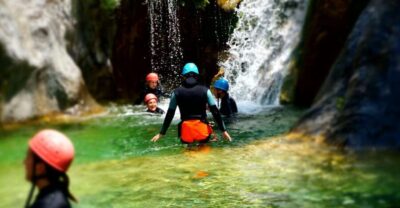 ★ 5.0From Thessaloniki: Half-Day Canyoning Trip to Mount OlympusFrom $100267 reviews
 ★ 4.5Thessaloniki: Bus Trip to Dion & Mt Olympus National ParkFrom $59256 reviews
 ★ 4.5Pozar Thermal Baths and Edessa Day Trip from ThessalonikiFrom $59216 reviews
 ★ 4.5Discover Vergina and Pella: Day Trip to Macedonian KingdomFrom $59183 reviews
 ★ 4.6From Athens: Mt. Olympus National Park Guided Day TourFrom $169104 reviews
Sits on these lists