
Review · RHODES ISLAND TOURS
Rhodes: Butterfly Valley and Filerimos Hill Bus Trip
Butterfly Valley feels like a living tunnel. I love the shaded Butterfly Valley paths with clear streams and cool shade, and I love the layered stop on Filerimos Hill, where you can piece together ancient, Christian, and WWII-era symbols in one walk. The main drawback is the uneven, sometimes slippery walking, plus extra site entrances you’ll need to pay if you want the full experience.
This is a 6-hour half-day plan that works well if you want a change of scenery from Rhodes town beaches, without renting a car. You get air-conditioned coach transport and pickup from select meeting points, but the day is timed for a schedule, not a long linger. Also, the trip is not a full guided tour in the museum sense, so bring comfy shoes, and be ready to read signs as you go.
In This Review
- Key Points at a Glance
- How the Rhodes Bus Trip Runs, From Pickup to Return
- Butterfly Valley in Rhodes: Streams, Shade, and the Best Chances Higher Up
- A smart walking strategy if the heat hits
- Filerimos Hill: Ancient Ialysos Remains and Early Christian Stops in One Circuit
- Why this hill stop is worth your time
- Temple of Athena Polias and the Early Christian Basillica: What You’re Really Seeing
- A tip for your photos
- Golgotha, the Road of Martyrdom, and the 18-Meter Italian Cross
- Entrance Fees and What You Should Budget for Real Value
- My take on value
- Timing on a 6-Hour Day: How Much Time You Get at Each Place
- The “best use” approach
- What to Wear and Bring for Comfort on Uneven Paths
- Who This Trip Fits Best (and Who Should Skip It)
- The Transport and Driver Factor: What Helps the Day Run Smoothly
- Should You Book the Butterfly Valley and Filerimos Hill Bus Trip?
- FAQ
- How long is the Rhodes Butterfly Valley and Filerimos Hill trip?
- What’s included in the price?
- Are entrance fees to archaeological sites included?
- Is food or drinks included?
- Is a guide included?
- Where do I find the bus for pickup?
- What should I bring for the day?
- Is this trip suitable for wheelchair users?
- What are the cancellation and payment options?
Key Points at a Glance

- Butterfly Valley walking through streams and shade, with the best chances higher up the route
- Filerimos Hill self-guided time to explore ancient Ialysos remains and church foundations
- Athena Polias, early Christian basilica, and a small subterranean Byzantine church in one hillside circuit
- Golgotha viewpoint and the Road of Martyrdom, ending at the 18-meter cross raised by the Italians in 1930
- Plan for paid entrances on site and expect walking on uneven paths
More of Rhodes beyond the old town

How the Rhodes Bus Trip Runs, From Pickup to Return
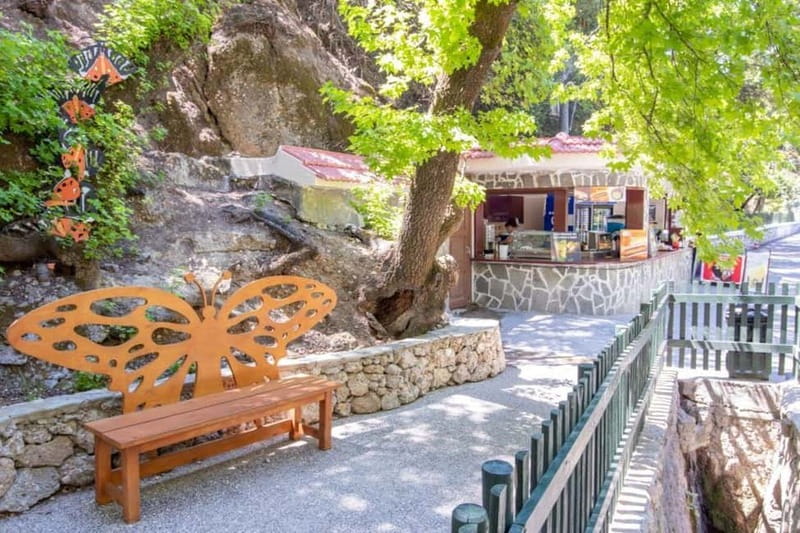
This one is a classic Rhodes arrangement: you meet the coach at a select pickup point, then ride out with other passengers. Your best bet is to keep an eye out for bus number 30 with the Captain’s Tours logo, because pickup times are handled by the provider after you book.
Once you’re on board, expect scenic coastal and hillside views as the driver handles Rhodes’ narrow roads. A few things affect your time: pickups and drop-offs at multiple hotels can make the ride feel a bit stop-and-go, even if the main sightseeing blocks still land where they should.
The day is built around two walking zones. You spend time in Butterfly Valley first, then head to the hill of Filerimos. The rhythm matters because it shapes how much you can realistically see at each stop without rushing.
Butterfly Valley in Rhodes: Streams, Shade, and the Best Chances Higher Up
Butterfly Valley is the kind of place that makes you slow down even before you find the best photos. The paths wind through lush vegetation and along clear running streams, and a lot of the route stays pleasantly shaded. On a warm day, that shade and the water sounds alone can make the valley feel like a real break.
Here’s the practical note that helps: what you’re looking for are not always obvious from the entrance. The valley has a changing feel as you go deeper, and you’ll often find more clusters further along. One traveler experience also pointed out that the “butterflies” can actually be moths, which can explain why your first sightings might feel limited until you climb a bit higher.
You’ll also see a natural history museum option in the valley area, but it’s not part of what’s included. If you’re the kind of person who likes to connect the plants, habitat, and insects you’re seeing, that extra stop can make the time feel more meaningful.
A smart walking strategy if the heat hits
The valley route has sections that can feel steeper near the later part. If you notice the butterfly activity drying up, you might find that the final uphill stretch becomes more of a workout than a payoff. In that case, turning back and enjoying the earlier, stream-side section can feel like the best use of your energy.
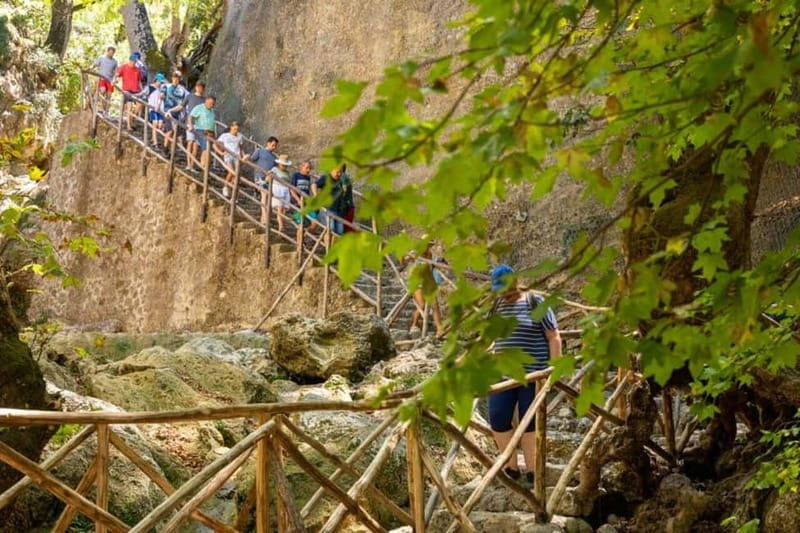
It’s also worth knowing that the paths can be uneven and a bit slippery in places. Bring comfortable shoes you trust on dirt and damp areas, not slick sandals.
Filerimos Hill: Ancient Ialysos Remains and Early Christian Stops in One Circuit
Filerimos Hill is only 267 meters high, but it packs a lot into a compact climb and walk. This hillside used to be the citadel of ancient Ialysos, so you’re not just walking through viewpoints. You’re moving across layers of time, from classical foundations to Christian-era sites.
When you arrive, you’ll have self-guided time to explore on your own pace. That’s a plus if you like to wander, but it’s also a reminder that you should follow signs carefully because the key structures are spread out along the hill paths.
The highlights here are focused and specific. You’ll see the foundations of the temple of Athena Polias, then visit an early Christian basilica. There’s also a small subterranean Byzantine church, which is the kind of stop that feels quietly special because it’s different from the usual open-air ruins.
Why this hill stop is worth your time
I like Filerimos because it’s not trying to be one theme park-like attraction. It’s a site where the stories are physical: stone foundations here, church spaces there, and then a modern memorial element up near the top.
It also gives you a change from the valley. Butterfly Valley is about shade, water, and insects. Filerimos is about walking, ruins, and the feeling of moving from one sacred or historical “chapter” to another.
- Faliraki: Boat Trip to Afantou Caves, Antony Quinn, Ladiko★ 4.5 · 780 reviews
- From Faliraki: High Speed Boat to Symi and St. George’s Bay★ 4.6 · 356 reviews
- Faliraki: Quad Safari Tour★ 4.8 · 265 reviews
- Faliraki: Yellow Sub Cruise to Anthony Quinn Bay & the Caves★ 4.8 · 249 reviews
Temple of Athena Polias and the Early Christian Basillica: What You’re Really Seeing
At the Athena Polias stop, you’re mostly looking at remains rather than a fully restored temple. That matters because it changes how you experience the place. Instead of imagining a complete building, you’re reading traces and placement, and that makes the visit feel more like archaeology than sightseeing.
Then the early Christian basilica adds a different rhythm. You’re shifting from classical-era foundations to Christian architecture patterns you can spot through the layout and remnants.
The subterranean Byzantine church is where many people feel the site becomes more than just “ruins plus photos.” Being underground changes the mood, and even if you don’t go deep into interpretation, you’ll feel the atmosphere shift as you move into that space.
A tip for your photos
Take a moment to step back and frame shots that show the relationship between the different structures. The value of this stop is in the layering, not only in individual landmarks.
Golgotha, the Road of Martyrdom, and the 18-Meter Italian Cross
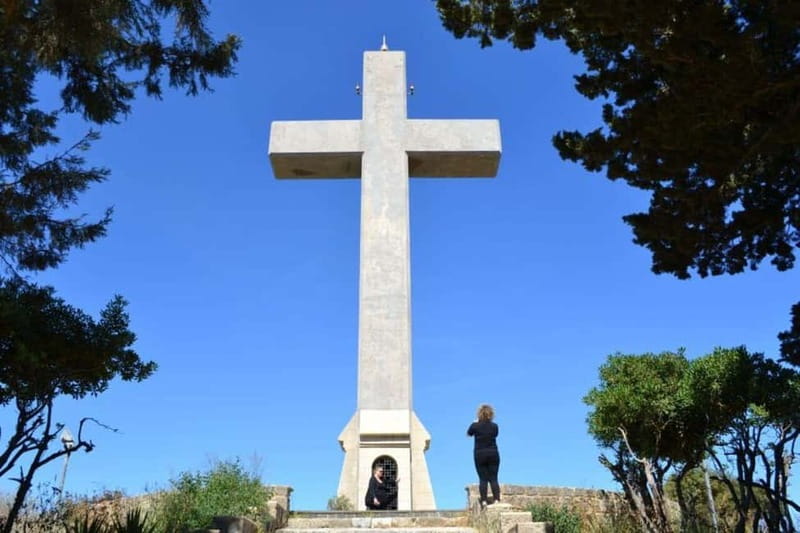
One of the most memorable sights on the route is Golgotha, reached via a road that sets off from the square and runs to the westernmost point of the hill. From there, you’ll follow the road of Martyrdom.
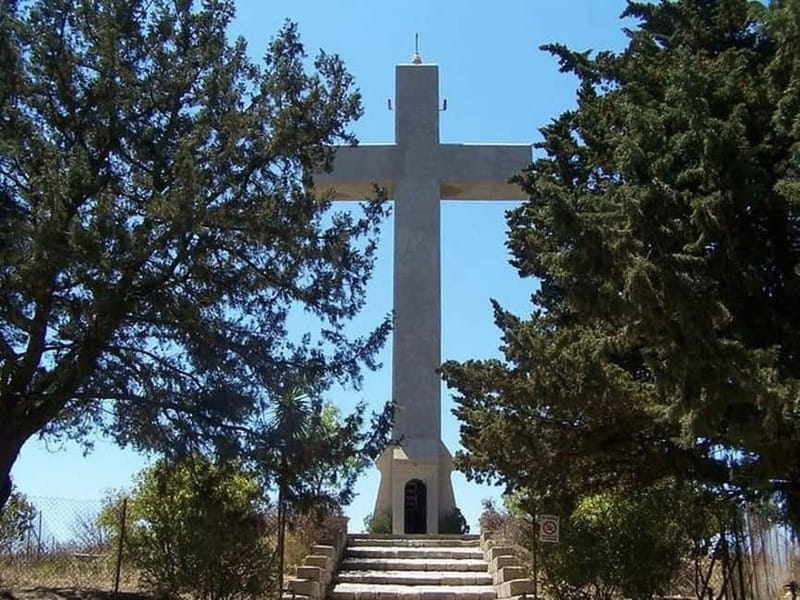
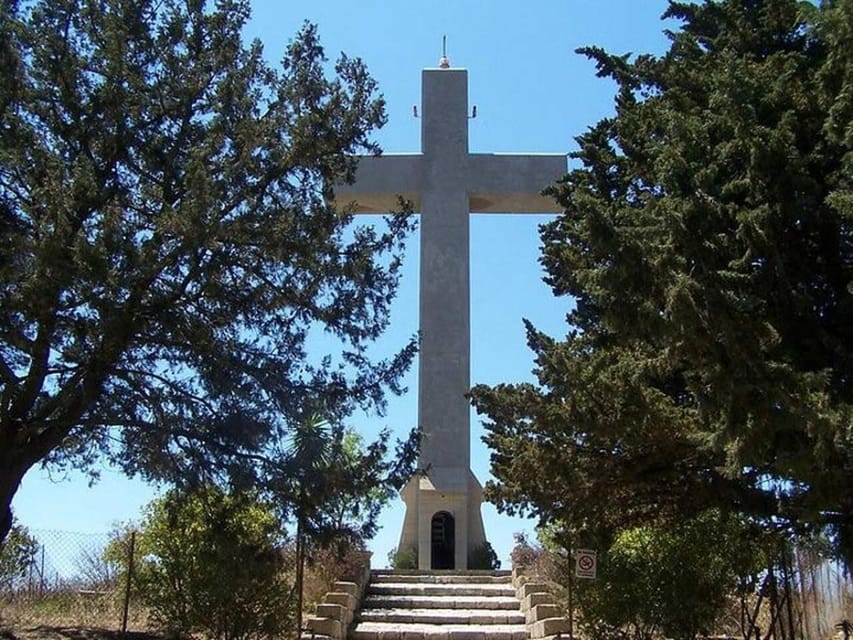
This is where the hillside crosses from ancient and Byzantine to a more modern memorial landscape. At the end of that road stands an 18-meter tall cross, raised by the Italians in 1930. It’s a visually strong ending to the circuit, and it tends to become the easiest “I remember this clearly” photo stop of the day.
If you are short on time or you would rather not pay for certain paid areas, keep in mind that some route options around the hill can let you see major points without buying every ticket. One practical note from experiences on the ground: it can be possible to turn toward the cross area from the entrance without paying the monastery entrance, depending on how you approach the site paths.
Entrance Fees and What You Should Budget for Real Value
The price you pay for the trip covers transport and pickup, not site admissions. The tour price is $23 per person, and that can be good value because you’re outsourcing logistics: coach transport, and drop-off at your meeting point.
But in Rhodes, you should treat the day as two separate budgets: the bus fee plus on-site entrance fees. The tour notes specifically that entrance fees to archaeological sites are not included, and that’s where your final total will land.
From on-the-ground cost signals, you might see additional charges for the butterfly valley area and for the monastery portion on Filerimos. There’s also a natural history museum option in the valley that is not included. Meanwhile, the cross is part of the featured route, and you may find free viewpoints depending on where you choose to walk.
My take on value
If you love insects, shade walks, and nature paths, Butterfly Valley can be worth paying for when those entrances cover the main route. If you are more focused on ruins and viewpoints, you can still enjoy Filerimos even if you skip paid sections.
The key is to arrive with a plan for what you will and won’t pay for. That way, you don’t feel surprised on site, and you can choose based on your own interests rather than last-minute decisions.
Also, carry small bills or a card you can use on-site, because you will likely be asked to pay at the entrance.
Timing on a 6-Hour Day: How Much Time You Get at Each Place
This excursion is six hours, which sounds like plenty until you factor in pickup, road time, and walking between zones. The reality is that you’ll want to move efficiently once you arrive in each location, especially if the day is busy.
Filerimos can feel generous or rushed depending on how high you want to go and whether you pay to enter the monastery areas. Some experiences suggest that spending a longer time at Filerimos is best if you want to see more thoroughly, including less shaded areas higher up.
Butterfly Valley is similar. You need enough time to walk into the valley if you want a better chance at seeing more insect clusters. If you only stroll near the entrance, you might feel like you missed the main show.
The “best use” approach
- In Butterfly Valley, aim to walk far enough that the route starts to feel more active, then turn back before you hit the hardest uphill sections in full heat.
- In Filerimos, follow the main circuit first, then decide on paid add-ons only if you still have energy.
What to Wear and Bring for Comfort on Uneven Paths
This day mixes nature paths with hillside walking. That means you should dress for friction, not just for sun.
Bring:
- Comfortable shoes
- Hat
- Sunscreen
- Camera
- Water
The walking can be uneven and slippery in parts, so shoes with decent grip are a must. Also, Filerimos has areas that may feel less shaded, so water matters more than you think once you’ve climbed a bit and the sun is on you.
If you get back fatigue easily, or if you have difficulty with mobility and uneven ground, this is not the right match. The tour information is clear that it is not suitable for people with back problems, mobility impairments, or wheelchair users.
Who This Trip Fits Best (and Who Should Skip It)
I’d recommend this tour if you want a half-day blend of nature and historical religious sites, without needing a rental car. It’s especially good for people who enjoy self-guided exploring, taking photos, and making quick decisions on entrance fees once they see what the site looks like.
It can also work for families, but only if everyone is comfortable with walking steps and uneven ground. One experience noted that the time at Filerimos can be adequate for smaller kids, but areas up top may not be shaded enough for very young travelers, so plan accordingly.
Skip it if you need step-free access, or if you know long hillside walking will flare up your back or mobility issues. This is the kind of route where “just a little walking” can become more than you expect.
The Transport and Driver Factor: What Helps the Day Run Smoothly
Even though this is a coach trip, the driver’s skill matters. Rhodes streets can be narrow, and some experiences highlight that the driver maneuvered the coach well around tight roads.
Communication is also part of the value. When the driver gives clear directions about where to go, when to return, and what’s worth prioritizing, your self-guided time becomes much easier. I like tours where the driver acts like a practical guide, even if there’s no separate guide included.
If you’re sensitive to coach comfort, note that some people found the bus basic. Still, it’s air-conditioned, and that counts when you’re returning from sun and walking.
Should You Book the Butterfly Valley and Filerimos Hill Bus Trip?
Yes, I think you should book it if you want an efficient day that combines Butterfly Valley shade-and-stream scenery with the historic circuit on Filerimos Hill, including Athena Polias foundations, an early Christian basilica, a subterranean Byzantine church, and the big 18-meter Italian cross.
You should reconsider if you hate paying on-site entrances or you know you will struggle with uneven, slippery paths and steps. Also, if you only want one “big attraction” and you’re not interested in walking between multiple stops, you may find this schedule a little tight.
If you like making the most of a short window, bring the right shoes, plan for entrance fees, and treat the day like two mini-adventures, you’ll likely leave with a very memorable mix of nature and sacred history.
FAQ
How long is the Rhodes Butterfly Valley and Filerimos Hill trip?
The trip duration is 6 hours.
What’s included in the price?
It includes pickup and drop-off from designated meeting points, plus transport by air-conditioned coach.
Are entrance fees to archaeological sites included?
No. Entrance fees are not included and must be paid on site.
Is food or drinks included?
No. Food and drinks are not included.
Is a guide included?
A guide is not included.
Where do I find the bus for pickup?
Pickup is from select meeting points on Rhodes, and you should look for bus number 30 with the Captain’s Tours logo.
What should I bring for the day?
Bring comfortable shoes, a hat, a camera, sunscreen, and water.
Is this trip suitable for wheelchair users?
No. It is not suitable for wheelchair users, and it is also not suitable for people with back problems or mobility impairments.
What are the cancellation and payment options?
You can cancel up to 24 hours in advance for a full refund, and you can reserve now and pay later.
Every Other Faliraki Write-Up





Rhodes Beyond the Old Town
Everything else we have written up around Faliraki





Rhodes Island Tours, side by side.
 ★ 4.8Rhodes: High-Speed Boat to Symi Island and St George’s BayFrom $552,333 reviews
 ★ 4.8Rhodes: All Inclusive Day Cruise with BBQ & Unlimited DrinksFrom $762,331 reviews
 ★ 4.0From Rhodes: Cruise to Symi Island and Saint George’s BayFrom $412,137 reviews
 ★ 4.8Rhodes: All-Inclusive Catamaran Cruise with Lunch and DrinksFrom $832,002 reviews
 ★ 4.2From Rhodes: Bus Tour to Lindos and the Seven Springs1,854 reviews
 ★ 4.5Rhodes: Symi Island & Panormitis Monastery Day Trip by BoatFrom $531,784 reviews
 ★ 4.7Rhodes: Sunset Cruise with Greek BBQ and Unlimited DrinksFrom $351,513 reviews
 ★ 4.6Rhodes: Lindos Cruise with 2 Swim StopsFrom $471,404 reviews
Sits on these lists