
Review · SHORE EXCURSIONS
The Highlights of Athens Private Shore Excursion 8 Hours
One day gives you two Athenses. This private excursion starts with easy cruise pickup at Piraeus, then takes you straight to the Acropolis for the big monuments, plus a museum and a chunk of modern Athens. You also get round-trip transport so you are not juggling buses, lines, and timing when your ship day is tight.
Two things I really like: you see the Acropolis twice in a way that makes sense (monuments first, Acropolis Museum right after), and you get undivided attention from your English-speaking driver who can pace the day to your group. One thing to keep in mind is that admission fees are not included, and the day has a fair amount of walking, steps, and smooth marble.
If you want a smooth, port-friendly plan that mixes ancient icons with everyday Athens moments, this is built for you. Just plan your ticket strategy early and wear shoes that grip.
In This Review
- Key points to know before you go
- Getting started at Piraeus, plus that Saronic Gulf drive
- Acropolis walk: Propylaea, the Parthenon, and Erechtheion
- Propylaea
- Parthenon
- Erechtheion and the Karyatides
- A realistic walking note
- Athena Nike: the small temple that makes a big difference
- Presidential Athens: Parliament, the Tomb, and the Changing of the Guard timing
- Hellenic Parliament and the square’s role
- Tomb of the Unknown Soldier
- What to watch for
- Plaka free time: village streets, lunch breaks, and the best kind of wandering
- Ancient Agora and Acropolis Museum: the logic connection
- Ancient Agora of Athens
- Acropolis Museum
- Kallimarmaro and Mount Lycabettus: two payoff moments, both worth it
- Kallimarmaro stadium
- Mount Lycabettus for views
- Price and value: what you are really paying for
- Small details that can make or break your day
- Should you book this Athens private shore excursion?
Key points to know before you go
- Private, port-to-port transport from Piraeus, with hotel or port return the same spot
- Acropolis route on foot covering Propylaea, Parthenon, Athena Nike, and Erechtheion
- Acropolis Museum timing that lets the artifacts make immediate sense
- Changing of the Guard stops at Parliament and the Tomb of the Unknown Soldier area
- Plaka free time (about 1 hour 30 minutes) to eat without rushing
- Top-of-Athens payoff from Mount Lycabettus, with a longer city panorama moment
More Athens bookings just for your own group



Getting started at Piraeus, plus that Saronic Gulf drive
Your day begins where cruise days really start to matter: at the Port of Piraeus, Terminal A (Port E11 area), where the driver waits with a sign. There is no guessing, no public transit math, and no losing time to wrong turns. You get an air-conditioned vehicle, and you ride with an English-speaking guide through the city’s twists.
Right away, you head along the Saronic Gulf coastal road toward Athens. This drive is not just a transfer. It is a quick mood-setter. You see how close Athens is to its port life, and you get a better sense of why the city has always been linked to the sea.
The upside of this start is mental: when you hit the Acropolis area, you feel on schedule instead of hurried. The only drawback is that your morning pace depends on cruise disembarkation and the day’s traffic, so give yourself a little buffer on the ship side.
Acropolis walk: Propylaea, the Parthenon, and Erechtheion
The heart of this tour is your Acropolis time. You start at the monuments’ high ground and work your way through the key stops. This is the part that feels like the Greeks planned it for millions of visitors, then still managed to keep it dramatic.
Propylaea
The Propylaea is the ceremonial gateway, built in the Periclean program, with later history in the mix too. You get to stand at the edge of the sacred precinct and understand how architecture acted like stage design. Even if you are not a stone-nerd, the setting tells you you are entering something important.
Practical note: this is a great spot for orientation. If you take a moment here to look up and down the site, everything later feels easier to place.
Parthenon
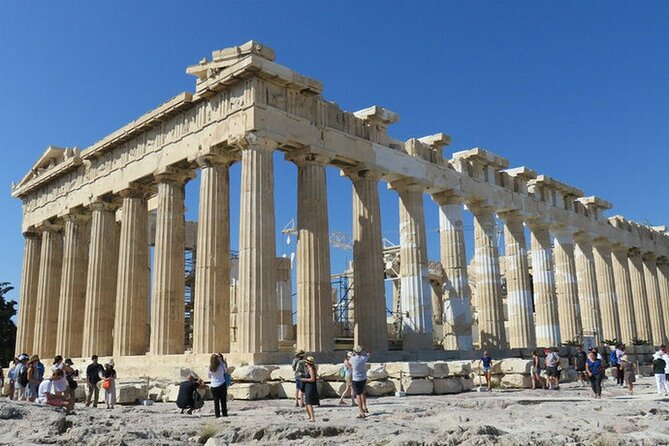
The Parthenon stop is where the tour earns its reputation. It is the most famous building on the hill, built between 447 and 438 BC as part of the Periclean project. I like how this tour gives you enough time to look beyond the postcard view.
You can spend your minutes three ways: (1) taking in the overall shape, (2) finding sculptural details from the angle you are standing, and (3) simply looking out across Athens. The Parthenon was meant to dominate the skyline, so do not rush the skyline part.
Erechtheion and the Karyatides
On the north side sits the Erechtheion, tied to Athens myths and to the sanctuary areas around Athena. The big visual hit is the Karyatides, those column substitutes that look like they are holding up the roof with sheer calm effort.
One smart way to approach this stop: look for what feels copied elsewhere. Some Karyatides are in museums, and knowing they exist outside the original building can make you pay closer attention to what is still here.
Other Athens port days
- Athens Shore Excursion: Athens and Piraeus Hop-On Hop-Off Bus Tour★ 4.0 · 617 reviews
- Essential Athens Full Day Private Tour – Best Shore Excursion★ 5.0 · 168 reviews
- Athens Shore Excursion: Acropolis Walking Tour★ 4.5 · 131 reviews
- Athens Shore Excursion: Small-Group Food Tour★ 4.5 · 39 reviews
A realistic walking note
This is not a sit-and-stare tour. There are stairs, uneven footing, and long stretches where you will want a steady pace. If you have any mobility limitations, plan around it. Also, if you use a stroller, expect that some Acropolis areas are not stroller friendly, with steps and slipperier marble surfaces.
Athena Nike: the small temple that makes a big difference
At the southeast edge of the sacred rock is the Temple of Athena Nike. It is smaller than the Parthenon, but that is why it works. You get a calmer, more intimate architectural moment right after the big dramatic hits.
This temple is connected to the idea of Athena Nike, the Wingless Victory. The site preserves layers, with earlier structures tied to earlier versions of the cult practice. That means your guide can point out how history was not one neat timeline. It was rebuilds, repairs, and re-uses that kept the meaning alive.
If your timing is good, this stop also gives you a chance to change your photo angle. The view lines here can make the whole hill feel more three-dimensional than it does from ground-level streets.
Presidential Athens: Parliament, the Tomb, and the Changing of the Guard timing
Once you come down from the Acropolis heights, the tour shifts gears. You move from classical Greece into modern Athens ceremony mode, centered on Syntagma Square.
Hellenic Parliament and the square’s role
The Parliament building is tied to the modern Greek state’s story, and it also sits right in the middle of where history happens in Athens today. Even if you do not plan to enter, standing outside helps you understand why this is such a symbolic stop.
Tomb of the Unknown Soldier
The Tomb of the Unknown Soldier is guarded by the Evzones, the ceremonial infantry unit known for its uniform and for guarding the memorial. The changing happens on a schedule, with the guard changing every hour at the Tomb of the Unknown Soldier area, and Sunday at 11:00 for the more well-known ceremonial timing.
This is one of those stops that feels short but lands hard. The slow-motion pacing some people notice is part of the show, and the soldiers look completely composed the entire time. If you want the best experience, get there a few minutes early so you are not scrambling for footing.
What to watch for
Keep your eyes on the details people tend to miss: the fustanella kilt-like garment with its pleats, the handmade nature of the uniform pieces, and the overall discipline of the unit. It is a good contrast to the ancient stones you saw earlier the same day.
Plaka free time: village streets, lunch breaks, and the best kind of wandering
Then you get the kind of break that makes a long day feel humane: free time for lunch in Plaka. You are given about 1 hour 30 minutes here, enough to eat, walk a few blocks, and pick up something small without feeling like you lost the day.
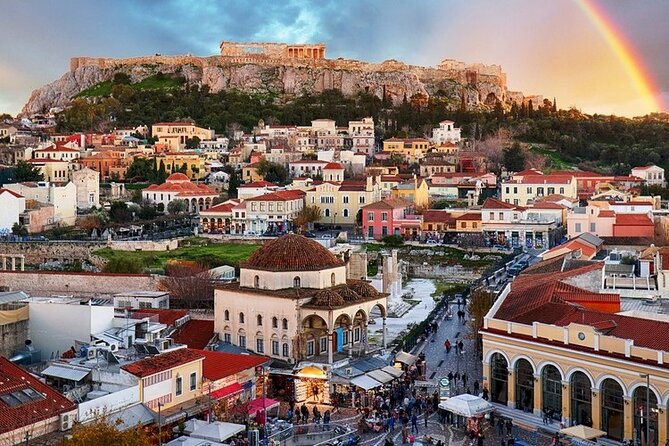
Plaka sits below the Acropolis and has that village-like maze of cobblestone streets, tiny shops, and whitewashed homes in spots like Anafiotika. This area is famous for a reason. The streets give you a less museum-like Athens feeling.
Two practical tips from how this day works in real life:
- Go early in your Plaka free time if the weather looks unstable. Rain can close down the walking vibe fast.
- If you want a sit-down meal, choose quickly once you find a place that fits your mood, then you can browse without stress.
Lunch itself is not included, which is good because you can pick what you actually want to eat. If you prefer local family tavernas over tourist menus, this is where you have the time to do it.
Ancient Agora and Acropolis Museum: the logic connection
After Plaka comes a cultural one-two punch: the Ancient Agora and then the Acropolis Museum.
Ancient Agora of Athens
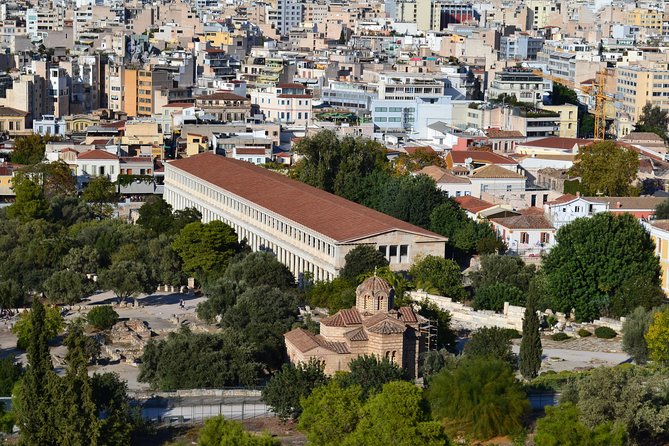
The Ancient Agora is the place where people gathered, discussed, traded, and lived out daily civic life for thousands of years. It is not just ruins. It is a layered space that shows the city kept evolving, rebuilding, and reusing areas over long stretches.
This stop is especially valuable because it explains the difference between monuments you visit and the functioning city that produced them. If the Acropolis feels like a sacred stage, the Agora feels more like the city’s busy back-and-forth.
Important note: the Ancient Agora stop is not listed as including admission fees, so you need to be ready to pay your own entry costs if you plan to go inside where applicable.
Acropolis Museum
The Acropolis Museum is designed to hold artifacts from the Acropolis site, built on the south side of the hill at a close distance to the monuments. I like museums like this when they are timed right, because the artifacts look instantly relevant instead of like random objects.
This museum uses a modern setting to explain the ancient objects. You will likely recognize what you saw outside, and the building itself is part of the storytelling, since it is positioned so the museum experience connects directly with what is up on the rock.
Plan for time. The museum slot here is about 1 hour 30 minutes, which is enough to see the core displays without turning it into a marathon.
Kallimarmaro and Mount Lycabettus: two payoff moments, both worth it
Not every Athens tour includes both a historic sports landmark and a real city viewpoint. This one does.
Kallimarmaro stadium
Kallimarmaro, also called Panathenaea Stadium, is made of marble. It is connected to the first modern Olympic Games in 1896, and it is one of those places where you can feel the link between ancient ideas and modern spectacle.
Even a shorter stop works because the setting is clear. You can look around and picture events happening, rather than trying to imagine ruins with no context.
Mount Lycabettus for views
Then you get the big aerial payoff: Mount Lycabettus (Lykavitos Hill), about 277 m above sea level. This is one of the highest points in central Athens and gives you panorama views over Athens and toward the coastline.
This stop lasts about 1 hour 10 minutes. That is key, because viewpoints turn from rushed to satisfying when you have time to watch light change a bit and take multiple angles.
You can get up on foot, by funicular railway, or by car. The tour includes a drop-off at the same pick-up spot after your visit, which is helpful if you plan to continue exploring on your own.
Pack for the climb, even if you use the funicular. Wear grippy shoes and bring water, because Athens heat can make a short ascent feel longer.
Price and value: what you are really paying for
This tour costs $407.41 per group, up to 3 people, and runs about 8 hours. If you book at the maximum group size of three, that works out to roughly $135.80 per person before adding any site admission fees.
On its face, that might sound steep compared with group bus tours. Here is why it can still be good value for the right traveler:
- You get door-to-port convenience with pickup and drop-off from Piraeus, which saves time that cruise passengers cannot replace.
- You get a private vehicle for your group size, which matters in Athens traffic and for timing stops like the Changing of the Guard.
- You also get English interpretation through the day, and the tour description emphasizes undivided attention.
The catch is admission fees. Entrance tickets to archaeological sites and the museum are not included, and food and drinks are not included either. So the final cost depends on what you choose to enter and whether you pre-purchase tickets in advance.
A smart strategy: pre-purchase your archaeological site tickets if you can, because availability can get tight. The tour can also buy tickets for you in advance with a small service fee, which can save you from last-minute scramble.
Small details that can make or break your day
This itinerary packs a lot into one day, so these are the real-world factors you should plan around:
- Shoes matter. The Acropolis has smooth marble surfaces, and slipping is a real risk if you do not have good traction.
- Heat is not theoretical. This is an outdoor day with long walking stretches, and the modern stops can be sunny too. Bring water and take shade breaks when you can.
- Licensed guides inside sites are separate. The driver is your English-speaking guide to the sites, but drivers are not licensed to accompany you inside archaeological sites and museums. If you want someone licensed inside the sites, that can be arranged for an extra cost, subject to availability.
- Bring realistic expectations for pacing. Even with private transport, you will still walk between stops. You can usually ask for your preferred pacing, but physics still applies.
Should you book this Athens private shore excursion?
I would book it if you have a limited time window and you want a plan that hits the big icons without making you wrestle the logistics. The combination that makes it work is simple: Acropolis monuments on foot, the Acropolis Museum soon after, then Plaka lunch time, and finishing with modern Athens ceremony and views from Lycabettus.
Skip it, or at least reconsider, if you know you want deep, guided interpretation inside the sites and you do not want to pay extra for a licensed guide. Also reconsider if your mobility needs mean you cannot handle stairs and slippery marble.
If you match the target audience, this is a strong value: private transport for up to three, expert navigation through a crowded city, and a day that shows Athens as both ancient and alive.
Just Your Own Group in Athens
The Rest of Athens



Every Other Athens Write-Up
- All Day Cruise -3 Islands to Agistri,Moni, Aegina with lunch and drinks included
★ 5.0 · 4,958 reviews



Everything else we have written up around Athens


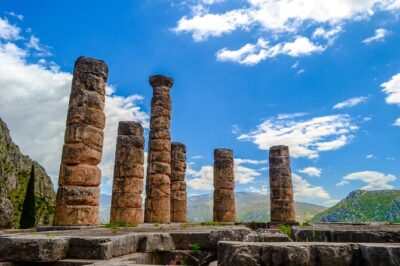


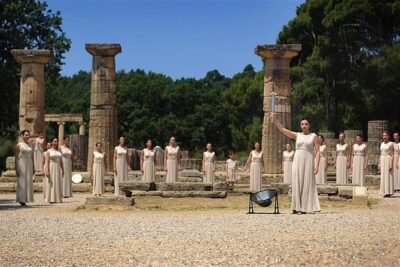

Shore Excursions, side by side.
 ★ 4.5Mykonos Shore Excursion with Pickup from Cruise Ship TerminalFrom $83766 reviews
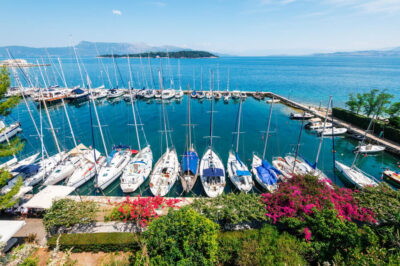 ★ 4.3Corfu: Paleokastritsa Beach and Old Town Bus Shore ExcursionFrom $44704 reviews
 ★ 4.5The Best Santorini Small-Group Shore Excursion for Cruise ShipsFrom $83344 reviews
 ★ 4.8From Argostoli: Kefalonia Shore Excursion Highlights TourFrom $76176 reviews
 ★ 5.0Essential Athens Full Day Private Tour – Best Shore ExcursionFrom $229168 reviews
 ★ 5.0Kefalonia Half Day Private Tour & Shore ExcursionFrom $67137 reviews
 ★ 4.5Athens Shore Excursion: Acropolis Walking TourFrom $136131 reviews
 ★ 4.5The Best Mykonos Small-Group Shore Excursion for Cruise ShipsFrom $83112 reviews
Sits on these lists