
Review · ACROPOLIS & PARTHENON TOURS
Acropolis Group Tour in German or Dutch
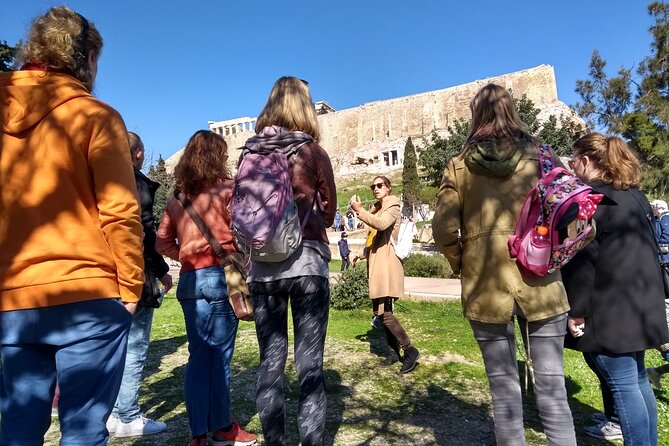
Small group, big myths up on the hill. This Acropolis tour in German or Dutch strings key monuments into clear stories, and I like that it is run by a licensed guide for you to follow along easily. The main catch is that entrance fees are not included (30 EUR per adult), so you should budget a bit extra before you go.
You start at the Acropolis metro area and walk through the most famous spots on the hill, with short, focused stops that fit into about 1 hour 30 minutes. The pace is designed for seeing a lot without feeling like you got stuck in a long group shuffle, and the small size (max 20) helps the guide keep things understandable.
One more consideration: the tour requires good weather, so if conditions are bad, plans change or you get offered a different date or a refund. If you are hoping for a flexible half-hour photo marathon, this format may feel a little structured.
In This Review
- Key things I’d book this tour for
- Small-Group Value and What It Really Costs
- Where You Start on the Acropolis Metro Exit, and Where You Finish
- The Route in 90 Minutes: What You See and Why It Matters
- Stop 1: Acropolis Hill, 360-Degree View, and the Story Setup
- Stop 2: Theatre of Dionysus Eleuthereus, Where Drama Started
- Stop 3: Temple of Athena Nike, the Smallest Temple With a Big Theme
- Stop 4: Propylaea, the Monumental Entrance Gate
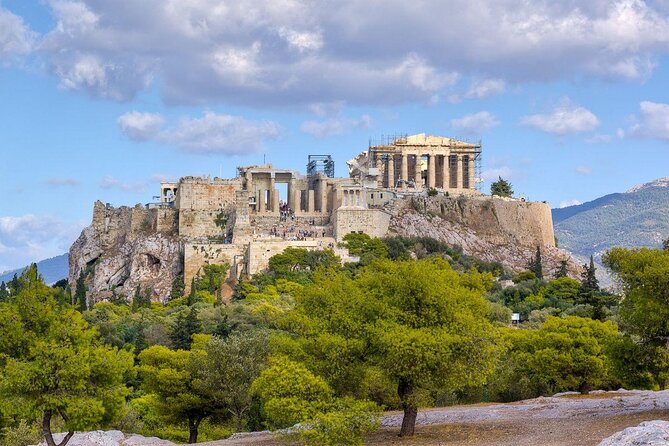
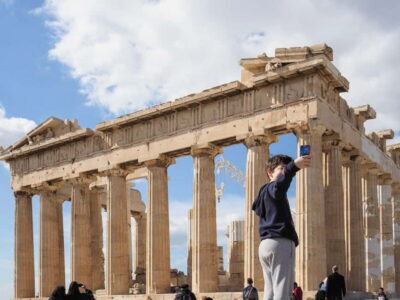
- Stop 5: Parthenon, Not-So-Straight Lines and Global Influence
- Stop 6: Erechtheion and the Caryatids, Plus the Athena vs Poseidon Myth
- Stop 7: Herod Atticus Odeon, Roman Concert Hall and Summer Performances
- The Guide Style: Stories That Help You Remember
- Who Should Book This Tour (and Who Might Prefer Something Else)
- Quick Budget Checklist Before You Go
- Should You Book This Acropolis Group Tour?
- FAQ
- Is the Acropolis group tour offered in Dutch or German?
- How long is the tour?
- What is the group size limit?
- Where do I meet the guide?
- Does the tour include admission tickets?
- Are food and drinks included?
- Is hotel pickup and drop-off included?
- What are the main stops during the tour?
- How does the tour end?
- What happens if the weather is bad?
- Can I cancel for a full refund?
Key things I’d book this tour for
- Small-group size up to 20 so the guide can actually guide
- Storytelling in German or Dutch that puts monuments in myth and context
- Licensed guide at every major stop for fast, clear explanations
- A practical 90-minute route timed around the top-of-hill highlights
- Child-friendly approach shown in guide feedback including patience with kids
Other ways up the Acropolis, side by side


Small-Group Value and What It Really Costs
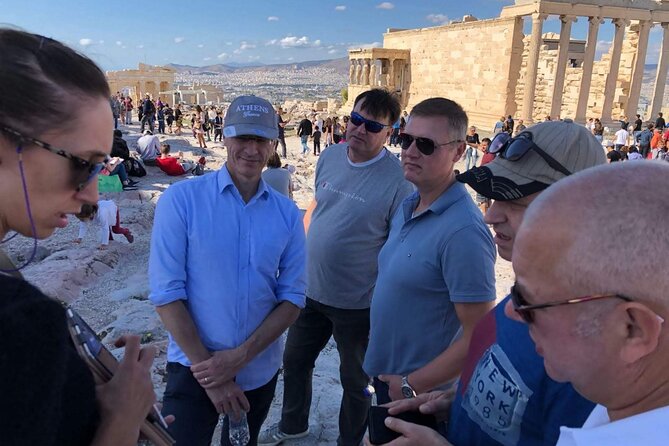
The headline price is $46.26 per person for a roughly 1.5 hour guided visit across the Acropolis area. For Athens, that is a reasonable price when you compare it to the hassle of trying to piece together meaning on your own, especially if you want the stories told in the language you understand best (Dutch or German).
The part to plan for is entrance fees. They are not included in the tour price, and the cost is listed as 30 EUR per adult, with the operator arranging your entrance fees. In other words, you are not left guessing tickets at the gate, but you still need to pay that on top of the tour cost.
Also note what is not included. Food and drinks are not included, and bottled water is recommended. Hotel pickup and drop-off are also not part of this tour, so you will need to make your own way to the meeting point.
Where You Start on the Acropolis Metro Exit, and Where You Finish
This tour is designed to get you oriented quickly. Your meeting point is near the Acropolis area, and the guide meets you at the exit of the Acropoli metro station, specifically Exit Makriyianni / Dionysiou Areopagitou. From there, you are taken to the site entrance and guided through the main highlights.
The tour ends on top of the Acropolis Hill. That matters because it shapes the feel of the visit. You are not doing a round trip with an easy return to the street right away. Plan how you will leave once you are up there, and make sure you are comfortable with finishing at an elevated spot.
Finally, the group stays small, capped at 20 participants, and the language stays consistent within the tour. If you want to follow the myth and historical references without translation, this is a plus.
The Route in 90 Minutes: What You See and Why It Matters
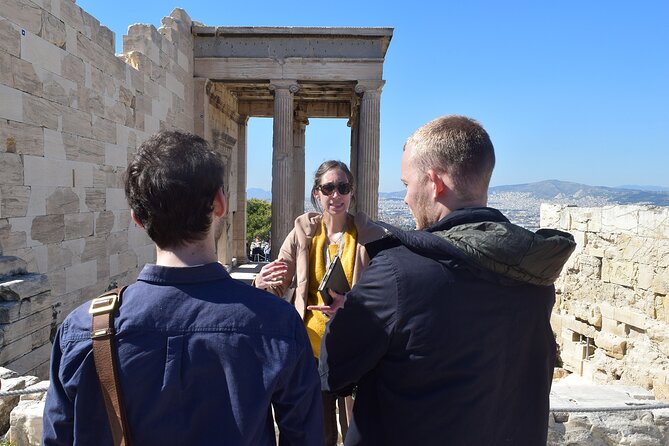
The big idea here is that you are not just looking at stones. You are learning how the place fits together. The guide uses stories to connect monuments, so the Parthenon is not just a photo, and the theatre is not just ruins.
The stops are intentionally spaced out, with specific time windows. That structure helps you see the most meaningful areas without turning your visit into a long day. It is also why the tour feels beginner-friendly while still satisfying if you love details.
Here’s how the experience unfolds.
Stop 1: Acropolis Hill, 360-Degree View, and the Story Setup
You begin with the Acropolis itself, passing the monuments on the hill as you move from the entrance area toward the top highlights. One of the best rewards is the stunning 360-degree view over Athens, which you get from the hilltop.
This first portion is crucial because it sets your mental map. When you see the layout from above, the later stops make more sense. You can understand where the temples and theatres sit in relation to the city and to each other.
Time here is about 20 minutes, and entrance tickets are handled separately since they are not included in the base price.
Stop 2: Theatre of Dionysus Eleuthereus, Where Drama Started
Next up is the Theatre of Dionysus Eleuthereus. This is one of the most interesting stops if you care about culture, not just architecture, because the guide ties the theatre back to religious roots.
You learn how ancient Greek theatre developed out of the cult of Dionysos, the god of wine. Then you get to admire the ancient marble seats, including incised names. That detail is one of those small things that makes history feel human, like you can almost picture who sat where.
This stop is about 15 minutes, and it is a good pace for taking in both the explanation and what remains of the structure.
- Athens: Cape Sounion & Poseidon Temple Sunset Half-Day Trip★ 4.8 · 8,241 reviews
- All Day Cruise -3 Islands to Agistri,Moni, Aegina with lunch and drinks included★ 5.0 · 4,958 reviews
- Athens, Piraeus, and Coastline: Blue Hop-On Hop-Off Bus★ 3.9 · 4,849 reviews
- Greek Food Walking Tour in Athens★ 5.0 · 4,740 reviews
Stop 3: Temple of Athena Nike, the Smallest Temple With a Big Theme
After Dionysus, you hit the Temple of Athena Nike, the goddess of victory. The emphasis here is on scale and meaning. You are told it is the smallest temple on top of the Acropolis hill, and that size makes the theme feel sharper.
The guide explains how the victory goddess inspired a famous sport brand. Even if you are not a brand person, it is a fun example of how symbols travel through time and pop culture.
This is a short stop, about 5 minutes. Treat it like a quick story snapshot before you move toward the biggest visual icons.
Stop 4: Propylaea, the Monumental Entrance Gate
Then comes Propylaea, the monumental entrance gate. This is where you pass through the gate to reach the top of the Acropolis. It works as a transition point, taking you from the approach areas into the core temple views.
You also get an up-close look at a huge marble block while passing by. That is the kind of practical visual you cannot always grasp from afar, and it helps you understand the building materials and scale you are about to see.
Time is also about 5 minutes, so do not expect long lingering here. It is more about the dramatic shift in space and viewpoint.
Stop 5: Parthenon, Not-So-Straight Lines and Global Influence
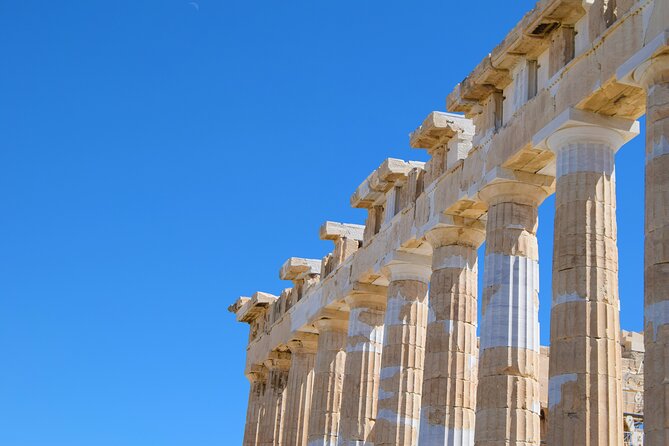
The Parthenon is the main event, and this tour does a good job of treating it as more than a checklist stop. Time allotted is about 20 minutes.
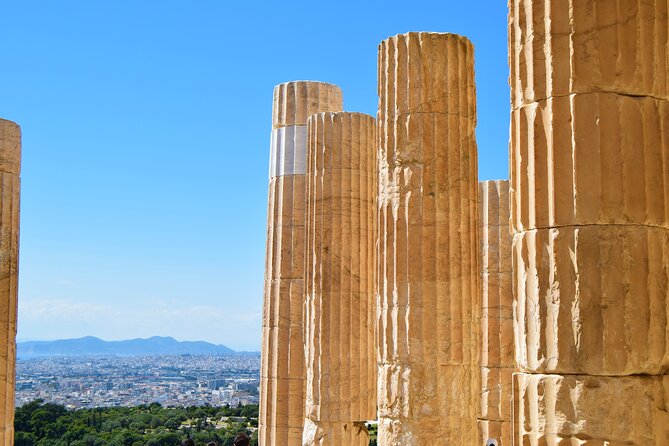
You learn that it is the biggest temple on the Acropolis hill, dedicated to Athena. Then you get a key architectural idea: the enormous building does not have straight lines. The guide also connects those choices to how the architecture inspired the world.
Even if you have seen the Parthenon in photos, this kind of explanation changes the way you look at what’s in front of you. You start noticing how the design challenges the simple expectation of geometry, and it becomes more like a deliberate system than just a big temple.
Stop 6: Erechtheion and the Caryatids, Plus the Athena vs Poseidon Myth
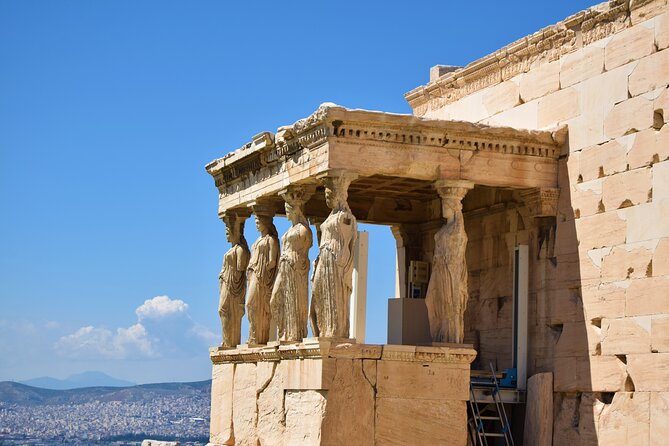
Next is the Erechtheion, known for the Caryatids, the female columns. This is a standout stop if you like myth and symbolism, because the guide brings the theme to life with specific stories.
You learn what happened to one of the six columns and where it is nowadays. Even without a location mentioned in your notes here, the key point is that there is a real story behind the missing and the surviving elements. That makes the site feel active and ongoing, not frozen in time.
You also hear the myth about the battle between Athena and Poseidon. Again, it is one of those explanations that helps the monuments feel tied to meaning, not just stone.
Time at this stop is about 10 minutes, which is enough to get the story and see the shapes clearly without rushing.
Stop 7: Herod Atticus Odeon, Roman Concert Hall and Summer Performances
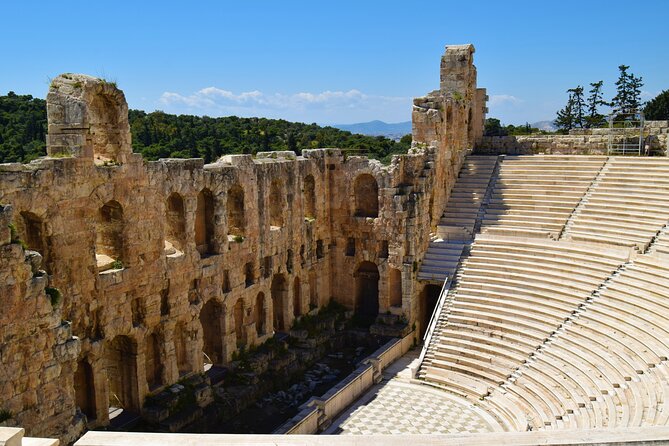
You end with the Herod Atticus Odeon, a restored Roman concert hall built in AD 161 by wealthy Roman Herodes Atticus in memory of his wife Regilla. That detail gives the structure emotional context, because it ties construction to personal commemoration.
The guide also points out that the venue still hosts major artists during the summer, with examples like Sting and Patti Smith. Even if concerts are not the reason you came, it is a strong way to understand why this place still matters.
This stop is about 10 minutes, and it works well as a closing note. After temples and myths, you finish with a space that still functions as a stage.
The Guide Style: Stories That Help You Remember
The tour’s promise is storytelling, and the structure supports it. Every stop is short, but each one is given a specific reason to exist in the larger picture.
That approach is especially helpful if you have limited time in Athens. Instead of collecting random facts, you get a guided sequence: Dionysus and theatre, victory and symbolism, entrances and transitions, the Parthenon’s architectural logic, then myth at Erechtheion, and finally a Roman venue that connects the ancient and modern uses of public space.
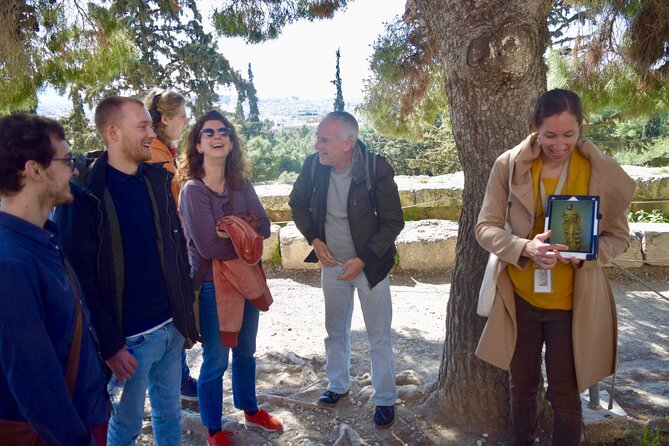
There is also a clear child-friendly element shown in feedback. One highlighted review called the tour very child-friendly, and it specifically praised a guide named Jessica for being very nice, telling interesting stories, and being patient with children. If you travel with kids, that matters, because it usually takes a certain kind of guide to keep attention without getting impatient.
Who Should Book This Tour (and Who Might Prefer Something Else)
This is a solid fit if you:
- Want a focused introduction to the Acropolis without spending a full day
- Prefer explanations in Dutch or German
- Like guided storytelling more than reading every sign
- Are traveling with kids and want a guide who can handle questions and attention spans
It might be less ideal if you:
- Want to spend long periods wandering freely at each monument
- Need hotel pickup or a transport-based day plan
- Are traveling during a time when weather is often poor, since the tour requires good weather
One more note: service animals are allowed, and the tour says most travelers can participate. That suggests it is broadly manageable for different visitor types, but keep in mind you are finishing up on the hill.
Quick Budget Checklist Before You Go
Here’s what I would plan for, based on the tour details:
- Base tour price: $46.26 per person
- Entrance fees: 30 EUR per adult, arranged by the operator
- Bottled water: not included, but recommended
- No hotel pickup: you get yourself to the Acropoli metro area
If you do this homework early, you avoid the common frustration of reaching the site and realizing you still need to sort out tickets on the spot.
Should You Book This Acropolis Group Tour?
Yes, I think you should book it if you want the Acropolis to make sense fast. The time on the hill is structured, the stories give context, and the small group size (up to 20) helps keep the experience human.
The extra entrance fee is the only real downside, and it is clearly stated. But the tour already includes the licensed guide and a clear route that hits the major monuments without wasting time. For families, the child-friendly feedback, including the patience praised for Jessica, is a strong reason to consider this over a bigger, louder group.
If you are comfortable finishing on top of the Acropolis Hill and you can travel in good weather, this is a good value way to see a lot, learn a lot, and still have energy left for the rest of Athens.
FAQ
Is the Acropolis group tour offered in Dutch or German?
Yes. The tour is in Dutch or German, depending on the option you book.
How long is the tour?
It lasts about 1 hour 30 minutes.
What is the group size limit?
The tour has a maximum of 20 travelers.
Where do I meet the guide?
You meet at the exit of the Acropoli metro station (Exit Makriyianni / Dionysiou Areopagitou), and the guide takes you to the entrance of the site.
Does the tour include admission tickets?
No. Entrance fees are not included. The cost is listed as 30 EUR per adult, and the operator will arrange your entrance fees.
Are food and drinks included?
No. Food and drinks are not included. Bottled water is recommended.
Is hotel pickup and drop-off included?
No. Hotel pickup and drop-off are not included.
What are the main stops during the tour?
You visit the Acropolis, the Theatre of Dionysus Eleuthereus, the Temple of Athena Nike, Propylaea, the Parthenon, the Erechtheion, and the Herod Atticus Odeon.
How does the tour end?
The tour ends on top of the Acropolis Hill.
What happens if the weather is bad?
The tour requires good weather. If it is canceled due to poor weather, you will be offered a different date or a full refund.
Can I cancel for a full refund?
Yes, free cancellation is available. You can cancel up to 24 hours in advance for a full refund. Cancellation closer than 24 hours before the start time is not refunded.
The Rest of Athens



Every Other Athens Write-Up
- All Day Cruise -3 Islands to Agistri,Moni, Aegina with lunch and drinks included
★ 5.0 · 4,958 reviews



The Acropolis, Other Ways Up

Everything else we have written up around Athens





Acropolis & Parthenon Tours, side by side.
 ★ 4.4Athens: Acropolis & up to 5 Archaeological Sites Combo PassFrom $4812,619 reviews
 ★ 4.2Athens: Acropolis Ticket with Optional Audio or Live GuideFrom $4211,055 reviews
 ★ 4.8Athens: Acropolis, Parthenon & Acropolis Museum Guided TourFrom $409,316 reviews
 ★ 4.6Athens: Acropolis and Parthenon Guided Walking TourFrom $385,882 reviews
★ 4.8Athens: Acropolis, Parthenon & Acropolis Museum Guided TourFrom $413,579 reviews
 ★ 4.0Athens: Acropolis Ticket with Audio GuideFrom $473,575 reviews
 ★ 4.7Acropolis: Acropolis and Parthenon Guided Walking TourFrom $363,442 reviews
 ★ 5.0Acropolis monuments & Parthenon Walking Tour with Optional Acropolis MuseumFrom $422,678 reviews
Sits on these lists