
Review · ANCIENT AGORA & KERAMEIKOS
Ancient Agora: Audiovisual self-guided tour with 3D models
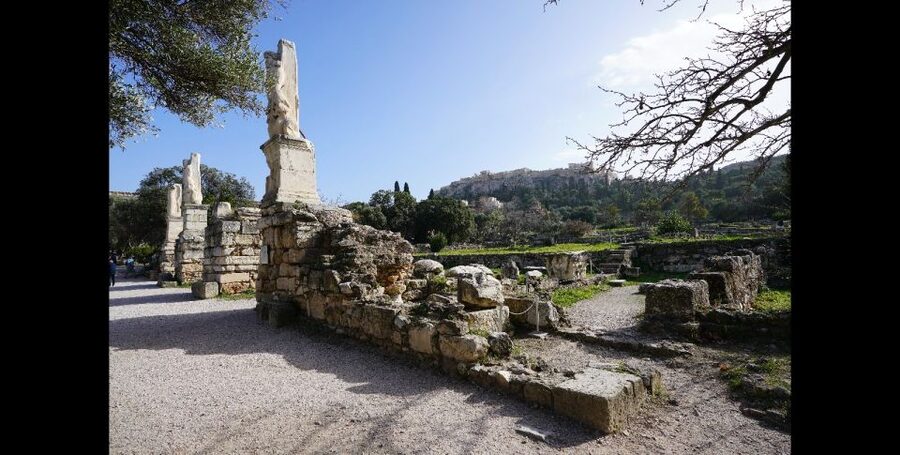
Ancient Athens fits in your pocket. This self-guided Ancient Agora tour uses audio plus 3D models and 360° views to turn scattered ruins into a readable story of civic life. You focus on the 6th-century BC Agora, including the place democracy began and sites connected to Socrates and other philosophers.
The trade-off is simple: you bring your own phone and headphones, and the experience depends on internet access to work well. Also, the ticket to enter the site is not included in the $7.89 price, so plan on adding the entry fee at the end.
In This Review
- Key Highlights
- Why the Ancient Agora is the Athens Stop You Should Not Skip
- What You Actually Get: Audio, 3D, 360° Views, and a Map That Makes Sense
- Temple of Hephaistos, Democracy, and Socrates: How the Tour Themes Connect
- Stop-by-Stop: A Route Through Civic Athens, Courts, Stoas, and Trade
- 1) The Agora as a Political and Administrative Hub
- 2) Courts and the Spaces of Debate
- 3) Stoas, Fountains, and Everyday Movement
- 4) Workshops and the Commercial Agora
- 5) Temples and Sanctuaries for Religion and Ritual
- The Temple of Hephaistos: Why This Stop Feels Like the Big Win
- Price and Value: Is $7.89 Worth It Here?
- Tech Reality Check: Your Phone, Wi-Fi, and the 200MB Storage Budget
- How to Use the 5-Day Validity Without Overplanning
- Who This Tour Fits Best (And Who Might Prefer Something Else)
- Final Verdict: Should You Book This Ancient Agora Self-Guided Tour?
- FAQ
- Is the entrance fee included in the $7.89 price?
- How long is the tour valid?
- What do I need to use the self-guided tour?
- Do I need internet access during the visit?
- How much storage does the app content need?
- What languages are available for the audio?
- When and how do I get the tour content after booking?
- Can I use the tour before or after visiting the Agora?
- What is the cancellation policy?
Key Highlights
- 3D models for 14 monuments help you visualize what you are standing in front of
- Audio in 8 languages keeps you moving, with written support for 16 monuments
- 360° panoramic views from 14 monuments help you orient yourself in the Agora maze
- Integrated map and monument IDs reduce guesswork when signs are limited
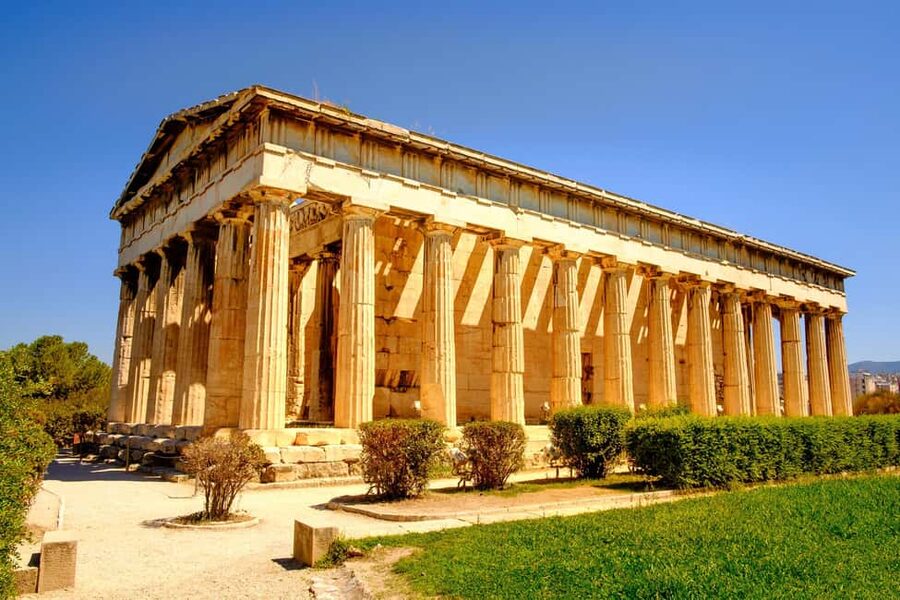
- Temple of Hephaistos is a top stop, highlighted for its excellent preservation
- GIFT pack of 68 culture facts adds useful background beyond the main route
More of the Agora and the Kerameikos ground





Why the Ancient Agora is the Athens Stop You Should Not Skip

If you only see the Acropolis, you miss the daily brain of ancient Athens. The Agora was where people met, traded, argued, worshiped, and organized civic life. It is not just ruins in a field, it is the social and political center where Athens did a lot of its thinking.
What makes this tour a strong fit is that it targets the Agora as a functioning system, not a list of monuments. You get guidance through the civic administration, courts, stoas, temples and sanctuaries, fountains, and even workshops. That matters because ancient Athens was built on routines. Once you see the Agora as a network, the stones make more sense.
And yes, you will learn about the moment democracy was first established. That theme gives your walk a clear spine, especially when the site feels large and visually repetitive.
What You Actually Get: Audio, 3D, 360° Views, and a Map That Makes Sense
This is an audiovisual self-guided tour delivered through the Culture App. It is not a live guide. Instead, you get on-demand content tied to monuments around the Agora, with multiple formats that support different learning styles.
Here is the practical breakdown of what is included:
- Monument identification with an integrated map
- Written info for 16 monuments, and audio for 16 monuments
- 3D models for 14 monuments, plus 360° panoramic views for 14
- Immersive videos for 14 monuments
- Related stories for 13 monuments
- A gift pack of 68 written and audio culture facts about ancient Greece
In plain terms, the app does the heavy lifting of context. The written and audio layers help if you are tired of reading in the heat, and the 3D plus 360° views help when your brain struggles to rebuild what used to be standing tall.
Also, the tour can be used anywhere anytime, before, during, or after your visit. That flexibility is underrated. If you run late to the site one day, you can still review content later and catch the key points.
Temple of Hephaistos, Democracy, and Socrates: How the Tour Themes Connect
The Agora did not exist in one category. It was civic, commercial, religious, and educational all at once. This tour leans into those overlaps, so your stops do not feel random.
Three themes show up again and again:
- Civic life and early democracy: you learn about where democracy was first established, and you connect that idea to the spaces where people met and made decisions.
- Public debate and philosophy: you get context for sites where Socrates and other philosophers taught. Even if you are not a philosophy nerd, the payoff is recognizing how ideas were part of everyday civic life.
- Religious and monumental anchors: temples and sanctuaries give you the landmarks that pull the route together.
One of the most useful design choices here is the blend of text, audio, videos, and 3D. On ruins days, it is easy to see something and move on, because nothing looks “important” at first glance. The app teaches you what to look for, then lets you see it from the angles you cannot physically recreate today.
Stop-by-Stop: A Route Through Civic Athens, Courts, Stoas, and Trade
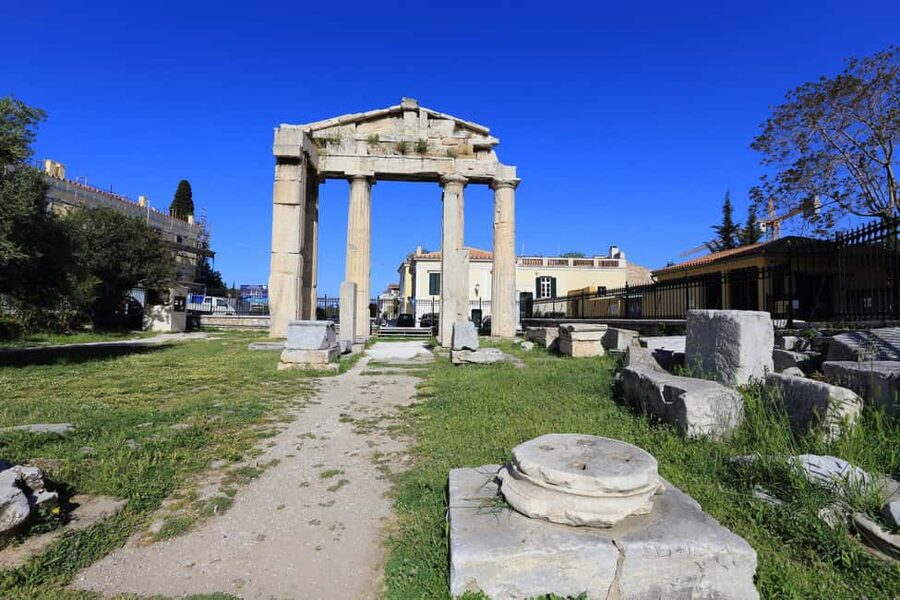
Because this is a self-guided tour, you do not follow a strict clock. Instead, you move from monument to monument as your app content cues you. Here is how the experience unfolds conceptually, and what to watch for at each type of stop.
1) The Agora as a Political and Administrative Hub
You start with the idea that the Agora was the heart of the ancient city, a place where civic life happened in public. The tour includes written and audio explanations for monuments tied to civil administration and political activity.
What you should do here: slow down near the areas where the content emphasizes governance and public decision-making. Even if the physical structures are incomplete, the layout tells you where people would gather and how officials might have moved through the space.
A good trick: use the integrated map and monument IDs to confirm you are on the right point. It reduces the “am I standing in the correct spot?” stress.
Other Athens bookings where a guide comes along
- Athens: Cape Sounio & Poseidon Temple Trip with Audio Guide★ 4.4 · 4,521 reviews
- Athens: Mythology of Delphi, Museum and Arachova Guided Tour★ 4.6 · 4,008 reviews
- Acropolis: Acropolis and Parthenon Guided Walking Tour★ 4.7 · 3,442 reviews
- From Athens: Delphi Full Day V.R. Audio Guided Tour★ 4.6 · 3,028 reviews
2) Courts and the Spaces of Debate
The tour covers courts and the practical legal side of Athenian life. This is where the Agora stops being abstract. You start imagining the arguments, procedures, and crowds.
Watch for any architectural remnants that suggest boundaries or gathering points. Then let the 360° views do their job. Those panoramic angles help you see how one area relates to the next, which is the difference between viewing ruins and understanding an urban plan.
3) Stoas, Fountains, and Everyday Movement
Stoas and fountains are not glamorous, but they are key to how people lived. The tour includes content that points out these features and explains their role in daily routines, shade, meetings, and public water.
This is where audio is handy. You can keep walking while you listen, and you do not lose momentum every time you want to read. If you hate standing still, this section will feel friendlier.
4) Workshops and the Commercial Agora
The Agora was also commercial. The tour includes monuments tied to workshops and economic activity, which helps you understand that civic life and commerce were intertwined.
What to look for: anything that hints at production or trade locations. Even if the remains are subtle, the app’s integrated map and 3D models (where available) help you connect the dots.
5) Temples and Sanctuaries for Religion and Ritual
You also get monuments tied to cults and festivals, including temples and sanctuaries. This is important, because ancient Athens did not separate the sacred from the civic. Festivals and worship shaped the calendar of public life.
For this part, you will likely enjoy the videos most. They can show how the religious structures might have looked and how they fit into the surrounding public space.
The Temple of Hephaistos: Why This Stop Feels Like the Big Win
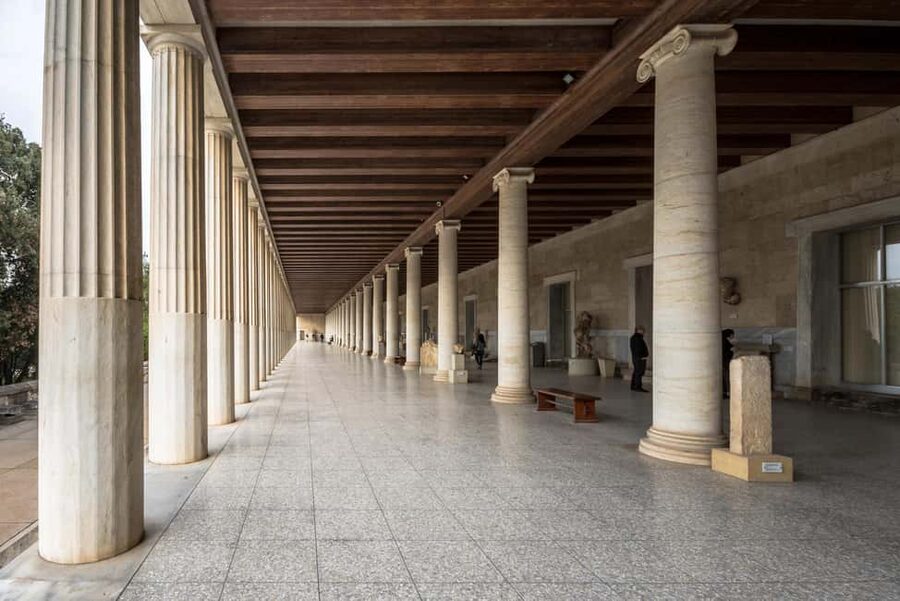
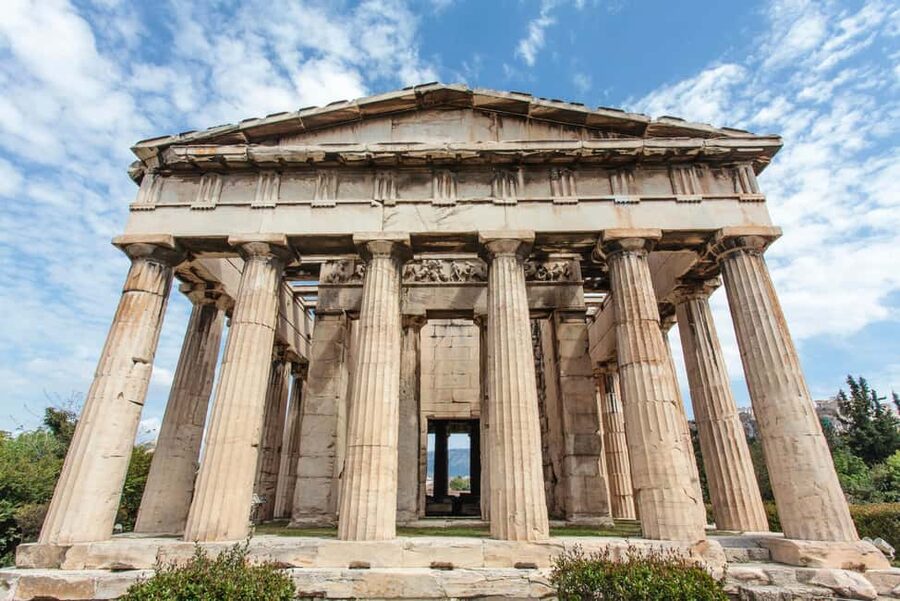
The Temple of Hephaistos is singled out as one of Greece’s best preserved temple sites. That makes it a smart anchor for your visit. When a place is well preserved, it gives you a reality check against your imagination.
In this tour, you get monument identification plus supporting content like audio and visuals tied to the temple area. The 3D models and 360° views help you understand how the temple sits within the Agora setting, not just as an isolated postcard.
Practical tip: when you reach this stop, give yourself a little time to look at details first, then use the app content to interpret what you are seeing. If you reverse that order, you can end up “watching” instead of observing.
Also, do not underestimate what a preserved structure does for your motivation. It makes you feel like you are cracking the code of the site, which pays off when you move back to less complete ruins.
Price and Value: Is $7.89 Worth It Here?

At $7.89 per person, this is not a “budget souvenir” price. It is a low-cost add-on to the actual site visit, especially since it aims to replace the need for a live guide.
But you do have costs on top:
- Entrance fee is not included: €10 full, €5 reduced
- You need your own smartphone and headphones (not included)
- Internet access is required to use the tours effectively
So is it good value? For many visitors, yes, because you get a lot of structured content: audio plus written material for 16 monuments, and 3D plus 360° plus videos for 14 monuments. That format combination is what you would normally pay more for if it were offered by a traditional guided experience.
If you are comfortable with self-guided travel and you like learning in layers, this cost can feel fair. If you prefer a human guide telling stories on the spot, you might find the lack of a person limiting. Still, the amount of included media is designed to cover that gap.
Tech Reality Check: Your Phone, Wi-Fi, and the 200MB Storage Budget
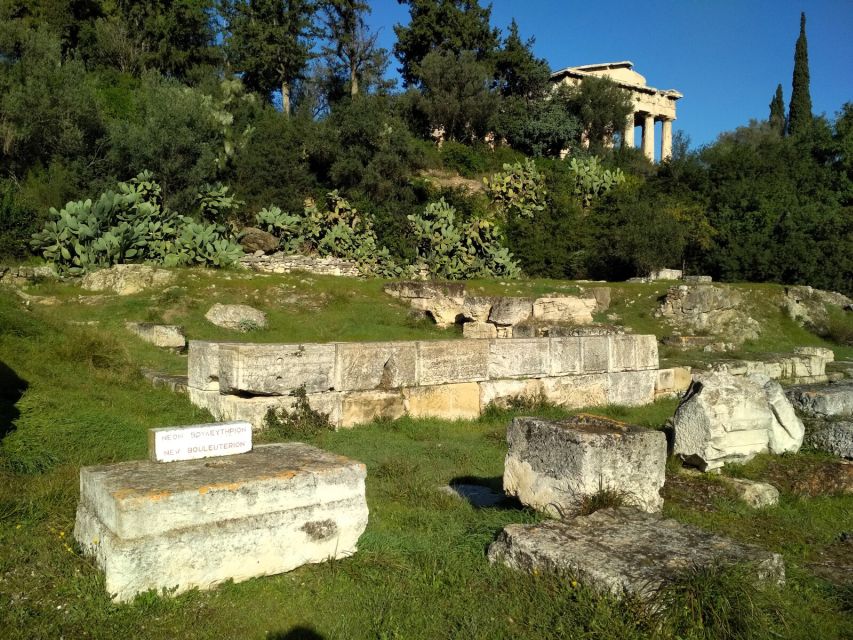
This tour runs on your phone through the Culture App. That is a totally normal approach now, but it has a few non-negotiable requirements.
Plan for:
- Download instructions arrive by email from the provider, so check your spam folder
- Internet access is required to use the tours effectively
- Download the content while on Wi-Fi before your visit unless you have enough data
- You need about 200MB of storage on your phone
- iOS 11.0 or later, Android 5.1 or later
You also want your phone charged, because you will be using it repeatedly. Bring your own earphones if you can. Otherwise, you will be stuck toggling audio in public, and that is not a great use of your time.
The good news: once downloaded, the app content can be used anywhere anytime, before, during, or after. That means you can flex if you get delayed.
Language support is solid. You can get audio in English, Greek, German, Spanish, Italian, French, Dutch, and Chinese.
How to Use the 5-Day Validity Without Overplanning
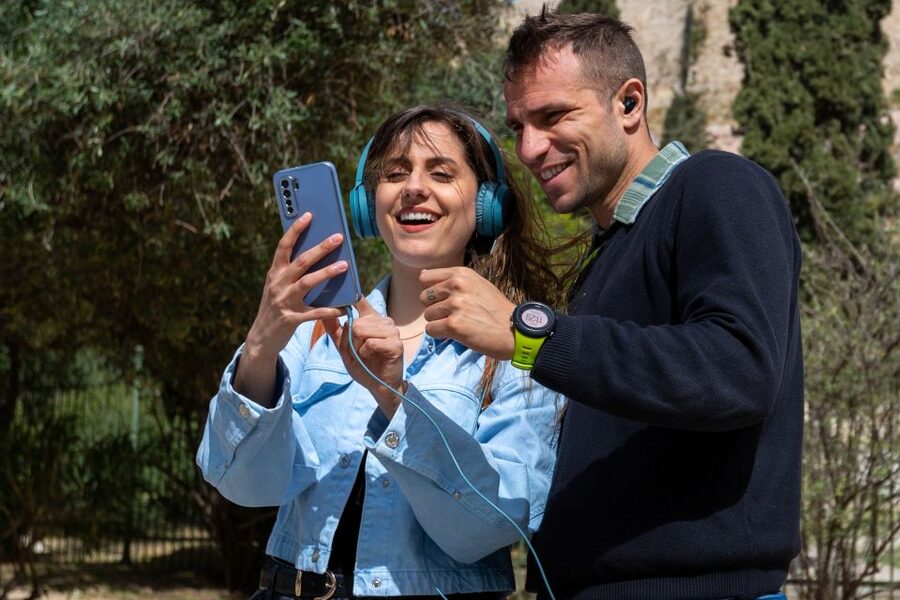
This ticket is valid for 5 days from first activation. That is ideal for travelers who are not sure how long they will want to spend at each site.
Here is how I recommend using it:
- If you arrive with energy, do your main route on your first day at the Agora
- If you are tired, do only the key anchors (the civic theme plus Hephaistos), then return later for the rest
- Use the app either before or after, not only during the walk, especially if the ruins are spread out and you want better recall later
This approach also helps when the weather is rough. You can still get value from the content without trying to cram everything into one long session.
Who This Tour Fits Best (And Who Might Prefer Something Else)
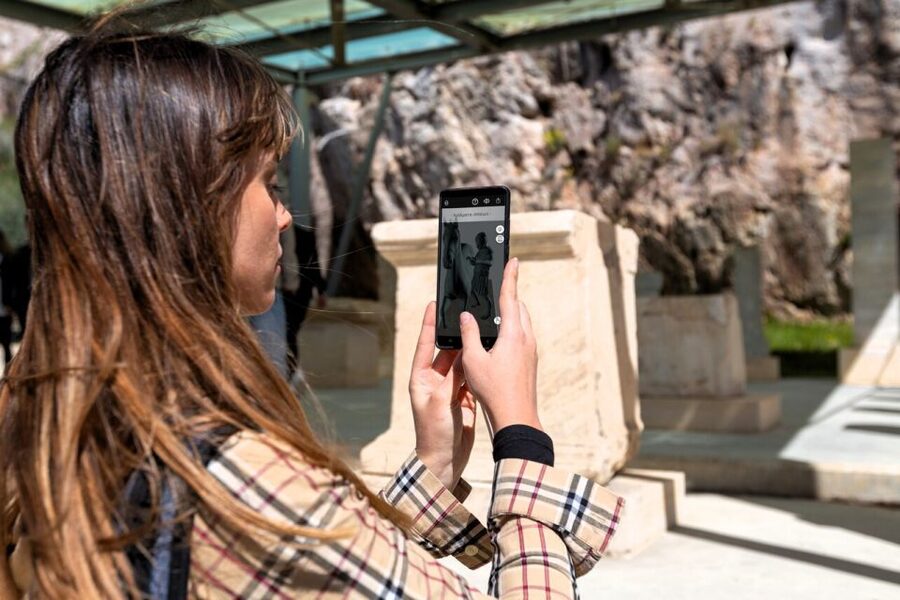
This self-guided format shines if you like structure, but you want control over pace. It is also a great match for couples, solo travelers, and anyone who finds group tours too rigid.
You will likely enjoy it if:
- You want to connect the Agora to democracy, civic life, and philosophy, not just “see ruins”
- You like audio but also want visuals when details are hard to spot
- You appreciate 3D and 360° views to understand how spaces relate
You may want a different approach if:
- You dislike phone-based travel or do not want to manage downloads
- You prefer a live person to answer questions and adjust the story in real time
The good part is that even without a live guide, the app includes both written and audio explanations, plus multiple visual formats. That reduces the usual frustration of self-guided tours.
Final Verdict: Should You Book This Ancient Agora Self-Guided Tour?
If you are visiting Athens and you care about how the city worked, I think this is a smart buy. For a small add-on price, you get a structured walkthrough of the Agora’s civic, legal, commercial, and religious sides, plus strong visual tools like 3D models and 360° views. The Temple of Hephaistos is the kind of anchor stop that makes the whole experience click.
I would book it if you can handle the basics, phone charged, headphones ready, and content downloaded on Wi-Fi. If you cannot, or you expect not to have reliable internet, the experience will feel thin.
FAQ
Is the entrance fee included in the $7.89 price?
No. The entrance fee is separate, at €10 full and €5 reduced.
How long is the tour valid?
It is valid for 5 days, starting from the first activation.
What do I need to use the self-guided tour?
You need a smartphone, plus headphones. The smartphone or headphones are not included.
Do I need internet access during the visit?
Internet access is required to use the tours effectively. You are also encouraged to download the content on Wi-Fi before you go if you do not have enough data.
How much storage does the app content need?
You need about 200MB of storage space on your phone.
What languages are available for the audio?
Audio is available in English, Greek, German, Spanish, Italian, French, Dutch, and Chinese.
When and how do I get the tour content after booking?
After booking, you receive an email from the provider with instructions to download the content. Check your spam folder.
Can I use the tour before or after visiting the Agora?
Yes. The self-guided tour can be used anywhere anytime, before, during, or after your visit.
What is the cancellation policy?
You can cancel up to 24 hours in advance for a full refund. The paid price is not refundable after downloading.
The Rest of Athens





Every Other Athens Write-Up
- All Day Cruise -3 Islands to Agistri,Moni, Aegina with lunch and drinks included
★ 5.0 · 4,958 reviews




Around the Agora and Kerameikos

Everything else we have written up around Athens






Ancient Agora & Kerameikos, side by side.
 ★ 4.0Athens: Agora and Hephaistos Temple Entrance TicketFrom $30449 reviews
 ★ 3.9Athens: Ancient Agora E-Ticket and Audio TourFrom $30413 reviews
 ★ 5.0Athens: Kerameikos Stone House Cooking ClassFrom $106165 reviews
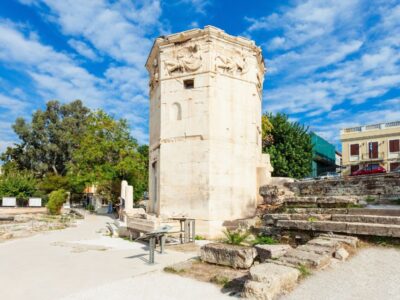 ★ 4.1Athens: Roman Agora & Ancient Agora E-ticket & 2 Audio ToursFrom $51107 reviews
 ★ 5.0Ancient Athens Segway Tour with Agora and KerameikosFrom $8394 reviews
 ★ 4.8Ancient Athens, Agora, and Keramikos Segway TourFrom $7853 reviews
 ★ 3.9Athens: Roman Agora E-Ticket and Audio GuideFrom $1841 reviews
Sits on these lists