
Review · ANCIENT AGORA & KERAMEIKOS
Athens: Roman Agora E-Ticket and Audio Guide
Time travel fits in your headphones. The Roman Agora e-ticket and audio guide turns a quick stop into a guided walk through major monuments and everyday life in the ancient city. You get an entry ticket that cuts the hassle, then you guide yourself with a downloadable tour that you can replay anytime.
I especially like the setup for convenience: pre-booked e-ticket plus offline audio and maps so you can keep going without hunting for signal. Second, the tour hits the sites people actually care about, including the Gate of Athena Archegetis, the Tower of the Winds, and the Mosque, plus a strong “see it, then learn it” flow.
One drawback to consider: since there is no live guide, you are relying on the audio and your phone for orientation. If you struggle with self-guided audio, you may find it harder to keep your bearings than you’d like.
In This Review
- Key highlights worth your time
- Roman Agora in 45 to 60 minutes, why this place works
- Tickets and offline audio, the real value of this experience
- Before you arrive, how to set yourself up for an easy visit
- Gate of Athena Archegetis, start strong with the main story node
- Tower of the Winds and the Mosque, the “three landmarks” payoff
- Fountain house, Vespasianae, and shops, where everyday life comes alive
- Acropolis views and the “meet the Winds” moment
- Price and time, when $18 feels fair and when it does not
- Who should book, and who should maybe choose something else
- Quick tips to avoid the most common self-guided audio problems
- Should you book this Roman Agora e-ticket and audio guide?
- FAQ
- How long does the Roman Agora e-ticket and audio guide take?
- What do I get with the ticket?
- Do I need internet during the visit?
- Which languages are available?
- Is there a live guide during the experience?
- What phone types are supported?
- Can I get a refund if my plans change?
Key highlights worth your time
- Skip-the-line entry with an emailed e-ticket
- Offline audio, text, and maps (about 100 to 150 MB)
- 45 to 60 minutes of self-paced touring that works well for a tight Athens day
- Big-name stops: Gate of Athena Archegetis, Tower of the Winds, and the Mosque
- Acropolis views and a focus on meeting the Winds through storytelling
- Multiple languages (English, Spanish, German, French, Italian, Greek)
More of the Agora and the Kerameikos ground




Roman Agora in 45 to 60 minutes, why this place works
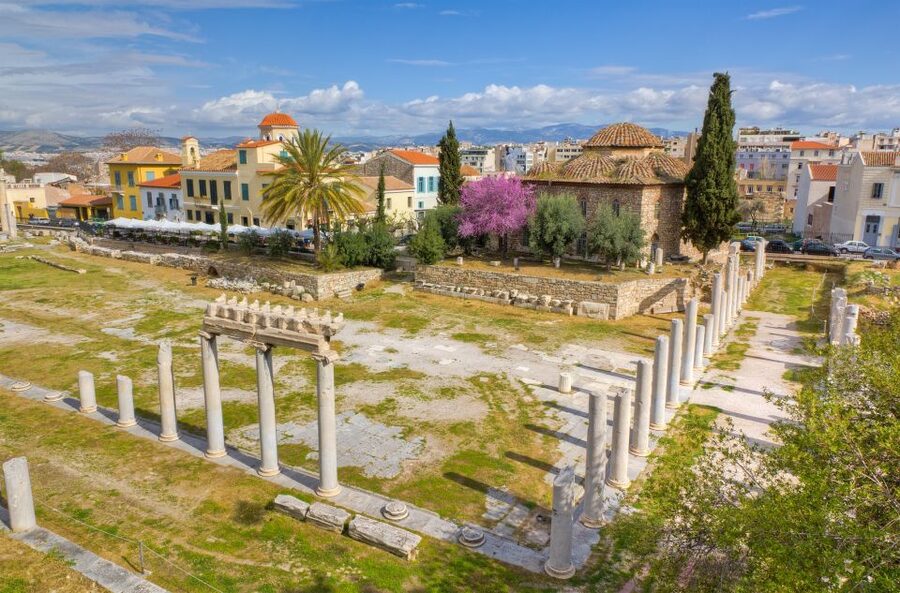
The Roman Agora is not a huge site, so it is a great match for a short Athens window. You are looking at a visitor experience built around compact time. Plan on about 45 minutes to 1 hour, and you can keep it light or stretch it with repeat listens of certain sections.
What makes the Roman Agora especially satisfying is the way it sits right next to the story of Athens itself. The tour is framed as a place where you understand the shifts from ancient Greek life into the Roman conquest era. Instead of treating the stones like museum objects, the audio guide nudges you to imagine daily habits and public spaces. That matters because, in Athens, it is easy to see monuments and miss the “how did people live?” part.
If you like archaeological sites that feel connected to real street life, this is a smart choice. The stops are varied enough to keep your attention, but the walking stays manageable.
Tickets and offline audio, the real value of this experience
You are paying for two things here: admission that skips the ticket line, and a self-guided audio experience that you prepare in advance. At $18 per person, the price is less about “a guide with a group” and more about convenience and friction-free access.
Offline is the big win. You download the app and the tour before you go, and the content includes text, audio narration, and maps. That means you can keep your plan even if cell service is weak. The tour also works before and after your visit, so you can start listening on the way over and then refresh key parts later.
The skip-the-line ticket matters more than it sounds. Even if the site is not packed when you arrive, cutting the waiting time helps when your day already has big-name priorities like the Acropolis area. This lets you spend your energy on the monuments instead of standing around.
One practical caution: the audio guide is not compatible with Windows phones, and it will not work on older iPhones, iPads, iPod Touch devices listed in the instructions. You also need storage on your phone, around 100 to 150 MB. If your phone is tight on space, clean up before you download.
Before you arrive, how to set yourself up for an easy visit

This is a downloadable experience, so your “tour success” happens before you reach the Roman Agora.
Here is the rhythm I recommend you follow:
1) Book and then watch your email for the access instructions. Check your spam folder too.
2) Download the app and the audio tour before you go.
3) Bring headphones and make sure your phone is charged. This tour is designed for listening while walking.
4) Plan to use one device per booking, since it is per device, not per participant.
If you do these steps, you avoid the most common self-guided problems: missing files, slow loading, and dying battery at the worst moment.
Also, keep in mind that there is no live guide and no fixed meeting point provided, since meeting point can vary depending on the option booked. This is one more reason to rely on your pre-download and go straight into your pace.
Gate of Athena Archegetis, start strong with the main story node
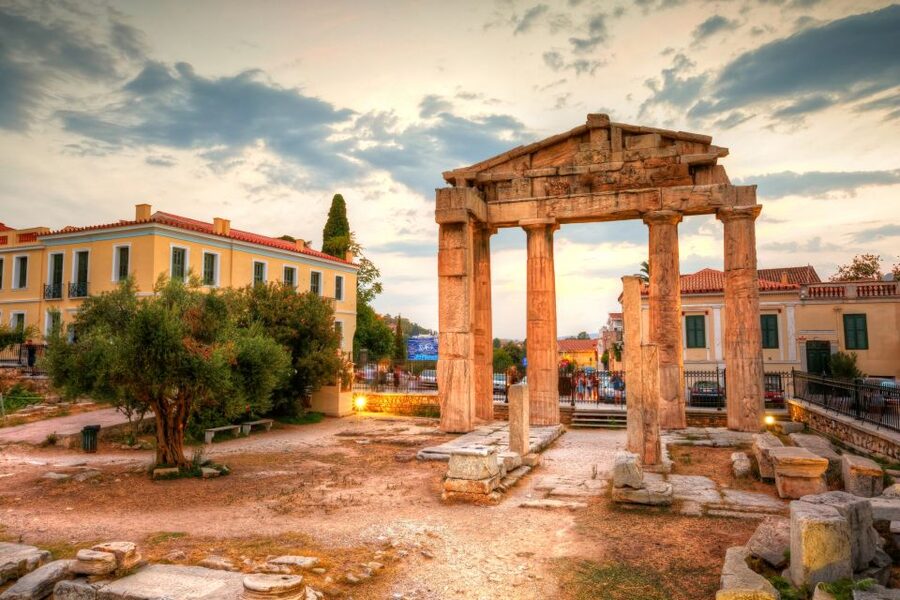
Your audio tour leads you to the Gate of Athena Archegetis, and this stop works well as an anchor for the visit. A gate is not just a pretty structure. It is the symbolic entry point to a civic world, and the tour uses it as an early “turn on the story” moment.
If you are the kind of visitor who likes context, you’ll appreciate how the audio focuses on uncommon stories and historical details in short, digestible segments. That style is particularly helpful in places like the Agora, where you can otherwise end up staring at stone and hoping it will start talking back.
What to do in this section:
- Pause long enough to listen through the narration tied to the gate.
- Look for the storytelling cues, since the tour is built to guide your attention while you move.
- Keep your phone volume comfortable so you do not feel rushed.
Potential drawback: because there is no guide to correct your route, if the audio cues do not match what you see, you might feel slightly unsure. This is exactly the kind of issue that can trigger complaints about orientation. Your best defense is to download offline maps and listen in the intended order.
Tower of the Winds and the Mosque, the “three landmarks” payoff
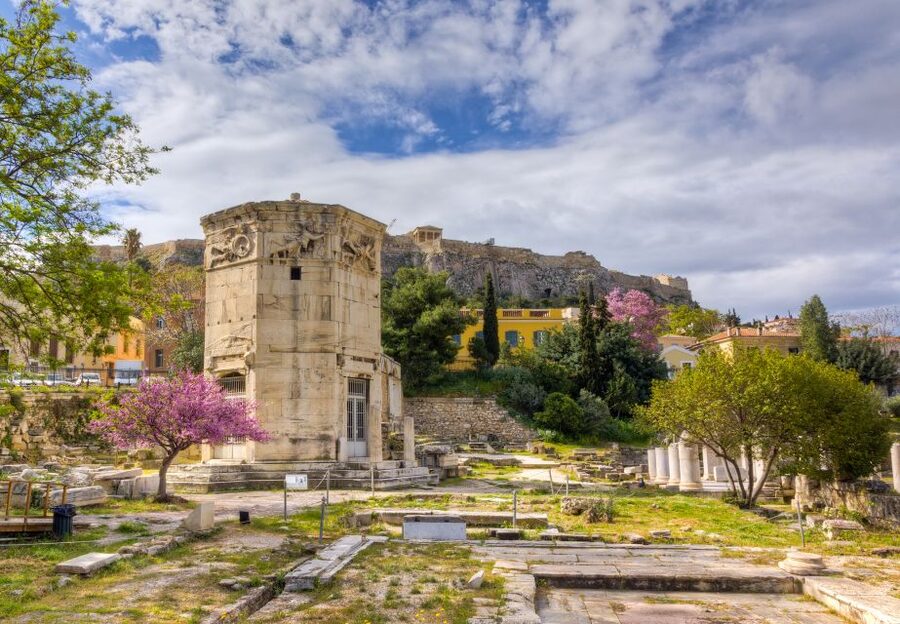
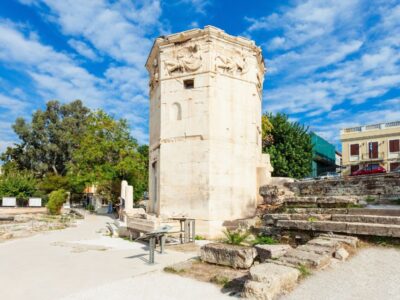
After the gate, the tour takes you to the Tower of the Winds and the Mosque. These are major named points in the experience, and they are useful because they give your walking route a clear spine: monument, feature, monument.
The Tower of the Winds is especially interesting in how the tour frames your visit. You are given the chance to meet the Winds, which is a playful hook with a serious reason behind it. In practice, it means the audio is pushing you to connect a distinctive landmark to a theme, not just a timeline.
Then comes the Mosque. Even without a live guide, the audio narration helps you treat it as part of the site’s layered past, rather than an isolated stop. The tone here is story-driven, and that is what keeps this from becoming a checklist.
What you’ll like if you enjoy narrative tours:
- You get brief original stories based on research, not dry facts only.
- The audio makes it easier to remember what you just saw.
- You do not need to do homework before your visit.
What you might not love if you prefer hand-holding:
- You have to manage attention yourself. If you are listening at low volume or skipping sections, you may miss the thread the tour is building.
Other Athens bookings where a guide comes along
- Athens: Cape Sounio & Poseidon Temple Trip with Audio Guide★ 4.4 · 4,521 reviews
- Athens: Mythology of Delphi, Museum and Arachova Guided Tour★ 4.6 · 4,008 reviews
- Acropolis: Acropolis and Parthenon Guided Walking Tour★ 4.7 · 3,442 reviews
- From Athens: Delphi Full Day V.R. Audio Guided Tour★ 4.6 · 3,028 reviews
Fountain house, Vespasianae, and shops, where everyday life comes alive

The Roman Agora is where you learn that “public space” is really the main character. After the big named landmarks, the tour turns toward smaller site elements, including the fountain house, the Vespasianae, and the shops.
This is the part of the experience that makes the audio guide feel worth it. If you only saw gates and towers, the visit might feel incomplete. But when the audio connects these spaces to habits of everyday life, you start understanding how people moved, met, and used the agora as part of their routine.
The mention of the Vespasianae is a clue that the tour is not only focused on monumental structures. It is designed to cover the practical pieces too. That gives you a more rounded sense of the place, especially if you like history that is grounded in daily needs rather than just rulers and wars.
In a typical listening pace, you’ll probably do best here by:
- Letting the audio explain the purpose of the stop before you move on.
- Spending a little extra time at transitions, since these are where the narrative shifts from one theme to another.
- Re-listening later back in your hotel if something catches your interest. The content can be used repeatedly.
Acropolis views and the “meet the Winds” moment
One of the best practical reasons to do this tour is the payoff view. The experience promises splendid views of the Acropolis, and it frames the Roman Agora as a place where you can relate what you see around you to the larger city story.
So while you are walking, do not only look at what the audio points out. Also use the audio pauses as a chance to orient yourself visually. Quick check-ins help you avoid the disorientation problem that can ruin a self-guided visit.
The “meet the Winds” theme adds an extra layer to how you experience the area. Even if you know the basics about ancient myths, it is the narrative angle that changes how you pay attention. You start noticing details you might have walked past otherwise.
If you want a smooth visit, keep your phone volume steady and keep moving. This is not a long museum-style sit-down. It is a walk that works best when you keep the story flowing.
Price and time, when $18 feels fair and when it does not
Let’s talk value in plain terms.
At $18 per person for about 45 to 60 minutes, the cost is fair if you will actually use the audio guide. The ticket is not the bargain part, since you are buying skip-the-line entry and a self-guided narrative system. The value is the combination: you get access now, and you get learning you can replay later.
If you are the kind of visitor who:
- prefers going at your own pace,
- likes audio storytelling,
- travels light and does not want to pay for a live guide,
then the price makes sense.
If you are the kind of visitor who:
- hates phone-based navigation,
- wants guaranteed clarity at every step,
then you may feel the time and money do not line up. That lines up with the most negative feedback about the audio being difficult to orient with.
Also consider this: if you have a very long day and are spending time on bigger sites, a short Roman Agora stop with a ready-to-go audio tour is a good fit. It helps you turn “we walked through another ancient area” into a more memorable hour.
Who should book, and who should maybe choose something else
This experience fits best for you if you want a self-guided visit with a smart structure.
It is a strong match if:
- you like history told through stories,
- you want to prepare offline and avoid roaming charges,
- you enjoy seeing key named monuments without waiting for a group.
It may not be your best choice if you:
- rely on a live guide for context and routing,
- are on a device that is incompatible with the audio app or have very low phone storage,
- want an itinerary with constant staff interaction.
One more factor: the tour is partially accessible for people with disabilities, but you are not given a fully detailed accessibility plan here. If accessibility is a key concern for you, it is smart to check the specific site conditions on arrival and travel with your own backup expectations.
Quick tips to avoid the most common self-guided audio problems
A self-guided tour is only as good as the practical setup you give it.
My short list:
- Charge your phone fully, then keep it off power-saving modes if possible.
- Use headphones you already know work well.
- Download everything before you arrive, since the content is offline and designed to run without roaming.
- Listen in order. Skipping around makes navigation harder.
- If you feel unsure, slow down. Rewind one segment only. Do not guess and sprint.
If you follow those, you dramatically reduce the risk of getting that “why am I not sure where I am” feeling.
Should you book this Roman Agora e-ticket and audio guide?
Book it if you want a smooth, structured hour at one of Athens’ compact must-sees, with skip-the-line entry and an offline audio tour you can replay. The best part is how the narration connects major monuments like the Gate of Athena Archegetis, the Tower of the Winds, and the Mosque with everyday spaces such as the fountain house, the Vespasianae, and the shops.
Skip it or choose something else if you know you struggle with self-guided phone navigation or you expect a human guide to manage the experience for you. In that case, the audio format can feel frustrating instead of helpful.
If you land in the middle, lean toward booking. For most people, having offline storytelling ready to go is the difference between a quick glance and an hour that actually sticks.
FAQ
How long does the Roman Agora e-ticket and audio guide take?
You should plan for about 45 minutes to 1 hour, depending on starting times and how you pace the self-guided route.
What do I get with the ticket?
You get an adult entry ticket to the Roman Agora with skip-the-line service, plus a self-guided audio tour on your smartphone in supported languages.
Do I need internet during the visit?
No. The tour includes offline content (text, audio narration, and maps) so you can avoid roaming charges.
Which languages are available?
The audio guide is available in English, Spanish, German, French, Italian, and Greek.
Is there a live guide during the experience?
No. This is a self-guided experience with no live guide.
What phone types are supported?
You need an Android (version 5.0 and later) or iOS smartphone, and it is incompatible with Windows phones and certain older Apple devices listed in the instructions (like iPhone 5/5C or older, and older iPad models).
Can I get a refund if my plans change?
This activity is listed as non-refundable.
A Guide Comes Along in Athens




Every Other Athens Write-Up
- All Day Cruise -3 Islands to Agistri,Moni, Aegina with lunch and drinks included
★ 5.0 · 4,958 reviews




Around the Agora and Kerameikos

Everything else we have written up around Athens







Ancient Agora & Kerameikos, side by side.
 ★ 4.0Athens: Agora and Hephaistos Temple Entrance TicketFrom $30449 reviews
 ★ 3.9Athens: Ancient Agora E-Ticket and Audio TourFrom $30413 reviews
 ★ 5.0Athens: Kerameikos Stone House Cooking ClassFrom $106165 reviews
 ★ 4.1Athens: Roman Agora & Ancient Agora E-ticket & 2 Audio ToursFrom $51107 reviews
 ★ 5.0Ancient Athens Segway Tour with Agora and KerameikosFrom $8394 reviews
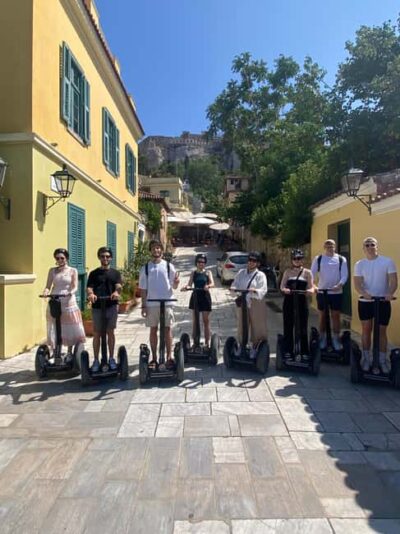 ★ 4.8Ancient Athens, Agora, and Keramikos Segway TourFrom $7853 reviews
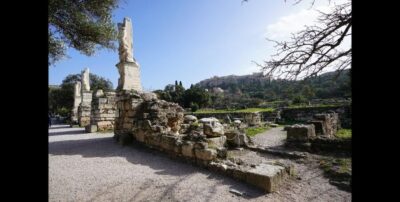 ★ 3.9Ancient Agora: Audiovisual self-guided tour with 3D modelsFrom $731 reviews
Sits on these lists