
Review · ACROPOLIS & PARTHENON TOURS
Athens: Acropolis and Mythology Highlights Small Group Tour
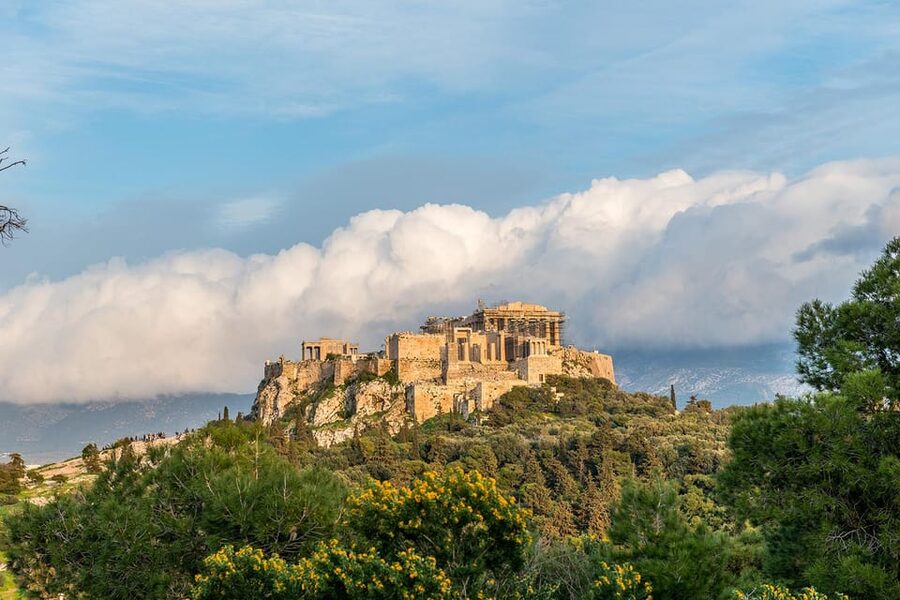
Athens feels mythical when you walk it right. This small-group tour turns the Acropolis into a story you can follow, with myth-first storytelling tied to what you see in front of you. You meet your guide by Hadrian’s Gate and then connect the gods, the politics, and the architecture in a way that makes Ancient Athens easier to remember.
I especially like the Parthenon-to-Agora route, since you do not stop at the postcard view. You get time on the main monuments, plus the Ancient Agora and the Temple of Hephaestus, so the day feels like more than one big climb.
One watch-out: even in 2 to 4 hours, you’re still walking on stone and stairs, so comfortable shoes matter.
In This Review
- Key highlights at a glance
- Meet Under Hadrian’s Gate: Getting Oriented Before the Acropolis
- Temple of Olympian Zeus: Why This Outside Stop Matters
- Acropolis Guided Block: Parthenon, Erechtheion, Nike, and Dionysus
- Temple of Athena Nike and the small details that mean big things
- Erechtheion: Where myths feel personal
- Parthenon: The monument that explains itself when guided
- Theatre of Dionysus Eleuthereus and the culture behind the stones
- Ancient Agora and Temple of Hephaestus: Athens as a Living City
- Temple of Hephaestus: Your calmer final monument
- Greek Mythology Meets Historic Facts: What Makes the Story Work
- Pacing, Heat, and Comfort Tips for a 2 to 4 Hour Walk
- Price and Value at About $53: What You’re Really Paying For
- Who This Tour Suits Best in Athens
- A smart tip for your first Acropolis visit
- Should You Book This Athens Acropolis and Mythology Highlights Tour?
- FAQ
- Where is the meeting point for the tour?
- What is the closest metro station?
- What sites are included during the tour?
- How long is the tour?
- Are Acropolis or Agora tickets included?
- What do I need to bring?
- Who gets free entry for Acropolis and Ancient Agora?
- Are strollers, backpacks, or pets allowed?
- What languages are offered?
Key highlights at a glance
- Start under Hadrian’s Gate so you get oriented fast and know where you are headed
- Acropolis guided time includes the Parthenon area plus nearby key temples and ruins
- Myths with context, including how gods connect to names, functions, and civic pride
- Ancient Agora + Temple of Hephaestus for a fuller picture of daily life, not just religion
- Small group pacing helps you ask questions and linger for photos when you want
Other ways up the Acropolis, side by side


Meet Under Hadrian’s Gate: Getting Oriented Before the Acropolis
The tour meets under the Arch of Hadrian, right by the Acropolis area at Leof. Vasilisis Amalias 50. If you’re using public transit, the closest metro station is ACROPOLIS, then it’s about a short walk to the Arch.
Your guide waits holding a sign that says ALTERNATIVE ATHENS, and that matters because the meeting spot is close to major pedestrian traffic. I like this kind of meetup point, since it means you start already in the neighborhood where the day’s story lives.
Temple of Olympian Zeus: Why This Outside Stop Matters
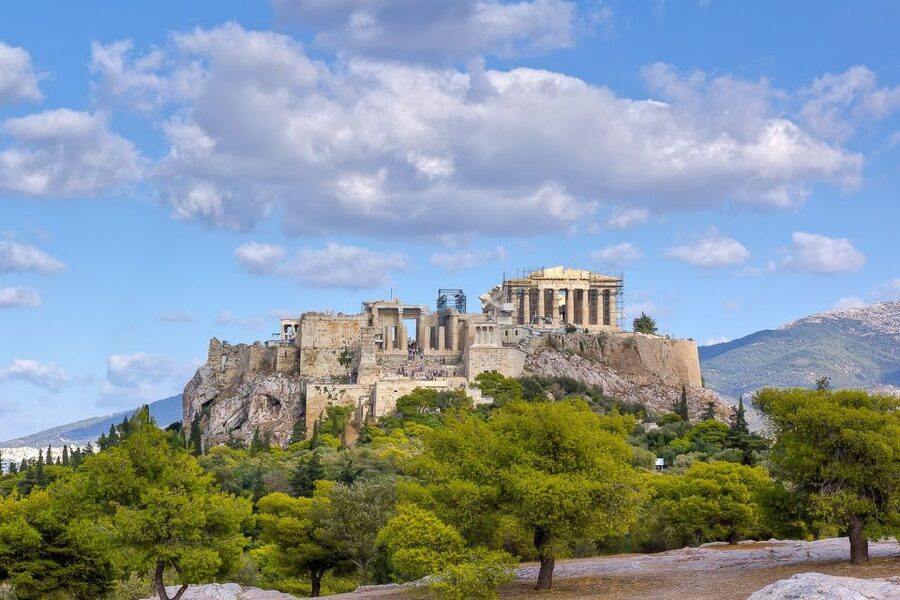
Before you head fully up, you pause at the Temple of Olympian Zeus from the outside for about 15 minutes. Even without going inside, it’s a useful warm-up because it helps you frame Athens as a city that kept changing what it worshiped and what it wanted to project.
This stop is also a good reminder that not everything survives in perfect shape. You’ll see a big monument in partial remains, and the guide’s job is to help you read those gaps instead of feeling like you’re only looking at ruins.
Acropolis Guided Block: Parthenon, Erechtheion, Nike, and Dionysus
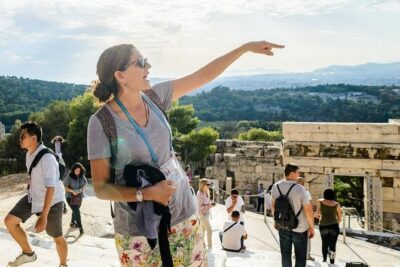
This is the heart of the tour, with two parts: a short walk that brings you into position, then a focused guided visit for about 1.5 hours. Expect multiple stops, with guided time at Temple of Athena Nike (about 15 minutes), Erechtheion (about 15 minutes), and Parthenon (about 30 minutes). You also get to hear how the broader Acropolis complex worked, including references to the Theatre of Dionysus Eleuthereus and other key places around the sacred area.
Temple of Athena Nike and the small details that mean big things
At Athena Nike, the guide’s explanations tend to focus on what this sanctuary signals about civic identity. Even though the site is not the biggest structure on the hill, it’s the kind of place where symbolism shows up in the details, and that’s exactly what mythology is good at: turning meaning into architecture.
Erechtheion: Where myths feel personal
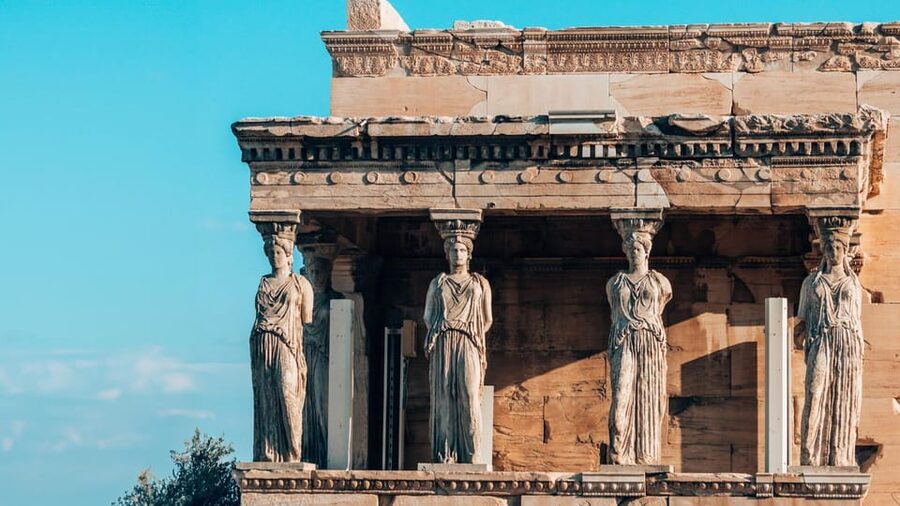
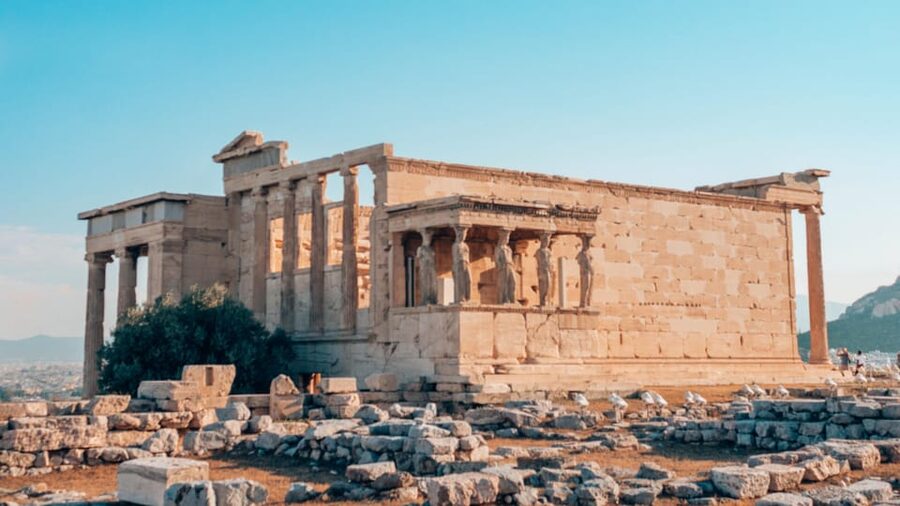
Then you move to Erechtheion, including time to look closely and hear how the mythology connects to the sacred claims of Athens. One of the most-loved elements in these kinds of tours is the moment when someone explains why a myth matters beyond a name you memorized in school.
The guide also helps you interpret the ruins you’re seeing. That’s important here because the Acropolis is not one intact building. It’s a layered story told through many periods, repairs, and partial remains.
- Athens: Acropolis & up to 5 Archaeological Sites Combo Pass★ 4.4 · 12,619 reviews
- Athens: Acropolis, Parthenon & Acropolis Museum Guided Tour★ 4.8 · 9,316 reviews
- Athens: Cape Sounion & Poseidon Temple Sunset Half-Day Trip★ 4.8 · 8,241 reviews
- Athens: Acropolis and Parthenon Guided Walking Tour★ 4.6 · 5,882 reviews
Parthenon: The monument that explains itself when guided
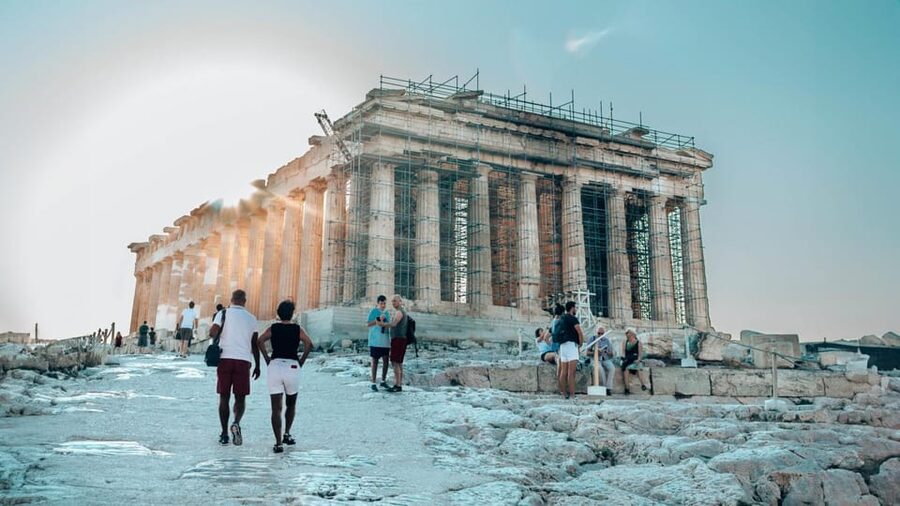
At the Parthenon, you get a longer guided look of about 30 minutes. This is where you’ll understand why people obsess over proportion, placement, and purpose. You’ll also hear how Greek mythology and civic life overlapped, so the temple does not feel like a museum object.
I like tours that slow down at the Parthenon instead of rushing past it. This one gives you time to ask questions and to look from more than one angle, so you can see how the building holds together visually even when you are surrounded by scaffolding, crowds, or bright light.
Theatre of Dionysus Eleuthereus and the culture behind the stones
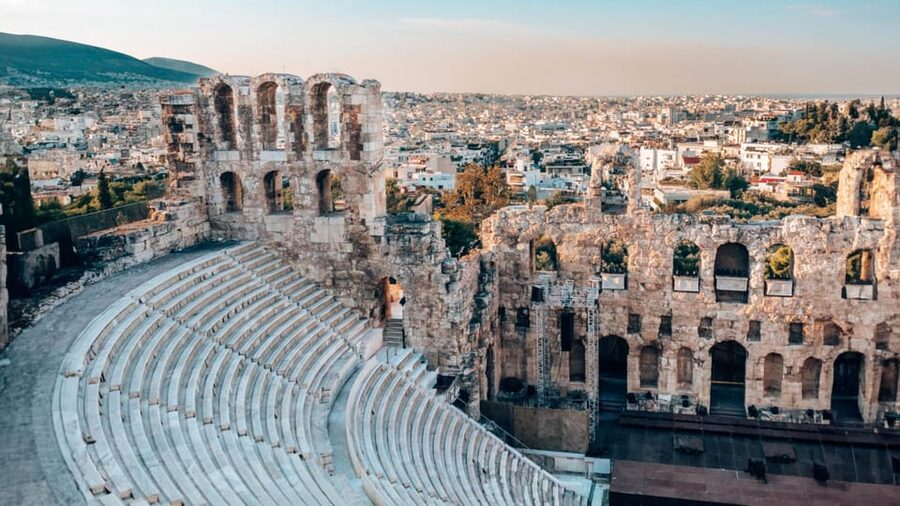
The mythology angle works especially well when the guide connects the sacred complex to culture. With references to the Theatre of Dionysus Eleuthereus, you start to see Athens as a place where religion, performance, and politics met.
If you enjoy Greek myth from books or modern pop culture, this is the part that often makes it click. The myths are not just supernatural stories, they’re linked to how Athenians organized festivals and civic identity.
Ancient Agora and Temple of Hephaestus: Athens as a Living City
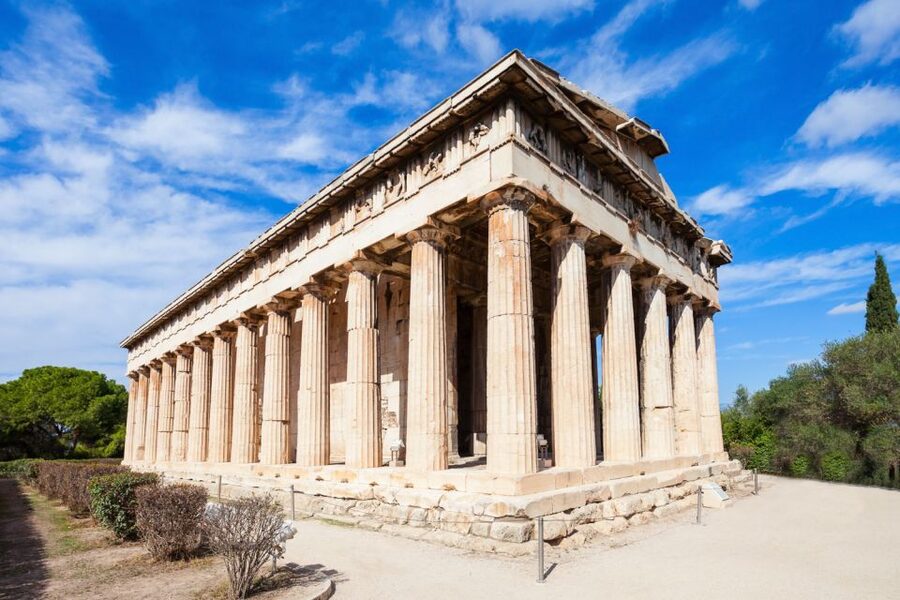
After the Acropolis, the tour shifts gears to the Ancient Agora of Athens, with about 30 minutes of walking plus time at the Temple of Hephaestus (about 30 minutes guided). This is a big deal because it changes the tone from sacred mountain to everyday city.
You’ll learn how Athens functioned socially and why it became a center of influence. The Agora is where you can understand the word “society” in a practical way. Athens was not only temples and myths, it was people making decisions, gathering, arguing, and building traditions.
Temple of Hephaestus: Your calmer final monument
The Temple of Hephaestus is a strong closing stop because it’s easier to appreciate without the same steep-hill pressure. You’ll get guided time here, and the guide’s job is to connect what you’re seeing to how Greeks understood the world.
If you want an “end-of-tour win,” this is often it. You get a lasting viewpoint on Athens that does not rely only on the Parthenon skyline.
Greek Mythology Meets Historic Facts: What Makes the Story Work
The best guides in this format do a specific thing: they use myths as a set of clues. They point out how names, deities, and legends show up in architecture and public life, then they connect that back to what likely happened historically.
That’s exactly what many guides in this program are praised for. People highlight storytellers like Stellios, Athina, Danae, Alex, and Vicky for explaining the myths without turning everything into a lecture. Names you’ll hear from guides include Angelica, Irene, Christina, Demi, and Antonia, and the common thread is pacing, clarity, and humor.
You’ll also see practical teaching methods mentioned in reviews. One person noted visual aids that showed what buildings looked like in the past, which can help a lot if you struggle imagining restored versions of ruined structures. Another key improvement theme is sound. A few comments mention that hearing the guide can be harder in busy moments, so if the tour date offers ear pieces, that can be a big comfort upgrade.
There’s also a helpful style choice here: the mythology is tied to how Athenians likely experienced daily life. When the guide connects a god’s role to a civic purpose or a monument’s meaning, the whole day sticks in your head.
Pacing, Heat, and Comfort Tips for a 2 to 4 Hour Walk

This tour runs 2 to 4 hours, depending on the starting time and pacing. The itinerary is packed with guided stops, so you’re not just drifting. You’ll walk between areas and then switch into short bursts of listening and looking.
In warmer months, heat and crowds can make that harder. Reviews often mention shade and water breaks, and that’s a smart expectation with an Acropolis day. Still, don’t assume the tour will move like an easy city stroll, it’s more of a structured walking circuit.
Practical stuff that you can plan around:
- Wear comfortable shoes for uneven ground and steps
- Bring comfortable clothes, especially if sun hits directly on the hill
- Bring your passport or ID, since entry rules for some age categories depend on identification
- Skip items that are not allowed like strollers, pets, and backpacks
- If you’re sensitive to sound, consider that busy areas can make it harder to hear, even with a guide speaking clearly
If it rains, you might still be able to keep going, since guides sometimes help people find a practical solution while keeping the experience moving. You just want to be ready for weather shifts in Athens.
Price and Value at About $53: What You’re Really Paying For
At about $53 per person, the price is less about a “pile of tickets” and more about what you get with a licensed guide. This is a walking tour that includes guided time at multiple major sites, plus the story glue that makes them connect.
Here’s how the value is shaped:
- Guided entry support: You get Acropolis tickets or Acropolis and Ancient Agora entry tickets if you choose that option
- Ticket line help: The tour notes skip the ticket line
- Guide and map: You get a certified guide and a map of Ancient Athens
One important note for planning: entrance fees are listed as prepurchasable, but the tour also says entrance fees are not included (with the option to prepurchase). So it’s worth checking what your selected ticket option covers when you book.
Also, if you qualify for free entry, it can shift value a lot. The tour states that EU citizens under 25 and non-EU citizens under 18 can get free access to the Acropolis and Ancient Agora with valid ID or passport. That can be a big win if you meet the criteria, since you’re still paying for the guide experience.
Who This Tour Suits Best in Athens

This tour is a strong match if you want Athens to feel understandable, not just impressive. The mythology angle is ideal if you enjoy Greek stories from modern culture, or if you want the myths tied directly to real buildings.
It’s also a good choice if you like asking questions. The small group format usually helps you avoid shouting over other tour groups, and many guides are praised for answering follow-up questions and keeping a comfortable pace.
If you’re someone who only wants the biggest skyline view and nothing else, you might find the Agora portion less important. But if you want context for how Athens worked as a society, the full route makes more sense.
A smart tip for your first Acropolis visit
Come ready to look for meaning, not just shapes. If you pay attention to how the guide connects gods, civic pride, and architecture, you’ll leave with a mental map that makes the stones easier to interpret the next time you see them.
Should You Book This Athens Acropolis and Mythology Highlights Tour?
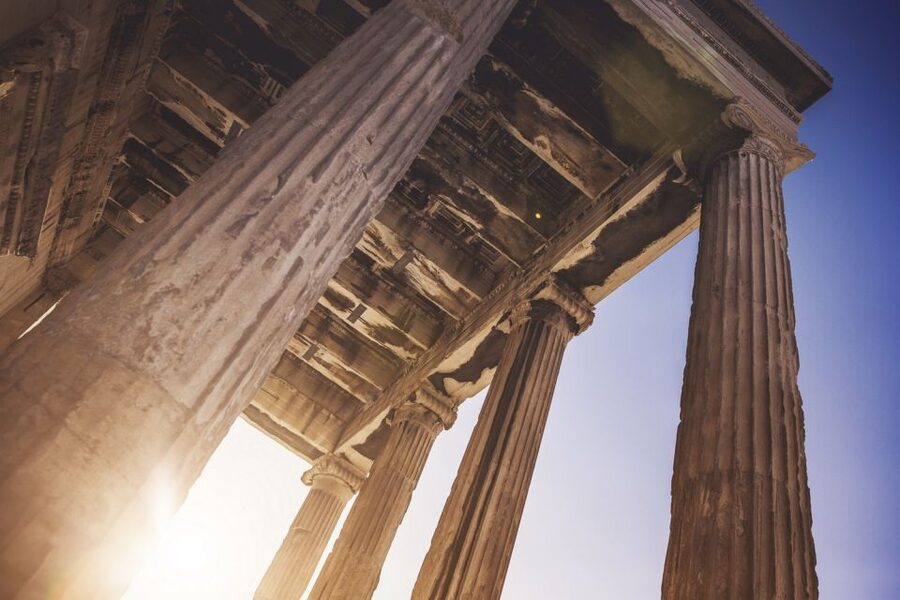
Book it if you want myths with practical context, time at the Parthenon and key Acropolis sites, and a route that continues to the Agora and Temple of Hephaestus. The best version of this experience is for people who like explanations and stories that make the monuments feel like they belonged to real lives.
Skip it only if you prefer to wander entirely on your own, or if you know you get overwhelmed by walking plus guided stops in peak crowds. Otherwise, this is a very solid way to get your bearings in Athens fast, and to understand why the Acropolis is more than a view.
FAQ
Where is the meeting point for the tour?
You meet under the Arch of Hadrian (Hadrian’s Gate) on Leof. Vasilisis Amalias 50.
What is the closest metro station?
The closest metro station is ACROPOLIS. From there, you walk about 5 minutes to the Arch of Hadrian.
What sites are included during the tour?
You visit the Temple of Olympian Zeus (outside), the Acropolis area, including Parthenon, Temple of Athena Nike, and Erechtheion, plus the Ancient Agora and the Temple of Hephaestus. The tour descriptions also mention the Theatre of Dionysus Eleuthereus and the ruins of certain related sanctuaries and temples.
How long is the tour?
The tour lasts 2 to 4 hours.
Are Acropolis or Agora tickets included?
Tickets may be included depending on the option you select. The tour notes that you can get Acropolis tickets or Acropolis and Ancient Agora entry tickets if that option is chosen. Entrance fees can also be pre-purchased if you let the provider know.
What do I need to bring?
Bring a passport or ID card, plus comfortable shoes and comfortable clothes.
Who gets free entry for Acropolis and Ancient Agora?
Free access applies to EU citizens under 25 and non-EU citizens under 18, with a valid ID or passport.
Are strollers, backpacks, or pets allowed?
No strollers and no backpacks. Pets are not allowed, though assistance dogs are allowed.
What languages are offered?
The live guide is available in English and French.
The Rest of Athens



Every Other Athens Write-Up
- All Day Cruise -3 Islands to Agistri,Moni, Aegina with lunch and drinks included
★ 5.0 · 4,958 reviews



The Acropolis, Other Ways Up

Everything else we have written up around Athens




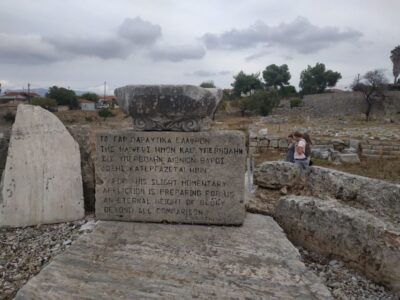

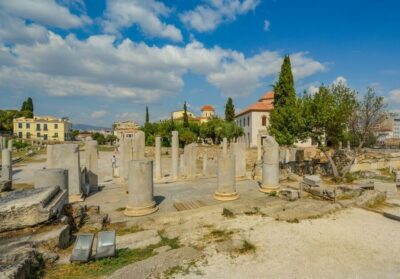
Acropolis & Parthenon Tours, side by side.
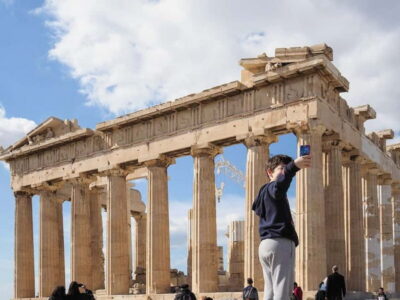 ★ 4.4Athens: Acropolis & up to 5 Archaeological Sites Combo PassFrom $4812,619 reviews
 ★ 4.2Athens: Acropolis Ticket with Optional Audio or Live GuideFrom $4211,055 reviews
 ★ 4.8Athens: Acropolis, Parthenon & Acropolis Museum Guided TourFrom $409,316 reviews
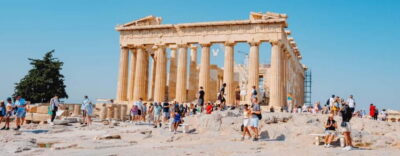 ★ 4.6Athens: Acropolis and Parthenon Guided Walking TourFrom $385,882 reviews
★ 4.8Athens: Acropolis, Parthenon & Acropolis Museum Guided TourFrom $413,579 reviews
★ 4.6Athens: Acropolis and Parthenon Guided Walking TourFrom $385,882 reviews
★ 4.8Athens: Acropolis, Parthenon & Acropolis Museum Guided TourFrom $413,579 reviews
 ★ 4.0Athens: Acropolis Ticket with Audio GuideFrom $473,575 reviews
 ★ 4.7Acropolis: Acropolis and Parthenon Guided Walking TourFrom $363,442 reviews
 ★ 5.0Acropolis monuments & Parthenon Walking Tour with Optional Acropolis MuseumFrom $422,678 reviews
Sits on these lists