
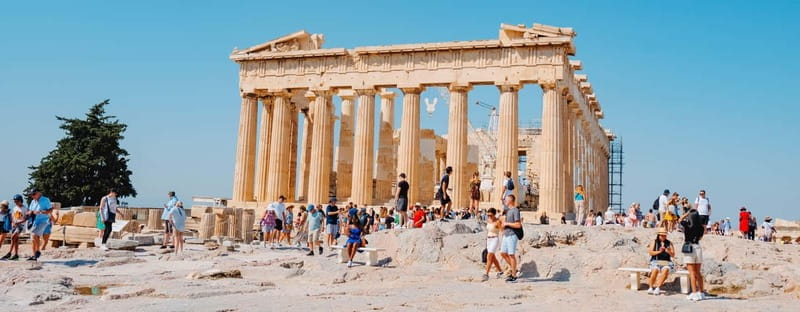
Review · ACROPOLIS & PARTHENON TOURS
Athens: Acropolis and Parthenon Guided Walking Tour
Skip the line and read Athens in stone. This Acropolis and Parthenon guided walking tour is built for momentum, with skip-the-line access and an English-speaking guide who brings the monuments to life fast. The main tradeoff is physical, you are on steep ground and there is no elevator for group tours.
I like that the route keeps you focused on the big, story-rich stops, not random detours. You start at Athenian Tours at Mitsaion 2 and end back at the same place, so you avoid the usual “where are we now” feeling. For groups over 5, you get disposable earphones, which makes it easier to hear instructions while you’re moving.
Heat is real on the Acropolis, and you’ll feel it if you go late in the day. If you can, I’d plan a morning slot, and I’d wear a hat and sunscreen because the tour doesn’t pretend the sun is optional.
In This Review
- Key things you’ll notice on this tour
- Entering Acropolis efficiently from Mitsaion 2
- South Slopes access, and why it changes your whole morning
- Stop at the Acropolis of Athens: how your guide sets the scene
- Theater of Dionysus: where comedy and tragedy had a home
- Asklepieion of Athens: healing gods on a very real hill
- Odeon of Herodes Atticus and the Roman layer you can still read
- Temple of Athena Nike viewpoints: small temple, big feeling
- Propylaea gate: the moment the hill becomes an entrance
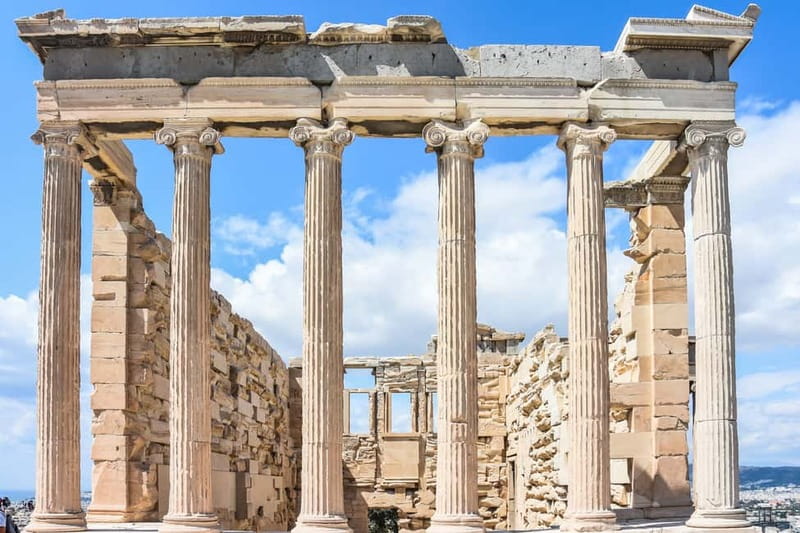
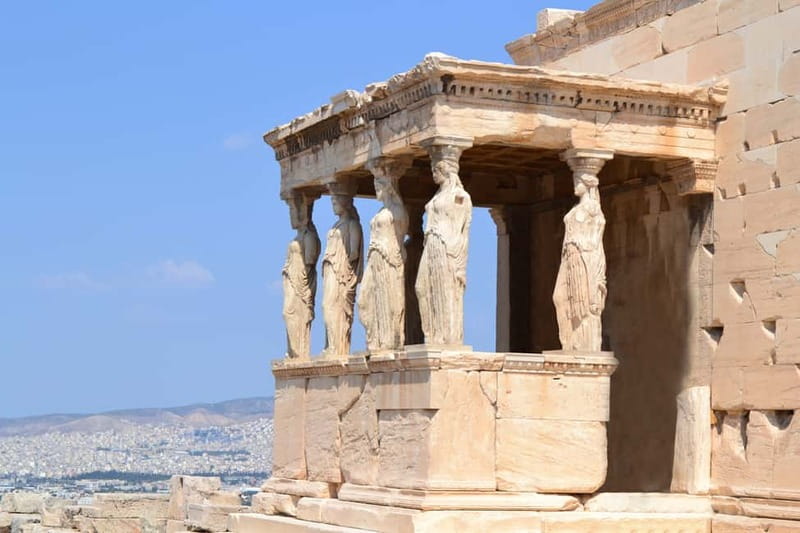
- Erechtheion and the six female Caryatids
- Parthenon: democracy, design, and why it still hits
- The guide factor: why Simon, Kostas, Iris, and Alexia keep showing up
- Tickets, earphones, and the simple rules to know
- What to wear and bring for a hot, steep walking tour
- Price and value: is $35.57 a good deal?
- Who should book this Acropolis and Parthenon tour
- Should you book this tour?
- FAQ
- How long is the Acropolis and Parthenon guided walking tour?
- Where do I meet the guide, and where does the tour end?
- What is included in the price?
- Are earphones provided?
- Is the tour offered in English?
- Can I take photos or record video during the tour?
- Is elevator access available at the Acropolis?
- Who is the tour not suitable for?
- Is there free cancellation?
Key things you’ll notice on this tour
- Skip-the-line entry helps you spend your time looking at monuments, not waiting at gates
- Propylaea gate moments make the whole hill feel like one big “arrive and enter” scene
- Theater of Dionysus turns ancient drama into something you can picture right away
- Asklepieion and its healing gods adds a softer, human side to a site that often feels hard and grand
- Erechtheion Caryatids (the six female figures) are easier to spot once your guide points them out
- Parthenon dedication to Athena clicks when the guide explains what you’re actually looking at
Other ways up the Acropolis, side by side




Entering Acropolis efficiently from Mitsaion 2
The tour starts at the Athenian Tours office on Mitsaion 2 (11742), and it ends back there. That matters more than it sounds. Athens has a lot of moving parts, and this setup keeps you from having to figure out your next transport while you are still buzzing from the views.
The group walks between key points on the Acropolis hill, and the tour is timed for a 2-hour experience. In that window, the best value is how the guide keeps you from treating the site like a checklist. Instead of just pointing at stones, you get explanations that connect different buildings and eras, including Classical Athens and later Roman influence you can still recognize today.
I also like the practical touches. For groups over 5, you get disposable earphones, so your guide’s voice stays clear when you’re near other groups or traffic inside the site. Audio can still be affected by crowd noise, but having earphones is a big help.
South Slopes access, and why it changes your whole morning
One of the most common “yes, this was worth it” comments is about how smoothly the tour enters the Acropolis. In practice, the group route often uses the South Slopes entrance, which many people find easier than approaching from the North Slope.
Why do you care? Because the Acropolis is not just a place you visit, it’s a steep climb with crowds. If you get funneled into a slow entry stream, you lose the energy your guide needs to keep the pace. Getting in more efficiently tends to make the entire experience feel less rushed.
Also, if you’re aiming for photos, that first stretch matters. Early on, light can be kinder and the crowd pressure can be lower. Even if your view is stunning at any hour, the “stress level” drops a lot when your entry works well.
Stop at the Acropolis of Athens: how your guide sets the scene
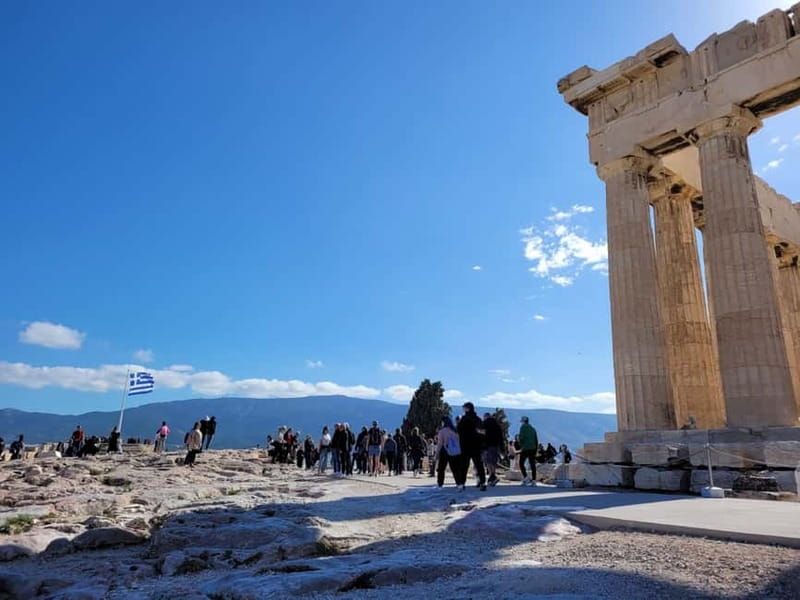
The tour begins with the Acropolis itself, then moves from landmark to landmark. You’ll be guided as you walk the hill, and your guide frames the site so the details feel less random.
This is where you should pay attention most. The Acropolis looks like one huge complex from a distance, but it isn’t. It’s a collection of buildings with different purposes, time periods, and design choices. When your guide explains that, you start seeing patterns, like why certain structures sit where they do and how the layouts guide the eye toward the big statement monuments.
You’ll also learn what to look for as you move. That turns your photos into more than souvenirs, because you’ll know what each structure represents. The tour is built around that payoff, and it’s why skipping lines is only half the value. The other half is what you learn while you’re there.
Theater of Dionysus: where comedy and tragedy had a home
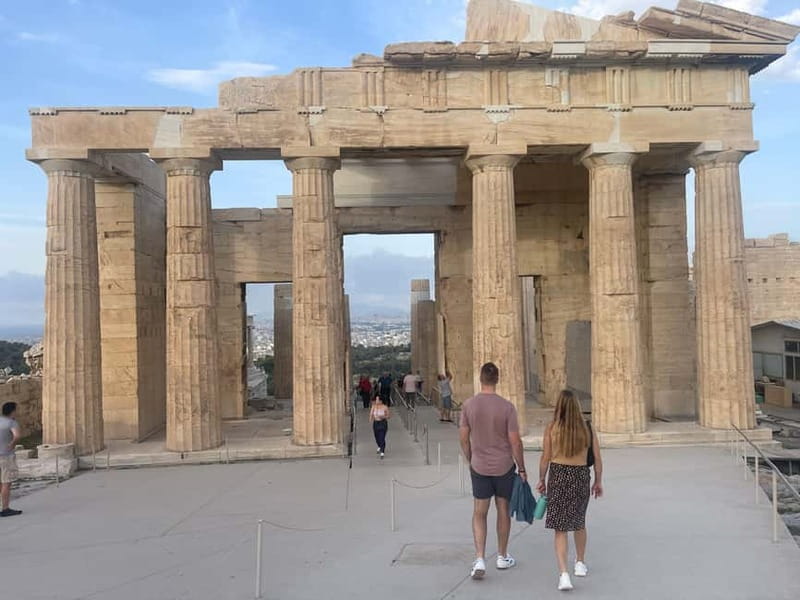
Next you reach the Theatre of Dionysus, and this stop is a crowd favorite for a reason. It’s not just an old ruin. It’s a place tied to ancient performance, where plays like comedies and tragedies were first staged.
The guide’s job here is to help you “translate” the stone. From a distance, it can look like a typical amphitheater. With a guide, it becomes a cultural snapshot. You’re not just looking at seats or curved walls. You’re imagining people gathering for drama, arguing through stories, and mixing entertainment with ideas.
One practical note: theaters can be wide and busy inside the Acropolis. Expect some crowd movement and plan to pause when the guide asks. You’ll see more if you don’t try to outwalk the group and then catch up later with blurry context.
Asklepieion of Athens: healing gods on a very real hill
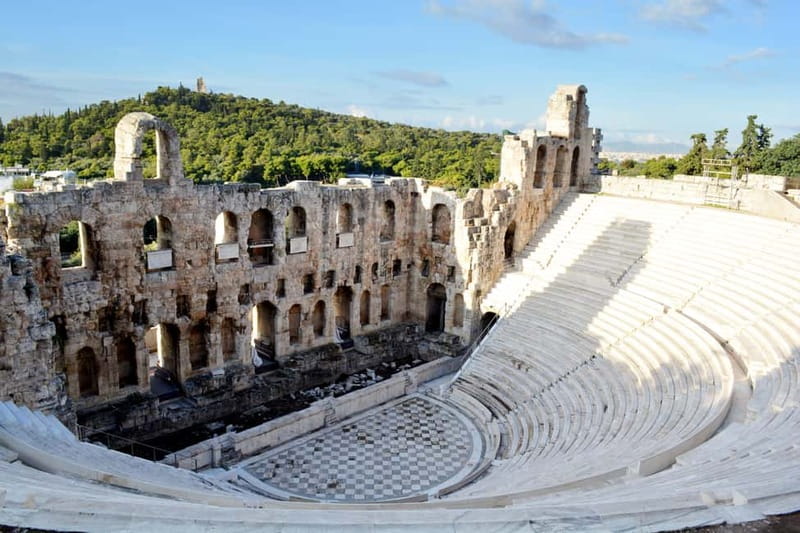
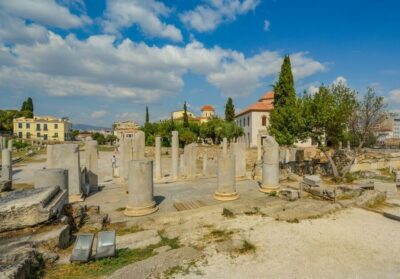
Then comes the Asklepieion of Athens, the healing temple built in honor of Asclepius and Hygeia. This stop adds emotional variety to the tour. After all the grand temples and big civic monuments, it’s refreshing to land on a site tied to healing and care.
For you, the value is perspective. The Acropolis isn’t only about power. It also reflects how ancient Greeks thought about the body, illness, and the hope of recovery. Your guide’s storytelling helps you see the Asklepieion as part of the same sacred ecosystem rather than a stray building you hurried past.
It’s also a nice break in tone while you’re still climbing. You can use this moment to catch your breath, drink water, and reset your eyes for the temples ahead.
Other Athens bookings where a guide comes along
- Athens: Cape Sounio & Poseidon Temple Trip with Audio Guide★ 4.4 · 4,521 reviews
- Athens: Mythology of Delphi, Museum and Arachova Guided Tour★ 4.6 · 4,008 reviews
- Acropolis: Acropolis and Parthenon Guided Walking Tour★ 4.7 · 3,442 reviews
- From Athens: Delphi Full Day V.R. Audio Guided Tour★ 4.6 · 3,028 reviews
Odeon of Herodes Atticus and the Roman layer you can still read

You’ll then visit the Odeon of Herodes Atticus. This is connected to the Herodion theater, built in memory of the wife of Herodes Atticus. Even if your brain starts thinking Classical Athens only, this stop helps you notice that the Acropolis was reused and reinterpreted across centuries.
That matters because it affects how you interpret what you see. Ruins aren’t frozen in time. They were shaped by later builders, later rulers, and later meanings. A guide helps you avoid the common trap of assuming that every structure belongs to the same moment in history.
Here’s what I like about the timing of this stop on a walking tour. You’re still energetic enough to care, and you’re far enough along that the overall path and “flow” of the hill are starting to make sense.
Temple of Athena Nike viewpoints: small temple, big feeling
Next is the Temple of Athena Nike, a stop that many first-time visitors miss because they assume the Parthenon is the only must-see. This temple is smaller, but it’s an important viewpoint and symbol of what Athena meant to the city.
When the guide explains what you’re seeing, you understand that this is not just a pretty structure. It connects directly to Athens identity, victory, and the goddess’s role as patroness. Even if you’re not a details person, the guide’s framing makes the temple feel like a chapter, not an extra page.
Also, viewpoints are one of the real reasons to do a guided walking tour at all. Left alone, you might just snap pictures. With a guide, you pause and look in the direction your guide suggests, so you actually read the vantage points instead of just passing them.
Propylaea gate: the moment the hill becomes an entrance
At some point you’ll reach the Propylaea, the grand gateway to the Acropolis. This is one of those stops that feels almost ceremonial, because you are moving up toward something that was meant to be approached in a certain way.
The best part is how your guide uses this space. You’re not just walking through an arch. You’re entering the heart of the sacred precinct, and it changes your mental posture. The Propylaea helps you feel the site as a designed experience.
Practically, this is also where the climb is felt most. Wear shoes with grip, and keep water handy. If you’re going in summer heat, I’d plan to take the shade breaks your guide offers when possible. They tend to manage those pauses smartly, and that can make the difference between a fun outing and a grumpy one.
Erechtheion and the six female Caryatids
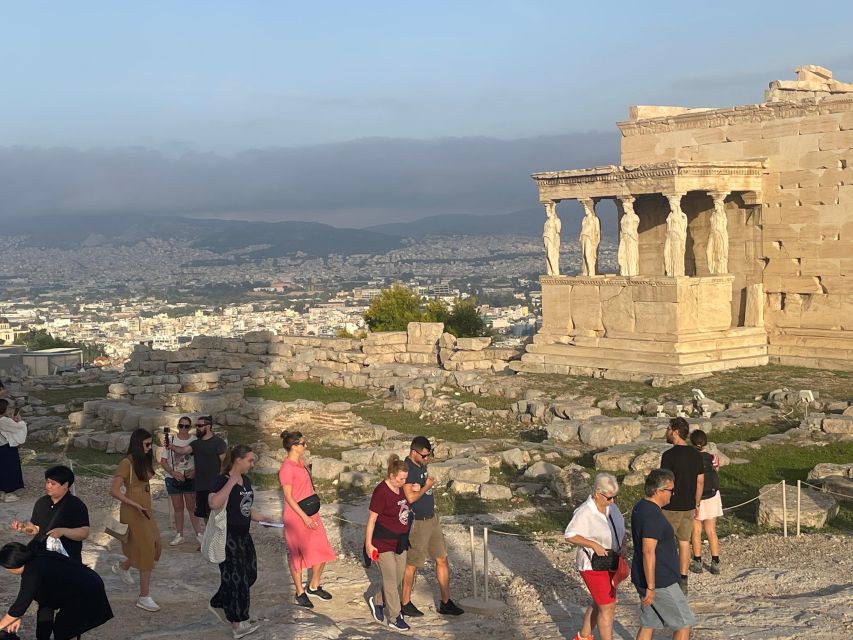
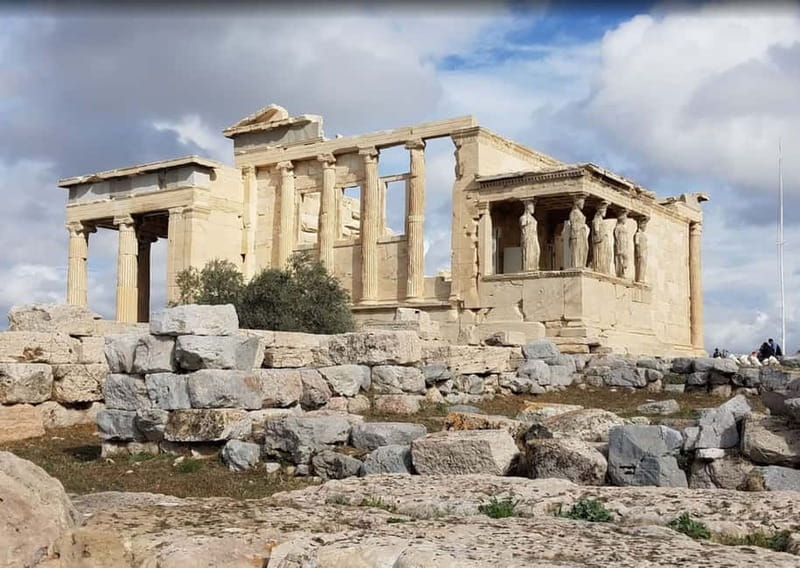
Then you arrive at the Erechtheion, famous for its asymmetrical design and for its six sculpted female figures that act as supporting columns, often called Caryatids.
Here’s what your guide does that you’ll really appreciate. Once someone points out the asymmetry and the purpose of the Caryatids, the whole facade stops looking like random decoration. It becomes a structural and artistic choice. You start noticing the logic behind the irregularity, which is exactly what makes the Erechtheion so memorable.
This stop is also where you should slow down for photos, but only after your guide sets the context. If you rush, you’ll miss the design reason why these female figures are such a big deal.
And yes, crowd flow can be tight. Keep your space, let the group move through, then circle back if your guide allows a moment.
Parthenon: democracy, design, and why it still hits
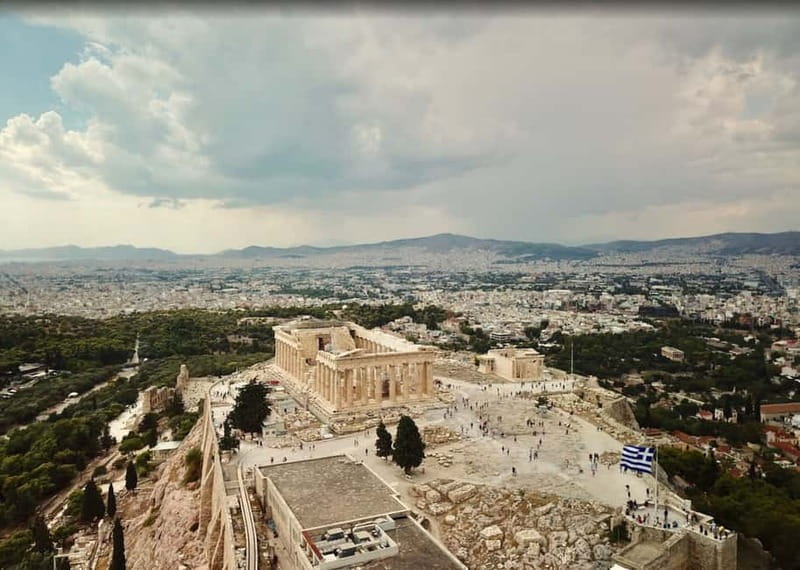
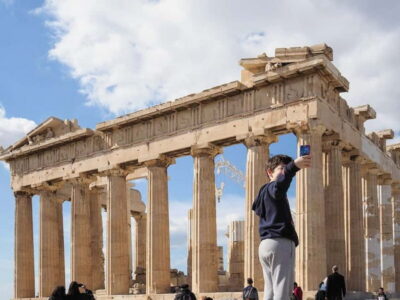
Finally, you reach the Parthenon, dedicated to Athena, patroness of Athens. This is where the tour’s value peaks, because it’s not just a monument, it’s a symbol of democracy and western civilization.
Your guide’s job is to connect form to meaning. The Parthenon is an example of 5th-century Doric architecture at its zenith, and the guide explains what that means in plain terms. You begin to see how the design communicates stability and civic pride.
If you’re a first-time visitor, this is where you should let the storytelling do its work. The Parthenon can feel overwhelming because it’s so famous. A good guide turns the scale and the details into something you can actually grasp in a couple of minutes at each viewpoint.
If you’re going in high heat, this is also where you’ll feel it, because you’ll be standing and looking. That makes morning slots even more attractive. The payoff is enormous, but your comfort helps you enjoy it fully.
The guide factor: why Simon, Kostas, Iris, and Alexia keep showing up
The tour is led by an English-speaking guide, and the strongest praise in the feedback is consistent. People mention guides who are funny and high-energy, who explain architecture, mythology, and Greek culture in a way that feels clear, not like a lecture.
Names you may hear tied to top guide experiences include Simon, Kostas, Iris, and Alexia. Those comments often mention how guides keep groups moving at a comfortable pace, find shade on hot days, and answer questions without making you feel rushed.
That matters for you because the Acropolis punishes bad pacing. If the group moves too fast, you end up tired and confused. If the guide doesn’t manage crowd flow, you spend your time waiting. This tour’s structure is built to avoid both problems.
Tickets, earphones, and the simple rules to know
This tour includes entrance tickets to the Acropolis plus skip-the-line tickets, so you are not arriving with the stress of figuring out which line is fastest. Disposable earphones are included for groups over 5.
Two rules you should note before you go:
- Photography is permitted throughout the tour, but video recording of the tour guide is not permitted.
- Audio quality can be affected by other groups when it’s crowded, even with earphones.
Also, for this style of tour you need to be ready to walk. No elevator for group tours is a big deal on the Acropolis hill, and the experience is not suitable for wheelchair users or people with mobility impairments.
Lastly, think like a minimalist. Pets, baby strollers, and luggage or large bags are not allowed. Bring what you need for sun and comfort, but keep it light.
What to wear and bring for a hot, steep walking tour
The tour comes with clear essentials because the Acropolis is not gentle.
- Comfortable shoes are non-negotiable. Choose grip over looks.
- Bring a sun hat and sunscreen.
- Carry water.
- Bring your passport or ID card.
If you hate carrying bulky items, you’re in luck. The tour does not allow luggage or large bags, so you won’t be tempted to pack for a day trip.
If you’re sensitive to heat or have heart issues, plan carefully. This isn’t listed as suitable for people with heart problems, and you should not gamble with your comfort on steep, sun-exposed ground.
And if you’re traveling with kids, note that it’s not suitable for children under 6. For younger travelers, the climb and pacing could be a mismatch.
Price and value: is $35.57 a good deal?
At $35.57 per person, you’re paying for three things that add up fast on the ground: an English-speaking guide, Acropolis entrance coverage, and skip-the-line access. In other words, you’re not just buying entry, you’re buying time management.
Two-hour tours can feel short, but here the time makes sense. The Acropolis is a concentrated hit of major monuments. If your goal is seeing the Parthenon and understanding what you’re looking at, this tour is designed for exactly that kind of first visit.
Is it expensive? It depends on what you compare it to. If you plan to do Acropolis tickets and then wing it with a guide-free plan, you’ll likely lose time in lines and lose the “meaning layer” that makes the stone worth your effort. If you prefer self-paced travel, you might skip the guided part and accept the tradeoff.
But if you want the monuments with context, and you want the day to stay smooth, this price is easier to justify.
Who should book this Acropolis and Parthenon tour
This is a strong fit if:
- You’re visiting Athens for the first time and want a focused plan.
- You care about mythology and architecture, and you like explanations that connect details.
- You want skip-the-line access and a route that prioritizes the Parthenon, Erechtheion, and other major stops.
It’s probably not for you if you:
- Need wheelchair access or elevator help on the hill.
- Have mobility limitations that make steep walking hard.
- Want a fully self-paced wander with no group rhythm.
Should you book this tour?
I’d book it if your priority is a high-impact Acropolis visit with a guide who explains what you’re seeing and keeps the pace workable. The biggest win is the combination of skip-the-line tickets and a route that hits the Parthenon, Theater of Dionysus, Asklepieion, Temple of Athena Nike, Propylaea, and the Erechtheion without turning your day into a maze.
If you’re going in summer, I’d lean toward a morning slot and come prepared for heat. Bring the basics, wear grippy shoes, and be ready to climb. When you do, you’ll walk away with more than photos. You’ll understand what the site is trying to say.
FAQ
How long is the Acropolis and Parthenon guided walking tour?
The tour duration is 2 hours.
Where do I meet the guide, and where does the tour end?
Meet your guide at Athenian Tours’ tour office at Mitsaion 2, 11742. The tour ends back at the same meeting point.
What is included in the price?
The price includes an English-speaking tour guide, entrance tickets to the Acropolis, skip-the-line tickets, and disposable earphones for groups of over 5 people.
Are earphones provided?
Yes. Disposable earphones are provided for groups over 5 people.
Is the tour offered in English?
Yes. The tour is an English-language experience.
Can I take photos or record video during the tour?
Photography is permitted throughout the tour. Video recording of the tour guide is not permitted.
Is elevator access available at the Acropolis?
No. The elevator cannot be used for group tours.
Who is the tour not suitable for?
It is not suitable for children under 6 years, people with mobility impairments, people with heart problems, and wheelchair users.
Is there free cancellation?
Yes. You can cancel up to 24 hours in advance for a full refund.
The Rest of Athens



Every Other Athens Write-Up
- All Day Cruise -3 Islands to Agistri,Moni, Aegina with lunch and drinks included
★ 5.0 · 4,958 reviews



The Acropolis, Other Ways Up

Everything else we have written up around Athens





Acropolis & Parthenon Tours, side by side.
 ★ 4.4Athens: Acropolis & up to 5 Archaeological Sites Combo PassFrom $4812,619 reviews
 ★ 4.2Athens: Acropolis Ticket with Optional Audio or Live GuideFrom $4211,055 reviews
 ★ 4.8Athens: Acropolis, Parthenon & Acropolis Museum Guided TourFrom $409,316 reviews
 ★ 4.6Athens: Acropolis and Parthenon Guided Walking TourFrom $385,882 reviews
★ 4.8Athens: Acropolis, Parthenon & Acropolis Museum Guided TourFrom $413,579 reviews
★ 4.6Athens: Acropolis and Parthenon Guided Walking TourFrom $385,882 reviews
★ 4.8Athens: Acropolis, Parthenon & Acropolis Museum Guided TourFrom $413,579 reviews
 ★ 4.0Athens: Acropolis Ticket with Audio GuideFrom $473,575 reviews
 ★ 4.7Acropolis: Acropolis and Parthenon Guided Walking TourFrom $363,442 reviews
 ★ 5.0Acropolis monuments & Parthenon Walking Tour with Optional Acropolis MuseumFrom $422,678 reviews
Sits on these lists