
Review · ACROPOLIS & PARTHENON TOURS
Athens Acropolis and Parthenon Walking Tour
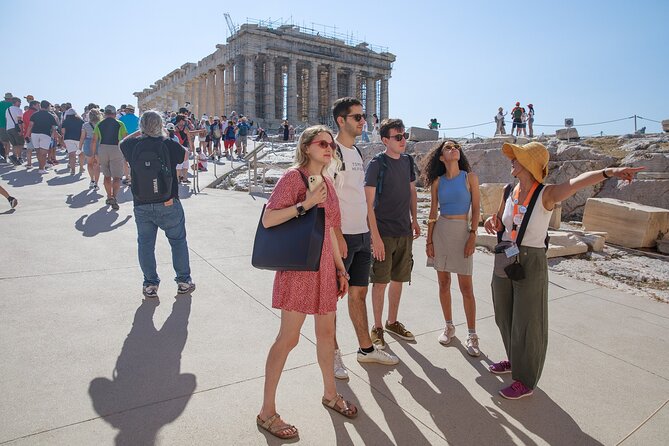
Acropolis day feels like you’re walking inside a stone story. This 2-hour guided trek covers the must-see monuments on the hill, with personal earsets so you can hear the guide clearly as you move. It’s a smart way to hit the UNESCO World Heritage Site without trying to figure everything out solo.
I especially like the way the walk keeps you oriented, so big names like the Parthenon, Erechtheion, and Propylaea actually mean something by the time you reach them. Another plus: if you choose the admission option, you can skip the ticket-office lines and move with less hassle. One thing to plan for, the climb is steep and the ground can be uneven, so bring comfortable shoes and expect a bit of a workout.
In This Review
- Key Things To Know Before You Go
- Meeting Point, Earsets, and the Real Pace Up the Acropolis
- From the Lower Slopes to Propylaea: How the Guide Sets Up the Big Sights
- Acropolis Highlights: Theatre to Temples, and Why Order Helps
- Stop 2: Theatre of Dionysus, the Birthplace of Drama
- Stop 3: Temple of Asclepios, a Breather for the Mind
- Stop 4: Odeon of Herodes Atticus and the Ancient-to-Modern Link
- Stop 5 and the View Breaks: Philopappos Hill and Temple of Athena Nike
- Stop 6: Propylaea, the Grand Entrance Feeling
- Stop 7: Erechtheion and the Caryatids (Those Columns You Can’t Forget)
- Stop 8: The Parthenon, the Moment It All Clicks
- The Ticket Choice, Skip the Line, and What It Means for Value
- What the Small Group Size Feels Like (And Why It Matters)
- Practical Tips That Save Your Day
- Should You Book This Acropolis and Parthenon Walking Tour?
- FAQ
- How long is the Athens Acropolis and Parthenon walking tour?
- Where do we meet for the tour?
- Is the admission ticket included in the price?
- Does the tour include skip-the-line access?
- What is the walking level like?
- Are baby strollers allowed on the Acropolis site?
- What group size should I expect?
- What if the tour is canceled or I need to cancel?
Key Things To Know Before You Go
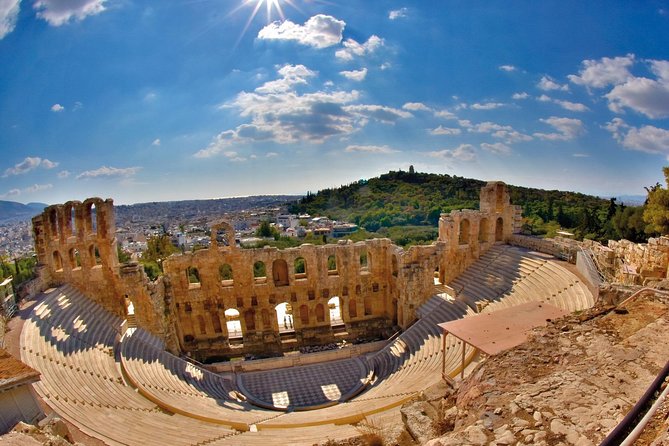
- Earsets for clear commentary on the move, so you are not guessing what you are looking at
- A tight 2-hour route across the Acropolis highlights, built for short stays
- A ticket option you can upgrade for, including line-skipping at the ticket office if selected
- Multiple photo pauses at viewpoints like Temple of Athena Nike and Philopappos Hill
- Licensed guide, small group size up to 24 people
Other ways up the Acropolis, side by side




Meeting Point, Earsets, and the Real Pace Up the Acropolis
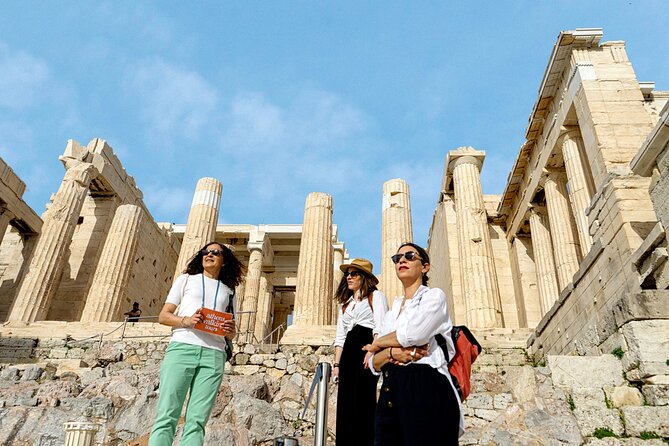
Your tour starts near the base of the Acropolis at LukumaΔΕΣ, Dionysiou Areopagitou 3, Athens 117 42. Meet your guide and group at your scheduled time, then you will head uphill right away. If you picked the option without admission tickets, you will hand over cash to your guide at the meeting point, since they have it prepaid, and you will not need to stand in line for tickets.
What makes this walk work is the sound system. You get personal earsets so the guide stays audible while you are climbing, stopping, and squeezing through busy sections. I like this setup because the Acropolis is not just one landmark, it’s a stack of monuments, levels, and viewpoints, and a good audio guide keeps the story from turning into noise.
The pace is brisk but not marathon-length. Still, this is an active uphill walk on stone paths, sometimes with uneven footing. If you are sensitive to stairs and slopes, go into it with the right expectations and plenty of water.
From the Lower Slopes to Propylaea: How the Guide Sets Up the Big Sights
Once you start climbing, the guide frames what you are seeing before you reach the biggest targets. You will pass key areas on the way up, with stops that connect monuments to the lives of ancient Athenians. That connection matters, because the Acropolis can feel like a collection of ruins until someone explains why each structure mattered.
Along the ascent, you will hear about the ceremonial and cultural role of the hill. You will also get a sense of how the monuments relate to each other, which is huge for first-timers. When you finally reach the Parthenon area, it will not be random sight-seeing, it will be a planned walk with a clear storyline.
This is one of the reasons I think this tour fits people who are short on time. In two hours you cover a lot of ground, but you do it in a guided order that helps you remember what is where.
Acropolis Highlights: Theatre to Temples, and Why Order Helps
The walk begins with the Acropolis proper, with a guided orientation that helps you understand what the UNESCO status is really about. You spend about 20 minutes here, with commentary focused on the core monuments and their cultural role.
A big practical win is that you are not stuck staring from one angle. Even within a short tour window, you get guided movement that lets you look across different sections of the site. That matters because the Acropolis reveals itself in layers, from gateway spaces to temple platforms and dramatic edges above the city.
You will also hear about the Theatre of Dionysus and other spaces that show ancient Athens was not only about politics and architecture. It was also about performance, public life, and religion, all happening on and around the hill.
Stop 2: Theatre of Dionysus, the Birthplace of Drama
One of the more fun stops is the Theatre of Dionysus, where ancient drama began to take shape. Plan on about 15 minutes here. The guide connects the theatre to major Greek playwrights like Aeschylus, Sophocles, and Euripides, and you can almost imagine the crowd energy even if the seating is now mostly gone.
Here’s the value of the stop: it puts the Parthenon and Athena worship into the wider picture of Athenian culture. You see that the Acropolis was not only temples and ceremonies, it was also a public stage for the stories that shaped Western literature.
If you like mythology and drama, this is the moment that often makes the whole day feel real. Even people who think they do not know much Greek history tend to latch onto the theatre part because it sounds familiar, and because the guide explains how the stories were performed in a real civic setting.
Stop 3: Temple of Asclepios, a Breather for the Mind

After the theatre, you shift to something calmer, the Temple of Asclepios, also known as the Asklepeion. You get about 10 minutes here. This was a sanctuary devoted to Asclepius, the god associated with medicine, and the idea was that people came for healing and hope.
This stop gives you a change of pace in your brain. You move from performance to healing, and the guide’s explanation makes it easier to remember that ancient religion often blended public worship with practical life. It is a useful break in the uphill schedule, especially if the sun is intense.
If you need mental recovery during a short tour, this is a good place to slow down briefly, look around, and rehydrate.
More of Athens taken slowly on foot
- Greek Food Walking Tour in Athens★ 5.0 · 4,740 reviews
- Acropolis: Acropolis and Parthenon Guided Walking Tour★ 4.7 · 3,442 reviews
- Acropolis monuments & Parthenon Walking Tour with Optional Acropolis Museum★ 5.0 · 2,678 reviews
- Athens Authentic Greek Food Walking Tour (Small Group)★ 5.0 · 809 reviews
Stop 4: Odeon of Herodes Atticus and the Ancient-to-Modern Link
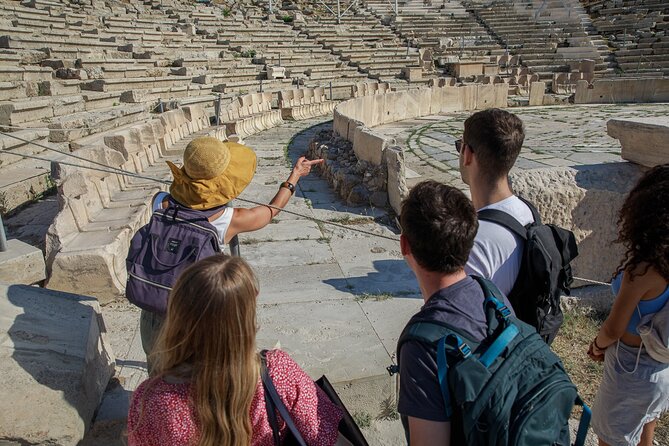
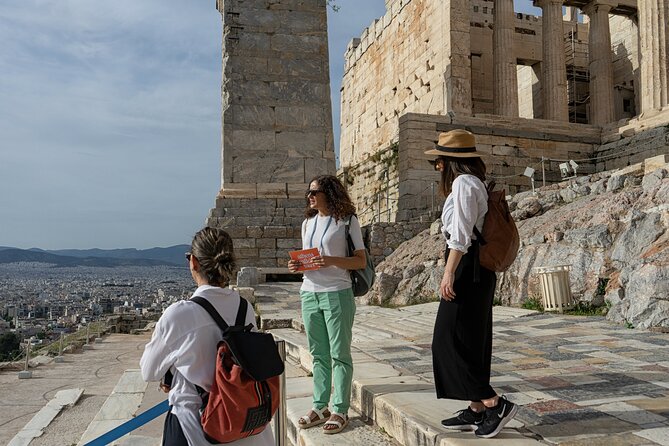
Next up, about 10 minutes at the Odeon of Herodes Atticus. This stone theatre has been around since 161 AD, and it continues to host performances.
That continuity is what I like here. It is easy to treat ancient sites as closed chapters. This theatre reminds you that some forms of public culture keep returning, with new audiences and new productions in spaces built for earlier times.
It also gives you another chance for photos, because theatres and viewpoints tend to frame the city in interesting ways. Even if you are not attending a show, you get the sense of why this location still draws people.
Stop 5 and the View Breaks: Philopappos Hill and Temple of Athena Nike
The tour includes quick, high-value pauses for views. You will see Philopappos Hill, also called the Hill of the Muses, and the monument of Philopappos. You get a short stop that works well for a breather and a city sweep below you.
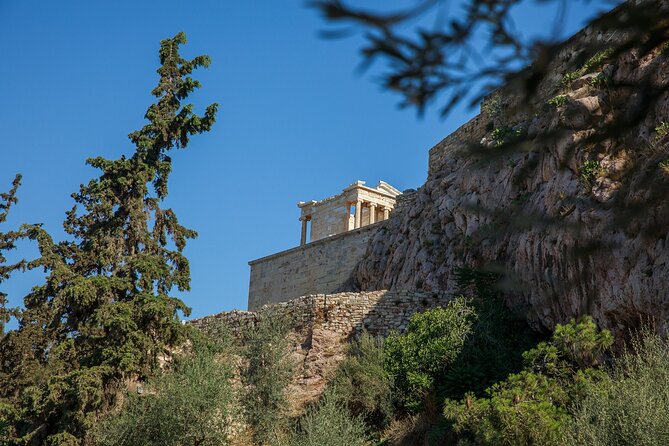
Then you move to the Temple of Athena Nike, perched at the southwestern edge of the Acropolis. Expect about 5 minutes here. This temple is dedicated to Athena as the goddess of victory, and it is also a great angle for panoramic looks back over Athens.
These two viewpoint breaks are worth paying attention to, because they make the architecture feel less like a checklist. After the temples and gateways, the views help you understand the Acropolis as a real place in the real city, not just a museum of stone.
Stop 6: Propylaea, the Grand Entrance Feeling
Propylaea is the grand marble gateway to the Acropolis. You pass through with about 5 minutes set aside, and the guide explains why this entrance matters. Designed by Mnesikles, it creates a sense of arrival and anticipation, like stepping from everyday life into sacred space.
I like this stop because it helps you read the site like a sequence. The gateway is not decoration, it’s a transition point. Once you understand that, you notice the way the rest of the walk feels increasingly ceremonial.
Also, even if you think you are mainly there for the Parthenon, Propylaea makes your Parthenon moments feel earned. You will feel the progression from threshold to temple.
Stop 7: Erechtheion and the Caryatids (Those Columns You Can’t Forget)
Then comes Erechtheion, about 15 minutes. This temple is famous for its architecture and its dual dedication to Athena and Poseidon. The headline feature is the Caryatid Porch, with the famous female statues that support the structure.
This is one of the most photogenic moments on the hill, and it is also one of the most explanatory. The guide’s job is to help you see the Caryatids as design, symbolism, and storytelling, not just as famous figures.
A practical tip: the ground can be busy and uneven around these stops. Take your time, move carefully, and let your earsets guide your attention, because it is easy to focus only on the statues and miss what the guide is linking to the broader religious meaning.
Stop 8: The Parthenon, the Moment It All Clicks
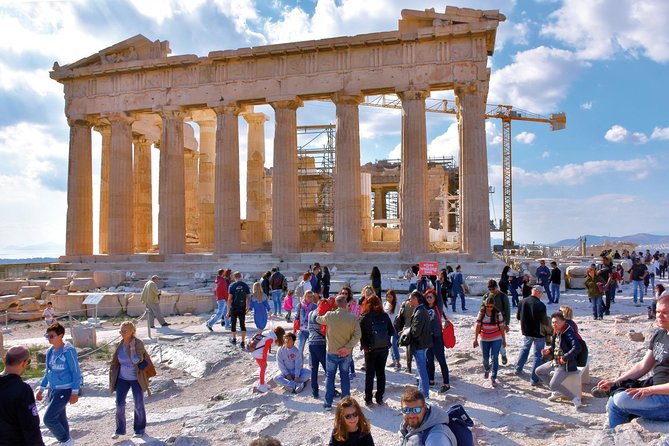
The tour ends with the Parthenon, about 25 minutes. Dedicated to Athena Parthenos, it is the iconic masterpiece that most people came to see. The guide explains why it became the symbol of classical Athens and how the design and setting reflect the society that built it.
Here’s what a good guided stop can do: it helps you look past the famous silhouette and actually notice parts of the temple in context. Even if you have seen pictures before, the guided explanation turns the Parthenon into a place with purpose and background.
If you only have one big Acropolis experience to choose, this stop is the reason to do it with a guide rather than only walking on your own. You will leave with a clearer mental map of what you saw and why it mattered.
The Ticket Choice, Skip the Line, and What It Means for Value
This tour is priced at $41.12 per person for the guided experience, with about 2 hours on the hill. The real value question is the admission ticket.
Your tour can be booked with or without the Acropolis admission ticket. If you select the option without tickets, you will need to handle the ticket step linked after booking within the required timeframe, and you will still need a valid ticket to join. If you choose the upgrade with admission, the price includes the Acropolis entry, and you also get skip-the-lines at the ticket offices for the Acropolis of Athens and Museum.
There is also the mention that when Acropolis entry is free, the entrance cost is already deducted from the tour price. That’s a good sign that the pricing is designed to reflect what you actually pay for the site.
So how do you decide? If you want the simplest experience with the least friction, the admission upgrade usually makes the day feel smoother. If you are comfortable managing tickets on your own and just want a guide, the no-ticket option can be a good fit. Either way, the tour stays focused on the hilltop landmarks and the guided explanations.
What the Small Group Size Feels Like (And Why It Matters)
The tour caps at 24 people. That matters on the Acropolis, where crowds can turn a guided walk into a slow shuffle. A smaller group helps the guide manage stop times and keep people together through narrow stretches.
You will also get a city map and a guide magazine at the end. I like these extras because they make it easier to keep exploring after the tour, instead of feeling like you used up all your planning time on the hill.
If you care about having time to actually look around, not just walk through, this group size is a practical advantage.
Practical Tips That Save Your Day
A few things can make or break Acropolis comfort.
- Wear comfortable shoes with traction. The walk is uphill and the surface can be uneven.
- Bring water and use sunscreen and a hat. Shade can be limited on exposed sections.
- Expect airport-style security and possible waits at peak times. Build in time and be ready to move quickly when it’s your turn.
- Baby strollers are not allowed on the Acropolis site, and there is no cloakroom for the side entrance used. A baby pouch is recommended.
- Strict entry times mean you should arrive on time. No waiting for late arrivals.
- If it is windy, audio outdoors can be harder, even with earsets. Try to stand where you can hear clearly at stops.
Finally, if you are planning museum time too, think about your schedule. This tour is built for the hilltop route in about 2 hours, so you may need another block of time if you want a full museum visit.
Should You Book This Acropolis and Parthenon Walking Tour?
Book it if you want a guided path that turns the Parthenon from a postcard into a real story. This is especially worth it when you have limited time, because the route hits the key monuments you will otherwise spend days trying to piece together.
Skip it if you prefer total freedom and already know what you want to see at each stop. You can definitely do the Acropolis on your own, but you will lose the advantage of someone connecting theatre, medicine, architecture, and Athena into one coherent walk.
If you are on the fence, my simplest advice is this: pick the admission option if you want fewer moving parts and more smooth time at the site. Pick the no-ticket option if you are comfortable managing entry yourself and want to focus your energy on the guide-led walk.
FAQ
How long is the Athens Acropolis and Parthenon walking tour?
The tour runs about 2 hours.
Where do we meet for the tour?
Meet at LUKUMAΔΕΣ, Dionysiou Areopagitou 3, Athens 117 42, Greece. The end point is Acropoli, Athens 117 42, Greece.
Is the admission ticket included in the price?
It depends on the option you choose. You can book without admission, or upgrade to include an admission ticket. If you book without the ticket, you must arrange entry as instructed and you need a valid entrance ticket to join the tour.
Does the tour include skip-the-line access?
If you select the option with an admission ticket, you get skip-the-lines at the ticket offices for the Acropolis of Athens and Museum.
What is the walking level like?
It’s best for travelers with a moderate physical fitness level. There is uphill walking and uneven ground.
Are baby strollers allowed on the Acropolis site?
No. Baby strollers are not allowed on the Acropolis archaeological site, and there is no cloakroom at the side entrance used.
What group size should I expect?
This tour has a maximum of 24 travelers.
What if the tour is canceled or I need to cancel?
You can cancel for a full refund up to 24 hours in advance. The experience requires good weather, and if it is canceled due to poor weather, you will be offered a different date or a full refund.
The Rest of Athens



Every Other Athens Write-Up
- All Day Cruise -3 Islands to Agistri,Moni, Aegina with lunch and drinks included
★ 5.0 · 4,958 reviews



The Acropolis, Other Ways Up

Everything else we have written up around Athens





Acropolis & Parthenon Tours, side by side.
 ★ 4.4Athens: Acropolis & up to 5 Archaeological Sites Combo PassFrom $4812,619 reviews
 ★ 4.2Athens: Acropolis Ticket with Optional Audio or Live GuideFrom $4211,055 reviews
 ★ 4.8Athens: Acropolis, Parthenon & Acropolis Museum Guided TourFrom $409,316 reviews
 ★ 4.6Athens: Acropolis and Parthenon Guided Walking TourFrom $385,882 reviews
★ 4.8Athens: Acropolis, Parthenon & Acropolis Museum Guided TourFrom $413,579 reviews
★ 4.6Athens: Acropolis and Parthenon Guided Walking TourFrom $385,882 reviews
★ 4.8Athens: Acropolis, Parthenon & Acropolis Museum Guided TourFrom $413,579 reviews
 ★ 4.0Athens: Acropolis Ticket with Audio GuideFrom $473,575 reviews
 ★ 4.7Acropolis: Acropolis and Parthenon Guided Walking TourFrom $363,442 reviews
 ★ 5.0Acropolis monuments & Parthenon Walking Tour with Optional Acropolis MuseumFrom $422,678 reviews
Sits on these lists