
Review · ANCIENT CORINTH & THE CANAL
Biblical Corinth: St. Paul and His Letters to the Corinthians
Mars Hill puts Paul on the map. This private day links Athens to Corinth with St. Paul stops that match what you read in his letters, plus onboard Wi-Fi so you stay connected.
I love the private pacing, so you can linger where you care and move on when you want. I also love the way the assigned driver builds context during the drive, so the ruins and churches feel connected instead of random.
One thing to consider: the driver is not a licensed site guide inside the archaeological areas, so if you want a full inside-the-ruins narration, you will want to add a licensed guide when available.
In This Review
- Corinth, Paul, and the letters come alive in 10 stops
- Private transport with Paul as the thread
- Price and what you actually get for 218.43
- Areopagus Hill, Mars Hill, and the Athens setup
- Corinth Canal and the Diolkos: trade routes, not just viewpoints
- Isthmia: Poseidon games, tentmaking, and the crowd energy
- Isthmia museum time: port artifacts and the Paul connection
- Ancient Corinth and the Bema: where letters meet the Roman world
- Temple of Apollo to Kechreai: Pauls ports and departure points
- Apostolou Pavlou church and Akrokorinthos payoff
- Drivers, not licensed guides, and how to get the best inside explanations
- Who this tour suits best
- Should you book Biblical Corinth: St. Paul and His Letters to the Corinthians?
- FAQ
- How long is this tour?
- Is hotel or port pickup included?
- Are entrance fees included?
- Does this tour include a licensed tour guide?
- What language is the tour offered in?
- Is Wi-Fi available during the tour?
Corinth, Paul, and the letters come alive in 10 stops
- Areopagus Hill and Mars Hill: Paul addressing Athens and introducing the idea of the Unknown God
- Corinth Canal views: engineering drama above the limestone walls and ships threading the waterway
- Diolkos remains: imagine ships hauled overland across the Isthmus long before the canal existed
- Isthmia and the Poseidon world: games, crowds, and Paul working as a tentmaker amid public life
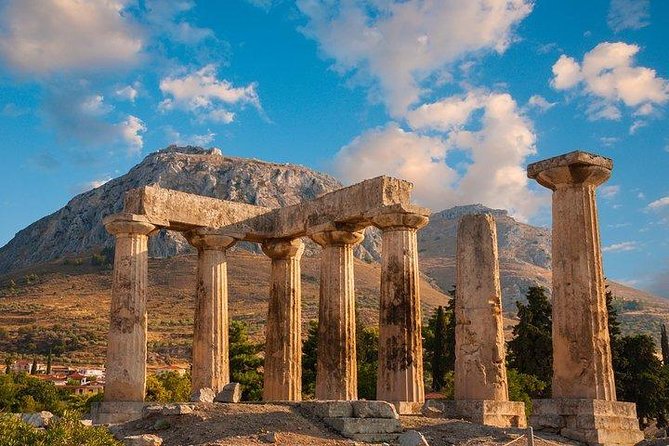
- Ancient Corinth highlights: the Bema, the skyline Temple of Apollo, and the city that shaped early Christianity
- Kenchreai and onward travel: the port tied to Pauls departures and early church life
Other stops at ancient Corinth and the canal

Private transport with Paul as the thread

This is the kind of Corinth day trip that works best when you like two things at once: big biblical themes and real street-level geography. You start with the Athens setting, then you head straight toward Corinth and keep returning to the same question. What did it mean for Paul to preach in places built for commerce, games, philosophy, and worship?
Because it is private, you can set your tempo. You are not stuck with a group that rushes. I like that the driver gives space, answers questions, and still keeps the day moving.
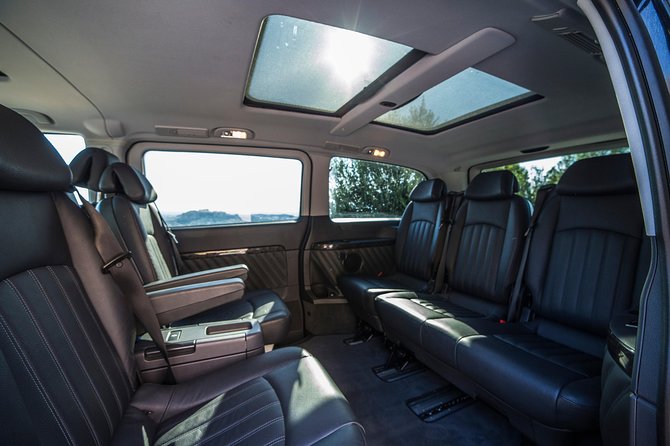
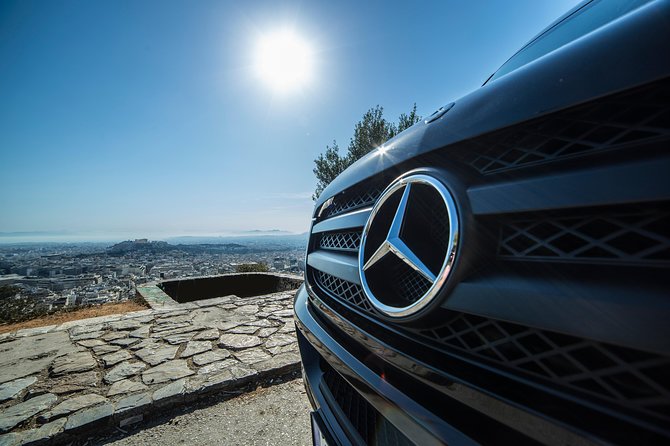
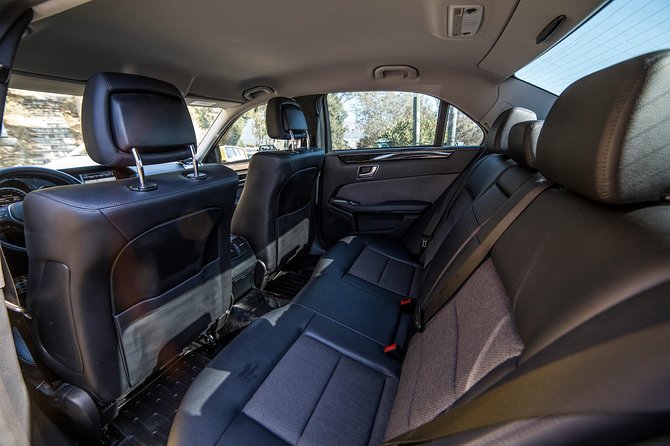
You also get comfort and logistics that help a long day feel manageable. Expect an air-conditioned vehicle, bottled water, and onboard Wi-Fi. That last part sounds small until you need maps, translations, or just a quick check-in message for your next stop.
Price and what you actually get for 218.43
The price is $218.43 per person for a full 8 to 9 hour day, and the value comes from what is included, not what sounds impressive. You get hotel or port pickup and drop-off, private transportation, and onboard Wi-Fi. There is also a lunch option at a traditional seaside Greek taverna if you select the Greek traditional food meal.
What is not included is what can surprise people if they expect it all wrapped up. Entrance tickets are extra for Ancient Corinth and the Archaeological Museum of Isthmia, and you can purchase them on site for the listed fee. Several other stops are free admissions.
Here is the practical takeaway: if you hate ticket math on travel days, you should budget for those two entrances. If you are happy buying a couple of tickets on site, the rest is a smooth, guided-by-context route that saves you from figuring out how to stitch these far-flung sites together.
Areopagus Hill, Mars Hill, and the Athens setup
Your day opens where ideas were argued in open air. You walk through the sacred grounds associated with the Acropolis, then you pause at Areopagus Hill, also known as Mars Hill. This is where the apostle delivered one of his best-known sermons in Athens, pushing back against the citys usual way of thinking and introducing the message of the Unknown God.
What makes this stop valuable is the framing. Standing in this area helps you understand that Paul was not only speaking about faith. He was translating faith into a language Athens respected. You will see how that matters when you later walk in Corinth, where religion, commerce, and status all mixed together.
You will also appreciate the pacing here. Areopagus Hill is not a huge time sink, and it sets up the rest of the day so the drive toward Corinth feels like a continuation instead of a detour.
Corinth Canal and the Diolkos: trade routes, not just viewpoints
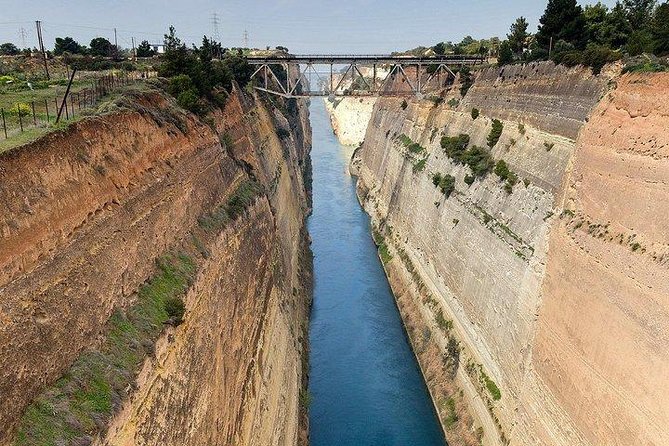
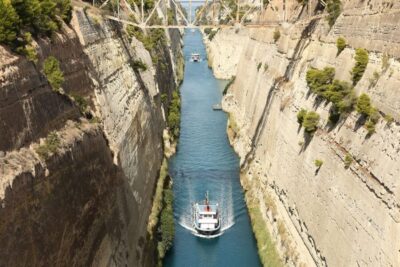
Once you leave Athens behind, the morning shifts from philosophy to geography. The Corinth Canal is the first big visual hit. You view it from above, looking down at the steep limestone walls and the narrow cut that connects the Gulf of Corinth to the Saronic Gulf.
The tour does a nice job turning a photo-worthy spot into a historical point. The canal was built to separate the Peloponnese from the mainland, and it is narrow enough that many modern ships cannot pass. That detail matters because it explains why older people still needed alternative ways to move goods and boats.
A short time later you reach the Diolkos, an ancient overland track system that allowed ships to be hauled across the Isthmus long before the canal existed. You can walk among the remnants and picture merchants, sailors, and travelers using this route. Even if you do not love engineering, you will probably enjoy how this links to Pauls world, where movement and trade shaped everyday life.
This is one of those “you can just look, or you can understand” moments. If you want context, ask questions in the car. The drivers on this tour tend to keep the story coherent from stop to stop.
Isthmia: Poseidon games, tentmaking, and the crowd energy
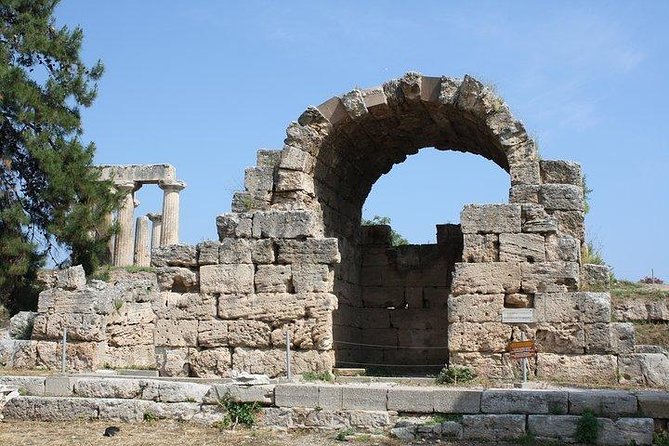
Isthmia is where the tour becomes more than a map. It is about public life. You visit the ancient sanctuary area tied to the Isthmian Games, held in honor of Poseidon and considered second in importance only to the Olympic Games.
The practical value of this stop is that it shows how Pauls ministry intersected with mass gatherings. It is easy to imagine preaching as something quiet and personal. Isthmia reminds you that in Pauls time, major faith ideas often spread right next to big events, big crowds, and big public routines.
You also learn why Paul could plausibly connect here. During his time in the Corinth area, he is believed to have worked as a tentmaker. Isthmia attracted visitors and athletes from across the Greek world, and that means work and outreach would naturally overlap.
On the ground, you explore more than one layer of the Isthmia complex. You may see the sanctuary spaces, the stadium area tied to the games, and nearby religious sites. The tour also includes a theatre stop at Isthmia, with Roman mosaics depicting sea creatures and Dionysian mythology. That contrast is not just decorative. It underlines how many different belief systems competed for attention in the same region where Christianity was spreading.
If you enjoy noticing cultural tension, this is a strong chapter of the day.
- Athens: Acropolis & up to 5 Archaeological Sites Combo Pass★ 4.4 · 12,619 reviews
- Athens: Acropolis, Parthenon & Acropolis Museum Guided Tour★ 4.8 · 9,316 reviews
- Athens: Cape Sounion & Poseidon Temple Sunset Half-Day Trip★ 4.8 · 8,241 reviews
- Athens: Acropolis and Parthenon Guided Walking Tour★ 4.6 · 5,882 reviews
Isthmia museum time: port artifacts and the Paul connection

A museum stop can feel like a chore on a long tour. Here, it is short, and it adds a key piece that the ruins alone cannot give.
The Archaeological Museum of Isthmia focuses on what the region looked like during Pauls time: religious and cultural life around the Poseidon sanctuary and the games. One of the notable highlights includes glass panels linked to Kenchreai, the nearby port connected to Paul travel.
This is also where the tour ties the physical objects to the movement of people. If you have ever wondered how letters and preaching connected to everyday shipping, this museum makes the link feel more real. You can see the kind of world ships carried and the kinds of religious offerings people made.
Plan for this stop to be a focused 30 minutes rather than a slow wandering session. It is the kind of museum where you can either move quickly to the themes you care about, or you can get distracted by details. The good news is the rest of the day keeps flowing, so the museum does not break your momentum.
Ancient Corinth and the Bema: where letters meet the Roman world
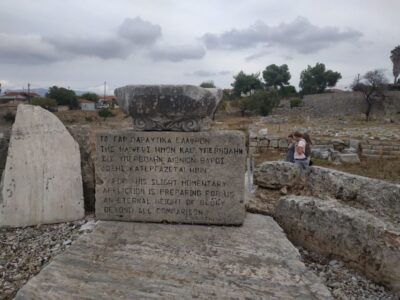
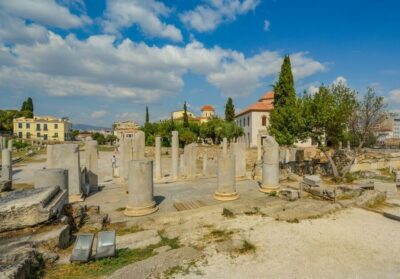
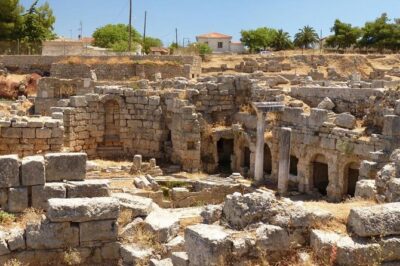
Then you arrive at the place that most people came for: Ancient Corinth. This was a major crossroads on the isthmus, and it mattered for trade, religion, and status. Paul spent more than a year and a half here, building a Christian community and writing letters that still shape Christian teaching.
The standout moment in the ancient city is the Bema, the judgment seat. This is where Paul is believed to have stood before Proconsul Gallio after accusations tied to his teaching. The story matters because it helps explain why Paul could keep preaching in Corinth without Roman suppression. Gallio treated it as an internal religious dispute. That detail is a big deal if you care about how early Christianity navigated power.
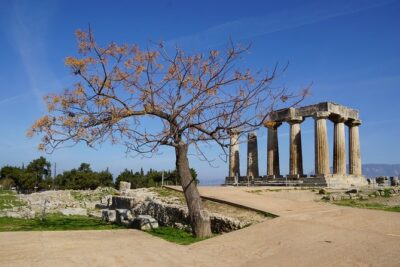
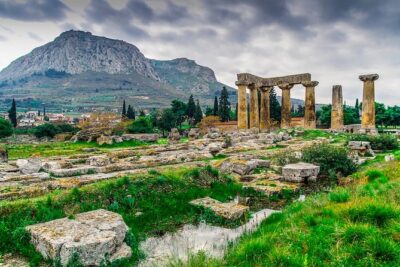
The tour also helps you read the city’s skyline. You visit the Temple of Apollo, built around 560 BC and known for impressive Doric architecture. Even if you do not memorize architecture names, you will feel the scale. When Paul arrived in Corinth, this temple would have dominated the skyline, symbolizing a deep polytheistic culture.
Standing in the area where Apollo worship was central makes Pauls preaching sound less abstract. You are not only imagining a competing idea set. You are literally next to the stones that anchored those beliefs.
The bonus for many people is pacing. Since it is private and you are not rushed by a crowded schedule, you can spend longer on the parts that connect to your questions, then move on before your legs turn into jelly.
Temple of Apollo to Kechreai: Pauls ports and departure points
Corinth was never only a city on land. It had a sea life, and Pauls journey depended on it.
You visit Kenchreai, known today as the ancient Cenchreae port on the eastern side of Corinth. This is tied to Acts 18 and Pauls second missionary journey. You also hear about a moment connected to a vow that likely involved cutting hair before departure, followed by travel with Priscilla and Aquila.
What I like about this stop is the way it connects travel details to church life. Kenchreai also housed an early Christian community. Paul mentions Phoebe in his letter to the Romans, describing her as a servant in the church. That is the kind of connection that makes the letters feel like real relationships, not just timeless ideas.
The setting today is peaceful by comparison, which makes the memory of the ancient port feel even more striking. Take a few minutes to slow down, because this stop works best when you let the contrast sink in.
Apostolou Pavlou church and Akrokorinthos payoff
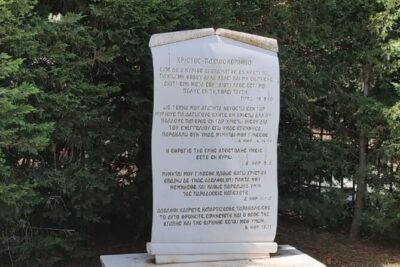
After the port, the day moves toward the religious layers that followed Paul. You visit Apostolou Pavlou, a church dedicated to the apostle and linked to his time in Corinth around 51 to 52 AD. It functions as a living reminder of where Paul taught and built community.
Then you climb up to Akrokorinthos, the fortress overlooking Ancient Corinth. If you only have one “wow” view on your day, this is often the one. You trace ancient walls and paths to a commanding overlook where Paul might have stood looking out toward the city he was trying to influence.
Akrokorinthos also changes your perspective on everything you saw earlier. You can look down and connect canal geography, port movement, and city layout into one big story. It makes the day feel coherent, not like a checklist.
I recommend bringing comfortable walking shoes. Even if you do not plan to rush, the climb plus the ancient uneven ground can add up during an 8 to 9 hour day.
Drivers, not licensed guides, and how to get the best inside explanations
This is one of the most important practical differences to understand. Your assigned driver is there to handle the driving and provide history during transit. They are not licensed to enter the archaeological sites with you.
That said, the commentary still matters. Many guides use a speaker so you can hear clearly, and they answer questions on the spot. In the best cases, the driver helps you look for what you might otherwise miss, like how the Bema area fits into the Roman legal story.
If you want a more formal inside-the-sites tour, there is an optional licensed tour guide upon request, depending on availability. This is worth considering if your top priority is interpretive storytelling while you are inside the ruins and museum spaces.
Also, do not skip the simple tactic of planning your lunch choice ahead of time. The meal is served at a traditional seaside taverna, and people who choose the Greek traditional food option have mentioned that the lunch spot comes with a great view and time to relax before the hill climb.
Who this tour suits best
This tour makes the most sense if you want a coherent biblical route through Corinth without doing the planning math yourself. It is also a strong fit if you like driving-based storytelling, because the narrative continues while you are traveling between sites.
It is especially good for people who:
- want to connect Paul letters to physical places like Mars Hill, the Bema, Apollo Temple, and Kenchreai
- prefer a private pace over group rush
- value comfort, Wi-Fi, and a driver who answers questions in real time
It may not be the best match if you mainly want a fully licensed guide walking you through every archaeological stop with a continuous inside explanation. In that case, you should ask about the licensed guide option early and budget the extra cost for the deeper interpretive layer.
Should you book Biblical Corinth: St. Paul and His Letters to the Corinthians?
I would book it if you want a memorable Paul-focused day that feels practical, calm, and thoughtfully paced. The blend of Athens context, Corinth engineering landmarks, Isthmia games, and the Bema story creates a full arc that matches why Paul letters still matter.
You should think twice before booking if you expect the driver to act as an official on-site guide inside every archaeological area, because that is not included. If you are flexible and you might add a licensed guide when available, you will likely find the day very satisfying.
If your goal is to leave Corinth with locations in your head and a clearer sense of how faith spread through real roads, ports, and public spaces, this is a solid pick for a day trip from Athens.
FAQ
How long is this tour?
The tour runs about 8 to 9 hours.
Is hotel or port pickup included?
Yes. Hotel or port pickup and drop-off are included, and pickup time can be adjusted on request.
Are entrance fees included?
Entrance fees are not included for Ancient Corinth and the Archaeological Museum of Isthmia. Other stops listed are free admissions, and you can purchase these two tickets on site.
Does this tour include a licensed tour guide?
A licensed tour guide is not included in the base price. A licensed tour guide can be requested depending on availability.
What language is the tour offered in?
The tour is offered in English.
Is Wi-Fi available during the tour?
Yes. There is Wi-Fi on board, plus bottled water and an air-conditioned vehicle.
Every Other Athens Write-Up
- All Day Cruise -3 Islands to Agistri,Moni, Aegina with lunch and drinks included
★ 5.0 · 4,958 reviews




Ancient Corinth and the Canal
Everything else we have written up around Athens


Ancient Corinth & the Canal, side by side.
 ★ 4.6From Athens: Ancient Corinth Day Trip with Canal & VR GuideFrom $411,073 reviews
 ★ 5.0Biblical Tour Letters ToThe Corinthians St Paul’s Footsteps 6HourFrom $1701,065 reviews
 ★ 5.0Private Biblical Tour Ancient Corinth & Isthmus Canal from AthensFrom $301762 reviews
 ★ 4.8Athens: Ancient Corinth & Nafplio Full Day Trip with SwimFrom $44523 reviews
 ★ 5.0Private Tour of Apostle Paul’s Footsteps in Ancient CorinthFrom $169275 reviews
 ★ 4.5Corinth Half-Day Trip from Athens with Entrance TicketsFrom $91242 reviews
 ★ 4.7Athens: Ancient Corinth & Nafplion Guided Premium TourFrom $34237 reviews
 ★ 4.4Athens: Corinth Canal, Mycenae and Nafplio Day TourFrom $33233 reviews
Sits on these lists