
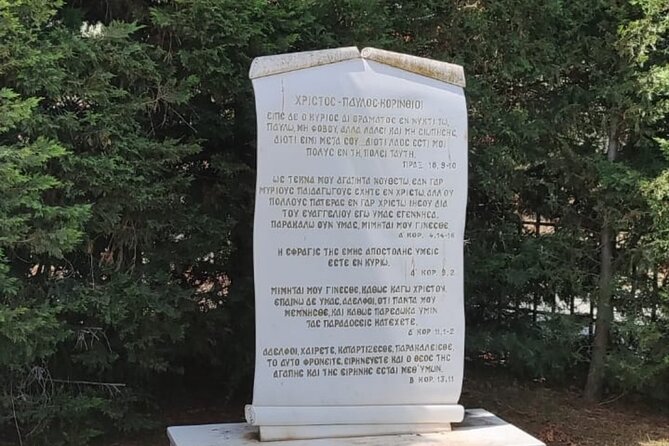
Review · ANCIENT CORINTH & THE CANAL
Private Tour of Apostle Paul’s Footsteps in Ancient Corinth
Corinth feels close when you walk it. This private tour follows Apostle Paul’s trail through the Agora area in Ancient Corinth and up to the heights of Acrocorinth, with real history in every stop. You’ll connect the geography to the stories, from Paul’s arrival by sea to the Roman-era setting where his message landed.
I especially love the way the day ties Christian tradition to specific places you can actually stand on, not just names on a page. The stops feel purposeful, from the Bema setting to the market area, then finishing with the modern Apostolos Pavlos Church.
One thing to plan for: entrance fees are not included, so budget for site entry plus some walking and bright Greek sun.
In This Review
- Key Highlights You’ll Care About
- From Athens to Corinth, a private ride that keeps the day smooth
- Corinth Canal at the Isthmus, plus the Diolkos trackway shortcut
- Kenchreai port, Paul’s arrival by sea, and the name Phoebe
- Ancient Corinth: the Bema and Agora area where message meets power
- The Archaeological Museum of Corinth, why it makes the ruins easier
- Acrocorinth fortress, the Temple of Aphrodite, and views you can’t fake
- Apostolos Pavlos Church, ending with a modern mosaic of Paul
- Price and value: what $169.03 covers, and what costs extra
- Who should book this Paul footsteps tour
- Should you book this Private Tour of Apostle Paul’s Footsteps in Ancient Corinth?
- FAQ
- How long is the tour from Athens to Ancient Corinth?
- Is pickup and drop-off included?
- Are entrance fees included for Ancient Corinth and the museum?
- What transportation will we use?
- Do you offer airport pick-up?
- Is the tour affected by weather?
Key Highlights You’ll Care About
- A true private day, only your group, so pacing is your call
- Corinth Canal and Diolkos start the story with trade and engineering
- Ancient Corinth focus on Paul moments, including the Bema and Agora area
- Museum stop that helps you interpret what you just walked past
- Acrocorinth fortress views plus layers of Greek, Byzantine, Frankish, Venetian, and Ottoman history
- Modern finish at Apostolos Pavlos Church, with a Paul mosaic by Pastorutti and Tsotsonis
Other stops at ancient Corinth and the canal

From Athens to Corinth, a private ride that keeps the day smooth
This tour runs about 5 to 6 hours, with travel time included, and it is built for a low-stress day trip. You get an air-conditioned vehicle, WiFi on board, and bottled water, which sounds small until you’re actually sitting in the heat.
Pickup is straightforward. If you’re staying in Athens, the driver waits for you at your hotel or apartment entrance. If you’re coming from a port, they wait at the gate holding a sign with your name. For small groups of 1 to 4, you’ll use a sedan, which usually means an easier, more comfortable ride through tight roads.
The biggest practical win with private tours is simple: you can take photos when you want, linger when a site clicks, and move on when you’re done. And since the experience is in English, you won’t be piecing clues together on your own.
Corinth Canal at the Isthmus, plus the Diolkos trackway shortcut
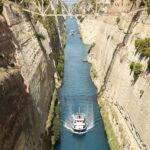
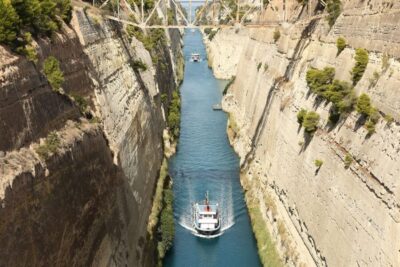
You start at the Isthmus of Corinth, the narrow land bridge that once marked a real boundary between mainland Greece and the Peloponnese. The Corinth Canal slices through the isthmus since 1893, and it is a striking opener because it shows how geography controls travel, commerce, and power.
After that, you’ll walk part of the Diolkos, the ancient stone-paved trackway that predates the canal by over two thousand years. This mattered because ancient ships were hauled overland to avoid the risky sea route around the Peloponnese. Even if you’re not a history nerd, you can feel the logic here: shortcuts shape everything, including how fast people and ideas move.
Value for you: this first pairing explains why Corinth mattered long before Paul ever arrived. It sets you up to understand later stops about ports, shipping, and why letters and travelers could connect across the Mediterranean.
Kenchreai port, Paul’s arrival by sea, and the name Phoebe
Next comes the ancient port of Kenchreai (Kechrees), tied to Paul’s early time in Corinth around 51 A.D. This is one of the most meaningful transitions in the day because it moves from geography and travel routes into people.
Here you’ll hear how Paul disembarked during his visit, and later sailed out again for Ephesus. You’ll also connect that travel with the Romans letter, entrusted to Phoebe, described as a deaconess in the local church.
Even though only modest traces of the port remain, it’s the kind of place where the story works best if you slow down. A port is not just a setting, it is a meeting point, where languages, goods, and faith traditions collide and remix.
Practical note: this stop is shorter, so if you like taking your time, make sure you use your early energy wisely.
Ancient Corinth: the Bema and Agora area where message meets power
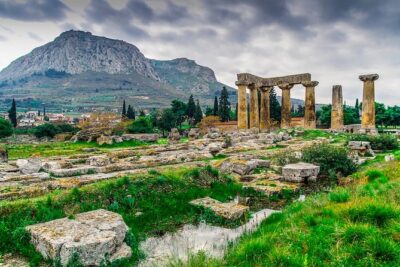
Now you’re in the core of the day, Ancient Corinth (Archaia Korinthos). This is where the city’s scale and purpose land in your head, not just in your notes.
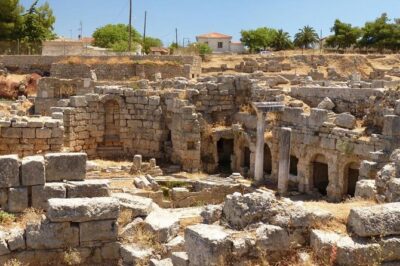
Two spots matter most for the Paul connection. At the Bema, a raised platform in the city center, Paul is believed to have addressed the local community and also stood trial before the Roman proconsul. Nearby, the Agora helps you picture daily life, the kind of marketplace setting where ideas spread fast because people were always moving through it.
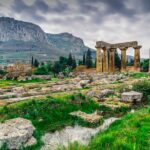
You’ll also see the Temple of Apollo, which is a reminder that this city did not have a single religion or a simple story. For Christian visitors, that mix can feel like part of the point, because Paul’s message was heard against a backdrop of pagan beliefs.
What I think works best here: the driver focuses on the why of each location, not just the what. If your guide is the type who links passages to place, you may get extra Bible context tied to what you’re standing near.
The Archaeological Museum of Corinth, why it makes the ruins easier
After walking among stones, the Archaeological Museum of Corinth helps you put faces and functions to what you saw outside. The museum, built in 1932, preserves finds from excavations and offers clearer context across Corinth’s timeline.
You’ll spend about 45 minutes here, and the galleries include highlights such as prehistoric finds and items from the Sanctuary of Asklepios. This is the stop that turns your day from walking locations into understanding a city.
One more practical reality: because the museum ticket is not included, you’ll want to plan a moment for payment and entry. It’s still worth it, especially if you want to leave with a sharper sense of what the ruins represent beyond dramatic walls and columns.
More Athens bookings just for your own group
- Best of Athens Half Day Private Tour★ 5.0 · 3,714 reviews
- Athens Full Day Private Tour★ 5.0 · 2,903 reviews
- Athens Airport Private Arrival Transfer with Meet & Greet★ 4.5 · 1,495 reviews
- Athens Airport to Athens Hotels Private Arrival Transfer★ 5.0 · 947 reviews
Acrocorinth fortress, the Temple of Aphrodite, and views you can’t fake
Then the tour climbs to Acrocorinth, the fortified acropolis that protected Corinth for centuries, through Greek, Byzantine, Frankish, Venetian, and Ottoman periods. The walls, towers, and bastions are impressive on their own, but the payoff is the feeling of how defensible this place was.
Acrocorinth also connects to religion, including the famous Temple of Aphrodite. The sanctuary is described as having a community of up to 1,000 priestesses, which adds another layer when you think about Paul addressing a world with established cults and strong local traditions.
And yes, the views are a factor. Even with a short time here (about 40 minutes), you’ll see why this hilltop mattered.
What to watch for: the terrain can be uneven, so comfortable shoes are not optional on this day.
Apostolos Pavlos Church, ending with a modern mosaic of Paul
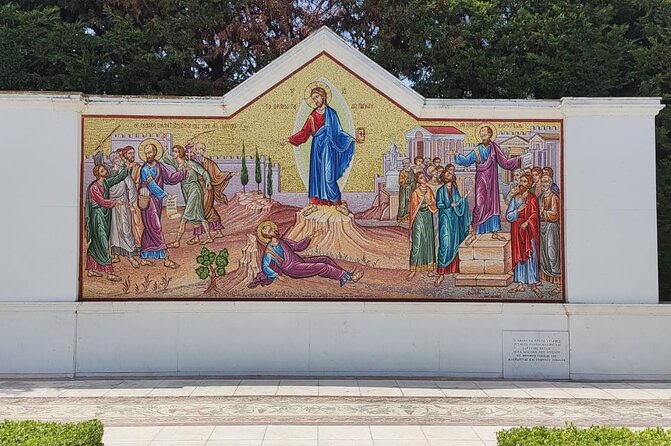
To close the experience, you visit the modern Apostolos Pavlos Church in central Corinth. Inside, you’ll find a striking mosaic depicting Paul’s journey and mission in the city, created by artists Pastorutti and Tsotsonis.
This finish works well because it creates a bridge between ancient Corinth and today. It’s not about replacing the ruins, it’s about reflecting on what the story has meant long enough to keep being retold in art and worship.
If you came for faith and context, this final stop gives you a calm place to absorb the day before you head back to Athens.
Price and value: what $169.03 covers, and what costs extra
At $169.03 per person, this tour is priced for private convenience and guided interpretation from the car. What you get as part of the experience is real value: air-conditioned transport, WiFi, bottled water, and professional English-speaking tour drivers with in-depth history framing.
Hotel and port pickup and drop-off are included too, which can save you headaches and local taxi bills.
Two costs to plan for:
- Entrance fees are not included. Archaeological site and museum entry is listed at €15.00 per person.
- A licensed guide to accompany you inside archaeological sites is not included.
That last detail matters if you expect a second person whose only job is walking you through indoor explanations at every ticketed stop. Here, the tour driver provides context, but you should budget your time and energy for doing the site entries yourself with the group meeting flow.
For many people, this price works because you are effectively buying:
- a smooth Athens to Corinth round trip with minimal hassle
- a focused route that hits the Paul-related touchpoints
- a day where you can control pacing with your private group
If you’re traveling solo, as a couple, or with older family members who prefer direct logistics over public transport, private often becomes the smart value.
Who should book this Paul footsteps tour
Book it if you want a Christian sites day that still stays grounded in real geography and city design. It also fits well if you like structure but don’t want the rigid feel of a big group bus.
You’ll especially enjoy it if:
- you’re visiting Corinth specifically for Apostle Paul connections
- you want both sea and city settings, not only one
- you prefer a private format where the driver can adapt to your pace
If you’re looking for a strictly biblical presentation with lots of church teaching time, you might find yourself wanting more direct scripture instruction than what a site-focused day provides. This experience is more about place and context than a full religious lecture.
Should you book this Private Tour of Apostle Paul’s Footsteps in Ancient Corinth?
Yes, if your ideal day trip is a tight route with meaningful stops, comfortable transport, and a guide who links what you see to why it mattered for Paul. The combination of the canal, Kenchreai port, Ancient Corinth’s Bema and Agora area, the museum, and the climb to Acrocorinth is a logical flow, and it is exactly the kind of day where private pacing helps.
I’d pass or adjust expectations if you strongly want fully guided, ticketed-site walkthroughs by a licensed guide at every stop. Also plan for entrance fees and heat, since you are walking through real outdoor ruins.
Overall, this is a high-value day for people who want Paul’s Corinth to feel specific, not vague.
FAQ
How long is the tour from Athens to Ancient Corinth?
The tour lasts about 5 to 6 hours, and that duration includes travel time.
Is pickup and drop-off included?
Yes. The tour includes hotel and port pickup and drop-off. If you are at a hotel or apartment, the driver waits at the entrance. If you are at the port, the driver waits at the gate holding a sign with your name.
Are entrance fees included for Ancient Corinth and the museum?
No. Entrance fees are not included and are listed at €15.00 per person for archaeological sites and the museum.
What transportation will we use?
The tour includes an air-conditioned vehicle with WiFi on board. For groups of 1 to 4 people, sedan vehicles are used.
Do you offer airport pick-up?
Airport pick-up is optional and costs an additional €50.00 per booking.
Is the tour affected by weather?
The experience requires good weather. If it is canceled due to poor weather, you will be offered a different date or a full refund. For the day itself, wear comfortable shoes and bring a hat and sunscreen.
The Rest of Athens




Every Other Athens Write-Up
- All Day Cruise -3 Islands to Agistri,Moni, Aegina with lunch and drinks included
★ 5.0 · 4,958 reviews
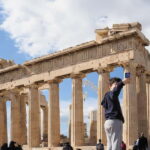



Ancient Corinth and the Canal
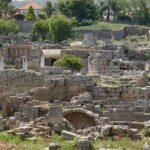

Everything else we have written up around Athens


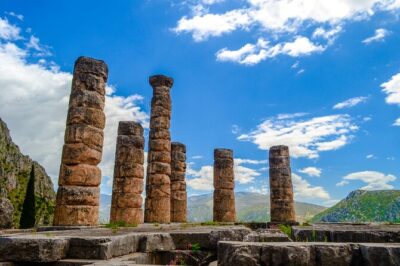



Ancient Corinth & the Canal, side by side.
 ★ 4.6From Athens: Ancient Corinth Day Trip with Canal & VR GuideFrom $411,073 reviews
 ★ 5.0Biblical Tour Letters ToThe Corinthians St Paul’s Footsteps 6HourFrom $1701,065 reviews
 ★ 5.0Private Biblical Tour Ancient Corinth & Isthmus Canal from AthensFrom $301762 reviews
 ★ 4.8Athens: Ancient Corinth & Nafplio Full Day Trip with SwimFrom $44523 reviews
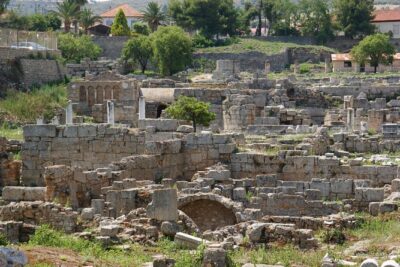 ★ 4.5Corinth Half-Day Trip from Athens with Entrance TicketsFrom $91242 reviews
 ★ 4.7Athens: Ancient Corinth & Nafplion Guided Premium TourFrom $34237 reviews
 ★ 4.4Athens: Corinth Canal, Mycenae and Nafplio Day TourFrom $33233 reviews
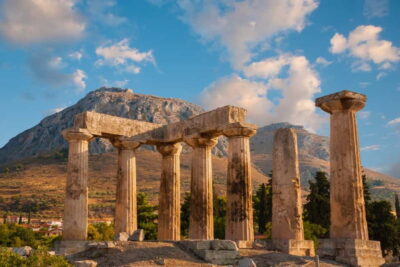 ★ 4.6From Athens: Ancient Corinth Tour Official Guide & TicketsFrom $86208 reviews
Sits on these lists