

Review · ANCIENT CORINTH & THE CANAL
Biblical Corinth Taste Faith & History with wine & Oil Tasting
Wine, oil, and Corinth in one day. This 5-hour private-style tour connects the dots between ancient Corinth, the Corinth Canal, and the Christian thread linked to Saint Paul. It is a smart way to see a lot of ground in the Peloponnese without turning your day into a logistics puzzle.
My favorite parts are the Acrocorinth viewpoint and the way the driver handled history plus real-world pacing, with names like Nikos and Panos coming up in strong reviews. One possible drawback to factor in: on some Tuesdays, the main Ancient Corinth site can close due to filming, so you may end up with less of the ruins experience than planned.
In This Review
- Key Highlights at a Glance
- A Half-Day Athens Escape to Corinth, Canal, Isthmia, and Acrocorinth
- Pickup, Private Van, and Why the Logistics Matter
- Corinth Canal: Modern Engineering With a 2,000-Year Dream Behind It
- The Diolkos: The Old Shortcut for Moving Ships
- Isthmia and the Paul Connection to the Ancient Games
- Archaeological Museum of Isthmia: Small Objects, Strong Visuals
- Ancient Corinth: The Place Where Corinth Becomes a Real City
- Corinth Archaeological Museum: A Quick Dose That Complements the Site
- Temple of Apollo: A Short Stop With an Early-Doric Feel
- Lunch and Shopping Time: Use It Strategically
- Acrocorinth Fortress: Upper Corinth and the View Worth the Climb
- Optional Wine and Oil Tasting: How to Add the Food and Faith Layer
- Price, Entrance Fees, and Real Value for This 5-Hour Format
- Weather, Closures, and How Your Day Might Change
- Who Should Book This Corinth Faith and History Tour
- Should You Book?
- FAQ
- FAQ
- Is pickup from Athens offered?
- How long is the tour?
- How big is the group?
- Are lunch or drinks included?
- What does it cost besides the base price?
- What if weather is bad or a site is closed?
Key Highlights at a Glance
- Small-group van to keep things flexible (up to 7 in a mini van)
- Acrocorinth fortress views over the isthmus and Corinth below
- Paul in Isthmia angle tied to the ancient games and his presence there
- Corinth Canal and the Diolkos story of shipping shortcuts
- Optional wine and oil tasting if you want the faith and food side
- Site closures can happen on certain days, including some Tuesday closures during filming
Other stops at ancient Corinth and the canal

A Half-Day Athens Escape to Corinth, Canal, Isthmia, and Acrocorinth
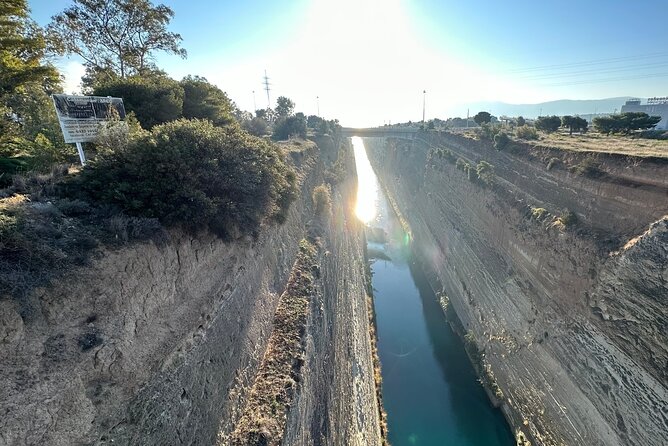
This is a classic “big hitters of Corinth” day, packed into about 5 hours. You start in Athens, then work your way from the modern engineering marvel of the canal into the older world of ship transport, sanctuaries, museums, and the high fortress of Acrocorinth.
What makes this tour feel different is the mix of themes. You do not just wander among ruins. You also get a faith and history thread tied to the New Testament setting around Corinth, plus the ancient sporting world of Isthmia. If you like connecting biblical references to actual places, this format helps you picture the setting fast.
And because it is a small group setup, you are not stuck following a rush-it-and-go plan for every stop. You can usually breathe, take photos, and move at a pace that matches your interests.
Pickup, Private Van, and Why the Logistics Matter
The most practical win here is the pickup and return. Your driver comes to your Athens hotel, Airbnb residence, or the port area, waits for you, and brings you back to the same general spot at the end. That alone saves time and stress in a city like Athens, where getting out of town can be its own mini-adventure.
Transport is modern and comfortable, with WiFi, A/C, and bottled water. Car seats are available if you book them in advance. Group size is capped in a meaningful way: 1 to 3 people typically ride in a sedan, and 4 to 7 people ride in a mini van.
This matters because Corinth is spread out. The day is easier when you are not hopping buses, swapping vehicles, or hunting meeting points. Several reviews also praise how drivers gave choices on timing and where to pause for food and photos.
Corinth Canal: Modern Engineering With a 2,000-Year Dream Behind It
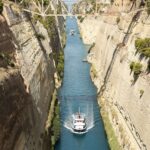
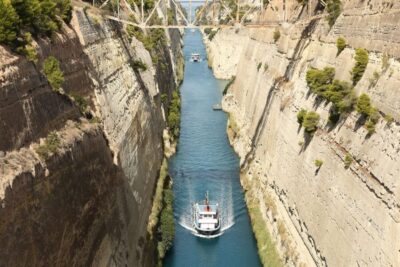
The first big “wow” is the Corinth Canal. It cuts across the narrow isthmus, linking the Gulf of Corinth to the Saronic Gulf. The practical result is dramatic: it effectively turns the Peloponnese into an island for ships heading that way.
The history detail that makes this stop more than a roadside photo is the 2,000-year dream. Before the canal existed, ships that wanted to cross toward the Adriatic or anchor in Corinth had to sail around the Peloponnese, adding about 185 nautical miles. That is a lot of extra time and risk, especially in older sailing conditions.
You typically get around 15 minutes here. Use it for quick photos and to orient yourself. The canal helps you understand why the isthmus mattered so much to trade and military movement.
The Diolkos: The Old Shortcut for Moving Ships
Right near the canal, you hit the Diolkos. This was a paved trackway in ancient Corinth that let boats be moved over land across the isthmus. The point was simple: avoid the long, dangerous trip around the peninsula.
The tour also brings in a fun linguistic clue from antiquity. Aristophanes used the phrase as fast as a Corinthian, which hints that people knew the trackway for its speed. The main job was moving goods, but in wartime it also helped speed up naval campaigns.
This stop is short, about 20 minutes, but it lands well if you like transport history. It gives you a sense that Corinth was not just famous for temples and speeches. It was a working hub, built on moving stuff efficiently.
Isthmia and the Paul Connection to the Ancient Games
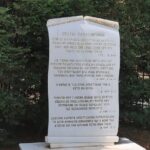
Next up is Isthmia, where the story becomes more personal if you care about faith history. This is where the Apostle Paul’s presence in the Isthmian region gets tied to the ancient games.
The Isthmian games were among the most important competitions in the ancient Greek world, second only to the Olympic games at Olympia. The tour’s angle is that Paul’s presence at the games was the first official presence of a Christian at those events, and that he worked as a tent maker for accommodation connected to athletes and visitors.
Even if you already know the New Testament references, I like seeing the physical geography behind them. Isthmia’s position at the point where the Peloponnese joins Central Greece makes it feel like a natural meeting place for people traveling for events.
You get about 30 minutes here, and the focus is on connecting the place to the story. If you want to keep the day moving, this is a good pacing stop.
More Athens eating and drinking on the list
- Greek Food Walking Tour in Athens★ 5.0 · 4,740 reviews
- Athens: Food Market Visit and Cooking Class with Wine★ 4.9 · 1,087 reviews
- Athens Authentic Greek Food Walking Tour (Small Group)★ 5.0 · 809 reviews
- Athens, Greek food tour including market visit★ 5.0 · 618 reviews
Archaeological Museum of Isthmia: Small Objects, Strong Visuals
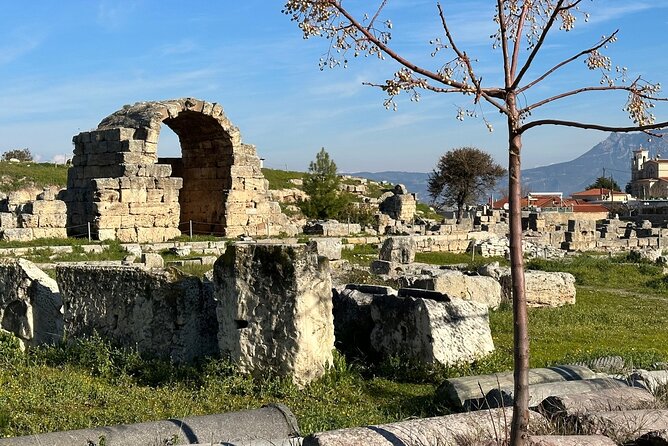
After Isthmia, the tour can include the Archaeological Museum of Isthmia. This is a shorter museum visit, around 20 minutes, but it is the kind of stop that helps you slow down and see what mattered to the port and sanctuary world.
A few standout highlights described for this museum include:
- An archaic marble pediment from the late 7th century BC
- Glazing from Kechreon, colored glass pieces found submerged on the floor of the Temple of Isis area, with scenes that resemble what you might think of as stained-glass style imagery
- An imperial statue type of Zeus from the mid 2nd century BC
- An epinician stele with a portrait of the Corinthian musician Lefkios Cornelius from around 150 AD
- Animal figurines, including a golden bull as a votive offering
- Commercial amphorae and other offerings tied to cult activity and daily life around the sanctuary
The fee part matters: museum admission is not included in the base price. The tour lists archaeological-site entrance fees as an added cost, so plan on paying that when you arrive or through your overall transaction.
Ancient Corinth: The Place Where Corinth Becomes a Real City
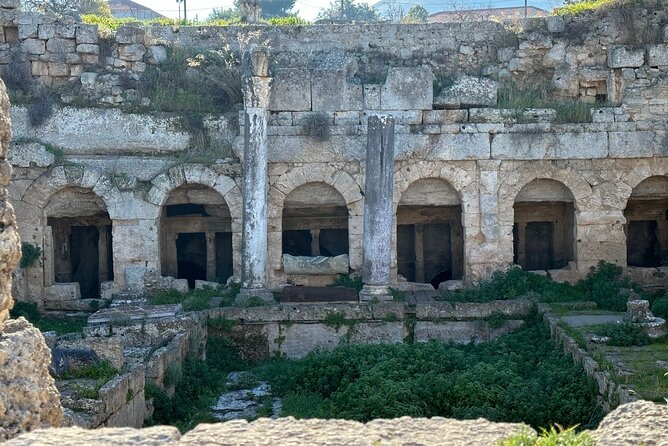
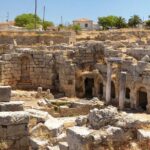
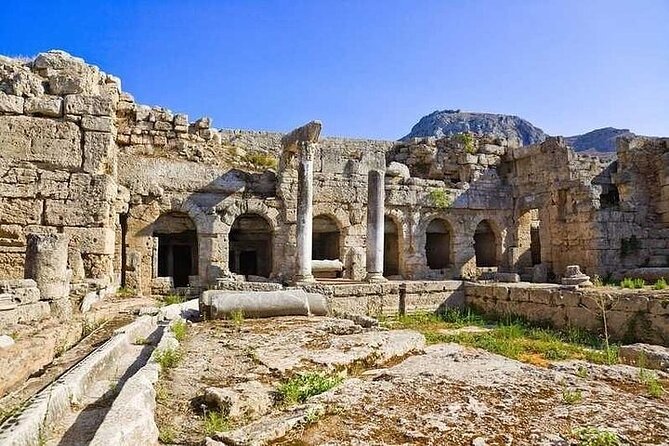
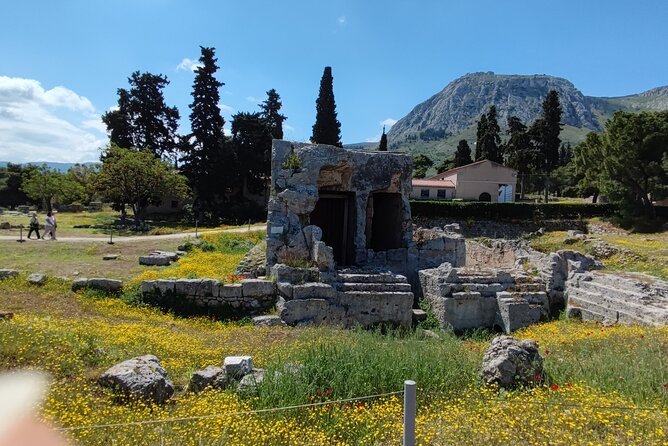
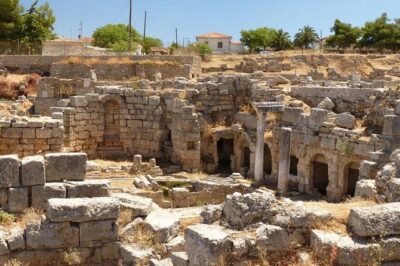
This is the heart of the day, and it is where most people build their mental map of Corinth. Ancient Corinth (Archaia Korinthos) is described as one of the largest and most important cities in Greece, with about 90,000 residents around 400 BC. Then the Romans demolished Corinth in 146 BC and later built a new city in 44 BC. Eventually, the Romans made it a provincial capital.
For Christians, it is linked to Paul’s two letters to the Corinthians and also mentioned in Acts as part of Paul’s missionary travels. If you like theology as place-making, this is the stop where the abstract becomes concrete.
You typically get about 1 hour at Ancient Corinth. That is enough time to see the major areas and get a feel for the layout. Just do not expect a long, museum-like wander unless you extend your time elsewhere.
One thing to take seriously: a review included an instance where the biggest stop was closed on a Tuesday due to filming of director Nolan’s film The Odyssey, and safety rules prevented access with unknown timing. While that is not guaranteed for every Tuesday, it is a real risk to be aware of. If your calendar lands on a Tuesday, I suggest you plan your expectations with the possibility of partial access.
Corinth Archaeological Museum: A Quick Dose That Complements the Site
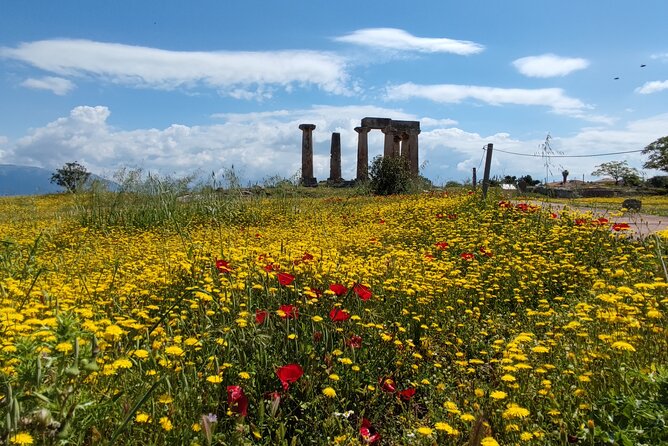
Next is the Archaeological Museum of Corinth, located within the ancient site area. The museum itself was constructed between 1931 and 1932 with the goal of displaying finds from excavations.
You get about 30 minutes here. It is not a half-day museum experience, but it is a helpful “context boost” after walking around the ruins. If you find yourself thinking, “So what were they doing here?” the artifacts and labeled pieces can answer that quickly.
The museum stop is also described alongside key site features you might notice in the area, such as Hadgimoustafa spring, the Lechaion Road, the Basilica, the Fountain of Peirene, the Stoa, the Agora, and the Odien. Even if you are not reading every label, that list helps you understand you are moving through layers of civic and religious life.
Admission is not included for this stop in the base price, so budget for the archaeological-site fees.
Temple of Apollo: A Short Stop With an Early-Doric Feel
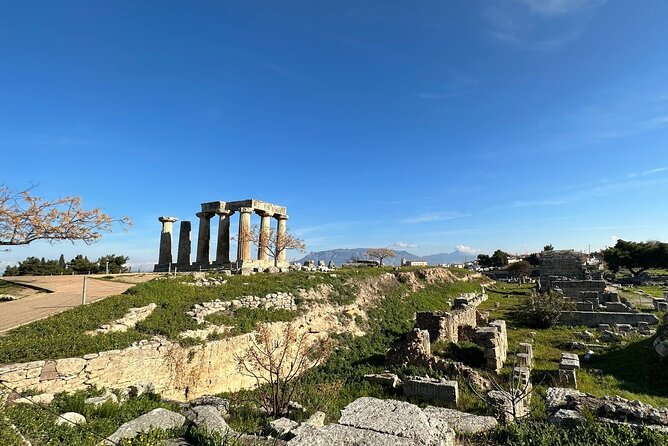
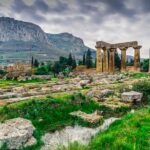
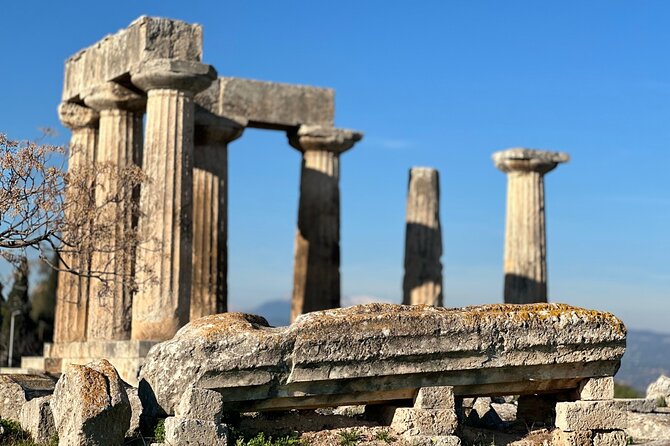
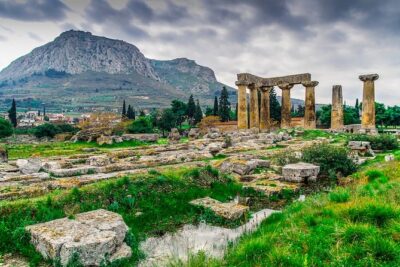
Then you move to the Temple of Apollo. It was constructed around 550 BC, and the description emphasizes it as one of the earliest Doric temples in the Peloponnese and Greek mainland. It also notes monolithic columns, which were rare in the ancient world.
You usually get around 15 minutes here. It is quick, but it works if you treat it as a “pause and observe” moment rather than a rush-by photo stop.
If you like architectural detail, look at how the temple’s form signals early Doric trends. Even from limited viewing angles, the style differences can be obvious once someone points them out or you have a few minutes to stare.
Lunch and Shopping Time: Use It Strategically
There is a free time window for lunch and shopping, about 45 minutes. Meal costs are not included. That means you control your lunch choice and budget, which I like.
This part is where driver flexibility can make the day feel smoother. Reviews mention drivers recommending good lunch spots and offering choices for where to stop. If you care about getting a local meal rather than a tourist-trap default, this is your moment to ask your driver for a suggestion before you pick a place.
Also, if you want to shop for small souvenirs, you will have time to do it without rushing from stop to stop.
Acrocorinth Fortress: Upper Corinth and the View Worth the Climb
The final anchor is Acrocorinth, the “Upper Corinth” fortress. The tour frames it as an emblematic castle-like acropolis perched on a monolithic rock above the ancient city.
The big reason Acrocorinth mattered is defense. The fortress had a secure water supply and was used repeatedly as a last line of defense in southern Greece because it controlled access to the isthmus, helping repel entry into the Peloponnese by land.
You typically get about 30 minutes at Acrocorinth. That is usually enough to walk to key viewpoints and take in the scale of what used to be here.
In one strong review, Acrocorinth was described as blowing people away. I get that. It gives you the sense of why cities fought for this position over and over. You are not just seeing ruins. You are seeing why power and geography were tied together.
If the weather is clear, go into this stop ready to take photos, and make peace with the fact that it will steal focus from everything else.
Optional Wine and Oil Tasting: How to Add the Food and Faith Layer
This tour is built around history sites tied to Corinth and the Paul story. The wine and oil tasting elements are listed as add-ons, not part of the base package cost.
The tour data shows:
- Oil tasting finger food costs €80 per person
- Wine tasting costs €15 per person
So how does this fit with the day? For me, it is a nice way to end with something sensory when you have been staring at stone, marble, and foundations all afternoon. You also get to connect the olive-oil-and-wine side of Mediterranean culture to the broader Corinth world you just visited.
Practical tip: if you add both tastings, think of them as a planned block, not something to squeeze in last minute. Ask your driver when they suggest doing it relative to the sites, so you do not lose time at the place you most want to photograph.
Price, Entrance Fees, and Real Value for This 5-Hour Format
The base price listed is $190.46 per person for an approximately 5-hour experience.
That number is only the start. The tour data also states:
- Entrance fees for all attractions are €15.00 per person
- A licensed tour guide is optional, if requested, for an extra €140.00 per person
- Lunch is not included
Then there are optional tastings:
- Oil tasting finger food: €80 per person
- Wine tasting: €15 per person
So what is the value? I think it comes from three places:
- Private transport with comfort: WiFi, A/C, bottled water, and modern vehicles
- Small-group flexibility: no big-bus choreography
- A coherent route: canal and shipping history, Isthmia and Paul, Corinth ruins and museums, then Acrocorinth
If you would otherwise try to do Corinth by train or bus and spend half your day coordinating transfers, this starts to look like a fair trade. You pay for convenience, then you spend that saved effort on actually seeing the sites.
Weather, Closures, and How Your Day Might Change
Two things can shift your plan:
- The experience requires good weather.
- Certain days can bring access issues. A review described Ancient Corinth being closed on a Tuesday due to filming of The Odyssey, with safety reasons and timing unknown until the day.
If your dates are flexible, you have an advantage. If not, set expectations that the tour may still deliver a lot, but one site could be reduced on certain access days.
Your best move is to communicate with the operator before you go, especially if you are traveling on a Tuesday or expecting a tight schedule. Your driver can often help you make the most of whatever is open.
Who Should Book This Corinth Faith and History Tour
This works best if you:
- Want a focused Athens day trip without dealing with complex transit
- Like history plus biblical context connected to real places
- Enjoy a small-group experience where you can ask questions and adjust timing
- Want the option to add wine and oil tastings as a cultural finish
If you are the type who loves reading slowly for hours, you might wish you had more time on the ground. But as a “see the key sites and get the story,” it is a strong plan.
Should You Book?
I would book this if you want a well-paced, small-group Corinth day with Acrocorinth as the centerpiece and a clear Paul and Isthmia connection. The biggest reason to pause is the possibility of a Tuesday closure at the main Ancient Corinth site due to filming, plus the fact that several key places carry entrance fees and optional extras can raise the total.
If you are excited about connecting faith references to geography, and you value comfort and flexibility, this is a very practical way to do Corinth in a half-day.
FAQ
FAQ
Is pickup from Athens offered?
Yes. Pickup is offered from Athens Hotel, Airbnb residence, or Port, and your driver returns you back to the meeting point at the end of the activity.
How long is the tour?
It runs for about 5 hours.
How big is the group?
It is a small-group tour and not a bus. Only your group participates. Transportation is in a luxury sedan for 1 to 3 people, or a comfortable mini van for 4 to 7 people.
Are lunch or drinks included?
Meal costs are not included. The itinerary includes lunch time, but you pay for what you order.
What does it cost besides the base price?
Entrance fees for the attractions are listed as €15.00 per person. Oil tasting finger food (€80 per person) and wine tasting (€15 per person) are listed as not included extras.
What if weather is bad or a site is closed?
The experience requires good weather. If it is canceled due to poor weather, you will be offered a different date or a full refund. Site closures can also happen for safety reasons, depending on what is going on at the location.
What to Eat and Drink Around Athens






Every Other Athens Write-Up
- All Day Cruise -3 Islands to Agistri,Moni, Aegina with lunch and drinks included
★ 5.0 · 4,958 reviews
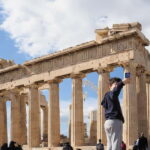





Ancient Corinth and the Canal
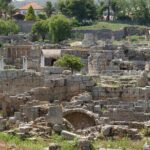
Everything else we have written up around Athens


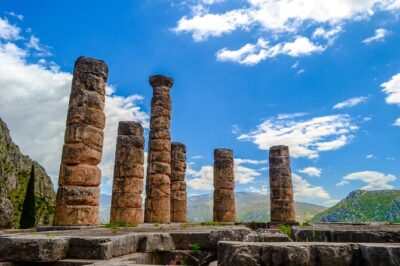


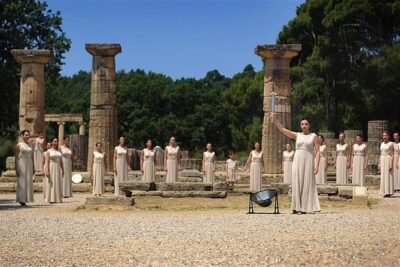

Ancient Corinth & the Canal, side by side.
 ★ 4.6From Athens: Ancient Corinth Day Trip with Canal & VR GuideFrom $411,073 reviews
 ★ 5.0Biblical Tour Letters ToThe Corinthians St Paul’s Footsteps 6HourFrom $1701,065 reviews
 ★ 5.0Private Biblical Tour Ancient Corinth & Isthmus Canal from AthensFrom $301762 reviews
 ★ 4.8Athens: Ancient Corinth & Nafplio Full Day Trip with SwimFrom $44523 reviews
 ★ 5.0Private Tour of Apostle Paul’s Footsteps in Ancient CorinthFrom $169275 reviews
 ★ 4.5Corinth Half-Day Trip from Athens with Entrance TicketsFrom $91242 reviews
 ★ 4.7Athens: Ancient Corinth & Nafplion Guided Premium TourFrom $34237 reviews
 ★ 4.4Athens: Corinth Canal, Mycenae and Nafplio Day TourFrom $33233 reviews
Sits on these lists