
Review · ANCIENT CORINTH & THE CANAL
Biblical Tour Letters to The Corinthians – St Paul’s Footsteps
Corinth suddenly feels personal when you follow Paul’s routes. This private day trip strings together major stops linked to St Paul’s time in Greece, from Mars Hill in Athens to the ancient ports and temples around Corinth. It’s built for Christians, history lovers, and anyone who wants a more thoughtful way to see the region.
What I really like is the customizable flow. Your driver can adjust what you focus on, so if you already saw parts of Athens earlier, you can spend more time where you care most. It also helps that the commentary is built around the places, not just dates.
One possible drawback: it’s still a day trip. If you want a slow, unhurried pace at every site, you should set that expectation early, because even the best routes can feel quick when the clock is moving.
In This Review
- Key highlights at a glance
- A private Corinth day trip that actually fits your pace
- Areopagus Hill (Mars Hill): where Paul talks to Athens
- Corinth Canal and the Diolkos: seeing the ship route Paul would have known
- Isthmia, Poseidon, and the Isthmian Games: Paul among athletes
- Archaeological Museum of Isthmia: ports, artifacts, and the feeling of real life
- Ancient Corinth and the Bema of Gallio: where faith met Roman power
- Temple of Apollo in Corinth: pagan public space, Christian message
- Kechries (Cenchreae) and the port story that heads the gospel outward
- Apostolou Pavlou church: a modern place for an ancient mission
- Lunch at a traditional seaside taverna: plan for a real break
- Akrokorinthos fortress: the view Paul would have looked across
- Driver-led flexibility: what you can customize and what to ask
- Price and value for up to 4 people
- Who should book this St Paul footsteps tour
- Should you book it
- FAQ
- How long is the tour?
- Is this a private tour?
- Do you pick you up from your hotel or apartment?
- What language is the tour in?
- Are entrance fees included?
- Do the drivers enter the sites with you?
- Can I cancel for a full refund?
Key highlights at a glance
- Mars Hill connection: Paul’s Areopagus sermon context right in Athens
- Ancient engineering stops: Corinth Canal and the Diolkos ship route
- Isthmia meets Paul: games, Poseidon, and the tentmaker idea
- The Bema moment: where Paul faced Gallio in Corinth
- Ports and vows: Cenchreae, hair cutting, and Phoebe in Romans
Other stops at ancient Corinth and the canal
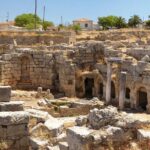

A private Corinth day trip that actually fits your pace
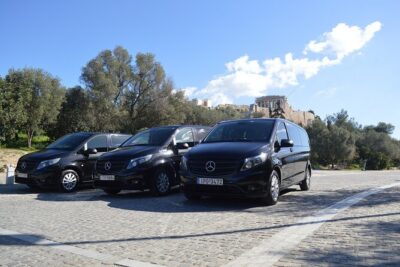
This is the kind of tour that works because you are not stuck in a rigid bus schedule. It’s private transportation, typically up to four people, with pick up from where you are staying. You ride in an air-conditioned vehicle with bottled water and WiFi on board, so the ride from Athens to the Corinth area stays comfortable even when traffic adds time.
The timeline is about eight hours. That means you’ll see a lot, but you also need to travel smart: wear comfy shoes, plan for short walks and uneven ground at ancient sites, and keep your expectations realistic. The tour’s best “value move” is that you can steer your attention toward the biblical stops that matter most to you.
Also, note how the tour is staffed. The driver provides history-focused commentary and answers questions in fluent English, but drivers are not licensed to escort you inside sites. If you want someone licensed to guide you through specific indoor areas, there is an upgrade option that depends on availability, so it’s worth asking when you book.
Areopagus Hill (Mars Hill): where Paul talks to Athens
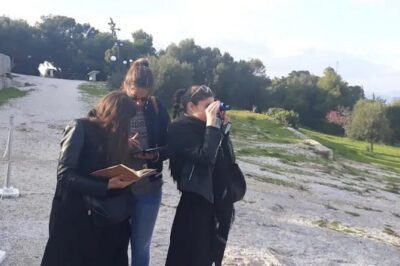
This stop starts on sacred ground near the Acropolis area, at Areopagus Hill, also called Mars Hill. The point here is not to treat it like a generic photo stop. You’re standing where Paul is traditionally tied to a sermon delivered before the council of Athenians, including the famous discussion of an unknown god and how Christianity challenged the ideas of the day.
Even if you’ve seen Mars Hill before, you’ll probably appreciate the way this stop frames Christianity as a message aimed at the mind as well as the heart. You get about 20 minutes here, and with the surrounding Acropolis area as a backdrop, it’s a strong spiritual warm-up before you head out toward Corinth.
Good to know: the stop is listed as free, so you can focus time on listening and observing instead of thinking about tickets.
Corinth Canal and the Diolkos: seeing the ship route Paul would have known
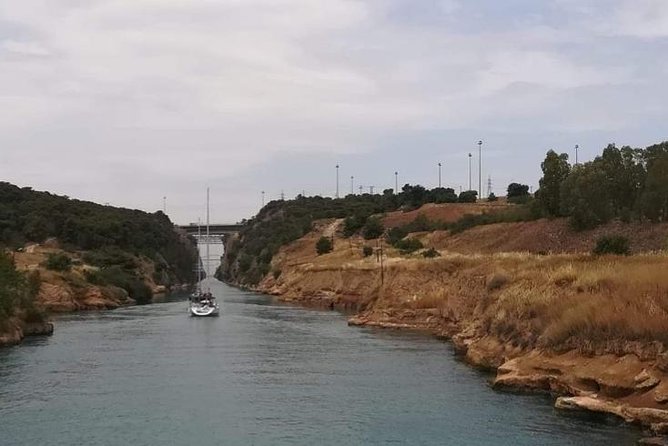
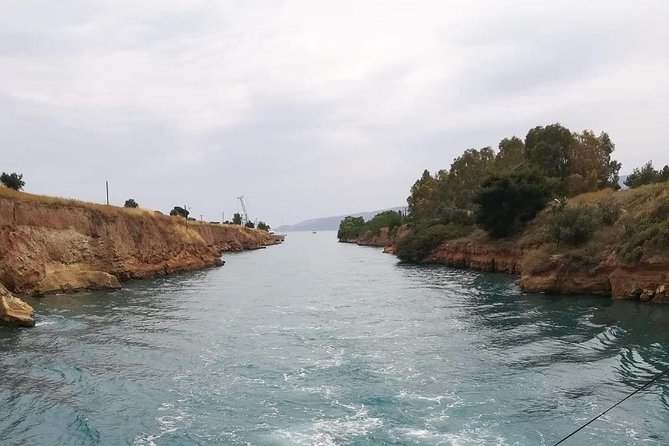
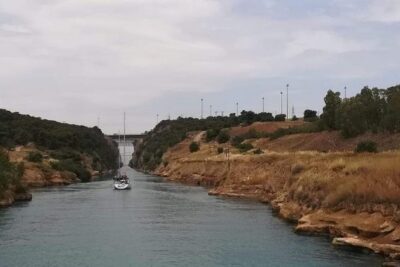
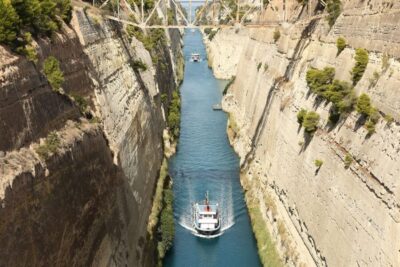
After Athens, you hit two engineering landmarks tied to Corinth’s geography. First up is the Corinth Canal, a 19th-century feat that slices between the Gulf of Corinth and the Saronic Gulf. It’s a modern construction, but the idea stretches back more than 2,000 years, linked to ancient Corinth’s rulers and the goal of saving ships the long detour around the Peloponnese.
Then you visit the Diolkos, an ancient ship-transport track across the Isthmus of Corinth. This is one of those places that makes the region feel practical, not just poetic. When you imagine ships being moved overland, you start picturing the merchants, sailors, and travelers who passed through Corinth’s orbit, including people Paul likely crossed paths with on his journeys.
Both stops are short, around 20 to 30 minutes total for the two main engineering themes. That’s a feature, not a flaw, because it keeps the focus on the route that leads you straight into the world Paul preached in.
Isthmia, Poseidon, and the Isthmian Games: Paul among athletes
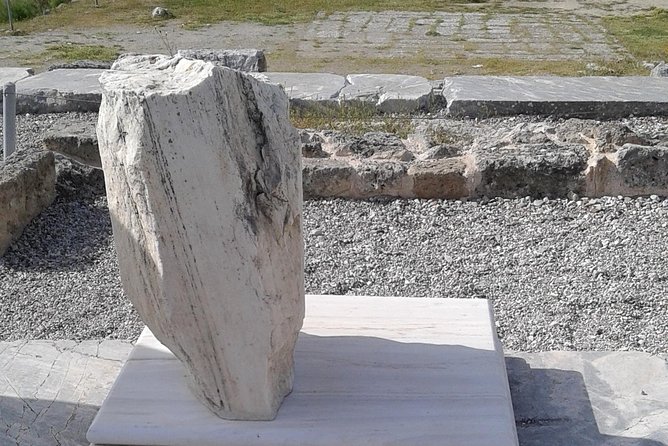
Isthmia is the big shift from Athens to Corinth’s cultural universe. You’ll spend about an hour in the Isthmia area, where games in honor of Poseidon drew people from across the Greek world. This is the setting that helps you understand why Paul could use public events and familiar images to communicate his message.
There’s also a biblical connection made in the tour narrative: Paul is believed to have worked as a tentmaker in the region. If you imagine athletes and travelers arriving for the games, then Paul working nearby to support them, it becomes easier to see how early Christian outreach could happen in ordinary everyday commerce and crowd life, not only in formal religious spaces.
You’ll also return for a second Isthmia-focused stop, around 40 minutes, which gives you time to look more closely at key worship and athletics structures. That second pass helps if you want to compare what you felt in your first stop with what you see in the remains and layout.
Archaeological Museum of Isthmia: ports, artifacts, and the feeling of real life
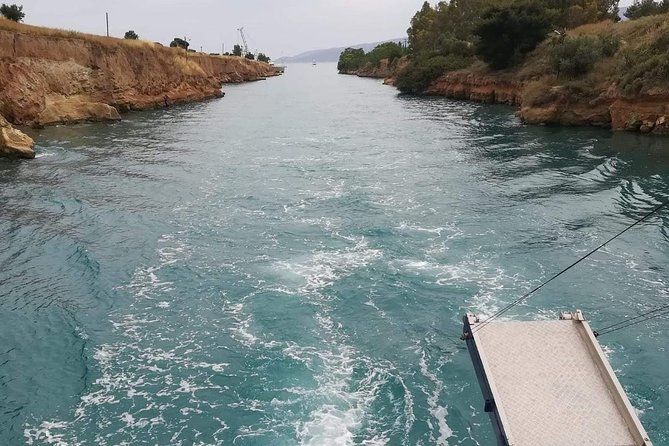
The museum stop is about 30 minutes. This is where the tour gives you context you can carry into the site visits. You’ll see artifacts connected to the sanctuary of Poseidon, and the display highlights help connect the games, worship, and the daily movement of people.
One especially memorable detail is the mention of glass panels from Kenchreai, the port Paul departed from for Syria. Even if you focus more on the Christian story than the art, these panels are a useful reminder that early faith spread through ports, trade routes, and travel networks, not in a vacuum.
The museum also includes statues, votive offerings, and burial finds, which broadens the picture beyond temples and stadiums. It’s a short stop, but it gives you a “how people lived” layer that many half-day history tours skip.
Museum admission is not included, so plan for a ticket purchase on site.
- Athens: Acropolis & up to 5 Archaeological Sites Combo Pass★ 4.4 · 12,619 reviews
- Athens: Acropolis, Parthenon & Acropolis Museum Guided Tour★ 4.8 · 9,316 reviews
- Athens: Cape Sounion & Poseidon Temple Sunset Half-Day Trip★ 4.8 · 8,241 reviews
- Athens: Acropolis and Parthenon Guided Walking Tour★ 4.6 · 5,882 reviews
Ancient Corinth and the Bema of Gallio: where faith met Roman power
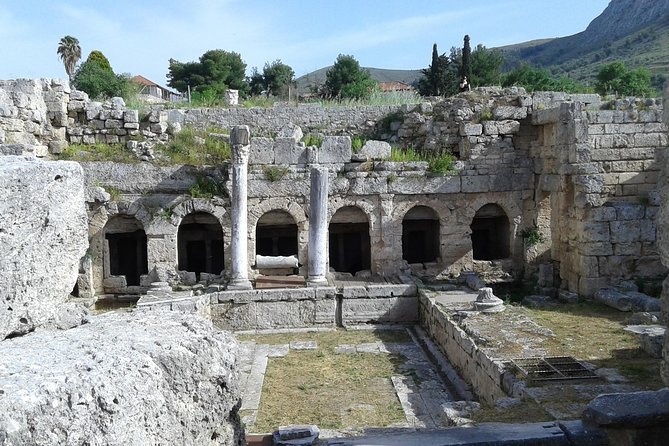
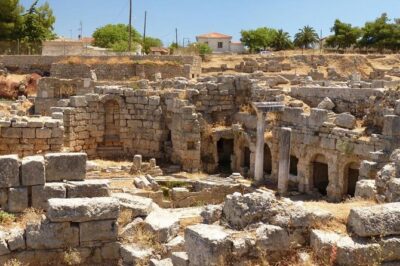
This is one of the core stops of the day, about an hour at Ancient Corinth (Archaia Korinthos). This is where you connect Paul’s letters to the real city setting: Corinth was a major commercial hub on the isthmus, and Paul lived and preached there for over 18 months, as recorded in Acts.
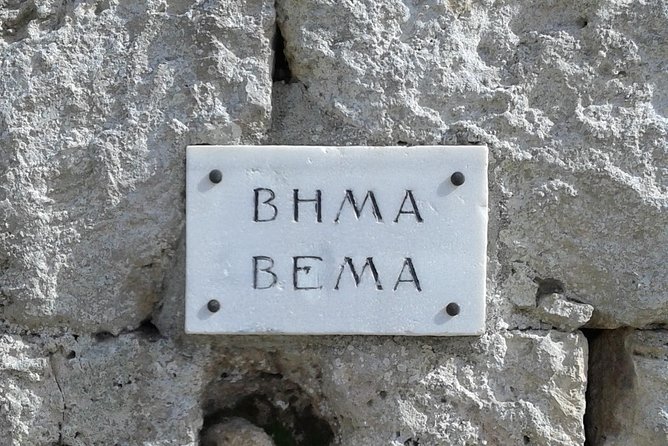
The tour focuses on Paul’s correspondence with the Corinthian community and uses the site to ground those ideas in place. You’ll also see the Bema, a stone platform in the Roman forum area, traditionally linked with Paul’s appearance before the proconsul Gallio. In the tour framing, Gallio dismissed the case and treated it as a religious dispute, which matters because it explains how Paul could continue preaching with less interference.
Standing at a Roman administrative space while thinking about Paul’s conviction is powerful. You can almost feel the tension between empire systems and new religious ideas taking root. The tour keeps the time tight, but it helps you understand why the Bema is more than an artifact. It’s a moment of pressure and outcome.
Entrance fees apply for Ancient Corinth, and the tour notes a specific cost of €15 per person for Ancient Corinth and the Archaeological Museum of Corinth. You buy on site.
Temple of Apollo in Corinth: pagan public space, Christian message
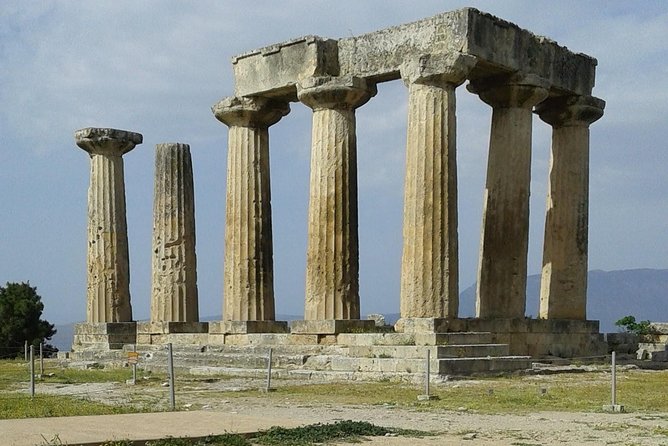
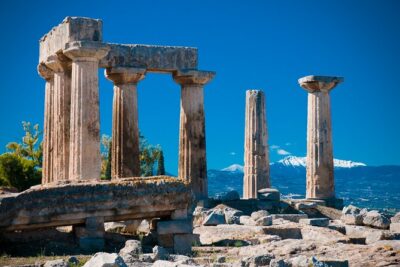
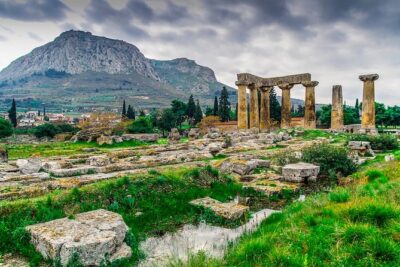
Next is a shorter, very targeted stop at the Temple of Apollo in the heart of Ancient Corinth. You’ll get about 30 minutes. This temple is built around 560 BC and uses early Doric architecture, with monolithic limestone columns that still give you a strong sense of scale.
The tour frames this as a dramatic backdrop to Paul’s mission. Apollo here was associated with music, prophecy, and light, and the temple’s prominence signals how public religion worked in Corinth. For Christian visitors, this stop can land differently than it does for classicists, because it creates that contrast between idol worship at the center of civic identity and a message about one God and Jesus Christ.
Even in a short time, it’s worth slowing down for a minute and looking at how the temple dominates sightlines. It helps explain why Paul’s message would have been noticed, even by people who weren’t seeking it out.
Kechries (Cenchreae) and the port story that heads the gospel outward
Kechries is the tour’s coastal change of mood. About 30 minutes here takes you to ancient Cenchreae, the eastern port of Corinth. This is linked to Acts 18:18 and Paul’s departure with Priscilla and Aquila.
A key detail in the tour explanation is the vow moment: Paul cuts his hair before heading for Syria. Whether you treat that as a literal vow or as a symbol of devotion, it makes the Christian story feel personal and human, not just doctrinal.
You’ll also connect this port site to early church growth through Romans, where Phoebe is commended as a servant associated with the church in Cenchreae. It’s a reminder that women had visible roles in early communities, including support and leadership functions.
The best part of this stop is that it’s calmer than the major ruins. You get a quieter setting that fits the idea of the gospel setting sail again.
Apostolou Pavlou church: a modern place for an ancient mission
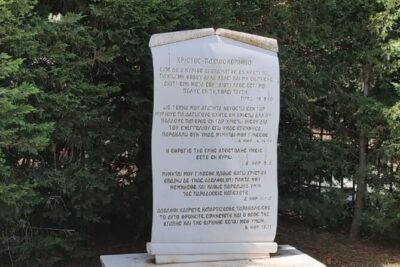
The Apostolou Pavlou church stop is about 20 minutes. This church honors the Apostle Paul and ties directly to his Corinth period around 51 to 52 AD. It’s a reflection spot, not just a sightseeing box, and it helps you transition from the stones of Ancient Corinth to the living Christian memory of the city.
What I like about this kind of stop is that it avoids turning the day into only ruins and theories. You get a place to pause and connect the history you’ve been seeing to faith practices that continue today.
The tour notes this as free, so it’s an easy addition to the schedule.
Lunch at a traditional seaside taverna: plan for a real break
You get about an hour for lunch at a traditional seaside Greek taverna. This matters more than it sounds. Long history days can become mentally heavy, and the meal break resets you so the next stops do not blur together.
Use the lunch hour to do two practical things. First, ask your driver what time you want to aim for at Akrokorinthos, since that’s where walking and stairs may impact your comfort level. Second, check whether you want any earlier site revisits or extra photos, because the day gets tighter after this point.
Lunch is not included in the tour price.
Akrokorinthos fortress: the view Paul would have looked across
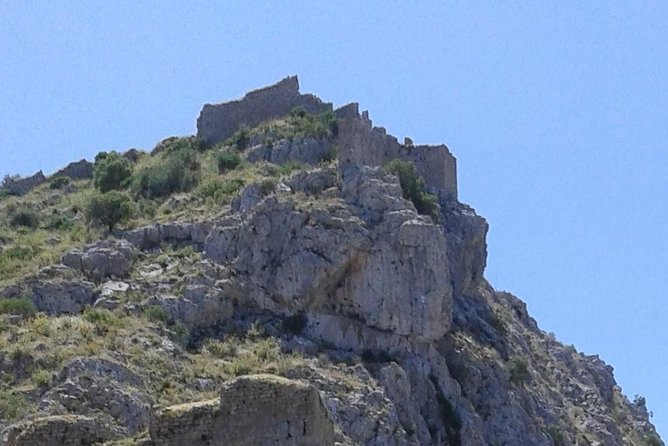
The day ends with Akrokorinthos, about 40 minutes. This fortress towers over Ancient Corinth and is tied to the tour’s idea that Paul traveled through the city below, with views from the heights.
Even if you do not treat the route as perfectly traceable, the views do the job. You can look down and understand why Corinth mattered so much, why the city was defended, and why people passed through the region in waves.
This is also a spot where you should judge your own pace. If you want slow looking and more photos, you can stretch the time here. If you prefer quick, focused sightseeing, you can keep it moving and still get the value of the viewpoint.
All told, Akrokorinthos gives the tour its emotional finish line: you see the place from above, then remember the faith story that unfolded inside.
Driver-led flexibility: what you can customize and what to ask
This is where the tour earns its reputation as “more than a checklist.” You’re in a private vehicle, and the tour description explicitly says you can customize the itinerary. In practice, that means you can adjust emphasis within the available stops, especially if you already visited something in Athens earlier.
If you want the best outcome, ask your driver one simple question early in the day: Which stop gives the most value for my interests, and which stop can we shorten if time gets tight? That keeps you from ending with a day full of sites you saw fast instead of the message you came for.
Also, plan around the guide model. Your driver can provide commentary and answer questions, but they will not enter sites with you. If you want a licensed guide to walk you through specific areas, ask about the upgrade option since it depends on availability.
On the plus side, many people talk about drivers and local guides who are excellent at turning places into stories. Names that come up include Michael and Kostas among drivers, and Pantelis and Alex as guides on certain days. If you care about depth, it’s worth requesting a guide upgrade when possible, so the stops feel guided rather than only driven.
Price and value for up to 4 people
At $386.18 per group for up to four people, this tour prices out as good value if you want a one-car day to the Corinth area. You’re paying for private transportation, pickup from your place, air-conditioned comfort, bottled water, and WiFi on board, plus history-focused driver commentary.
The cost can feel different if you are traveling alone or as a couple, because the per-person math depends on filling the group. If you can travel with friends or family, the value jumps. If you are solo, you may still find it worth it because you avoid coordinating multiple taxis and you get a tight, coherent day built around Paul’s footsteps.
What you’ll still pay extra for are site admissions. The tour notes an entrance fee of €15 per person for Ancient Corinth and the Archaeological Museum of Corinth, purchased on site. Museum of Isthmia admission is also not included, so bring some cash or a card plan for tickets.
Who should book this St Paul footsteps tour
Book this if you fall into one of these groups:
- You want a Christian history day where Paul’s story is the spine of the sightseeing.
- You want private transport so you can ask questions and shift emphasis as you go.
- You prefer short, focused site time over a slow, museum-heavy day.
Skip it or go in with eyes open if you know you get frustrated when timelines feel tight. Even though it is private and flexible, the schedule still has to fit the eight-hour window. If pacing is everything for you, set that expectation from the start and ask for slower time at the stops that matter most.
Should you book it
I’d recommend this tour if you want the Corinth area tied to Paul in a way that feels practical, not abstract. The mix of Athens reference point, Corinth’s engineering landmarks, Isthmia’s games setting, and the Bema connection gives you a day that connects faith, daily life, and empire reality.
You should also book it if you value comfortable logistics: pickup, air-conditioned rides, and a driver who can explain what you’re looking at. Just do one thing before you go, ask how they will help you keep a pace that works for your group, because a private car can still feel rushed if you do not steer the schedule early.
FAQ
How long is the tour?
It lasts about 8 hours.
Is this a private tour?
Yes, it is private, and only your group participates.
Do you pick you up from your hotel or apartment?
Yes, pickup is offered from your place.
What language is the tour in?
The tour is offered in English.
Are entrance fees included?
Some site admissions are not included. The tour lists an entrance fee of €15 per person for Ancient Corinth and the Archaeological Museum of Corinth, purchased on site. The Archaeological Museum of Isthmia also has an admission ticket not included.
Do the drivers enter the sites with you?
No. Drivers are not licensed to accompany you in any site, but they can provide commentary and answer questions.
Can I cancel for a full refund?
Yes, you can cancel for a full refund up to 24 hours in advance of the experience start time.
The Rest of Athens




Every Other Athens Write-Up
- All Day Cruise -3 Islands to Agistri,Moni, Aegina with lunch and drinks included
★ 5.0 · 4,958 reviews



Ancient Corinth and the Canal
Everything else we have written up around Athens
Ancient Corinth & the Canal, side by side.
 ★ 4.6From Athens: Ancient Corinth Day Trip with Canal & VR GuideFrom $411,073 reviews
 ★ 5.0Biblical Tour Letters ToThe Corinthians St Paul’s Footsteps 6HourFrom $1701,065 reviews
 ★ 5.0Private Biblical Tour Ancient Corinth & Isthmus Canal from AthensFrom $301762 reviews
 ★ 4.8Athens: Ancient Corinth & Nafplio Full Day Trip with SwimFrom $44523 reviews
 ★ 5.0Private Tour of Apostle Paul’s Footsteps in Ancient CorinthFrom $169275 reviews
 ★ 4.5Corinth Half-Day Trip from Athens with Entrance TicketsFrom $91242 reviews
 ★ 4.7Athens: Ancient Corinth & Nafplion Guided Premium TourFrom $34237 reviews
 ★ 4.4Athens: Corinth Canal, Mycenae and Nafplio Day TourFrom $33233 reviews
Sits on these lists