
Review · CRETAN & GREEK COOKING CLASSES
Cooking Class in Athens with Shopping in Central Market & Lunch
You start at the market, then cook your lunch. This Athens Greek cooking class pairs shopping with real chef instruction, so the meal feels like something you made for your own day in the city. It is small-group too, so you are not stuck watching from the sidelines.
What I like most is the Central Market shopping with a host, where you buy ingredients like locals, not just tourists. I also love that you leave with a recipe booklet so you can repeat the dishes back home, including tzatziki and chocolate salami. One consideration: the experience is set up in a traditional taverna, so expect some heat and a close-up, working-table feel, especially in busy conditions.
In This Review
- Key things to know before you go
- Central Market first, Athens feeling second
- Shopping like locals, not like a checklist
- Hands-on cooking: tzatziki, dolmadakia-style bites, and more
- How the taverna setting changes your class experience
- Lunch you can actually taste, plus wine and mineral water
- Who you will learn from, and why translation matters
- Price and value: what $101.55 really covers
- Timing, walking, and practical comfort
- The only real downside to watch for
- Should you book this Athens cooking class?
- FAQ
- What time does the Athens cooking class start, and how long is it?
- Is this a small group?
- What language is the tour offered in?
- Is lunch included, and what drinks are provided?
- Where do I meet for the experience?
- Is a licensed guide included?
Key things to know before you go
- Central Market shopping as the warm-up, with a host guiding what to look for and what to buy
- Small group size (max 12), which keeps the cooking hands-on instead of purely watch-and-hope
- You cook classic dishes like tzatziki, Greek salad, dolmadakia-style bites, stuffed peppers and tomatoes, and chocolate salami
- Lunch includes wine and mineral water, served after your cooking
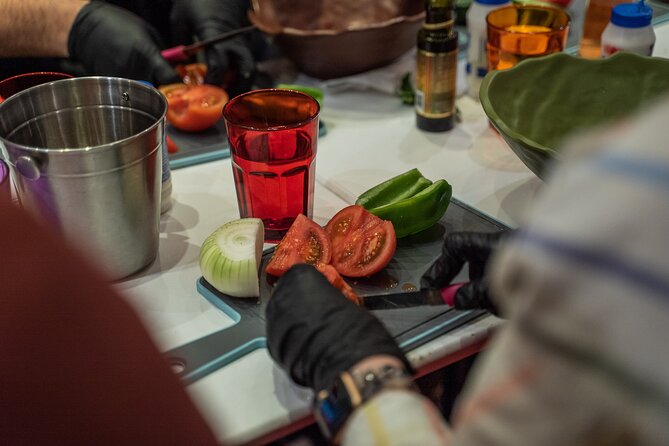
- Aprons and gloves are provided, so you can focus on the food, not the mess
- You get a recipe souvenir booklet, making this more than a one-time meal
More Greek and Cretan kitchens to stand in




Central Market first, Athens feeling second
This is not the kind of cooking class where you show up, meet your chef, and skip straight to chopping. You begin in Athens with a guided trip to the Central Market, starting from Tzireon 12 in the 11742 area, with a 11:30 am start. From there, you walk about 15 minutes through the older parts of town to reach the market, then you shop and learn along the way.
Why that order matters: the shopping shapes what you cook. You are not guessing what good Greek ingredients taste like. You are buying them in the places where locals actually stock their kitchens, then turning around and cooking those flavors into your lunch.
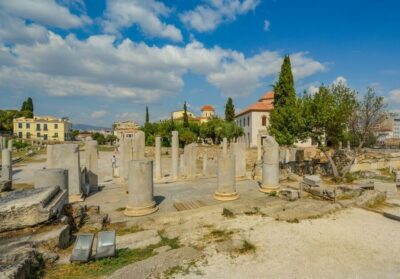
The timing also works well if you want a break from late-day sightseeing. A 3 hours 30 minutes experience gives you a full block in the morning and early afternoon, then you are free after lunch to roam Monastiraki and the Historical Center area.
Shopping like locals, not like a checklist
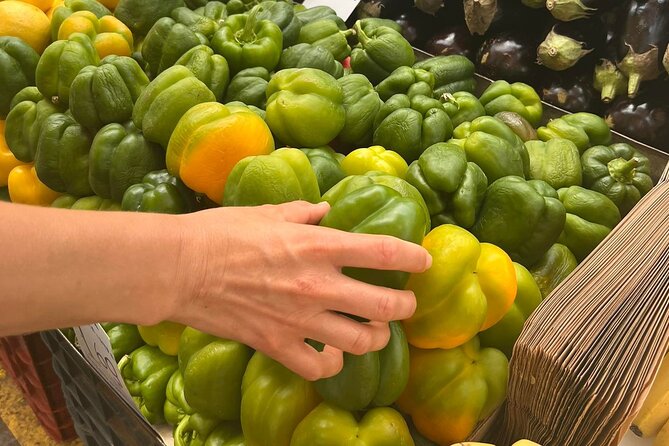
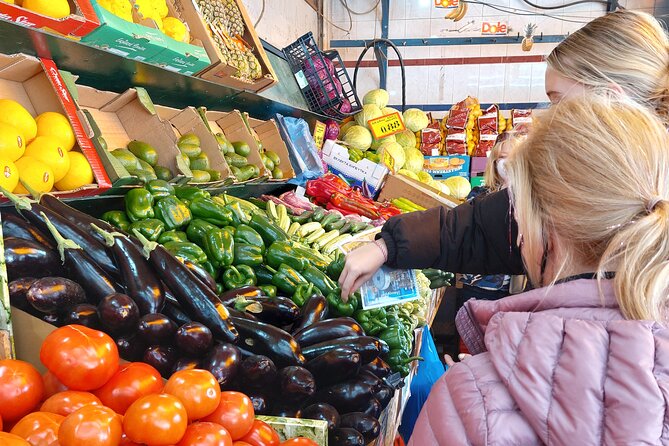
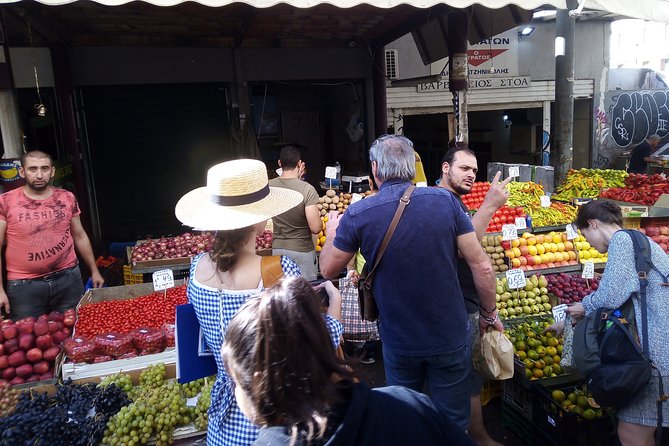
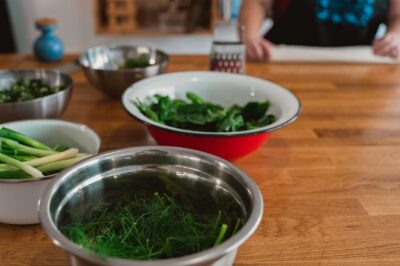
The Central Market stop is the heart of the learning. You will shop for items tied to the dishes you are making, with your facilitator showing you what to purchase and how certain ingredients matter in Greek cooking. In past experiences, guides have pointed out specific buying tips, like how to recognize real feta, and how to pick produce that holds up in cooking.
You’ll also get exposed to the way the market is organized. Cheese shops, vegetable stalls, and food counters all feel different, and that helps you understand why Greek cooking is so ingredient-driven. It is also a nice way to get your bearings in Athens. The walk through older streets to get to the market is short, but it still lets you feel the neighborhoods.
A small practical note: markets mean motion and time. You will likely move at a steady pace, and you should dress for walking shoes and a quick stop-and-go rhythm.
Hands-on cooking: tzatziki, dolmadakia-style bites, and more
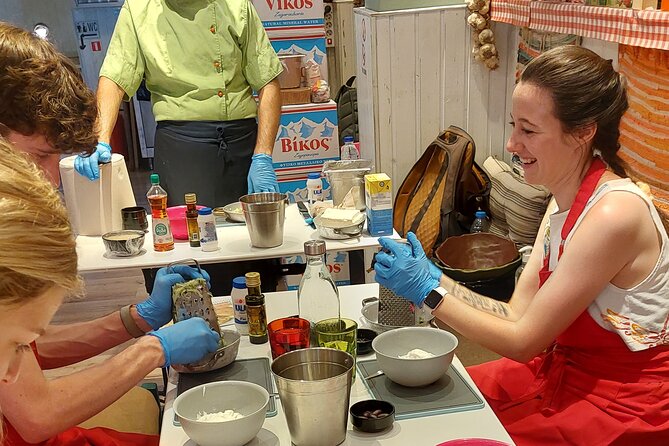
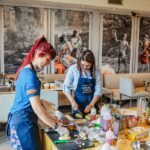
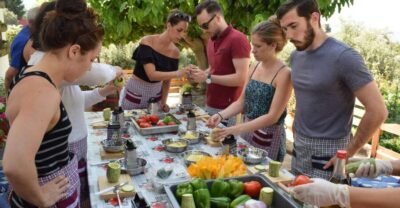
Once shopping is done, you move to the cooking portion at a traditional taverna in the Historical Center area. The cooking happens with a professional cook leading the instructions, while the facilitator helps with English translation when needed.
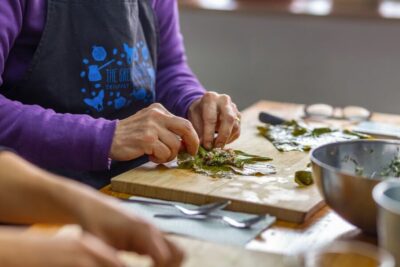
This is a hands-on class, with apron and glove support so you can work comfortably. And it is not just one dish. Your sample menu includes:
- Tzatziki (yogurt, cucumber, garlic dip)
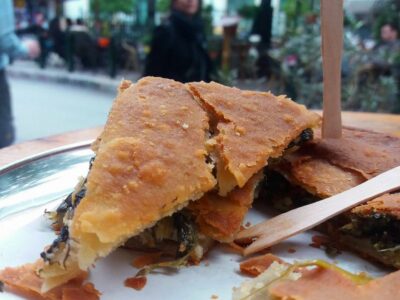
- A starter like mini cheese pies or stuffed vine leaves (dolmadakia) with rice
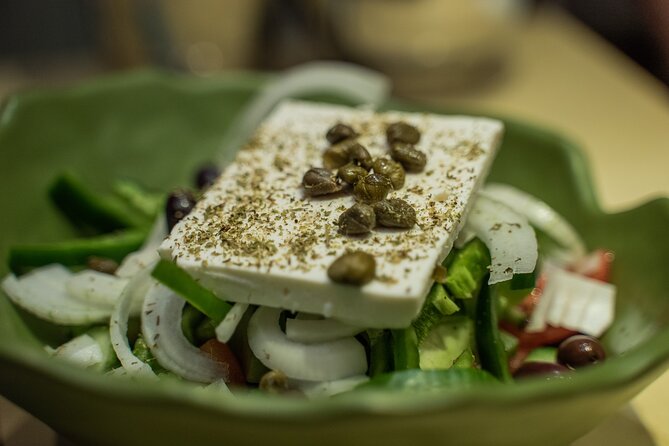
- Greek salad (tomato, cucumber, green peppers, olives, feta)
- Stuffed vegetables like peppers and tomatoes filled with rice
- Chocolate salami for dessert (a cold sweet with chocolate, biscuit, and walnuts)
Here is what that means for you. Tzatziki and Greek salad teach the Greek flavor base, the cool, creamy, olive-oil-forward balance. Stuffed vegetables show the patience side of Greek cooking, the “slow down and stuff it right” skill. Dolmadakia or cheese pies add a different texture and filling style, so you get more than a single flavor profile.
Also, do not be surprised if timing affects what you personally cook every second. Some dishes take longer in real restaurant conditions, so you may find that not everything is finished by the time you sit down. The good news is you still eat the results as part of lunch.
How the taverna setting changes your class experience
The cooking lesson and lunch happen in a local taverna where doors are often kept open. That can be great for atmosphere, but it can also change comfort. One review flagged an open-air dining feel during hot weather, and another mentioned the restaurant was noisy and crowded, with close seating while the chef demonstrated.
That close setup is common in small-group cooking lessons because everyone needs to see and help. In a worst-case scenario, the working table can feel tight with elbow-to-elbow arrangement. In the best-case scenario, it feels like you are inside a real kitchen workflow, watching how a family restaurant runs.
So how should you plan? Bring a realistic expectation: you are here to cook and eat, not to relax in a quiet, air-conditioned classroom. If you get hot easily, wear light layers and bring a small towel or extra water bottle for the walk.
Lunch you can actually taste, plus wine and mineral water
After cooking, you sit down for lunch in the same restaurant area. The menu is not random. It is built from what you prepared: traditional appetizers, salads, main courses, and dessert, all served in a cozy local setting.
Included in your price is one glass of wine per person plus mineral water during lunch. That matters, because it turns the class into a full meal experience rather than a snack-and-send-you-out setup.
In terms of portion expectations, most people describe the meal as plentiful. One review noted the courses felt lighter on protein, which may matter if you are coming hungry and expecting a meat-heavy lunch. But the included dishes still cover a lot of Greek comfort food territory, especially through yogurt, feta, olives, rice fillings, and nuts in dessert.
Bottom line: if you want to leave with a full bellies-and-satisfied taste of Greece, this menu structure usually delivers.
More Athens bookings with lunch thrown in
- All Day Cruise -3 Islands to Agistri,Moni, Aegina with lunch and drinks included★ 5.0 · 4,958 reviews
- From Athens: Hydra, Poros, and Aegina Day Cruise with Lunch★ 4.1 · 4,305 reviews
- Athens: Meteora Monasteries Day Trip with Caves and Lunch★ 4.7 · 2,964 reviews
- Athens: Meteora Monasteries Day Tour with Lunch★ 4.8 · 2,196 reviews
Who you will learn from, and why translation matters
In Athens, the chef might not speak perfect English. That is not a deal-breaker here. The facilitator acts as the bridge, so you can follow the steps without guessing. Many experiences praised this part of the experience, especially when guides translated clearly and kept everyone involved.
You will see names like Nina and Joanna associated with the guide role in past bookings, and George, Elena, Antoinette, Angela, Constantina, Yelena, Xenia, and Yanis also appear in feedback. You may even run into translations that help you understand why a specific motion matters, like how to blend tzatziki, how to roll and fill, or how to shape stuffed vegetables.
One important nuance: the experience is designed around food and local daily life, not a licensed deep history or archaeology lecture. If you are hoping for a full-on, museum-grade explanation of ancient Athens architecture, this may not be the format you want. You will still hear context, but it is tied to food culture and how people live.
Price and value: what $101.55 really covers
At $101.55 per person, this sounds like a lot until you price it like a traveler with groceries and a calendar. You are paying for:
- Market shopping with guidance
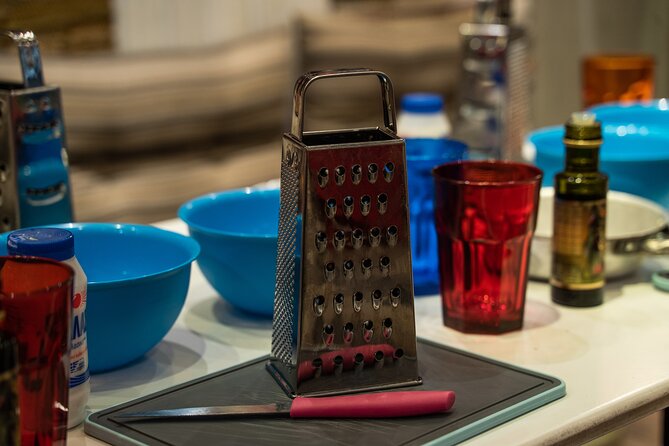
- All cooking equipment such as aprons, gloves, and cookware tools
- A full lunch including two appetizers, salad, main(s), and dessert
- A glass of wine per person plus mineral water
- A recipe booklet souvenir after the class
That adds up. If you tried to recreate this on your own, you would spend money on ingredients anyway, then still pay for a chef, a venue, and the hands-on instruction. Here, the class bundles those costs and reduces the hassle.
Two value checks to keep in mind:
- A licensed guide is not included as part of the experience. So your learning focus is culinary, food culture, and local perspective rather than formal guided history.
- The recipe booklet appears to be provided per booking, not necessarily one per person. In most cases that is fine, but if you have multiple people in your group and you all want a physical copy, consider planning ahead.
Timing, walking, and practical comfort
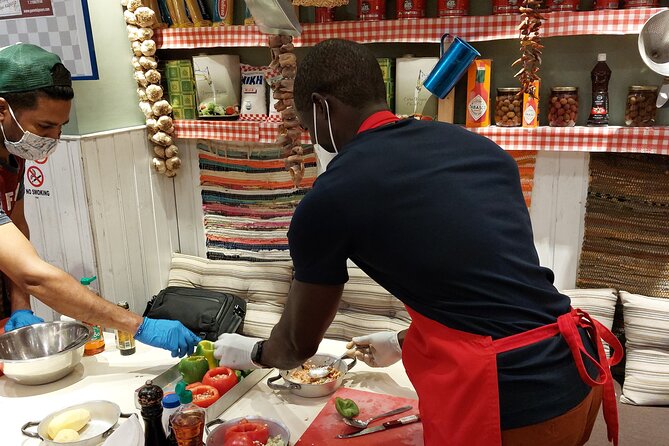
This is a start-at-11:30 am activity with the walk to the market built in, then cooking and lunch, and then you finish back around the Monastiraki square area. The total time is about 3 hours 30 minutes.
Walking is part of the experience. One review warned about the walk through Monastiraki area in heat, and another described the walk as hazardous. That is not something you should ignore. Athens streets can be uneven, and market areas are busy on foot.
Your best move:
- Wear comfortable shoes with grip
- Bring water, especially in summer
- Keep your pace flexible, since the group size stays small but the route is active
Also, the meeting place is near public transportation. So if you plan to combine this with other Monastiraki and Central Athens stops, you can.
The only real downside to watch for
Most feedback is overwhelmingly positive, and the most praised parts are consistent: the market stop feels fun and informative, guides help you understand food culture, the chef instruction is clear with translation, and the food itself is delicious.
The main drawback themes are comfort and expectations:
- Restaurant noise and tight seating can reduce relaxation
- Air conditioning can be limited in a traditional setup during hot weather
- Recipe booklet timing or quantity can be a mismatch for some groups
- Not every course may feel equally meat-forward for those expecting a protein-heavy lunch
If you go in knowing this is an energetic small-group cooking day, you will likely love it. If you are sensitive to heat, noise, or you need a certain dietary structure, you should think carefully before booking.
Should you book this Athens cooking class?
Book it if you want an easy, flavorful way to connect with Athens through food. You’ll get the best of both worlds: market shopping with guidance, then cooking and eating a menu that includes tzatziki, Greek salad, stuffed vegetables, and chocolate salami. The small group size helps you actually participate, not just watch.
Skip or consider another option if:
- you need a quiet, fully climate-controlled indoor class
- you are seeking a formal, licensed historical tour
- you hate any walking in heat or crowded market areas
- you expect a heavy protein lunch every time
If your goal is practical Greek cooking you can repeat at home, and a fun afternoon where someone else handles the buying and the logistics, this is a strong choice.
FAQ
What time does the Athens cooking class start, and how long is it?
It starts at 11:30 am and runs for about 3 hours 30 minutes.
Is this a small group?
Yes. The experience has a maximum of 12 travelers.
What language is the tour offered in?
It is offered in English.
Is lunch included, and what drinks are provided?
Lunch is included with appetizers, salad, main dishes, and dessert. You also get a glass of wine per person and mineral water with lunch.
Where do I meet for the experience?
You meet at Tzireon 12, Athina 117 42, Greece. The activity ends back at the meeting point, around the Monastiraki square area.
Is a licensed guide included?
No. The experience includes market shopping and cooking guidance, but it does not list a licensed guide as included.
With Lunch in Athens
- All Day Cruise -3 Islands to Agistri,Moni, Aegina with lunch and drinks included
★ 5.0 · 4,958 reviews



Every Other Athens Write-Up
- All Day Cruise -3 Islands to Agistri,Moni, Aegina with lunch and drinks included
★ 5.0 · 4,958 reviews




Greek and Cretan Kitchens to Stand In
Everything else we have written up around Athens




Cretan & Greek Cooking Classes, side by side.
 ★ 5.0Athens: Classic Cooking Class with Market Visit and WineFrom $831,101 reviews
 ★ 4.9Athens: Food Market Visit and Cooking Class with WineFrom $811,087 reviews
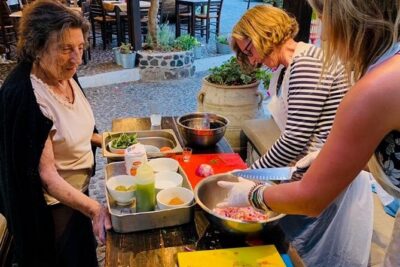 ★ 5.0Greek Cuisine Cooking Class in Santorini with Recipes and WineFrom $145969 reviews
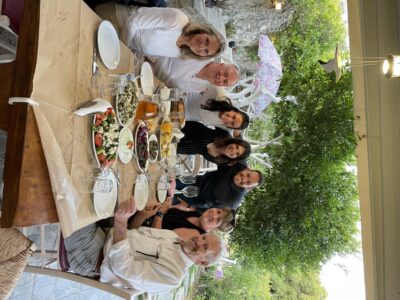 ★ 5.0Naxos: Half-Day Cooking Class at Basiliko Family TavernFrom $117887 reviews
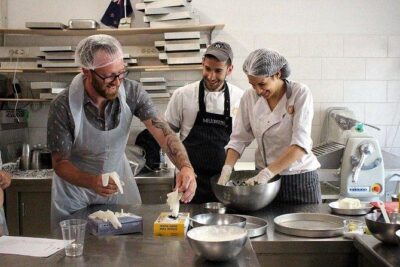 ★ 5.0Greek Cooking Class in Athens Including Rooftop Dinner with Acropolis ViewFrom $120826 reviews
 ★ 5.0Greek Small-Group Athens Cooking Class & DinnerFrom $118574 reviews
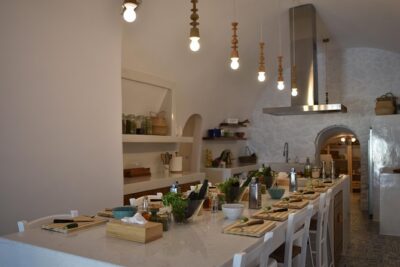 ★ 5.0Exclusive Cooking Experience in our Cave Home by Petra KouzinaFrom $266572 reviews
 ★ 4.9Chania: Authentic Cooking Class in the White MountainsFrom $129529 reviews