
Review · ANCIENT OLYMPIA TOURS
Katakolon: Olympia Highlights Shore Excursion
Olympia is where athletic legend began. I like how this shore excursion takes you straight to the Temple of Zeus and the Temple of Hera area, then pairs it with a practical, timed visit to the main landmarks like the Altis and the stadium. One thing to plan for is the pace: you are not wandering freely for as long as you want, because visits are scheduled into set blocks.
The best part is that the tour is built for cruise timing. You get roundtrip transport in an air-conditioned vehicle, an English-speaking escort, and entrance tickets to the Olympia site, so you are not stuck figuring out logistics while your ship window closes. The tour also includes a free downloadable audio guide for Olympia and the museum, which helps you follow along even when you are moving fast between highlights.
A possible drawback, if you are sensitive to heat and walking, is the ground you cover. This is not suitable for wheelchair users or people with mobility issues, and it is mostly outdoor archaeology, so your shoes and water matter.
In This Review
- Key Olympia Highlights Shore Excursion Tips
- Katakolon to Olympia: The 40-Minute Ride That Sets the Tone
- What Actually Happens Inside Olympia (And What You Might Wish Was Longer)
- Gymnasium and Palaestra: Where Training Culture Meets Myth
- Altis, the Sacred Enclosure, and the Classical Temple Zone
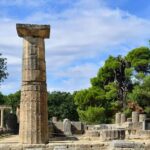
- Temple of Zeus and Temple of Hera: Two Sides of the Same Olympic Story
- Nymphaion and Leonidaion Guesthouse: Why the Side Stops Matter
- The 50-Minute Break: Your Choice for Museum vs. More Ruins
- Getting Back on Time: 30 Minutes to Return to the Port
- Comfort, Sun, and Footwear: The Stuff That Actually Affects Enjoyment
- Price and Value for $56: What You Get, What You Don’t
- Who This Tour Suits Best (And Who Might Prefer Something Else)
- Should You Book This Katakolon Olympia Highlights Tour?
- FAQ
- How long is the Katakolon Olympia shore excursion?
- What is the price per person?
- What does the tour include?
- Is the Olympia Museum entrance fee included?
- Is there an audio guide provided?
- Where do I meet the tour on the day of departure?
- Does the tour have an English-speaking guide?
- Can I choose how long to spend in different areas of Olympia?
- Is the tour suitable for wheelchair users or limited mobility?
- What should I bring, and what is not allowed?
- Is there free cancellation?
Key Olympia Highlights Shore Excursion Tips
- Meet at the John Latsis Katakolo Port exit and look for a sign showing your shore time
- Air-conditioned roundtrip transportation keeps the start and return stress-free
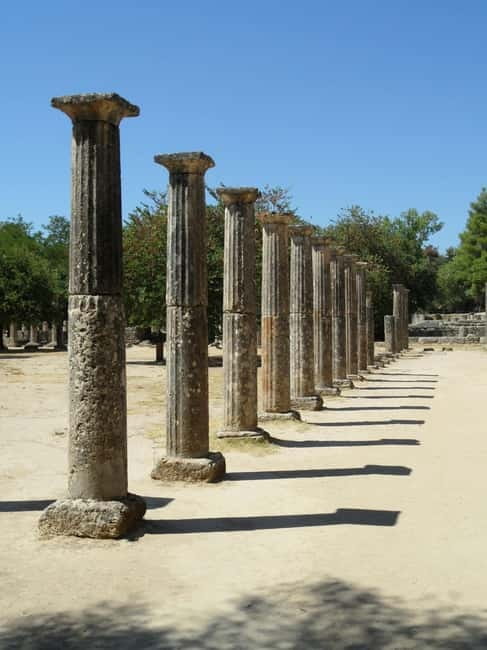
- You’ll see the Gymnasium, Palaestra, Altis, and the Classical Temple area as part of the main route
- Temples of Zeus and Hera are focal points, viewed from the key vantage areas
- A free downloadable audio guide supports your visit, including the museum content
- You get break time and free time on-site, but not totally self-paced
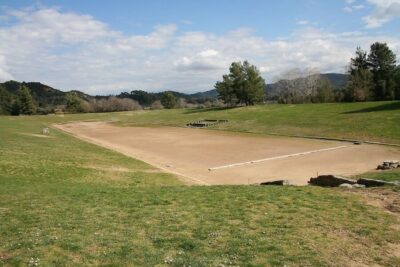
Other visits to the stadium at Olympia

Katakolon to Olympia: The 40-Minute Ride That Sets the Tone
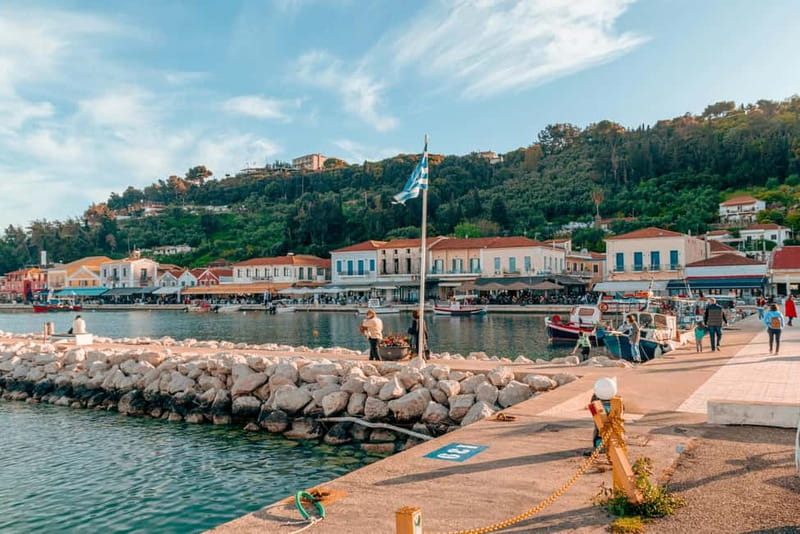
Most people come to Olympia hoping to understand why it mattered, not just take photos of pillars. The first win here is the straightforward transfer from the John Latsis Katakolo Port, with about a 40-minute bus ride that gets you into place with time left to see the big structures.
This timing matters on a cruise day. You do not lose hours hunting for tickets, arranging private transport, or translating signage. Instead, you start the day with an English-speaking coach or minibus escort who keeps things moving and tells you what to watch for once you arrive.
You’ll also want to note the tour’s approach to explanation. It includes a live English guide, with historical and myth context built around the Olympic Games and Zeus. Even if you love archaeology, this setup helps you connect what you see to the bigger story fast, before the ruins turn into random stones.
What Actually Happens Inside Olympia (And What You Might Wish Was Longer)
The Olympia visit is scheduled, not open-ended. After arriving, you’ll spend about 1.5 hours in the Olympia site area during the main visit block, and then you’ll have a separate 50-minute break or free time window later. That structure is good for most cruise travelers, but it is not ideal if you want to linger in one spot for a full hour.
During the main time, you are taken past the headline landmarks that define Olympia’s sacred sports zone. The tour wording points you toward the Gymnasium and Palaestra, plus the temple complexes of Zeus and Hera. In other words, you’re not just shown one temple and hurried away. You get the key layout of the site so you understand where athletes trained, where worship happened, and where ceremonies centered.
One more practical note: the tour includes entrance tickets to the Olympia site, but it does not include a licensed guide escorting you inside the ruins. In practice, that means you rely on the tour’s on-the-ground explanations for the big points, and on your own pace using the included downloadable audio guide for deeper detail while you walk.
Gymnasium and Palaestra: Where Training Culture Meets Myth
The Gymnasium and Palaestra are more than background buildings. They help you picture how people prepared for competition in ancient Greece, in a place tied to religion and public life.
The Gymnasium is the training-world piece. The Palaestra is associated with wrestling and related athletic activity. Even when most structures are fragmentary today, their locations within the sanctuary make sense. You get the sense that sports were not separate from beliefs. They were part of a wider civic and sacred system.
This matters for your visit because Olympia can feel confusing if you only focus on the most famous temple. When you see training spaces early, it changes how the rest of the site lands. The stadium stop later makes more sense, too, because you can mentally connect the routine of practice with the moment of competition.
I also like that these stops are positioned so you understand the site as a whole. Olympia was designed as the center for athletic excellence every four years, held in honor of Zeus. Once you understand that purpose, you start noticing how the different areas work together, not just how big the temples are.
Altis, the Sacred Enclosure, and the Classical Temple Zone
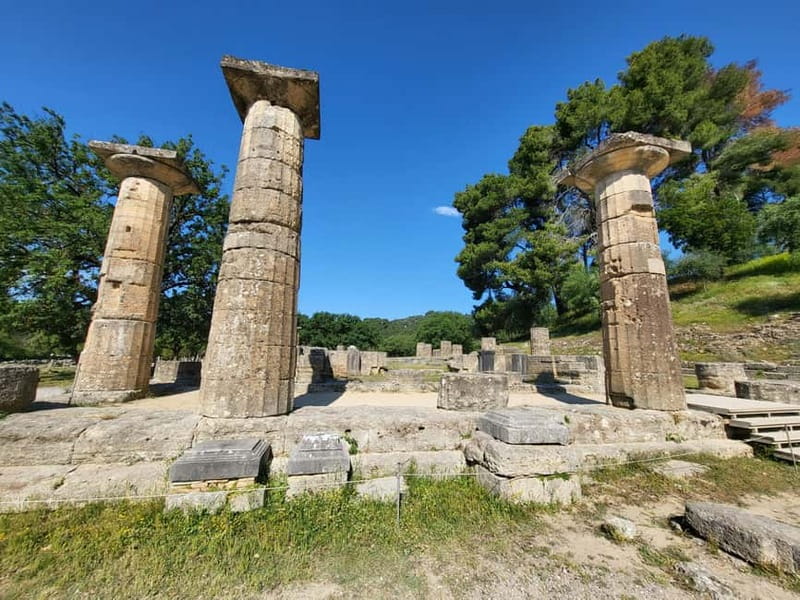
The Altis is the heart of the sanctuary area. In plain terms, it’s the sacred enclosure that organizes worship spaces and major structures. Seeing the Altis is valuable because it gives you the site’s mental map: this is not a random archaeological park, it’s a planned religious and athletic complex.
The tour highlights the Altis and the Classical Temple area, so you are not stuck only looking at what remains standing. You’re guided toward the big-picture meaning of the space, especially the link to Zeus, the father of the gods in the tradition attached to the Games.
The payoff here is how quickly it makes Olympia feel coherent. Without context, a ruined sanctuary can look like scattered columns. With context, you start recognizing the logic of where ceremonies happened, where the sanctuary boundary matters, and how the major temple spaces relate to the rest of the athletic world.
If you are the type who likes to read signs for 10 minutes before moving on, you’ll probably want to use your audio guide during the Altis area. It’s included, and it’s a good way to turn your walk into something more than quick observation.
Temple of Zeus and Temple of Hera: Two Sides of the Same Olympic Story
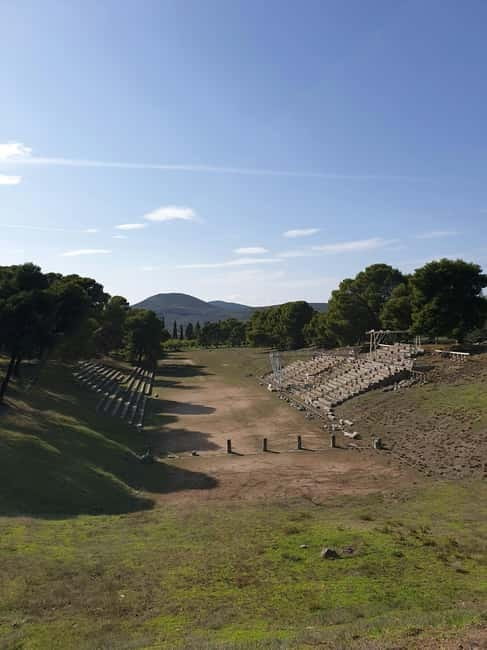
The Temple of Zeus and the Temple of Hera are the headline stops for a reason. They reflect the two pillars of the sanctuary’s identity: worship tied to divine power and the ceremonial structure behind athletic competition.
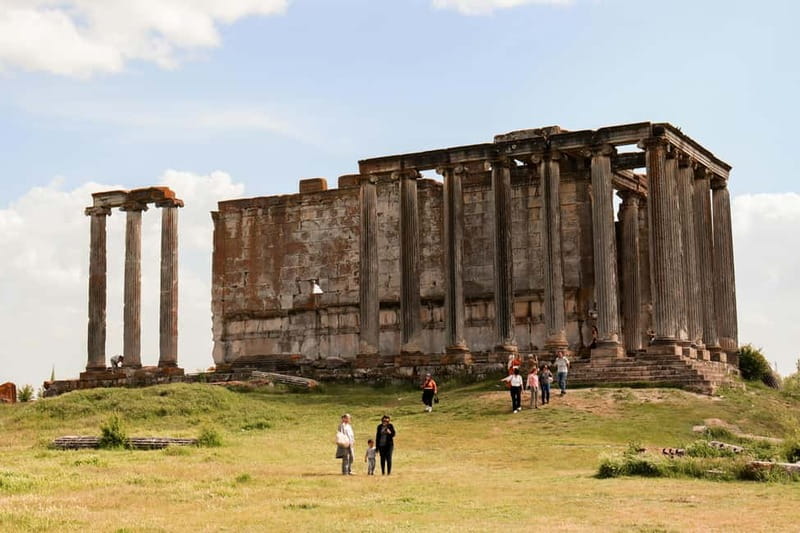
The tour specifically calls out both temples as part of your main exploration. Even when you’re viewing from key areas rather than standing inside fully restored spaces, the best approach is to look at the rhythm of the complex: where Zeus sits in the sanctuary’s focus, and how Hera’s presence complements the sacred system around the Games.
Here’s what I’d recommend you do as you walk this section. Don’t rush your first look. Take 30 to 60 seconds to orient yourself, then return mentally to the map you built earlier from the Gymnasium and Palaestra. When the site is understood as training plus worship, those temple areas start to feel like the finishing point of a whole cultural ritual, not just a photo opportunity.
Also, the tour includes the Hera altar and mentions major structures like the Temple of Hera as part of the outside views. That combination matters because it anchors Hera’s role in the sanctuary, not just a secondary building name.
Other Katakolo port days
- Shore Excursion: Katakolo Sightseeing hop on hop off bus tour★ 3.0 · 36 reviews
- Katakolon and Olympia Shore Excursion★ 4.7 · 27 reviews
Nymphaion and Leonidaion Guesthouse: Why the Side Stops Matter
Two stops in the schedule can easily be overlooked if you only chase the biggest temple photo: the Nymphaion and the Leonidaion guesthouse.
The Nymphaion is one of those structures that adds life to the story. Even if today it is mostly about ruins and layout, the function connects to water and ritual elements within the sanctuary. When you see this kind of feature, Olympia stops feeling like only a stadium and temple postcard. It becomes a place that operated like a real event center.
Then there’s the Leonidaion Guesthouse. This is the accommodation and hospitality link. Olympia wasn’t just a day of competition; it was a recurring festival that pulled people in from outside. Seeing the guesthouse area helps you picture the crowds, the travel, and the fact that the Games were a major social and logistical event, not just a sporting contest.
Even if your time feels tight, these stops are worth your attention because they explain how the sanctuary worked. You’ll come away with more understanding of what life around the Games looked like.
The 50-Minute Break: Your Choice for Museum vs. More Ruins
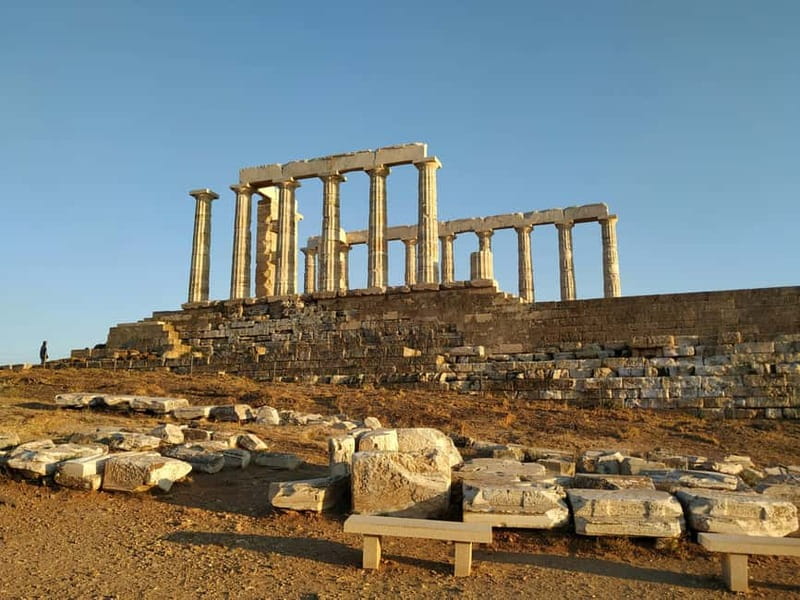
After the main route, you get a break and free time on-site, about 50 minutes. This is where you decide what you want more.
If you are mainly here for the outdoor sanctuary, you can keep your attention on the Olympia grounds and revisit the areas you liked most. If you want more detail, the Olympia museum visit is the obvious option, but you’ll need to pay the museum entrance fee separately. The audio guide you get is also designed to cover the museum, which is handy if you do plan to go in.
I’d treat this 50 minutes like a mini mission. Pick one direction: museum or extra sanctuary time. If you try to do both with rushing, you may lose the chance to actually enjoy either.
This break also gives you a chance to handle practical needs: water checks, shade breaks, and a quick snack if you packed something. Food and drinks are not included, so being ready helps you keep your energy up for the walk.
Getting Back on Time: 30 Minutes to Return to the Port
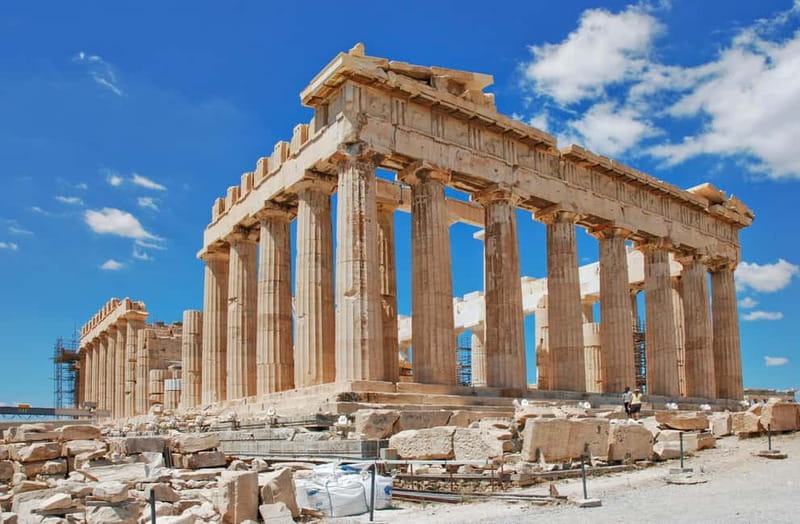
At the end, you’ll travel back by bus or coach for about 30 minutes and arrive back at the Katakolo port area. On a cruise day, this part can make or break the experience, and the structure here is clear.
The tour’s value shows up in the return plan. You are not stranded on your own after a long walk. A driver and escort bring you back to the John Latsis Katakolo Port, and the meeting point instructions make it easier to find your group quickly.
One last thing that matters for a smooth return is your meeting behavior. The tour says you should meet at the port exit after disembarking, look for the large blue overhead sign, and watch for your driver and tour escort holding a sign with your shore time. Do not drift far until you know where your group is located.
Comfort, Sun, and Footwear: The Stuff That Actually Affects Enjoyment
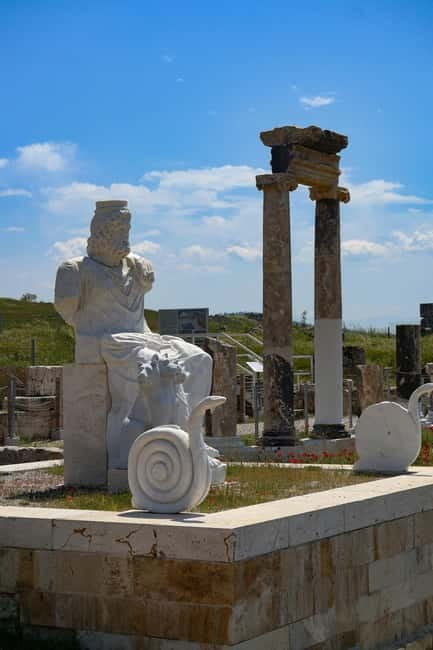
This is a walking-focused ruins visit. The tour itself warns it is not suitable for walking and mobility issues, and it is not for wheelchair users. That’s a key consideration, because even if the distance is short, the terrain can still be uneven and exposed.
Bring comfortable shoes with real grip. The tour also asks you to pack sunglasses, a hat, sunscreen, and water. That list is not random. Olympia is outdoors, and in warm weather you’ll feel it quickly if you forget shade and hydration.
One more practical point: smoking is not allowed. Simple rules like this are about site etiquette and safety, so follow them.
If you’re sensitive to heat, I’d keep your hat and sunscreen within easy reach, not buried deep in a day bag. You’ll likely use them during the temple and enclosure parts of the route, when you are exposed longer.
Price and Value for $56: What You Get, What You Don’t
At $56 per person for a 4-hour shore excursion, you’re paying for three things: roundtrip air-conditioned transport, entrance tickets to the Olympia site, and the included English guiding plus the downloadable audio guide.
That is often good value compared with booking separate transport and tickets on a tight cruise schedule. You also avoid the hassle of organizing a self-guided route without any time buffer.
What you are not getting is a fully flexible, linger-as-long-as-you-want experience. Visits are scheduled, and the tour does not include the optional Olympia Museum entrance fee. Food and drinks are also not included, so you’ll need to plan for whatever snack or lunch you want during the 50-minute free time.
Also, a licensed guide escorting customers inside Olympia is not included. The tour still provides an English-speaking live guide, but if you want to stay deep in every corner with a high-detail guide right beside you, you should expect to rely more on your audio guide during parts of the site.
Who This Tour Suits Best (And Who Might Prefer Something Else)
This is a strong match if you:
- Want Olympia’s top landmarks in a single cruise-day outing
- Prefer an organized route with clear timing instead of figuring out the site yourself
- Like myth and Games context, not just archaeology photos
- Appreciate having a free audio guide as backup
It might not be the best fit if you:
- Need wheelchair access or have major mobility limits
- Want a fully self-paced exploration with unlimited time at each structure
- Plan to spend a long stretch in the museum, because museum entry is optional and not included in the price
If you can walk comfortably and you like structure, you’ll likely feel like the tour uses your time well. If you crave freedom over schedule, you might feel rushed in the scheduled blocks.
Should You Book This Katakolon Olympia Highlights Tour?
I’d book it if you want a clear, cruise-friendly path through Olympia’s most important landmarks, with Zeus and Hera focus, plus an audio guide to help you understand what you’re seeing. The combination of entrance tickets, air-conditioned transport, and a timed visit is exactly the kind of practical value that works on a ship day.
I would reconsider if you know you need lots of museum time, or if you want to roam without limits. The tour’s design is about hitting the key points within about four hours, including the ride in and out.
If your priority is to understand the sanctuary’s layout quickly and then choose how to spend your 50 minutes, this shore excursion gives you a workable plan. Just pack your shoes, water, and sun gear, then enjoy the moment when Olympia shifts from ruins into a story about athletes, gods, and a festival held every four years.
FAQ
How long is the Katakolon Olympia shore excursion?
The duration is 4 hours, including transportation time to and from Olympia.
What is the price per person?
The price is listed as $56 per person.
What does the tour include?
It includes cruise port pick-up, air-conditioned roundtrip transportation, an English-speaking coach or minibus escort, entrance tickets to the Olympia site, and a free downloadable audio guide for Olympia and the museum.
Is the Olympia Museum entrance fee included?
No. The entrance fee to the Olympia Museum is not included. It is optional during your free time.
Is there an audio guide provided?
Yes. You get a free downloadable audio guide of Olympia and the museum.
Where do I meet the tour on the day of departure?
After you disembark, go to the port exit. There is a large blue overhead sign, and your driver and tour escort will be waiting there displaying a sign with your shore time.
Does the tour have an English-speaking guide?
Yes. The tour includes a live tour guide in English.
Can I choose how long to spend in different areas of Olympia?
No. This tour is not structured as fully self-paced browsing. Time at the site is scheduled.
Is the tour suitable for wheelchair users or limited mobility?
No. It is not suitable for people with mobility impairments or wheelchair users.
What should I bring, and what is not allowed?
Bring comfortable shoes, sunglasses, a hat, sunscreen, and water. Smoking is not allowed.
Is there free cancellation?
Yes. You can cancel up to 24 hours in advance for a full refund.
The Rest of Katakolo
Every Other Katakolo Write-Up
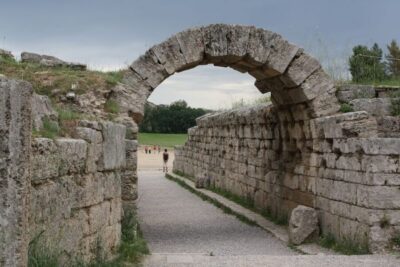
The Stadium at Olympia
Everything else we have written up around Katakolo
Ancient Olympia Tours, side by side.
 ★ 4.54-Day Classical Greece Tour: Epidaurus, Mycenae, Olympia, Delphi, MeteoraFrom $766732 reviews
 ★ 4.3Ancient Olympia: Archaeological Site and Museum Entry TicketFrom $30555 reviews
 ★ 4.8Olympia: Tour with Virtual Reality and AudioFrom $28505 reviews
 ★ 4.53-Day Classical Greece Tour: Epidaurus, Mycenae, Nafplion, Olympia, DelphiFrom $520342 reviews
 ★ 4.3Olympia: Archaeological Site & Museum E-Ticket & Audio GuideFrom $41272 reviews
 ★ 4.5Ancient Olympia Half-Day Tour from Katakolo Cruise PortFrom $14228 reviews
 ★ 3.5Katakolo: Pyrgos and Katakolo Hop-on Hop-off Bus TourFrom $11196 reviews
 ★ 4.84-Day Tour of Mycenae, Epidaurus, Olympia, Delphi & MeteoraFrom $747168 reviews
Sits on these lists