
Review · ANCIENT CORINTH & THE CANAL
Paul”s Footsteps Ancient Corinth Biblical Tour
Paul’s Corinth is not a generic Greek history tour. This one follows the route of the Apostle with a private vehicle so you can move between key stops without dragging your feet or sharing time. I love the hotel pickup and the calm pacing, and I also like that the van has Wi-Fi for quick Bible and background research on the go. The main thing to plan for is cost creep, entrance fees are not included and lunch is on you.
What makes this feel meaningful is how the day connects physical places to the story, from the Corinth Canal and the Diolkos transfer track to the port of Kenchreai and the churches tied to Paul. The guides I saw referenced by name, like Kostas, Nick, Constantine, George, and Konstantinos, were consistently praised for making explanations clear while still giving you time to look, walk, and take photos. One practical consideration: part of the explanation happens from the driver/guide, while licensed site guiding inside archaeological spaces is listed as not included, so if you want extra narration inside each ticketed building, budget that possibility.
In This Review
- Key highlights to look forward to
- Why Paul’s Corinth tour feels different than a standard day trip
- Getting there: private pickup, bottled water, and Wi-Fi on the drive
- Stop 1: Corinth Canal photos, ancient passing routes, and the Diolkos connection
- Stop 2: The Diolkos, a rare look at ancient “portage”
- Stop 3: Temple of Apollo, light and music through Corinthian eyes
- Stop 4: Corinth Archaeological Museum, amphoras and Roman names
- Stop 5: Acrocorinth fortress, Caesar’s winter palace, and big views
- Stop 6: Ancient port of Kenchreai, the tentmakers connection, and a church link
- Stop 7: Ancient Corinth, Apollo, the Agora, and the Oracle site feeling
- Stop 8: Apostolos Pavlos Church, a short stop with a 51 AD anchor
- Price and value: what $350.68 per group really buys
- Group size, pacing, and the guides people mention by name
- Best for who? Picking the right kind of traveler
- Should you book this Paul’s Footsteps Ancient Corinth Biblical Tour?
- FAQ
- How long is the Paul’s Footsteps Ancient Corinth Biblical Tour?
- What is the group size for this private tour?
- Do I get hotel or cruise pickup and drop-off?
- Is Wi-Fi available during the tour?
- Is lunch included?
- Are entrance fees included for archaeological sites and museums?
- Is the tour offered in English?
- Do I need to pay for every stop?
- Can I cancel for a full refund?
Key highlights to look forward to
- Private car time that makes this route feel doable and unhurried
- Wi-Fi on board so you can fact-check names and places while you’re there
- Corinth Canal and the Diolkos for a real sense of how movement shaped commerce and travel
- Acrocorinth views from a huge fortress above the city
- Kenchreai and the port connection to Priscilla and Aquila and the early Christian story
Other stops at ancient Corinth and the canal

Why Paul’s Corinth tour feels different than a standard day trip
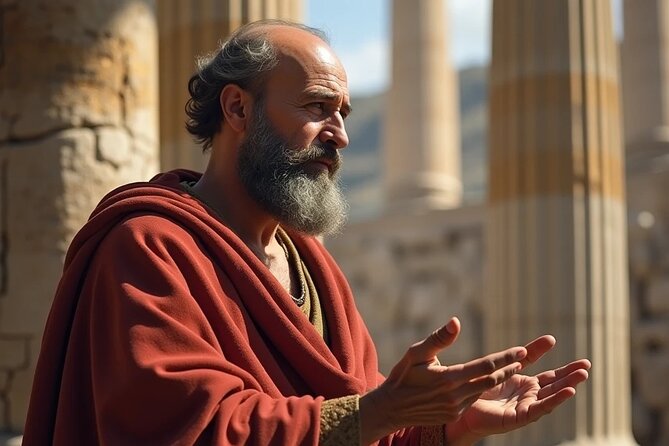
If you like travel that has a storyline, this works well. Instead of hitting monuments in a random order, the day is built around the places Paul is linked to. You spend a long stretch in Corinth and the surrounding sites, so you are not just snapping pictures and leaving. You’re building a map in your head.
I also like that it’s not only about ruins. You get churches tied to the early Christian era, plus the Roman and Greek layers that shaped daily life. That mix helps you understand why the places mattered, not just what they looked like.
Getting there: private pickup, bottled water, and Wi-Fi on the drive
Your day starts with pickup around Athens, with a sign showing your name, whether you’re in a hotel, an apartment (like Airbnb), or at a cruise location. This matters because Corinth trips can eat up time if you’re trying to figure out transport on your own.
Once you’re in the vehicle, you’ll have bottled water, air-conditioning, and Wi-Fi access. That sounds small until you want to check spelling, look up a place name, or pull up a quick passage before you walk into a site. It’s especially useful on a day like this where names and locations pile up fast.
This is a private tour with space for only your group, up to 2 people per booking. That makes a difference for comfort and for the flow of the day. You can ask questions, pause for photos, and avoid the awkward timing pressure that comes with larger shared tours.
Stop 1: Corinth Canal photos, ancient passing routes, and the Diolkos connection
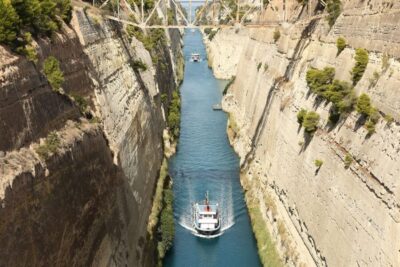
The first major stop is the Corinth Canal, often called the Isthmus Canal. You get time for views and photos, and the scale is the kind that makes you understand why people talked about this corridor for centuries. The canal is about 4 miles long, with walls roughly 80 meters high and 27 meters wide.
Here’s the interesting part for a Paul-focused route: excavations are credited to King George starting in 1886 and finishing in 1996 after decades of interruptions. But the story does not start there. The route notes that the existence of the canal passage dates much earlier, around 2700 BC without the modern excavation work. It also points out that in Roman times, boats were transferred by rolling them along wood tracks, rather than simply sailing through.
Why this matters for you: when you understand the movement logic of a place, Paul’s travel routes make more sense. You’re not just seeing water, you’re seeing infrastructure that changed how people and goods moved between regions.
Stop 2: The Diolkos, a rare look at ancient “portage”
Right after the canal viewpoint, you’ll see the Diolkos, an ancient roll way dating back to around 2700 BC. In plain terms, it’s one of those rare archaeological reminders that travel was work. If you had to move ships over land, you needed a system.
This stop is short, but it’s a good mental bridge. You go from modern engineering shock (big walls, big channel) to an older, human-powered solution (rolling ships on tracks). It’s a quick way to grasp how this region functioned as a crossroads.
Stop 3: Temple of Apollo, light and music through Corinthian eyes
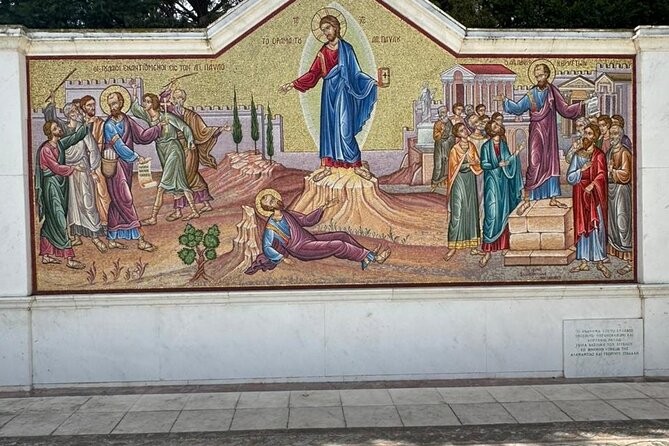
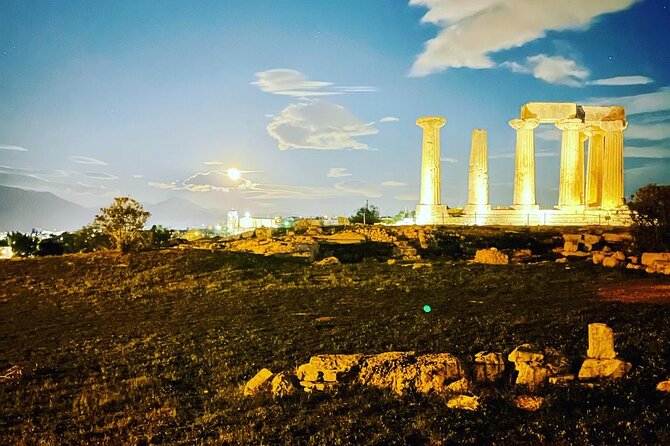
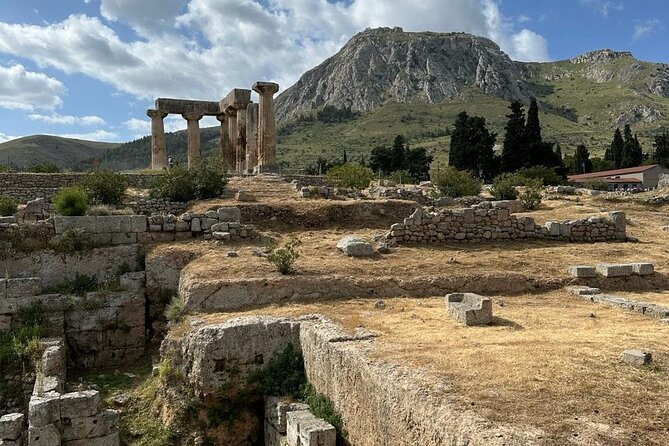
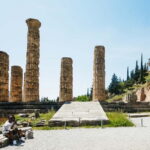
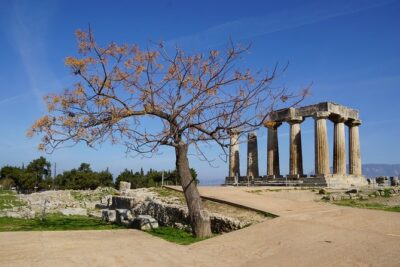
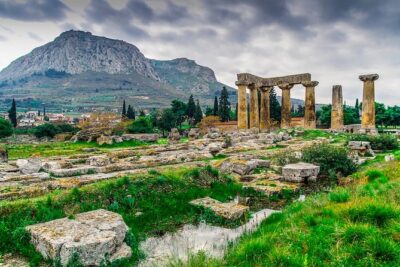
Next comes the Temple of Apollo, tied to local Corinthian worship and also referenced alongside Roman interpretations. The details provided emphasize Apollo as the god of light and music, not just a vague classical deity.
The temple gets extra attention because it’s described as the only Apollo temple where the sun can be seen from all sights in the area. Even if you don’t get a guided “sun angle” explanation on site, you’ll likely notice how the location and lighting play into the meaning of Apollo.
Practical note: time here is about 30 minutes, and the entrance is not included in the base price. That means you should be ready to pay the site fee if you want to go inside or access areas that require a ticket.
- Athens: Acropolis & up to 5 Archaeological Sites Combo Pass★ 4.4 · 12,619 reviews
- Athens: Acropolis, Parthenon & Acropolis Museum Guided Tour★ 4.8 · 9,316 reviews
- Athens: Cape Sounion & Poseidon Temple Sunset Half-Day Trip★ 4.8 · 8,241 reviews
- Athens: Acropolis and Parthenon Guided Walking Tour★ 4.6 · 5,882 reviews
Stop 4: Corinth Archaeological Museum, amphoras and Roman names
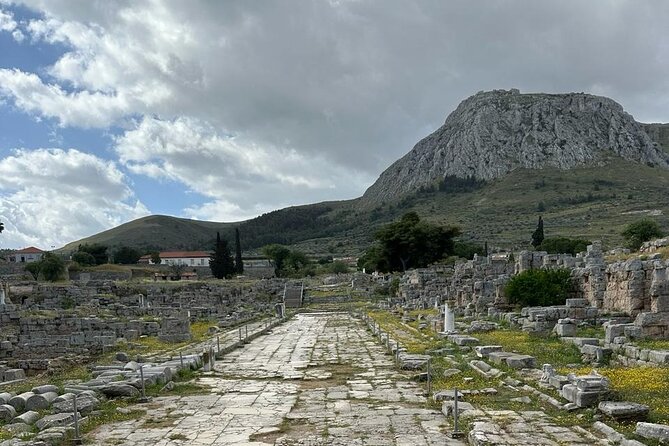
Then you head to the Archaeological Museum of Corinth for about an hour. This is one of those stops that can quietly become your favorite if you care about objects, not only ruins.
The standout items listed include Roman emperors referenced in the museum holdings, and a strong emphasis on amphoras, with 265 of them cited, described as having different styles and decorative patterns like Greek keys. The message is clear: Corinth was a commercial hub, and amphoras are the kind of everyday container that turn trade into something physical you can see.
The museum entrance is not included, so plan your budget for ticketing. Still, I think it’s worth it on this route because it gives you context while your brain is already filled with names like Paul, Priscilla, Akila, and local civic life.
Stop 5: Acrocorinth fortress, Caesar’s winter palace, and big views
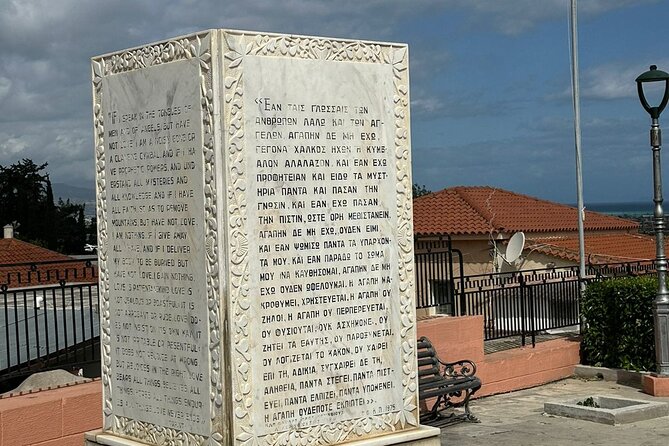
Acrocorinth is the big one. This is the fortress area on a hill, described as around 530 meters high, associated with the 5th century BC timeframe. The day notes it as the winter palace of Caesar, and it also points to a Temple of Aphrodite in the fortress complex.
There’s also a story thread tied to daily labor and early Christians. The description links the fortress area to the business world around tentmakers, mentioning Priscilla and Akila. Whether every detail matches the way you’ve heard the story before, the point is that this place helps you picture power and work sitting side by side above the city.
Time is about an hour here, which is enough to take in the walls, orient yourself, and enjoy the views. From the heights, you can see the Corinth Canal and the boats, which turns earlier stops into a connected picture. It’s one of those moments where the day stops feeling like a checklist and starts feeling like geography.
Entrance is not included for Acrocorinth, so again, budget for site tickets.
Stop 6: Ancient port of Kenchreai, the tentmakers connection, and a church link
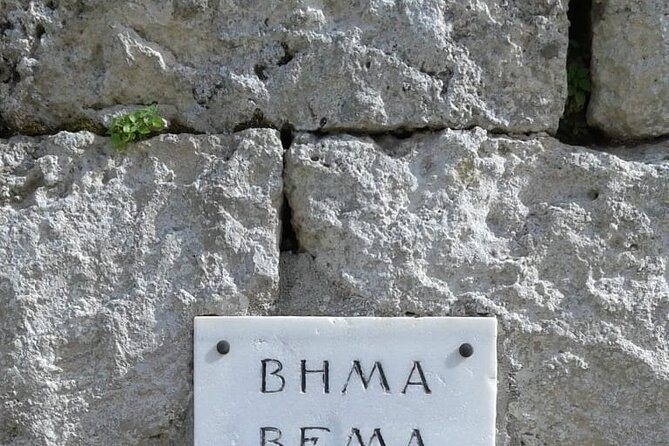
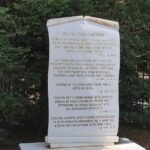
After the fortress, you move to the Ancient Port of Kenchreai. This is one of the most story-forward stops. The description places Paul at Kenchreai around 51 AD and connects him to Priscilla and Akila making tents.
You’ll also hear about an early Christian church connection, described as the very first Christian church you can see in this area. And the route notes Paul’s next travel move, leaving for Ephesus after an extended stay, described as 16 months.
This stop lasts about 45 minutes and is listed with free admission. For you, that’s a good bargain moment in the day: you get meaningful narrative connection without an extra paid ticket at the gate.
Stop 7: Ancient Corinth, Apollo, the Agora, and the Oracle site feeling
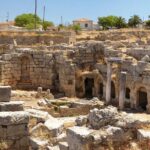
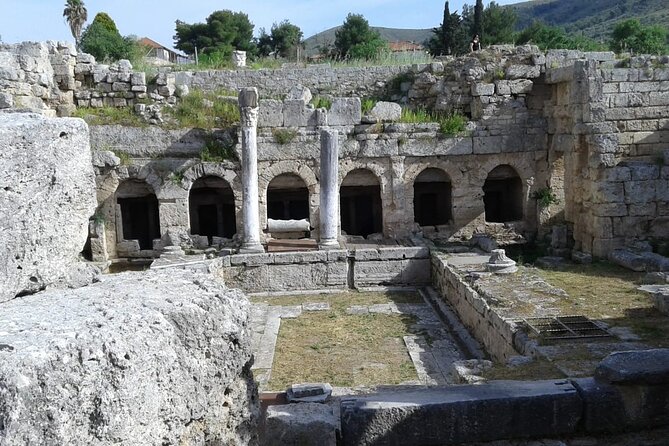
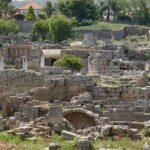
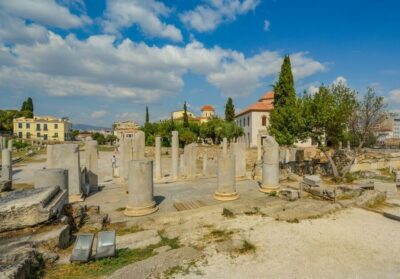
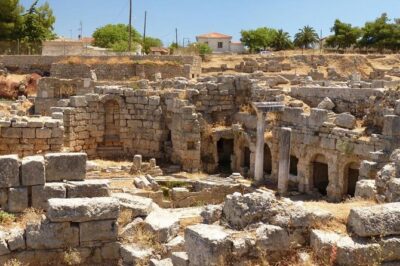
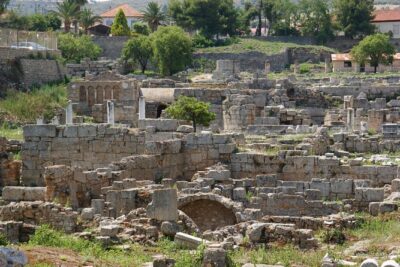
Then comes the heart of it: Ancient Corinth, around 2 hours on foot and in the area. You’re described a village that’s about 7000 years old, with several layers to spot, from major temples to civic spaces.
What you should expect to see includes:
- The Temple of Apollo within the ancient site area
- The Octavia Temple, mentioned as connected to Caesar’s mother
- The Agora, the civic and social center
- The Oracle of Corinth area
- The Ancient Church of Paul
- The museum space within the ancient complex
A big benefit of a private tour here is that you can linger in the places that click for you. If you care about the civic layout, you can spend more time around the Agora and civic zones. If you’re more drawn to religious narrative, you can focus on church-linked spots and temple areas.
Entrance is not included for this stop, so plan your ticketing budget.
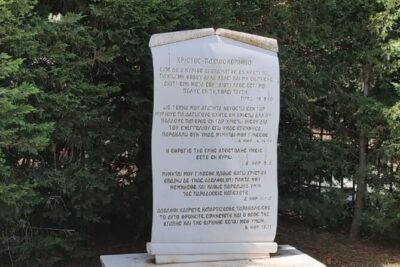
Stop 8: Apostolos Pavlos Church, a short stop with a 51 AD anchor
You finish with Apostolos Pavlos Church, described as an ancient church from 51 AD. The time is about 20 minutes, and admission is listed as free.
Even with a short visit, anchoring the day with a church reference is powerful. It ties earlier stops back to the early Christian thread, and it gives you a tidy closing note before you head back.
Price and value: what $350.68 per group really buys
The price is $350.68 per group for up to 2 people, and the duration is about 6 hours 30 minutes. When you compare that to shared tours, the value is mainly in your time and your comfort: private transport, pickup and drop-off, and an English-speaking driver/guide for biblical tours in the vehicle.
But you should budget for extras. Entrance fees for archaeological sites and museums are listed as about €15 per person, and lunch is not included. Some stops are free, like the Corinth Canal viewpoint area and Kenchreai, but multiple key sites are ticketed. So the final cost for you depends on which ticketed entries you choose to include.
One more practical point: the price includes private transportation and guidance during the day, but a licensed tour guide to accompany you into archaeological sites is listed as not included. In real life, that often means the driver/guide may explain from the van or from viewpoints, while some sites may feel more self-directed once you reach ticketed areas. If you want deep narration inside every building, keep that in mind when judging value.
Group size, pacing, and the guides people mention by name
This tour is private for your group, up to 2. That usually means you get a smoother pace, fewer waits, and more flexibility for questions. The reviews often highlight that guides like Kostas, Nick, Constantine, George, and Konstantinos helped keep things moving while still giving enough time at each stop.
I like that style for this kind of day trip. Corinth is dense. If you move too slowly, you lose the emotional arc of the story. If you move too fast, you miss what you came for. This format aims for the middle: steady rhythm, enough time to look closely, and consistent explanation while traveling between places.
Best for who? Picking the right kind of traveler
This is a good match if:
- You want a Paul-focused route and not just a general Corinth highlights tour
- You value private comfort, especially with hotel or cruise pickup
- You like to ask questions and have context while you travel, not only at the stops
It might be less ideal if you want a fully ticketed, fully escorted package where every archaeological interior is guided by a licensed specialist included in the base price. In that case, budget the difference and be clear about what you’ll get inside paid sites.
Should you book this Paul’s Footsteps Ancient Corinth Biblical Tour?
Book it if you want a private, story-driven day that connects geography to Paul’s era, with comfort and smart pacing. The Corinth Canal, Diolkos, Acrocorinth views, and the Kenchreai port stop give you enough variety that the day doesn’t feel repetitive. Add the on-board Wi-Fi and hotel pickup, and you get a low-stress way to do a full countryside circuit.
I’d hold off or ask a couple questions first if you’re counting on everything being included beyond entrance fees, especially for in-site licensed guiding. Also check your appetite for tickets and plan lunch separately.
If you’re the type who likes your travel with a storyline and practical logistics handled for you, this is a strong choice.
FAQ
How long is the Paul’s Footsteps Ancient Corinth Biblical Tour?
It runs about 6 hours 30 minutes.
What is the group size for this private tour?
It is a private tour, only your group participates, with a limit of up to 2 people per booking.
Do I get hotel or cruise pickup and drop-off?
Yes. Pickup is included from your hotel, Airbnb, or cruise location in Athens, and drop-off is also included.
Is Wi-Fi available during the tour?
Yes. Wi-Fi access is available on board the vehicle.
Is lunch included?
No. Lunch is not included.
Are entrance fees included for archaeological sites and museums?
No. Entrance fees are not included, and the tour lists €15.00 per person for archaeological sites and museums.
Is the tour offered in English?
Yes. The tour is offered in English.
Do I need to pay for every stop?
Not every stop is paid. Some stops are listed as free admissions, while others are listed as not included, depending on the site.
Can I cancel for a full refund?
Yes. Free cancellation is available up to 24 hours in advance for a full refund.
The Rest of Athens





Every Other Athens Write-Up
- All Day Cruise -3 Islands to Agistri,Moni, Aegina with lunch and drinks included
★ 5.0 · 4,958 reviews



Ancient Corinth and the Canal
Everything else we have written up around Athens




Ancient Corinth & the Canal, side by side.
 ★ 4.6From Athens: Ancient Corinth Day Trip with Canal & VR GuideFrom $411,073 reviews
 ★ 5.0Biblical Tour Letters ToThe Corinthians St Paul’s Footsteps 6HourFrom $1701,065 reviews
 ★ 5.0Private Biblical Tour Ancient Corinth & Isthmus Canal from AthensFrom $301762 reviews
 ★ 4.8Athens: Ancient Corinth & Nafplio Full Day Trip with SwimFrom $44523 reviews
 ★ 5.0Private Tour of Apostle Paul’s Footsteps in Ancient CorinthFrom $169275 reviews
 ★ 4.5Corinth Half-Day Trip from Athens with Entrance TicketsFrom $91242 reviews
 ★ 4.7Athens: Ancient Corinth & Nafplion Guided Premium TourFrom $34237 reviews
 ★ 4.4Athens: Corinth Canal, Mycenae and Nafplio Day TourFrom $33233 reviews
Sits on these lists