
Review · ANCIENT CORINTH & THE CANAL
The Apostle Paul’s Missionary Journey in Athens and Corinth
Paul’s story feels close when the stones are still here.
This private Athens-and-Corinth day links biblical moments with classical sites you’ll recognize from Greece’s big history. I love how the tour is structured as a clear “route of ideas,” from debate scenes in Athens to the places Paul walked and worked in Corinth.
Door-to-door pickup is a real quality-of-life upgrade, and it helps you start on time without wrangling taxis. I also like that the day stays personal, because this is a private tour and your driver can tailor pacing and answers to your group.
One thing to plan for: there’s some walking on uneven pavement, and the day can be long (about 8 to 9 hours), so good shoes and sun protection matter.
In This Review
- Key Points You Should Know Before You Go
- Door-to-door pickup and a private Athens-to-Corinth day
- Starting at the Ancient Agora, where Paul met the thinkers of Athens
- The Areopagus: where debate felt official, not just casual
- Agios Dionysios Areopagitis Church, Athens’ early Christian link
- Corinth Canal: why geography mattered to Paul’s world
- Kenchreai’s ancient port: Paul’s arrival point in 51 AD
- Ancient Corinth (Archaia Korinthos): the Bema, the Agora, and Temple ruins
- Corinth Museum stop: why artifacts make Paul feel real
- Acrocorinth’s fortress views and the Temple of Aphrodite
- Price and value: what you’re really paying for
- What I think fits best (and what might not)
- Should you book this Paul in Athens and Corinth tour?
- FAQ
- How long is the tour?
- What does the tour include?
- Are entrance fees included?
- What pickup options are available?
- Is this tour private?
- Is the tour easy for walking and uneven ground?
- Is there free cancellation?
Key Points You Should Know Before You Go
- Private, door-to-door service keeps the day efficient, especially if you are staying outside central Athens
- Wi-Fi on board plus bottled water means fewer interruptions and a smoother road trip
- Paul’s Athens sequence is more than sightseeing, you’ll visit the Agora and the Areopagus for the debate context
- Corinth Canal and Kenchreai give you geography and arrival context before you reach Ancient Corinth
- Acrocorinth rewards your legs with big views and a strong sense of how the region was defended and worshipped
- Entrance fees are not included, so budget for site tickets at the Agora and Corinth ruins
Other stops at ancient Corinth and the canal

Door-to-door pickup and a private Athens-to-Corinth day
This is the kind of tour that saves energy before you even start walking. You get air-conditioned vehicle transport, plus hotel or port pickup where the driver waits outside with your name. If you are coming from the airport, that pickup is optional and costs extra, so plan on hotel or port meeting if you want to keep things simple.
The tour price is $200.25 per person for an 8 to 9 hour day, and the value is not just the drive. It is the way you are led through a sequence of sites tied to Paul’s time and message, then matched to the classical world those ideas landed in. Since entrance fees for several sites are not included, you’ll want to treat this as a “transport and interpretation day” and then add tickets for the stops that charge.
Your group size is limited. For groups of 1 to 4, the tour uses a sedan vehicle, which usually means less shuffling and more one-on-one time. The driver is also your key source of explanations, with in-depth history knowledge and English language support.
If you like a day that feels planned but not rushed, this works well. You are not hopping between tiny mini-stops all day. You have a meaningful cluster in Athens, then you head to the Corinth region and finish high at Acrocorinth.
Starting at the Ancient Agora, where Paul met the thinkers of Athens
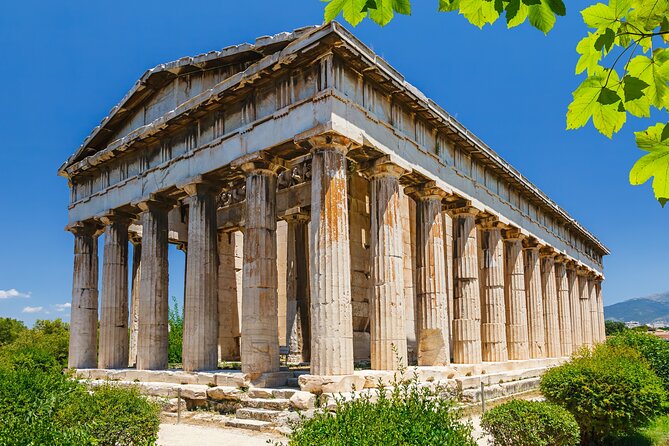
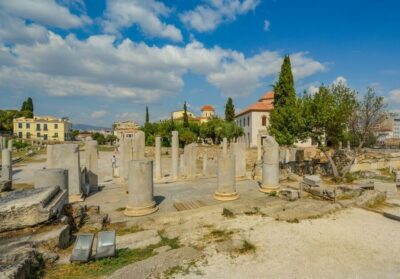
Your first major stop is the Ancient Agora of Athens, the heart of civic life where politics, trade, and religion overlapped. This is where the tour framing gets smart. Paul’s presence here is not treated as a vague religious moment, it is placed in a real public space where philosophers and citizens argued in everyday life.
You will have about an hour here, and entrance fees for this site are not included. Plan for that extra cost, and also plan time to absorb what you are looking at. Agora ruins can feel “big but scattered” if you do not know what you are standing near. The benefit of this tour is that your driver helps you interpret what the space would have meant in Paul’s era, so your photos come with context, not just angles.
Practical tip: go in wearing your walking shoes, because this stop is part of the day’s early rhythm. If your feet are already sore, you will feel the rest more than you need to.
The Areopagus: where debate felt official, not just casual
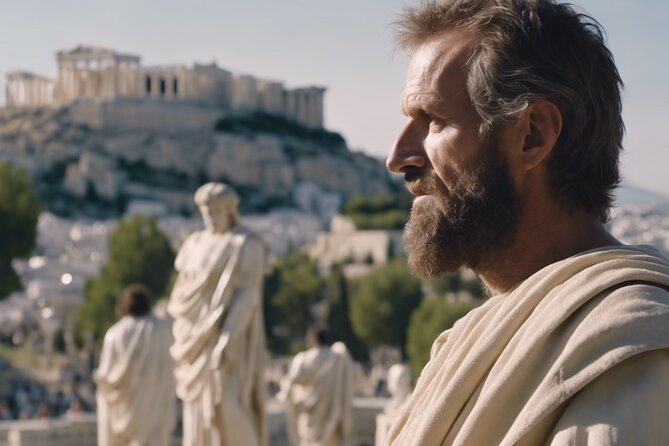
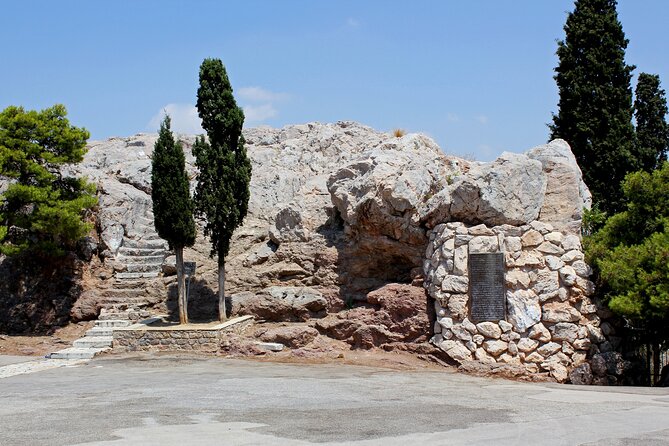
Next comes the Areopagus, a marble hill northwest of the Acropolis. In ancient Athens, it served as a judicial and political meeting place, and in Paul’s time it was also associated with intellectual discussion. You get about 30 minutes here, and there is no admission charge on this stop.
This short timing is actually a plus. The Areopagus is a place where you can get the idea quickly: this was not just a street corner chat. It was a setting that carried authority, which helps you understand why Paul’s message would have landed differently than in a private setting.
Look for the feeling of elevation. Standing and viewing the surrounding area helps you grasp why people gathered and how speaking in such a spot could feel powerful. Your driver’s explanations help connect the dots between the physical site and the kind of “public listening” Paul would have faced.
Agios Dionysios Areopagitis Church, Athens’ early Christian link
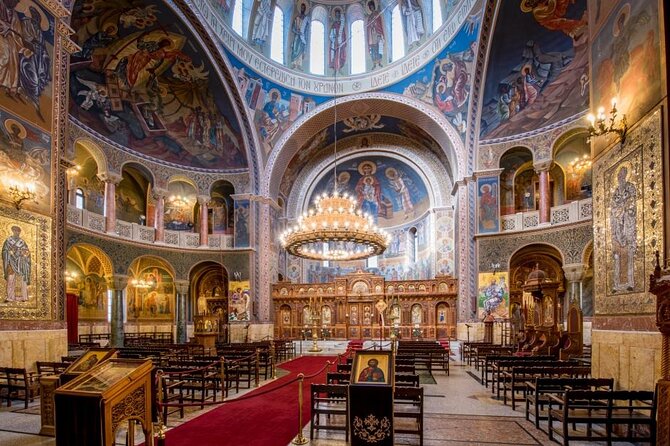
A quick shift from ruins to a working church brings the story into later Christian memory. The Church of Saint Dionysius the Areopagite is located in the Kolonaki district, on Skoufa Street. You have about 20 minutes, and entry is free.
The key connection here is the tradition that Dionysius, linked to the Areopagus story, was converted to Christianity by Paul and later became the city’s first bishop. You are not just looking at architecture. You are seeing how a local tradition held onto Paul’s footprint long after the Roman-era world moved on.
This stop also breaks up walking. It is shorter, indoor or semi-indoor depending on how you move through it, and it gives you a reset before you head out toward Corinth.
Corinth Canal: why geography mattered to Paul’s world
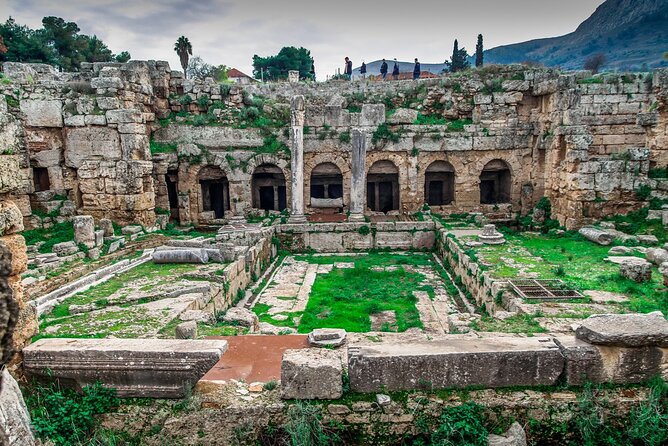
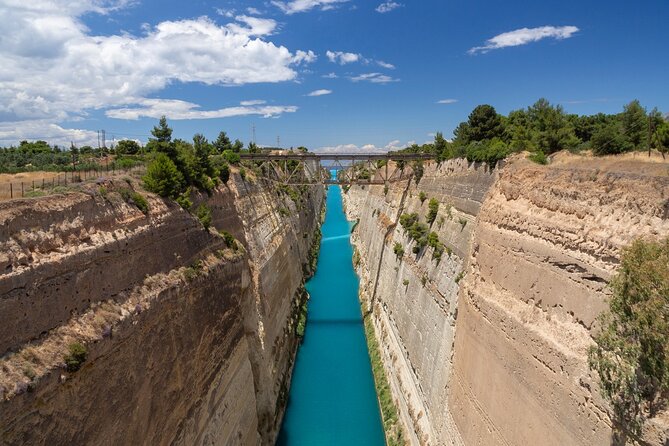
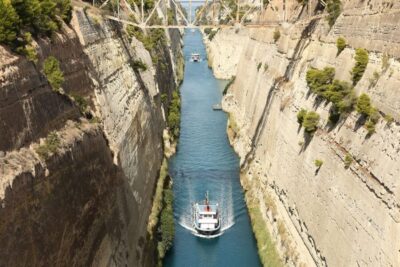
After Athens, the tour shifts into travel mode, but you still get a meaningful stop: the Corinth Canal. It is an engineering marvel that slices through the narrow Isthmus of Corinth, separating the Peloponnese from mainland Greece.
The canal was built long after biblical times, so it is not a “Paul lived here” moment. But that is exactly why it works on this itinerary. It shows you the strategic importance of this region. When you understand how easy or hard it is to move around, you better grasp why ports, routes, and travelers mattered.
You only have about 20 minutes here, and it is free. Use that time to take photos, stretch your legs, and get your bearings. When you later stand at Kenchreai and Ancient Corinth, you will understand the practical reason the region keeps showing up in travel and trade stories.
- Athens: Acropolis & up to 5 Archaeological Sites Combo Pass★ 4.4 · 12,619 reviews
- Athens: Acropolis, Parthenon & Acropolis Museum Guided Tour★ 4.8 · 9,316 reviews
- Athens: Cape Sounion & Poseidon Temple Sunset Half-Day Trip★ 4.8 · 8,241 reviews
- Athens: Acropolis and Parthenon Guided Walking Tour★ 4.6 · 5,882 reviews
Kenchreai’s ancient port: Paul’s arrival point in 51 AD
The next stop is the Ancient Port of Kenchreai (also spelled Kechrees or nearby forms). You get about 20 minutes, and entry is free.
This is one of the most emotionally specific stops on the route, because it is tied to Paul’s arrival in 51 AD to begin his mission in Corinth. Even if you know the basics of the story, the port setting helps you see Paul not as a distant figure, but as a traveler arriving at an active harbor where people carried goods and ideas.
Much of the port is submerged or in ruins, but you can still see traces of Roman engineering, including structures like storerooms, breakwaters, and sanctuaries. There is also an early Christian basilica from the 4th century A.D. That layering matters. It tells you this area kept changing hands, religions, and uses over centuries.
Practical tip: if the ground is uneven where you can walk, keep your pace easy. You are saving your energy for Ancient Corinth and Acrocorinth later.
Ancient Corinth (Archaia Korinthos): the Bema, the Agora, and Temple ruins
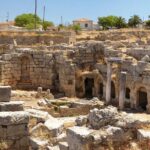
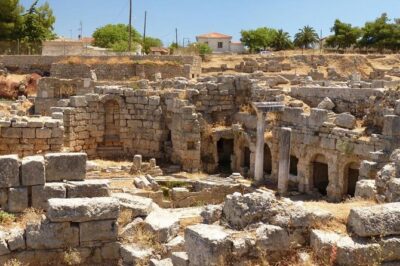
This is the day’s big archaeological anchor: Ancient Corinth. You get about an hour here, and entrance fees are not included.
If you want to feel the Paul connection clearly, focus on two areas your driver will point out:
- The Bema, a raised platform in the center of the city. Paul is believed to have addressed the local community and stood trial before the Roman proconsul.
- The Agora, the marketplace space that echoes the everyday life behind the letters Paul wrote to the Corinthians.
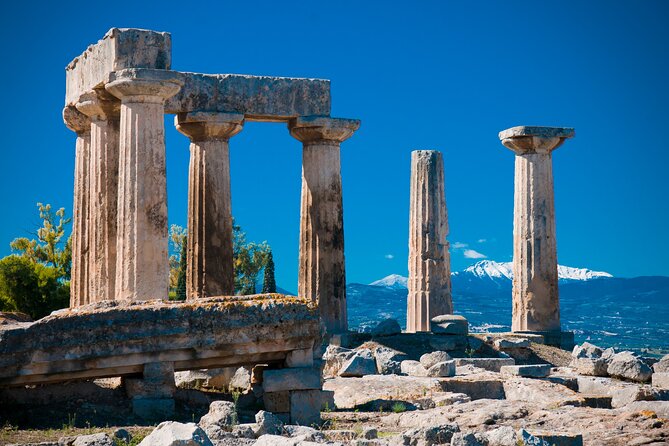
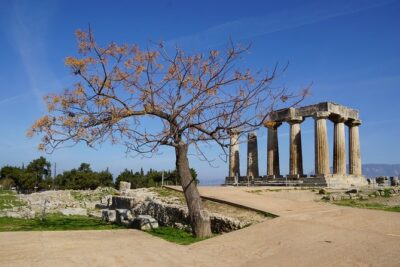
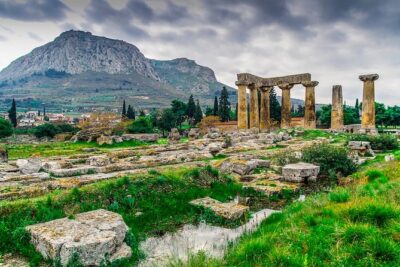
You also get time around the Temple of Apollo, which gives you a wider view of the city’s religious history. That matters because Corinth was not “one faith, one idea.” It was a busy place with competing traditions and many ways of explaining life.
Drawback to know ahead: ruins spread out. You might walk more than you expect for an “hour-long” stop, especially if you want to walk to several points. Go slowly at first so the last half of the day does not feel like a punishment.
And a gentle reminder: bring patience. Archaeology sites can feel like you are trying to read a paragraph with missing sentences. The value of this tour is interpretation. Your driver’s history knowledge helps you connect what you see to how people lived.
Corinth Museum stop: why artifacts make Paul feel real
Before finishing, you visit the Archaeological Museum of Corinth. You get about 45 minutes, and admission is free.
Museums can feel optional on a tight day, but this one fits the theme. The museum was established in 1932 to safeguard artifacts from the area, and the exhibits help you understand the broader social and religious life behind the ruins.
You can expect displays that cover prehistoric finds and materials from the Sanctuary of Asklepios, plus artifacts that bring everyday living and local worship into focus. For this itinerary, the museum is not a detour. It is the “why this city looked like that” moment.
If you are the type who likes to know what objects were used for, you’ll probably enjoy this stop. If you prefer only outdoor ruins, you might find it slower than you like, but the time is still reasonable.
Acrocorinth’s fortress views and the Temple of Aphrodite
The last stop is the Acrocorinth acropolis, where you have about 30 minutes and the stop is free.
This is a strong finish because it changes the scale. Acrocorinth guarded the city through centuries, and it also served as a religious center. One of the big points here is the Temple of Aphrodite, said to have housed up to 1,000 priestesses. Even if you treat details like that as something to learn and not something to over-verify in your head, the overall meaning lands: this was a place where power and worship were linked to the terrain.
Plan for the physical part of the experience. You are going up to a viewpoint, and the reward is the panoramic sense of why this place mattered. It is also where the “Paul in Greece” story starts to feel like a map rather than a list of sites.
Practical tip: bring a hat and sunscreen. You are in open air by the end of the day, and the Greek sun can add up fast.
Price and value: what you’re really paying for
At $200.25 per person for an 8 to 9 hour day, this is not a budget shopping trip. It is mid-range, and the value comes from a few things that add up:
- Private transport that gets you from Athens to Corinth without you handling the logistics
- A history-focused driver who can interpret what you are seeing in both Athens and Corinth
- Comfort extras like bottled water, Wi-Fi on board, and air-conditioned transport
- A sequence of stops that connect faith history to classical settings, rather than repeating generic highlights
The main cost “gotcha” is entrances. Several stops require paid admission tickets, including Ancient Agora and Ancient Corinth, while other stops are free. So when you budget, build in site tickets, not just the tour price.
Also, note what is not included: there is no separate licensed guide included for entering archaeological sites and museums. Your driver explains and guides you through the day, but if you were expecting a licensed guide to lead you through everything inside, this package is not designed that way. For most people, the driver explanations are enough. For hardcore archaeology or scriptural studies, you might want to supplement on your own.
What I think fits best (and what might not)
This tour works best if you want a guided day that connects stories to real places. If you care about how Paul’s preaching landed in a public intellectual world, you’ll like the Athens sequence. If you want the feeling of Paul arriving and moving through Corinth’s spaces, you’ll like Kenchreai and Ancient Corinth.
It is also a good fit for couples and small groups who want flexibility. The private format means you can ask questions and not lose your turn.
Two cautions:
- If you have mobility limitations, plan carefully. The day includes walking on uneven pavement.
- If you hate long days of sun and foot travel, you may feel it more than you expect, especially in warmer months.
Should you book this Paul in Athens and Corinth tour?
I’d book this if you want one focused day that ties Paul’s mission to the actual settings where people debated, traveled, worked, and worshipped. The combination of Athens sites (Agora, Areopagus, and the church linked to Dionysius) plus Corinth’s arrival point and ruins makes the story feel grounded.
I would think twice if you need a fully licensed in-site guide for every ticketed location, or if your body does not handle uneven ground well. In those cases, you might still enjoy the transport and viewpoints, but the experience could feel harder than you planned.
If you can handle a long day and you are willing to add entrance tickets on top, this tour looks like a strong value for a “Paul’s footsteps” itinerary that actually gives you context at each stop.
FAQ
How long is the tour?
It runs about 8 to 9 hours.
What does the tour include?
You get an air-conditioned vehicle, Wi-Fi on board, bottled water, and hotel or port hotel drop-off. There is a professional English speaking tour driver with in-depth history knowledge. For groups of 1 to 4, the tour uses sedan vehicles.
Are entrance fees included?
No. Entrance fees to archaeological sites and museums are not included.
What pickup options are available?
Hotel or apartment pickup is offered, and the driver waits outside for you. Port pickup is offered, and the driver waits in the arrival area with a signboard with your name. Airport pickup is optional and costs extra.
Is this tour private?
Yes. It is a private tour, so only your group participates.
Is the tour easy for walking and uneven ground?
There is walking on uneven pavement, so comfortable shoes matter. The tour is suitable for most travelers, but you should plan for the walking.
Is there free cancellation?
Yes, you can cancel for free up to 24 hours before the experience starts for a full refund. The experience also requires good weather, and if it is canceled due to poor weather you will be offered another date or a full refund.
Every Other Athens Write-Up
- All Day Cruise -3 Islands to Agistri,Moni, Aegina with lunch and drinks included
★ 5.0 · 4,958 reviews





Ancient Corinth and the Canal
Everything else we have written up around Athens




Ancient Corinth & the Canal, side by side.
 ★ 4.6From Athens: Ancient Corinth Day Trip with Canal & VR GuideFrom $411,073 reviews
 ★ 5.0Biblical Tour Letters ToThe Corinthians St Paul’s Footsteps 6HourFrom $1701,065 reviews
 ★ 5.0Private Biblical Tour Ancient Corinth & Isthmus Canal from AthensFrom $301762 reviews
 ★ 4.8Athens: Ancient Corinth & Nafplio Full Day Trip with SwimFrom $44523 reviews
 ★ 5.0Private Tour of Apostle Paul’s Footsteps in Ancient CorinthFrom $169275 reviews
 ★ 4.5Corinth Half-Day Trip from Athens with Entrance TicketsFrom $91242 reviews
 ★ 4.7Athens: Ancient Corinth & Nafplion Guided Premium TourFrom $34237 reviews
 ★ 4.4Athens: Corinth Canal, Mycenae and Nafplio Day TourFrom $33233 reviews
Sits on these lists