

Review · MUSEUMS
Athens: National Archaeological Museum Private Guided Tour
Skip the museum guesswork, and you get the story. Athens National Archaeological Museum is massive, but a private guided tour keeps you moving with purpose. I especially love how the guide turns ancient objects into a clear timeline, not random stuff on labels, with the Antikythera mechanism as the big wow moment.
I also like the hands-on feel of this experience. Christos takes a small group and does real triage, meaning you see the most important pieces across the museum’s major collections and you can ask questions along the way.
One consideration: two hours is fast for a museum this size. If you want to read every label and wander slowly, you’ll still need extra time on your own after the tour.
In This Review
- Quick hits before you go
- Entering the Athens National Archaeological Museum, with a Plan
- The Meet-Up Moment, and Why It Sets the Tone
- What You’ll Learn as You Walk the Museum Floors
- The Big Wow Stop: Antikythera Mechanism, the World’s Oldest Analogue Computer
- Prehistory and Early Aegean Culture, Seeing Before the Classics
- Sculptures Collection, How Greek Art Changes Over Time
- Vases and Minor Objects, Pottery That Teaches You How People Lived
- Bronze Collection, Small Figures with Big Presence
- A Special Moment: The Jewelry Room Showing
- Egyptian and Near Eastern Antiquities, Greece in a Wider Frame
- Staying Oriented After Two Hours: Plan Your Own Loop
- Price and Value for a Private Group Up to Six
- Who This Tour Suits Best in Athens
- So, Should You Book This Private Tour?
- FAQ
- How long is the private guided tour?
- Where do we meet for the tour?
- Is the museum entry ticket included?
- Is hotel transfer included?
- What is the group size for this tour?
- Who is the guide for the tour?
- What languages are available for the live tour guide?
- Which artifact is included in the highlights?
- Can I reserve and pay later?
- Can I cancel and get a refund?
Quick hits before you go
- Licensed archaeologist guide for a tight, readable overview of Greek art and history
- World-class anchor object: the Antikythera mechanism, the oldest known analogue computer
- Small private group up to 6, so questions and pace stay personal
- Good chance to cover multiple collections in one visit, from prehistory to late antiquity
- Tour pacing can run quick, with time for follow-up sightseeing after
Other Athens collections worth the ticket



Entering the Athens National Archaeological Museum, with a Plan

The National Archaeological Museum sits in a grand neoclassical building that feels important the moment you step inside. It also can feel intimidating. There are a lot of galleries, and without a plan your eyes can bounce from one case to the next with zero connection.
That is where the private guide makes a real difference. You’re not just getting someone to point at artifacts. You’re getting a path through the museum, with context that helps you recognize what you’re looking at and why it matters. The tour is 2 hours, and the pacing reflects that: you’ll focus on highlights and learn how the pieces fit together.
The tour starts at the museum main entrance steps on Patission Street (44 Patission Street, 10682). If you see another address like 28is Oktovriou 42 while you confirm your exact pin, don’t panic. This is just the area around the museum, so double-check the meeting spot with your guide before you head in.
The Meet-Up Moment, and Why It Sets the Tone
Your guide for this experience is Christos Theodoropoulos, a licensed archaeologist who leads in several languages (Turkish, English, German, Greek). In practice, that matters because museum tours fall apart when people can’t keep up, or when the guide speaks too slowly for a group that wants to see a lot.
I like how this tour is built for real people, not a script-only factory. Reviews highlight Christos’s ability to adjust the route for the group in front of him, including families with teenagers and young kids. That flexibility matters in a place like this, where everyone has a different comfort level with timelines and art history.
Also, expect questions to be welcomed. Christos answers in a way that helps you keep moving. You’ll get more out of the collection when your brain is actively linking objects to stories.
What You’ll Learn as You Walk the Museum Floors

The museum holds more than 11,000 exhibits and covers Greek civilization from prehistoric beginnings all the way through late antiquity. That is a huge span. The best part of a guided visit is not trying to memorize everything. It’s learning the organizing logic so the collection stops feeling like one long blur.
The museum’s permanent exhibitions are arranged into five big collections:
- Prehistoric antiquities
- Sculptures
- Vases and minor objects
- Bronze collection
- Egyptian and Near Eastern antiquities (the only one of its kind in Greece)
On your guided visit, you can expect the route to hit key highlights rather than every case. Since the museum is laid out across about 8,000 square meters with many galleries on each floor, the guide’s job is to keep you oriented while still making sure you see the museum’s strongest pieces.
A common theme in feedback is that this tour feels like a crash course without feeling like a lecture. You leave with an actual framework for what you saw and what it meant.
The Big Wow Stop: Antikythera Mechanism, the World’s Oldest Analogue Computer
If you came to Athens looking for the moment you’ll remember, this is it. The tour’s headline artifact is the Antikythera mechanism, often described as the world’s oldest analogue computer.
Even if you’ve read about it before, seeing it in person lands differently. This isn’t just another ancient object. It’s a clue that ancient Greek minds were thinking with precision, using mechanical design to represent the heavens.
Why it’s a perfect anchor for a guided tour: once you connect a technological marvel to the wider world of ancient Greece, the rest of the museum becomes more meaningful. Instead of separate categories, you start seeing how Greek culture blended art, knowledge, and practical engineering.
Prehistory and Early Aegean Culture, Seeing Before the Classics
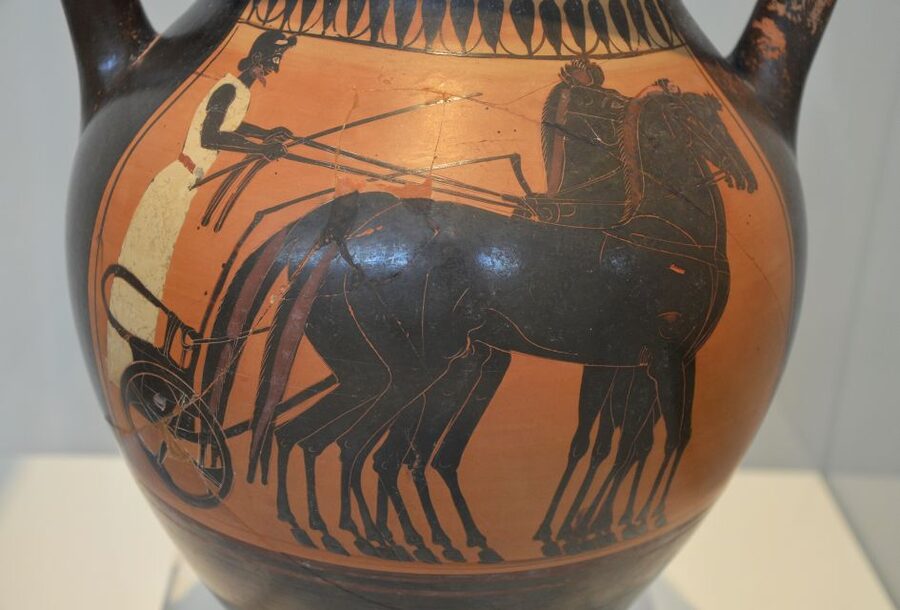
The museum’s prehistoric collection covers the Aegean world from the 6th millennium B.C. to 1050 B.C. That includes major cultures like Neolithic, Cycladic, and Mycenaean, plus finds from the prehistoric settlement at Thera.
This section is where you learn why later Greek art did not appear out of nowhere. You get the “roots” story. The guide’s value is showing you the patterns, like how forms and styles evolve, and how the museum’s prehistoric finds set up the later classical emphasis on human figures and refined craftsmanship.
A practical tip for you: if you tend to skip prehistoric rooms because they feel less familiar, don’t. This is where the museum gives you perspective. Even within two hours, the right guide can make these early objects click.
More Athens bookings just for your own group
- Best of Athens Half Day Private Tour★ 5.0 · 3,714 reviews
- Athens Full Day Private Tour★ 5.0 · 2,903 reviews
- Athens Airport Private Arrival Transfer with Meet & Greet★ 4.5 · 1,495 reviews
- Athens Airport to Athens Hotels Private Arrival Transfer★ 5.0 · 947 reviews
Sculptures Collection, How Greek Art Changes Over Time
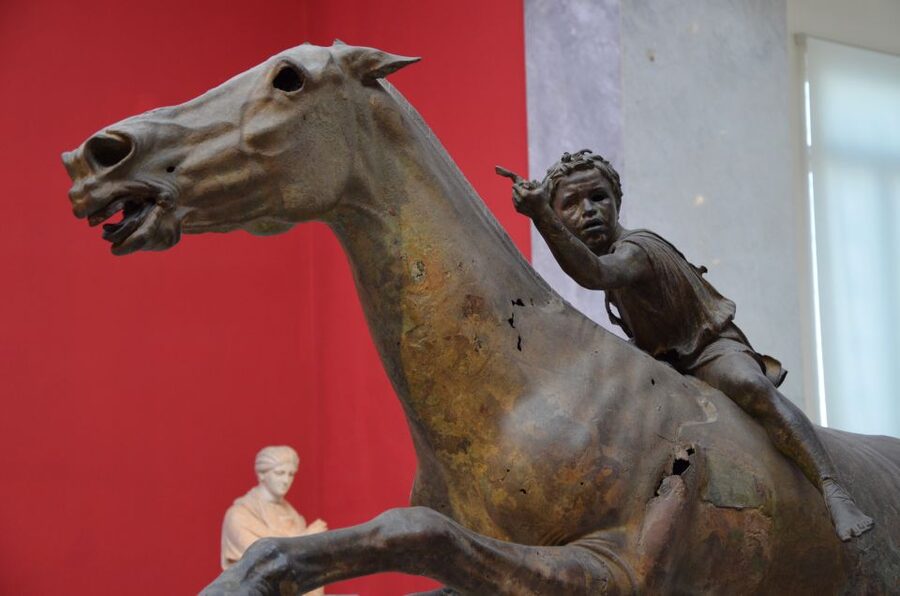
The museum’s sculpture focus runs from the 7th to the 5th centuries B.C. That’s a key stretch in Greek art. You can feel the shift in how figures are made and how artists approach proportion, movement, and expression.
This is another area where having someone lead you matters. Sculpture rooms can make you feel like you’re staring at static objects. With the right explanations, you start noticing style changes. You also learn how the objects relate to the cultural mindset of their periods.
Christos is praised for explaining history in a detailed but understandable way. The goal is not to turn you into an art historian in two hours. The goal is to leave with eyes that work. You’ll look at a figure and have at least one solid idea of where it fits.
Vases and Minor Objects, Pottery That Teaches You How People Lived
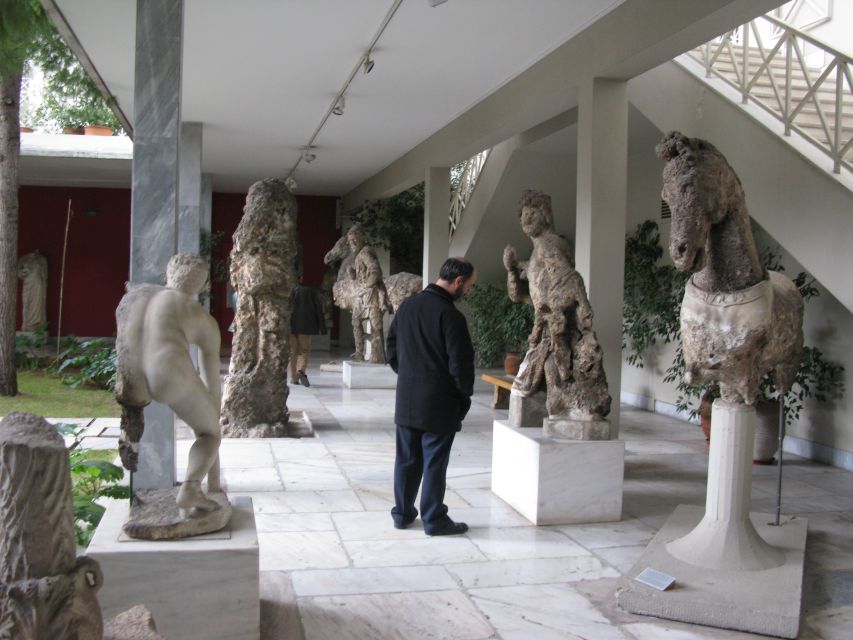
The vase and minor objects collection spans a wide time range, from the 11th century B.C. to the Roman period. It also includes the Stathatos Collection, described as a corpus of minor objects from all periods.
Why this matters: vases and small artifacts often show daily life and beliefs more directly than big sculptures. They are easier to connect to human stories because they carry scenes, symbols, and design choices.
Also, minor objects are where a guide can make you slow down without feeling stuck. Reviews mention Christos’s humor and the way he keeps explanations engaging, which helps you enjoy the smaller pieces instead of rushing past them.
Bronze Collection, Small Figures with Big Presence
The Bronze collection includes important statues, figurines, and minor objects. Bronze often hits different than marble in the imagination. Even when you do not know technical details, you can sense how durable and alive these objects feel.
In a time-limited tour, bronze is often one of the categories that helps you understand craftsmanship and scale. You’ll likely get a guided selection of highlights rather than a full survey, but that’s fine. You’re here to learn how to see.
If you’re the type who wants to go back and spend more time later, this is a good category to remember. The guide helps you know what to return to once you’ve finished the structured part.
A Special Moment: The Jewelry Room Showing
Here’s a highlight that stood out in the reviews in a good way. One group noted that Christos arranged a private showing of the jewelry room, which is usually locked at certain times of year.
That matters because jewelry is not just decorative. It often connects to status, materials, and cultural symbolism. A special look like that can turn your visit from “I saw artifacts” into “I saw how people displayed identity.”
Keep your expectations flexible. The tour data tells you the guide is experienced and can handle the visit in a thoughtful way, but it does not guarantee special access every day. Still, this is the kind of outcome that a private guide can sometimes make possible.
Egyptian and Near Eastern Antiquities, Greece in a Wider Frame
One unique feature of the museum is its Egyptian and Near Eastern Antiquities collection, the only one in Greece, with works dating from around 5000 B.C. up to the Roman conquest.
This part is valuable even if you came primarily for ancient Greece. It gives you context for how Greek worlds interacted with neighbors. It also helps you understand that “ancient Greek art” did not develop in a vacuum.
In a guided format, you don’t need to master every culture represented. You just need enough perspective to notice themes, like influence, exchange, and how objects travel through time and empires.
Staying Oriented After Two Hours: Plan Your Own Loop
The tour duration is 2 hours, and most people will feel the pressure of time in a building this large. Reviews mention that Christos keeps a quick pace because there is just too much to see in less than two hours. That’s a fair trade. You get the story and the highlights, then you decide where you want to slow down.
After the guided portion, I recommend doing a second pass with a purpose. Pick two or three collections you reacted to most, like the sculptures room or prehistoric section, then spend your time comparing what you learned with what you’re seeing.
Also, if you still have energy, watch for a chance to go a little longer. One review noted that Christos showed an upper story beyond the scheduled tour time. If the museum timing works out and your guide has room in the flow, you might get that extra bit of sightseeing value.
Price and Value for a Private Group Up to Six
This tour costs $400 per group up to 6. Add the museum entry ticket, 10 EUR, and you’re looking at a straightforward total that is easiest to justify when you travel as a group.
Here’s how I think about value:
- If you’re filling all 6 spots, the guide cost drops sharply per person. Then you’re really paying for time, efficiency, and expertise.
- If you’re traveling as 2 or 3, it’s still a good value if you care about getting context instead of just wandering. Two hours with a licensed archaeologist can save you from the most common museum problem: leaving confused while wishing you’d chosen a smarter route.
Private format matters here. The museum is not a place where you want to shuffle along behind a large crowd listening to audio alone. A small group means you can ask questions, adjust pace, and keep your visit connected.
Who This Tour Suits Best in Athens
This is a strong fit if you want the museum to feel like a guided story rather than a checklist. It works especially well for:
- Families who want everyone to stay engaged, including kids and teens
- First-time visitors who need orientation fast
- Anyone with a specific interest, like ancient jewelry or particular periods of Greek art
- People who feel overwhelmed by large museums and prefer a curated route
It’s also a good choice if you speak one of the supported languages. The guide can lead in Turkish, English, German, and Greek, which helps you get the explanations at full clarity.
So, Should You Book This Private Tour?
I would book it if you want to see the National Archaeological Museum efficiently and leave with a real framework for what you saw. Two hours is short, but the guide’s job is to make the time count, especially with major anchors like the Antikythera mechanism and the museum’s best-known collection themes.
If you’re the kind of visitor who loves unstructured wandering and reading every label slowly, you might prefer extra time on your own. In that case, you could still book the tour for the orientation, then extend your day independently.
If you can travel with up to 6 people, the math gets easier and the experience becomes even more worth it. For most Athens schedules, this is one of those “pay once, save time, feel smarter” museum moves.
FAQ
How long is the private guided tour?
The tour lasts 2 hours.
Where do we meet for the tour?
Meet at the steps in front of the main entrance of the National Archaeological Museum of Athens, 44 Patission Street, 10682.
Is the museum entry ticket included?
No. The museum entry ticket is 10 EUR and is not included.
Is hotel transfer included?
No, hotel transfer is not included.
What is the group size for this tour?
It is a private group with up to 6 people per group.
Who is the guide for the tour?
The experience is led by an experienced licensed archaeologist guide, Christos Theodoropoulos.
What languages are available for the live tour guide?
The live guide can lead in Turkish, English, German, and Greek.
Which artifact is included in the highlights?
The tour highlights include the Antikythera mechanism, described as the world’s oldest analogue computer.
Can I reserve and pay later?
Yes, reserve now and pay later is available.
Can I cancel and get a refund?
Yes, free cancellation is available up to 24 hours in advance for a full refund.
The Rest of Athens





Every Other Athens Write-Up
- All Day Cruise -3 Islands to Agistri,Moni, Aegina with lunch and drinks included
★ 5.0 · 4,958 reviews




Other Athens Collections

Everything else we have written up around Athens





Museums, side by side.
 ★ 4.8Athens: Acropolis, Parthenon & Acropolis Museum Guided TourFrom $409,316 reviews
 ★ 4.6Athens: Mythology of Delphi, Museum and Arachova Guided TourFrom $314,008 reviews
★ 4.8Athens: Acropolis, Parthenon & Acropolis Museum Guided TourFrom $413,579 reviews
★ 4.6Athens: Mythology of Delphi, Museum and Arachova Guided TourFrom $314,008 reviews
★ 4.8Athens: Acropolis, Parthenon & Acropolis Museum Guided TourFrom $413,579 reviews
 ★ 5.0Acropolis monuments & Parthenon Walking Tour with Optional Acropolis MuseumFrom $422,678 reviews
 ★ 4.5Athens All Included: Acropolis and Museum Guided Tour with TicketFrom $1652,673 reviews
 ★ 4.4Athens: Acropolis Museum Ticket with optional Audio GuideFrom $302,652 reviews
 ★ 4.8From Athens: Small-Group Delphi, Museum & Arachova Day TripFrom $342,476 reviews
 ★ 4.1Parthenon & Acropolis Museum with Audio or Live Tour OptionFrom $702,446 reviews
Sits on these lists