

Review · WALKING TOURS
Athens Social and Political Walk
Politics gets real on Athens streets. In a 2.5-hour walk with a small group, you connect the places of power to the ideas, fights, and turning points that shape modern Greece. You will cover Greece’s political system on foot, with a political scientist guiding the story from the past to today’s headlines.
What I love most is the focus on Greek politics beyond postcard Athens. You also get room to ask questions and work out what you are seeing, instead of rushing from one photo spot to the next. The guide keeps it grounded and understandable, including comparisons that help political concepts click fast.
One possible drawback: you will be on your feet for about 2 hours 30 minutes and the pace is meant to cover key sites, so build in some stamina (and comfortable shoes).
In This Review
- Key highlights you should care about
- Walking Athens to understand Greek politics
- The opening stretch: Prime Minister’s seat and the power map
- President’s residence: the role behind the office
- Parliament and the Old Parliament House: seeing continuity and change
- November 17, 1973 at the Athens Polytechnic site
- How the guide makes it understandable, not just impressive
- What the route feels like in real life
- Price and value: why $47.92 can make sense
- Who should book this political walk
- Practical tips so you get more out of it
- Should you book the Athens Social and Political Walk?
- FAQ
- How long is the Athens Social and Political Walk?
- What language is the tour offered in?
- How big is the group?
- Where does the tour start and end?
- Do I need a print ticket?
- What is the walking level like?
- Are service animals allowed?
- What if the tour is canceled due to weather?
- What is the cancellation policy?
Key highlights you should care about

- Max of 15 people means you get real attention, not a crowd shuffle
- Political scientist-led format turns landmarks into an actual explanation
- Parliament to old Parliament helps you see how the story changes over time
- November 17, 1973 Athens Polytechnic uprising is a major centerpiece
- Balanced, nuanced take keeps the walk from feeling like a lecture trap
More of Athens taken slowly on foot





Walking Athens to understand Greek politics
Athens can feel like two cities at once. On one side, you have ancient ruins and marble monuments. On the other side, you have the institutions of the modern state, where decisions get argued, defended, and sometimes reshaped. This walk is built for that second Athens. Instead of treating politics like a textbook, it treats it like street geography: who sits where, who answers to whom, and why certain events still cast long shadows.
The experience is priced around $47.92 per person, and for that you get something many sightseeing tours do not offer. You get a structured political narrative, delivered by a guide with an academic lens, then made practical through questions. It is not only about what things are, it is about why they matter.
And yes, the route is on foot. You cover key official sites and then end at the National Technical University of Athens area tied to the Athens Polytechnic uprising. That ending matters, because it frames the whole walk: this is not just how Greece governs, it is also how Greece remembers.
The opening stretch: Prime Minister’s seat and the power map
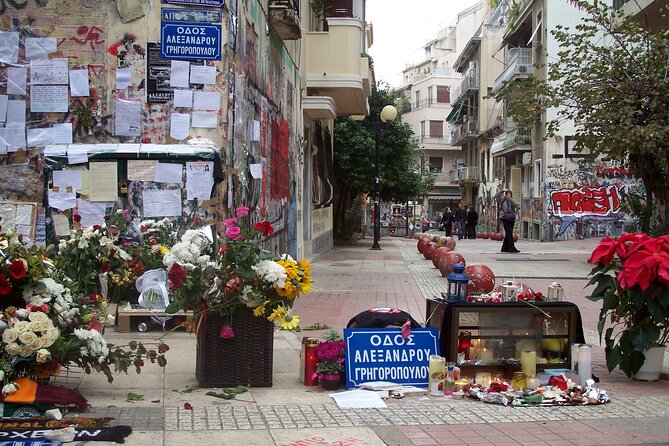
The walk starts at Leof. Vasilissis Sofias 2-4, Athina 106 74. From there, you move toward the official seat of the Prime Minister of Greece. This is a good first move because it anchors the discussion in the executive branch, before you even talk about parliament or public protest.
What I like about starting here is simple. You can look at the building and instantly understand why it is political. The symbolism is visible, but the guide adds the meaning: how leadership works in practice, and how public trust and disagreement shape the political atmosphere. If you have ever wondered why politics can feel intense in one country and distant in another, this stop gives you a place to begin.
You will also learn to read the city like a system. Athens is full of history, but modern politics is not hidden. It is built into the layout, the official entrances, and the constant sense that Greece is always debating its direction.
President’s residence: the role behind the office
Next comes the official residence of the President of the Hellenic Republic. This stop helps you separate titles from power. Even if you already understand basic government structures, seeing the presidential role in the physical space of Athens helps you understand how constitutional responsibilities feel in real life.
The guide’s approach matters here. In reviews, the strongest praise is not just for facts, it is for clarity and balance. That same vibe usually shows up in stops like this, where you can end up misunderstanding the role if you only rely on stereotypes. You get explanations that keep things fair: what the office represents, what it can influence, and why it fits into the larger political ecosystem you are walking through.
If your travel style is more thinking than photographing, this is one of the most rewarding portions. It gives you mental structure so later stops about Parliament and the Polytechnic uprising connect cleanly.
Parliament and the Old Parliament House: seeing continuity and change
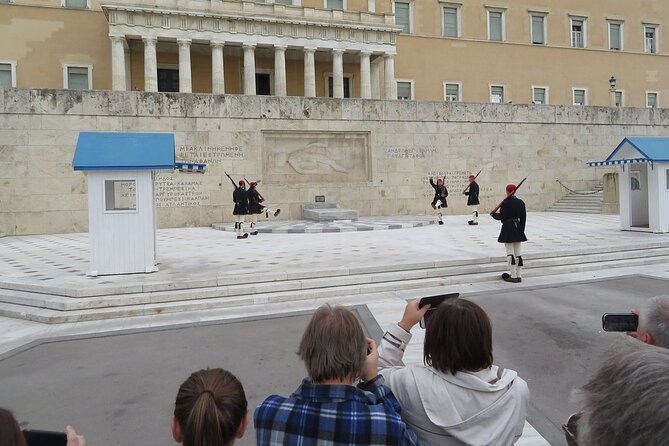
Then you reach the Parliament of Greece. This is where the walk shifts from officials to institutions. Parliament is the place where disagreements become legislation and where political strategy turns into public policy. Even if you do not go inside, you can still feel the weight of the space.
The guide ties Parliament to the larger arc of modern Greek political development. Reviews mention that the story runs from the Greek independence war through eras that include the Junta and later movement toward democratic reform. That kind of threading is exactly what you want on this walk. It turns a set of buildings into a timeline you can actually hold in your head.
After that, you visit the Old Parliament House. This stop is a smart contrast. Old Parliament is not just another historic facade, it is a visual clue that political structures shift over time. Seeing old versus new helps you understand that Greece’s institutions are not stuck in one moment. They evolve with social pressure, governance needs, and the country’s long memory.
A practical note: this portion can feel a bit fast, because you are covering major sites in a limited time window. If you are the type who likes to linger and read every sign, you may want to bring extra curiosity to your questions so you get answers quickly and accurately.
November 17, 1973 at the Athens Polytechnic site
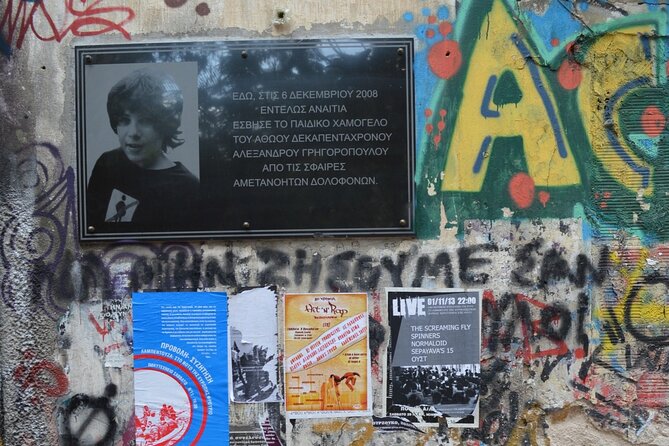
The most emotionally charged part of the walk centers on the Athens Polytechnic uprising on November 17, 1973. The route ends at the National Technical University of Athens, sometimes known as Athens Polytechnic, located on Patision Avenue. This is the place where history stopped being abstract and became a turning point.
This is where the walk justifies its political focus. The guide does not treat the uprising like a standalone story. Instead, it is connected to how Greeks interpret power, authority, and protest. Reviews highlight that the guide covers big political concepts and also adds recent news flavor to the narrative. That combination helps the 1973 event feel less like a distant chapter and more like a lens for the present.
Another thing I like here is the guide’s emphasis on questions. When you hear about a major event like this, it is normal to wonder what people expected, what changed afterward, and why it still matters. A good guide helps you ask those questions without making it heavy or overly academic.
The setting itself also helps. Ending at the Polytechnic site makes it harder to mentally file the story away. You are still in Athens, still surrounded by everyday life, and still seeing the physical space where memory lives.
- Athens: Cape Sounion & Poseidon Temple Sunset Half-Day Trip★ 4.8 · 8,241 reviews
- All Day Cruise -3 Islands to Agistri,Moni, Aegina with lunch and drinks included★ 5.0 · 4,958 reviews
- Athens, Piraeus, and Coastline: Blue Hop-On Hop-Off Bus★ 3.9 · 4,849 reviews
- Greek Food Walking Tour in Athens★ 5.0 · 4,740 reviews
How the guide makes it understandable, not just impressive

The biggest praise in the feedback for this tour is about the person leading it. The guide, often highlighted as Isaac in comments, is described as passionate, engaging, and very well prepared. That matters because political tours can go two ways: either they sound like memorized talking points, or they become a confusing blur.
Here, the approach is more useful. You get comparisons to your own country’s politics, which is a trick that turns unfamiliar systems into something you can reason about. You also get anecdotes tied to recent news, so you learn what is relevant now, not only what was relevant long ago.
You also pick up a sense of the country’s social and political polarization, and how it affects everyday life. Reviews mention the guide explains polarization in Greek society and connects early modern Greece to the Junta and democratic reform. That framing is important. Without it, Greece can feel like a series of disconnected headline moments. With it, the events start to look like a consistent story with different chapters.
This is where the small-group size becomes more than a comfort perk. With a max of 15 people, you are more likely to get direct responses when you ask a question. That is how you leave with clarity instead of just impressions.
What the route feels like in real life

The tour runs for about 2 hours 30 minutes. That duration is long enough to build context, short enough to fit into an Athens schedule without draining the whole day. It is also designed for a moderate physical fitness level. In practice, that means you should expect steady walking between official sites.
The meeting point is Leof. Vasilissis Sofias 2-4. You finish at the main entrance of the National Technical University of Athens on Patision Avenue. Because the ending point is a bit different from the usual tourist loop, it can actually be convenient. After the tour, you can keep exploring that neighborhood or grab transport without doubling back.
The tour is offered in English, and you get a mobile ticket. It also runs near public transportation. That helps if your Athens day is flexible or if you are hopping between neighborhoods.
One small practical consideration: because the itinerary uses outdoor walking, the experience depends on good weather. If rain or rough conditions hit, plans may change or you may be offered a different date or a full refund.
Price and value: why $47.92 can make sense

At about $47.92 per person, this is not the cheapest way to spend a couple hours in Athens. But the value is in what you cannot easily replace on your own.
You can always walk past buildings on your own. The extra cost buys you:
- a guided political narrative, not just landmark exposure
- a political scientist-style explanation tied to events you might hear about later
- time for questions, including big picture context like the Junta and democratic reform
If you are the kind of traveler who likes to connect current events with history, this tour gives you a shortcut. It helps you make sense of what you will read in Greek news or see in conversations. That is the real payoff.
Also, the tour is capped at 15, which keeps the experience from becoming a loud group lecture. In political tours, that difference matters. Quiet attention means your questions actually get answered.
Who should book this political walk
This tour is a great fit if:
- you want Athens, but with a modern lens
- you care about how countries make decisions and how citizens argue about them
- you like your guides to explain rather than just point
It is less ideal if:
- you want only classic sightseeing, with minimal talking
- you dislike politics as a topic
- you need a slow, linger-at-each-stop style tour
But even if you are not a politics nerd, reviews suggest the guide keeps things clear and makes concepts understandable. That is what makes this tour work for first-timers who still want deeper context.
Practical tips so you get more out of it
Go in with at least two question ideas. For example: how do you read today’s headlines with the knowledge of past political shifts, and why do certain events stick in national memory? The best moments on this walk tend to come when you ask follow-ups.
Wear comfortable shoes. You are walking between major official sites and the route can feel quick for the number of landmarks. Bring a light layer because Athens weather can shift.
Finally, give yourself permission to think. This is not a check-the-box itinerary. It is designed to help you connect the dots between the sites you see and the political story behind them.
Should you book the Athens Social and Political Walk?
If your goal is to understand Athens as a living capital, not just a museum of sights, I think you should book this. The biggest strengths are the structure, the guide’s depth, and the balance that keeps the discussion fair and clear. The ending at the Polytechnic uprising site gives the whole walk meaning, instead of leaving you with disconnected facts.
If you hate politics as a topic, you might find it heavy. If you are unsure, start with what you do like: if you enjoy learning how current events connect to historical pressure, this walk will likely feel like one of the more useful choices you make in Athens.
FAQ
How long is the Athens Social and Political Walk?
It lasts about 2 hours 30 minutes.
What language is the tour offered in?
The tour is offered in English.
How big is the group?
This experience has a maximum of 15 travelers.
Where does the tour start and end?
It starts at Leof. Vasilissis Sofias 2-4, Athina 106 74, Greece. It ends at the main entrance of the National Technical University of Athens (Athens Polytechnic), located on Patision Avenue.
Do I need a print ticket?
No. You receive a mobile ticket.
What is the walking level like?
You should have a moderate physical fitness level. It is a walking tour.
Are service animals allowed?
Yes, service animals are allowed.
What if the tour is canceled due to weather?
If it is canceled due to poor weather, you will be offered a different date or a full refund.
What is the cancellation policy?
You can cancel for free up to 24 hours in advance for a full refund. If you cancel less than 24 hours before the start time, the amount paid is not refunded.
More of Athens On Foot

Every Other Athens Write-Up
- All Day Cruise -3 Islands to Agistri,Moni, Aegina with lunch and drinks included
★ 5.0 · 4,958 reviews





Everything else we have written up around Athens






Walking Tours, side by side.
 ★ 4.6Athens: Acropolis and Parthenon Guided Walking TourFrom $385,882 reviews
 ★ 5.0Greek Food Walking Tour in AthensFrom $874,740 reviews
 ★ 4.7Acropolis: Acropolis and Parthenon Guided Walking TourFrom $363,442 reviews
 ★ 5.0Acropolis monuments & Parthenon Walking Tour with Optional Acropolis MuseumFrom $422,678 reviews
 ★ 4.8Knossos: Knossos Palace Skip-the-Line Guided Walking TourFrom $1041,380 reviews
 ★ 4.5Athens Acropolis and Parthenon Walking TourFrom $411,355 reviews
 ★ 5.0Athens Authentic Greek Food Walking Tour (Small Group)From $83809 reviews
 ★ 4.4Early Morning Acropolis & Old Athens Guided Walking TourFrom $28748 reviews
Sits on these lists