
Review · WALKING TOURS
Athens: Women in Ancient Greece Guided Walking Tour
Walking Athens through women’s lives changes everything. This 2-hour walk led by Maelle uses the Agora and Pnyx as a springboard into how Greek society worked, with myth tied to real daily roles. I also love that you get a female perspective on famous monuments, not just the usual dates and stones. One thing to consider: the route has steps and some uneven walking, and tickets are not included since you are seeing key sites from the outside only.
You will start in Monastiraki, then move toward Plaka and the slopes with big sightlines. Along the way, the tour connects goddesses like Athena and Penelope, legendary figures like Sappho and Aspasia, and even the darker, stranger tales like the kidnapped Spartan girls and a mysterious women’s festival. It is history as a conversation, with lots of room for questions, not a lecture you zone out of after 10 minutes.
In This Review
- Key highlights to look for
- Greek women, not just Greek ruins
- Price and logistics that actually affect your day
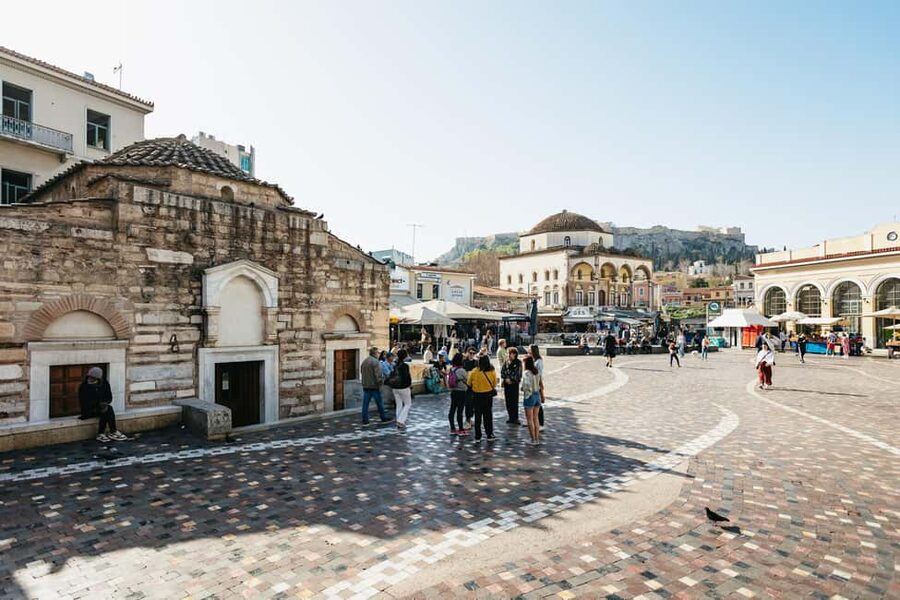
- Meeting at Monastiraki: where it starts and how to find it
- Monastiraki, Hadrian’s Library, and Plaka through a women’s lens
- Gate of Athena Archegetis and the myth that shapes real life
- Ancient Agora and Pnyx: power, voting, and who got a voice
- Views, the Acropolis angle, and ending at Filopappou Hill
- The women you hear about, and why the tour’s focus lands
- Who should book this tour, and who should skip it
- Value check: why $44.04 can be a great deal in Athens
- Should you book Athens: Women in Ancient Greece?
- FAQ
- Where does the tour start?
- What is the duration of the guided tour?
- Is this tour ticketed for archaeological sites?
- What languages is the tour offered in?
- What should I bring?
- Is the tour suitable for wheelchair users or limited mobility?
- Are there private group options?
Key highlights to look for

- A guide who makes the topic feel personal, with friendly Q and A and follow-up questions that keep you thinking
- Iconic Athens, reframed, so the Ancient Agora, Gate of Athena, and Pnyx feel relevant to women’s lives
- Myth as social context, linking Athena, Penelope, Demeter, and Pandora to how women were expected to live
- Women who defied expectations, including Sappho, Aspasia, and Agnodice, not just goddesses
- Great “outside view” choices, since you are not buying site tickets for most stops
- A walk that ends with views, finishing at Filopappou Hill after seeing the Acropolis from below
Other Athens bookings where a guide comes along



Greek women, not just Greek ruins
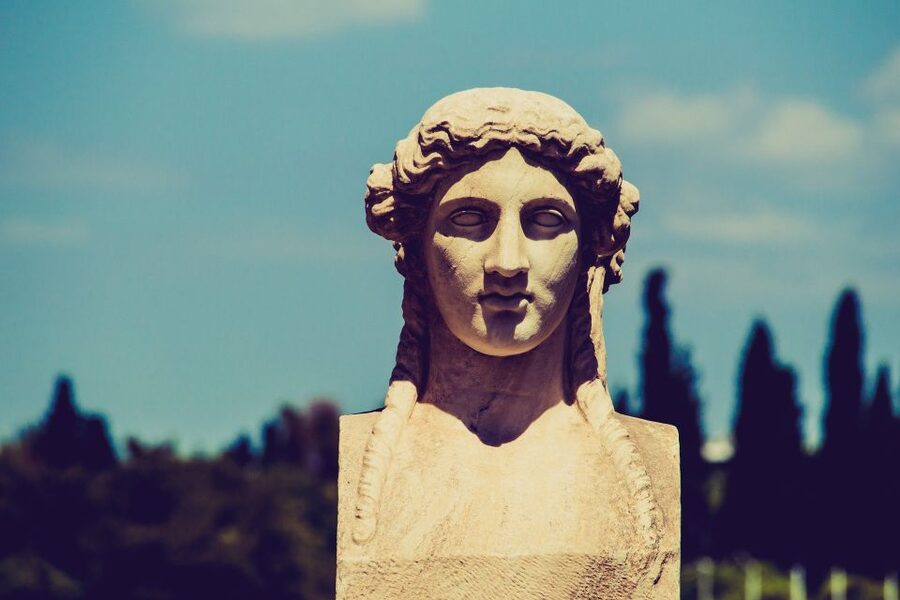
Most Athens tours hand you a script: build, conquer, philosophy, marble, move on. This one swaps the viewpoint. You still cover major landmarks, but the emphasis is on how women lived, what they were supposed to do, and how myth and religion shaped those expectations.
That difference matters. When you hear the stories of women like Sappho and Aspasia alongside everyday realities, the ancient city stops feeling like a postcard. You start to ask smarter questions, like who got education, who could speak, who had legal or social leverage, and why those answers often had limits.
And it is not only famous names. The tour includes women from different walks of life, and it keeps returning to the gap between mythic ideals and lived experience. That is where it gets genuinely interesting, because it turns Athens into a place you can connect to, even today.
Price and logistics that actually affect your day
At $44.04 per person for about 2 hours, this is priced like a focused guided walk, not a full-day tour with admissions and long bus transfers. That is good value if you like history told in a human way and you do not need to climb into every site for an official ticket.
A couple practical points that change how you plan:
- Most archaeological sites are exterior views only. So you should expect visuals from the outside, not a ticketed inside visit.
- No food or drink is included. Bring a water bottle and plan on small stops for sips, not meals.
The tour runs in English and French, and you can choose a private group option if you want more direct pacing and fewer questions passed around.
Meeting at Monastiraki: where it starts and how to find it
You meet at Monastiraki Square, in front of the Church Pantanassa. Your guide will be holding a sign reading Women in Ancient Greece, which makes the meetup straightforward.
This is a smart starting point. You get to begin in a lively area where people are already walking between neighborhoods. It also means your first moments are about orientation, not struggling to find your group while your legs are still cold.
The tour wraps back around the same general area, and there are two drop-off locations, including a spot at Rovertou Galli 69. In other words, it is not one of those tours where you end up far away and hungry with no way back.
Monastiraki, Hadrian’s Library, and Plaka through a women’s lens
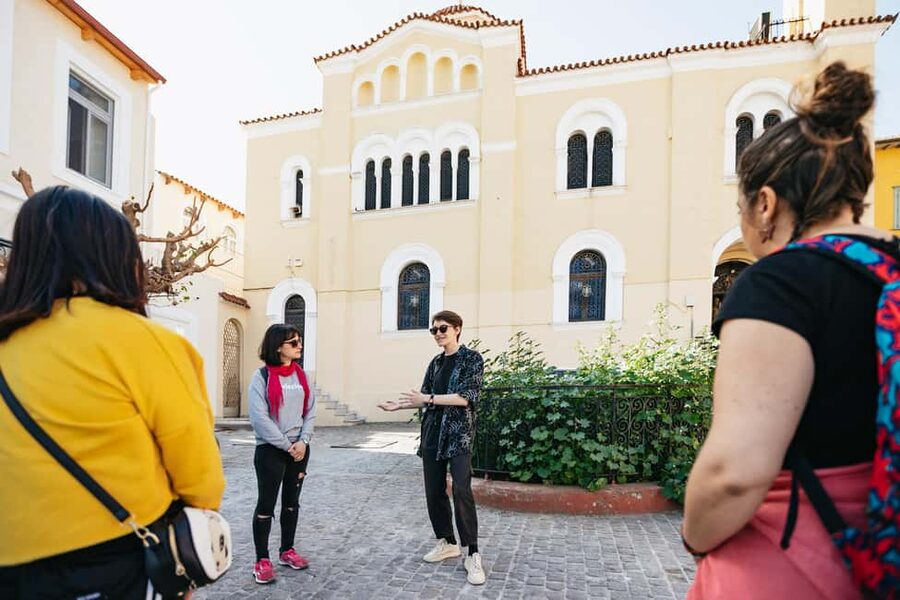
The walk starts with the energy of Monastiraki and quickly turns it into something deeper than a market neighborhood. As you move a short distance, the storytelling sets the tone: women in ancient Greece were not a side note. They were woven into religion, family expectations, and community rituals.
From there, you reach Hadrian’s Library, a site most visitors treat like a quick photo stop. Here, it becomes part of the “what shaped education and public life” conversation. The guide uses the setting to talk about the limits and possibilities women faced, and how those limits were justified through culture, myth, and social rules.
Next comes Plaka, where the mood changes to classic Athens streets. This part works well because it gives you breathing room between heavier themes. In Plaka, you are not just walking past pretty buildings. You are learning how the city’s stories were built from multiple layers, including the voices that historians often left out.
A standout for me, based on the way the tour is led, is how it keeps returning to day-to-day life. You are not only hearing about famous women. You are also learning how ordinary life shaped what women could do, and how reputation and household roles influenced everything from public presence to freedom of movement.
Gate of Athena Archegetis and the myth that shapes real life
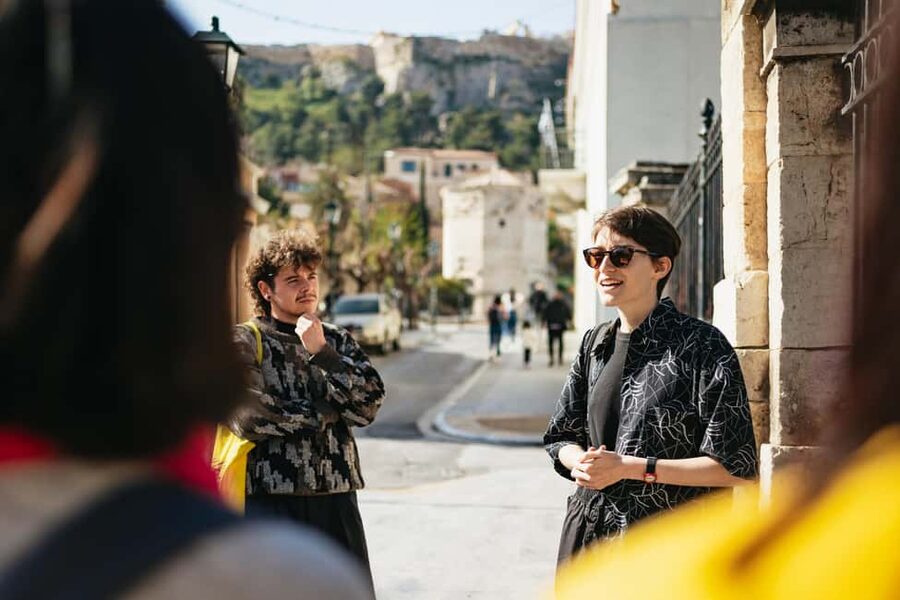
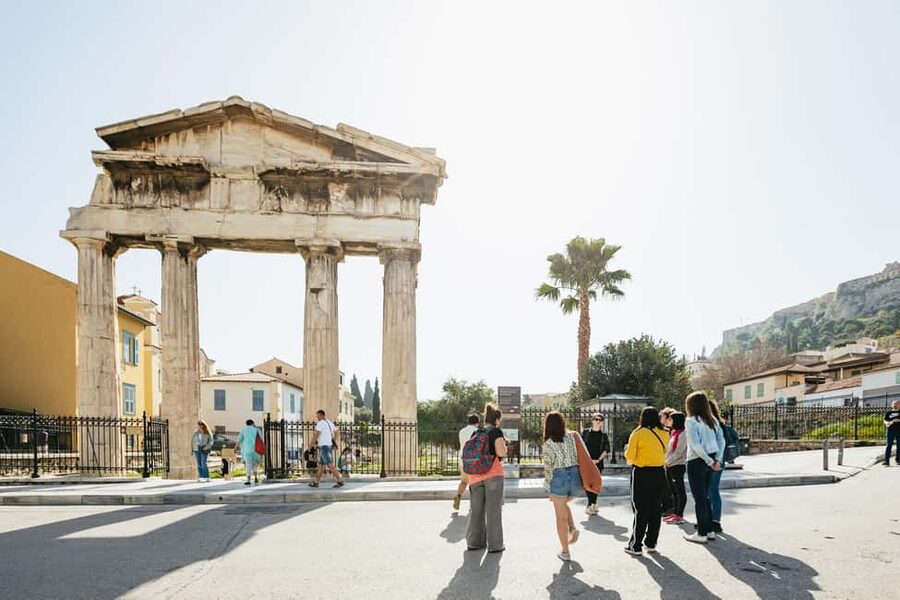
At the Gate of Athena Archegetis, the tour leans hard into the idea that mythology was not just entertainment. Athena is not only a figure in legends. She is a symbol loaded with expectations about order, skill, wisdom, and the way society talked about women.
This stop is where the tour starts feeling like an Athens myth class, but with legs. You are standing in an actual city doorway while hearing how these stories reinforced social roles.
Then there is a secret stop, which is one of those elements you will appreciate if you like tours that do not just follow the same standard route. This is where the guide pulls in narratives like the kidnapped Spartan girls and the story threads connected to a women’s festival in Athens. Even if you know some Greek myth already, these plotlines tend to feel fresher because they are framed around what they said about gender, power, and community boundaries.
You might also notice a pattern: the guide links goddesses and moral stories to the structure of society. Pandora is handled with that same lens, not as a simple “hope remained” headline. Instead, you hear how the myth was used to explain why women were viewed in certain ways, and how those views shaped everyday behavior.
More of Athens taken slowly on foot
- Greek Food Walking Tour in Athens★ 5.0 · 4,740 reviews
- Acropolis: Acropolis and Parthenon Guided Walking Tour★ 4.7 · 3,442 reviews
- Acropolis monuments & Parthenon Walking Tour with Optional Acropolis Museum★ 5.0 · 2,678 reviews
- Athens Authentic Greek Food Walking Tour (Small Group)★ 5.0 · 809 reviews
Ancient Agora and Pnyx: power, voting, and who got a voice
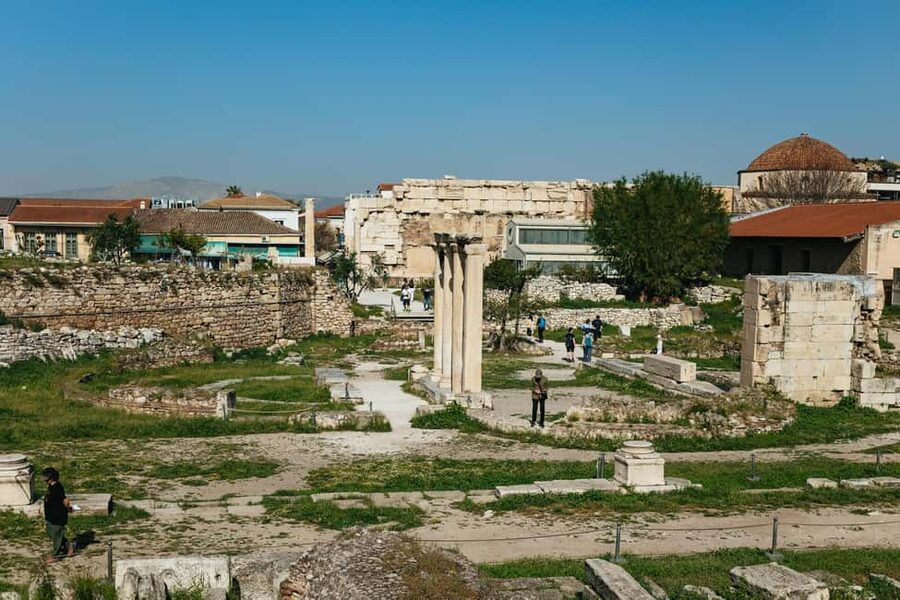
Few places in Athens feel as central as the Ancient Agora. Most classic tours sprint through it as a timeline. Here, the Agora becomes a stage for asking tougher questions about who actually had power in real terms.
That is what makes this stop valuable. You are standing where public life happened, then learning how the concept of citizenship did not automatically include everyone. The tour does not pretend women were equal participants in the political system. It instead shows you how society worked, and why women were often placed outside the formal sphere even when they shaped culture in major ways.
From the Agora you continue to Pnyx, a place tied to the democratic process. The guide points out that Pnyx is where the first democratic votes were cast. That detail matters because it gives you a concrete anchor for the democracy conversation.
What makes Pnyx work best on this tour is the contrast. You see the idea of voting and deliberation, and then you learn about the realities of who had access, who had status, and who did not. It is not meant to be a downer. It is meant to make the political story complete, and it helps you understand how later myths and histories formed around who could speak.
Views, the Acropolis angle, and ending at Filopappou Hill

After Pnyx, you get a short scenic viewpoint stop on the way, then the walk finishes at Filopappou Hill. This is a good arc. The tour starts among monuments and political spaces, then closes with the kind of Athens view that helps everything click.
You also get a look up toward the Acropolis as part of the experience. Since site tickets are not included, this tour uses the landscape and angles to deliver the classic skyline without the stress of long entry lines. It is also a smart choice for a 2-hour tour. You get the visual payoff while still spending most of the time on story.
Filopappou Hill is a fitting ending because it is outdoors, scenic, and calmer than the densest central streets. You end with a sense of place, not just a list of stops.
If you tend to get tired in the heat, you may like the way the guide paces. In the feedback, people mention comfort-minded pauses in shade. That is not a guarantee, but the leadership style sounds geared toward keeping the group steady and not rushed.
The women you hear about, and why the tour’s focus lands
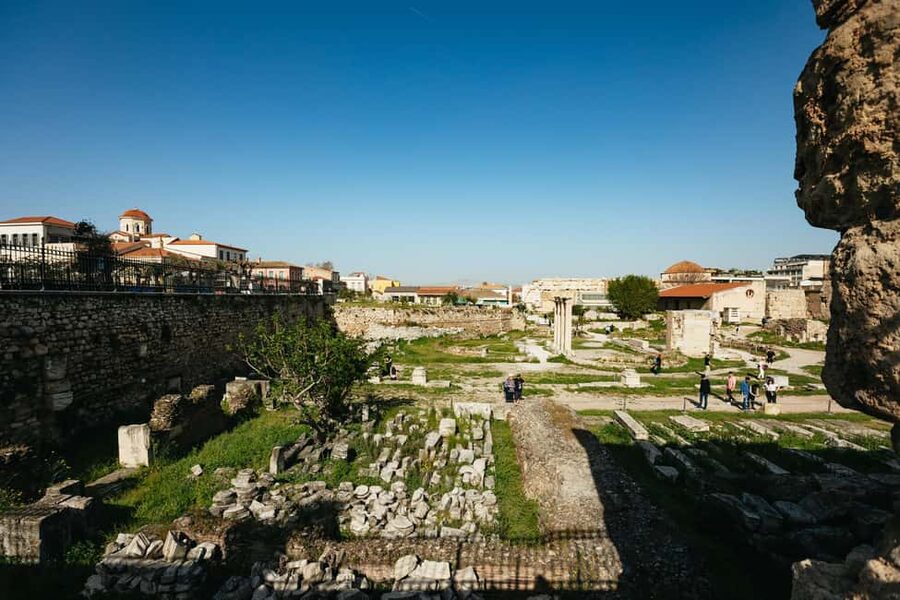
This is the part that turns the walking tour into a trip memory. The tour highlights women who were sidelined in many traditional accounts, and it connects them to larger themes.
Here are some of the names and themes you will hear:
- Sappho, often used to talk about voice, education, and creative agency
- Aspasia, connected to how influential women could exist within restrictive systems
- Agnodice, raised as an example of a woman pushing boundaries toward medicine and learning
- Mythic anchors like Athena, Penelope, Demeter, and Pandora that explain how gender roles were explained to people
The smartest move is how the guide uses mythology as a social tool. Instead of treating legends like separate bedtime stories, the tour shows how myths offered frameworks for what women were expected to be, and what happened when women did not fit.
It also helps that the guide seems to welcome questions, even ones that drift away from the main script. People with a general Athens background still come away feeling they learned something new, and people who know little get a smooth entry point.
Who should book this tour, and who should skip it
This is ideal if you like:
- guided walks that feel conversational
- history framed through real people, not just kings and wars
- learning a different lens on classic sites you might already plan to visit
- mythology with social meaning, not just plot summaries
It may not fit if you have mobility constraints. The tour includes steps and it is marked as not suitable for wheelchair users. It also notes it is not suitable for people with heart problems. If either of those is you, it is worth choosing a tour designed for flatter routes.
It is also a good fit for different ages and interest levels. Some people book it specifically because they want the women-focused angle, not the standard Athens checklist.
Value check: why $44.04 can be a great deal in Athens
In Athens, you can spend money quickly if you keep adding ticketed entry after ticketed entry. This tour keeps the value clear because:
- it is guided and story-heavy
- it covers major areas in a short time (about 2 hours)
- it includes a guide, walking tour, and a small gift
- it focuses on context rather than only paid admissions
At $44.04, you are paying mainly for the guide’s framing and the route logic. Since tickets are not included and many stops are exterior views, the tour is best for travelers who are happy to see the sites first, then decide later if they want museum or entry experiences on their own.
If you want a private group, the same format can be more comfortable, especially if you have specific questions about women’s roles, mythology, or ancient politics.
Should you book Athens: Women in Ancient Greece?
If you are even a little tired of the usual Athens tour pattern, book this. You are getting a fresh lens on places you already recognize, plus stories that are not typically covered in the standard “great men of history” way. It is short enough to fit into a busy morning, and the end view at Filopappou Hill helps you walk away with more than facts.
Skip it if you need an access-friendly route with no steps, or if heart-related conditions make walking strenuous. Also consider whether you want paid site entry today. If yes, plan other visits on your own time since this tour keeps things exterior.
If you want Athens to feel human, lived-in, and slightly surprising, this is a very smart use of time.
FAQ
Where does the tour start?
You meet your guide on Monastiraki Square in front of the Church Pantanassa. Your guide will be holding a sign that says Women in Ancient Greece.
What is the duration of the guided tour?
The tour lasts about 2 hours. Starting times vary, so you will need to check availability.
Is this tour ticketed for archaeological sites?
No. Tickets are not included, and you will see the key archaeological sites from the outside.
What languages is the tour offered in?
The live tour guide speaks English and French.
What should I bring?
Bring a sun hat, sunscreen, and water. The tour is outdoors and includes walking.
Is the tour suitable for wheelchair users or limited mobility?
No. The tour includes steps and is not suitable for wheelchair users or people with mobility impairments.
Are there private group options?
Yes. A private tour or private group option is available.
A Guide Comes Along in Athens

The Rest of Athens



Every Other Athens Write-Up
- All Day Cruise -3 Islands to Agistri,Moni, Aegina with lunch and drinks included
★ 5.0 · 4,958 reviews




Everything else we have written up around Athens





Walking Tours, side by side.
 ★ 4.6Athens: Acropolis and Parthenon Guided Walking TourFrom $385,882 reviews
 ★ 5.0Greek Food Walking Tour in AthensFrom $874,740 reviews
 ★ 4.7Acropolis: Acropolis and Parthenon Guided Walking TourFrom $363,442 reviews
 ★ 5.0Acropolis monuments & Parthenon Walking Tour with Optional Acropolis MuseumFrom $422,678 reviews
 ★ 4.8Knossos: Knossos Palace Skip-the-Line Guided Walking TourFrom $1041,380 reviews
 ★ 4.5Athens Acropolis and Parthenon Walking TourFrom $411,355 reviews
 ★ 5.0Athens Authentic Greek Food Walking Tour (Small Group)From $83809 reviews
 ★ 4.4Early Morning Acropolis & Old Athens Guided Walking TourFrom $28748 reviews
Sits on these lists