
Review · ANCIENT CORINTH & THE CANAL
Footsteps of Apostle Paul from Athens to Corinth, Private Day Tour
Walking Paul’s route feels close. This private day stitches together major Athens and Corinth waypoints from Acts, from the Areopagus speech spot to Ancient Corinth, then out to the port where he sailed on to Ephesus. I love the mix of big famous monuments and the faith-focused stops that put Bible scenes into real geography, and I love the smooth hotel or cruise-port pickup plus comfortable A/C transport for a full day. One thing to plan for: entrance fees are not included, and key sites like the Ancient Agora (museum) and Ancient Corinth (museum) usually add extra costs.
You’ll start at 8:00 am and spend about 7 to 8 hours on the move, with a driver who offers fluent English commentary during the drive (but does not enter archaeological sites). If you want a licensed guide to go inside with you, that can be arranged for an additional fee, depending on availability.
In This Review
- Key highlights worth your attention
- Price and logistics: what you’re really paying for
- How the private format changes your experience in Athens and Corinth
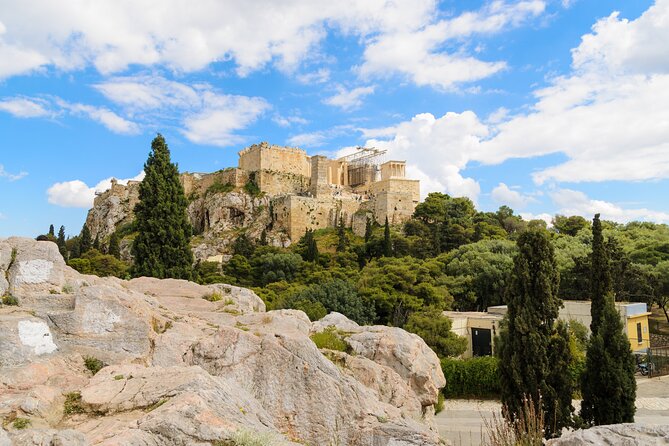
- Areopagus: the rock meeting place and Paul’s famous Athens moment
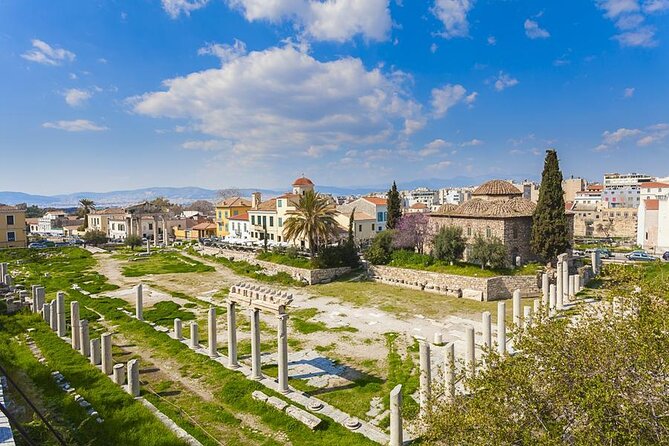
- Ancient Agora: the civic heart where faith met everyday life
- Temple of Olympian Zeus: scale, fragments, and the story of imperial Athens
- Panathenaic Stadium: from ancient competitions to still-famous athletic drama
- Hadrian’s Arch and the split personality of Athens
- Syntagma Square: politics in marble form, then guards at the tomb
- Academy, University, and National Library: Athens as a thinking city
- Corinth Canal: where navigation meets Bible geography
- Ancient Corinth: the Paul story site with real dating anchors
- Kechries port: the departure point feel, not the crowd-magnet kind of stop
- What to do if you want more than driver commentary
- Who this tour is best for
- Quick practical tips for a smooth day
- Should you book this Paul-footsteps tour?
Key highlights worth your attention
- Areopagus for Paul’s Athens speech setting, with free admission and dramatic views over the city
- Ancient Agora and its justice-and-market heart, where Paul’s first preaching to Greeks is tied to the setting
- Corinth Canal as a navigational turning point, making the drive feel story-connected, not just scenic
- Ancient Corinth with Gallio-era timing, giving you a Bible landmark you can date to the 50s AD
- Kechries port for the Ephesus departure, a quiet stop that can land emotionally for many people
- Private pace that you can steer, plus the option for site escorts if you want more than driver commentary
Other stops at ancient Corinth and the canal

Price and logistics: what you’re really paying for
At $286.02 per person, this is not a budget excursion. What you get for the money is the private format plus real friction-reducers: pickup and drop-off from Athens hotels, residences, or the Piraeus cruise port, A/C non-smoking vehicle, insured certified transport, parking fees handled, and bottled water. You also get skip-the-line service to purchase appropriate entrance tickets in advance, which matters when you are juggling several ancient sites in one day.
Because entrance fees to sites are not included, I suggest treating this as a transportation and guiding-day package. You’ll likely add costs for the Ancient Agora museum (€20 per person) and Ancient Corinth with the museum (€15 per person), since those specific entries are called out as extra.
One practical consideration: it runs a long, hot circuit. In summer, it can feel long even with a car between stops. Build in water, sunscreen, and sunglasses, and wear shoes that handle uneven stone and steps.
How the private format changes your experience in Athens and Corinth
This is a true private tour, meaning it is only your group. That matters because the day is built from sites that reward timing: you’ll want to slow down where you care, and speed up where you do not. Many people also like that you can ask your driver to reshape the flow slightly so you spend less time stuck in crowds and more time where the light and views help.
It’s also worth understanding the guide setup. Your personal driver provides commentary in fluent English during the ride, but cannot enter the archaeological sites. If you want a licensed guide to escort you inside the sites, you can arrange that for an additional 200€ depending on availability. If your group includes someone who loves deep textual detail, that option can be the difference between seeing places and understanding every angle.
Areopagus: the rock meeting place and Paul’s famous Athens moment
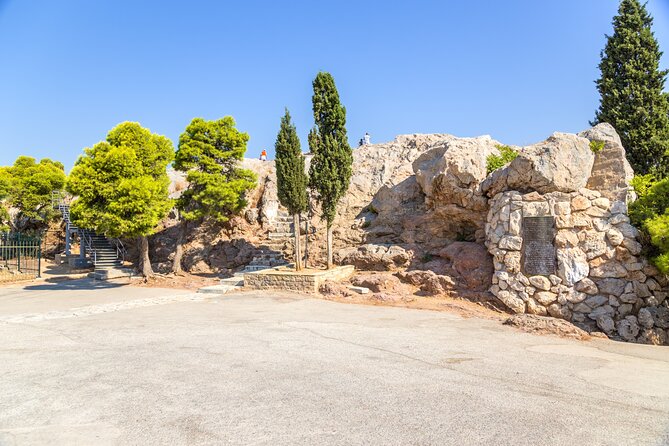
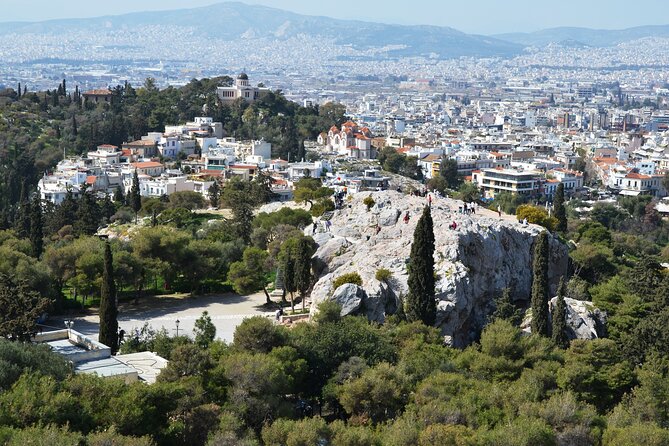
Your day starts with Areopagus, a prominent rock outcropping northwest of the Acropolis. In older Athens it functioned as a place of authority, shifting from a council of elders to roles in the court system. What makes this stop special for Bible-focused visitors is the association with Paul’s famous speech in Athens, tied to the altar to the unknown god.
The ticket note here is simple and helpful: admission is free, and the time on site is short (about 20 minutes). That makes Areopagus a great first stop, because it sets the tone fast. It also gives you early orientation in relation to the Acropolis area, so later monuments feel connected rather than random.
Practical tip: bring your phone camera, but also take a moment without it. The view lines and the “this is where the story would have unfolded” feeling are the real point.
Ancient Agora: the civic heart where faith met everyday life
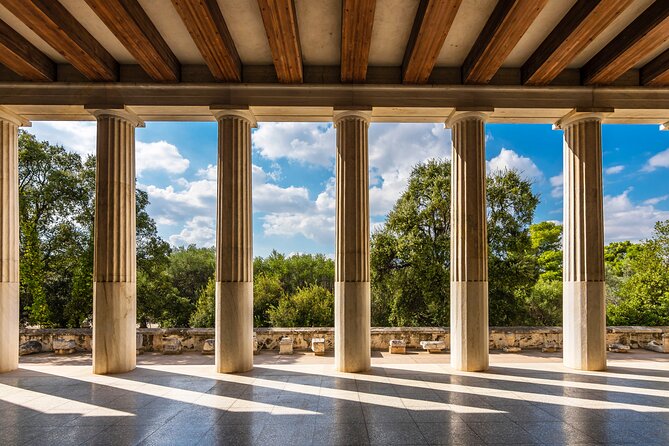
Next comes the Ancient Agora of Athens, the city’s heart for politics, commerce, administration, religion, and justice. It’s not just an open-air museum. This was a functioning center across many periods of the city’s history, even used long before classical Athens became the Athens you picture from textbooks.
For the biblical timeline, this is where Paul’s preaching to Greeks is linked to 51 AD. The Agora is also one of those places where context matters. You stand near the idea of public debate and civic life, which helps when you picture Paul addressing people in a daily setting rather than in a private room.
Time is about 1 hour 30 minutes, and here is the one extra cost to plan for: admission ticket is not included for the Ancient Agora and the Agora museum, listed as €20 per person. If your group is short on time or budget, you might choose how much you want to see inside the museum area versus staying focused on the exterior layout. Ask your driver what is most meaningful for your group before you pay.
Temple of Olympian Zeus: scale, fragments, and the story of imperial Athens
After the Agora, you’ll pass to the Temple of Olympian Zeus, the grand Roman-era giant built centuries after earlier Athens legends. The description matters because it helps you understand what you are seeing now: the temple was designed with rows of columns on the long and narrow sides, and once housed a famous chryselephantine Zeus statue, gold and ivory, plus an emperor statue. Today, 16 columns survive, with 13 on the east side intact.
This is a good stop if you like architecture that explains itself through ruins. Even if you do not go deep into scholarship, you can still read the temple’s intent: power, scale, and message.
Consideration: you might not need long here. If your group prefers fewer stops, the Temple of Olympian Zeus is one place you can enjoy from a quick angle and then move on.
More Athens bookings just for your own group
- Best of Athens Half Day Private Tour★ 5.0 · 3,714 reviews
- Athens Full Day Private Tour★ 5.0 · 2,903 reviews
- Athens Airport Private Arrival Transfer with Meet & Greet★ 4.5 · 1,495 reviews
- Athens Airport to Athens Hotels Private Arrival Transfer★ 5.0 · 947 reviews
Panathenaic Stadium: from ancient competitions to still-famous athletic drama
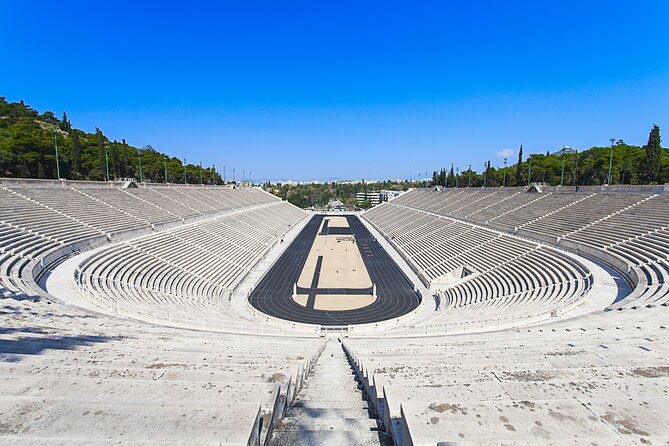
Next is Panathenaic Stadium, originally a natural hollow between hills and transformed into a stadium by Lykourgos in the 4th century BC. Later, Herodes Atticus restored it in the 2nd century AD, and it is known for the horseshoe shape and track dimensions linked to the Great Panathenaea festivities.
The ticket is free and time is short at about 15 minutes, so it works well inside a packed schedule. It is also an eye-catcher. You are looking at a physical reminder that Greek public life loved athletic competitions, and that these traditions kept being rebuilt and reused over time.
If you want photos, this is a good moment to do them before your eyes tire from sun glare.
Hadrian’s Arch and the split personality of Athens
Then you’ll see Hadrian’s Arch, a triumphal arch built in AD 131 by the Athenians in honor of their benefactor emperor Hadrian. The inscriptions on each side are a neat way to understand Athens’ identity shift: one side references ancient Athens and Theseus, the other references the city of Hadrian.
This is one of those stops that feels like a “blink and you might miss it” moment unless your driver points out the inscriptions and what they mean. Since you have private commentary, you can get more from a quick visit than you would with only a guidebook.
Time here is not specified, so expect it to be a brief walk-through, likely linked to nearby viewpoints.
Syntagma Square: politics in marble form, then guards at the tomb
From ancient Athens to modern Athens, you’ll reach Constitution Square, Syntagma Square, directly in front of the Greek Parliament. The space is wide, white marble, and made for people watching. It is also a natural pause between the ancient sites and the ceremony-based stops that follow.
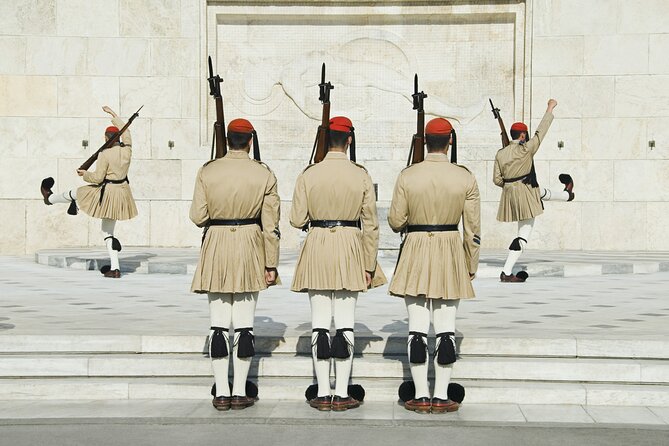
Next is the Monument to the Unknown Soldier in front of the Greek Parliament, sculpted between 1930 and 1932 by Fokion Rok. It is guarded 24-7 by the Evzones, the presidential guards.
Finally, you’ll time in for the Changing of the Guard ceremony at the Presidential Mansion and at the Tomb of the Unknown Soldier. This is listed as about 15 minutes, and admission is free. It’s tourist-popular for a reason: it gives a crisp, visual break from ancient stone, and it’s easy for groups of mixed ages to enjoy.
Practical tip: in hot weather, keep shade in mind around this area. Short ceremony time helps, but waiting for the moment can still feel long if the sun is harsh.
Academy, University, and National Library: Athens as a thinking city
After the guards, you’ll pass by the Academy of Athens, established in 1926 and Greece’s national academy and highest research establishment under the Ministry of Education. Nearby you’ll also see the National and Kapodistrian University of Athens, and the National Library of Greece, part of Theophil von Hansen’s neo-classical Trilogy. This zone feels like a calmer Athens interlude after the drama of guards and marble square crowds.
These are not the Bible hotspots of the day, but they add texture. Athens is not only ruins. It’s a living capital shaped by modern institutions, and the architecture helps you see that shift.
If your group’s focus is strictly biblical sites, these stops may feel like “between points.” Still, they are short and free, and your driver can connect them to the bigger picture of Athens as a place where ideas get passed along.
Corinth Canal: where navigation meets Bible geography
After Athens, you’ll head toward Corinth and stop at the Corinth Canal. This is one of the most visually satisfying breaks because it is both functional and dramatic.
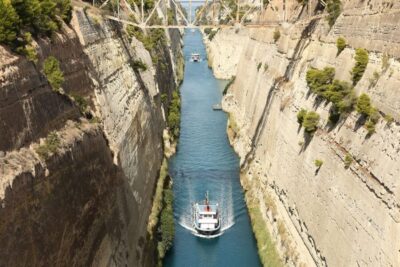
The canal connects the Gulf of Corinth with the Saronic Gulf and separates the Peloponnese peninsula from mainland Greece, effectively turning the peninsula into an island. It is also navigational lifeline for ships saving a journey of 185 nautical miles. The canal is about 6.3 kilometers long, with depth and width figures listed, plus surrounding walls about 170 feet high.
Time is about 30 minutes and admission is free. This makes it a perfect palate cleanser. You also get a real sense of why Paul and others moved along coastlines and waterways. Even if you are not a ship nerd, looking down at that channel makes ancient travel routes feel more real.
Ancient Corinth: the Paul story site with real dating anchors
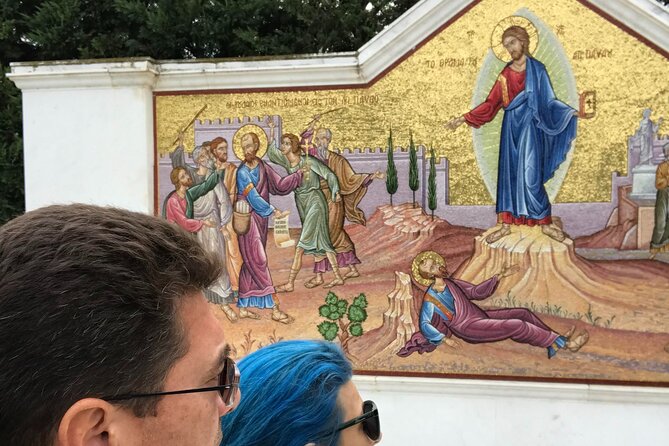
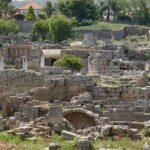
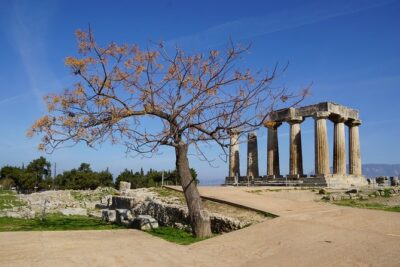
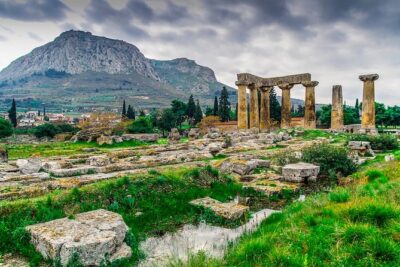
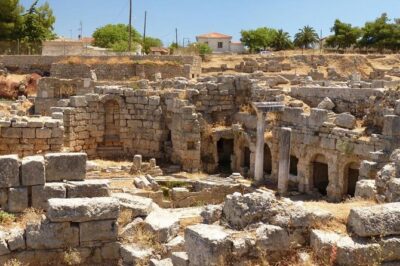
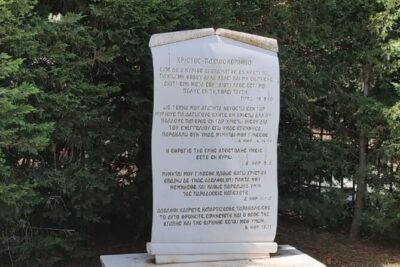
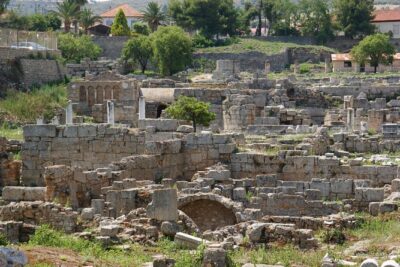
Ancient Corinth is the big ticket spiritual stop on the second half of the day. Here, Paul first visited around AD 49 or 50, during the time when Gallio, brother of Seneca, was proconsul of Achaia. Paul stayed about 18 months, and his work with Priscilla and Aquila as tentmakers ties directly to the modern concept of tentmaking. The synagogue connection is also important, because it frames Paul’s approach as he moves from synagogue conversations into broader audiences.
The timeline anchor that many people love is Gallio’s trial proceedings in AD 51 or 52, tied to Acts and often used to date the New Testament narrative framework more securely. Afterward, Silas and Timothy rejoined Paul here.
Time is about 1 hour 30 minutes, and admission is not included for Ancient Corinth and the museum, listed as €15 per person. This cost is easier to accept if you treat it as buying into interpretive context, since the museum helps you connect the stone you are standing on to the larger story.
One small drawback of this stop within a long day: you can feel rushed if your group wants both lots of photos and lots of reading. Since this is private, just be honest with your driver early about what matters most to you.
Kechries port: the departure point feel, not the crowd-magnet kind of stop
Last comes Kechries, one of Corinth’s ancient ports. This is the port associated with St. Paul sailing to Ephesus. Time is only about 15 minutes, and admission is free.
This is where the day can turn emotional for people. Not because you see a dramatic ruin, but because you’re standing at a link in a travel chain. It helps you visualize Paul leaving Corinth and continuing onward, which is often harder to picture when you are only reading chapters.
If you want the most from this stop, take your photos quickly and then just look around. You are looking for the geography, the “this is how a ship would have gone out” logic.
What to do if you want more than driver commentary
Your driver will handle fluent English commentary during the ride, but cannot enter archaeological sites. If you want a licensed guide to escort you inside sites like Ancient Agora and Ancient Corinth, that can be arranged for an additional 200€ depending on availability.
I like this setup because it lets you choose your style:
- If you prefer a comfortable, guided-with-every-drive day, stick with the driver commentary.
- If you love granular interpretation and want help reading the sites, add the licensed guide for the most important locations.
Names of drivers in this tour’s orbit include George, Spiros, Lambrose, Nikos, Tolis, Apostolos (called Apostle in one account), and Makis. Even with different personalities, the common thread is that the driving commentary keeps the day anchored to Paul and Athens rather than turning into a random monument circuit.
Who this tour is best for
This is a strong fit if you fall into one of these groups:
- You want Paul’s story in physical places, not just a lecture.
- Your group includes Bible-minded travelers plus people who still want to see major Athens landmarks.
- You want private pacing so you can spend longer where you care, like Ancient Corinth or the ceremony stops.
If you are the type who wants to linger in museums for hours, you may feel this is too short at the sites. But if your goal is a connected day that covers the key waypoints from Athens to Corinth, it hits the mark.
Quick practical tips for a smooth day
- Start early at 8:00 am, and plan for a full, walk-and-stand schedule even with car transfers.
- Bring a hat and sunscreen, especially in summer humidity.
- Have your entrance fee expectations ready for the two called out museums (Agora and Ancient Corinth).
- Use the car time. Ask your driver for how the day connects Paul’s route, then let the sites “click” for you when you step out.
Should you book this Paul-footsteps tour?
If you want a day where Bible geography feels tangible, this is an excellent choice. The private format, pickup convenience, A/C transport, and the mix of Athens, Corinth Canal, Ancient Corinth, and Kechries make it a clean route that respects your time. The only real reason not to book is if you dislike added site fees and you plan to spend long stretches reading inside museums, because entrance tickets for Agora and Corinth museum entries are extra.
If your group values meaningful stops and you can handle a long warm day with frequent transitions, book it and treat it like a single connected pilgrimage day across two cities.
The Rest of Athens



Every Other Athens Write-Up
- All Day Cruise -3 Islands to Agistri,Moni, Aegina with lunch and drinks included
★ 5.0 · 4,958 reviews



Ancient Corinth and the Canal
Everything else we have written up around Athens


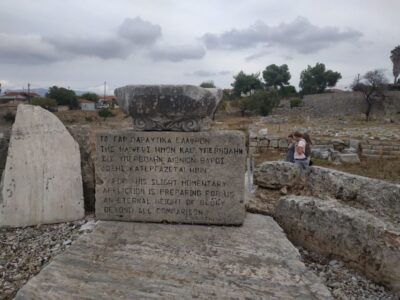

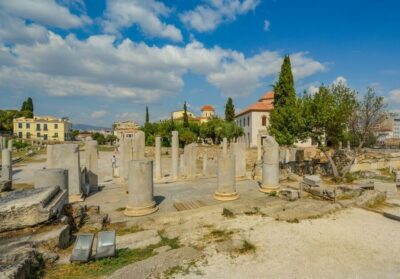
Ancient Corinth & the Canal, side by side.
 ★ 4.6From Athens: Ancient Corinth Day Trip with Canal & VR GuideFrom $411,073 reviews
 ★ 5.0Biblical Tour Letters ToThe Corinthians St Paul’s Footsteps 6HourFrom $1701,065 reviews
 ★ 5.0Private Biblical Tour Ancient Corinth & Isthmus Canal from AthensFrom $301762 reviews
 ★ 4.8Athens: Ancient Corinth & Nafplio Full Day Trip with SwimFrom $44523 reviews
 ★ 5.0Private Tour of Apostle Paul’s Footsteps in Ancient CorinthFrom $169275 reviews
 ★ 4.5Corinth Half-Day Trip from Athens with Entrance TicketsFrom $91242 reviews
 ★ 4.7Athens: Ancient Corinth & Nafplion Guided Premium TourFrom $34237 reviews
 ★ 4.4Athens: Corinth Canal, Mycenae and Nafplio Day TourFrom $33233 reviews
Sits on these lists