
Review · ANCIENT CORINTH & THE CANAL
Private Luxury Biblical Tour: Apostle Paul’s Footsteps – Corinth
Corinth hits you fast. This private, luxury-style day maps the places tied to Apostle Paul, from the canal and ports to the Bema and the modern church that marks his influence. It is built for comfort, with a calm pace and your own small group in the car, so you spend more time looking up at ruins and less time stuck in lines.
I love the relaxed pickup-to-drop-off flow. You start with port or hotel pickup in Athens, and then you get a direct, air-conditioned ride all day, including bottled water and on-board WiFi to keep your plans straight. I also like the English-speaking driver-guide format, which means you still get commentary while you are moving between sites, plus your own group stays together for a more personal day.
One thing to consider: site entrances and the museum ticket cost extra (you should budget about €20 per person). Also, the driver-guide does not replace a licensed guide inside every archaeological space, so if you want very deep indoor interpreting, you may find you have to read a bit at your own pace.
In This Review
- Quick reasons this Corinth day works
- Private pickup from Athens: comfort that actually saves time
- Price and what you truly get for $179.06 per person
- Isthmus of Corinth and the Diolkos: the engineering warm-up
- Kenchreai port: meeting the world Paul arrived in
- Ancient Corinth, Glauke Fountain, and the Bema: where Acts 18 stops being abstract
- Temple of Apollo and the Agora tribunals: pagan Corinth in plain view
- Archaeological Museum of Corinth: artifacts that put ruins in context
- Akrokorinthos acropolis: layered fortifications and big views
- Apostolos Pavlos Church: a modern marker on an ancient path
- What the best guides do with this itinerary
- Weather, pacing, and what to pack so the day feels easy
- Who should book this Apostle Paul footsteps tour to Corinth
- FAQ
- What is the duration of the Corinth Apostle Paul tour from Athens?
- Is pickup from Athens included?
- Can I get an airport pickup?
- Is this tour private?
- What group sizes and vehicles are used?
- Are tickets and entrance fees included?
- Is there WiFi on board?
- What language is the driver-guide?
- What should I bring or wear?
- What happens if weather is bad?
Quick reasons this Corinth day works
- Small-group private transport keeps the day efficient, especially between the scattered sites.
- Isthmus of Corinth and the Diolkos give you instant context for how ships and trade shaped the region.
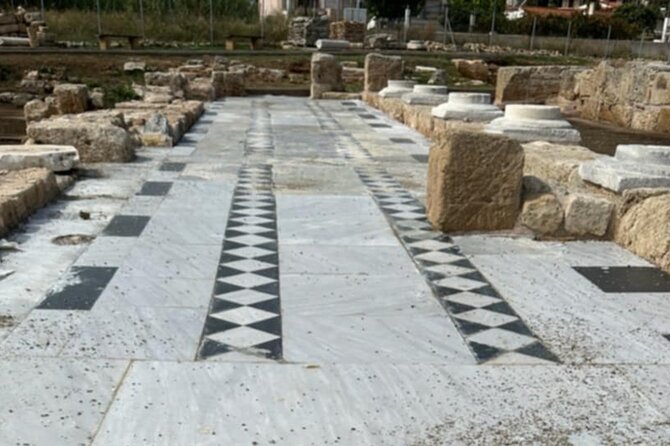
- Acts 18 stops at the Bema connect Paul’s story to Roman public space you can actually stand in.
- Glauke Fountain plus the Agora ruins show the mix of myth, politics, and faith that marked ancient Corinth.
- Akrokorinthos (the fortified acropolis) adds big views and a stack of eras, from classical to Byzantine, Frankish, and Ottoman.
- A modern Apostle Paul church closes the loop in a meaningful, grounded way.
Other stops at ancient Corinth and the canal

Private pickup from Athens: comfort that actually saves time
This is one of those tours where the “luxury” part matters, because Corinth is not a one-stop place. You are looking at multiple locations spread around the area, and the best days feel like a smooth chain rather than a rushed sprint. Here, you get an air-conditioned vehicle, bottled water, and a day plan that includes time spent traveling between stops.
Pickup is a major win if you are docking in Athens or staying outside the busiest zones. You can arrange hotel or apartment pickup, with the driver waiting outside your place. If you are arriving by cruise, the driver meets you in the arrival area with a sign showing your name. And yes, based on real experiences shared with the operator, they have handled flexible routing, including pickup from Piraeus and drop-off at a different location in Athens.
On the vehicle side, group size is kept small and practical. Groups of 1 to 4 ride in a luxurious sedan, and groups of 5 to 7 ride in comfortable mini vans. That matters because you get less crowding at stops, and you can shuffle your luggage and gear without the “everyone off, everyone on” stress you see on bigger group tours. WiFi onboard also helps more than you’d think, especially if you are using your phone for directions, Bible text, or notes as you go.
Price and what you truly get for $179.06 per person
At $179.06 per person, this is not a bargain-basement outing. But it is also not priced like an all-day guided walking tour with a licensed interpreter inside every site. What you are paying for is private transportation, door-to-door pickup and drop-off in Athens, and a driver-guide who explains what you are seeing as you travel.
Here is where value becomes clear:
- Your time efficiency is high. You are not waiting for other groups or being dragged between locations.
- The private format makes it easier to set your own pace at each stop.
- You get practical comfort extras: air-conditioning, WiFi, and bottled water.
The main cost add-on is entrance fees. Archaeological sites and the museum are not included, and the listed estimate is €20 per person. Some individual stops are free, but the museum and certain major archaeological areas are where the money goes. I suggest you plan on paying that on the day, so it never turns into an unpleasant surprise.
Also, tipping is not included. That does not mean you must tip, but you should decide your comfort level before the day starts.
Isthmus of Corinth and the Diolkos: the engineering warm-up
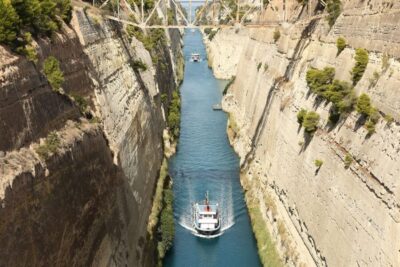
The day begins at the Isthmus of Corinth, a narrow land bridge that has mattered for thousands of years. Even if you know almost nothing about the area, you instantly get why this mattered to commerce: the Corinth Canal cuts through the rock, giving you a shortcut for maritime trade. Expect panoramic views and a strong “why this place is strategic” feeling.
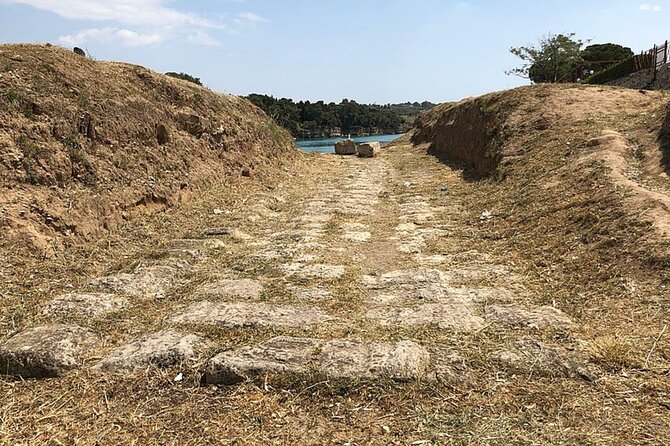
Then you move to the Diolkos, an ancient stone-paved road built to transport ships overland across the isthmus. This is not just a random ruin stop. It is a key to understanding Corinth’s power and why Romans and Greeks both cared about movement of goods and people. When you can see the logic of ship transport, Paul’s story becomes easier to visualize later, because you understand the city was wired into travel routes.
These two stops are short and purposely staged early. They are the kind of introductions that help you make sense of the religious and political stops that come right after.
Kenchreai port: meeting the world Paul arrived in
Next comes the Ancient Port of Kenchreai, on the eastern side. This is where Paul’s route connects to Roman-era Corinth in a way that feels specific, not vague. The stop is tied to the idea that Paul arrived there around 53 A.D.
What I like about this part of the day is that you get a sense of “arrival.” Corinth is not only a set of ruins. It is a city people entered, worked, bought, argued, and worshipped in. Port locations help you picture the first moments of mission work: where letters and travelers might pass through, where conversations could start, and where new communities could form.
The time here is modest, so don’t expect a long museum-style interpretation. But the payoff is the context. You leave this stop ready to understand why Corinth mattered for early Christianity.
Ancient Corinth, Glauke Fountain, and the Bema: where Acts 18 stops being abstract
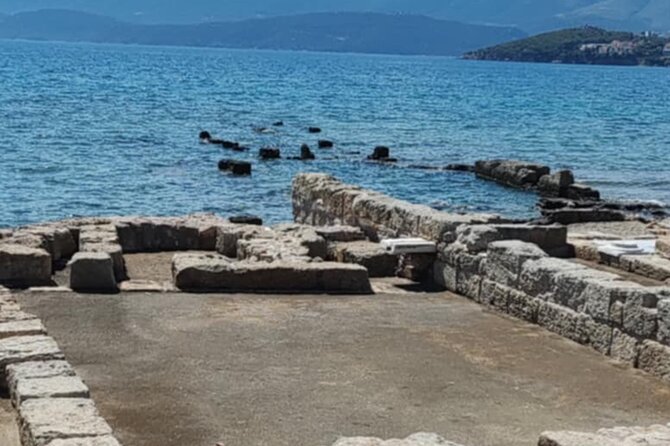
Now the tour hits the heart of the day: ancient Corinth itself. You start with the Glauke Fountain, carved into the hillside and linked to myth. The legend involves Glauke, daughter of King Creon, who sought refuge there after being poisoned by Medea. You might not think mythology belongs on a biblical itinerary, but it does. It reminds you Corinth was steeped in stories and gods, and that Paul preached in a world full of established beliefs.
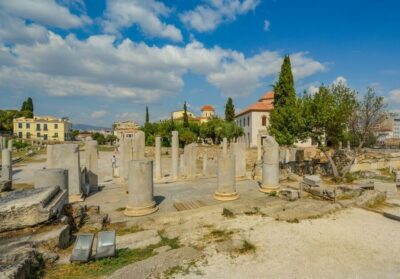
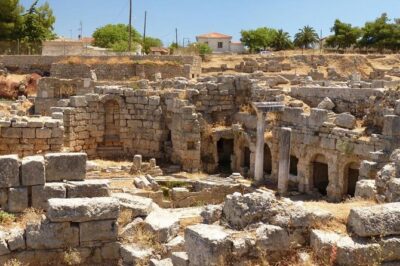
Then the day pivots to the Roman Forum and the Bema, the elevated platform associated with Paul’s public teaching. This is one of the most meaningful moments, because you are standing in a real setting where public address and judgment happened. Later, the site took on Christian layers, which helps explain why the location stays spiritually charged even after centuries of change.
The traditional connection is tied to Paul appearing before Gallio, the Roman proconsul, around 51 A.D. The account is linked to Acts 18:12-17, including the moment when Gallio dismissed Paul, allowing him to continue his mission. You are not just reading a verse. You are looking at the kind of place where officials and arguments played out in public.
A very practical note: the Bema stop time is brief, so listen carefully as you’re there. If your guide is the type who likes to slow down for your questions, you’ll benefit most by preparing a couple of specifics in your mind.
More Athens bookings just for your own group
- Best of Athens Half Day Private Tour★ 5.0 · 3,714 reviews
- Athens Full Day Private Tour★ 5.0 · 2,903 reviews
- Athens Airport Private Arrival Transfer with Meet & Greet★ 4.5 · 1,495 reviews
- Athens Airport to Athens Hotels Private Arrival Transfer★ 5.0 · 947 reviews
Temple of Apollo and the Agora tribunals: pagan Corinth in plain view
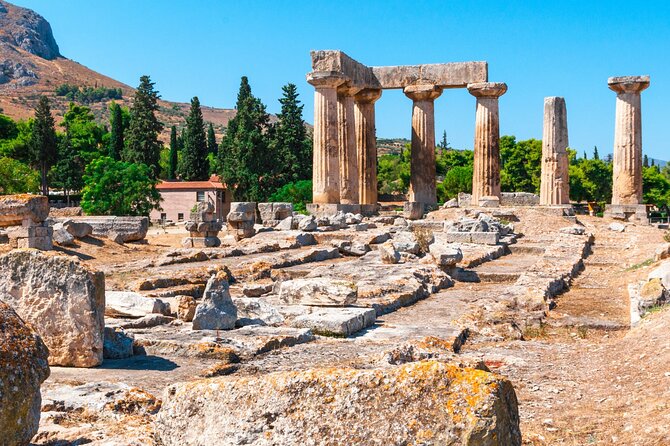
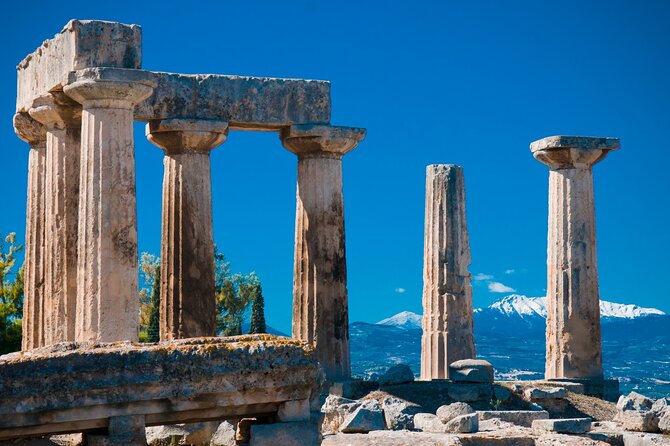
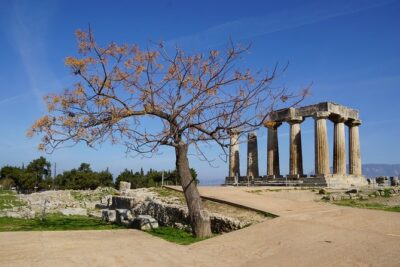
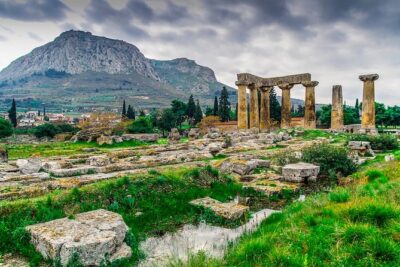
After the Bema, the tour includes the Temple of Apollo, one of the oldest Doric temples in the Peloponnese. The point of this stop is not simply architecture spotting. It is atmosphere. Paul’s Corinth was surrounded by religious buildings and civic identity. You get to see the scale of what people worshipped and celebrated, which makes Paul’s message land with more weight.
Then you return to the Bema connection and the Agora tribunal setting, including tradition about Paul’s hearing before Gallio. Modern mosaics at the site depict Paul’s trial and journey, which helps the meaning click, especially if you like visual cues while reading scripture.
This section can feel like two sides of the same coin: one moment you are in a temple world, the next you are in a civic courtroom world. That contrast helps you understand that Paul’s message was not delivered in a vacuum. It challenged the public norms of Corinth.
Archaeological Museum of Corinth: artifacts that put ruins in context
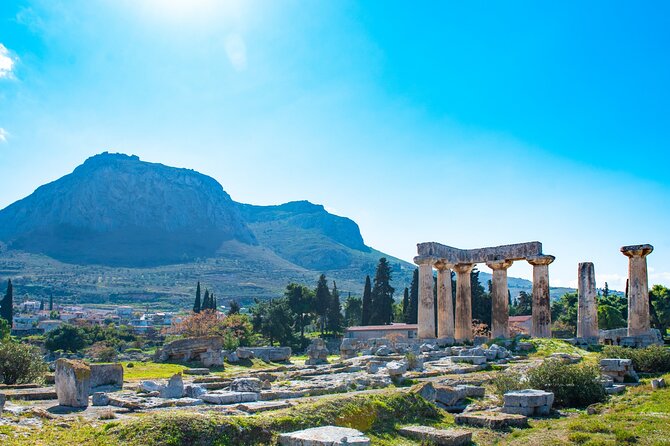
If you only wanted outdoors, you could skip the museum. I would not. The Archaeological Museum of Corinth gives you a structured way to connect the sites you just saw with objects people actually used, built, and honored.
The museum stop is the longest part of this middle block, around 45 minutes. You’ll see collections that stretch from prehistoric finds to Roman-era treasures, along with statuary, pottery, and items linked to the Sanctuary of Asklepios. Even if you skim quickly, you get a better grip on daily life and religious practice beyond the major monuments.
The museum ticket is not included in the base price, so again, budget for that €20 per person estimate. But this is also the part where time helps you more. Spend a little energy looking at pottery and inscriptions, even briefly. It changes how the ruins feel when you return to the outside sites.
Akrokorinthos acropolis: layered fortifications and big views
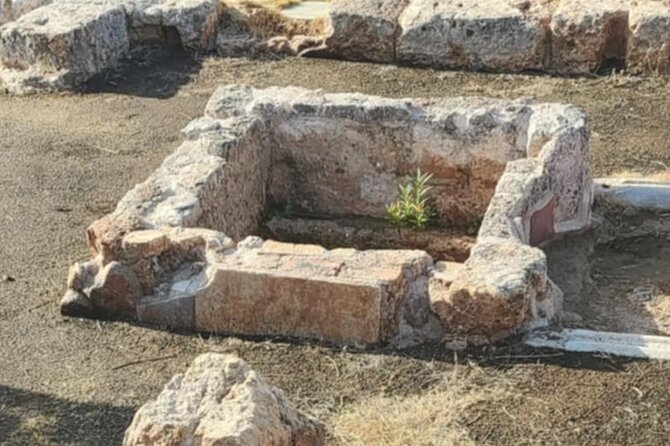
Next is Akrokorinthos, the fortified acropolis of Acrocorinth. This is where Corinth becomes a place of heights and control. The ruins include classical foundations along with fortifications from Byzantine, Frankish, and Ottoman periods.
You’ll want comfortable shoes here. The visit is around 40 minutes, so you can take it at a reasonable pace, but it is not a sit-and-smile stop. The reward is the mix of time periods in one view. That layered feel matters because it reinforces how long Corinth stayed important.
Also, even when you come for Paul, the acropolis helps you understand how cities protected themselves and why they kept returning to the same strategic location. That makes the story feel less like a postcard and more like a lived geography.
Apostolos Pavlos Church: a modern marker on an ancient path
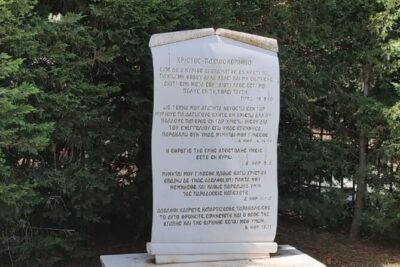
The tour finishes at Apostolos Pavlos Church, a three-aisled basilica built in 1936 on the site of an earlier church associated with Paul’s influence in Corinth.
This stop is shorter, about 20 minutes, but it often lands emotionally for people who planned the day around Acts and missionary routes. It is a modern space built with the memory of older worship in mind. You leave with a sense of closure that a set of ruins alone cannot always provide.
The final stop also gives you a clean transition back to your day. Since the tour concludes at the original meeting point, it is easier to plan dinner or the next travel step.
What the best guides do with this itinerary
The itinerary is strong on paper, but guides make it sing. In the experiences shared with this operator, guides such as Demetrius, Makis, George, and Pericles were repeatedly praised for being patient, relaxed, and focused on scripture and historical connections.
A few practical guide behaviors show up again and again in that feedback:
- They give explanations at each stop without rushing you.
- They flex timing so you can control your viewing pace.
- They may help with photo breaks and small detours when there is room in the schedule.
One reviewer also described an excellent lunch stop, which tells me the operator expects you to want breaks, not just drive-by snapshots. If you care about lunch, ask your driver where they recommend and build it into your stop rhythm.
Weather, pacing, and what to pack so the day feels easy
This tour requires good weather. If conditions are poor, you will be offered a different date or a full refund. That is the one big variable you cannot control.
On the ground, Corinth can mean sun, heat, and stone surfaces. Plan for that. Wear comfortable footwear, bring a hat and sunscreen, and keep water handy even though bottled water is provided. Since you will be in a vehicle between sites, you still want to move with confidence when you step out.
As for pacing, the tour includes travel time, so don’t treat each stop as an open-ended wandering session. If you have one or two moments you really care about, decide before you arrive and spend your attention there first.
Who should book this Apostle Paul footsteps tour to Corinth
Book it if:
- You want a private day with a small group and less crowd stress.
- You care about the Bible setting, not just generic sightseeing.
- You like a guided narrative as you move between major stops, including the Bema and Gallio connection.
- You value comfort, especially if you are starting from port or coordinating with a hotel pickup.
Skip it if:
- You want a licensed guide inside every archaeological site, with deep museum-level interpretation everywhere.
- You hate extra costs. Entrance fees for sites and the museum are a real add-on.
- You prefer a long walking tour where you control every step on foot for hours.
If you are visiting Athens and want one solid, meaningful half-day that connects Acts 18 with the geography of Corinth, this format is a strong fit. The private transport and consistent narration make the day feel coherent, not scattered.
FAQ
What is the duration of the Corinth Apostle Paul tour from Athens?
The tour is about 5 to 6 hours, including the time spent traveling between locations.
Is pickup from Athens included?
Yes. Pickup is available from designated locations, including hotel or apartment pickup and port pickup. The driver waits outside for hotel or apartment pickups, and greets you at the port arrival area with a name sign.
Can I get an airport pickup?
Airport pickup is available for an additional cost.
Is this tour private?
Yes. It is private, meaning only your group participates.
What group sizes and vehicles are used?
Groups of 1 to 4 people ride in luxurious sedan vehicles. Groups of 5 to 7 people ride in comfortable mini vans.
Are tickets and entrance fees included?
No. Entrance fees for archaeological sites and museums are not included, with an estimate of €20.00 per person. Some stops list admission ticket free, but not all.
Is there WiFi on board?
Yes. There is complimentary WiFi on board.
What language is the driver-guide?
The tour is offered in English, with an English-speaking driver-guide.
What should I bring or wear?
Wear comfortable footwear for walking, and bring a hat and sunscreen since Greece can be warm and sunny.
What happens if weather is bad?
If the tour is canceled due to poor weather, you will be offered a different date or a full refund.
The Rest of Athens




Every Other Athens Write-Up
- All Day Cruise -3 Islands to Agistri,Moni, Aegina with lunch and drinks included
★ 5.0 · 4,958 reviews



Ancient Corinth and the Canal
Everything else we have written up around Athens




Ancient Corinth & the Canal, side by side.
 ★ 4.6From Athens: Ancient Corinth Day Trip with Canal & VR GuideFrom $411,073 reviews
 ★ 5.0Biblical Tour Letters ToThe Corinthians St Paul’s Footsteps 6HourFrom $1701,065 reviews
 ★ 5.0Private Biblical Tour Ancient Corinth & Isthmus Canal from AthensFrom $301762 reviews
 ★ 4.8Athens: Ancient Corinth & Nafplio Full Day Trip with SwimFrom $44523 reviews
 ★ 5.0Private Tour of Apostle Paul’s Footsteps in Ancient CorinthFrom $169275 reviews
 ★ 4.5Corinth Half-Day Trip from Athens with Entrance TicketsFrom $91242 reviews
 ★ 4.7Athens: Ancient Corinth & Nafplion Guided Premium TourFrom $34237 reviews
 ★ 4.4Athens: Corinth Canal, Mycenae and Nafplio Day TourFrom $33233 reviews
Sits on these lists