

Review · WALKING TOURS
Small-Group Women History in Ancient Greece Walking Tour
Athenian women take center stage. This 2-hour small-group walk through central Athens connects real places to stories of women’s daily lives and the myths that shaped how Greeks thought about family, love, and power. I love that the tour keeps the focus where most classical tours don’t, and I also love how the route links myth and daily life to specific corners of the city, not just lectures.
You should know one thing before you book: this is a walking tour, and it’s not recommended for travelers with mobility issues, with hills and uneven pavement part of the deal.
In This Review
- Key points to know before you go
- Women in Ancient Greece, told as street-level stories
- The route in plain terms: a 2-hour walk with city context
- Meeting Maelle in Monastiraki: where the tour begins
- Hadrian’s Library: education for girls and women
- A church stop that turns into a lesson on marriage and love
- Gate of Athena Archegetis: myths tied to real choices
- Dioskouron: a women-only festival angle
- Ancient Agora, seen from outside: public life and private limits
- Areopago: a turning point story about women’s rights
- Pnyx: democracy where women were excluded
- Philopappos Hill finish: the view comes with meaning
- Price, timing, and value: why $44.71 can make sense
- Who should book this Athens women’s history walk
- Tips to get the most from Maelle’s storytelling
- Should you book the Small-Group Women History in Ancient Greece Walking Tour?
- FAQ
- How long is the walking tour?
- Where do I meet the guide and where do we finish?
- What is the price per person?
- Do I need to pay admission fees at the stops?
- What is the group size?
- Is the tour suitable for people with mobility issues?
- What happens if weather is poor?
Key points to know before you go

- A tightly focused women-in-Athens narrative that includes mythology and names you will recognize.
- Small-group size (max 12), which makes it easier to ask questions and keep the pace comfortable.
- Free-entry stops and no archaeological-site entry, so you spend time walking and looking instead of waiting in lines.
- A finish on Philopappos Hill with a strong viewpoint over the Acropolis.
- Stories you won’t get from a self-guided stroll, especially around marriage, women’s public limits, and trials.
More of Athens taken slowly on foot





Women in Ancient Greece, told as street-level stories
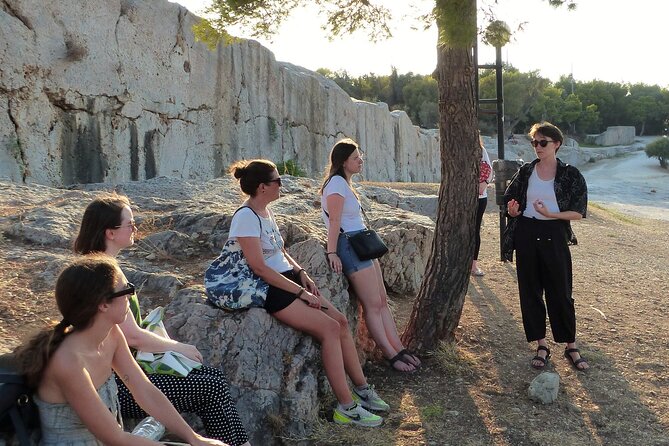
Athens is famous for its big ideas: democracy, philosophy, drama. This tour does something smarter. It treats women as the center of the story and uses the city as a living classroom, one stop at a time.
You’ll hear tales tied to major figures like Athena, Penelope, and Pandora, then move into real-world names that changed what was possible, including Sappho, Aspasia, and Agnodice. The “wow” is not just the cast of characters. It’s the way the guide ties themes together, so you start noticing patterns: who gets education, who controls space, and what happens when rules get challenged.
This is also where the tour earns its reputation as the missing piece for an Athens visit. Many guided walks cover temples and rulers. This one frames the city through how women navigated daily life, restrictions, and occasional cracks in the system.
The route in plain terms: a 2-hour walk with city context
The tour is about 2 hours long and is designed as a steady walking loop through central Athens. You start at Pl. Monastirakiou 2, Athina 105 55, and you end at Philopappos Hill, Φυλής 215, Athina 117 41 near a top viewpoint over the Acropolis.
That ending matters. It’s the kind of finish that makes you feel like you earned the view. You’re not just looking at stone. You’re looking after hearing how myth and politics shaped people’s lives, including women whose influence is easy to miss when the tour is focused on men’s history.
Logistics-wise, it’s near public transportation, and you can keep your options open if you want to hop back into the metro after the walk. A mobile ticket is used, and the tour is offered in a small group, max 12.
Meeting Maelle in Monastiraki: where the tour begins
You meet in Monastiraki Square, which is a smart starting point. It’s central, easy to recognize, and it sets the tone for a walking experience that moves from today’s Athens into the ancient layers beneath it.
In the first stretch, Maelle frames the big question: what did daily life look like for women, and how did Greek society define acceptable roles? Instead of treating ancient women like footnotes, the tour treats them like real people living within rules they often did not write.
If you like tours that move at a conversational pace, this one fits. The group size helps, and the storytelling format keeps you engaged without feeling like you’re trapped in a lecture.
Hadrian’s Library: education for girls and women

One of the most interesting stops is Hadrian’s Library. Even if you do not go inside paid spaces on this tour, this stop works because it anchors the topic of learning in a place you can see and reference.
You’ll learn about the education of girls and women in ancient Athens, and that reframes a common assumption. Many visitors come in expecting education to be strictly male. Here, you get a more nuanced picture of what was possible, what was limited, and how a culture’s ideas about women showed up in formal life.
This stop also connects well with the tour’s broader theme. Education is not just about knowledge. It’s about authority, influence, and the right to participate in conversations that shape society.
A church stop that turns into a lesson on marriage and love
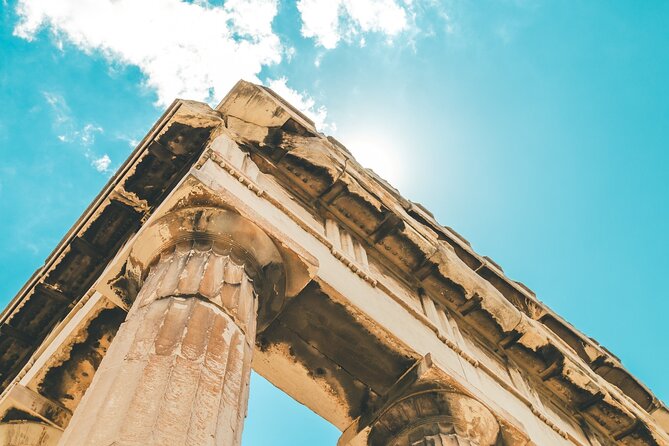
The walk includes Holy Church of the All-Great Taxiarchs and the Virgin Mary Gregorousa. On the surface, it’s a church stop. In practice, it’s used to talk about how ancient Greeks viewed marriage in both Athens and Sparta.
You’ll hear about EROS, the passionate kind of love, and how the language around love, duty, and desire shaped women’s lives. It’s not a detached history lesson. It’s a discussion of expectations, and how those expectations create real pressure at home and in society.
This is one of the tour’s strengths: the guide does not treat ancient values as curiosities. You connect it to how people still talk about love and duty today, even when the details are different.
More Athens history told on the spot
- Historical Delphi One Day Tour with Arachova Stop & Expert Guide★ 4.5 · 1,247 reviews
- Historic Athens: Small Group Electric Bike Tour★ 4.9 · 740 reviews
- The History of Athens: Greek Mythology Private Tour★ 5.0 · 138 reviews
- Athens Highlights by E-Bike: Small-Group Historic Tour★ 5.0 · 131 reviews
Gate of Athena Archegetis: myths tied to real choices
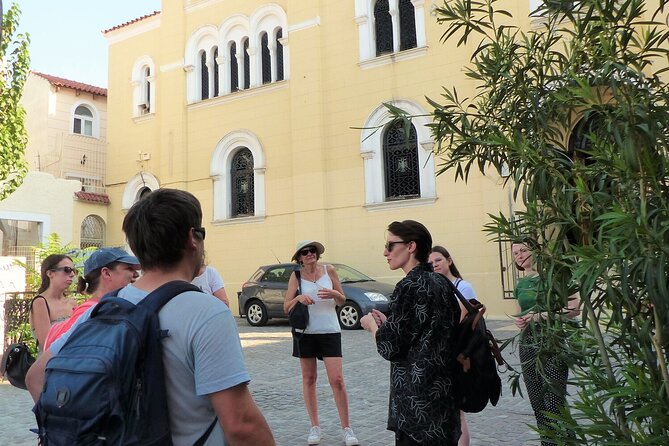
Next comes the Gate of Athena Archegetis. Athena is the kind of goddess who makes visitors think of strategy and wisdom. The tour uses her linked myths to talk about married life for women in ancient Athens and Sparta and what those mythic stories communicated about acceptable behavior and roles.
I like stops like this because you get a “read” on the city. You start seeing architecture as storytelling. This gate is not just a point on a map. It becomes a way to understand how the culture explained the world: who should lead, who should manage household life, and how mythology justified the boundaries.
If you enjoy being able to look at a structure and say, I know what that’s about, you’ll appreciate this part of the route.
Dioskouron: a women-only festival angle

The tour includes Dioskouron, where you’ll discover a mysterious ancient festival dedicated exclusively to women. This is the kind of detail that makes the whole tour feel special, because it flips the usual “history is mostly public male events” pattern.
Even without stepping into a paid site, the guide uses this stop to highlight the idea that women had spaces and traditions that were theirs alone. That helps you balance the story. Yes, women faced restrictions. But the culture also created moments and practices where women mattered in public life, just within defined boundaries.
It’s a good reminder that “limited access” does not always mean “no agency.” Sometimes it means agency lived in smaller, sanctioned places.
Ancient Agora, seen from outside: public life and private limits
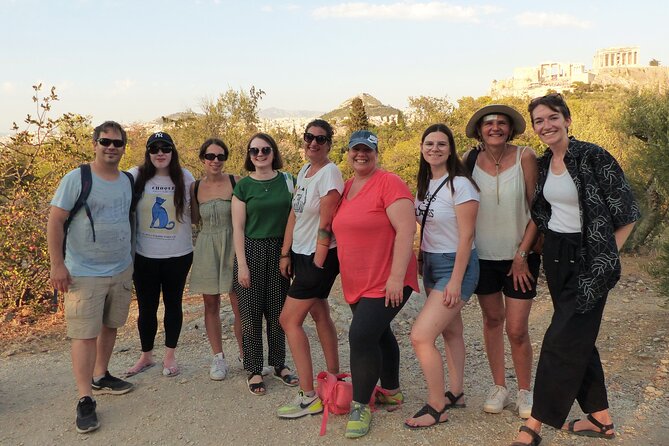
The Ancient Agora of Athens stop focuses on public life, but with a key detail: you do not enter the archaeological site. You’ll see it from the outside, and that is a practical choice for a 2-hour tour.
From this vantage, Maelle explains the marketplace as the center of public life, then connects it to the role women could and could not play there. You learn about the life of female slaves and courtesans in the city, and how the marketplace functioned as a stage for different categories of women.
This is where the tour becomes especially useful for first-time Athens visitors. When you later visit major historical sites on your own, you’ll remember that the public spaces were not equally open. They were shaped by gender rules, and those rules affected real daily routines.
Areopago: a turning point story about women’s rights
Next is Areopago, a place tied to trials and punishment in ancient times. The tour uses this setting to talk about where the worst sinners were trialled, then pivots into a story about a woman who risked a death sentence to change women’s rights.
I love this part because it’s not only about restrictions. It’s about resistance. It gives you a stronger sense that women were not just acted upon by history, they argued back, at real risk.
Even if you do not remember every name, you will remember the feeling: ancient society had a system that could be lethal, and some women still challenged it. That changes how you interpret later stories about citizenship, politics, and reputation.
Pnyx: democracy where women were excluded
At Pnyx, the tour moves into politics and the birth of democracy. You learn that only men citizens used to vote, which is the uncomfortable reality at the heart of Athens’ famous system.
Then, against that backdrop, you hear about a woman who influenced politics during Athens’ Golden Age. This is handled in a way that keeps the story from turning into a list. It becomes a point about how power can work indirectly, through relationships, reputation, and persuasion, even when formal voting rights are denied.
If you’re the kind of traveler who likes your history tied to how it affects daily life, you’ll appreciate the balance. The tour does not just say women were excluded. It explains what that exclusion meant and how women still found ways to shape outcomes.
Philopappos Hill finish: the view comes with meaning
The tour ends at Philopappos Hill, known as the Hill of the Muses, with inspiration for Athenians until now. The stop also delivers a practical payoff: you get an amazing view on the Acropolis.
This finish works because it gives your brain a place to land. You’ve walked through myths, marriage expectations, women-only traditions, public and private boundaries, and political exclusion. Then you look out over the landscape and realize how much is missing from the standard Athens story.
That’s why the ending feels different from a typical “great view, goodbye” moment. Here, the view becomes a recap of the tour’s theme: Athens was built from many influences, not just the public achievements that usually get the spotlight.
Price, timing, and value: why $44.71 can make sense
At $44.71 per person for a 2-hour small-group walk, the price sits in the mid-range for Athens guided experiences. What makes it feel fair is how focused it is. You are not paying for a long route that repeats the biggest hits. You are paying for a specific lens, and that lens changes what you see the next day on your own.
The group size also supports the value. With a maximum of 12 travelers, you get a more intimate pace than on larger coach-style tours. And because it’s about storytelling tied to visible locations, you are not losing time waiting around for entrances or ticket lines.
If you plan to book ahead, do it earlier rather than later. The tour is commonly booked around 37 days in advance, which usually means it fills for popular time slots.
Who should book this Athens women’s history walk
You’ll like this tour if you want Athens history that feels human and specific. It’s a great pick when you already plan to see the Acropolis and major classics, but you also want the missing layer: how people lived, who had voice, and how women were shaped by social rules.
It’s also a strong choice for couples or solo travelers who like a narrative tour. The route is manageable for most travelers, and the pacing works for questions.
It may not be the best fit if you need a low-walking, flat route. The tour is not recommended for travelers with mobility issues, and the finish at Philopappos Hill implies real walking and some uneven terrain.
If you’re traveling with a teen or an inquisitive adult who likes big questions, this kind of “myths plus daily life plus power” approach can land really well. The guide’s tone is designed to keep the topic approachable without sanding down the hard parts.
Tips to get the most from Maelle’s storytelling
Come with a curious mindset. You don’t need to memorize names, but you will enjoy it more if you treat each stop like a clue. Notice how the guide connects mythology (Athena, Penelope, Pandora) to societal ideas about women, family, and love.
Wear shoes for a walking tour. You’ll be outside for the full experience, and you’ll end on a hill viewpoint.
If you like to take photos, do it early, then listen. Some stops are about what you see right now and what it meant then. If you’re constantly flipping between camera and guide, you might miss the connections.
If the group is small, ask questions when one of your interests pops up. This format works best when you use it like a conversation, not a broadcast.
Should you book the Small-Group Women History in Ancient Greece Walking Tour?
I’d book it if you want Athens that goes beyond temples and famous male names. This tour gives you a side of Greek history that many first-time visitors do not get, and it does it with a guide, Maelle, whose storytelling focuses on women’s lives, myths, and the way rules shaped daily choices.
Skip it only if you want a totally flat, low-footprint experience or if you prefer tours that focus on monuments only. This is a narrative walking tour. The value comes from thinking differently as you walk, then carrying that perspective into the rest of your Athens days.
If you’re making one “different” choice, this is a strong one.
FAQ
How long is the walking tour?
The tour is about 2 hours.
Where do I meet the guide and where do we finish?
You meet at Pl. Monastirakiou 2, Athina 105 55, Greece. The tour ends at Philopappos Hill, Φυλής 215, Athina 117 41, Greece.
What is the price per person?
The price is $44.71 per person.
Do I need to pay admission fees at the stops?
The stops listed are marked as free, and the tour does not include entry into the Ancient Agora archaeological site.
What is the group size?
The tour has a maximum of 12 travelers.
Is the tour suitable for people with mobility issues?
It is not recommended for travelers with mobility issues.
What happens if weather is poor?
This experience requires good weather. If it is canceled due to poor weather, you will be offered a different date or a full refund.
More of Athens On Foot

The Rest of Athens



Every Other Athens Write-Up
- All Day Cruise -3 Islands to Agistri,Moni, Aegina with lunch and drinks included
★ 5.0 · 4,958 reviews




Everything else we have written up around Athens






Walking Tours, side by side.
 ★ 4.6Athens: Acropolis and Parthenon Guided Walking TourFrom $385,882 reviews
 ★ 5.0Greek Food Walking Tour in AthensFrom $874,740 reviews
 ★ 4.7Acropolis: Acropolis and Parthenon Guided Walking TourFrom $363,442 reviews
 ★ 5.0Acropolis monuments & Parthenon Walking Tour with Optional Acropolis MuseumFrom $422,678 reviews
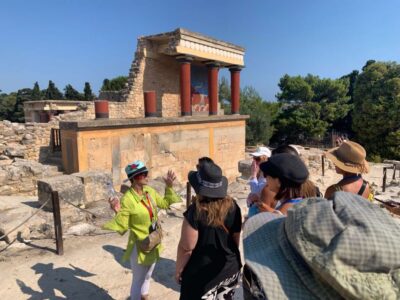 ★ 4.8Knossos: Knossos Palace Skip-the-Line Guided Walking TourFrom $1041,380 reviews
 ★ 4.5Athens Acropolis and Parthenon Walking TourFrom $411,355 reviews
 ★ 5.0Athens Authentic Greek Food Walking Tour (Small Group)From $83809 reviews
 ★ 4.4Early Morning Acropolis & Old Athens Guided Walking TourFrom $28748 reviews
Sits on these lists