
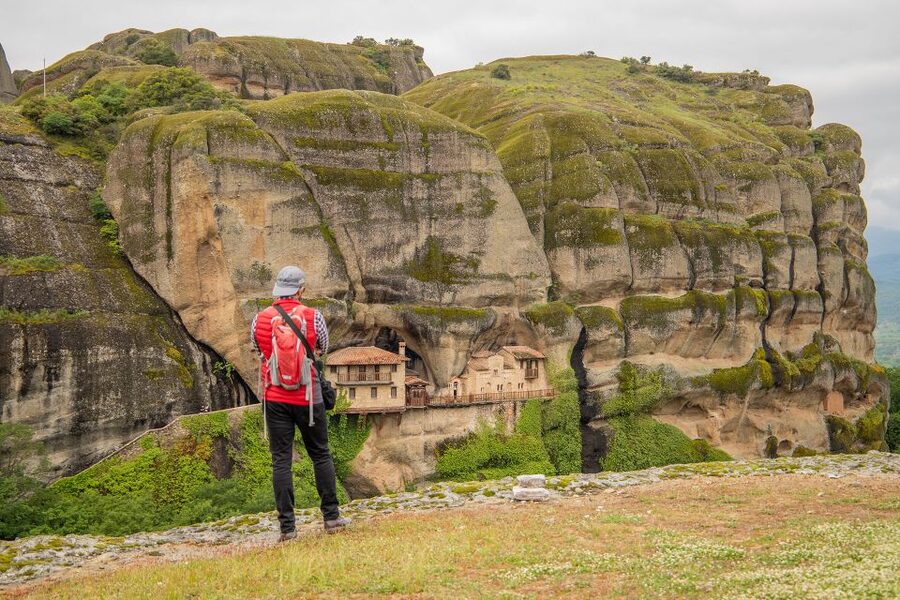
Review · METEORA MONASTERY TOURS
Kalabaka: Meteora Small-Group Hiking Tour w/ Monastery Visit
Meteora rocks look unreal, up close. I love the panoramic viewpoints you earn by foot and the local guide storytelling that makes the monasteries feel personal. The only real drawback is the route has uneven, sometimes steep sections, so you need decent shoes and some stamina.
This is a morning, half-day style walk out of Kalabaka that combines rock-gazing, photo stops, and a visit to one of the Eastern Orthodox monasteries in the UNESCO Meteora complex, usually Great Meteoron or Varlaam. You also get a quieter, more human side of the area, including the stop at St. George the Madilas, where there is a long tradition tied to children making rope climbs to offer dedications.
In This Review
- Key highlights before you lace up
- Why Meteora is better on foot than by bus
- Kalabaka pickup and the short coach ride to Kastraki Square
- Dupiani Hermitage, Pantokratoros ruins, and the feel of the rock maze
- Ypapanti Monastery and the ruins of St. Dimitrios from the 1808 uprising
- Climbing toward Great Meteoron or Varlaam, plus the best vantage points
- Great Meteoron vs Varlaam: what you should watch for
- St. George the Madilas: a cultural stop beyond the big monasteries
- What matters inside the monasteries: entry fees, guides, and dress code
- Price and value: what $35 includes and what you must budget for
- Hike difficulty and what to bring so it stays fun
- Guide quality: why names like Christos and Evan keep coming up
- Who this 5-hour Meteora hike suits best
- Should you book this Meteora small-group hike?
- FAQ
- How long is the Kalabaka to Meteora hiking tour?
- Where does pickup happen?
- How much hiking is included?
- Which monastery will I visit?
- Are monastery entry fees included?
- What is included in the price?
- What should I bring?
- Is there a cancellation policy?
Key highlights before you lace up
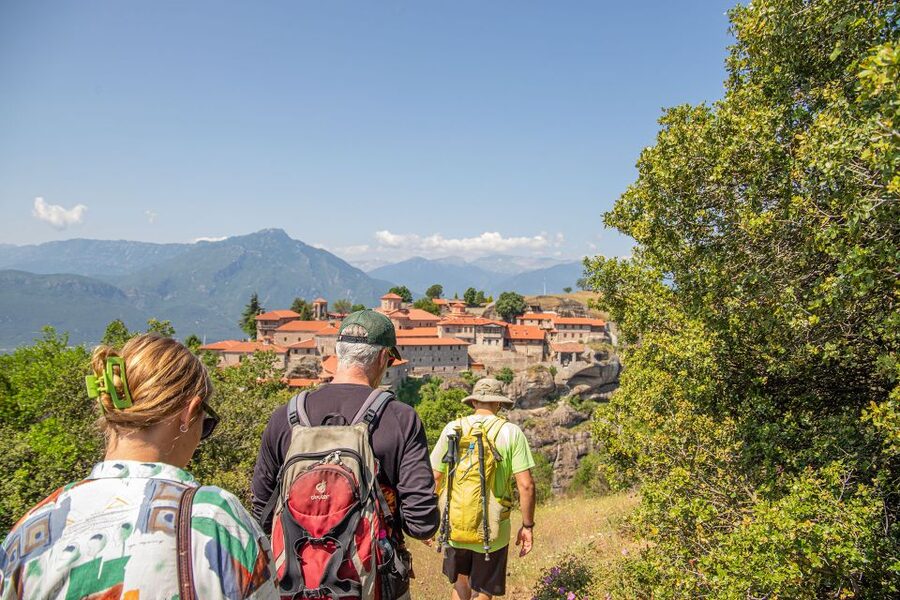
- Close-up hiking through Meteora’s rock paths instead of viewing everything from a car window
- A monastery visit paired with viewpoints that you reach by walking, not just by standing in crowds
- Dupiani Hermitage to Ypapanti Monastery plus a look at the ruins linked to the 1808 uprising
- Great Meteoron or Varlaam as your main monastery stop, with entry fees typically extra
- St. George the Madilas for a memorable cultural stop beyond the main monasteries
- Water and a map included, while you bring snacks, a hat, and cash for monastery entry
More ways to see the Meteora rocks and monasteries
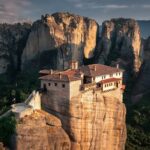
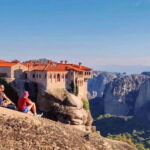
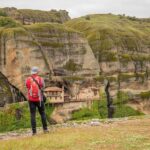
Why Meteora is better on foot than by bus
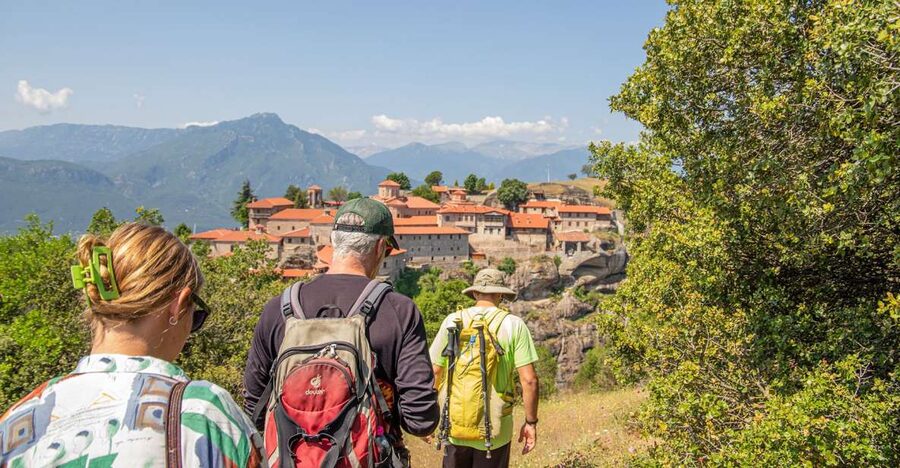
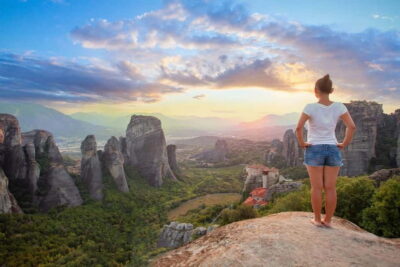
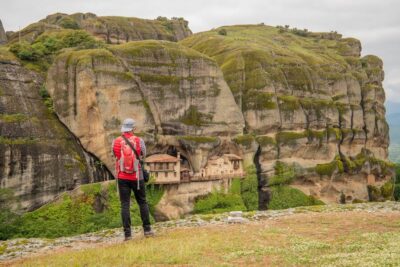
Meteora is famous for its sandstone towers, stacked so high they look staged. From a viewpoint, it can feel like scenery. Walking makes it physical. You get close enough to see how the rock has been shaped, layered, and cut by time.
I also like how the walk turns into a guided “read” of the place. A good guide helps you spot what matters: where the rocks squeeze the trail, why certain monasteries were placed where they were, and how the local stories attach to the view.
The other big advantage is pacing. With a guide setting the rhythm, you can enjoy the uphill effort without feeling rushed to just take photos and move on.
Kalabaka pickup and the short coach ride to Kastraki Square
You start in Kalabaka, with pickup from selected boutique hotels and guesthouses in town. Most mornings begin with a short coach ride, roughly 10 minutes, to the Meteora trail area.
Then the tour shifts gears. The walking begins around Kastraki Square, where you get oriented before the first climb and photo moments. This matters because Meteora is a maze of rocks and paths. Getting your bearings early makes the rest of the day feel smoother.
The ride itself is typically smooth. The transport portion gets high marks, which is useful when you want to spend your energy hiking, not worrying about timing.
Dupiani Hermitage, Pantokratoros ruins, and the feel of the rock maze
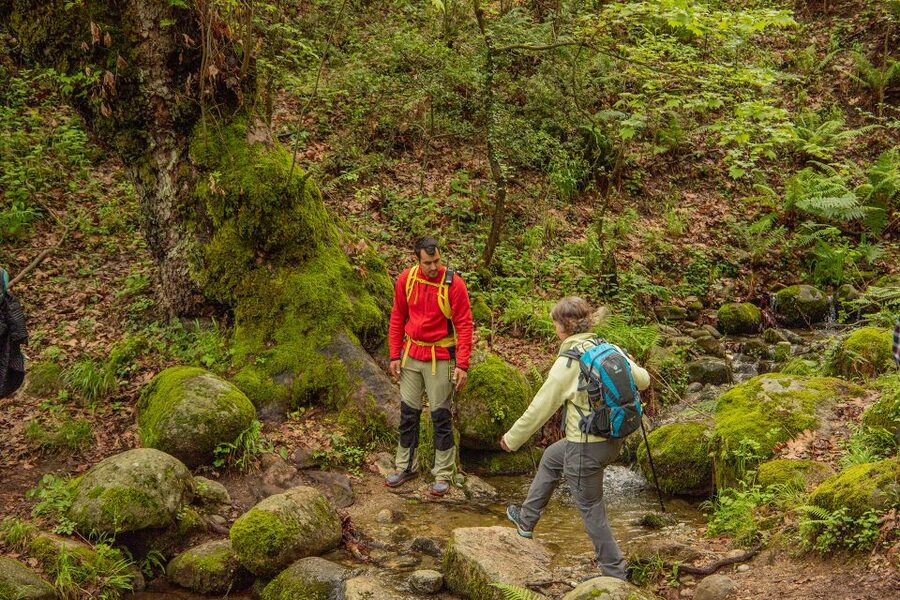
From Kastraki Square, the trail continues toward Dupiani Hermitage. This part of the walk is where you start to understand Meteora’s scale. The monasteries are not just buildings sitting on cliffs. They are built into an entire rock system, and the route uses that geography.
On the way, you pass below the ruined Pantokratoros Monastery on the north side of Dupiani’s rock. Ruins like this can be easy to ignore if you only think in terms of “what’s open today.” With a guide, the ruins become a timeline, a hint that faith here has always had to adapt to hardship and conflict.
This stretch also gives you practical value. You learn what footing feels like on these trails. Some sections can be rocky, and the surfaces can change quickly. If you have any concerns about shoes, this is the time you’ll notice them, so it pays to start with proper closed-toe footwear.
Ypapanti Monastery and the ruins of St. Dimitrios from the 1808 uprising
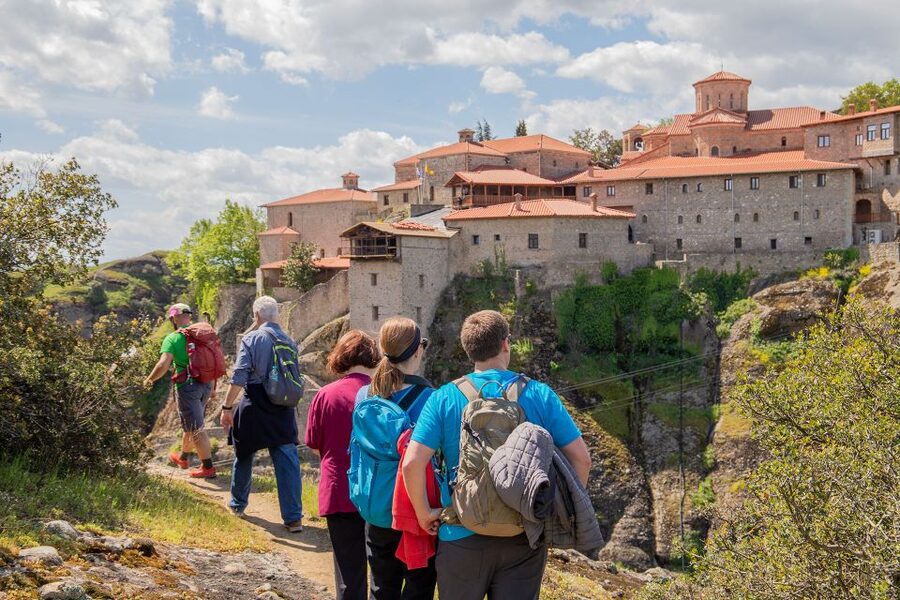
Next you arrive at Ypapanti Monastery and the nearby ruins of St. Dimitrios. The ruins are especially interesting because they link the landscape to real local events, including a story about a monastery destroyed by the Ottomans in 1808 during a local uprising.
I like this stop because it balances the “wow” factor with context. Meteora is dramatic, yes, but the day becomes more meaningful when you understand what was happening around these places. You are not just walking through rocks. You are walking through layers of human life.
You also get a better sense of how the Eastern Orthodox monastic world fits into Greek history. The guide can point out what you might miss on your own, like how locations and sightlines reflect survival needs and religious purpose.
Climbing toward Great Meteoron or Varlaam, plus the best vantage points
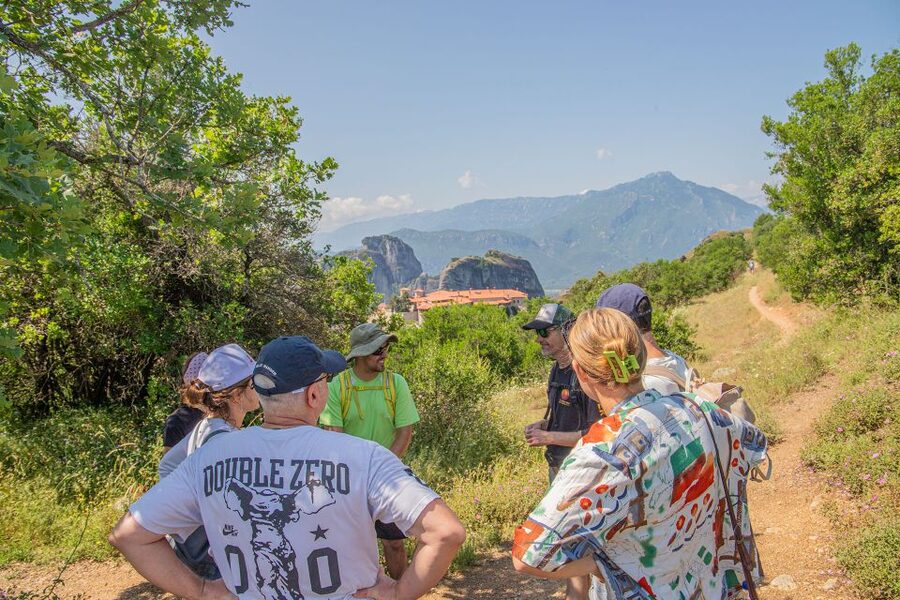
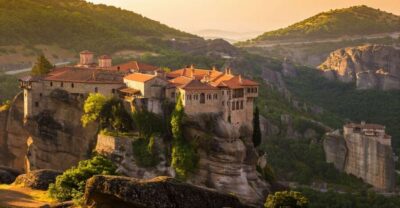
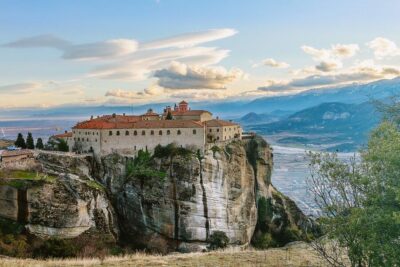
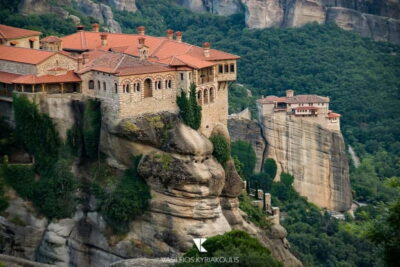
The core of the tour is the ascent toward the major monasteries: Great Meteoro (Great Meteoron) and Varlaam, two of the six Eastern Orthodox monasteries in the Meteora area. They sit within the UNESCO Meteora World Heritage Site.
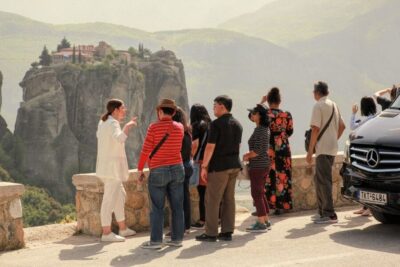
Here’s the sweet spot. You walk up through the hills and rocks, then reach vantage points where the monasteries finally look like the photos. It is one thing to see a towering complex from afar. It is another thing to approach it step by step and then stand where the views make sense.
On the monastery visit portion, your time is usually about an hour. You tour the grounds, and you can explore at your own pace for that entry window. Entry fees are typically not included, and the cost is about €5 per person per monastery. Since you are bringing cash anyway, this is an easy add-on to plan for.
One practical note from the hiking reality: ascents tend to be manageable, but descents can feel harder. I’d treat this as an “active walk” day, not a stroll, especially if you’re not used to steep trails or uneven steps.
More monasteries and Byzantine churches
- Meteora: Sunset Small Size Tour with Monastery & Caves visit★ 4.9 · 171 reviews
- Athens to Meteora: Monasteries & Hidden Caves Bus Tour★ 4.7 · 141 reviews
- Meteora: Monasteries Tour, Lunch, and Athens Transfer Option★ 4.8 · 102 reviews
- Kalabaka: Meteora Monasteries Minibus Tour with Photo Stops★ 5.0 · 74 reviews
Great Meteoron vs Varlaam: what you should watch for
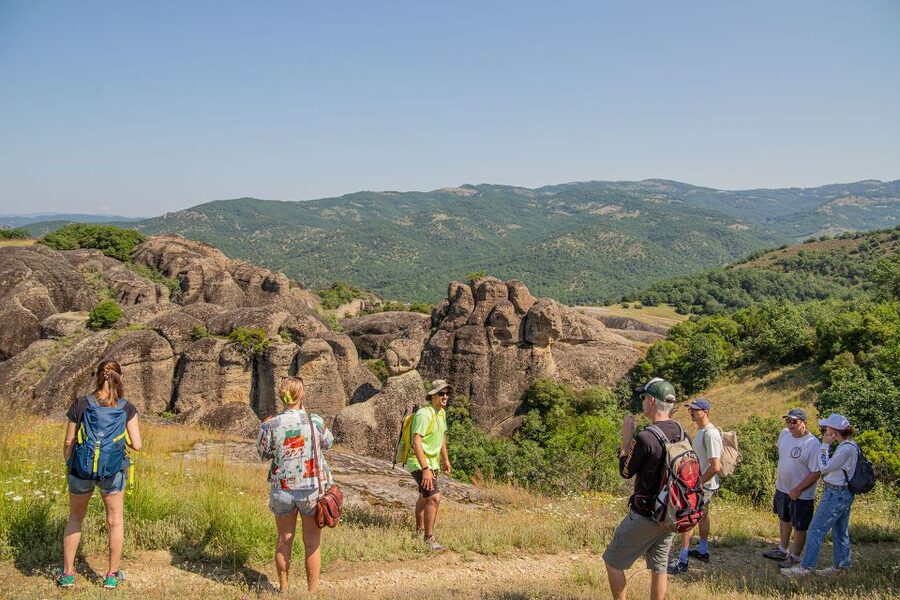
The tour experience usually centers on one monastery visit, either Great Meteoron or Varlaam, depending on the day’s plan. Both are worth your attention, but the experience feels different because the approach and surrounding viewpoints shift.
Varlaam, in particular, matters because the day includes a later descent from it to the St. George stop. That means you are not just climbing to see Varlaam, you are also using it as a turning point in the hike loop.
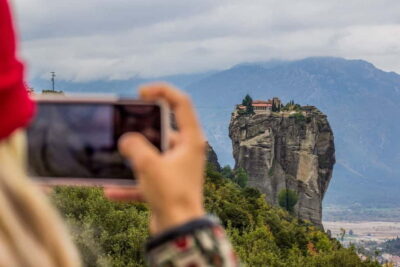
If you care about photos, this is where your guide becomes valuable. They can point out angles and landmarks so you are not wandering around trying to figure out where your best shot is.
And if you are curious about wildlife, keep your eyes open. Some guides highlight small animals and reptiles along these paths, so you might spot things beyond the monasteries if you look down and not just out.
St. George the Madilas: a cultural stop beyond the big monasteries
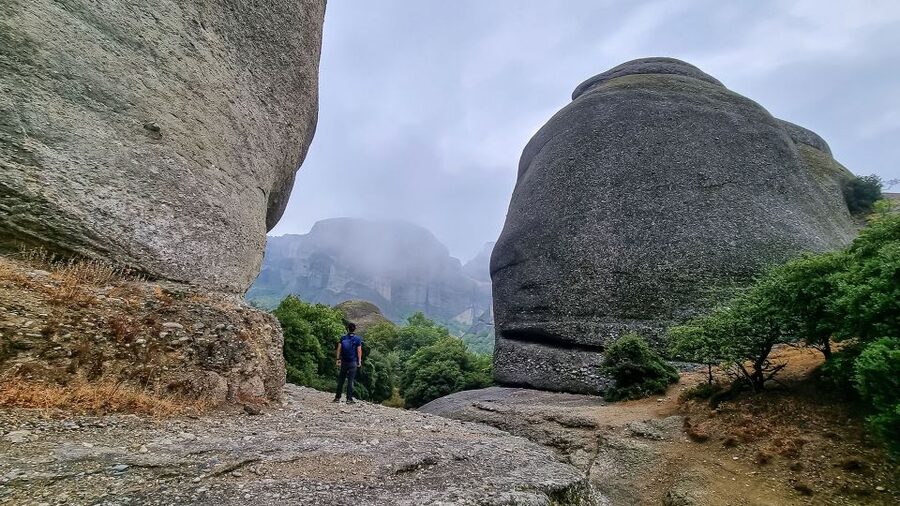
After the main monastery time, the tour heads down from Varlaam to St. George the Madilas. This stop is a reminder that Meteora is not only about the big, iconic monasteries on the cliffs.
At St. George the Madilas, you visit the area tied to a tradition where local children climb using a rope to dedicate offerings to St. George. Whether you see a live event or not, the point is the place and the ritual meaning behind it.
I love stops like this because they help you connect with local practice, not just architecture. It also helps the day feel complete. Once you have climbed, toured, and looked at stone towers, it is refreshing to end with a human tradition that makes the rocks feel even more alive.
What matters inside the monasteries: entry fees, guides, and dress code
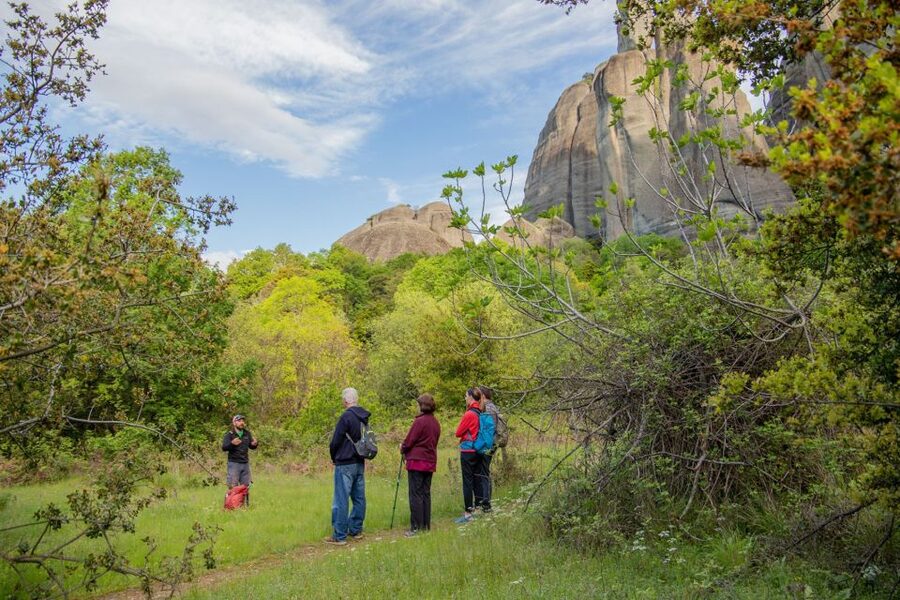
You get a guided overview for the hike and key parts along the way. Inside the monasteries, your guide assistance is more limited, since the included guide time typically does not cover guiding inside the monastery spaces.
So plan to read, look closely, and ask questions when your guide is with you. Your map and your route knowledge will help you move around without feeling lost.
Also, dress rules are real here. The tour information says sleeveless shirts are not allowed, and you should avoid anything too casual like sandals or flip-flops. Bring a light layer for warmth and for shoulders. Even if you think it will be hot, you will thank yourself once you are standing in sun and stone.
Price and value: what $35 includes and what you must budget for
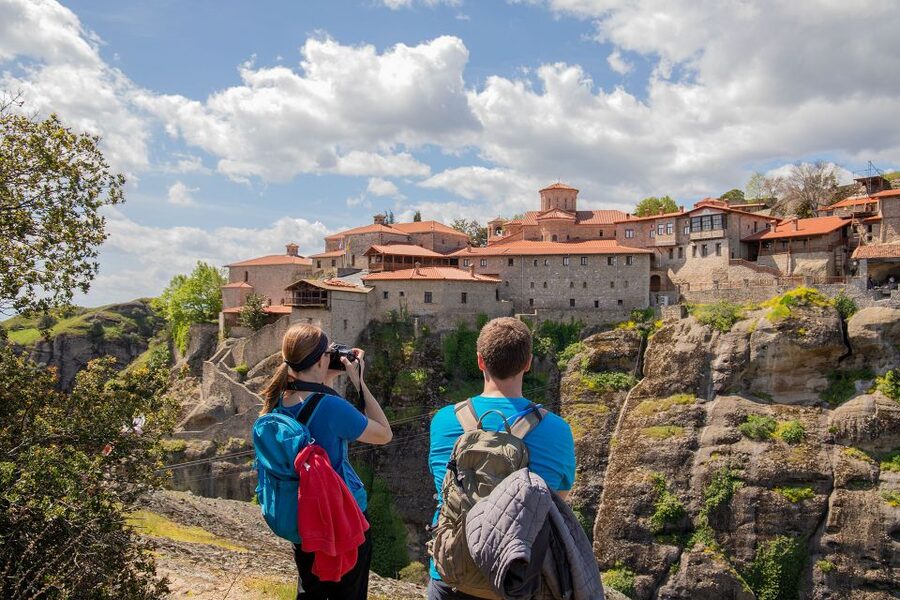
At around $35 per person, this tour is strong value for a half-day experience in one of Greece’s most photo-drenched places. The big reason is what’s included: pickup and drop-off from Kalabaka, a mountain guide, a map, and a bottle of water.
The things that are not included are also clear, and that transparency helps. Monastery entry fees are extra, about €5 per person per monastery, and food is not specified. If you want a snack plus a drink, bring your own.
In practice, this price structure usually makes sense if you are doing Meteora for the first time and you want a guided route you would not confidently piece together on your own. It also works well if you want one monastery visit without feeling like you must see all six in one day.
Hike difficulty and what to bring so it stays fun
This is not a wheelchair-friendly day. It is also not a low-fitness day. The tour is not suitable for people with mobility impairments, and it is not recommended for people with heart problems or for those with low fitness.
But that does not mean it is extreme for everyone. Many hikers describe it as mostly easy in places, with a few harder bits. The key is that you are dealing with rocky ground, some steep steps, and a descent that can feel tough if your shoes are slippery.
Bring:
- Comfortable shoes with good grip (closed-toe, no flip-flops)
- A hat
- Snacks (food is not included)
- Comfortable clothes
- Cash for monastery entry
Also, start early and hydrate. Even though a bottle of water is included, the day can be warm, and you will work harder than you expect while walking between viewpoints.
Guide quality: why names like Christos and Evan keep coming up
One of the most praised parts of this experience is the guide. Different names show up, but the pattern is consistent: guides like Christos, Evan, Dimitri, and Chris (and variations of that name) make the hike feel interactive instead of just instructional.
What you want from your guide in Meteora is simple:
- Help spotting what to look at in monasteries, not just where to stand
- Storytelling that connects the rock formations, myths, and Eastern Orthodox traditions
- A pace that suits different fitness levels in the group
- Practical support for comfort, like rest stops and flexibility
If you like learning while you move, this tour delivers. And if you prefer fewer lectures and more walking, a good guide can still keep explanations short and relevant to the next view.
Who this 5-hour Meteora hike suits best
This is best for people who want a walk that feels purposeful. If you enjoy scenery that you earn, and you like history that is tied to real places, this hike fits well.
It also suits you if you want a calmer way to see Meteora. The route is designed to take you between key points and viewpoints without only doing the quick “drive up, walk 10 minutes, drive away” routine.
It may not suit you if:
- You are under 7 years old
- You have mobility impairments
- You have heart problems
- You have low fitness
- You are visually impaired
If you fall into any of those groups, you will likely feel stressed on the trail. For those cases, consider a gentler Meteora option.
Should you book this Meteora small-group hike?
Yes, if you want Meteora in a way that feels physical, guided, and worth the effort. This tour gives you close-up rock paths, one major monastery visit (Great Meteoron or Varlaam), and a memorable extra stop at St. George the Madilas.
Book it especially if you care about value. For about $35, you get the guide, water, and transport plus a route that would be hard to self-navigate well on your first visit.
Skip it if you cannot handle steep, rocky walking, or if you are counting on the day to be gentle and flat.
FAQ
How long is the Kalabaka to Meteora hiking tour?
The tour duration is 5 hours.
Where does pickup happen?
Pickup is from Kalabaka, with pickup included from selected hotels and guesthouses in the area.
How much hiking is included?
The day includes hiking time in Meteora across about 2.5 hours and another 1 hour, plus photo stops.
Which monastery will I visit?
You will visit 1 monastery of the 6 in the area, usually either Great Meteoron or Varlaam, and you will have about an hour for that visit.
Are monastery entry fees included?
No. Monastery entry fees are not included, and the fee is listed as about €5 per person per monastery.
What is included in the price?
Pickup and drop-off, a mountain guide, a map, and a bottle of water are included.
What should I bring?
Bring comfortable shoes, a hat, snacks, comfortable clothes, and cash.
Is there a cancellation policy?
Yes. Free cancellation is available up to 24 hours in advance for a full refund.
Every Other Kalabaka Write-Up

Monasteries and Byzantine Churches
The Meteora Rocks, More Visits
Everything else we have written up around Kalabaka
Meteora Monastery Tours, side by side.
 ★ 4.8Thessaloniki: Full-Day Bus Trip to MeteoraFrom $583,471 reviews
 ★ 4.7Athens: Meteora Monasteries Day Trip with Caves and LunchFrom $662,964 reviews
 ★ 4.8Athens: Meteora Monasteries Day Tour with LunchFrom $652,196 reviews
 ★ 4.8Athens: Meteora Tour with Local Guide and Greek LunchFrom $631,561 reviews
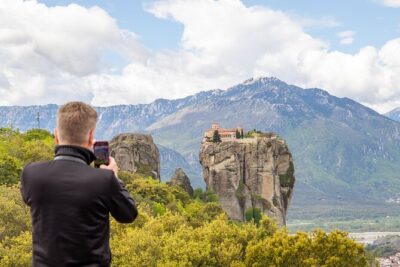 ★ 4.5Athens: Meteora Monasteries, Caves & Coastal Stopovers with LunchFrom $881,432 reviews
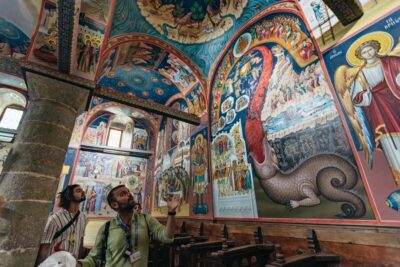 ★ 4.5From Athens: Delphi and Meteora 2-Day Guided TourFrom $271825 reviews
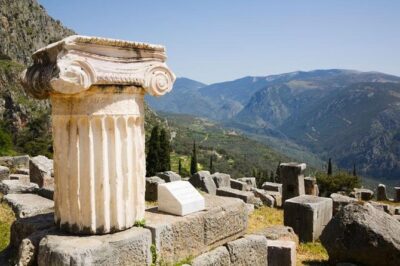 ★ 4.54-Day Classical Greece Tour: Epidaurus, Mycenae, Olympia, Delphi, MeteoraFrom $766732 reviews
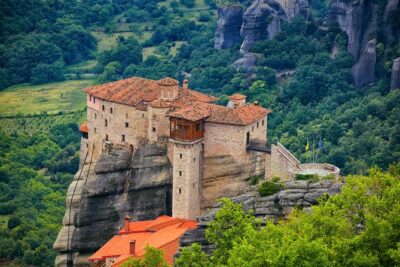 ★ 4.5Athens: Meteora Monasteries, Hermit Caves Tour with PickupFrom $87724 reviews
Sits on these lists