
Review · METEORA MONASTERY TOURS
Meteora: Majestic Sunset Tour & Monasteries with Local Guide
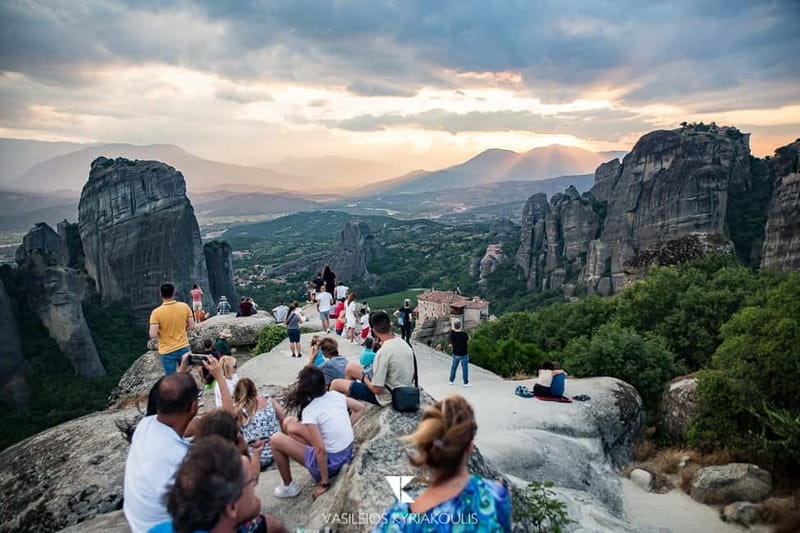
Meteora at sunset hits different. This 4-hour, small-group tour lines up the best viewpoints and pairs them with real context: you visit major monasteries, the Byzantine Church in Kalampaka, and the Badova hermit caves with an English-speaking local guide plus a free smart audio guide. I especially like how it saves you from the headaches of driving and parking, but do remember monastery and church entry fees are extra and cash-only, and you must dress properly for the religious sites.
You start with hotel pickup in Kalabaka or Kastraki and then move through the rock complex in a comfortable, air-conditioned minibus. The tour is built for one big goal, watching the sun settle over the towers of stone, from the most panoramic spot they use, while still squeezing in enough sightseeing that you leave with a strong sense of how Meteora worked, and why.
In This Review
- Key highlights worth planning for
- Why This Meteora Sunset Tour Works So Well in 4 Hours
- Hotel Pickup, Air-Conditioned Comfort, and a Real Small-Group Feel
- Monastery of St. Stephen: A Strong First Stop for Timing and Views
- Kalampaka Old Town Church Stop: The Byzantine Layer and Apollo Connections
- Badova Hermit Caves: A Different Side of Meteora
- Seeing All 6 Monasteries, Plus Going Inside 1 or 2
- Free Smart Audio Guide: How to Use It Without Fuss
- Photo Stops and the Best Sunset Timing
- Price, Entry Fees, and What the Deal Really Includes
- Dress Code and Practicalities That Matter at Meteora
- Who Should Book This Sunset and Monasteries Tour
- Should You Book This Meteora Thrones Sunset and Monasteries Tour?
- FAQ
- How long is the Meteora sunset tour?
- Where does the tour pick up and drop off?
- What do I need to pay separately?
- Does the tour include the monasteries inside?
- Is the sunset included?
- Do I need the audio guide equipment?
- Is this tour suitable for people with mobility impairments?
- Are there specific days and start times in summer?
Key highlights worth planning for
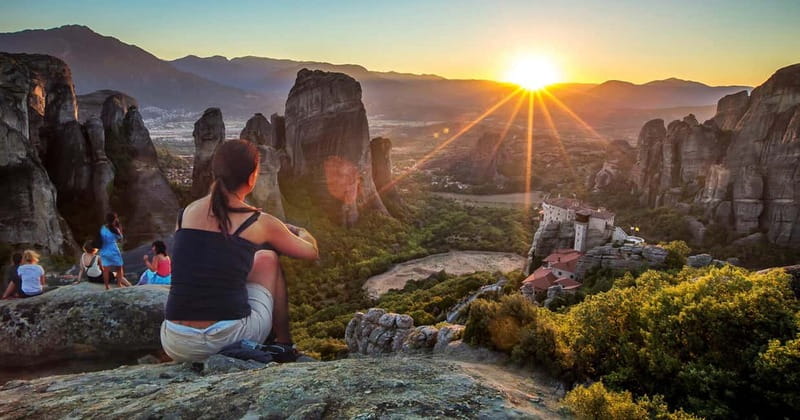
- Panoramic sunset viewpoint, timed for one of the best moments in Meteora
- All 6 monasteries seen, plus the chance to go inside 1 or 2
- Badova hermit caves, reachable by clever stops you probably would not find alone
- Byzantine Church in Kalampaka old town, tied to the area’s older layers of worship
- Free smart audio guide, with smartphone support for multiple languages
- Hotel pickup and small-group pacing, so you spend less time wrestling with traffic
More ways to see the Meteora rocks and monasteries
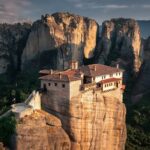
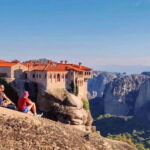
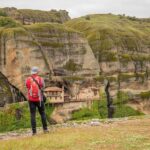
Why This Meteora Sunset Tour Works So Well in 4 Hours
Meteora is the kind of place where you can spend an entire day and still feel like you only scratched the surface. This tour takes the pressure off by doing the core jobs for you: orientation, key stops, and then the payoff at sunset. In other words, you get the rocks and you get the stories, without needing a car and a full day.
The biggest win is pacing. You get multiple photo stops and scenic viewpoints along the way, but the tour does not feel like a fast shuffle where nothing sinks in. And because it is a small group in an air-conditioned minibus, you can focus on your camera, your questions, and keeping your energy for the sunset.
One more practical plus is the way the audio guide supports the physical sites. You do not just walk into a monastery, you learn what you are looking at, from your phone through earpads.
Hotel Pickup, Air-Conditioned Comfort, and a Real Small-Group Feel
If you are staying in Kalabaka or Kastraki, this is a big convenience: pickup happens directly from your hotel area. That matters here, because the Meteora rock complex involves narrow roads and lots of sudden viewpoints where parking can be a hassle. With the minibus handling the transfers, you avoid that stress and keep your time for sightseeing.
The tour is described as a small group, and you can feel it in how the schedule flows from stop to stop. It is also helpful if you want the option to ask the guide a question without yelling over a crowd. Several guide names show up in the experience, like Maria, Chris, Clement, Antonio, Dimitri, and Demetrius, and that local familiarity is part of why the stops feel connected instead of random.
There is also a practical note for those with mobility concerns: the tour is not suitable for people with mobility impairments, so think carefully if walking stairs, uneven steps, or steep paths are a problem for you.
Monastery of St. Stephen: A Strong First Stop for Timing and Views
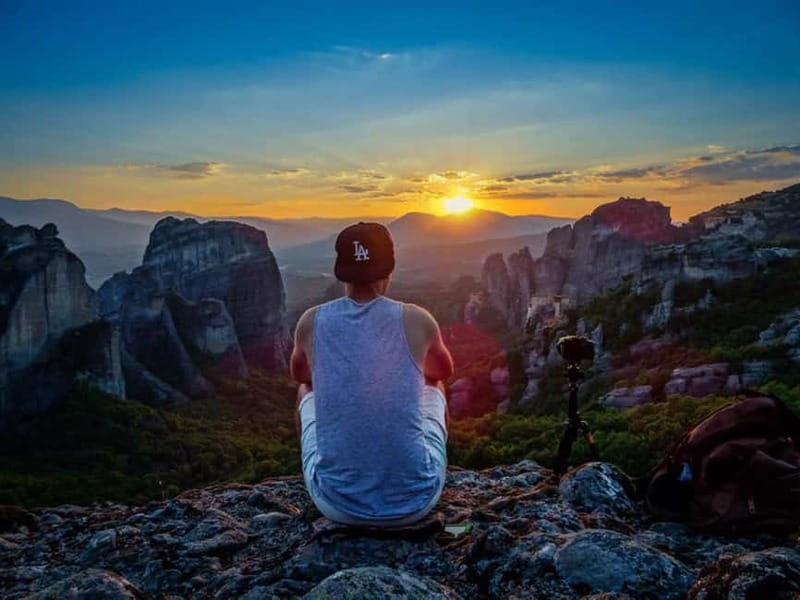
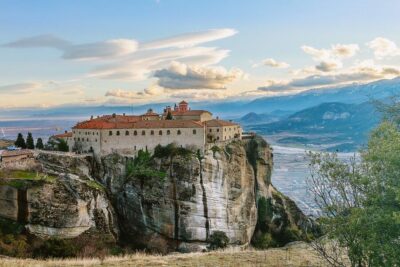
The day starts with a stop at the Monastery of St. Stephen. You get a photo stop, time to visit, and sightseeing time that is long enough to look around without feeling rushed.
This is usually a smart early choice because different monasteries close at different times. In practice, St. Stephen tends to be one of the later openings compared to the rest, which can help you get inside at least one site before the midday cutoffs. If you are aiming to see something interior rather than just viewpoints, the scheduling advantage is real.
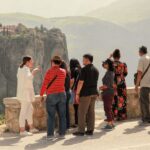
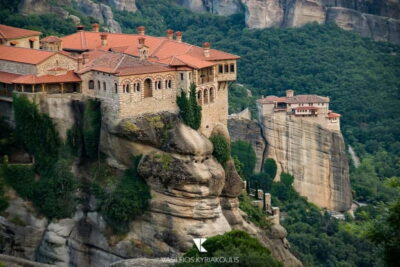
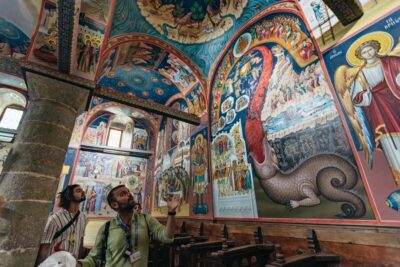
Inside monasteries, you are dealing with rules and crowd dynamics. The guide and the audio support help you get oriented fast, so you know where to look and what details matter. And because the monasteries sit on tall rock pillars, the sense of scale can hit you as you step onto the pathways. Meteora is dramatic outside, but the interior adds another layer, especially in the way the space is shaped around worship and community life.
Kalampaka Old Town Church Stop: The Byzantine Layer and Apollo Connections
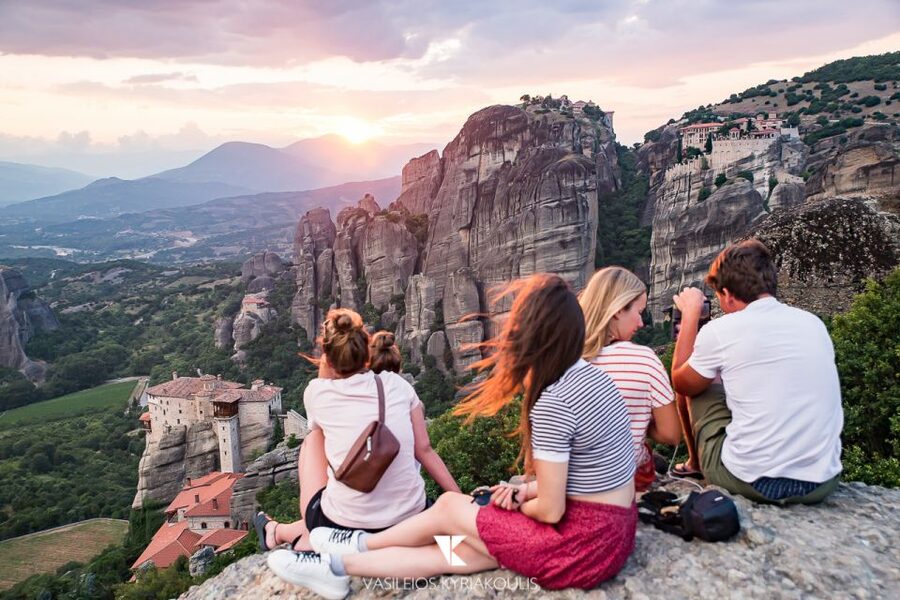
Before you head deeper into the rock complex, the tour includes time for the Holy Church of the Dormition of the Virgin Mary in Kalampaka old town. This stop is both visual and historical.
One of the more interesting pieces of context here is the connection to earlier worship in the area. The church site used to be an ancient temple dedicated to Apollo, so you are seeing a layer cake of belief, where one sacred use shifts into another. Even if you are not a history nerd, that makes you look at the church with a different brain.
This stop is also a good breather. You switch from steep monastery terrain to a town church setting, then you head back to the cliffs with fresh energy. Plus, it is a chance to stretch your legs and grab quick photos from town streets before the focus shifts back to the monasteries and caves.
Badova Hermit Caves: A Different Side of Meteora
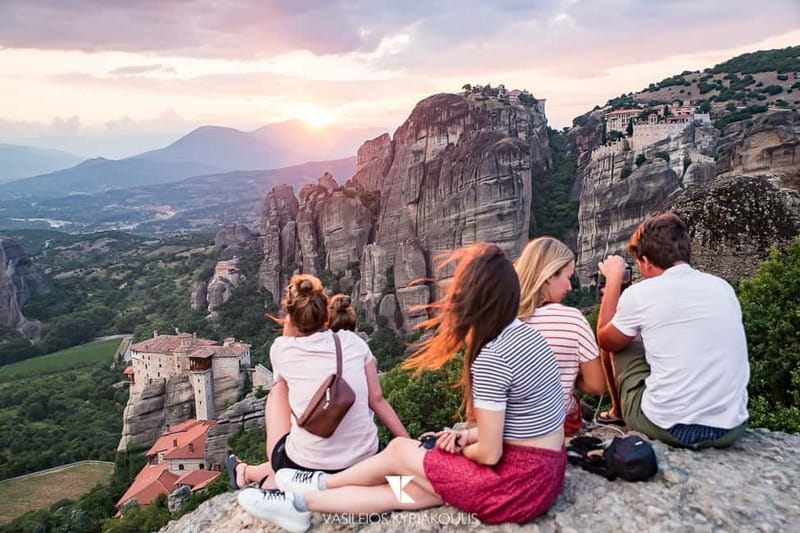
Later, you encounter the Hermit Caves of Badova, the kind of place that turns Meteora from scenic to story-driven. These caves are carved into the cliffside, used by hermits who sought solitude high above the modern noise.
What I like about this inclusion is that it breaks the pattern of monastery after monastery after monastery. The caves make you think about survival, isolation, and devotion. You are not only looking at architecture perched on rock, you are learning about why people would risk everything to live in places that are hard to reach.
The tour frames these caves with history and context so you are not just standing in front of openings in rock. You learn what the hermit life meant in this setting, and that helps the caves feel like part of the bigger Meteora story, not a random add-on.
If you want a Meteora experience that feels textured instead of repetitive, the Badova caves are a key reason to pick this tour.
Other boats out for the last of the light
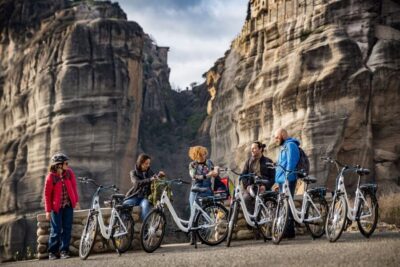
- Meteora Sunset Tour on E-bikes★ 5.0 · 54 reviews
Seeing All 6 Monasteries, Plus Going Inside 1 or 2
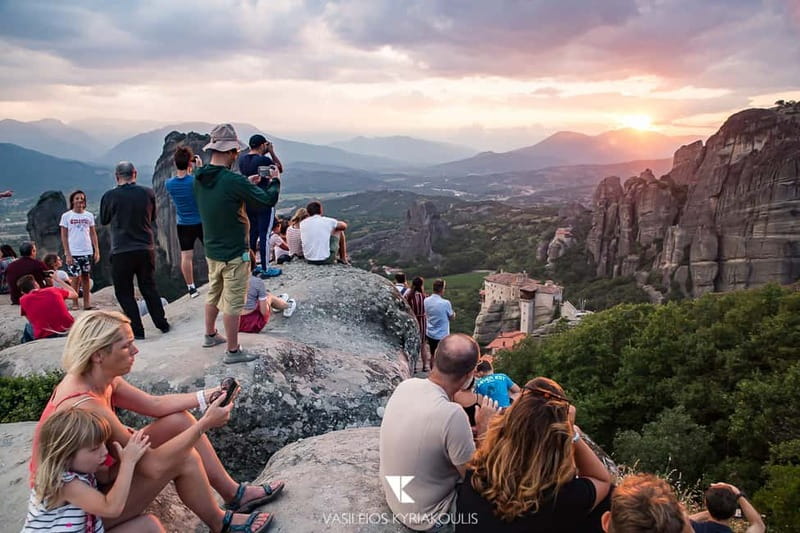
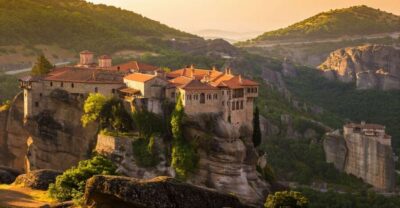
One promise that matters a lot here is that you will see all 6 Meteora monasteries. That usually means you get guided views of each one as part of your time at Meteora itself, not just glimpses from one angle.
Then comes the practical reality: you will have the chance to visit 1 or 2 monasteries inside, depending on the period and timing. This is exactly what you should expect in a place where hours can vary and some monasteries are closed earlier. The good news is that even with only one or two interiors, you still get the full map of the site from multiple perspectives, and you are guided so you understand what each monastery represents.
Here is how to think about it as a value decision. If you only have half a day, you do not want to bet everything on one monastery. You want coverage. This tour gives you coverage, and it also gives you interior access when the timing lines up.
Also, you will not just be dumped at a viewpoint. You get guided time at Meteora, time for scenic stops along the way, and enough duration to absorb the place.
Free Smart Audio Guide: How to Use It Without Fuss
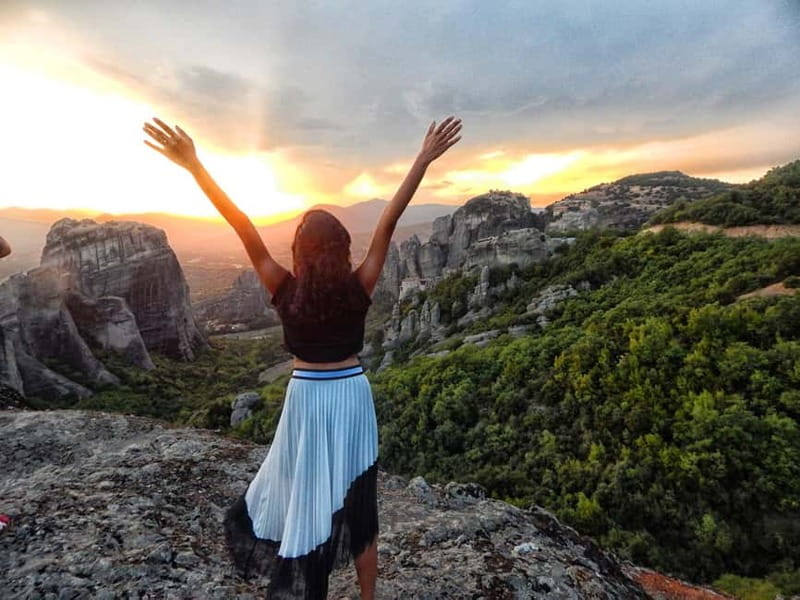
This tour includes a smart audio guide you can use inside monasteries and at 11 points of interest. You are told to bring earpads and a smartphone, which is a small thing that makes a big difference. If you show up with your phone but no earpads, your experience can go from smooth to annoying fast.
The audio guide is offered in a wide range of languages, including English, Spanish, French, Italian, German, and more. You can keep the volume and pace in your control, which is handy because monasteries often involve slow walking, stairways, and quiet spaces where it is not practical to have the guide always right next to you.
My advice: test your audio before you start moving between sites. Earpads, enough battery, and the right language means you will actually use the guide, instead of fighting with it while the sun is doing its thing.
Photo Stops and the Best Sunset Timing
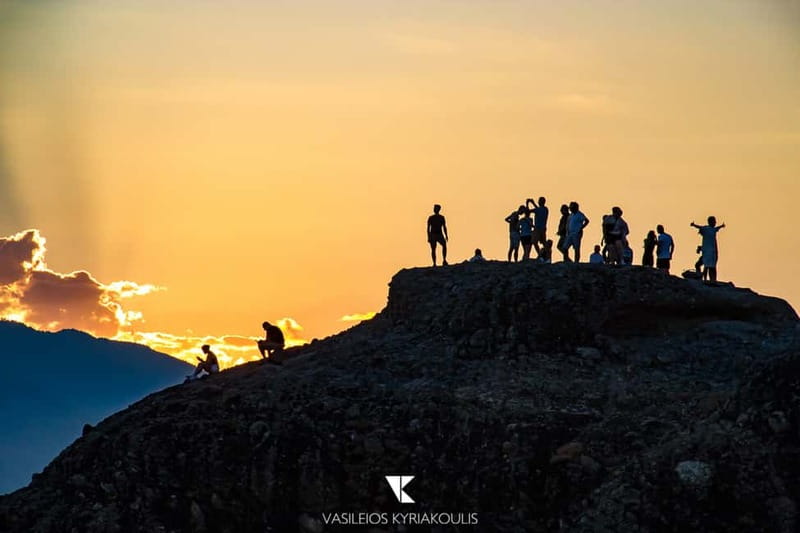
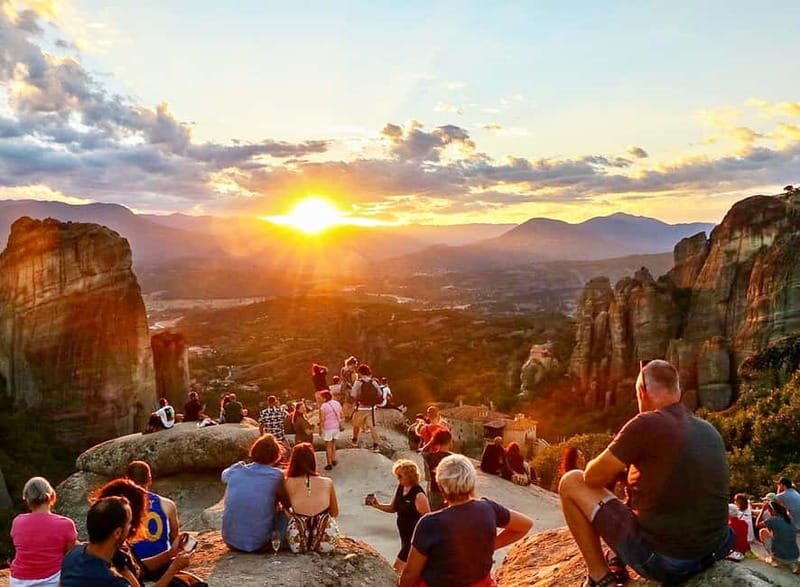
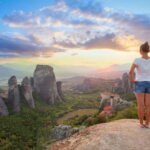
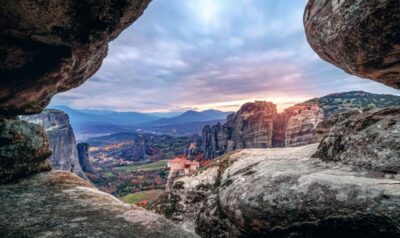
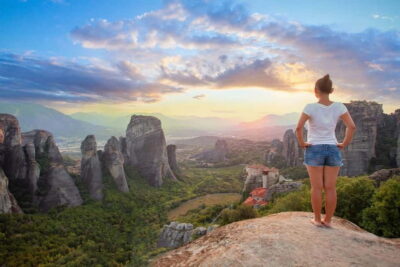
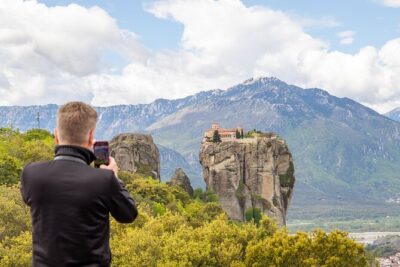
Meteora sunset is not just a pretty backdrop. The rock towers change color as the light shifts, and that is the moment when your photos go from nice to memorable.
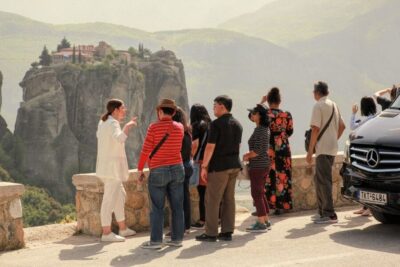
This tour builds toward that. You get several stops for photos before the big moment, then you finish at the most panoramic sunset viewpoint used on the route, with about 30 minutes of sunset time for sightseeing and photos.
Two practical tips if you want the best shots:
- Be ready for fast lighting changes. When the sun dips, your shadows and color shift quickly.
- Cloud cover happens. The tour can still work on a cloudy day because the rocks keep their shape and texture, but you should not expect a perfect bright-orange sky every time.
If you are someone who wants a guided schedule for sunset rather than wandering around hoping for the best, this structure is a plus. You get a place to stand, and you get the time window to watch the sun settle.
Price, Entry Fees, and What the Deal Really Includes
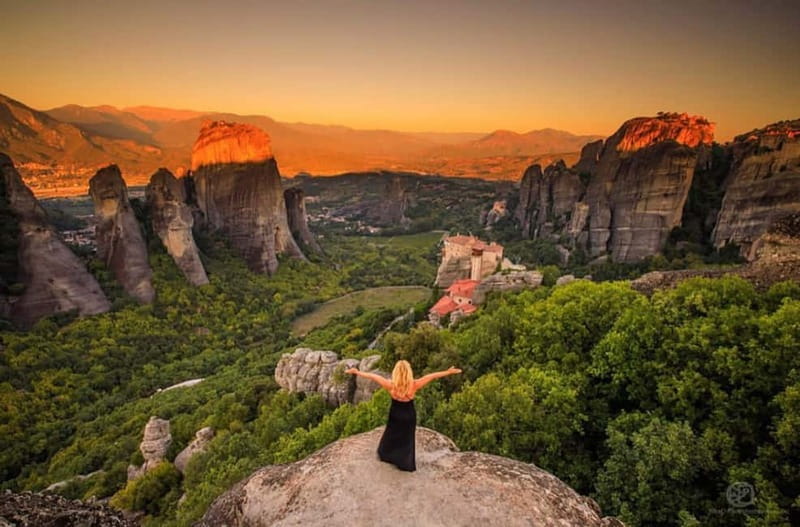
The price is listed at $28.46 per person for a 4-hour experience. That can feel surprisingly low for a tour with hotel pickup, a local guide, and guided access to multiple major stops. The value comes from what is included versus what is not.
Included highlights:
- Hotel pickup and drop-off in Kalambaka or Kastraki
- Small group transport in an air-conditioned minibus
- Local English-speaking guide (and live guide options are listed)
- Free smart audio guide with multiple languages
- See all 6 monasteries, plus interior access to 1 or 2
- Visit the Byzantine Church in Kalampaka old town
- Discover the Badova hermit caves
- Free WiFi and a panoramic Meteora map
Not included:
- Monastery entry fees: €5 per person per monastery, paid in cash
- Byzantine church entry fee: €2 per person, paid in cash
- Meals and drinks
So, what you need to budget is not just the $28.46. If you enter two monasteries, that is two monastery fees plus the church fee. The cash-only part is important, so make sure you have the right coins or bills before you start climbing stairs.
Still, even with entry fees, this tends to be good value compared to the cost of doing the same sites on your own without paying for transport, guide support, and the audio interpretation.
Dress Code and Practicalities That Matter at Meteora
You cannot show up in beachwear and expect to enter. The tour clearly states clothing requirements for monasteries:
- Women must wear knee-length or longer skirts and cannot wear pants, shorts, or sleeveless shirts
- Men cannot wear sleeveless clothing or shorts
That is more than a formality. It affects what you pack, how fast you can move, and whether your day feels smooth or stressful.
Also bring:
- Earpads for the audio guide
- A smartphone with enough battery for audio and photos
- Layers if evenings feel cool, since you are watching sunset and the temperature can drop after the heat of the day
One more note: you are told the tour is not suitable for mobility impairments, so the physical side matters.
Who Should Book This Sunset and Monasteries Tour
This is a strong fit if you want:
- A guided overview that helps you make sense of Meteora quickly
- Sunset without driving or parking headaches
- To see the main monasteries, plus an extra stop with character in the Badova caves
- A tour length that works even if you have limited time in Thessaly
It is especially good for families, because the duration is short and the pacing has enough stops to keep kids and teens interested. It can also work well for mixed ages since pickup and small-group comfort reduce fatigue.
You might want to choose something else if:
- You cannot handle stairs and uneven monastery paths (the tour is not suitable for mobility impairments)
- You hate dress rules for religious sites
- You want a long, slow monastery-only day without town and cave stops
Should You Book This Meteora Thrones Sunset and Monasteries Tour?
If your main goal is to see Meteora properly in a half day, I think this is a smart booking. You get panoramic sunset time, guided context across multiple key locations, and transportation handled for you. The inclusion of Badova hermit caves is a real upgrade if you want more than the usual monastery checklist.
Before you book, do the math on the entry fees, plan on cash, and check that the dress code works with what you packed. If you do those two things, you will likely feel like you spent your time well, not just watched rocks go by.
FAQ
How long is the Meteora sunset tour?
It runs for 4 hours.
Where does the tour pick up and drop off?
Pickup and drop-off are available for hotels in Kalambaka or Kastraki. The tour also lists additional pickup and drop-off location options including Trikala and Kastraki, and Kalabaka.
What do I need to pay separately?
Monastery and church entry fees are not included. Monastery entry is €5 per person per monastery, and the Byzantine Church of the Virgin Mary entry is €2 per person, paid in cash.
Does the tour include the monasteries inside?
The tour includes visits to all 6 monasteries, with the chance to enter 1 or 2 monasteries, depending on the season and timing.
Is the sunset included?
Yes, the tour includes time at a panoramic Meteora sunset viewpoint.
Do I need the audio guide equipment?
Yes. You will need a smartphone and earpads to use the smart audio guide.
Is this tour suitable for people with mobility impairments?
No. It is listed as not suitable for people with mobility impairments.
Are there specific days and start times in summer?
From June to August, every Monday the tour starts at 4:00 PM.
Monasteries and Byzantine Churches
Out For the Last of the Light
The Meteora Rocks, More Visits
Everything else we have written up around Kalabaka
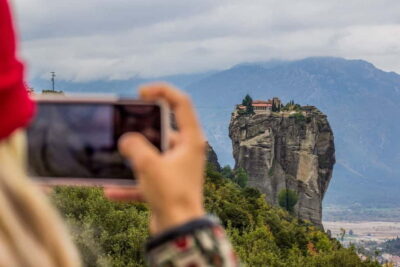
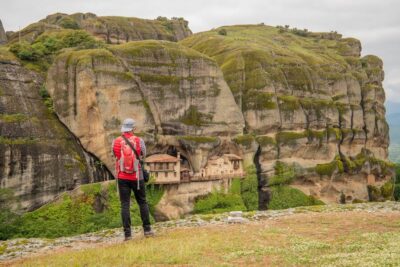
Meteora Monastery Tours, side by side.
 ★ 4.8Thessaloniki: Full-Day Bus Trip to MeteoraFrom $583,471 reviews
 ★ 4.7Athens: Meteora Monasteries Day Trip with Caves and LunchFrom $662,964 reviews
 ★ 4.8Athens: Meteora Monasteries Day Tour with LunchFrom $652,196 reviews
 ★ 4.8Athens: Meteora Tour with Local Guide and Greek LunchFrom $631,561 reviews
 ★ 4.5Athens: Meteora Monasteries, Caves & Coastal Stopovers with LunchFrom $881,432 reviews
 ★ 4.5From Athens: Delphi and Meteora 2-Day Guided TourFrom $271825 reviews
 ★ 4.54-Day Classical Greece Tour: Epidaurus, Mycenae, Olympia, Delphi, MeteoraFrom $766732 reviews
 ★ 4.5Athens: Meteora Monasteries, Hermit Caves Tour with PickupFrom $87724 reviews