
Review · METEORA MONASTERY TOURS
Meteora: Panoramic Morning Small Group Tour with Local Guide
Six monasteries, one jaw-dropping morning. Meteora is a UNESCO World Heritage Site perched on giant rock pillars, and this 4-hour half-day tour is built for maximum viewpoints with a local English guide.
I especially like the small-group air-conditioned minibus setup, which keeps things calm and lets you actually hear the story. I also like that you see all 6 active monasteries from strategic angles, while entering 3 of the most popular ones.
One thing to plan for: there’s a lot of walking and stairs, plus strict monastery clothing rules, and entrance fees are extra in cash.
In This Review
- Key highlights you will feel right away
- Why Meteora looks different in the morning
- How the tour route works from Kalabaka or Kastraki
- Panoramic photo stops, plus the Hermit Caves
- Entering St. Nicholas Anapavsa, a quick orientation stop
- Great Meteor Monastery: the biggest interior visit of the morning
- Varlaam Monastery: strong time for photos and context
- Rousanou Monastery: the shorter interior visit that still matters
- The outside viewpoints: Holy Trinity and St. Stephen
- Smart audio guide setup, languages, and what you need
- What to wear: the monastery dress rules you must follow
- Price and value: what $35 gets you, plus the cash entry fees
- Who should book this Meteora morning tour
- Should you book this tour?
- FAQ
- What is the duration of the Meteora morning tour?
- Where does the pickup happen?
- How many monasteries do you see, and how many do you enter?
- Is the tour guided, and in what language?
- Is there an audio guide?
- Are monastery entrance fees included?
- What should I wear to enter the monasteries?
- What is included besides the guide and transport?
Key highlights you will feel right away
- All-6 visibility: you get viewpoints for every active monastery, even the ones you do not enter.
- 3 interior visits: time inside the monasteries where you can admire priceless artifacts.
- Local English storytelling: you learn the Byzantine-era monastic history from a live guide.
- Free smart audio guide: includes 11 points of interest, in many languages.
- Photo stop heavy: frequent pull-offs and scenic breaks for your best angles.
- Hermit caves included: a lesser-seen side of Meteora added into the route.
More ways to see the Meteora rocks and monasteries
Why Meteora looks different in the morning
Meteora is famous for its rock towers, and the best way to understand the place is to see it in motion. This morning tour takes you to the viewpoints early, when the rocks still feel huge and the pace stays friendly. By late morning, Meteora can get crowded fast, so starting early is a smart move.
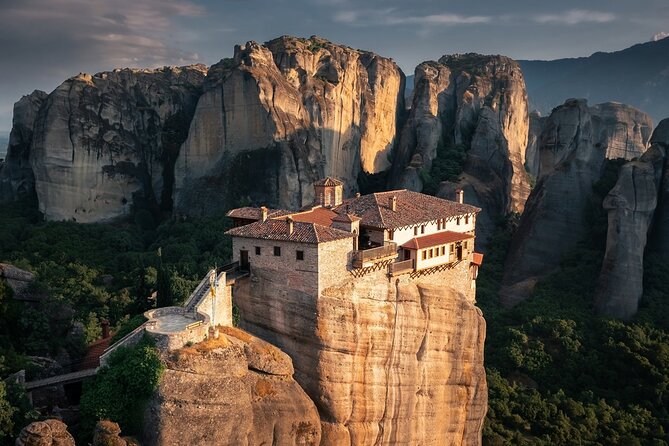
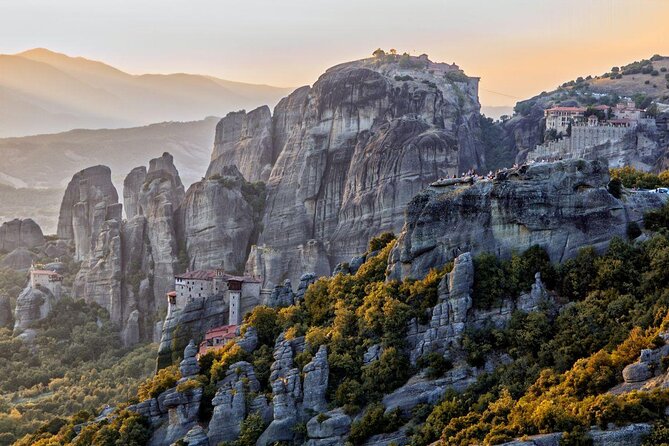
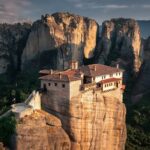
The real magic is how the monasteries sit in layers. You are not just looking at one “pretty church on a cliff.” You are seeing a whole working monastic landscape from outside, then stepping inside three of the sites to understand the life that formed here. The guide focuses on the Byzantine story and how this remote geography shaped a religious community.
This tour also has a practical feel to it: short transfers, repeated photo opportunities, and enough time at each monastery to actually take photos and look around, not just rush through.
How the tour route works from Kalabaka or Kastraki
You get hotel pickup in Kalabaka or Kastraki (the experience also notes Trikala as an option in the wider pickup area). After pickup, it is only a short drive to the Meteora area northwest of Kalabaka. Once you are there, the route is built to save time on driving while maximizing your time at viewpoints.
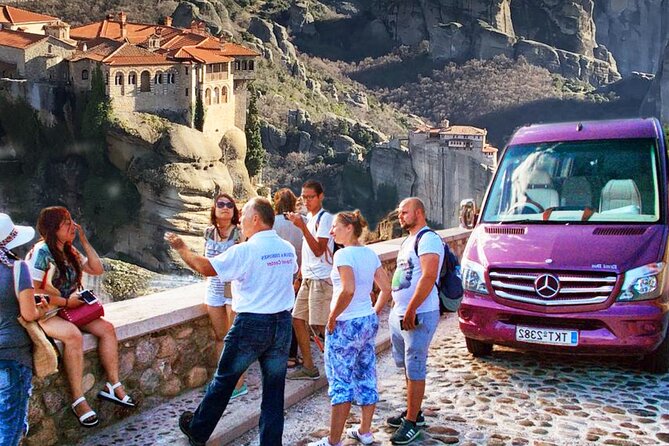
You travel in a small, air-conditioned minibus. Multiple groups describe the size as comfortably small, with some saying it stayed under about 20 people. That matters here because Meteora is all about timing. If a group is large, everyone spends more time waiting, and you lose the calm, look-and-learn rhythm that makes this site click.
Also note the tour style: the guide provides the main narration, but you are not trapped in a single-file line. Some guides do not walk fully inside every monastery space with you, so you can explore at your own speed while still having the information handled.
Panoramic photo stops, plus the Hermit Caves
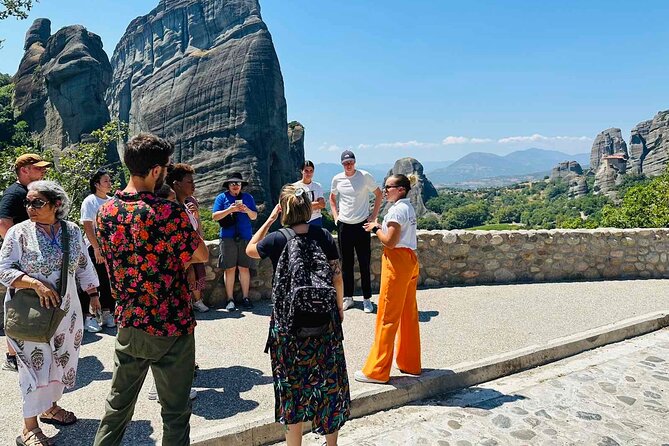
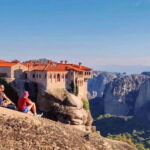
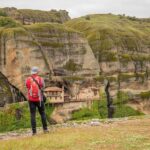
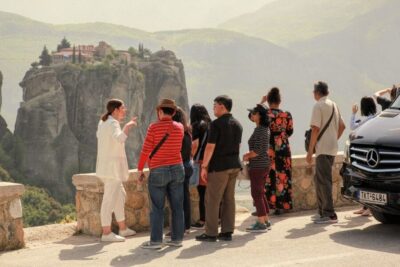
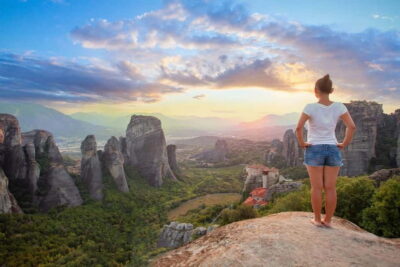
Between monasteries, the tour keeps you at the best “stop and look” points. You get frequent scenic pull-offs where you can see the rock formations and the monasteries perched along the cliff tops. These are the moments where the geography finally makes sense, because you can compare the monasteries’ heights and positions in one view.
A standout included extra is the Hermit Caves. These are the kind of side stops that make your trip feel fuller than a simple monastery checklist. Even if you only get a short visit, it adds texture to the monastic story, showing how people sought solitude in this dramatic terrain.
And yes, you will want your camera ready. The tour includes numerous photo stops, and you will likely use them more than you expect, especially for the “how did they build there?” angle shots.
Entering St. Nicholas Anapavsa, a quick orientation stop
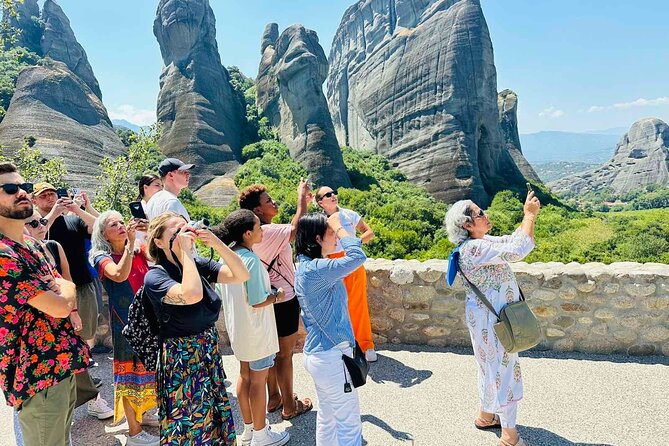
Your first named monastery stop is St. Nicholas Anapavsa. The schedule gives it about a 15-minute photo stop and sightseeing moment.
That short timing works for a reason. It functions like an orientation. You see the monastery’s setting, you get one of the first big panoramas, and you get a feel for the cliff-top layout before you move into the longer interior visits later. If you love photos, this quick stop helps you capture early context, then build better shots when you have more time.
A minor consideration: since the focus is more on viewpoints here, you may feel the time is brief. The tradeoff is that you are not wasting long stretches when the real “time inside” happens at the larger monasteries later.
Great Meteor Monastery: the biggest interior visit of the morning
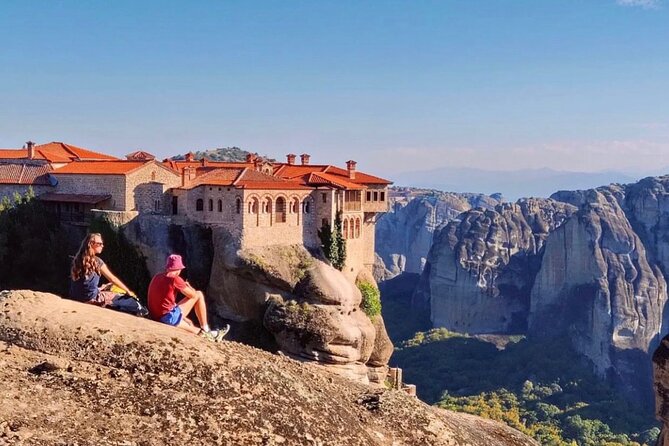
Next is Great Meteor Monastery, scheduled for about an hour with photo stops, sightseeing, and a guided visit. This is usually the headline stop because it gives you the longest time for the interior experience.
When you step into a monastery like this, the value is not just the architecture. It is how the guide connects the spaces to the Byzantine-era monastic community that formed on these rocks. You are hearing why isolation mattered, why these sites were built where they were, and how the monasteries survived through centuries on narrow ledges.
Inside, the tour format also helps. Many people like this approach because the information is handled by the live guide and supported by the smart audio guide, so you can read the space without feeling like you must follow a constant script.
Practical tip: arrive ready for lines and stairs. Even in the morning, Meteora monasteries can have foot traffic. Give yourself time to slow down once you are inside, especially for photos framed through doorways and corridors.
- From Kalabaka/Kastraki: Meteora Monasteries Morning Tour★ 4.8 · 178 reviews
- Meteora: Sunset Small Size Tour with Monastery & Caves visit★ 4.9 · 171 reviews
- Athens to Meteora: Monasteries & Hidden Caves Bus Tour★ 4.7 · 141 reviews
- Meteora: Monasteries Tour, Lunch, and Athens Transfer Option★ 4.8 · 102 reviews
Varlaam Monastery: strong time for photos and context
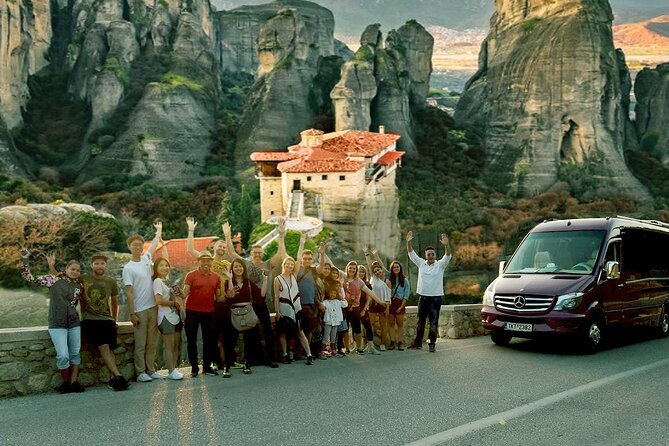
Then comes Monastery of Varlaam, with about 45 minutes for photo stop, sightseeing, and visit time. Varlaam is one of the three most popular monasteries included for interior access, so this is one of your main “walk in and look around” blocks.
This is a good point in the tour to use your audio guide. The smart audio guide is free, and it is designed to run at specific points of interest. Since you are already learning the big picture from the live guide, the audio tends to help you notice details you would otherwise miss, like how different spaces connect to the monastic routine.
You will also feel the staircase rhythm here. Multiple people mention that some monasteries involve serious steps. If stairs affect you, plan to move slowly. A little patience pays off with better viewing and less breathless rushing.
Rousanou Monastery: the shorter interior visit that still matters
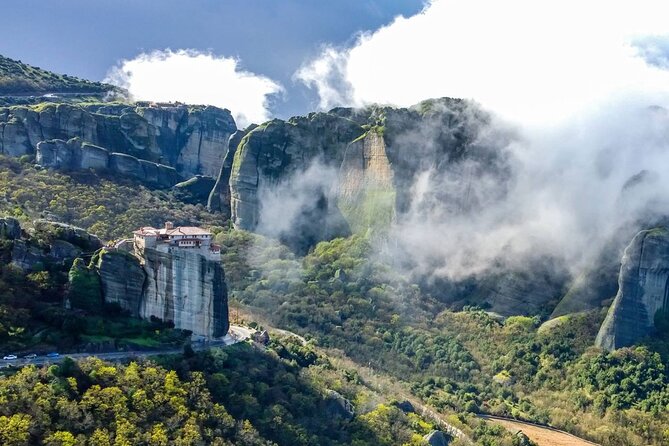
Monastery of Rousanou is scheduled for about 30 minutes. That makes it the middle interior visit in the schedule, long enough to enter and take in the atmosphere, but not so long that you feel stuck.
I like this length because it keeps your morning balanced. You get enough time to absorb what you are seeing, then still have energy for the outside viewpoints that round out the “all six monasteries” goal.
If you are traveling with family or anyone who needs breaks, Rousanou can be a nice reset point. It is still a full monastery visit, but the time window is manageable.
The outside viewpoints: Holy Trinity and St. Stephen
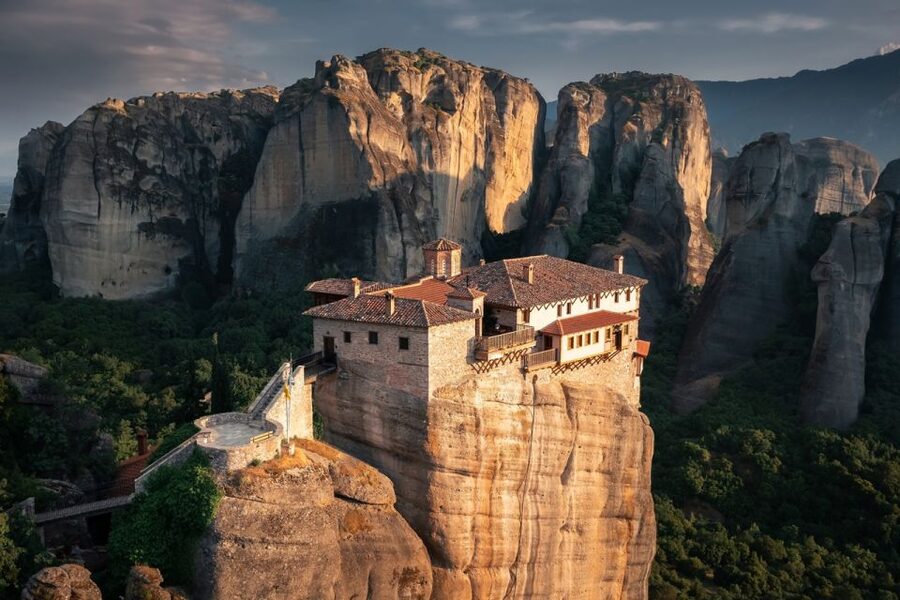
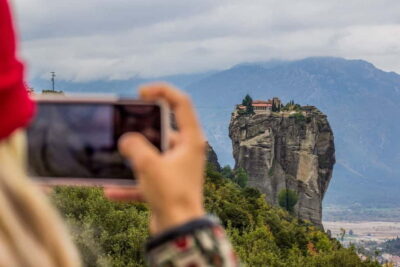
Two monasteries are included as outside photo stops: Holy Trinity Monastery (about 10 minutes) and Monastery of St. Stephen (about 10 minutes). You see them from key angles, which is the clever part of this tour design.
Why does this matter? Because Meteora is not only about interiors. The scale is the lesson. When you see Holy Trinity and St. Stephen from the right lookout points, the whole cliff-top system clicks. You understand how monks and nuns lived in separated pockets on the same rocky spine.
The tradeoff is obvious: you will not get the same inside time for these two as you do for the other three. But the overall payoff is that you finish the tour knowing where everything is, and then you can decide if you want to return independently later for deeper time.
Smart audio guide setup, languages, and what you need
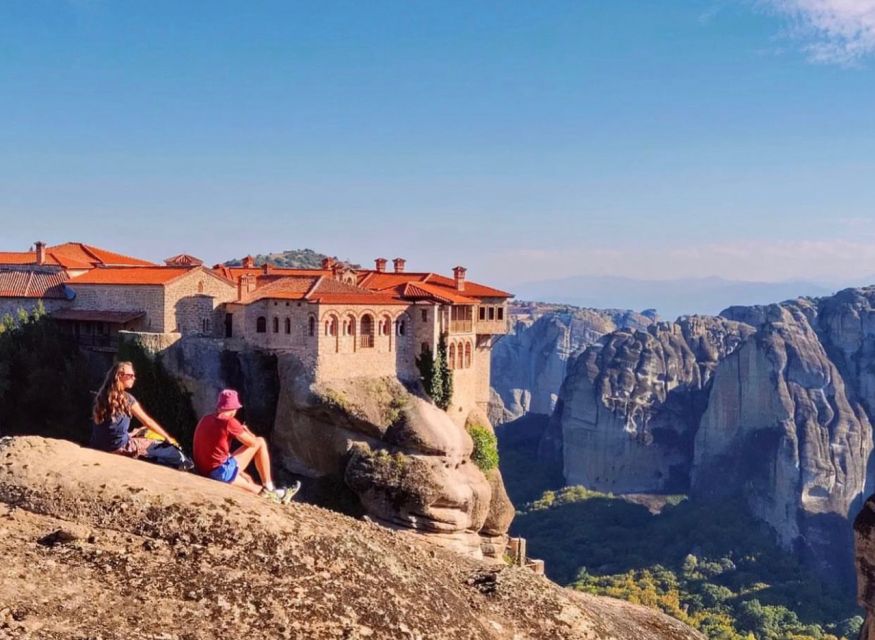
A big part of the value is the included smart audio guide. It covers 11 points of interest and is available in many languages, including English, Spanish, French, Italian, German, Dutch, Portuguese, Polish, Russian, Japanese, Korean, and Chinese.
To use it, bring earbuds or earpads and have your smartphone ready. This matters because the audio is not just a nice add-on. It helps you keep learning while you roam around each monastery space at your own speed.
The tour guide is still central, of course. But the audio guide helps when you are standing in a spot where you need a second pass to take in what you are seeing.
What to wear: the monastery dress rules you must follow
Meteora monasteries have strict clothing expectations, and this tour is clear about it.
- Women must wear knee-length or longer skirts. Pants are not allowed, and shorts and sleeveless shirts are not allowed.
- Men cannot wear sleeveless clothing or shorts.
If you show up in the wrong outfit, you risk being turned away, or being forced to improvise on the spot. Either way, it throws off your timing. I recommend packing a lightweight long skirt for women and a spare shirt with sleeves for everyone.
Also wear comfortable shoes. This is not a flat, museum-style walk. Expect steps, uneven ground near viewpoints, and some climbing.
Price and value: what $35 gets you, plus the cash entry fees
The tour price is $35 per person for a 4-hour morning experience. That is a strong deal for Meteora, because transportation, a live English local guide, audio guidance, and planned access to three monasteries are already built in.
The one cost to factor in is monastery entrance fees. Entrance fees are €5 per monastery, payable in cash only. Since the standard plan includes entering three monasteries, you should budget about €15 cash for the interior sites. You can pay only what you are asked at the time, but using €15 as a working number keeps things simple.
So what is the “real” value? It is not just the price. It is that the tour reduces the stress of figuring out timing, routes, and which viewpoints give you the best understanding of the site. You get the big-picture overview of all six monasteries plus interior access to three, in only half a day.
Who should book this Meteora morning tour
This tour fits best if you:
- want to see Meteora quickly without renting a car
- like learning from a live local English guide
- care about viewpoints and want a plan that shows all six monasteries
- want a small group experience with free audio support
It may be less ideal if you:
- have limited mobility and know stairs are a serious issue for you
- prefer very slow, unstructured time in one monastery rather than a guided route
Also, if you have a second visit later, this tour becomes a perfect orientation. You finish the morning understanding what you saw, where everything sits, and which site you might want to revisit.
Should you book this tour?
If you want the best bang-for-your-time morning at Meteora, I would book it. You get all six active monasteries on the viewpoints, then true interior time at three major sites, with live guiding plus a free smart audio guide to keep the learning accessible.
Just go in prepared. Bring the right clothing, carry earbuds or earpads, and plan for steps. If you do that, this tour is one of the easiest ways to see Meteora in a way that feels more like understanding the place, not just collecting photos.
FAQ
What is the duration of the Meteora morning tour?
The tour runs for about 4 hours, including pickup and the time at Meteora.
Where does the pickup happen?
Pickup is offered from Kalabaka and Kastraki (the tour also references Trikala in the wider area).
How many monasteries do you see, and how many do you enter?
You see all 6 active monasteries from viewpoints, and you visit inside 3 monasteries.
Is the tour guided, and in what language?
Yes. The live tour guide is in English.
Is there an audio guide?
Yes. A free smart audio guide is included with coverage of 11 points of interest. It is available in multiple languages, and you use it on your smartphone with earpads.
Are monastery entrance fees included?
No. Entrance fees are €5 per monastery and are payable in cash.
What should I wear to enter the monasteries?
You need appropriate clothing. Women must wear knee-length or longer skirts and cannot wear pants, shorts, or sleeveless shirts. Men cannot wear sleeveless clothing or shorts.
What is included besides the guide and transport?
The tour includes hotel pickup and drop-off (Kalabaka or Kastraki), small-group air-conditioned minibus transport, a free panoramic Meteora map, free WiFi, and time to discover the Hermit Caves.
The Rest of Kalabaka

Every Other Kalabaka Write-Up
The Meteora Rocks, More Visits
Everything else we have written up around Kalabaka
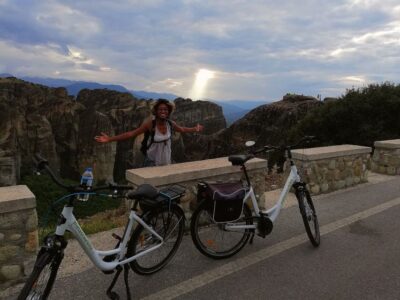
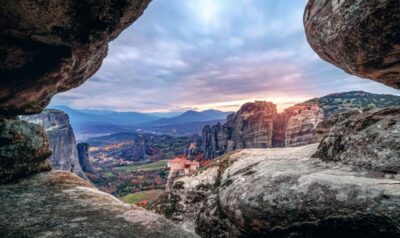
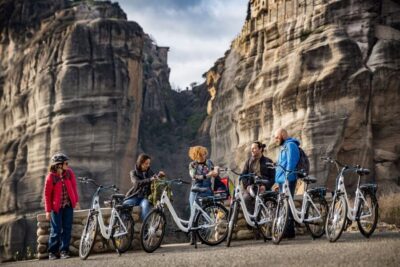
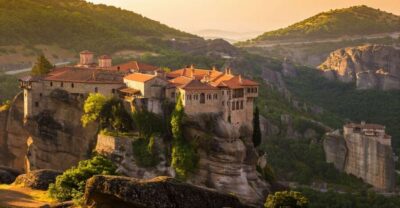
Meteora Monastery Tours, side by side.
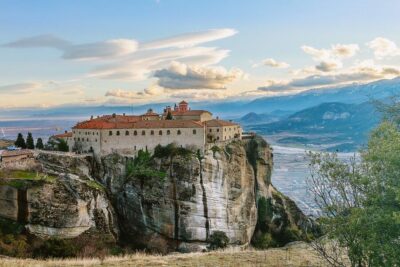 ★ 4.8Thessaloniki: Full-Day Bus Trip to MeteoraFrom $583,471 reviews
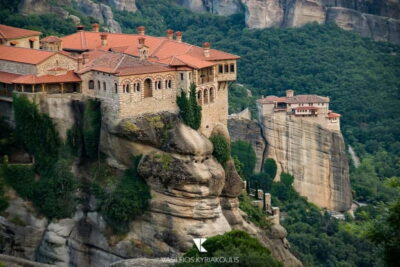 ★ 4.7Athens: Meteora Monasteries Day Trip with Caves and LunchFrom $662,964 reviews
 ★ 4.8Athens: Meteora Monasteries Day Tour with LunchFrom $652,196 reviews
 ★ 4.8Athens: Meteora Tour with Local Guide and Greek LunchFrom $631,561 reviews
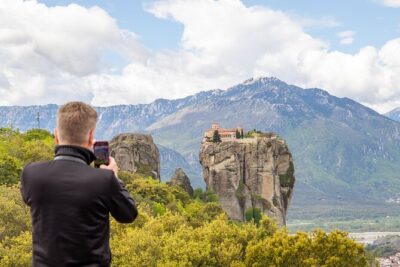 ★ 4.5Athens: Meteora Monasteries, Caves & Coastal Stopovers with LunchFrom $881,432 reviews
 ★ 4.5From Athens: Delphi and Meteora 2-Day Guided TourFrom $271825 reviews
 ★ 4.54-Day Classical Greece Tour: Epidaurus, Mycenae, Olympia, Delphi, MeteoraFrom $766732 reviews
 ★ 4.5Athens: Meteora Monasteries, Hermit Caves Tour with PickupFrom $87724 reviews
Sits on these lists