
Review · METEORA MONASTERY TOURS
Meteora Monasteries Half-Day Small Group Tour with Transport
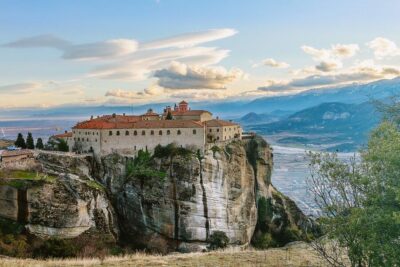
Meteora feels like stone floating in the sky. This half-day small-group outing takes you to the major UNESCO monasteries of Meteora, with photo stops and a clear, guided route that helps you make sense of why monks chose these rock crowns. You also get a quick orientation on the UNESCO status and the Byzantine-era spiritual role these places played (Meteora and its monastic story).
I like that the tour gives you both inside access to three monasteries and plenty of exterior viewpoints to connect the dots across the cliffs. I also like the feel of a true small-group day, especially with an English-speaking local guide and the photo-friendly pacing that keeps the day from feeling rushed.
The main consideration is that monastery access is not fully included: entrance fees for Great Meteoron, Roussanou, and Varlaam are extra, and you should expect stairs and walking even on a half-day format.
In This Review
- Key highlights worth planning for
- Why this Meteora half-day works when time is tight
- Pickup and the “small-group” reality on Meteora roads
- The rock-prison to monastery-roof story you’ll understand fast
- Saint Nicholas of Anapafsas: the first stop that sets the tone
- Roussanou Monastery: accessible height, big personality
- Varlaam Monastery: the second biggest and a real art stop
- Great Meteoron Monastery: the biggest, oldest, and most iconic
- Agia Triada (Holy Trinity) and Agios Stefanos: the outside views that complete the map
- Agia Triada (Holy Trinity) from a harder route
- Agios Stefanos, the more accessible alternative
- Guides, pacing, and why the day feels “productive”
- Dress code and the step count you should expect
- What you pay, what you do not, and how it really adds up
- Who this Meteora half-day tour is best for
- Quick read: should you book this tour?
- FAQ
- How many monasteries do you visit inside on this half-day tour?
- What are the entrance fees, and are they included in the tour price?
- What time does the tour start, and how long does it last?
- Do I need cash for the monasteries?
- What is the dress code?
- Is the tour only in English?
Key highlights worth planning for
- Small group size (max 18) means less waiting, easier questions, and a smoother flow on narrow viewpoints.
- Transport from Kalambaka or Kastraki saves you the logistics headache in the morning.
- 3 monasteries visited inside, with other famous monasteries shown from outside so you still get the big picture.
- English local guide plus free audio guides for multiple languages if you need it.
- Photo stops built into the route so you can actually shoot the cliffs, not just stare at them.
- Dress code and steps are real, including a route with about 140 steps for Agia Triada.
More ways to see the Meteora rocks and monasteries

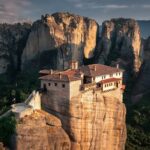

Why this Meteora half-day works when time is tight
Meteora is one of those places where a little structure goes a long way. The rocks are dramatic, the monasteries are scattered, and it is easy to waste time trying to stitch together a self-guided plan. This tour is built for a half-day window, so you get the key sites without burning your whole day.
You also get a very workable pace. The day runs around 4 hours, starting at 9:00 am, and many people finish by early afternoon. That timing is especially helpful if you want a second window for more viewpoints, a museum stop in Kalambaka, or just a slow Greek lunch.
And at $36.30 per person, the value mostly comes from the parts that are hard to DIY in one morning: round-trip transport, a guide who can explain what you are seeing, and organized stops so you are not bouncing between locations on your own.
Pickup and the “small-group” reality on Meteora roads
Pickup is from hotels and Airbnbs in Kalambaka and Kastraki. That matters because the monasteries sit above town, and getting to the right pull-offs can be tricky when you are navigating steep roads and tight parking areas.
This is also capped at 18 travelers, which changes the day. With a smaller group, it is easier to manage the flow of stairs, to regroup at viewpoint points, and to ask questions without shouting over everyone. One detail I really appreciate: the tour includes bottled water and free WiFi on board, small comforts that help on a morning that is part walking and part scenic driving.
The guide is English only, with extra languages handled by a free smart audio guide. If you are traveling as a mixed-language group, it is a practical setup.
The rock-prison to monastery-roof story you’ll understand fast
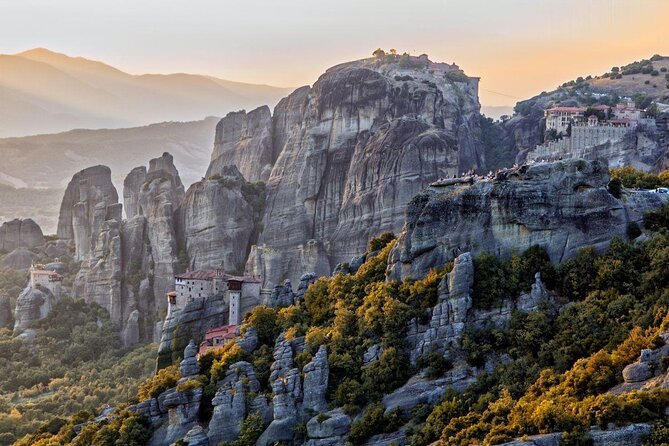
Your day starts with context, not just sightseeing. You get an orientation that the monastery presence spans from the 14th to the 16th century, when many monasteries were established on the rock summits. Of the original group, only six remain active for people to visit today.
You also learn why these places mattered beyond scenery. Meteora became a center of Orthodox monastic life in the Byzantine era, and the monasteries preserved religious art, craft traditions, and precious manuscripts, some of which you can see in museum spaces inside the monastic complex areas.
If you like a place that has meaning, this is one of Meteora’s best introductions. Once you understand the purpose, the heights stop being just dramatic and start feeling intentional.
Saint Nicholas of Anapafsas: the first stop that sets the tone
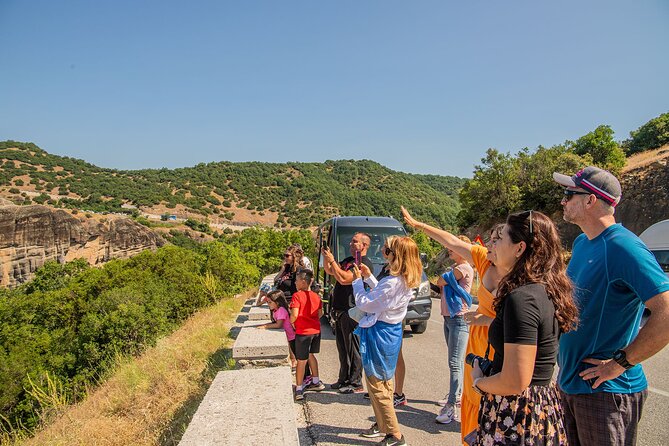
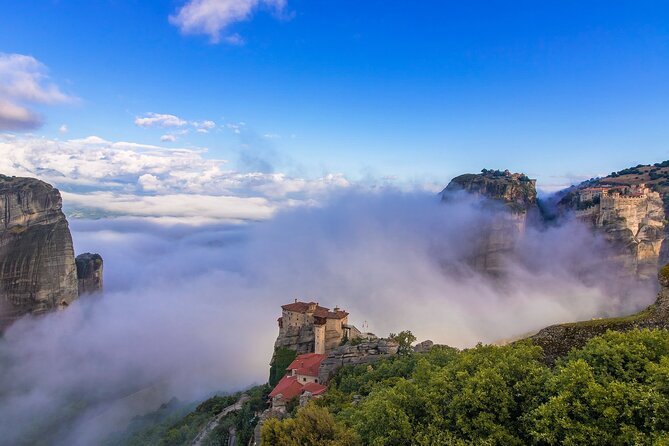
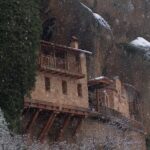
On the way up, the route includes the Holy Monastery of Saint Nicholas of Anapafsas. The monastery dates to the end of the 14th century, and it is a great “first chapter” stop because it gives you a historic anchor before you bounce between larger, more famous sites.
The name Anapafsas has multiple interpretations, and your guide shares the two most common ones. One ties the name to a benefactor linked with the monastery, and the other connects it to its position as one of the first places encountered on the ascent, likely serving as a resting stop for pilgrims before continuing upward.
This kind of explanation matters because Meteora’s monasteries feel similar at first glance. A small naming detail like this helps you see each rock-top monastery as its own place, not just a postcard.
Roussanou Monastery: accessible height, big personality
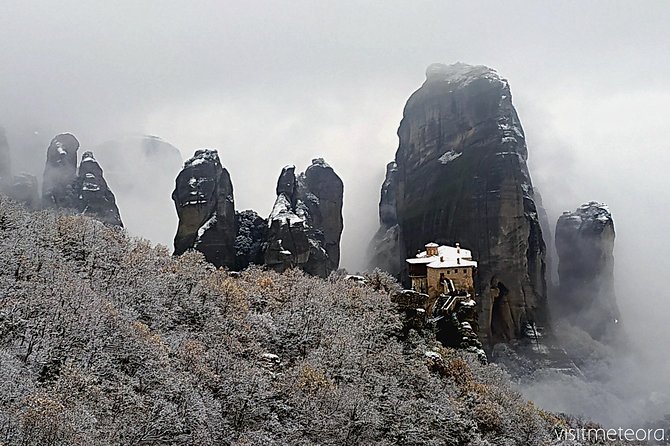
Your first inside stop is usually Roussanou Monastery. It is named after the first probable hermit who settled on the rock, and the main cathedral dates to the late 1500s, with decoration following about three decades later.
Roussanou is also one of the more accessible monasteries in the Meteora system because its rock is lower than some of the others. That can matter if your legs are not excited about a long staircase circuit. You still get the Meteora feeling, but with fewer penalties.
A practical note: Roussanou suffered severe damage during World War II and later became a convent in 1988. That gives you a sense of how these sites have endured and adapted, not just survived on postcards.
More monasteries and Byzantine churches
- Meteora: Morning Half Day Sightseeing and Monasteries Tour★ 5.0 · 165 reviews
- Meteora All Monasteries Tour with Photo Stops★ 5.0 · 104 reviews
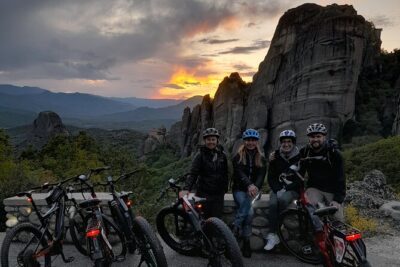
- Morning Monastery E-bike Tour★ 5.0 · 71 reviews
- Meteora: Monasteries Tour with Lunch and Athens Transfer Option★ 5.0 · 64 reviews
Varlaam Monastery: the second biggest and a real art stop
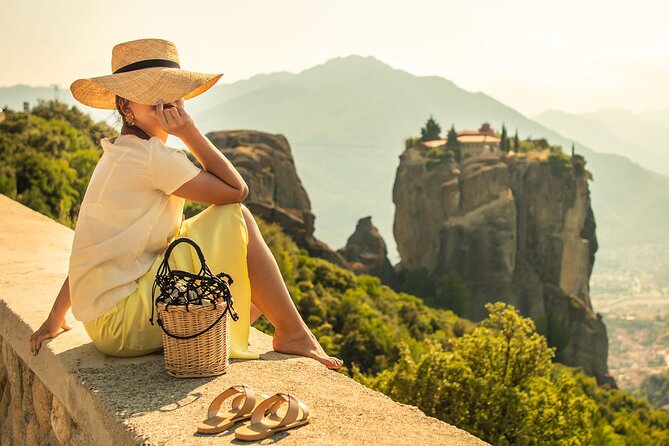
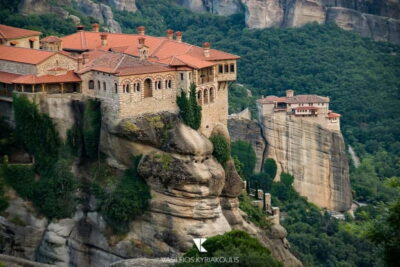
Next is Varlaam Monastery, the second biggest in Meteora and located opposite the Great Meteoro Monastery. It was founded in the mid-14th century by Hosios Varlaam, and it carries a strong sense of architectural “confidence” because of how large it is compared with many of the other rock-top sites.
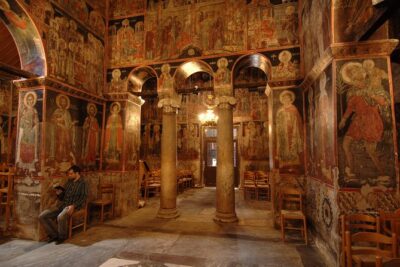
Inside, you will spend time in the Catholicon, where the church honor and decoration details stand out. The catholicon was built in honor of the Agioi Pantes in 1541-42, by priest-monks Hosioi Theophanes and Nectarios the Apsarades from Ioannina. The main church decoration was completed in 1548.
There is also a fascinating connection for art lovers: a magnificent wall painting is attributed, based on style, to Frago Catelano from Thebes. Your guide’s explanation can help you notice what you might otherwise miss.
One practical detail: admission for Varlaam is listed as extra, so budget for it.
Great Meteoron Monastery: the biggest, oldest, and most iconic
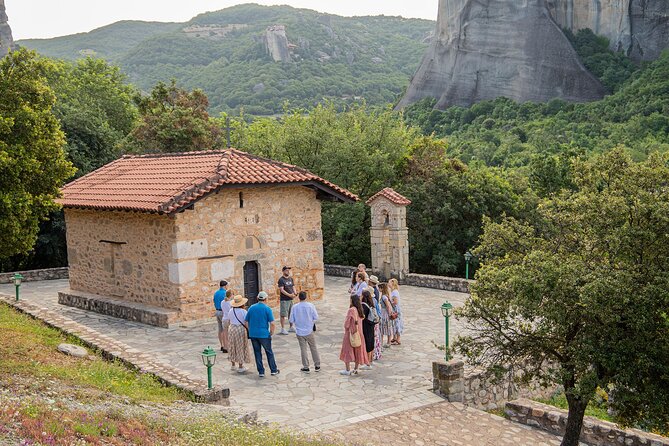
Your final main inside stop is typically Great Meteoron Monastery, also known as Great Meteoro. This is both the biggest and the oldest, and it is called the monastery that was suspended in the air, meteoro, because of the gigantic rock it crowns.
The monastery is tied to Saint Athanasios the Meteorite, described as the first founder who helped organize the systematic monastic life in Holy Meteora. If you only visit one interior, this is the one people usually treat as the centerpiece.
You’ll usually have about an hour here, which is long enough to look around properly if you are not trying to speed-run every photo angle. It is also a good place to slow down and let the guide point out architectural and religious details, because the scale can be overwhelming.
Admission is extra here as well, so keep cash ready.
Agia Triada (Holy Trinity) and Agios Stefanos: the outside views that complete the map
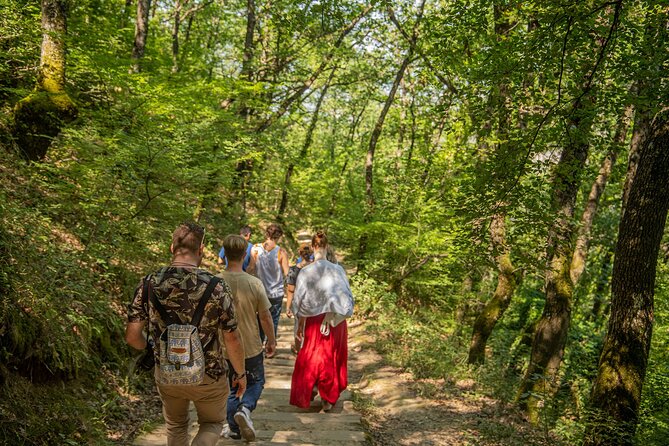
Not every famous monastery is an inside visit on a half-day plan. Still, you will see major sites from outside and understand how they relate.
Agia Triada (Holy Trinity) from a harder route
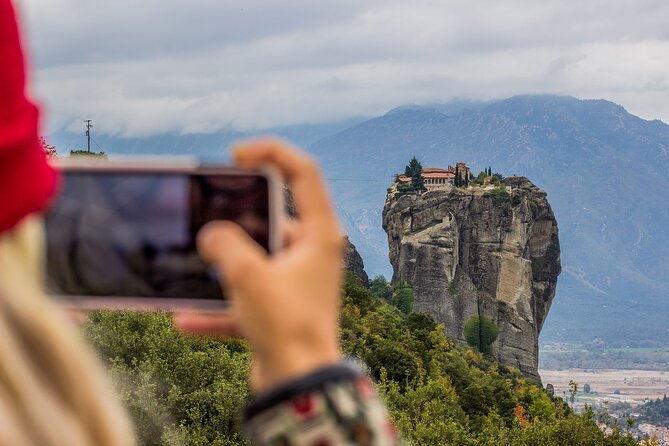
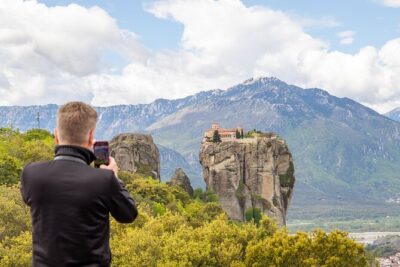
Agia Triada Monastery is one of the most dramatic locations on the route. It is described as difficult to reach, perched on a steep rock near Saint Stephen’s Nunnery. Visitors follow a pathway first, then climb around 140 steps to reach the top.
Once you reach it, the payoff is the panoramic look around the rock formations and monastery spread. If you are okay with steps but want that big payoff view, this stop is worth it.
Agios Stefanos, the more accessible alternative
At the other end is Agios Stephanos, often called the most accessible stop because you reach the entrance via a small bridge rather than a staircase climb. Monastic life there traces back to the early 1100s, and founders and renovators mentioned include Hosios Antonios and Hosios Philotheos, who rebuilt the Catholicon from its foundations in 1545.
If you know you can manage some walking but stairs are a problem, this stop can still help you experience a Meteora monastery up close.
Guides, pacing, and why the day feels “productive”
The tour lives or dies on the guide, and this one gets strong praise for making the day make sense. People highlight guides like Jim, Apostolis, Lidia Radford referenced for narrowing down the right option, and drivers such as Dinos for friendly help. While not every guide name will match your day, the pattern is consistent: the commentary ties the architecture to the monastic purpose.
I also like the rhythm. The time spent driving between monasteries is not treated as dead time. Viewpoints and photo stops help you keep momentum. If you are traveling solo, the guide-and-driver combo is also noted for helping with photos so you are not stuck asking strangers every few minutes.
One small tip to keep the day from feeling repetitive: if you have already done a sunset-focused Meteora tour on another day, you might run into overlap. Check what you already saw before booking a second excursion.
Dress code and the step count you should expect
Meteora monasteries have a strict dress code. Men must wear trousers and long sleeves. Women must wear a long skirt. If you show up in shorts, trousers, and skirts will be provided, but it is still smart to plan ahead so you are not scrambling once you are at the gate.
Footwear is key. Bring comfortable shoes because your day includes climbing, walking between viewpoints, and getting up and down at multiple monasteries.
Also, be realistic about difficulty. Even on a half-day, you are dealing with stairs at several points, including the route to Agia Triada that mentions around 140 steps.
If you have mobility concerns, you are not automatically out of luck. The itinerary includes the more accessible Agios Stephanos route. And at least one review mentions the company solved a mobility issue, which suggests they take it seriously when someone has limits.
What you pay, what you do not, and how it really adds up
The headline price is $36.30 per person, but the monastery entrance fees are not included. Entrance fees listed for the interiors are:
- Great Meteoron: €5.00 per person
- Roussanou: €5.00 per booking
- Varlaam: €5.00 per booking
So your total cost will depend on which interiors you access and the day’s exact plan, but you should assume extra euros on top of the tour price.
There is also a practical detail that can save you embarrassment: bring cash because some monasteries do not accept credit cards.
Even with those extra fees, I see this as decent value when you want three interiors plus guided context plus round-trip pickup. If you tried to do the same set of monasteries solo, you would spend money on transport, lose the interpretive guide time, and risk wasting time on the wrong viewpoints.
Who this Meteora half-day tour is best for
This tour fits best if you want:
- A guided route that explains the monasteries quickly so you do not get lost in similar-looking cliff-top churches.
- Three interior visits plus outside viewpoints, without needing a full day.
- A schedule that starts in the morning and gives you free time afterward.
It is also a good match for first-time visitors staying in Kalambaka or Kastraki who do not want to figure out transport and parking.
If you are the type who wants to linger for hours inside one monastery and do zero photo stops, you may find a half-day format tight. In that case, a longer or more customizable option might feel better.
Quick read: should you book this tour?
If you want the Meteora essentials without turning your day into logistics math, this is a strong pick. The combination of English local guiding, transport from Kalambaka or Kastraki, and three interior monastery visits makes it efficient.
Book it if you like structure and want to understand what you are seeing, not just collect images. Skip it or pair it with a different plan if your main goal is museum time, slow interior study, or if you know your legs cannot handle steps. For everyone else, it is a solid, practical way to see why Meteora is one of Greece’s most unforgettable cliff-top worlds.
FAQ
How many monasteries do you visit inside on this half-day tour?
You visit inside 3 monasteries. You also see the other monasteries from outside during the drive and photo stops.
What are the entrance fees, and are they included in the tour price?
Entrance fees are not included. The tour lists Great Meteoron (€5.00 per person) and Roussanou (€5.00 per booking) and Varlaam (€5.00 per booking) as extra costs. Some monasteries do not accept credit cards, so bring cash.
What time does the tour start, and how long does it last?
The tour starts at 9:00 am. Duration is listed as about 4 hours.
Do I need cash for the monasteries?
Yes. The tour advises you to bring cash for entrance fees, because some monasteries do not accept credit cards.
What is the dress code?
Men must wear trousers and long sleeves. Women must wear a long skirt. If you arrive in shorts, the tour states that trousers and skirts will be provided.
Is the tour only in English?
The tour is guided in English only. Other languages are available through a free audio guide, including options like French, Spanish, Italian, German, Portuguese, Polish, Russian, Chinese, Japanese, and Korean.
Every Other Meteora Write-Up

Monasteries and Byzantine Churches


The Meteora Rocks, More Visits
Everything else we have written up around Meteora

Meteora Monastery Tours, side by side.
 ★ 4.8Thessaloniki: Full-Day Bus Trip to MeteoraFrom $583,471 reviews
 ★ 4.7Athens: Meteora Monasteries Day Trip with Caves and LunchFrom $662,964 reviews
 ★ 4.8Athens: Meteora Monasteries Day Tour with LunchFrom $652,196 reviews
 ★ 4.8Athens: Meteora Tour with Local Guide and Greek LunchFrom $631,561 reviews
 ★ 4.5Athens: Meteora Monasteries, Caves & Coastal Stopovers with LunchFrom $881,432 reviews
 ★ 4.5From Athens: Delphi and Meteora 2-Day Guided TourFrom $271825 reviews
 ★ 4.54-Day Classical Greece Tour: Epidaurus, Mycenae, Olympia, Delphi, MeteoraFrom $766732 reviews
 ★ 4.5Athens: Meteora Monasteries, Hermit Caves Tour with PickupFrom $87724 reviews
Sits on these lists