
Review · METEORA MONASTERY TOURS
Meteora: Morning Half Day Sightseeing and Monasteries Tour
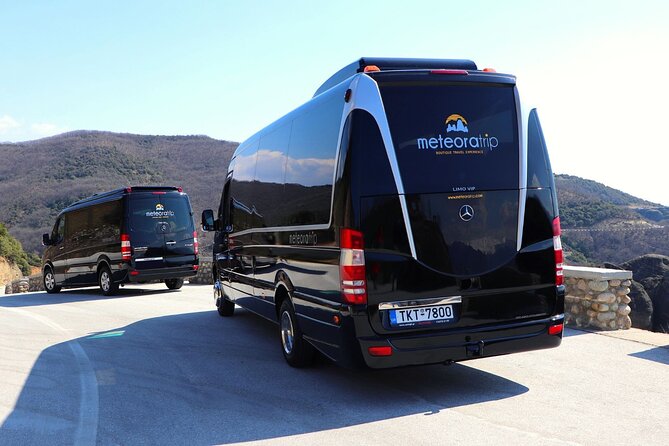
Meteora can be a maze of stairs and steep roads. This half day tour is built so you can focus on the views, the monasteries, and the stories, instead of figuring out parking or routes. I especially like the hotel pickup in a VIP minibus, because it makes the morning start feel effortless, even when the area is busy.
Two things I really appreciate are the free Wi-Fi in the minivan for photo uploads, and the fact that you get a local guide’s explanations as you go. Guides I’ve seen mentioned, like Vasili and Nikolas, are praised for keeping things engaging, not rushed, and easy to follow.
The main thing to keep in mind is that your ticket price covers the tour, not the monastery entrances. Entrance fees are extra, monasteries require cash, and you will also deal with stairs, including a section with 145 steps at Holy Trinity.
In This Review
- Key things to know before you go
- The smart morning timing for Meteora monasteries
- Pickup in Kalabaka or Kastraki, and why the small group helps
- The photos and hidden stops that make the scenery feel personal
- Kastraki quick look: Small castle vibes before the climbs
- Saint Nicholas of Anapafsas: the quick 20-minute introduction
- Roussanou Monastery: the longer stop where you can really slow down
- Great Meteoron (Transfiguration of Christ): oldest and biggest feelings
- Varlaam Monastery: second largest, opposite the big one
- Holy Trinity Monastery: the 145 steps reality check
- Saint Stephen (Agios Stefanos): the easiest access stop for balancing the day
- Tickets, cash rules, and what the price really covers
- Audio guides and language support, plus a practical phone tip
- Dress code: bring the right clothes or you will lose time
- Rain, fog, and why a guide still helps when the view changes
- Who this tour is best for
- Should you book the Meteora morning monasteries tour?
- FAQ
- What time does the tour start, and how long does it last?
- Is pickup from Kalabaka or Kastraki included?
- What is included in the tour price?
- What extra costs should I expect?
- How many monasteries will I visit, and is there time to see interiors?
- Are audio guides available, and what do I need to use them?
- What should I wear for the monasteries?
- What happens if the weather is bad?
Key things to know before you go
- Six monasteries in one morning loop, with interior time in three and quick viewing time for the others
- Hotel pickup and drop-off from Kalabaka or Kastraki, in a small-group VIP minibus (max 15)
- Free Wi-Fi on board so you can send photos home right after each viewpoint stop
- Audio guides included for phone use, with earphones, in Spanish, French, German, Italian, Japanese, Chinese, and Korean
- Dress code is strict, especially for women’s bottoms and shoulder coverage
- Bring cash for monastery entrances, listed as €5 per person per monastery
More ways to see the Meteora rocks and monasteries

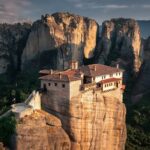
The smart morning timing for Meteora monasteries
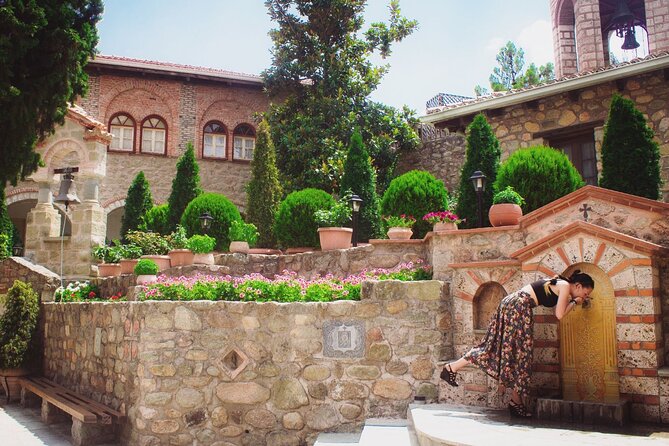
Starting at 9:00 am is a sweet spot. You get solid daylight for the rock-top views, and you avoid the later crowds that can make the whole area feel like a slow-moving line.
The tour is about 4 hours, which is long enough to see serious highlights without turning your whole day into uphill walking and waiting. That balance matters here, because Meteora is not flat, and every stop is vertical in its own way.
Pickup in Kalabaka or Kastraki, and why the small group helps
You’re picked up from your accommodation in Kalabaka or Kastraki, usually in the windows of 08:45 to 09:00 (Kalabaka) and 09:00 to 09:15 (Kastraki). Then you ride in a VIP minibus and get dropped back where you started.
That small group size, maximum 15 travelers, keeps the morning from feeling like a cattle-car tour. It also helps with those in-between moments, like quick photo stops from the viewpoints, where you want time to look and not just shuffle forward.
The photos and hidden stops that make the scenery feel personal
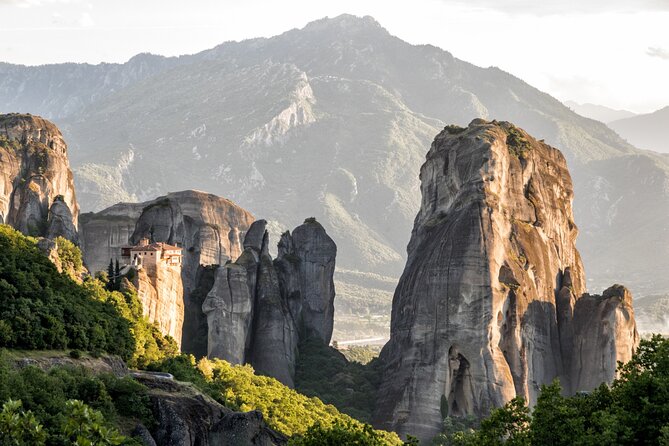
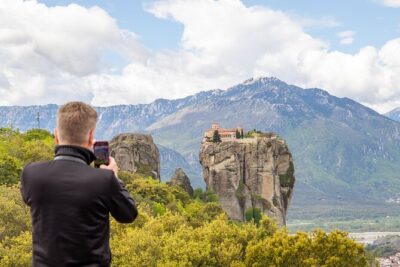
A big part of this experience is the “other side” view of Meteora, not just a checklist of monastery names. Along the way, you’ll hear why hermits settled in these caves and how the monks managed what must have felt impossible.
There are also named stops that help you connect the rocks to real places, like the ancient Chapel of Doupiani and the St. George Mandilas cave. Even if fog or clouds roll in, these are the kinds of stops where the guide’s context makes the area click.
And yes, the photo situation is handled well. With free Wi-Fi in the minivan, you can send pictures right after the best viewpoints, instead of saving everything for later when you are tired.
Kastraki quick look: Small castle vibes before the climbs
Before the monastery circuit, you’ll see Kastraki, a picturesque village located at the bottom of the Holy Meteora rocks. The name connects to a Byzantine castle that once stood here, and the ruins are still preserved.
This is a nice warm-up stop. It helps you get oriented so that once the rocks dominate the view, you understand where you are and why the monasteries look both dramatic and strangely reachable.
Saint Nicholas of Anapafsas: the quick 20-minute introduction
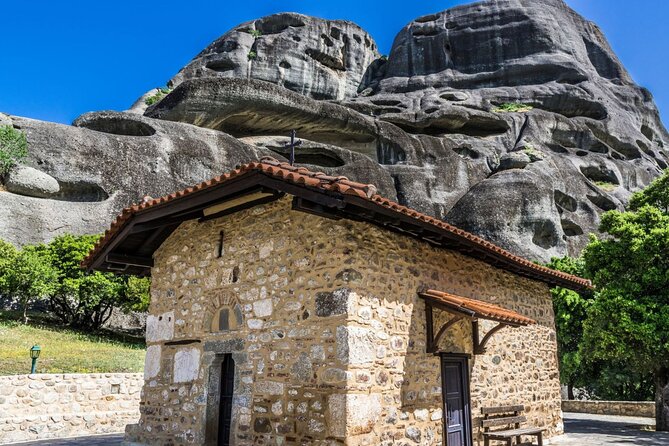
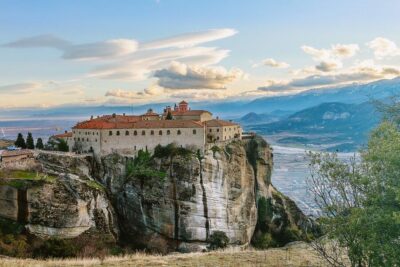
Stop 1 is Saint Nicholas Monastery of Anapafsas. It’s described as literally suspended in air on a rock, and it is the first monastery you reach on the way from Kastraki toward the stone forest area.
You only get about 20 minutes here, so this stop works best for two goals: get the shape of the monastery in your head, then move on. If you want long photo sessions, plan to use the viewpoint time plus the short moments right after you arrive.
More monasteries and Byzantine churches
- Meteora: Morning Half Day Sightseeing and Monasteries Tour★ 5.0 · 165 reviews
- Meteora All Monasteries Tour with Photo Stops★ 5.0 · 104 reviews
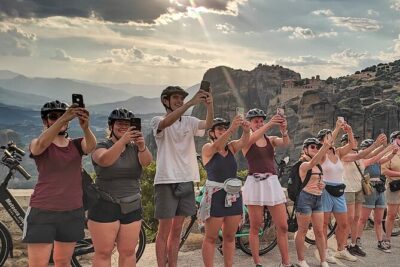
- Morning Monastery E-bike Tour★ 5.0 · 71 reviews
- Meteora: Monasteries Tour with Lunch and Athens Transfer Option★ 5.0 · 64 reviews
Roussanou Monastery: the longer stop where you can really slow down
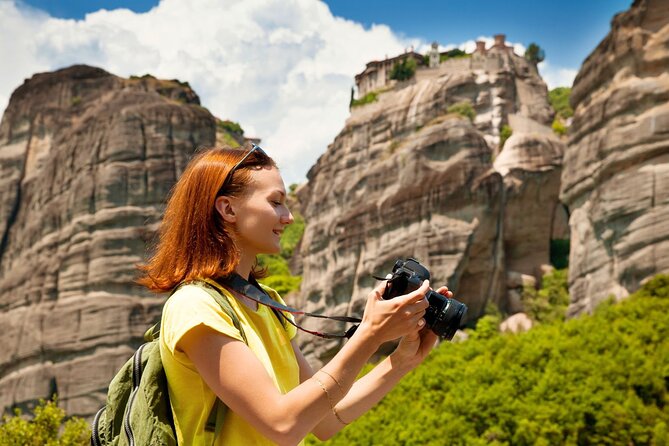
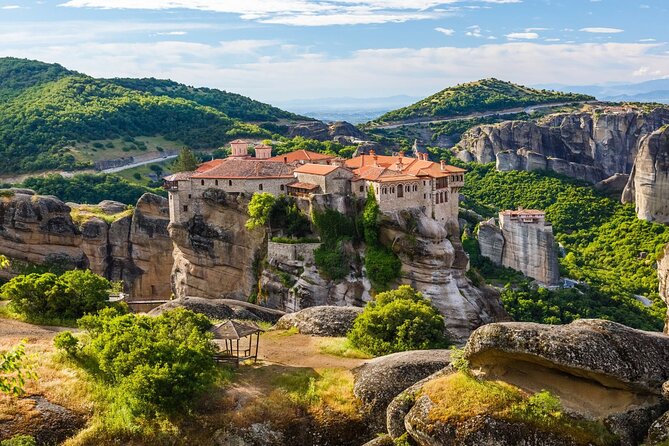
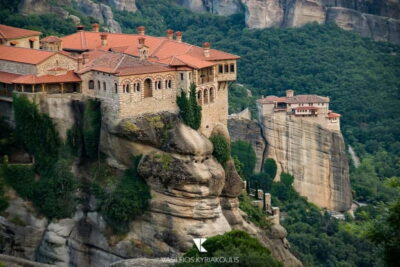
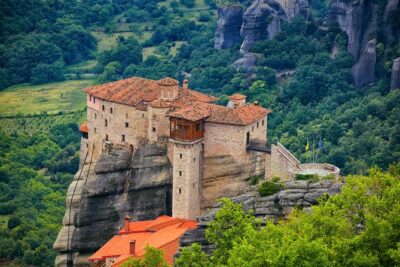
Roussanou Monastery sits on a steep, vertical cliff, between Saint Nicholas Anapafsas and Varlaam. This one has about an hour, which is the right amount of time to see it properly instead of just snapping photos from the road.
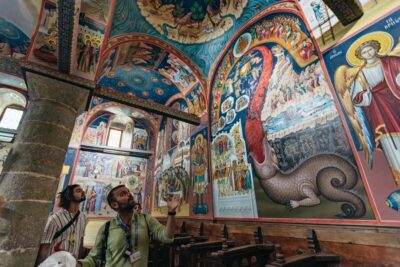
Because the tour is designed to include interior time at three monasteries, this longer stop is one of the places where you’ll feel you gained depth, not just exposure. Still, keep an eye on timing, because Meteora rewards you most when you pace yourself across stairs and uneven paths.
Great Meteoron (Transfiguration of Christ): oldest and biggest feelings
Great Meteoron, also called the Monastery of the Transfiguration of Christ, is the oldest and most important monastery on Meteora. It’s the kind of stop where you can feel why this area became a religious power center without needing a lecture that goes on forever.
You get about an hour here as well, which gives you time to take in the buildings and then step back to absorb the rock-top scale. This is also a stop where the guide’s stories help you understand the effort behind the location, from construction challenges to daily life for the monks.
Varlaam Monastery: second largest, opposite the big one
Varlaam is located on a rock opposite Great Meteoron. It’s the second largest monastery, and like the others, it is visually impressive the moment you arrive.
You’ll have about an hour. That time is useful, because with monasteries at this height, it’s easy to feel like you are rushing through. With a longer window, you can move at your pace, check out what you care about, and still leave enough energy for the next climbs.
Holy Trinity Monastery: the 145 steps reality check
Holy Trinity is the third oldest monastery, and it is also described as the most difficult to reach. The route involves crossing a downhill path and then ascending 145 steps carved into the rock.
This is the main consideration on the itinerary, especially if you have mobility limits or if stairs make you feel winded quickly. The upside is that the payoff can be big, because this is exactly the kind of place where you understand how remote life became possible.
If you prefer easier walking, you can treat this stop like a choose-your-own-adventure moment. Use your time wisely, rest when needed, and keep your focus on views and atmosphere rather than trying to “beat the clock.”
Saint Stephen (Agios Stefanos): the easiest access stop for balancing the day
Holy Monastery of Saint Stephen is located just above Kalabaka and is described as the most accessible monastery in Meteora. There are no steps to reach the entrance, and access is easy through a small stone bridge.
It gets about 20 minutes, which is enough to see it and soak it in without exhausting your legs. I like ending with a stop like this because it helps you finish the circuit without the tour feeling like a punishment.
Tickets, cash rules, and what the price really covers
The tour price is listed as $36.30 per person, and it includes the 4-hour Meteora tour plus pickup and drop-off in Kalabaka or Kastraki. It also includes an English-speaking local guide, free audio guides, and free Wi-Fi on board.
What is not included is the monastery entrance fee. Entrance fees are listed as €5 per person per monastery, and the monasteries only accept cash. Plan for the extra cost based on how many monasteries you actually enter, since you will make stops at all six but interior access is focused on three.
If you want help budgeting, treat it like this: the tour is mostly about getting you from place to place and briefing you before each site, while you pay the site admission separately once you’re there.
Audio guides and language support, plus a practical phone tip
Even if you travel with limited Greek, you can follow along. The tour includes free audio guides in Spanish, French, German, Italian, Japanese, Chinese, and Korean.
To use them, you need your smartphone and earphones. This is one of those small prep items that makes a difference, because you do not want to arrive and realize you forgot earbuds.
Dress code: bring the right clothes or you will lose time
Meteora monasteries impose a dress code for visitors, and it is not just a suggestion. Men are required to wear long trousers and shirts with sleeves.
Women must wear skirts that fall below the knee and cover their shoulders. Trousers are not permitted, and a long scarf wrapped around the waist can help meet requirements.
This matters because monasteries can turn a planned schedule into a delay if someone needs to improvise at the last minute. I recommend packing something simple and wearable that passes muster the first time.
Rain, fog, and why a guide still helps when the view changes
This experience requires good weather. If it’s canceled due to poor weather, you should be offered a different date or a full refund.
On days with fog or rain, the vibe changes fast in Meteora. The upside of having a guide is that even when visibility drops, you still get the stories, the structure of the route, and the sense of how the monks used these sites.
And if the weather is great, you’ll get more time for panoramic views and photo stops, which is a big reason this tour keeps earning strong marks.
Who this tour is best for
This is a great match if you want a stress-free way to see Meteora with an efficient morning route and minimal navigation headaches. It is also ideal for first-timers who want the main monasteries and the big explanations without building a plan around parking and road access.
It’s especially useful if you dislike driving in difficult terrain or worry about missing viewpoints. The minivan format also helps you stay organized, because you are guided from stop to stop instead of trying to stitch together a self-drive itinerary under time pressure.
Should you book the Meteora morning monasteries tour?
Book it if you want to hit the key stops in a morning, prefer hotel pickup, and value having someone explain what you’re seeing while you walk around. The combination of small-group comfort, free Wi-Fi for photo sharing, and audio guides makes it easy to enjoy Meteora without turning it into a logistics project.
Pass if you are determined to spend long hours at fewer sites, because this is built for a compact circuit and you will feel the stair and time constraints in places like Holy Trinity. Also factor in the extra cash entrance fees and the dress code, so you don’t end up thinking you paid for everything when you did not.
If you do want to see multiple monasteries but still get a taste of guided context, this is a solid way to start your Meteora trip and then decide where to return next.
FAQ
What time does the tour start, and how long does it last?
The tour starts at 9:00 am and lasts about 4 hours.
Is pickup from Kalabaka or Kastraki included?
Yes. Pickup and drop-off are included from your accommodation in Kalabaka or Kastraki.
What is included in the tour price?
The tour price includes the VIP minibus transfer, a 4-hour Meteora tour, an English-speaking local guide, free audio guides, and free Wi-Fi in the bus.
What extra costs should I expect?
Monastery entrance fees are not included. Entrance fees are listed as €5 per person per monastery, and the monasteries only accept cash.
How many monasteries will I visit, and is there time to see interiors?
You can see six monasteries and admire the interior of three of them, with time left over to continue sightseeing.
Are audio guides available, and what do I need to use them?
Yes. Free audio guides are available, and you’ll need your smartphone and earphones.
What should I wear for the monasteries?
Men need long trousers and long-sleeved shirts. Women need skirts that fall below the knee and shoulder coverage, and a long scarf wrapped around the waist can be used to meet the requirement.
What happens if the weather is bad?
This experience requires good weather. If canceled due to poor weather, you’ll be offered a different date or a full refund.
Every Other Meteora Write-Up

Monasteries and Byzantine Churches


The Meteora Rocks, More Visits
Everything else we have written up around Meteora

Meteora Monastery Tours, side by side.
 ★ 4.8Thessaloniki: Full-Day Bus Trip to MeteoraFrom $583,471 reviews
 ★ 4.7Athens: Meteora Monasteries Day Trip with Caves and LunchFrom $662,964 reviews
 ★ 4.8Athens: Meteora Monasteries Day Tour with LunchFrom $652,196 reviews
 ★ 4.8Athens: Meteora Tour with Local Guide and Greek LunchFrom $631,561 reviews
 ★ 4.5Athens: Meteora Monasteries, Caves & Coastal Stopovers with LunchFrom $881,432 reviews
 ★ 4.5From Athens: Delphi and Meteora 2-Day Guided TourFrom $271825 reviews
 ★ 4.54-Day Classical Greece Tour: Epidaurus, Mycenae, Olympia, Delphi, MeteoraFrom $766732 reviews
 ★ 4.5Athens: Meteora Monasteries, Hermit Caves Tour with PickupFrom $87724 reviews
Sits on these lists